
For most of automotive history, buying a car meant owning everything that came with it. If a vehicle left the factory with a certain engine, suspension setup, or performance capability, those features belonged to the owner.
Manufacturers could advertise horsepower figures, acceleration times, and towing capacities because every customer purchasing that vehicle received access to the full package. The rise of software-defined vehicles has begun to change that relationship.
Today, an increasing number of automakers use software to control features that already exist physically within a vehicle. Heated seats, navigation systems, driver-assistance functions, and even performance capabilities can be activated or restricted through software.
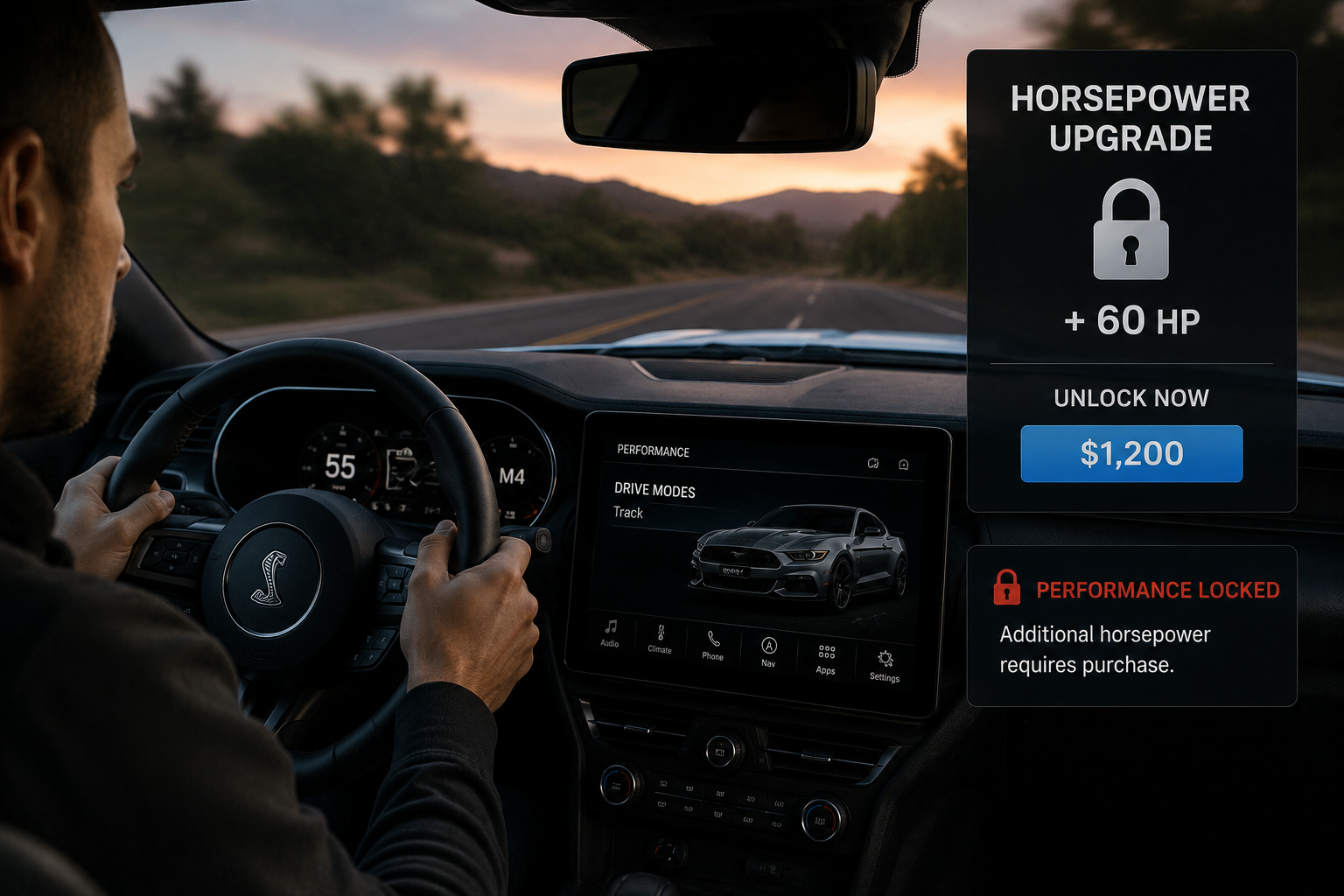
In some cases, consumers purchase vehicles containing the necessary hardware for certain features but must pay additional fees to unlock them. Few examples have generated more controversy than software-locked horsepower.
Several manufacturers have introduced performance upgrades that can be purchased after a vehicle leaves the showroom. Through a software update, power output increases, acceleration improves, or performance settings become available.
While automakers describe these programs as innovative ways to personalize vehicles, critics argue they reveal a troubling reality: consumers may no longer fully own the capabilities of the cars they buy.
The debate touches on larger questions about ownership, subscriptions, digital rights, and the future of the automotive industry. As vehicles become increasingly dependent on software, many consumers are beginning to wonder whether buying a car still means owning it in the traditional sense.
Also Read: 10 Luxury Cars With Factory Sound Systems Worth Every Penny
The Shift Toward Software-Defined Vehicles
The automotive industry is undergoing one of the biggest technological transformations in its history.
Modern vehicles contain dozens of computers managing everything from engine operation and battery performance to suspension behavior and climate control systems. Research from consulting firm McKinsey & Company suggests software content in vehicles has grown dramatically over the past decade and will continue increasing as electrification and connectivity expand.
This software-centric approach offers legitimate advantages. Manufacturers can deliver over-the-air updates, fix bugs remotely, improve efficiency, and add new features without requiring dealership visits.
Tesla helped popularize this concept by regularly enhancing vehicle performance and functionality through software updates. Other manufacturers quickly followed. As software became more important, automakers discovered a new business opportunity.
Instead of selling all vehicle capabilities upfront, companies realized they could reserve certain functions behind digital paywalls. Features that once would have been included in the purchase price could now generate recurring revenue through subscriptions or one-time unlock fees.
The strategy has attracted significant attention because it fundamentally changes how vehicles are sold and monetized. For consumers, the implications are becoming increasingly difficult to ignore.
Horsepower Has Become A Software Product
Performance has traditionally been one of the easiest aspects of a vehicle to understand. An engine produced a certain amount of power because of its mechanical design.
Horsepower was determined by physical components such as turbochargers, fuel systems, camshafts, and engine tuning. If two vehicles shared the same hardware, they generally produced similar performance. Software has changed that equation.
Several manufacturers now sell vehicles with identical hardware configurations but different power outputs determined largely by software. A customer may purchase a vehicle capable of producing more horsepower, yet access to that performance remains restricted until an additional payment is made.
BMW, Mercedes-Benz, Tesla, and other manufacturers have experimented with software-controlled features that affect vehicle performance. Electric vehicles are particularly well-suited to this model because power delivery is heavily managed through software systems.
From a technical standpoint, the approach makes sense. Manufacturers can create multiple product tiers without requiring extensive hardware differences. From a consumer perspective, however, the practice raises uncomfortable questions.
If the hardware already exists within the vehicle, many buyers wonder why they must pay extra to access capabilities that are physically present from day one. That question sits at the center of the controversy.
The Subscription Economy Has Reached The Driveway
Software-locked horsepower represents part of a broader trend toward subscription-based vehicle ownership.
Automakers increasingly view vehicles as platforms for ongoing revenue generation rather than one-time purchases. Industry analysts at Morgan Stanley and other investment firms have highlighted recurring software revenue as a potentially significant source of future profits.
Manufacturers have taken notice. Heated seats, premium navigation systems, remote-start functions, advanced driver-assistance features, and enhanced connectivity services have all appeared as subscription offerings. Performance upgrades are simply the latest extension of this strategy.
For automakers, the appeal is obvious. Vehicle sales can fluctuate with economic conditions, interest rates, and consumer demand. Subscription revenue is more predictable and often generates higher profit margins.
Investors generally favor recurring revenue businesses because they provide greater financial stability. Consumers, however, often view the situation differently.
Many buyers accept paying for subscriptions for streaming services or cloud storage because those services require ongoing infrastructure and content updates. Paying monthly fees to access capabilities already installed in a purchased vehicle feels fundamentally different.
The distinction may be psychological, but it is powerful. People tend to believe ownership should include access to everything physically present in the product they purchased.
Consumers Are Increasingly Pushing Back
Not surprisingly, many drivers have responded negatively to software-locked features. Consumer surveys conducted by automotive research firms have consistently found resistance to subscription-based vehicle functions.
While some buyers appreciate flexibility and lower upfront costs, others view software restrictions as unnecessary and exploitative. The backlash against subscription-heated seats provides a useful example.
When several manufacturers experimented with charging recurring fees for heated-seat functionality despite the hardware already being installed, criticism was swift. Many consumers argued that they had effectively paid for the hardware during the vehicle purchase and should not be required to pay again for access.
Software-locked horsepower triggers similar reactions. Performance enthusiasts in particular tend to view horsepower as an inherent property of the vehicle rather than a service that can be rented.
The idea that acceleration or power output can be withheld until additional payments are made feels contrary to traditional automotive culture.
Social media discussions, owner forums, and consumer advocacy groups have frequently criticized these practices.
The resistance suggests that automakers may face limits regarding how aggressively they can monetize software-controlled features.
Ownership Is Becoming More Complicated
The controversy surrounding software-locked horsepower ultimately reflects a deeper issue. Historically, ownership implied control. If consumers purchased a vehicle, they owned its capabilities. They could modify it, repair it, maintain it, and use it as they saw fit within legal limits.
Software-defined vehicles challenge that assumption. Increasingly, ownership involves software licenses, digital permissions, and manufacturer-controlled ecosystems. Certain features can be activated, deactivated, or modified remotely. In some cases, manufacturers retain substantial influence over how vehicle capabilities are accessed.
Consumer rights advocates argue that this trend weakens traditional ownership principles. The right-to-repair movement has already raised concerns about manufacturer control over diagnostic tools and repair information. Software-locked features introduce similar questions regarding performance and functionality.
If a manufacturer can remotely enable or disable capabilities after a sale, how much control does the owner truly possess? The answer varies depending on the company, the vehicle, and the specific feature involved.
Nevertheless, the trend has sparked a broader conversation about digital ownership in the automotive world.
Electric Vehicles Are Accelerating The Trend
Electric vehicles have made software-based monetization easier than ever. Unlike traditional gasoline engines, EV performance is heavily managed through software. Battery output, power delivery, acceleration characteristics, regenerative braking behavior, and charging performance can all be adjusted through programming.
This flexibility creates opportunities for manufacturers. A single electric powertrain can support multiple performance levels with minimal hardware changes. Instead of developing entirely different mechanical configurations, companies can differentiate products through software settings.
Research from the International Energy Agency highlights how software has become central to EV development. Modern electric vehicles receive regular updates that can improve efficiency, range, charging performance, and user experience.
The same technology enabling those improvements also enables software restrictions. As EV adoption grows, consumers will likely encounter more examples of performance features being managed digitally. Whether buyers embrace or reject these practices remains an open question.
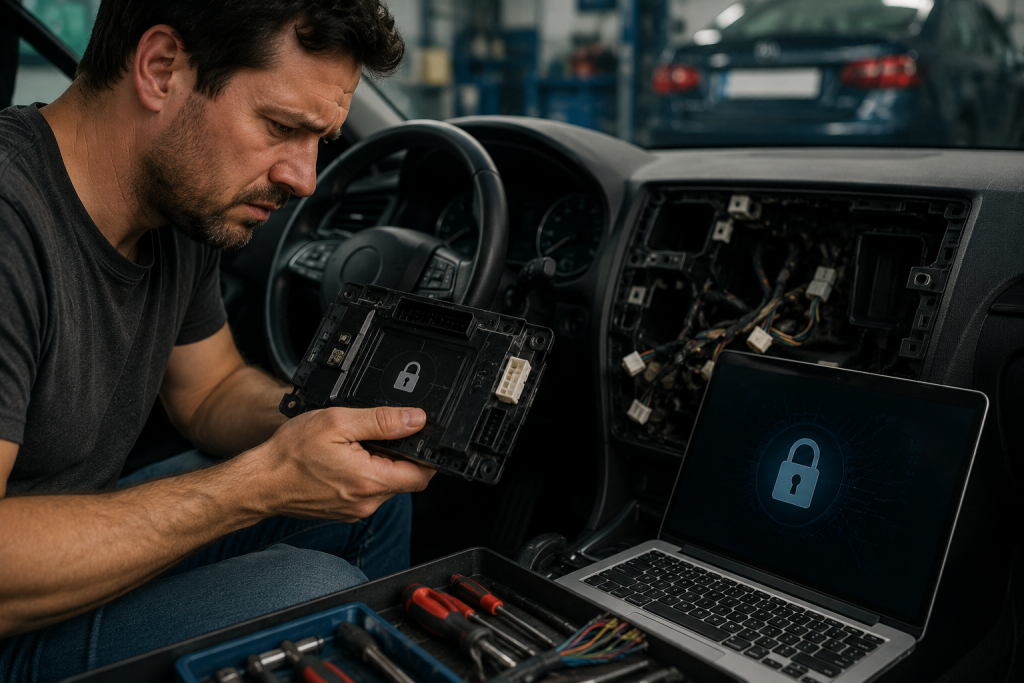
What is clear is that software will play an increasingly important role in defining vehicle capabilities.
The Business Case Makes Sense
To be fair, automakers are not implementing software-locked horsepower solely to frustrate consumers. There are legitimate business reasons behind the strategy.
Creating multiple performance variants through software can reduce manufacturing complexity, streamline production, and improve profitability. It allows manufacturers to serve different customer segments while minimizing hardware differences.
Some consumers may genuinely prefer lower upfront prices with optional upgrades available later.
The approach can also provide flexibility. Owners who initially purchase a lower-performance version may choose to upgrade years later without trading vehicles or installing aftermarket components.
From an operational perspective, software-based upgrades are efficient and scalable. The challenge lies in balancing those benefits against consumer expectations regarding ownership.
Manufacturers may view software locks as innovative product management tools. Consumers often view them as artificial restrictions imposed on products they have already purchased. That difference in perspective continues driving the debate.
Why The Backlash Isn’t Going Away
The controversy surrounding software-locked horsepower extends beyond automotive performance.
At its core, the issue reflects growing concerns about how digital technology is reshaping ownership. Consumers increasingly encounter products governed by subscriptions, licenses, and ongoing fees. Vehicles are becoming part of that trend.
The problem for automakers is that cars occupy a unique place in consumer culture. For many people, vehicles represent freedom, independence, and personal ownership. Restrictions that feel acceptable in software applications may generate far stronger reactions when applied to automobiles.
Software-defined vehicles are undoubtedly the future. Over-the-air updates, digital features, and connected services will continue expanding. Many of these innovations provide genuine benefits to consumers.
Yet software-locked horsepower highlights a potential downside. When a vehicle contains hardware capable of delivering additional performance but requires extra payments to access it, ownership begins to feel less complete. Consumers may possess the car physically, but manufacturers retain control over certain capabilities.
That reality explains why software-locked horsepower has become such a controversial topic. It challenges long-standing assumptions about what ownership means. And for many buyers, it serves as evidence that the car sitting in their driveway may not be entirely theirs after all.
Also Read: 10 Vintage Cars With Features That No Longer Exists
