
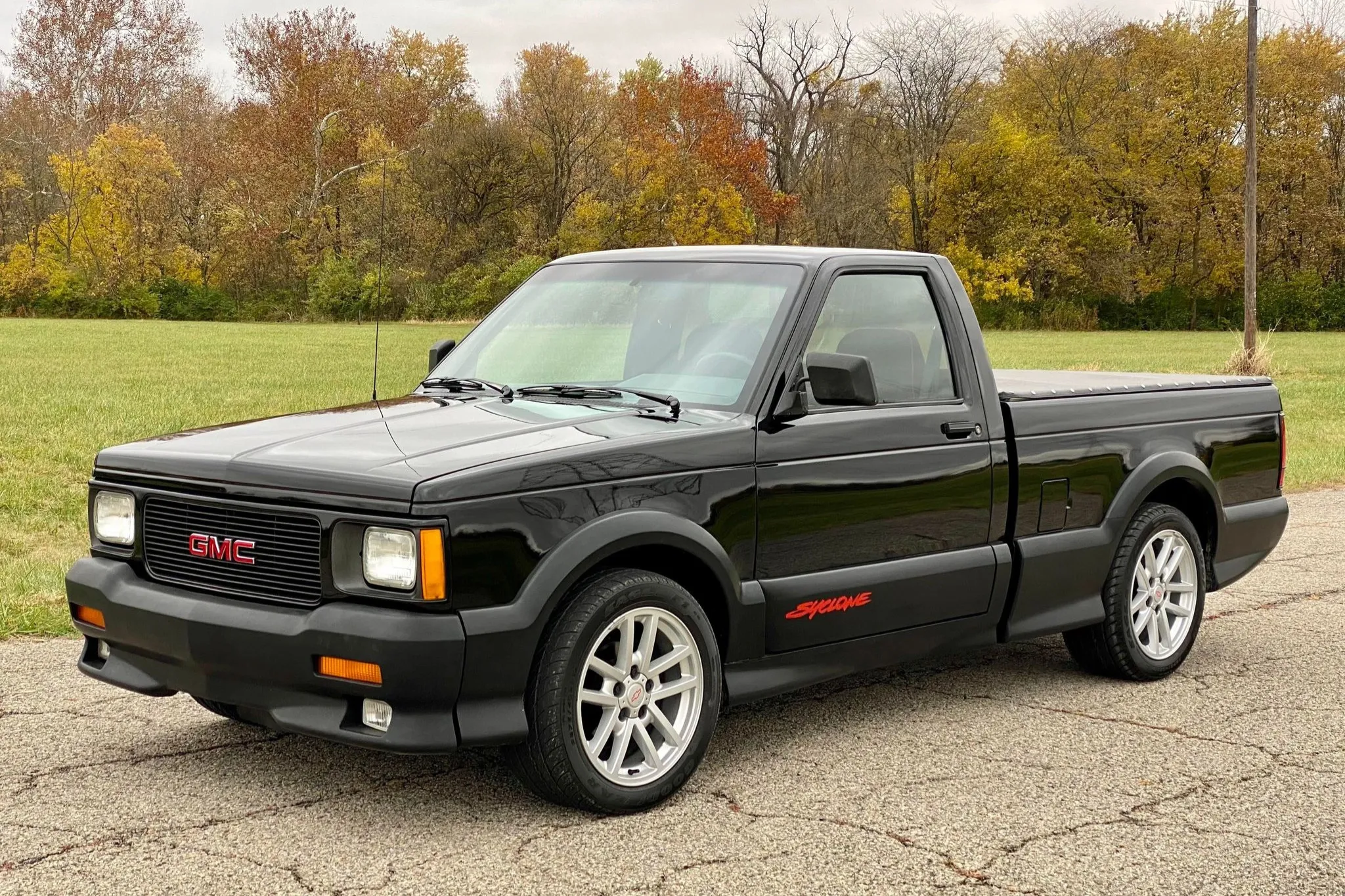
When people think of high-performance vehicles from the early 1990s, names like Ferrari, Porsche, Lamborghini, and Corvette usually come to mind. Pickup trucks rarely enter the conversation.
At the time, trucks were primarily viewed as workhorses designed for hauling cargo, towing trailers, and handling demanding jobs. Speed was rarely a priority, and sports-car owners certainly had little reason to fear a compact pickup at a stoplight. Then GMC introduced the Syclone.
On paper, the idea sounded absurd. GMC took the humble Sonoma pickup, fitted it with a turbocharged V6 engine, added all-wheel drive, upgraded the suspension, and created a truck capable of acceleration figures that embarrassed some of the world’s most respected sports cars.
The most shocking comparison involved a Ferrari, a brand synonymous with speed and performance.
When automotive magazines tested the GMC Syclone shortly after its introduction in 1991, the results stunned enthusiasts and industry observers alike.
This compact American pickup could sprint to 60 mph faster than a contemporary Ferrari 348, a car that cost several times more and carried one of the most prestigious badges in the automotive world.
More than three decades later, the Syclone remains one of the wildest production trucks ever built. It challenged assumptions about what a pickup could be and helped lay the foundation for the high-performance trucks that followed.
Most importantly, it proved that raw acceleration is not always determined by exotic styling or a six-figure price tag. Sometimes, a turbocharged pickup can shock the automotive establishment.
Also Read: 10 Hidden Features In The Toyota RAV4
GMC Wanted To Build Something Nobody Expected
The late 1980s and early 1990s were a period of experimentation for American performance vehicles.
Manufacturers were searching for ways to create excitement while working within increasingly strict emissions and fuel-economy regulations.
General Motors already had experience with turbocharged technology through vehicles such as the Buick Grand National and GNX, both of which had earned reputations for delivering extraordinary performance from relatively modest-looking packages.
The success of those vehicles inspired a bold idea. Rather than creating another sports coupe or muscle car, GMC engineers wondered what would happen if they applied a similar formula to a pickup truck.
The goal was not to build a work truck with a little extra power. The goal was to build the fastest production pickup in the world.
To make the project happen, GM partnered with Production Automotive Services, a company involved in specialty vehicle development. Engineers started with the GMC Sonoma compact pickup and transformed it into something entirely different.
By the time development was complete, the truck had become a serious performance machine capable of competing with sports cars rather than other pickups.
The result would become one of the most memorable vehicles General Motors ever produced.
A Turbocharged V6 powered the madness.
One of the most surprising aspects of the Syclone was its engine. Many people assume a performance truck from the early 1990s would rely on a large V8. Instead, GMC equipped the Syclone with a turbocharged 4.3-liter V6 derived from the company’s existing truck engine family.
The engine received extensive modifications. A Mitsubishi turbocharger forced additional air into the combustion chambers. An intercooler reduced intake temperatures. Stronger internal components improved durability under boost. Specialized fuel and engine-management systems helped maximize performance.
Officially, the engine produced 280 horsepower and 350 lb-ft of torque. Those numbers may not sound extraordinary by modern standards, but they were extremely impressive in 1991. More importantly, torque arrived low in the rev range, creating explosive acceleration from a standstill.
Many enthusiasts and industry observers have long suspected that GMC understated the engine’s true output. Independent testing frequently suggested the truck was producing more power than its official specifications indicated.
Whether intentional or not, the conservative ratings only added to the Syclone’s mystique. The truck was clearly faster than its numbers suggested.
All-Wheel Drive Made The Difference
Power alone does not explain the Syclone’s legendary acceleration. The truck’s secret weapon was its advanced all-wheel-drive system.
At a time when most performance vehicles sent power to either the rear wheels or the front wheels, the Syclone distributed torque to all four corners. Approximately 35 percent of the power went to the front axle, while the remaining 65 percent was directed to the rear.
This configuration provided remarkable traction. While many powerful sports cars struggled to put power down effectively, the Syclone launched with astonishing efficiency. Wheelspin was minimized, and nearly every pound-foot of torque could be converted into forward motion.
The system transformed the truck’s character. Instead of smoking the rear tires at every stoplight, the Syclone simply hooked up and surged forward. The launch felt violent by the standards of the era, catching many drivers completely off guard.
This traction advantage became especially important during instrumented performance testing. It allowed the truck to achieve acceleration figures that seemed almost impossible for a pickup.
The Ferrari comparison made headlines.
The moment that cemented the Syclone’s place in automotive history came when performance magazines began testing the truck.
Car and Driver famously compared the Syclone’s acceleration with several high-performance vehicles, including the Ferrari 348. The results were shocking.
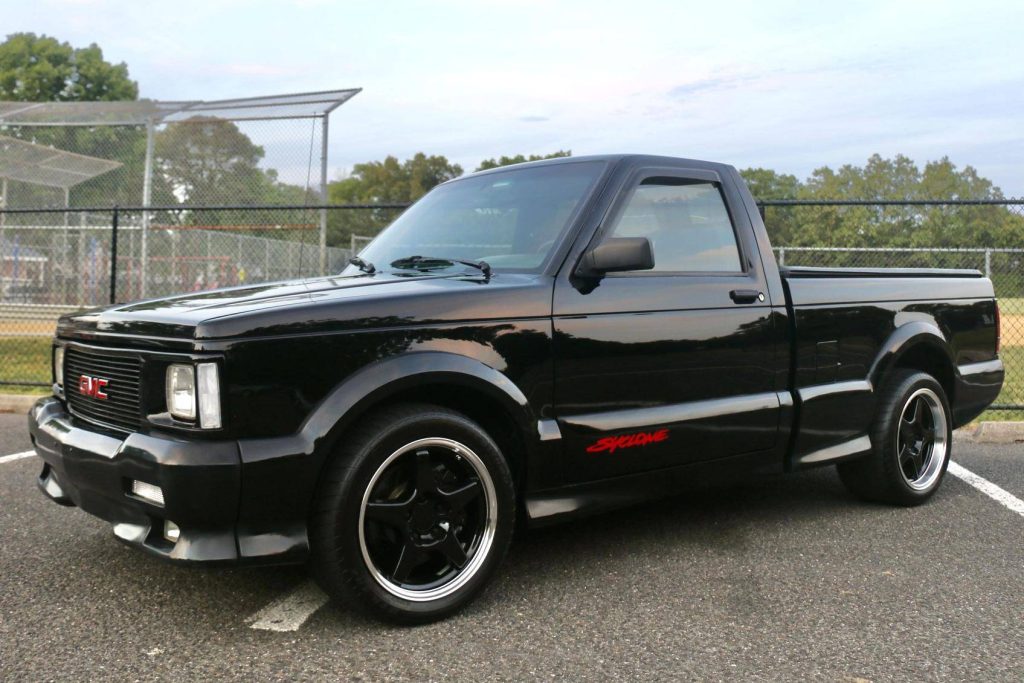
The GMC Syclone reached 60 mph in approximately 4.3 seconds. The Ferrari 348 required roughly 5.6 seconds to accomplish the same task.
For context, the Ferrari represented one of the world’s most desirable sports cars. It featured a mid-mounted V8 engine, exotic Italian styling, and a price tag that placed it far beyond the reach of most buyers.
The GMC was a compact pickup truck. Yet when the traffic light turned green, the truck was quicker.
The comparison generated enormous publicity because it challenged conventional automotive wisdom. Consumers expected Ferraris to dominate acceleration contests. They did not expect to lose to a pickup carrying construction materials in the bed.
The Syclone became an instant legend. Even people who never drove one remembered the headline-grabbing Ferrari comparison.
It Was More Than Just A Straight-Line Machine
Although acceleration generated most of the attention, the Syclone offered more than quarter-mile bragging rights.
Engineers upgraded the suspension significantly compared with a standard Sonoma. The truck sat lower to the ground and received performance-oriented tuning designed to improve handling.
Large tires and the all-wheel-drive system contributed additional grip. No one would mistake the Syclone for a dedicated sports car on a winding road, but it was remarkably capable for a pickup. Contemporary reviews frequently praised its stability and responsiveness.
Braking performance also impressed testers. The combination of strong acceleration, capable handling, and confident braking created a well-rounded performance package that exceeded expectations.
This versatility helped separate the Syclone from many specialty vehicles of the era. It was not simply a novelty designed for drag races. It was a genuinely competent performance vehicle.
Drivers could enjoy the truck in a variety of situations rather than only during straight-line acceleration runs.
Production Was Short But Memorable
Despite its impressive capabilities, the Syclone was never intended to become a high-volume model. Production lasted only for the 1991 model year.
Approximately 2,995 examples were built, making the truck relatively rare from the beginning. Most were finished in black, although a small number of other colors were produced.
The limited production run contributed significantly to the vehicle’s long-term appeal. Collectors tend to gravitate toward unique vehicles that represent important moments in automotive history, and the Syclone checks both boxes. It was innovative, controversial, and genuinely fast.
Because relatively few were produced, surviving examples have become increasingly desirable.
Enthusiasts appreciate the truck not only for its performance but also for its historical significance.
The Syclone demonstrated that performance pickups could attract serious attention from buyers and media alike.
The Syclone Influenced Future Performance Trucks
Although production ended quickly, the Syclone’s impact continued. GMC followed the truck with the Typhoon, a high-performance SUV based on similar mechanical components. Other manufacturers eventually embraced the idea that trucks could be legitimate performance vehicles.
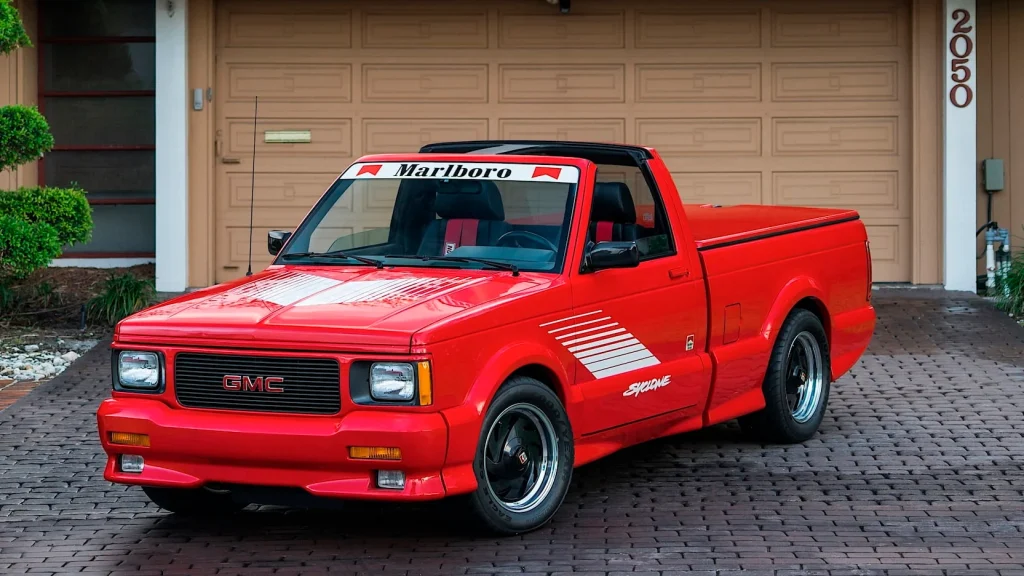
Today, high-performance pickups are common. Vehicles such as the Ford F-150 Raptor R, Ram 1500 TRX, and various performance-oriented truck models owe at least part of their existence to pioneers like the Syclone.
The idea that a pickup could deliver sports-car performance no longer seems shocking. In 1991, it absolutely was.
The Syclone helped change perceptions by proving that enthusiasts were willing to embrace unconventional performance vehicles. Its success demonstrated that speed could come in unexpected forms.
Why The GMC Syclone Remains A Legend
More than thirty years after its debut, the GMC Syclone remains one of the most outrageous vehicles ever sold by an American manufacturer.
Its appeal extends beyond the famous Ferrari comparison. The truck represented a willingness to challenge assumptions and pursue performance in a completely unconventional way. Rather than building another sports car, GMC created a turbocharged all-wheel-drive pickup capable of embarrassing exotic machinery.
That formula remains compelling today. The Syclone combined practicality, rarity, surprising sophistication, and astonishing straight-line speed into a package nobody saw coming. It looked like a compact pickup, but it accelerated like a supercar.
In an era increasingly dominated by predictable product planning and carefully researched market segments, the Syclone stands as a reminder of what can happen when engineers are allowed to build something truly unexpected.
Its production run was brief, but its legacy has endured for decades. The truck that out-accelerated a Ferrari became one of the most memorable performance vehicles of its generation and a benchmark for every fast pickup that followed.
Also Read: 10 Luxury Cars With Factory Sound Systems Worth Every Penny
