
One of the biggest selling points of electric vehicles is the promise of lower running costs. Automakers often highlight the savings compared with gasoline, while EV owners frequently point out that charging is usually much cheaper than filling a fuel tank.
However, not all charging costs are the same. Where you charge your EV can make a dramatic difference to your monthly expenses.
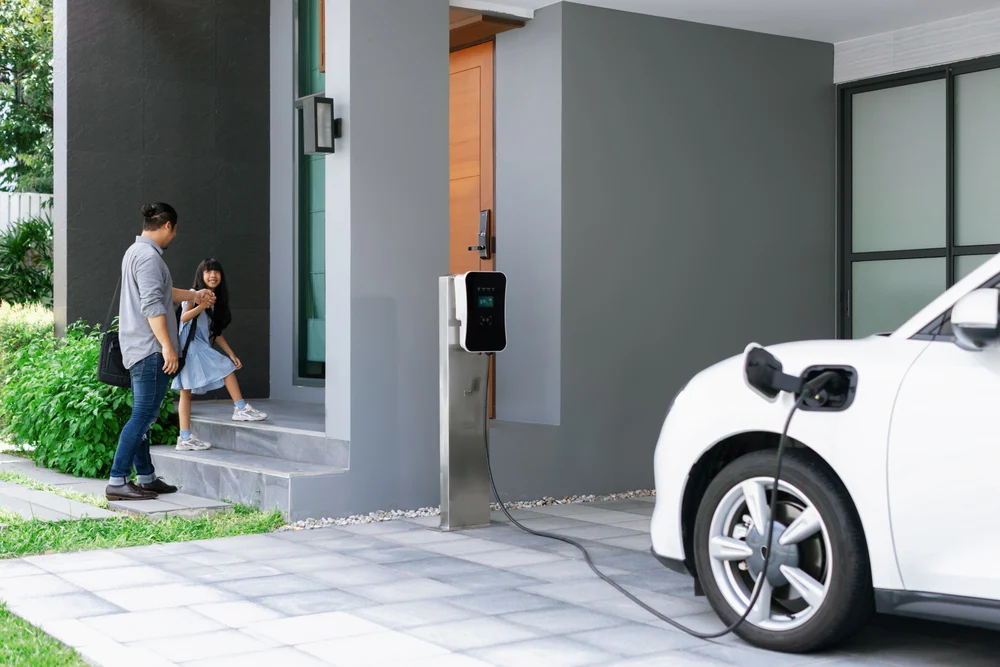
Charging at home is generally the least expensive option and one of the main financial advantages of EV ownership. Public DC fast chargers, on the other hand, prioritize speed and convenience over cost.
Depending on electricity rates, charger pricing, and your vehicle, using a public fast charger regularly can cost two to four times as much as charging at home.
For prospective EV buyers, understanding these differences is essential. The total cost of ownership depends not only on the price of the vehicle but also on how and where it will be charged over the next several years.
Also Read: 10 Cars That Are Cheapest to Insure for Drivers Under 25
Home Charging Is Usually the Cheapest Option
For most EV owners, home charging accounts for the vast majority of charging sessions. Instead of stopping at a charging station every few days, drivers simply plug in overnight and wake up with a fully charged battery.
The cost depends almost entirely on the local residential electricity rate. In the United States, average residential electricity prices generally range from $0.12 to $0.20 per kilowatt-hour (kWh), although rates vary significantly by state and utility provider.
To estimate charging cost, multiply the battery capacity by the electricity rate.
For example:
60 kWh battery × $0.15 per kWh = $9.00
75 kWh battery × $0.15 per kWh = $11.25
90 kWh battery × $0.15 per kWh = $13.50
Even after accounting for charging losses, a complete recharge at home is often less expensive than filling a comparable gasoline vehicle.
Charging Losses Slightly Increase Real Costs
The battery does not receive every unit of electricity drawn from the wall. Some energy is lost as heat during the charging process.
Most Level 2 home charging systems operate at approximately 85 to 95 percent efficiency, meaning owners typically purchase slightly more electricity than the battery ultimately stores.
For example, charging a 75 kWh battery may actually require around 79 to 83 kWh from the electrical supply.
Using a residential rate of $0.15 per kWh, the actual cost becomes roughly $12 to $12.50 rather than exactly $11.25.
Although these losses are relatively small, they are worth considering when estimating long-term operating costs.
Installing a Home Charger Adds an Upfront Expense
Charging at home is inexpensive once the equipment is installed, but the installation itself requires an initial investment.
Typical costs include the following:
Level 2 charger: $400 to $800
Professional installation: $500 to $2,000
Electrical panel upgrades if needed: $1,000 to $4,000
The final cost depends on:
- Existing electrical capacity
- Distance from the electrical panel
- Local labor rates
- Permit requirements
Many homeowners recover this investment over several years through lower charging costs compared with public charging.
Some utility companies and government programs also offer rebates that reduce installation expenses.
Public DC Fast Charging Costs Considerably More
Public fast chargers deliver electricity much more quickly than home chargers. Instead of waiting overnight, many modern EVs can recharge from 10 to 80 percent in roughly 20 to 40 minutes, depending on the vehicle and charging station.
That convenience comes at a premium. Public DC fast charging commonly costs between $0.35 and $0.65 per kWh, although pricing varies by network and location.
Using those rates:
60 kWh battery = $21 to $39
75 kWh battery = $26 to $49
90 kWh battery = $32 to $59
Some premium charging locations charge even more during periods of peak demand. As a result, relying exclusively on public fast charging can significantly increase operating costs.
Membership Programs Can Reduce Costs
Many charging networks offer subscription plans that lower charging rates. For a monthly membership fee, drivers often receive:
- Lower per-kWh pricing
- Reduced session fees
- Priority access
- Additional charging benefits
Frequent road-trip travelers may recover the membership cost quickly. Occasional users, however, often find pay-as-you-go pricing more economical. The value depends entirely on how often the network is used.
Time-of-Use Rates Can Save Even More at Home
Many utility companies encourage overnight charging by offering reduced electricity prices during off-peak hours. These programs are known as time-of-use (TOU) plans.
Instead of paying one flat rate all day, customers pay different prices depending on when electricity is consumed.
For example:
Overnight: $0.08 per kWh
Afternoon peak: $0.28 per kWh
Charging overnight under a TOU plan can reduce electricity costs dramatically. A 75 kWh battery charged at $0.08 per kWh would cost only about $6, making home charging even more attractive.
Many EVs allow owners to schedule charging automatically during the least expensive hours.
Public Charging Is Designed for Convenience
Although public fast charging costs more, it serves an important purpose. It enables:
- Long-distance travel
- Apartment residents without home charging
- Emergency charging
- Fleet operations
- Urban drivers without private parking
Without fast charging, electric vehicles would be far less practical for many drivers. The higher price reflects the significant investment required to build and maintain high-power charging stations. Unlike residential chargers, public DC fast chargers require the following:
- High-capacity electrical service
- Specialized cooling systems
- Commercial property
- Utility demand charges
- Regular maintenance
- Network connectivity
Those costs contribute directly to higher charging prices.
Gasoline Comparison
To understand the financial difference, consider a compact SUV capable of traveling approximately 300 miles on either electricity or gasoline.
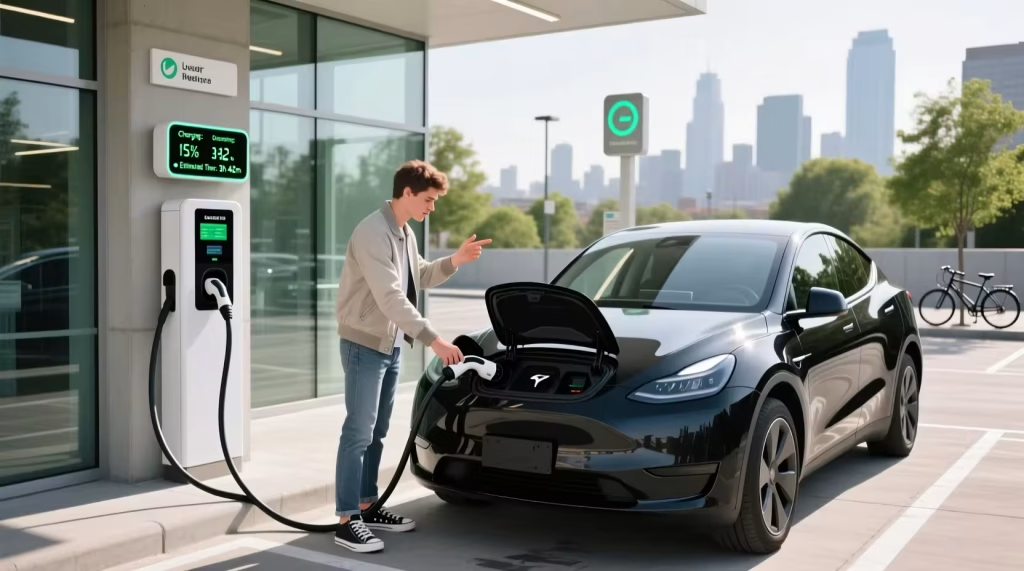
An EV requiring 75 kWh for that distance would cost:
Home charging ($0.15/kWh):
Approximately $11 to $12
Public fast charging ($0.50/kWh):
Approximately $38
A gasoline SUV averaging 30 mpg traveling the same distance would consume about 10 gallons.
At $3.80 per gallon, the fuel cost would be approximately $38.
This illustrates an important point. Home charging usually delivers substantial savings compared with gasoline.
Public fast charging may provide little or no fuel-cost advantage, depending on local pricing.
Battery Size Matters
Larger batteries naturally cost more to charge. Approximate home charging costs at $0.15 per kWh:
50 kWh: around $8
70 kWh: around $11
90 kWh: around $14
110 kWh: around $17
At public charging rates near $0.50 per kWh, those same batteries could cost the following:
50 kWh: about $25
70 kWh: about $35
90 kWh: about $45
110 kWh: about $55
Fortunately, drivers rarely charge from empty to full. Most daily charging sessions involve replacing only the energy used since the previous trip.
Weather Also Affects Charging Costs
Extreme temperatures increase energy consumption. Cold weather may require the following:
- Battery heating
- Cabin heating
- Longer charging sessions
Hot weather often increases air-conditioning use and battery cooling. These factors reduce driving efficiency, meaning more electricity is required to travel the same distance.
Winter operating costs may therefore rise even if electricity prices remain unchanged. The effect varies depending on climate, vehicle design, and driving habits.
Is Home Charging Always Possible?
Not every EV owner has access to home charging. Apartment residents and urban drivers often depend on public infrastructure. Fortunately, workplace charging continues to expand.
Many employers now provide:
- Free charging
- Reduced-cost charging
- Reserved EV parking
Some shopping centers, hotels, restaurants, and public parking facilities also offer complimentary charging, helping offset ownership costs.
However, drivers relying primarily on commercial charging should carefully evaluate local pricing before purchasing an EV.
Long-Term Cost Difference
Consider two drivers traveling 15,000 miles per year. One charges almost exclusively at home. The other relies primarily on public fast chargers.
After several years, the difference can amount to thousands of dollars in electricity costs alone. That explains why access to home charging remains one of the strongest financial advantages of EV ownership.
The vehicle itself may be identical. Charging habits ultimately determine much of the operating cost.
Charging an electric vehicle at home remains one of the least expensive ways to power any passenger vehicle. Depending on local electricity rates, a full recharge often costs between $8 and $15, allowing drivers to travel hundreds of miles for considerably less than the cost of gasoline.
Although installing a Level 2 home charger requires an upfront investment, most owners recover that expense over time through lower energy costs and the convenience of overnight charging.
Public DC fast chargers play a critical role in making long-distance travel possible, but they are significantly more expensive. Charging rates of $0.35 to $0.65 per kWh mean a full recharge can cost as much as filling a gasoline vehicle, especially for larger battery packs.
For drivers with access to home charging, the financial benefits of EV ownership remain compelling. For those who depend mainly on public fast chargers, the savings become much smaller, making charging habits just as important as the vehicle itself when calculating the true cost of electric driving.
Also Read: 10 Vehicles With the Largest Standard Touchscreens in 2026
