
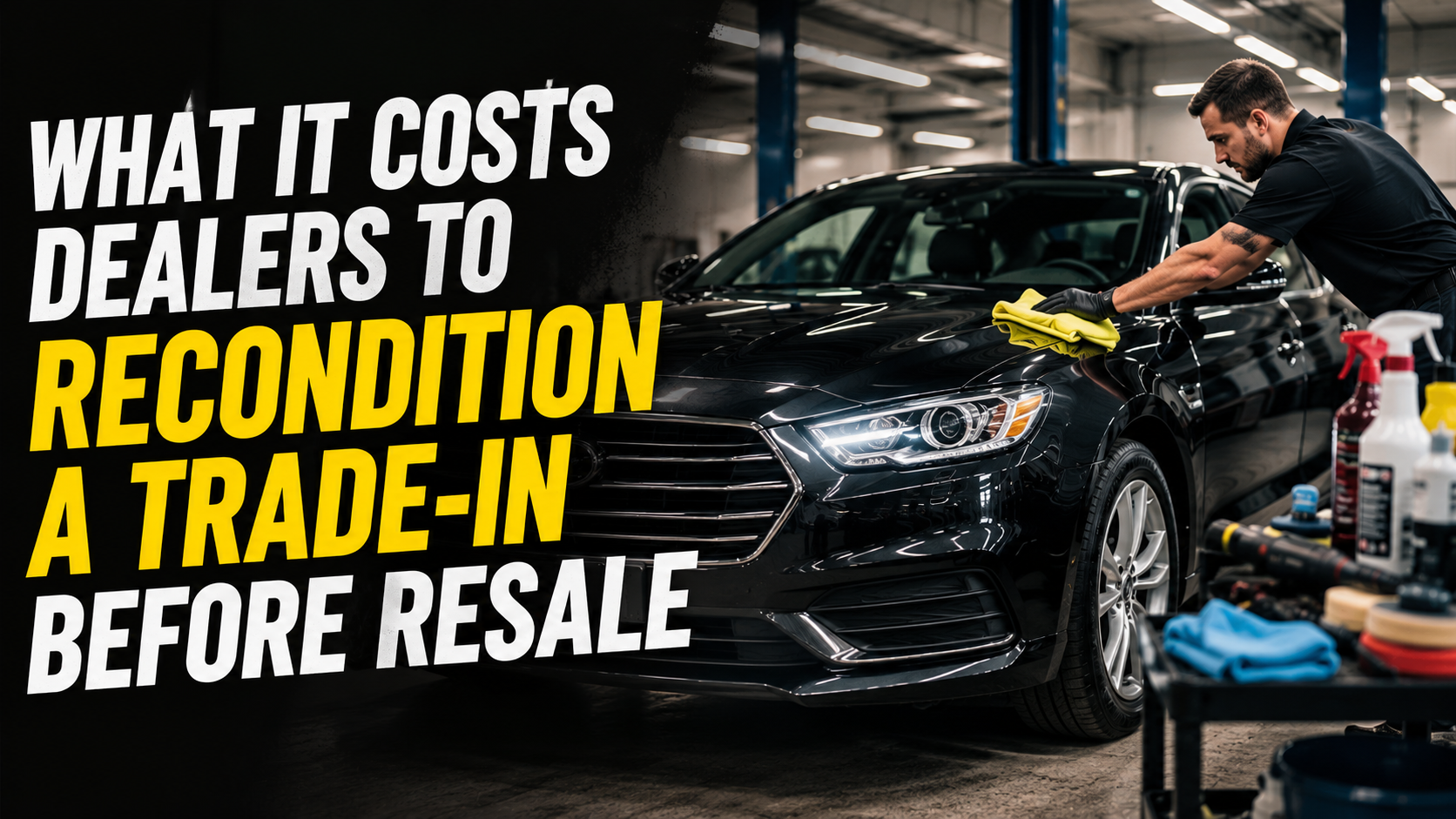
Walk through any dealership’s used-car inventory, and you’ll notice that most vehicles look remarkably clean and well maintained. The paint shines, the interiors appear fresh, the tires have plenty of tread, and the engine bay often looks almost new.
What many buyers never see is the amount of work that takes place before those vehicles ever reach the showroom floor.
When a dealership accepts a trade-in, it rarely places the vehicle up for sale immediately. Instead, it enters a reconditioning process designed to restore the vehicle to a condition that meets the dealer’s retail standards.
This process can involve everything from replacing worn brake pads and tires to repairing cosmetic damage, updating software, performing scheduled maintenance, and professionally detailing the interior and exterior.
For dealerships, reconditioning is one of the largest hidden expenses associated with selling used vehicles. It also explains why there is often a significant gap between a customer’s trade-in value and the vehicle’s eventual retail price.
While every trade-in is different, understanding what dealers spend preparing these vehicles provides valuable insight into how the used-car business really works.
Also Read: 10 Widest Production Cars Ever Sold in America
Every Trade-In Begins With a Comprehensive Inspection.
Before deciding whether a trade-in will be sold on the lot or sent to a wholesale auction, the dealership performs a detailed inspection.
Certified technicians evaluate the vehicle’s mechanical condition, safety systems, electronics, tires, brakes, suspension, engine, transmission, and bodywork. Many dealerships follow inspection procedures covering well over 100 individual items.
The inspection serves two purposes. First, it identifies repairs required to meet safety standards. Second, it helps the dealership estimate how much money must be invested before the vehicle can be offered for retail sale.
If repair costs become too high compared with the vehicle’s market value, the dealership may decide it is more profitable to sell the vehicle through an auction rather than spend money preparing it for its own lot.
Average Reconditioning Costs Can Be Surprisingly High
Industry estimates suggest dealerships typically spend between $800 and $2,500 reconditioning an average late-model trade-in. Vehicles with higher mileage, accident history, or visible wear often require significantly more investment, with repair bills sometimes reaching $4,000 to $5,000 or beyond.
Luxury vehicles frequently cost even more because replacement parts, specialized labor, and advanced electronic systems are considerably more expensive than those found in mainstream models.
These expenses are built into the dealership’s pricing strategy long before a customer ever sees the vehicle advertised online.
Mechanical Repairs Usually Consume the Largest Budget
The majority of reconditioning expenses involve mechanical work rather than cosmetic improvements.
Many trade-ins require routine maintenance before resale, including fresh engine oil, filters, coolant checks, transmission service, or brake fluid replacement. These services reassure buyers that the vehicle has been properly prepared while reducing the likelihood of immediate post-sale maintenance issues.
More substantial repairs are also common. Worn suspension components, weak batteries, leaking water pumps, failing wheel bearings, damaged exhaust components, and aging alternators frequently appear on vehicles that have accumulated significant mileage.
Dealerships understand that buyers expect a used vehicle to drive confidently during a test drive. Even relatively small mechanical issues can discourage a sale or result in expensive warranty claims later.
Tires and Brakes Often Need Immediate Attention
Among the most frequently replaced items are tires and brakes. Dealerships generally have minimum tread-depth standards before placing a vehicle on the lot.
Even if tires technically remain legal, replacing them may improve both appearance and customer confidence. Depending on vehicle size, installing four new tires can cost anywhere from $400 to well over $1,200.
Brake components receive similar attention. If brake pads approach the end of their service life or rotors show excessive wear, they are commonly replaced before the vehicle reaches the sales lot.
Although this adds several hundred dollars to the dealership’s investment, it helps prevent safety concerns while improving the driving experience during customer demonstrations.
Cosmetic Repairs Make the Biggest First Impression
Mechanical reliability is essential, but appearance often determines whether a customer even considers a vehicle.
Small dents, scratches, chipped paint, bumper scuffs, cracked trim, cloudy headlights, and curb-damaged wheels all reduce buyer confidence. Consequently, dealerships invest heavily in cosmetic improvements before listing a vehicle for sale.
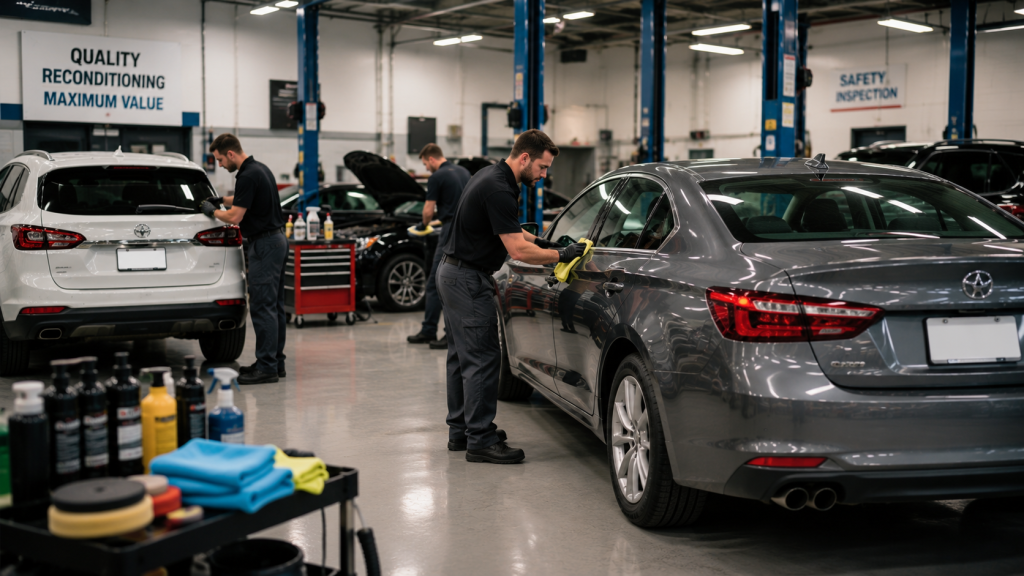
Many minor dents are repaired using paintless dent repair techniques, allowing technicians to restore body panels without repainting. Small paint imperfections are corrected through localized refinishing, while alloy wheels are frequently refurbished if curb damage is noticeable.
Although these repairs may seem relatively minor, they dramatically improve how buyers perceive the vehicle’s condition.
Professional Detailing Goes Far Beyond Washing the Car
Once repairs are complete, the vehicle typically undergoes a comprehensive detailing process.
Professional detailing involves much more than a simple wash and vacuum. Technicians shampoo carpets, deep-clean upholstery, condition leather surfaces, polish paint, remove contaminants, restore plastic trim, clean the engine compartment, and eliminate odors caused by smoke or pets.
This level of preparation can require several hours of labor, depending on the vehicle’s condition. The objective is to make the vehicle appear as close to new as possible without disguising its true condition.
For many buyers, the detailed appearance creates confidence that the vehicle has also been mechanically maintained with equal care.
Modern electronics have added new costs.
Reconditioning has become more expensive as vehicles have grown increasingly sophisticated.
Today’s used cars often contain advanced driver-assistance systems, large infotainment displays, multiple cameras, radar sensors, and numerous electronic control modules. Every one of these systems must function correctly before the vehicle can be sold confidently.
Technicians frequently install software updates, recalibrate safety systems, diagnose warning lights, and verify that electronic features operate properly. While these repairs may not be immediately visible to customers, they require specialized diagnostic equipment and trained technicians, increasing preparation costs.
Luxury vehicles are particularly expensive in this regard because their technology packages contain substantially more electronic components than entry-level models.
Certified Pre-Owned Vehicles Require Even More Investment
Manufacturer-certified pre-owned programs demand an even higher standard. To qualify, vehicles must satisfy strict inspection requirements established by the manufacturer. These programs often specify minimum brake thickness, tire tread depth, maintenance history, mileage limits, and cosmetic condition.
After passing inspection, certified vehicles usually receive additional warranty coverage, roadside assistance, and other customer benefits.
Preparing a certified vehicle typically costs dealerships considerably more than standard reconditioning. However, certified vehicles generally command higher selling prices and attract buyers seeking greater peace of mind.
Administrative Expenses Continue After Repairs
Reconditioning involves much more than replacing parts. Dealerships also invest in photographing the vehicle, creating online listings, processing title paperwork, performing emissions or safety inspections where required, fueling the vehicle, and transporting it between service departments and sales facilities.
Although each expense may seem relatively small, together they add hundreds of dollars to the dealership’s total investment.
These behind-the-scenes costs are another reason the final asking price often exceeds what many customers expect based solely on the trade-in value.
Why Dealers Don’t Sell Every Trade-In
Not every vehicle justifies the investment required for retail resale. If inspection reveals severe mechanical problems, extensive collision damage, excessive mileage, or unusually high repair costs, the dealership may choose not to recondition the vehicle at all.
Instead, it will often be sold through a wholesale auction, where independent dealers or exporters may purchase it. This approach allows the dealership to avoid investing thousands of dollars in a vehicle with limited retail potential.
As a result, the vehicles displayed on dealership lots typically represent only the best candidates from the trade-ins they receive.
Is Reconditioning Worth the Cost?
From the dealership’s perspective, the answer is usually yes. A properly reconditioned vehicle sells faster, generates stronger customer confidence, and reduces the likelihood of expensive warranty claims or customer complaints after delivery.
Investing a few thousand dollars before resale often produces a higher selling price while protecting the dealership’s reputation. Buyers are generally willing to pay more for a vehicle that has been thoroughly inspected, serviced, and professionally prepared than one that shows obvious signs of neglect.
For customers, this process provides benefits that extend well beyond appearance. A vehicle that has received fresh maintenance, quality repairs, and a complete inspection is often a safer and more reliable purchase than one sold without any preparation.
Reconditioning is one of the highest hidden costs in the used-car business, and it involves far more than simply cleaning a vehicle before placing it on the lot.
Depending on the trade-in’s condition, dealerships commonly invest $800 to $2,500 in repairs, maintenance, detailing, inspections, and cosmetic improvements, while older or more heavily used vehicles can require $5,000 or more before they are considered ready for retail sale.
These expenses help explain why a vehicle’s retail price is often much higher than its trade-in value. Dealers assume the cost and risk of preparing the vehicle to meet safety standards and customer expectations while standing behind it after the sale.
For buyers, understanding this process offers a clearer picture of what goes into a professionally prepared used car and why paying slightly more at a reputable dealership can sometimes provide better long-term value than purchasing a vehicle that has received little or no reconditioning.
Also Read: 10 Automakers Ranked by How Much Driver Data They Collect
