
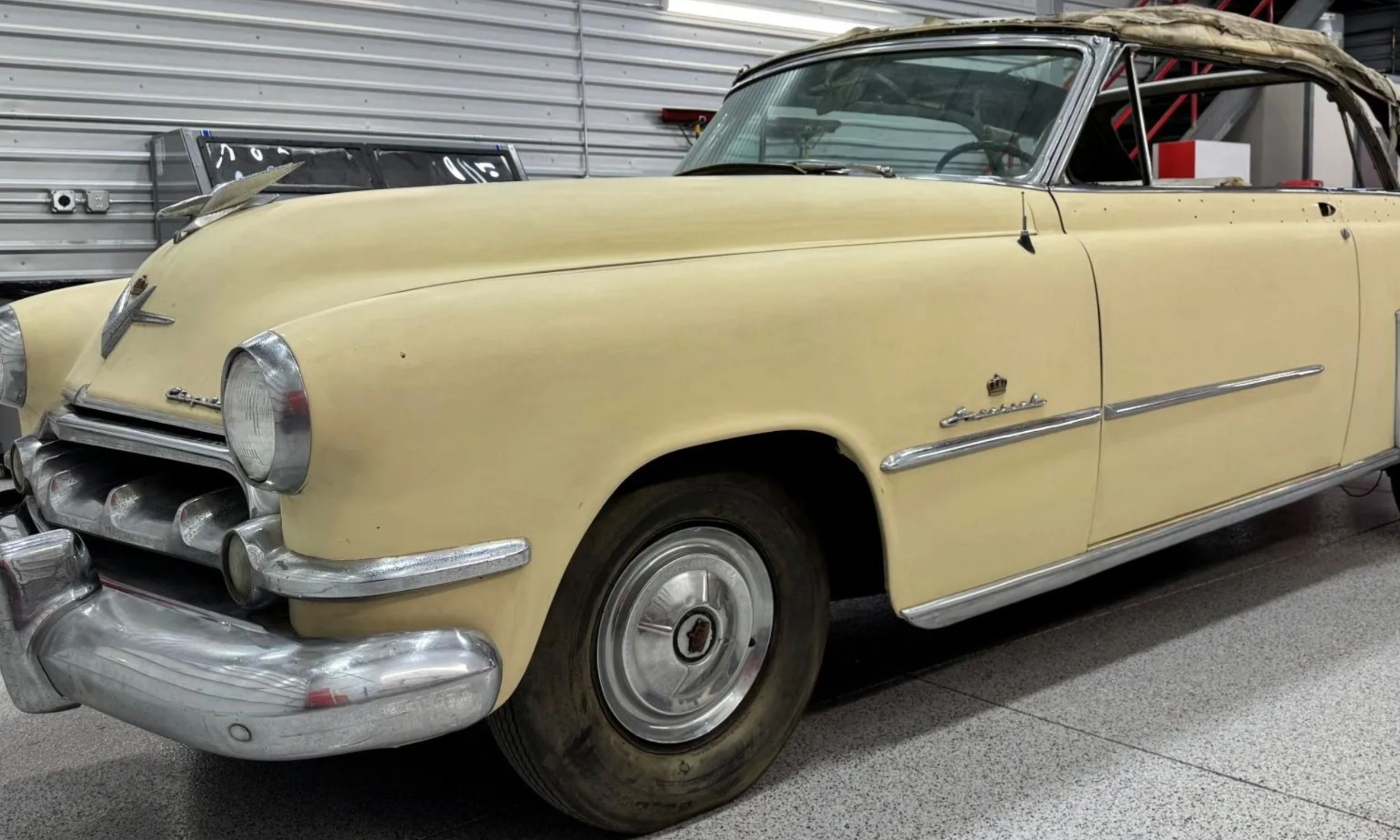
American roads were built wide, yet a handful of production vehicles have spent decades testing exactly how wide wide actually is. From post-war Detroit land yachts stretching nearly seven feet across to electric supertruck giants that require amber clearance lights by law, the widest vehicles ever sold to American consumers share one thing in common: their engineers pushed the physical limits of what a production vehicle could measure before regulators, garage door manufacturers, and parking lot designers collectively said enough.
Federal law draws a clear line at 80 inches for standard passenger car classification. Cross that threshold, and you are legally operating a commercial-sized vehicle on public roads, triggering requirements for amber identification lights mounted overhead to warn surrounding traffic that something unusually large is occupying the lane.
Several vehicles on this list cross that threshold without apology, wearing their amber lights as badges of honor rather than compliance burdens. Others came so close to that 80-inch ceiling that engineers clearly measured the legal limit before finalizing the body panel drawings. Here are the ten widest production vehicles ever sold in America, ranked by factory body width excluding mirrors.
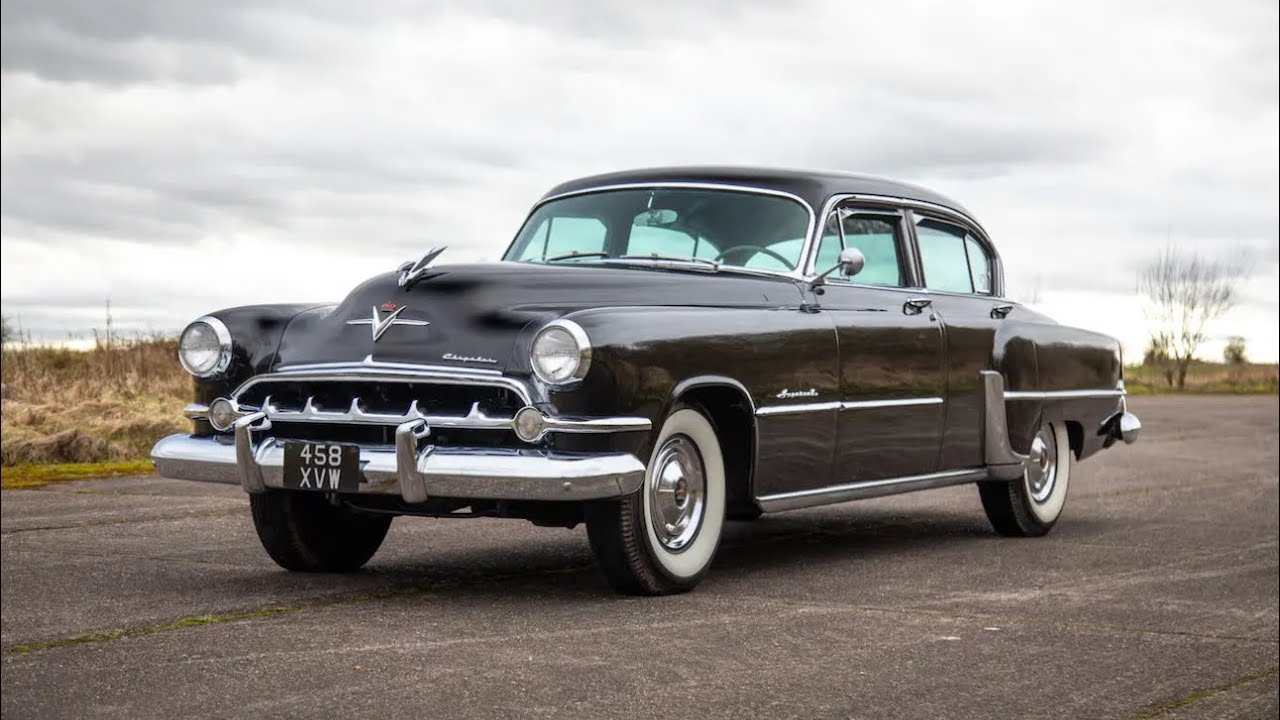
1. 1954 Chrysler Crown Imperial 8-Passenger Limousine
Factory Width: 82.9 inches
- Engine: 5.4L Naturally Aspirated FirePower HEMI V8
- Horsepower: 235 hp
- Torque: 330 lb-ft
- Size: 244.3 in Long x 82.9 in Wide
Chrysler holds the all-time production car width record with this specific configuration, a distinction that has stood for over seventy years and remains unchallenged across the entire history of American passenger car manufacturing. An 82.9-inch body width on a vehicle classified as a passenger car represented a genuinely extraordinary physical commitment to interior space at a time when luxury transportation was measured primarily by how much room rear passengers enjoyed during formal travel.
Engineering this width required Chrysler to push the rear axle tracking outward beyond what any competing manufacturer was doing during this production era, extending the quarter panels to match and creating rear-seat interior dimensions that genuinely challenged the conventional definition of what an automobile could measure. A unique wrap-around chrome rear bumper compounded the external width impression further, giving the limousine a visual presence at its rear that matched its physical dominance in any parking situation.
The 5.4L FirePower HEMI V8, producing 235 horsepower, represented serious performance technology for 1954, yet the powertrain was almost secondary to the vehicle’s primary purpose, which was transporting multiple passengers in genuine luxury across formal occasions where width and interior volume mattered considerably more than acceleration or handling responsiveness.
This specific eight-passenger limousine configuration was built for a client base that valued interior rear compartment space above nearly every other consideration, and Chrysler delivered exactly that by simply making the exterior body as wide as manufacturing and pre-regulatory automotive production allowed.
Safety regulations that would eventually cap passenger car widths arrived later, and by that point, this limousine had already secured its place in American automotive history as the widest production passenger car ever sold, a record that no subsequent manufacturer has come close to challenging across more than seven subsequent decades of American vehicle production.
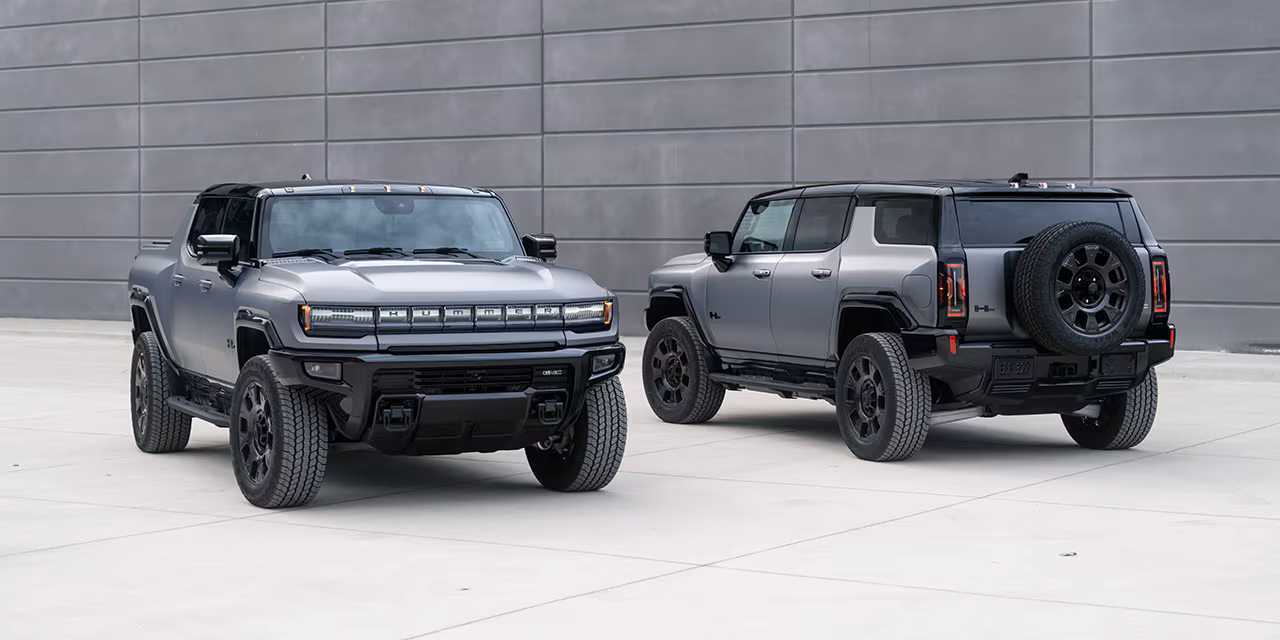
2. GMC Hummer EV SUV and Pickup
Factory Width: 86.7 inches
- Engine: Triple Electric Motor AWD Setup
- Horsepower: Up to 1,000 hp
- Torque: 11,500 lb-ft (wheel torque)
- Size: 206.7 in Long x 86.7 in Wide
Among vehicles currently in production and available for purchase today, the GMC Hummer EV holds the title of the widest modern vehicle sold through American dealerships, and its 86.7-inch body measurement places it well beyond the 80-inch legal threshold that distinguishes passenger vehicles from commercial-width transportation. That legal classification carries visible consequences that owners encounter from the very first night drive they take in this vehicle.
Three amber clearance light bars embedded into the front roofline are not decorative additions or styling choices made by GM’s design team. Federal law requires these lights on any vehicle exceeding 80 inches in body width, since oncoming drivers at night need a visual warning that an unusually wide vehicle is occupying the upcoming lane before their headlights can reveal the full physical presence of the approaching machine.
Triple electric motors producing a combined 1,000 horsepower alongside wheel torque figures measuring 11,500 lb-ft require an immense mechanical platform to manage properly, and that platform demands a wide stance to keep the forces involved stable under acceleration.
The physics of putting 1,000 horsepower through four driven wheels at a vehicle this weight requires wide track dimensions that inherently push body panel measurements outward beyond what standard passenger car regulations accommodate.
Owners who purchase this vehicle in suburban environments frequently report that standard parking spaces require careful consideration, since the body width exceeds what most parking infrastructure was designed around, and single-car garages built to typical residential specifications present a genuine physical challenge for daily storage without modification.
Also Read: 10 Cars That Are Cheapest to Insure for Drivers Under 25
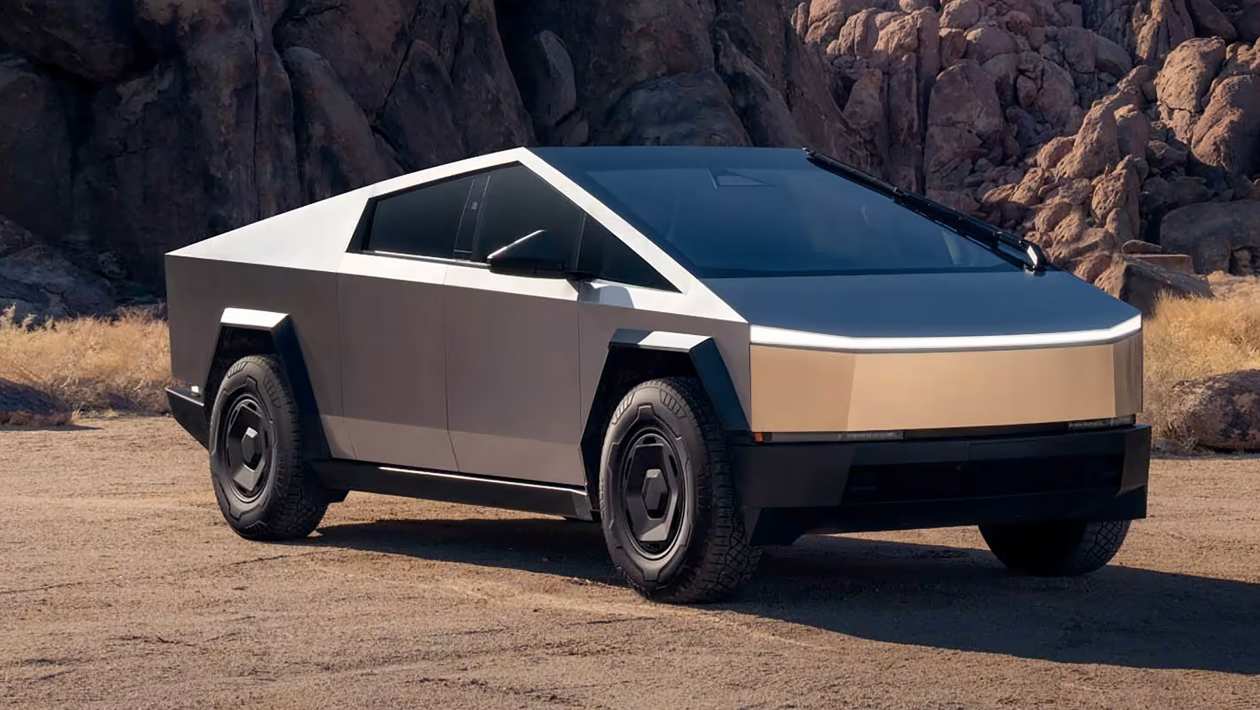
3. Tesla Cybertruck
Factory Width: 86.6 inches (mirrors folded)
- Engine: Tri-Motor AWD Cyberbeast Setup (or Dual-Motor)
- Horsepower: 600 hp to 845 hp
- Torque: 7,435 lb-ft to 10,296 lb-ft (wheel torque)
- Size: 223.7 in Long x 86.6 in Wide
Tesla designed the Cybertruck by balancing several engineering goals at the same time. Its 86.6-inch body width came from those decisions and the use of cold-rolled stainless steel for the exterior. Unlike regular body panels, this material cannot be shaped or trimmed easily after production. Tesla also wanted enough cabin space for three adults across the front seat, while the stainless steel exoskeleton serves as the vehicle’s main structural support instead of relying on a traditional frame.
Another factor behind the truck’s width is its flat exterior design. Stainless steel panels cannot be pressed into deep curves using ordinary manufacturing methods, so Tesla adopted straight surfaces and sharp edges. Since the body does not curve inward near the sides like many pickups, the exterior width closely matches the distance across the wheels.
This design also gives the truck its bold appearance while allowing the structural panels to perform their intended function without unnecessary styling changes. Performance also benefits from this wider design. A broad track gives the Cybertruck better stability during fast cornering and hard acceleration.
Depending on the version, the tri-motor system produces between 600 and 845 horsepower, making that extra width valuable for keeping the truck balanced under demanding driving conditions. The wider footprint also helps distribute weight more evenly, improving driver confidence when carrying heavy loads or towing.
Many owners quickly realize that folding the side mirrors is necessary before entering a standard residential garage. Although the body measures 86.6 inches wide, the mirrors extend even farther, requiring extra clearance in tight spaces. Drivers also need to pay closer attention when parking in narrow spaces because the truck occupies more room than many conventional pickups.
4. Hummer H1 Alpha Open Top and Wagon
Factory Width: 86.5 inches
- Engine: 6.6L Duramax Turbo-Diesel V8
- Horsepower: 300 hp
- Torque: 520 lb-ft
- Size: 184.5 in Long x 86.5 in Wide
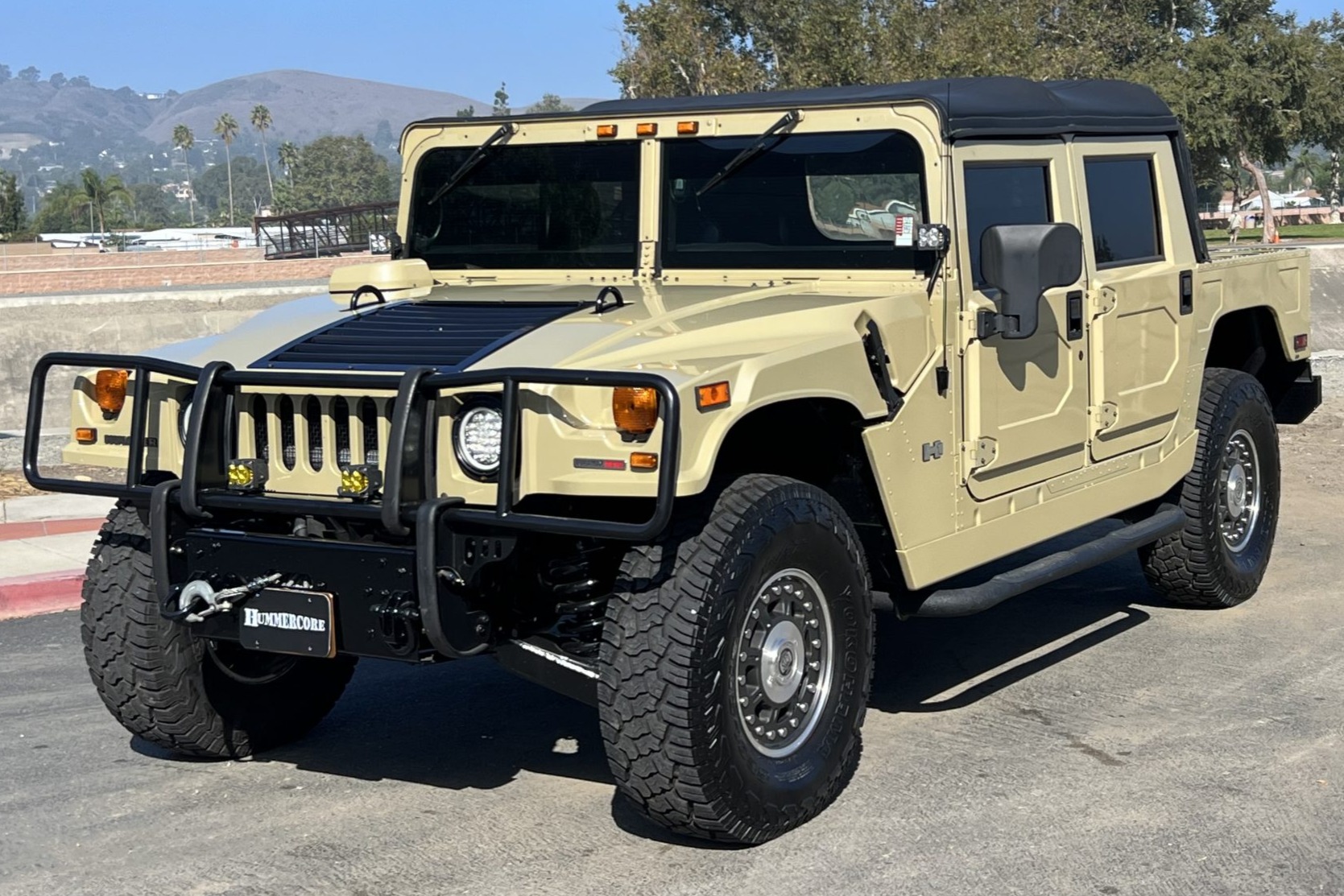
The story behind the Hummer H1 begins with its military roots rather than civilian transportation. It was first created to satisfy the United States Army’s demand for a high-mobility vehicle capable of traveling through places where ordinary military trucks could not operate. Because of that purpose, the M998 HMMWV received a wide track based on military requirements such as trench crossings and rough ground, without considering public roads, parking spaces, or other civilian driving conditions.
Later, when AM General introduced the H1 for civilian buyers, the company kept the same wide platform. Reducing its width would have required major changes to the vehicle’s mechanical design instead of making simple cosmetic updates. As a result, the H1 entered the civilian market with a body width of 86.5 inches, making it one of the widest production vehicles sold through regular dealerships while staying true to its military foundation.
Inside the cabin, the large center tunnel immediately stands out. This raised section exists because the heavy-duty axle housings and portal hub assemblies occupy a great deal of space beneath the vehicle. Instead of passing underneath the cabin floor, those components forced the interior layout to be built around them. The driver and passenger sit much farther apart than they would in a regular SUV because of this mechanical arrangement.
Powering the H1 Alpha is a 6.6-liter Duramax turbo-diesel engine producing 300 horsepower and 520 lb-ft of torque. Even with this improved engine, the vehicle remained built for military duties instead of everyday city driving and tight parking spaces.

5. Lamborghini Aventador LP700-4 and SVJ
Factory Width: 79.9 inches (standard panels) / 82.7 inches (rear track flares)
- Engine: 6.5L Naturally Aspirated V12
- Horsepower: 690 hp to 759 hp
- Torque: 509 lb-ft to 531 lb-ft
- Size: 188.1 in Long x 82.7 in Wide
Aerodynamic physics and thermal management requirements drove the Aventador’s width specification rather than any desire to maximize passenger comfort or cargo volume, and understanding those engineering motivations explains why this supercar measures considerably wider at the rear than at the front in a way that standard passenger vehicles never replicate.
Cooling a mid-mounted naturally aspirated 6.5L V12 producing nearly 760 horsepower in its highest state of tune requires substantial airflow moving through the rear cooling intakes, which in turn demands physical width at the rear of the vehicle to accommodate that intake volume.
Wide rear quarter panel cooling intakes expanded to accommodate thermal management requirements pulled the rear body measurement beyond what the narrower front panels suggested, creating the distinctive widening profile that gives the Aventador its planted, aggressive rear stance. The 82.7-inch rear measurement, including track flares, places the SVJ configuration comfortably above the 80-inch legal threshold in width despite the supercar’s clearly performance-focused rather than utility-focused purpose.
High-speed stability at the velocities this V12 enables benefits enormously from the wide rear track that those expanded panels accommodate, since keeping 759 horsepower planted under acceleration and maintaining aerodynamic balance at triple-digit speeds requires a physical footprint broad enough to resist the lateral instability that narrower supercars encounter at comparable speeds.
The rear wing and diffuser elements that generate downforce to press tires into the pavement work more effectively when operating across a wider platform that distributes those aerodynamic loads evenly. Owners who drive the Aventador daily, a small but real subset of buyers who use these vehicles as actual transportation rather than garage art, consistently report that the vehicle’s width makes urban driving a calculated exercise in spatial awareness that standard road cars never require.
6. Ford F-150 Raptor and Raptor R
Factory Width: 86.6 inches
- Engine: 5.2L Supercharged V8 (or 3.5L Twin-Turbo V6)
- Horsepower: 450 hp to 720 hp
- Torque: 510 lb-ft to 640 lb-ft
- Size: 232.6 in Long x 86.6 in Wide
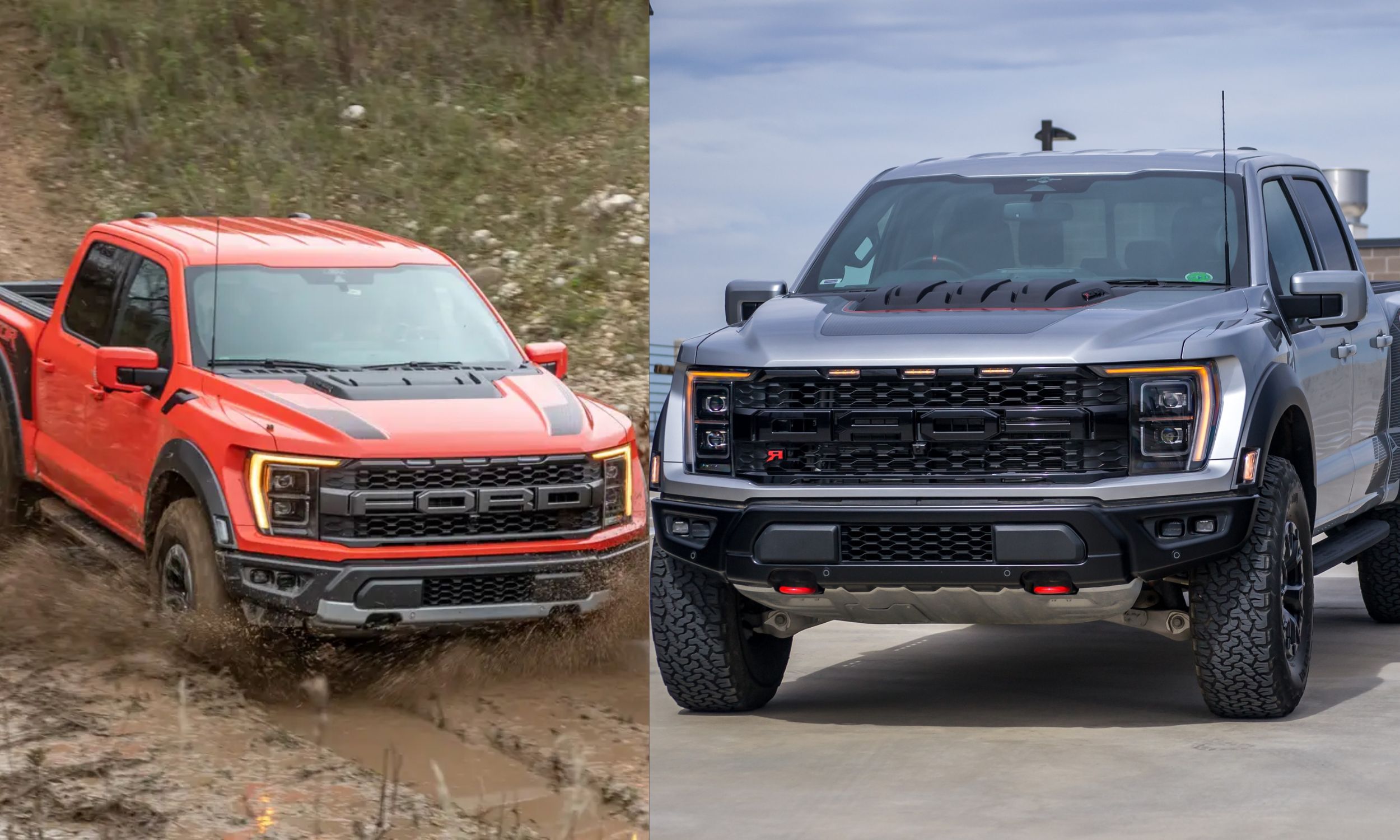
When Ford developed the Raptor, the company intentionally widened its track by six inches compared to the regular F-150. Although both trucks share the same cab and basic structure, the wider setup was necessary to support suspension travel inspired by desert racing.
The standard F-150 chassis could not provide enough room for that level of wheel movement without major engineering changes. Long-travel Fox bypass shock absorbers need extra clearance to move freely throughout their full range, especially when the suspension is fully compressed. Expanding the track created the space required for those components to work properly without striking the body.
Another factor behind the Raptor’s wide stance is the availability of massive 37-inch tires on the Raptor R. Tires of that size require broad fender flares to meet federal regulations that demand proper tire coverage. Without those wider body panels, parts of the tires would extend beyond the vehicle’s exterior.
Because of this design, the truck measures 86.6 inches wide, placing it above the width limit that requires amber clearance lights, just like the Hummer EV and other extra-wide vehicles. Power also played a major role in this design. The Raptor R’s supercharged 5.2-liter V8 produces 720 horsepower, raising performance well beyond the already capable twin-turbo V6 version.
That extra power works best with a broad suspension setup, giving the truck better stability during fast driving across rough desert trails. American highway lanes usually measure between 10 and 12 feet wide. At 86.6 inches, the Raptor occupies much of a lane even before mirror width is included.
7. Ram 1500 TRX
Factory Width: 88.0 inches
- Engine: 6.2L Supercharged HEMI V8
- Horsepower: 702 hp
- Torque: 650 lb-ft
- Size: 232.9 in Long x 88.0 in Wide
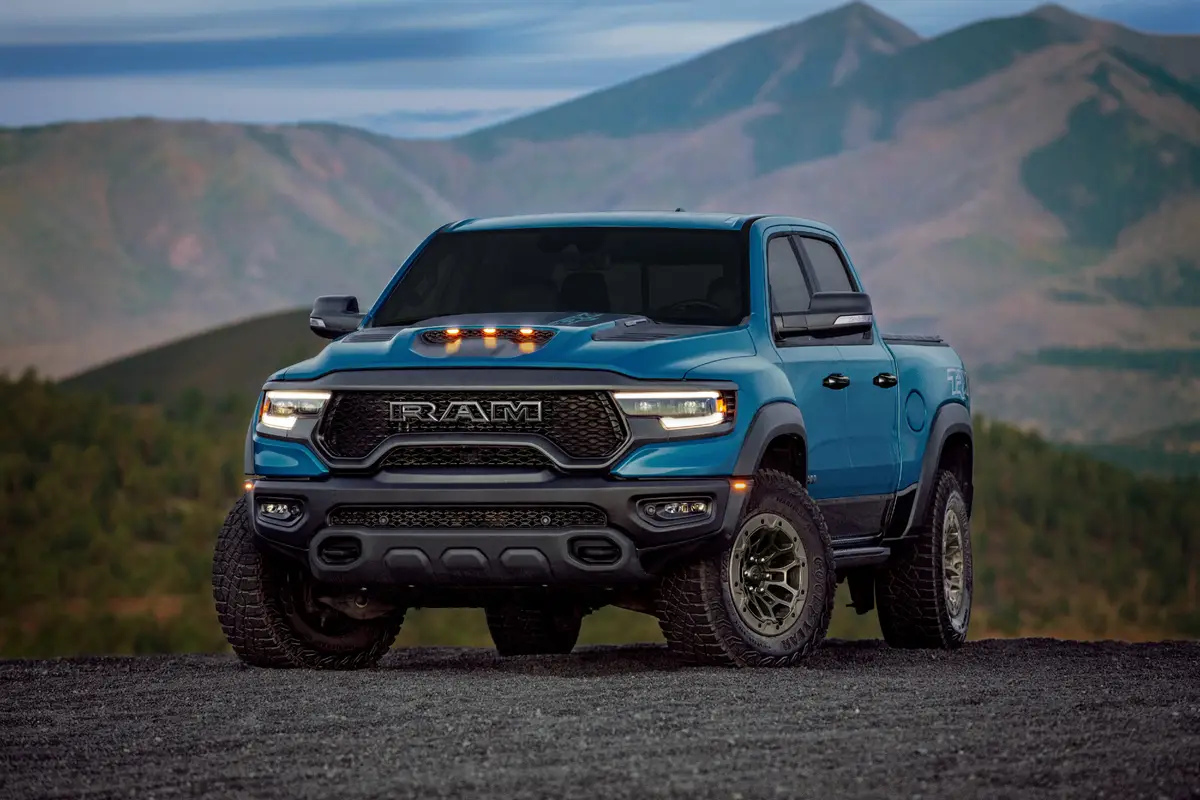
Among all half-ton production pickup trucks ever sold through American dealerships, the Ram 1500 TRX holds the distinction of being the widest example in the segment’s entire production history, and its 88.0-inch measurement places it beyond every other vehicle on this list that sits in regular production across standard automotive retail channels.
That measurement did not happen accidentally or as a byproduct of packaging decisions made primarily for other purposes. Ram engineers specifically widened the TRX’s track and then added massive composite fender flares to cover that extended track, creating a deliberate visual and physical statement about what the brand intended this truck to represent against Raptor competition.
A 6.2L supercharged HEMI V8 producing 702 horsepower and 650 lb-ft of torque requires a stable platform to manage its power delivery during both high-speed desert travel and standard road driving, and the wide track that those 88.0 inches represent contributes directly to that stability by lowering the effective center of gravity relative to the vehicle’s stance width.
Physics rewards a wider wheelbase with greater resistance to lateral roll forces, which matters considerably when 702 horsepower motivates a vehicle weighing well over 6,000 pounds across changing road surfaces. Composite fender flares, rather than stamped steel additions, keep the added width at a manageable weight penalty while providing the body coverage that federal regulations require over the extended track’s tire footprint.
These flares give the TRX the visually distinctive muscular stance that immediately distinguishes it from the standard Ram 1500, sharing its basic cab structure, signaling performance intent through physical proportions rather than simply through badging and color choices.
8. 1960 Ford Thunderbird and Full-Size Galaxie
Factory Width: 81.3 inches
- Engine: 5.8L Naturally Aspirated Interceptor V8
- Horsepower: 300 hp
- Torque: 427 lb-ft
- Size: 213.7 in Long x 81.3 in Wide
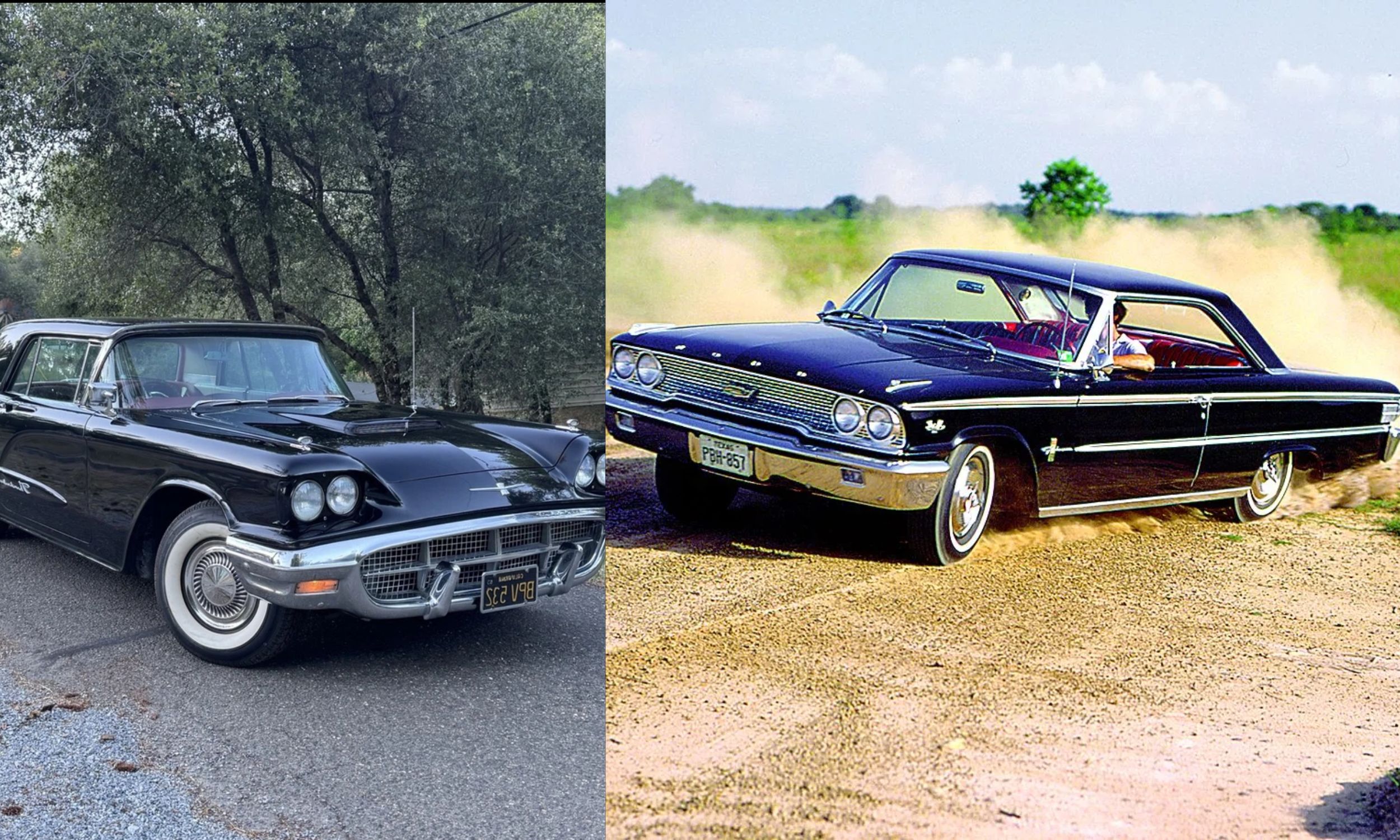
Ford crossed the 80-inch passenger car legal threshold with the 1960 Thunderbird and Galaxie configuration, and the consequences of that boundary violation were not merely theoretical or regulatory paperwork concerns but actual practical problems that affected the brand’s ability to sell these vehicles through normal channels in certain markets.
Several individual states maintained passenger car width regulations that did not align with federal guidelines, and Ford’s 81.3-inch measurement exceeded those state-level limits in ways that required genuine legal accommodation rather than simply acknowledging a gray area.
Forced to negotiate special temporary permits so dealerships in affected states could legally sell these vehicles on their lots, Ford experienced firsthand what happens when an automaker pursues maximum interior width and visual presence without fully reconciling those goals against the full patchwork of state-level regulations that governed passenger car dimensions during this production era.
That permit negotiation process represented an unusual chapter in American automotive retail history where a mainstream manufacturer needed government permission to sell its own product in certain markets. A 5.8L Interceptor V8 producing 300 horsepower and 427 lb-ft of torque powered these wide-body configurations, providing performance numbers appropriate for a flagship automotive statement during a year when Ford was competing aggressively across every segment of the American market.
The Interceptor designation carried specific performance credibility during this era that connected the vehicle to law enforcement and high-performance applications rather than positioning it as simply a large family vehicle.
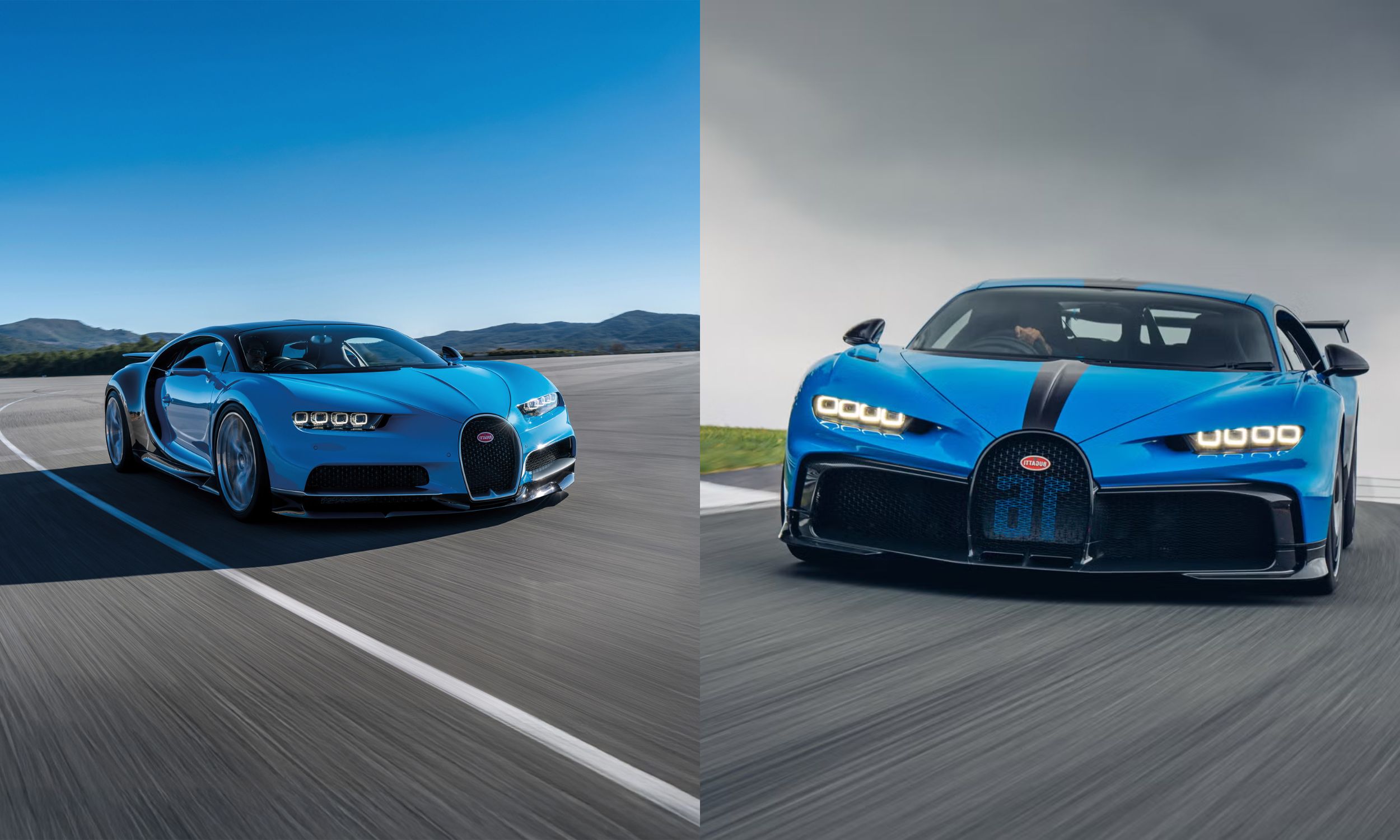
9. Bugatti Chiron Standard and Pur Sport
Factory Width: 80.2 inches
- Engine: 8.0L Quad-Turbocharged W16
- Horsepower: 1,479 hp to 1,578 hp
- Torque: 1,180 lb-ft
- Size: 178.9 in Long x 80.2 in Wide
Measuring 80.2 inches across, the Bugatti Chiron goes just beyond the 80-inch width limit used to classify passenger vehicles. That tiny 0.2-inch difference was not added for appearance. It came from the engineering demands of fitting an 8.0-liter quad-turbocharged W16 engine into a mid-engine layout while still leaving enough cabin space for occupants. Every part had to fit without sacrificing the car’s intended proportions or driving ability.
Unlike conventional V8 and V12 engines, the W16 uses 16 cylinders arranged in a W-shaped layout. This design allows a much larger engine to fit into the middle of the car without making it excessively long. Even with that space-saving arrangement, the engine still requires extra room across its width. As a result, the engine bay extends farther outward, and that added space is reflected in the Chiron’s body dimensions.
Another reason for the wide body is the cooling system required by the four turbochargers. The intercoolers, intake pipes, and supporting hardware take up valuable space around the engine. Bugatti addressed this by using lightweight carbon-fiber body panels that provide the required width without adding unnecessary weight. This approach helps preserve the balance and performance expected from a 1,480-horsepower machine.
The Chiron also relies on exceptionally wide Michelin Pilot Sport tires to put its immense power onto the road effectively. Those tires require wider wheels and a broader track, which also increases the car’s total width. That combination pushed the Chiron just past the passenger vehicle classification limit.
Also Read: 7 Cars Where the Cheapest Trim Costs the Least to Own Over Five Years
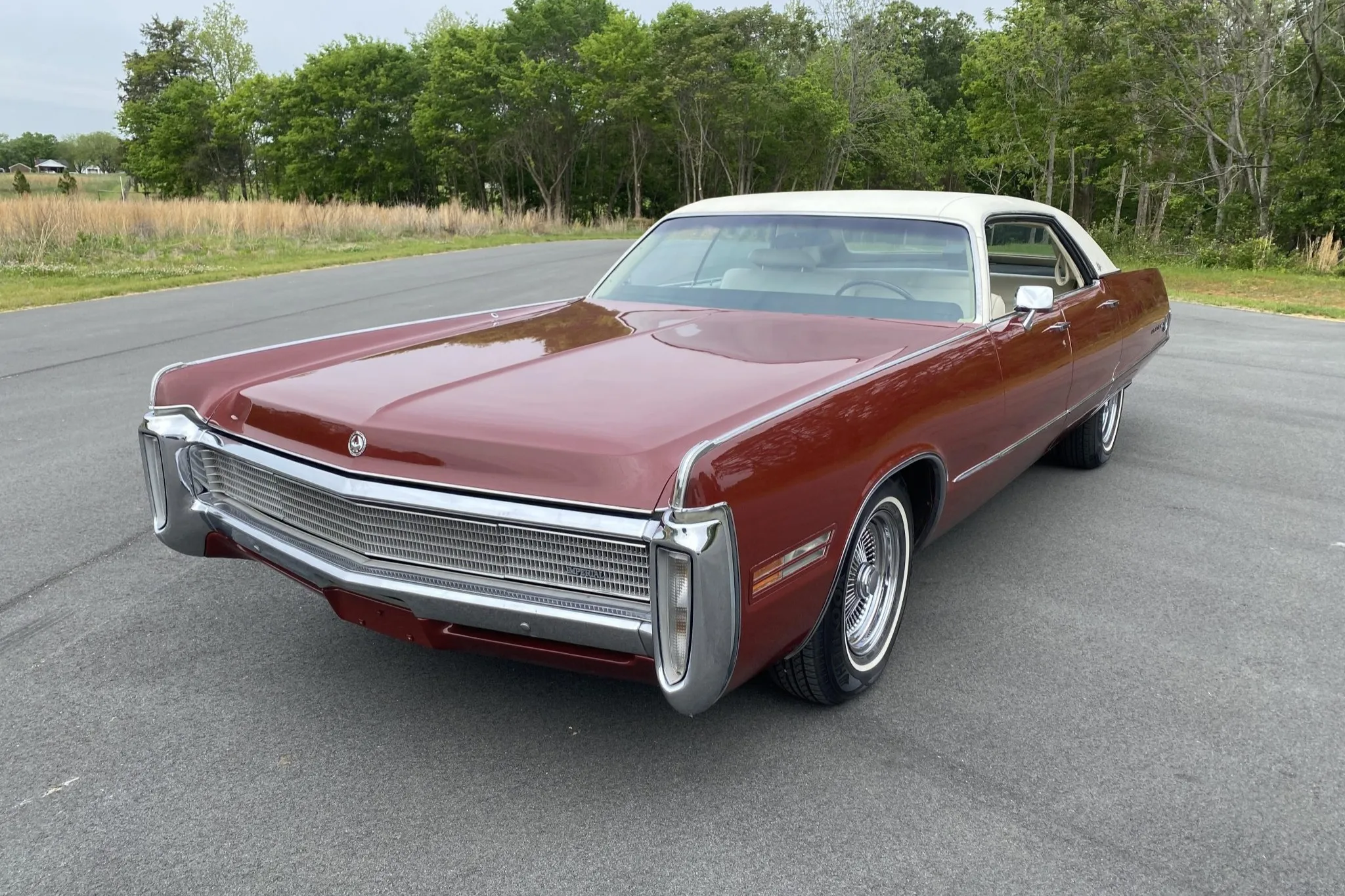
10. 1973 Chrysler Imperial LeBaron
Factory Width: 79.6 inches
- Engine: 7.2L Naturally Aspirated 440 V8
- Horsepower: 215 hp (Net rating)
- Torque: 345 lb-ft
- Size: 235.3 in Long x 79.6 in Wide
Back in 1973, Chrysler carefully planned the Imperial LeBaron’s body width to remain just below the 80-inch limit used to classify commercial vehicles. At 79.6 inches wide, the car missed that mark by only 0.4 inches. That small difference was almost certainly intentional because crossing the limit would have required amber clearance lights and a different vehicle classification. At the same time, Chrysler wanted to provide as much cabin space as possible for passengers.
During that period, large bench seats were a defining feature of luxury American sedans. By keeping the body just under the legal width limit, Chrysler created extra room for wide front and rear seats without changing the vehicle’s classification. Buyers enjoyed a spacious cabin that matched expectations for a premium full-size sedan.
Power came from a naturally aspirated 7.2-liter, 440-cubic-inch V8 engine producing 215 net horsepower. Like many American engines of the early 1970s, it delivered less power than earlier versions because manufacturers had to meet stricter federal emissions rules. Those changes affected nearly every large-displacement engine produced at the time.
Stretching 235.3 inches in length, the Imperial ranked among the longest sedans built in Detroit. Its generous dimensions delivered exceptional passenger space while staying just inside the legal limits for a standard passenger vehicle classification.
