
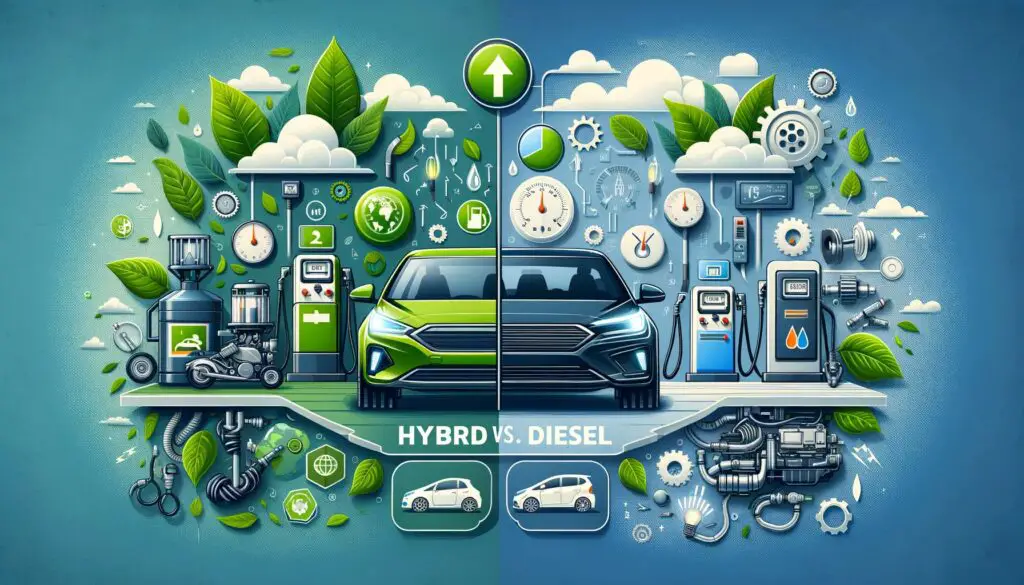
For decades, hybrid and diesel vehicles have been two of the most popular alternatives for drivers looking to reduce fuel costs without switching to a fully electric vehicle.
Diesel engines earned a reputation for exceptional highway fuel economy, long engine life, and strong towing capability, while hybrids became known for their ability to dramatically reduce fuel consumption in city driving.
Both technologies promised lower operating costs than conventional gasoline vehicles, but they achieve those savings in very different ways.
The question many buyers still ask is whether a hybrid or a diesel is actually cheaper to own over the long term. The answer isn’t as straightforward as comparing miles per gallon.
Five-year ownership costs include depreciation, maintenance, repairs, insurance, fuel prices, and resale value. A vehicle that saves hundreds of dollars annually at the pump may also require more expensive maintenance, while another with slightly higher fuel costs could offset that expense with fewer repairs and stronger reliability.
In today’s U.S. market, the comparison has also changed significantly. Diesel passenger cars have become far less common following tighter emissions regulations and shifting consumer demand, while hybrids have expanded into nearly every vehicle segment, from compact sedans to midsize SUVs and pickup trucks.
According to the U.S. Department of Energy’s FuelEconomy.gov, many modern hybrids now achieve fuel economy that rivals or exceeds what diesel-powered passenger vehicles once offered, particularly in mixed city and highway driving.
Meanwhile, diesel fuel has often remained more expensive than regular gasoline in much of the United States.
When all ownership costs are considered, hybrids are generally the less expensive option for most American drivers. Here’s why.
Also Read: What It Really Costs to Own a Ford Explorer for Five Years
Fuel Costs Favor Hybrids for Most Drivers
Fuel savings are usually the first reason buyers consider either technology. Diesel engines extract more energy from each gallon of fuel than gasoline engines, allowing them to achieve excellent highway efficiency. However, diesel fuel itself generally costs more than regular unleaded gasoline in the United States.
According to the Union of Concerned Scientists, although diesel vehicles may consume roughly 20 percent less fuel than comparable gasoline models, the higher price of diesel fuel means the actual savings at the pump are often much smaller than drivers expect.
By comparison, hybrids typically run on regular gasoline, allowing their improved fuel economy to translate directly into lower fuel costs.
Over five years and 15,000 miles per year, the organization estimated that hybrid owners could save approximately $3,000 to $4,000 in fuel compared with similar gasoline vehicles, while diesel owners might save only $800 to $1,800 under similar conditions.
For commuters who spend much of their time in city traffic, hybrids gain an even larger advantage because regenerative braking captures energy that would otherwise be lost during braking.
Maintenance Costs Are Different
Routine maintenance differs considerably between the two powertrains. Hybrid vehicles require the same basic services as gasoline-powered cars, including:
- Engine oil changes
- Tire rotations
- Brake inspections
- Air filter replacements
- Coolant service
Because regenerative braking reduces wear on the conventional braking system, many hybrid owners also replace brake pads less frequently than drivers of conventional vehicles. Diesel vehicles have additional maintenance requirements.
Many modern diesel passenger vehicles require the following:
- Diesel Exhaust Fluid (DEF) refills
- Fuel filter replacements at shorter intervals
- High-pressure fuel system servicing
- Turbocharger maintenance
- Emissions system inspections
Modern diesel emissions equipment, including diesel particulate filters (DPFs) and selective catalytic reduction (SCR) systems, has significantly improved emissions performance but also added complexity. Repairs involving these systems can become expensive once the factory warranty expires.
For drivers planning to keep a vehicle well beyond five years, these additional maintenance requirements can narrow or eliminate the fuel savings that diesel engines provide.
Repairs Can Shift the Long-Term Equation
Repair costs become increasingly important as vehicles age. Hybrid technology was once viewed as expensive to repair because of battery replacement concerns. However, experience over the past two decades has shown that hybrid battery packs are often much more durable than early buyers feared.
Many hybrid batteries remain in service for well over 150,000 miles, and failures during the first several years of ownership are relatively uncommon. Manufacturers also back hybrid battery systems with lengthy warranties that, in many states, extend well beyond the standard powertrain warranty.
Diesel engines are known for their durability, but the emissions equipment required on modern diesel vehicles has introduced additional repair risks.
Potential high-cost repairs may involve:
- Diesel particulate filters
- Exhaust gas recirculation systems
- Turbochargers
- High-pressure fuel pumps
- Fuel injectors
- SCR components
While these repairs do not affect every owner, they can substantially increase ownership costs when they occur outside warranty coverage.
Reliability Depends on the Model
Neither hybrids nor diesels can be judged by technology alone. Vehicle design, manufacturer quality, and maintenance history remain the biggest factors influencing long-term reliability.
Several hybrid models, particularly those produced by Japanese manufacturers, have established exceptionally strong reliability records over many years of production.
Likewise, certain diesel trucks have demonstrated remarkable longevity when maintained properly, especially in commercial applications involving consistent highway driving.
However, diesel passenger cars sold in the United States often incorporate emissions systems that are sensitive to short-trip driving. Vehicles that rarely reach full operating temperature may experience increased soot accumulation, potentially leading to more frequent emissions-related service.
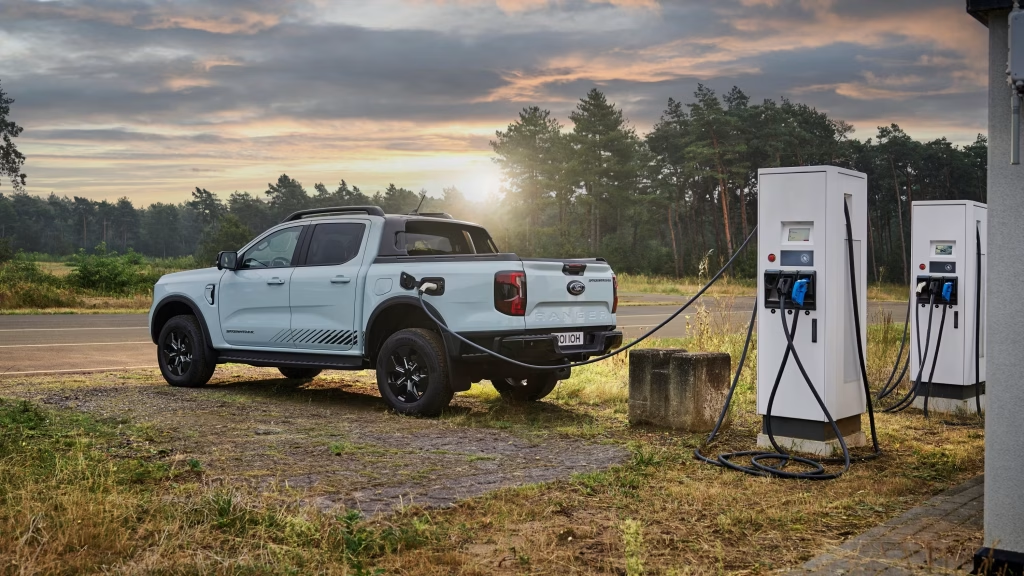
Hybrids generally perform well in urban driving, where their electric motors reduce engine workload during stop-and-go traffic.
Depreciation Has Changed
Resale value is another important ownership cost. Diesel passenger cars once enjoyed strong resale demand because of their excellent highway fuel economy. That trend has weakened considerably in the United States as manufacturers have shifted away from diesel-powered passenger vehicles.
Hybrids, on the other hand, have become increasingly popular as fuel prices fluctuate and buyers seek better efficiency without changing their driving habits.
Research comparing long-term ownership costs has found that both diesel and hybrid vehicles often recover part of their higher purchase price through improved resale values. However, market demand increasingly favors hybrids because they remain widely available and appeal to a broader group of used-car buyers.
The availability of replacement parts and service networks also favors hybrids, as nearly every major automaker now offers hybrid models.
Driving Style Matters
The better financial choice depends partly on how a vehicle is used. A hybrid is typically the better option for drivers who:
- Spend significant time in city traffic
- Commute daily
- Drive fewer than 20,000 miles annually
- Want lower maintenance costs
- Prioritize reliability and fuel savings
A diesel may make more financial sense for drivers who:
- Regularly tow heavy trailers
- Cover long highway distances every week
- Operate primarily at steady highway speeds
- Need high torque for work applications
Long-distance highway driving allows diesel engines to operate at peak efficiency while minimizing some of the conditions that contribute to emissions system problems.
Availability Also Influences Ownership Costs
One factor that receives less attention is vehicle availability. The number of diesel-powered passenger cars sold in the United States has declined sharply over the past decade. Most remaining diesel options are now concentrated in heavy-duty pickup trucks, commercial vans, and a small number of luxury SUVs.
Hybrids, by contrast, are available in nearly every major segment, including:
- Compact cars
- Midsize sedans
- Crossovers
- SUVs
- Minivans
- Pickup trucks
Greater availability increases competition, expands service options, and provides buyers with a wider range of price points.
Replacement parts and qualified technicians are also generally easier to find for popular hybrid models than for discontinued diesel passenger cars.
Which One Costs Less Over Five Years?
For the average American driver covering about 15,000 miles per year, a hybrid usually delivers a lower total cost of ownership.
Its lower fuel consumption in city driving, reduced brake wear, simpler maintenance schedule, and strong reliability record often outweigh the higher purchase price.
While diesel engines remain exceptionally efficient on long highway trips and continue to excel in towing applications, their additional maintenance requirements, emissions-related components, and the higher cost of diesel fuel reduce much of their traditional cost advantage.
Industry research supports this conclusion. The Union of Concerned Scientists found that hybrids generally produce substantially greater five-year fuel savings than comparable diesel passenger vehicles because their efficiency gains are paired with regular gasoline rather than higher-priced diesel fuel.
That doesn’t mean diesel is the wrong choice. Drivers who routinely tow heavy loads, spend most of their time on the interstate, or rely on the durability of heavy-duty diesel trucks may still find diesel ownership financially worthwhile.
For the majority of U.S. commuters and family vehicle owners, however, a modern hybrid is typically the more economical choice over the long term, offering lower operating costs without sacrificing practicality or everyday usability.
Also Read: What It Really Costs to Own a Honda Accord for Five Years
