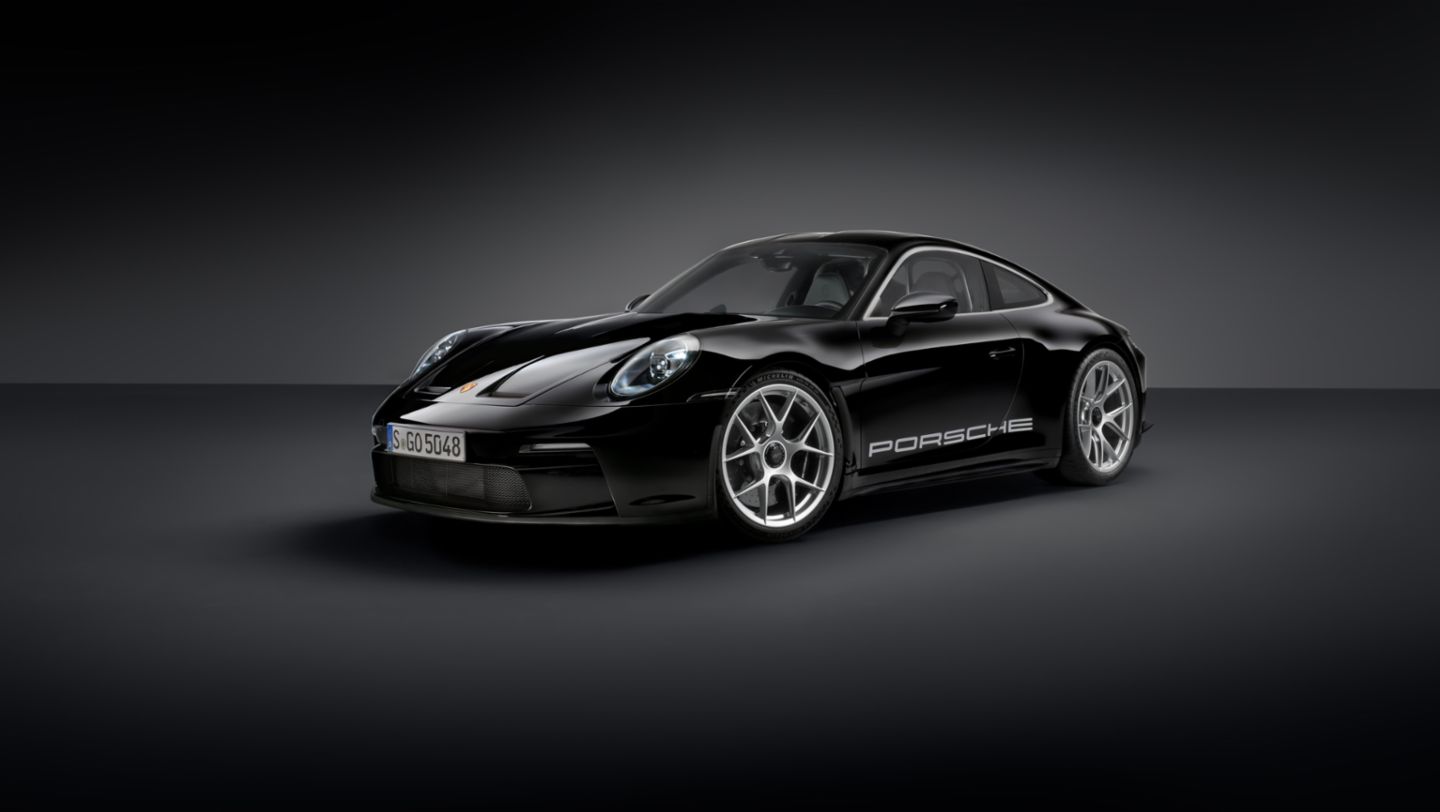
In an era when dual-clutch automatics shift faster than any human driver and electric vehicles deliver instant torque without changing gears, it might seem surprising that one of the world’s most sought-after performance cars comes with a feature many automakers are abandoning: a manual transmission.
Yet every time Porsche introduces a limited-production, manual-only special edition, demand far exceeds supply. The latest example is the Porsche 911 S/T, a car that has become one of the most desirable modern 911s despite carrying a price tag well above $290,000 before options.
Rather than relying solely on its limited production to stand out, the 911 S/T showcases Porsche’s dedication to preserving the authentic, driver-focused sports car experience.
Built to celebrate the 60th anniversary of the 911, it combines the naturally aspirated 4.0-liter flat-six engine from the 911 GT3 RS with a six-speed manual transmission and a lightweight rear-wheel-drive chassis.
Porsche limited production to 1,963 units worldwide, a number chosen to honor the launch year of the original 911. Long before customer deliveries began, allocations had effectively been spoken for by loyal Porsche buyers and collectors, while resale values quickly climbed far above MSRP in the secondary market.
The success of the 911 S/T proves that manual transmission performance cars remain highly desirable when they deliver something automatics cannot: complete driver involvement.
Rather than chasing the fastest lap time, Porsche engineered a car focused on mechanical purity, rewarding skilled drivers with one of the most engaging experiences available today.
Also Read: 8 Trucks That Hold Their Value Past 15 Years
Why the 911 S/T Exists
The 911 S/T was never intended to be Porsche’s fastest road car. That role belongs to the GT3 RS, which uses aggressive aerodynamics, track-focused suspension, and Porsche’s PDK dual-clutch transmission to produce the quickest lap times.
Instead, the S/T was designed with an entirely different philosophy. Porsche engineers wanted to build a lightweight driver’s car that emphasized the following:
- Mechanical engagement
- Precise steering feel
- High-revving naturally aspirated performance
- Reduced weight
- Manual gear changes
- Everyday road usability
To achieve those goals, Porsche combined major components from several different 911 models.
The engine comes directly from the GT3 RS, producing 518 horsepower and 342 pound-feet of torque. That power is sent exclusively to the rear wheels through a six-speed manual transmission.
The 911 S/T builds on the standard GT3 manual by featuring a shorter final-drive ratio, delivering quicker acceleration while maintaining the engaging, hands-on experience of shifting gears yourself.
Limited Production Creates Extraordinary Demand
One of the biggest reasons the 911 S/T sells out almost immediately is simple mathematics. Only 1,963 examples will be built worldwide.
That production figure represents only a tiny fraction of annual Porsche 911 output, making allocations extremely limited for U.S. dealerships.
Many Porsche retailers received only one or two cars, while some received none at all. Because Porsche typically gives priority to long-time customers with established purchase histories, most enthusiasts never had an opportunity to order one directly from the factory.
Industry analysts and auction results showed asking prices climbing well above the original MSRP shortly after allocations were announced, illustrating how demand dramatically exceeded supply.
Collectors viewed the S/T not simply as another limited-edition 911 but as one of the final naturally aspirated, manual-only flagship models likely to be produced before increasingly strict emissions regulations reshape future performance cars.
A Manual Transmission Is the Entire Point
The six-speed manual transmission is not merely an option on the S/T. It defines the entire vehicle.
Porsche deliberately chose to equip the 911 S/T exclusively with a manual transmission, setting it apart from many modern performance cars that offer both manual and automatic gearbox options.
That decision surprised some buyers because the automatic transmission would undoubtedly make the car quicker around a race track.
Porsche intentionally accepted slower acceleration times in exchange for greater driver involvement.
The manual gearbox includes:
- A lightweight clutch
- A shorter gear ratio
- Rev-matching capability that can be disabled
- A precision-engineered shift mechanism
Every shift requires active participation from the driver. Rather than allowing software to make every decision, the S/T places responsibility back in the driver’s hands. For enthusiasts, that mechanical interaction has become increasingly rare.
Lightweight Engineering Sets It Apart
Reducing weight became one of Porsche’s primary engineering objectives. Compared with many modern high-performance cars, every unnecessary pound was targeted.
The S/T uses numerous lightweight components, including the following:
- Carbon-fiber doors
- Carbon-fiber front fenders
- Carbon-fiber hood
- Carbon-fiber roof
- Magnesium wheels
- Lightweight battery
- Reduced sound insulation
The result is a curb weight of approximately 3,100 pounds, making it the lightest member of the current 992-generation 911 family. Lower weight benefits every aspect of vehicle dynamics.
It improves:
- Steering response
- Braking performance
- Cornering balance
- Acceleration
- Ride quality
Instead of relying on additional horsepower, Porsche enhanced performance through intelligent engineering.
It Was Designed for Roads, Not Lap Records
Instead of adopting the enormous rear wing and aggressive aerodynamic styling seen on the GT3 RS, the 911 S/T features a more understated design. Its restrained appearance reflects its purpose as a driver-focused sports car rather than a track-oriented machine.
Rather than producing maximum downforce for race tracks, Porsche optimized the suspension for fast public roads where compliance and driver confidence matter as much as outright grip.
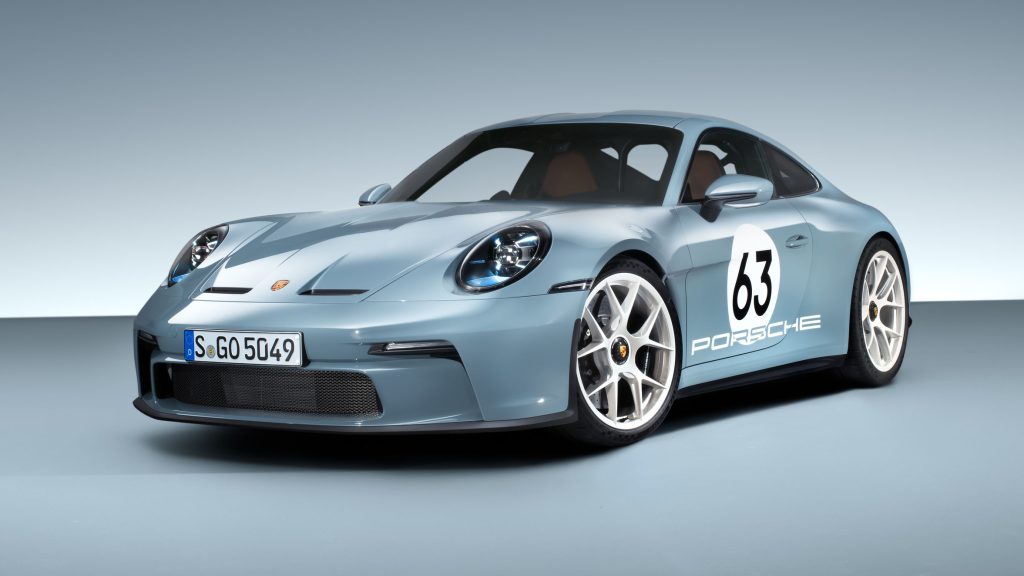
The chassis combines elements from both the GT3 Touring and GT3 RS while introducing a unique suspension calibration developed specifically for the S/T. Drivers receive exceptional steering precision without sacrificing ride comfort.
This balance has become one of the car’s defining characteristics. Many reviewers have described the S/T as one of the most rewarding road cars Porsche has ever produced because it emphasizes communication rather than outright speed.
Why Buyers Are Willing to Pay Far Above MSRP
Limited production alone does not guarantee collector status. The automotive market has seen numerous special editions lose value after initial excitement faded. The 911 S/T is different because several factors converge at once.
These include:
- Manual-only transmission
- Naturally aspirated engine
- Lightweight construction
- Anniversary significance
- Extremely limited production
- Porsche’s long-standing reputation for GT models
Collectors increasingly recognize that naturally aspirated manual sports cars are becoming scarce.
Tighter emissions standards, stricter fuel economy requirements, and the transition toward electrification mean opportunities to purchase vehicles like the S/T may become increasingly rare. That expectation has significantly increased demand.
Porsche Understands Enthusiast Demand
The success of the 911 S/T is not an isolated event. Porsche has repeatedly demonstrated that enthusiast-focused manual models generate remarkable interest.
Recent examples include the following:
- 911 Sport Classic
- 911 R
- 911 GT3 Touring
- 911 S/T
Each emphasizes driver engagement over outright performance statistics. Even Porsche’s latest manual-focused performance models continue attracting enthusiastic buyers.
The recently announced 911 GT3 S/C is offered exclusively with a manual transmission, and Porsche says approximately 80 percent of GT3 Touring buyers choose the manual gearbox when given the option.
That remarkable take rate highlights how strong demand remains among performance-car enthusiasts despite the industry’s broader shift toward automatic transmissions.
For Porsche, manuals are no longer about maximizing sales volume. They are about strengthening brand identity and serving a loyal enthusiast community.
Will Cars Like the 911 S/T Continue to Exist?
That remains uncertain. Automotive regulations continue to become more demanding, while electrification is reshaping nearly every performance segment.
Manual transmissions represent only a small fraction of new vehicle sales in the United States, and many manufacturers have already discontinued them entirely.
Even among sports cars, automatic transmissions dominate because they deliver quicker acceleration, lower emissions, and improved fuel economy.
Porsche has repeatedly stated that it will continue offering manual transmissions where technically and commercially feasible, but the number of suitable models is shrinking.
As a result, vehicles like the 911 S/T are likely to become even more significant in automotive history.
The Porsche 911 S/T demonstrates that manual transmission performance cars still command extraordinary demand when executed with purpose.
Its combination of a 518-horsepower naturally aspirated flat-six, an exclusive six-speed manual transmission, lightweight engineering, and a strictly limited production run of 1,963 cars created one of the most sought-after modern sports cars ever produced.
Allocations were effectively claimed before production began, and values on the secondary market quickly surpassed the original sticker price, reflecting demand that far exceeded supply.
While most manufacturers continue moving toward automatic gearboxes and electrified powertrains, Porsche has shown there is still a passionate audience willing to pay a premium for a truly engaging driving experience.
The 911 S/T is not the quickest 911, nor was it designed to be. Instead, it succeeds by offering something increasingly rare in today’s automotive world: a machine that places the driver at the center of every shift, every corner, and every mile.
For enthusiasts, that experience is precisely why cars like the 911 S/T continue to sell out year after year.
Also Read: 8 Dealer Add-Ons That Rarely Increase Your Car’s Resale Value