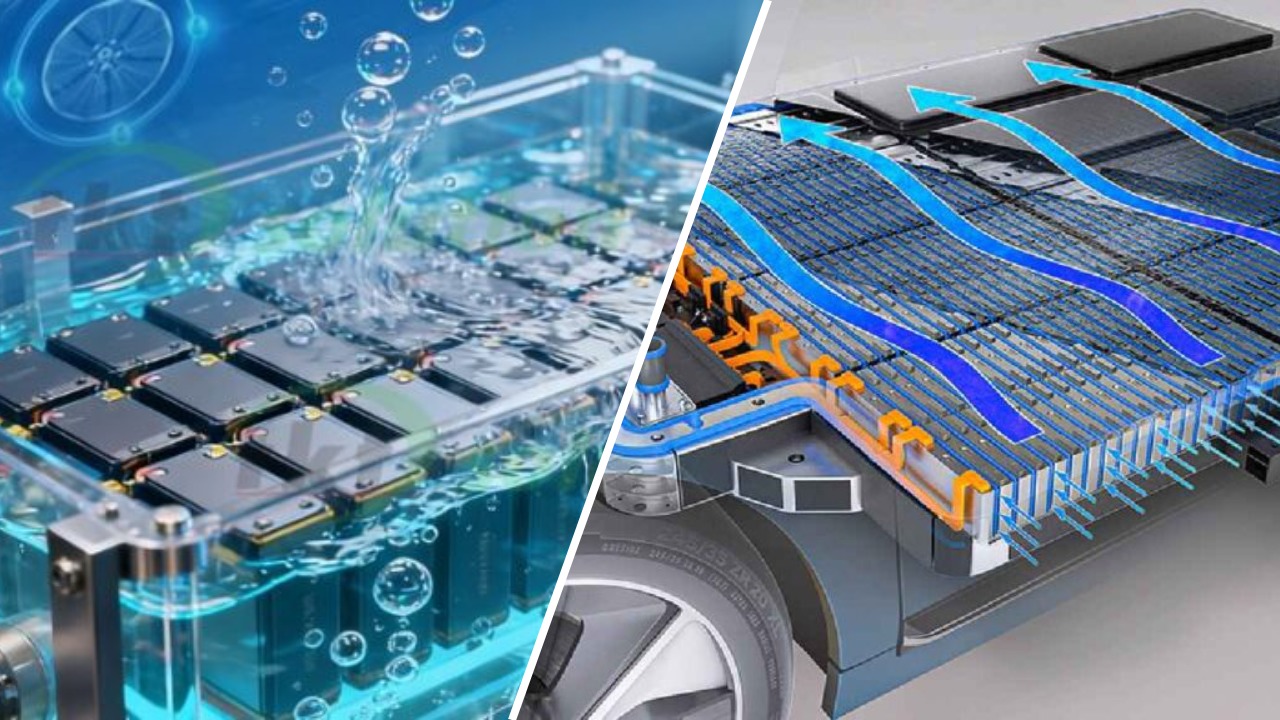
Battery technology has improved dramatically since the first generation of modern electric vehicles reached the market more than a decade ago. While today’s EVs routinely travel more than 300 miles on a charge and support ultra-fast charging, one of the biggest advances has occurred behind the scenes: battery thermal management.
Early electric vehicles often relied on simple passive air cooling, while nearly every modern EV now uses sophisticated liquid-cooled battery systems designed to regulate temperature under virtually every driving condition.
That engineering change has had a significant impact on long-term battery durability. Heat is one of the biggest factors affecting lithium-ion battery aging, and controlling battery temperature has become essential for preserving capacity over years of use.
According to data highlighted by CarPro and supported by multiple battery health studies, a typical 2023 electric vehicle can show roughly 10% less battery degradation than a comparable 2012 EV with similar mileage, largely because of improvements in battery chemistry, software, and especially liquid-cooled thermal management.
The comparison illustrates how rapidly electric vehicle engineering has evolved. Although many early EVs continue operating successfully after well over 100,000 miles, modern battery systems are designed to retain capacity more effectively under demanding conditions, providing owners with longer-lasting range and greater confidence throughout the vehicle’s lifespan.
Also Read: 10 Vehicles That Were Sold Under Three Different Brand Names
Why Battery Temperature Matters So Much
Every lithium-ion battery generates heat while charging and discharging. During acceleration, regenerative braking, and especially DC fast charging, the electrical current flowing through battery cells naturally increases their temperature.
Excessive heat accelerates chemical reactions inside the battery that gradually reduce usable capacity. Over time, these reactions increase internal resistance, limit the movement of lithium ions, and permanently decrease the amount of energy the battery can store.
Unlike temporary reductions in range caused by cold weather, heat-related degradation is cumulative and cannot be reversed. Air-cooled battery systems attempt to dissipate heat using ambient air flowing around the battery pack. While relatively simple and inexpensive, this approach has clear limitations.
Air removes heat far less efficiently than liquid coolant, making it difficult to maintain consistent battery temperatures during hot weather, repeated fast charging, or extended highway driving.
The first-generation Nissan Leaf became one of the best-known examples of passive battery cooling. Introduced for the 2011 model year, it relied primarily on passive air cooling rather than an active liquid thermal management system.
Owners in moderate climates often experienced acceptable battery longevity, but vehicles operated in consistently hot regions such as Arizona and Nevada frequently showed noticeably faster capacity loss.
By contrast, liquid-cooled battery systems circulate coolant through channels surrounding battery modules, much like an engine cooling system in a gasoline-powered vehicle.
Sensors continuously monitor temperatures throughout the battery pack, allowing software to activate pumps, valves, compressors, and heat exchangers whenever temperatures begin moving outside the optimal operating range.
This precise temperature control reduces thermal stress during charging and driving while keeping battery cells operating within their most efficient range. The result is slower long-term degradation and more consistent performance across a wide variety of climates.
According to CarPro, comparing similar vehicles with equivalent mileage shows that modern 2023 EVs typically exhibit around 10% less battery degradation than comparable 2012-era models, reflecting improvements in thermal management as well as advances in battery chemistry and software.
Liquid Cooling Offers More Than Better Battery Life
Although improved longevity is one of the biggest advantages of liquid cooling, the technology benefits nearly every aspect of electric vehicle performance.
Charging speed is perhaps the most obvious example. High-power DC fast charging generates substantial heat inside battery cells. Without adequate cooling, temperatures can rise quickly enough that the battery management system must reduce charging power to protect the battery.
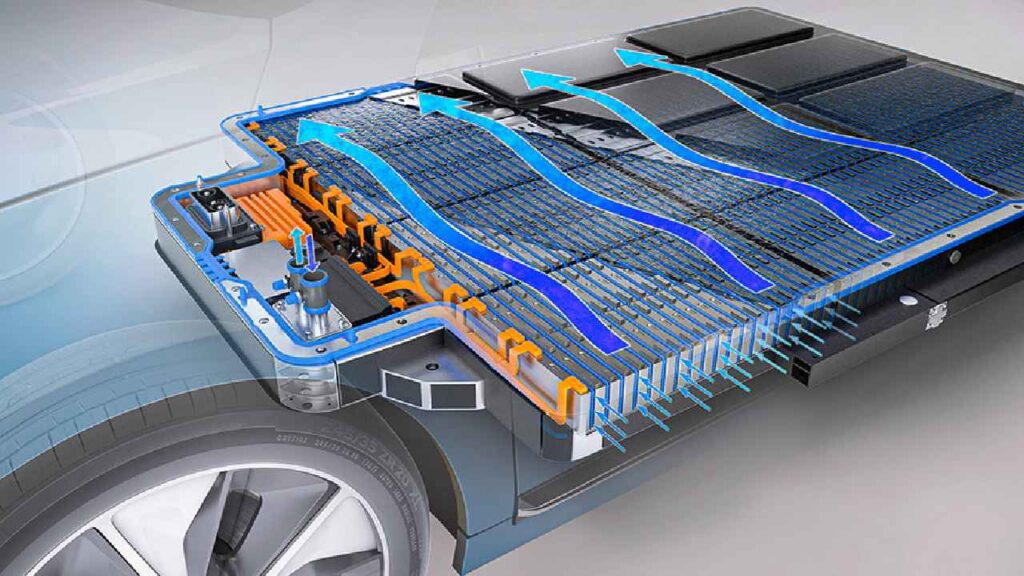
Modern liquid-cooled EVs can sustain higher charging speeds for longer periods because coolant continuously removes excess heat during charging. This allows many current-generation vehicles to maintain rapid charging rates well beyond what early battery-electric vehicles could achieve.
Thermal management also improves cold-weather performance. Liquid systems can warm the battery before driving or charging, allowing lithium-ion cells to reach their ideal operating temperature more quickly. Many vehicles now automatically precondition the battery when navigation is set to a DC fast charger, improving both charging speed and efficiency.
Battery management software works closely with liquid cooling systems. Modern EVs constantly monitor individual cell voltages, temperatures, charging currents, and internal resistance. Software adjusts charging power, regenerative braking, and cooling operation in real time to minimize battery stress while maximizing performance.
Advances in battery chemistry have reinforced these improvements. Current lithium nickel manganese cobalt (NMC), nickel cobalt aluminum (NCA), and lithium iron phosphate (LFP) batteries all demonstrate greater resistance to long-term degradation than many earlier lithium-ion designs.
Combined with better thermal regulation, these chemistries help modern batteries maintain usable capacity for far longer than their predecessors.
Real-world studies support these engineering improvements. Geotab’s research involving more than 22,700 electric vehicles projects average battery capacity retention of 81.6% after eight years, while Recurrent reports that modern EVs typically retain approximately 95% of their original driving range after five years.
Those findings illustrate how much battery durability has improved since the first generation of mainstream EVs entered production.
Modern EVs Benefit From Lessons Learned Over the Past Decade
The contrast between early air-cooled battery packs and today’s liquid-cooled systems demonstrates how quickly electric vehicle technology has matured.
Manufacturers learned valuable lessons from early EV programs. The experiences of first-generation Nissan Leafs, Mitsubishi i-MiEVs, and other pioneering electric vehicles highlighted the importance of thermal management in preserving battery health over the long term.
As a result, nearly every major automaker now equips its latest electric vehicles with sophisticated liquid-cooled battery systems. Tesla, General Motors, Ford, Hyundai, Kia, BMW, Mercedes-Benz, Volkswagen, Volvo, Rivian, Lucid, Porsche, and many other manufacturers rely on active thermal management as a core component of battery design.
Battery warranties have also become more comprehensive. In the United States, manufacturers generally provide battery coverage for 8 years or 100,000 miles, with several companies offering longer mileage limits or guarantees that batteries will retain a specified percentage of their original capacity throughout the warranty period.
Real-world ownership data continues reinforcing consumer confidence. Battery analytics company Recurrent recently reported that only 0.3% of 2022 model-year and newer electric vehicles have required battery replacement outside manufacturer recalls, indicating that catastrophic battery failures have become exceptionally uncommon in modern EVs.
For consumers shopping for either new or used electric vehicles, thermal management has become one of the most important features to evaluate.
Vehicles equipped with active liquid cooling generally offer better long-term durability, improved charging consistency, stronger resale value, and more predictable performance across different climates than earlier air-cooled designs.
The latest engineering improvements show that battery degradation is no longer the major concern it once was. While every lithium-ion battery gradually loses some capacity over time, advances in liquid cooling, battery chemistry, and intelligent software have significantly slowed that process.
The fact that a typical 2023 EV can experience about 10% less degradation than a similarly driven 2012 model demonstrates how effectively manufacturers have addressed one of the biggest challenges facing the first generation of electric vehicles.