
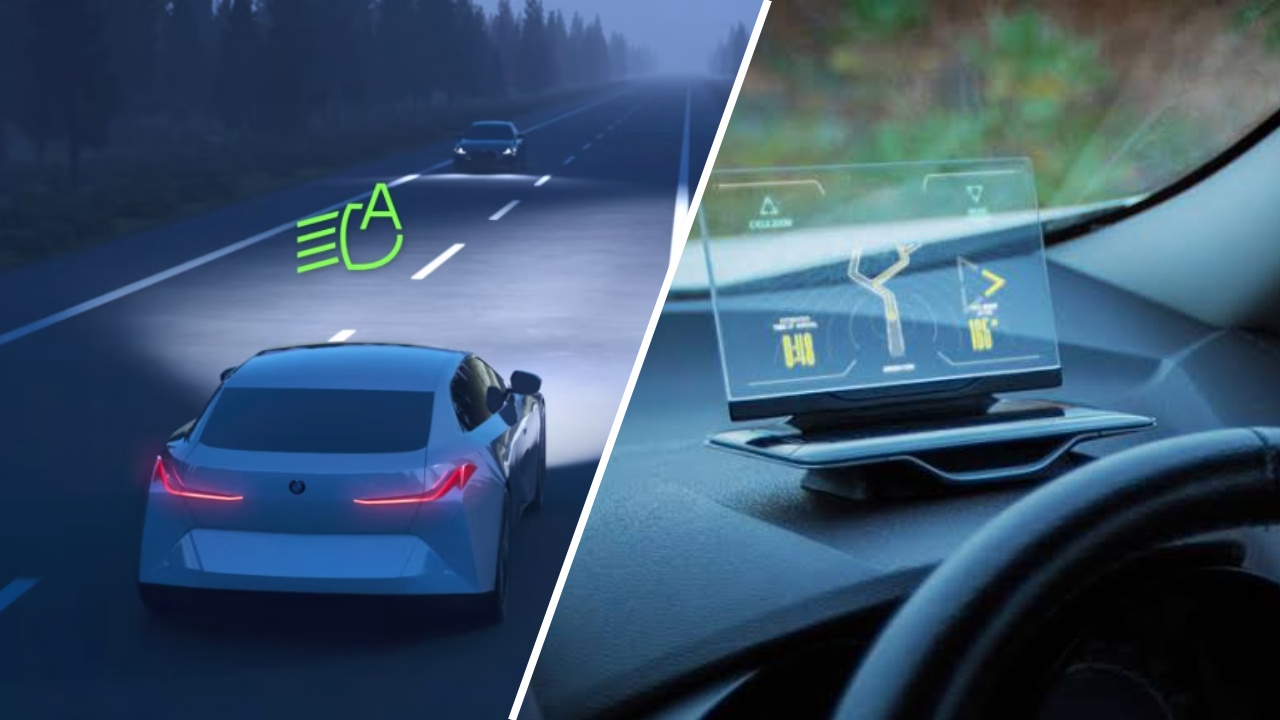
Driving at night is more dangerous than daytime travel because reduced visibility, headlight glare, fatigue, impaired drivers, and unexpected hazards increase the risk of crashes. According to the National Highway Traffic Safety Administration (NHTSA), fatal crash rates are significantly higher after dark despite lower traffic volumes. Although safe driving habits remain essential, modern vehicle technology can help drivers better navigate challenging nighttime conditions.
Features such as advanced lighting systems, cameras, driver assistance technologies, and visibility enhancements improve awareness, reduce driver workload, and help identify hazards sooner. Many of these innovations have been recognized by organizations like the Insurance Institute for Highway Safety (IIHS) and NHTSA for their safety benefits. This article highlights eight vehicle features that offer meaningful advantages for people who frequently drive at night, especially on rural roads or during long commutes.
Also Read: 10 Cars With Transmissions Ahead Of Their Time
1. Adaptive LED Matrix Headlights
A driver’s ability to see the road is the single most important factor during nighttime travel, which is why adaptive LED matrix headlights rank among the most worthwhile features available today.
Traditional headlights force drivers to choose between high beams that maximize visibility and low beams that avoid blinding oncoming traffic. Matrix lighting systems eliminate much of that compromise by using dozens of individually controlled LED segments that automatically adjust the light pattern in real time.
Using cameras mounted near the windshield, the system detects approaching vehicles and traffic ahead. Instead of switching the entire headlight assembly from high beam to low beam, it selectively dims only the portions of the beam that would shine directly into another driver’s eyes.
The remaining sections continue illuminating dark portions of the roadway. This allows drivers to maintain much greater forward visibility without creating glare for others.
The Insurance Institute for Highway Safety has repeatedly demonstrated that headlight performance varies dramatically between vehicles, and poor headlights remain a significant contributor to nighttime crashes. Matrix systems address this issue by increasing usable illumination while adapting continuously to changing traffic conditions.
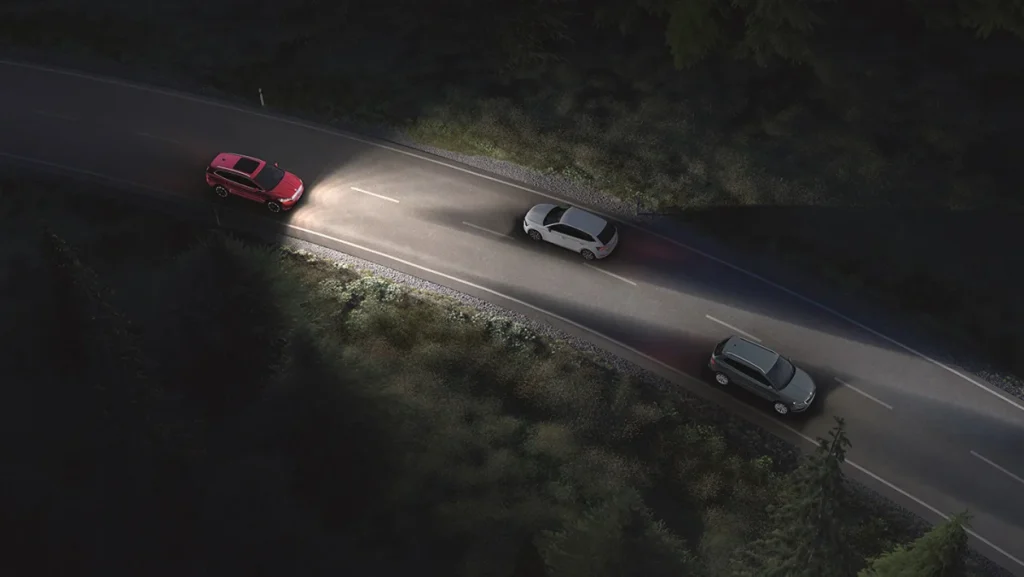
The technology is particularly valuable on rural highways where wildlife, cyclists, and pedestrians may appear with little warning. Drivers benefit from extended visibility while surrounding traffic remains protected from excessive glare.
As adaptive matrix headlights become more common in the United States following updated federal regulations permitting adaptive driving beam technology, they are increasingly viewed as one of the best safety investments for anyone who spends substantial time driving after dark.
2. Night Vision Camera With Pedestrian Detection
Most drivers rely entirely on their headlights to identify hazards, but headlights have physical limitations. A thermal night vision system extends a driver’s awareness beyond the reach of conventional lighting by detecting heat signatures from people, animals, and cyclists long before they become visible through the windshield.
This technology has been adopted by manufacturers such as BMW, Mercedes-Benz, Audi, Cadillac, and others on premium U.S. models.
Instead of using visible light, infrared cameras detect temperature differences in the environment. The system displays thermal images on the instrument cluster or center display and highlights pedestrians or large animals approaching the roadway. Many vehicles also issue visual and audible warnings if the software predicts a possible collision.
The greatest advantage appears on unlit rural roads where deer crossings are common. Since deer are involved in more than one million collisions annually in the United States, according to insurance industry estimates, additional reaction time can significantly reduce crash risk.
Thermal imaging often identifies animals several hundred feet before headlights reveal them, allowing drivers more time to brake safely.
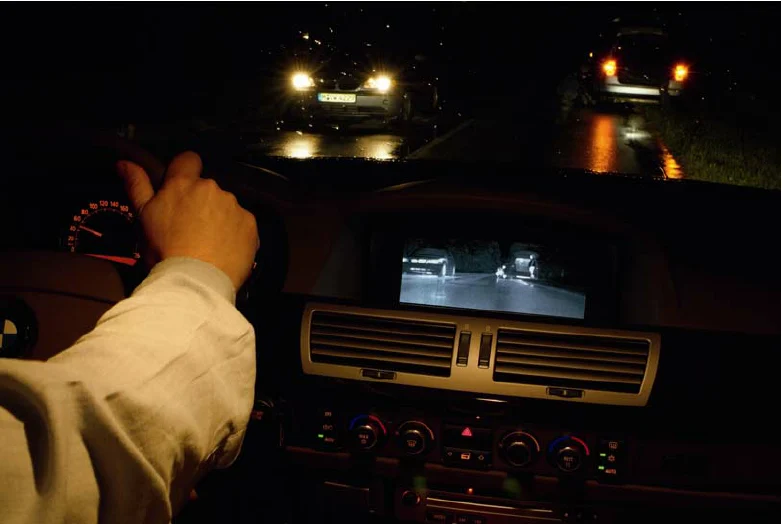
Night vision is not intended to replace attentive driving, but it provides another layer of situational awareness during conditions where human eyesight is naturally limited.
For drivers who frequently travel on dark highways or through wooded areas, the feature can detect hazards that would otherwise remain invisible until the final moments, making it one of the most practical premium safety technologies available today.
3. Auto High-Beam Assist
Many drivers avoid using high beams because they worry about blinding oncoming traffic or forgetting to switch back to low beams. As a result, they travel on dark roads with reduced visibility even when high beams would be appropriate.
Auto High-Beam Assist solves this problem by managing the headlights automatically, allowing drivers to maximize forward illumination without constantly operating the headlight stalk.
The system uses a forward-facing camera mounted near the windshield to monitor traffic conditions. When no vehicles are detected ahead, the high beams activate automatically, extending visibility hundreds of feet farther down the road than standard low beams.
The moment an approaching vehicle or taillights ahead are recognized, the system immediately returns to low beams to prevent glare. Once the road is clear again, high beams reactivate without driver intervention.
This feature is especially valuable on rural highways where long stretches of darkness can hide curves, wildlife, stalled vehicles, or pedestrians.
Studies by the Insurance Institute for Highway Safety have shown that many drivers underuse high beams even when conditions warrant them. Automatic operation encourages more consistent use, improving visibility while reducing driver workload.
Unlike more expensive matrix lighting systems, Auto High-Beam Assist has become available on a wide range of mainstream vehicles, making it one of the most cost-effective nighttime safety features buyers can choose.
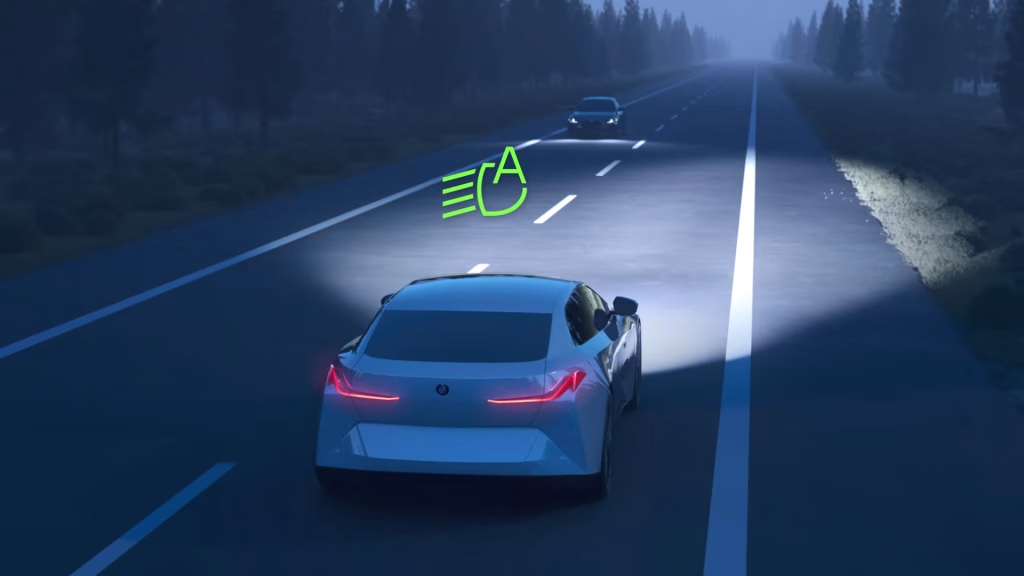
Frequent night drivers often notice the difference immediately because the system allows them to focus more on the road instead of worrying about manually adjusting their headlights every few seconds.
4. Blind Spot Monitoring With Rear Cross-Traffic Alert
Darkness naturally reduces peripheral vision, making lane changes and reversing from parking spaces more challenging. Blind spot monitoring addresses this limitation by using radar sensors mounted near the rear corners of the vehicle to detect traffic approaching from areas the driver cannot easily see.
When another vehicle enters the blind spot, an illuminated warning appears in the side mirror, helping prevent unsafe lane changes.
Many systems pair this technology with Rear Cross-Traffic Alert, which becomes particularly valuable after sunset. While backing out of parking spaces, radar sensors monitor traffic approaching from both sides, including vehicles that may be hidden behind larger SUVs or pickup trucks.
If a collision risk is detected, the system provides audible and visual warnings, and on some vehicles, automatic emergency braking can intervene if the driver does not react.
According to NHTSA, lane-change and backing crashes remain common sources of property damage and injuries. Reduced nighttime visibility makes these situations even more difficult because headlights approaching from the side may not become visible until the last moment.
Radar-based monitoring helps compensate by detecting vehicles long before the driver can see them. The technology does not replace mirror checks or shoulder glances, but it provides an additional layer of awareness during conditions where human vision is less effective.
Drivers who regularly commute before sunrise or return home late at night often consider blind spot monitoring one of the most useful everyday safety features because it operates quietly in the background and intervenes only when genuinely needed.
5. Adaptive Cruise Control With Stop-and-Go
Long nighttime drives can be mentally exhausting even when traffic is light. Reduced visibility demands greater concentration, while fatigue naturally increases after sunset.
Adaptive Cruise Control with Stop-and-Go helps reduce that workload by automatically maintaining a safe following distance from the vehicle ahead, allowing drivers to focus more on steering and scanning the road for hazards instead of constantly adjusting speed.
Using forward-facing radar and cameras, the system continuously measures the distance to traffic ahead. If another vehicle slows down, adaptive cruise control automatically reduces speed to maintain the selected gap.
Once traffic accelerates, the vehicle smoothly returns to the preset cruising speed. Stop-and-go functionality extends this capability into congested traffic by bringing the vehicle to a complete stop and resuming movement when traffic begins flowing again.
The feature becomes particularly valuable during nighttime interstate travel, where judging following distances can be more difficult because visual cues are limited to taillights. Consistent spacing also reduces sudden braking events that may surprise drivers behind you.
While Adaptive Cruise Control does not replace attentive driving, it helps minimize one of the most repetitive aspects of highway travel, reducing fatigue during extended trips.
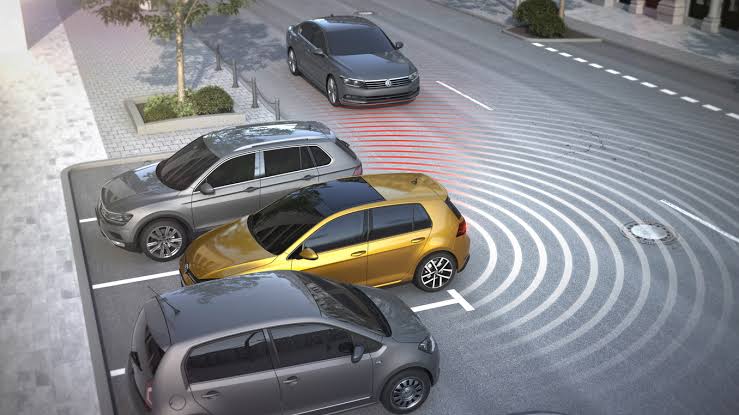
Studies from organizations, including IIHS, have shown that advanced driver assistance technologies can reduce certain crash types when used appropriately.
Drivers who frequently cover hundreds of miles after dark often report arriving less fatigued because the system handles routine speed adjustments while they remain responsible for monitoring the road and surrounding traffic.
6. Rain-Sensing Windshield Wipers
Nighttime rain creates one of the most difficult driving environments because darkness, reflections, and water on the windshield all reduce visibility simultaneously. Rain-sensing windshield wipers address this challenge by automatically adjusting wiping speed based on the amount of moisture detected on the glass.
Instead of manually changing intermittent settings every few minutes, drivers can keep both hands on the steering wheel while the system continuously adapts to changing conditions.
A sensor mounted behind the windshield monitors how much light reflects through the glass. As raindrops accumulate, the sensor detects changes and instructs the wipers to increase or decrease their operating speed.
During a drizzle, the system may use intermittent wiping, while heavier rainfall automatically triggers faster continuous operation. When precipitation stops, the wipers slow down or turn off without requiring driver input.
Although this may seem like a convenience feature at first, it also contributes to safety. Nighttime storms often change intensity quickly, and drivers may become distracted while adjusting wiper controls during heavy traffic or on unfamiliar roads.
Automatic operation allows them to maintain better focus on lane position, surrounding vehicles, and unexpected hazards.
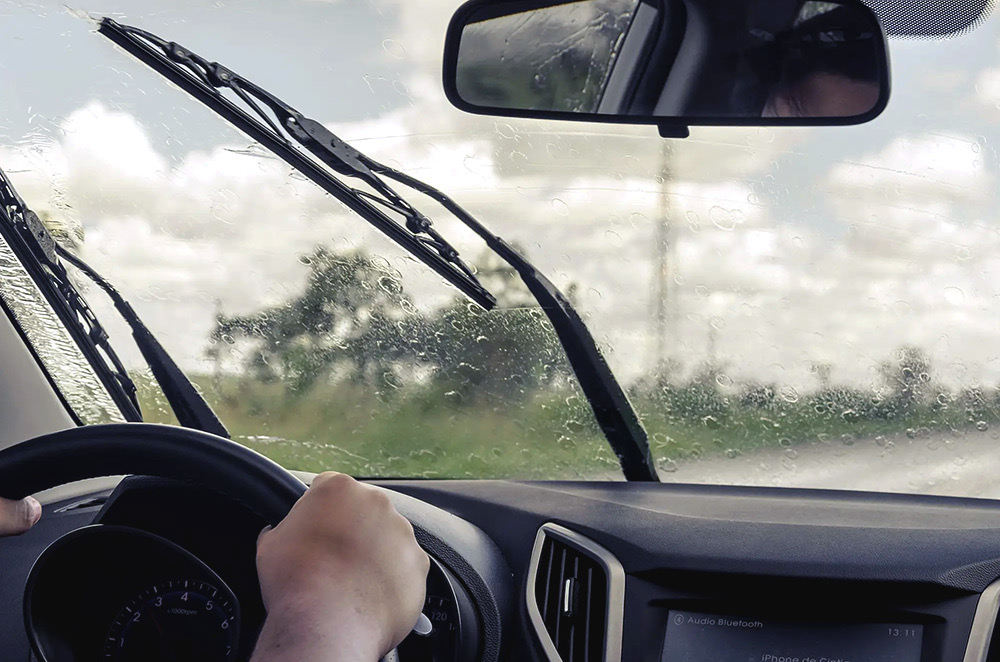
The technology is particularly helpful during long highway drives where weather conditions vary from one county to another.
Combined with automatic headlights and high-quality windshield glass, rain-sensing wipers help maintain the clearest possible forward view while reducing unnecessary distractions, making them a worthwhile feature for anyone who frequently drives after sunset.
7. Head-Up Display (HUD)
Glancing down at the instrument cluster for even a second can become more hazardous at night than during the day. In darkness, the eyes constantly adjust between the brightly illuminated dashboard and the dimly lit road ahead.
A head-up display minimizes this problem by projecting essential driving information directly into the driver’s line of sight on the windshield or a transparent display panel. Modern HUD systems display data such as vehicle speed, navigation directions, posted speed limits, adaptive cruise control status, and, on some vehicles, driver assistance alerts.
Because the information appears close to the driver’s natural field of vision, the eyes require less refocusing compared with looking down at the gauges. This allows the driver to spend more time watching the roadway while still monitoring important vehicle information.
Nighttime highway driving especially benefits from this technology. Drivers can follow turn-by-turn navigation without repeatedly looking at the center display, reducing distraction on unfamiliar routes.
Premium systems also provide lane guidance and collision warnings directly within the projected display, allowing safety alerts to appear almost immediately where the driver’s attention is already focused.
Research into driver behavior has shown that reducing glance time away from the roadway improves situational awareness, particularly when reaction time is limited.
While a head-up display cannot prevent every accident, it contributes to safer driving by helping drivers keep their attention forward instead of shifting repeatedly between the road and the dashboard.
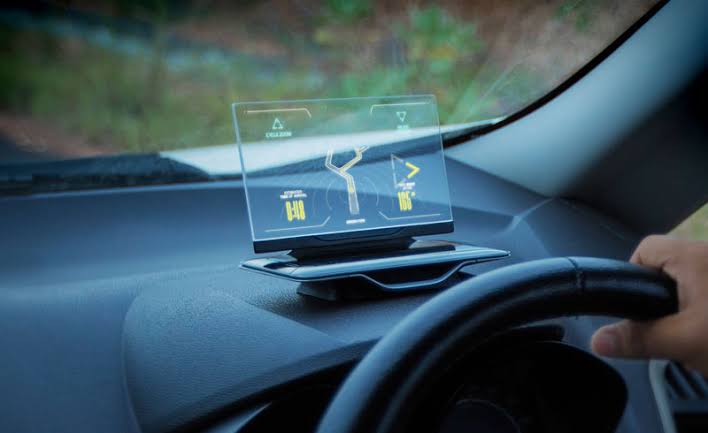
For motorists who regularly drive long distances after sunset, a well-designed HUD quickly becomes one of those features that is difficult to give up once experienced. It combines convenience with meaningful safety benefits in a way few optional technologies can match.
8. Automatic Emergency Braking With Pedestrian Detection
Even attentive drivers can struggle to identify hazards quickly after dark. Pedestrians wearing dark clothing, cyclists without adequate lighting, or stopped vehicles beyond a curve are all more difficult to detect at night.
Automatic Emergency Braking with Pedestrian Detection provides an important backup by monitoring the road ahead with cameras and, on many vehicles, radar sensors capable of recognizing potential collision risks.
The system continuously analyzes objects in front of the vehicle. If it determines that a crash is likely and the driver does not react in time, it first issues audible and visual warnings. If no corrective action follows, the vehicle can automatically apply the brakes to reduce impact speed or, in some situations, avoid the collision entirely.
Nighttime pedestrian crashes remain a significant safety concern in the United States. NHTSA data consistently show that a large percentage of pedestrian fatalities occur after dark because visibility is reduced.
Advanced automatic emergency braking systems are specifically designed to address this challenge by detecting pedestrians earlier than drivers sometimes can under poor lighting conditions.
The technology has become a major focus of the Insurance Institute for Highway Safety, which evaluates pedestrian crash prevention performance as part of its vehicle testing. Manufacturers continue improving camera sensitivity, radar capability, and object recognition software to increase effectiveness during low-light conditions.
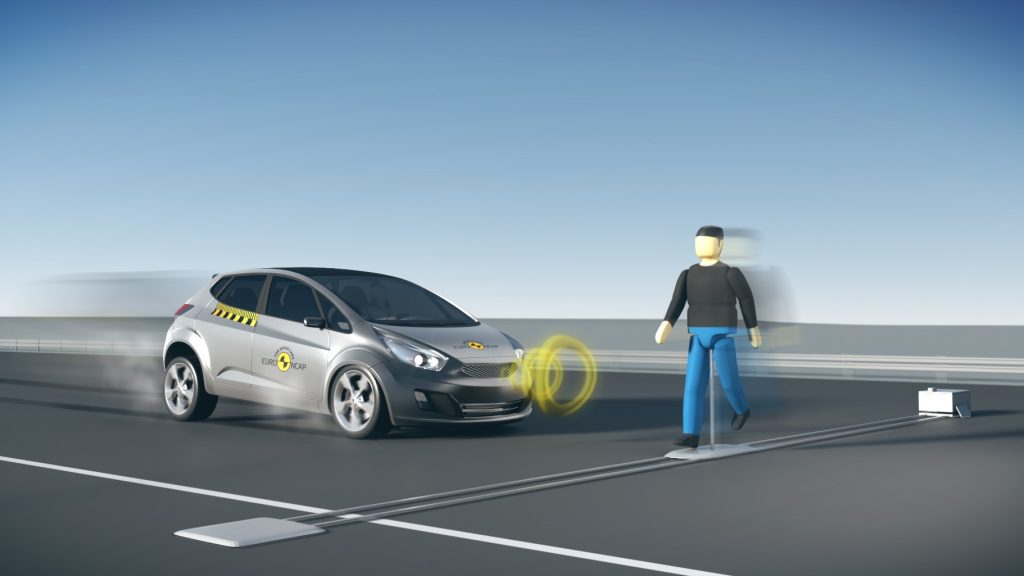
Although no driver assistance system replaces alert driving, automatic emergency braking with pedestrian detection offers one of the most valuable safety nets available today.
For anyone who regularly drives at night through urban areas, suburban neighborhoods, or poorly lit highways, it is a feature well worth prioritizing when shopping for a new vehicle.
Also Read: 10 Cars From the 1990s Already Becoming Collectible
