
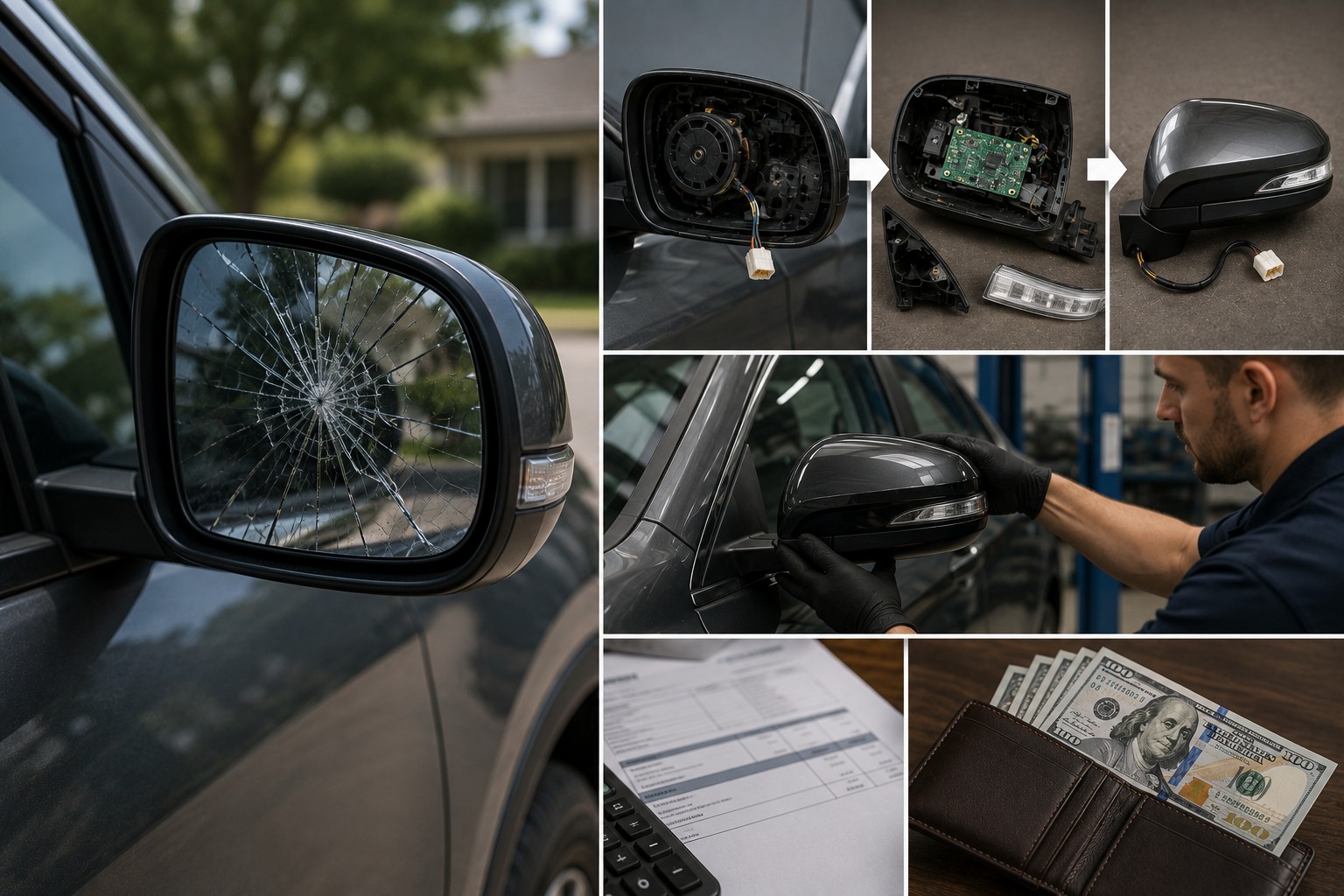
A cracked side mirror used to be a minor annoyance. You’d grab a $30 glass insert. Fifteen minutes later, you were done. That era is over. Modern mirrors aren’t just glass anymore. They’re sensor pods, heating elements, and mini-computers stitched into a housing.
Blind-spot radar hides behind the glass. Cameras feed live video to dashboards. Heating grids keep the surface fog-free in winter. Every one of these features adds cost, and not just for the part itself. On vehicles with multi-camera systems or blind-spot sensors, parts alone can cross $1,000.
Labor stacks on top of that. So does calibration, a step many drivers have never heard of. A basic power mirror assembly with heating and turn signals typically runs $150 to $400. Add a blind-spot sensor or camera, and that number climbs fast.
This piece breaks down exactly where the money goes. We’ll look at cameras, heaters, radar, calibration, and the real receipts drivers have shared online. By the end, you’ll understand why one small crack can trigger a four-figure invoice.
The Camera Revolution Inside Your Mirror
Side mirrors now double as camera housings. This didn’t happen by accident. Automakers needed a place to mount forward-facing sensors. The mirror stalk was already there.
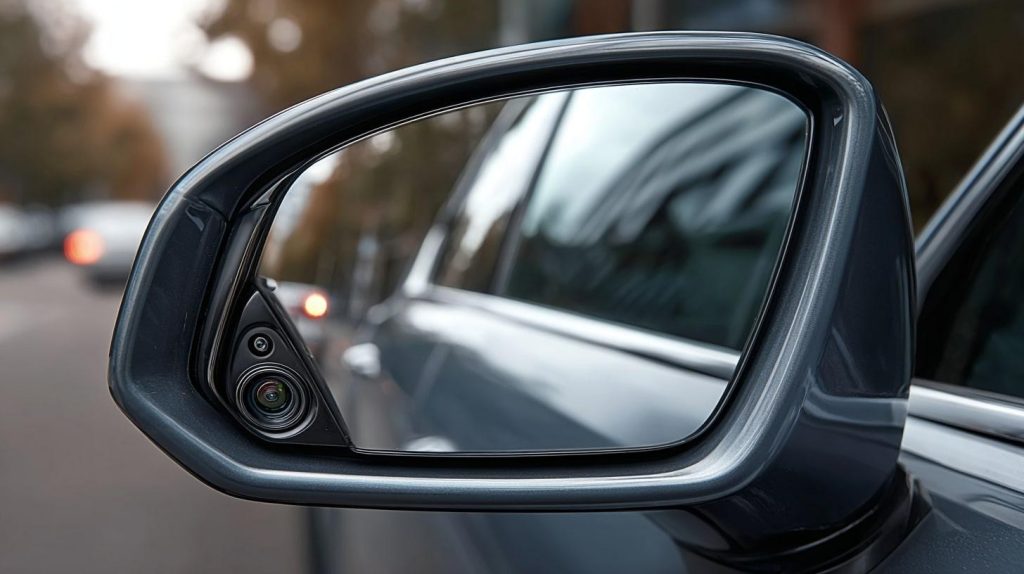
Some vehicles use these cameras for blind-spot video feeds. Others use them for 360-degree surround-view systems. Luxury brands went further. They replaced the mirror entirely.
Lexus launched a digital side-view mirror for its ES 300h, replacing conventional door mirrors with a camera and monitor system. The physical glass mirror disappeared completely.
Cameras sit in casings where traditional mirrors used to be. Images display on five-inch screens near the front pillars. When the driver signals or shifts into reverse, the screens show an extended view along the car’s sides and rear, with distance guidelines overlaid on the image.
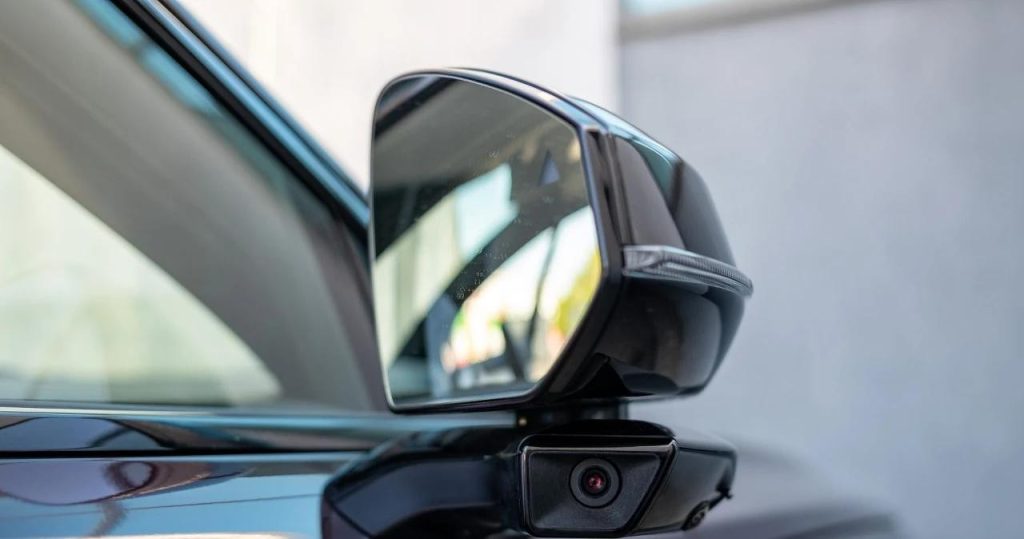
This sounds futuristic. It’s also expensive to fix. Owners on enthusiast forums have priced replacement digital mirror units near $3,000 retail. That’s before labor.
A separate camera module for these systems can run around $400, with signal cables adding another $60 or so. Even on cars that keep a traditional glass mirror, a built-in blind-spot camera changes the math.
Parts listings for Honda models with integrated cameras routinely price the assembly well above $100, before any dealer markup or paint matching. The camera itself isn’t the only cost driver here. It’s what happens after installation. Every camera-equipped mirror needs to “talk” to the car’s onboard computer correctly.
Get that wrong, and warning lights appear. We’ll cover that calibration step in detail shortly, because it’s often the single biggest line item on the bill. For now, the takeaway is simple. A camera in the mirror turns a glass-and-plastic part into a precision electronic component. Pricing follows accordingly.
Heated Glass: Small Feature, Real Money
Heated mirrors seem like a modest upgrade. A thin heating element sits behind the glass. It clears fog and light ice in seconds. Drivers barely notice it working. But that heating element changes the mirror’s entire construction. Heated mirrors prevent fog and ice buildup, and this feature raises the side mirror assembly cost.
The glass itself becomes a wired component. It can’t just be popped out and swapped like a basic mirror. Ordering the correct glass typically requires the vehicle’s VIN, since part numbers differ by model year and options like blind-spot monitoring or self-dimming. A heated element adds another variable to that equation.
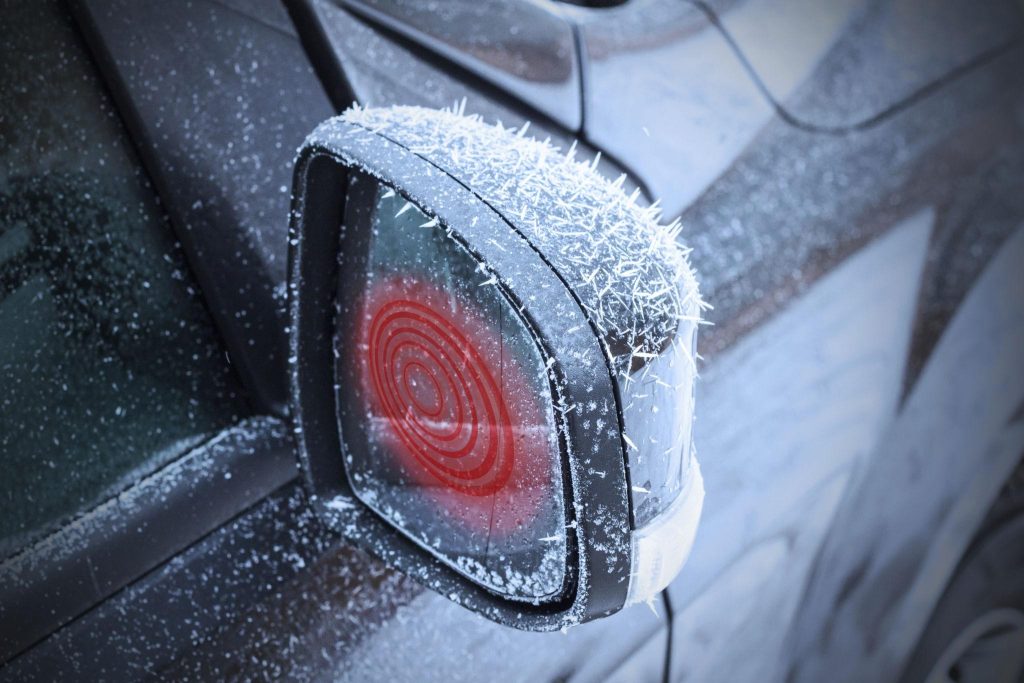
Standalone glass-only replacement, when the assembly itself is fine, generally costs between $20 and $150 for the part. That’s the cheap scenario. But heated glass rarely comes alone anymore. It’s usually bundled with power adjustment, turn signals, or auto-dimming.
Electric mirrors, heated mirrors, and components on luxury brands like BMW or Audi are more sophisticated, and therefore more expensive to replace. Labor plays a role too. Wiring has to be reconnected correctly.
A simple, non-technical mirror swap typically takes half an hour to an hour of shop time. Heated units with multiple wiring harnesses take longer. Shop labor rates commonly fall between $50 and $120 per hour, depending on region. That labor cost compounds with every added feature.
On its own, a heater might add $50 to $100 to a mirror’s price. Paired with power folding, auto-dimming glass, and turn signals, it becomes part of a much larger assembly. That assembly is what actually gets ordered and installed. The heater rarely shows up as a separate line item, but its presence is baked into the higher total.
Blind-Spot Radar Hiding in the Housing
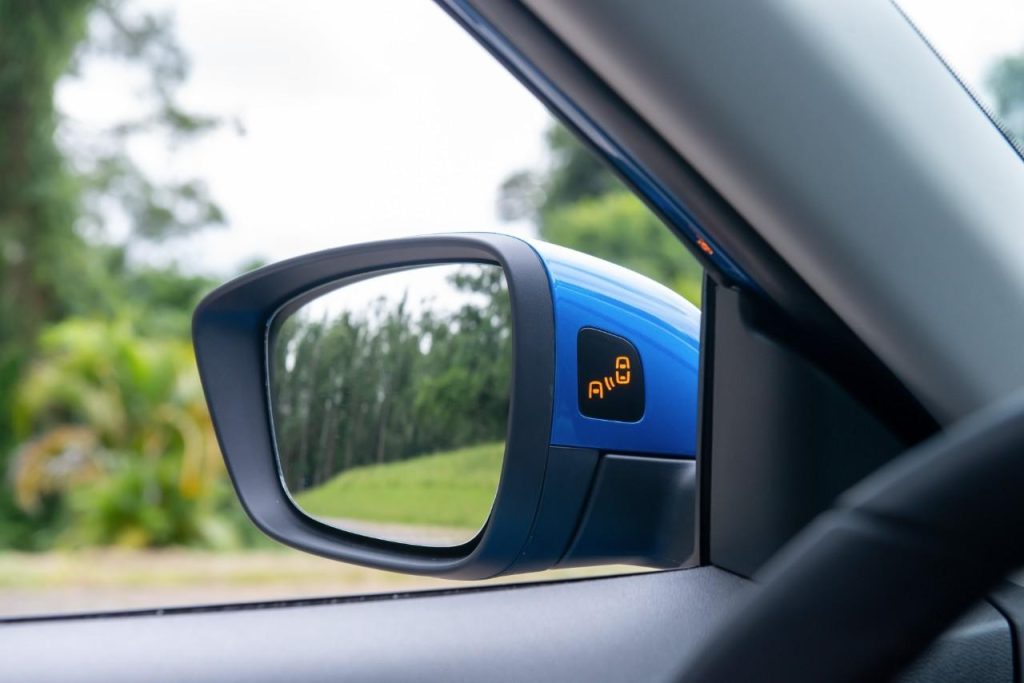
This is where costs jump the most. Blind-spot monitoring sensors often sit directly inside the mirror housing. They’re small radar or sonar units. They watch the lane beside and behind the car.
These sensors use radar or sonar technology, and the precision required makes them expensive to manufacture and replace. When a mirror unit includes blind-spot monitoring or an integrated camera, the part cost alone can climb to $500 to $800 or more.
That’s before labor or calibration. On luxury vehicles, it gets worse. A mirror for a 2021 Mercedes-AMG C43 has been priced at $1,340 for a single unit. Regular family SUVs aren’t immune either. One owner of a 2022 Chevrolet Traverse LT reported a quote of $1,650 for a mirror with blind-spot technology.
Of that total, $650 covered the mirror part itself. The remaining $725 was for camera calibration. That’s a striking split. Calibration cost more than the physical sensor.
Professional sensor installation alone often runs $200 to $500, because sensors must be mounted at exact heights and angles. Small mounting errors can reduce detection accuracy or trigger constant false alerts. Precision isn’t optional here.
This precision requirement is exactly why blind-spot mirrors can’t be treated like old-fashioned parts. A misaligned sensor doesn’t just look wrong.
It can fail to detect a car in your blind spot. That’s a safety problem, not a cosmetic one. Shops know this, and they price the labor accordingly. The radar unit itself might be modest in size, but the accuracy it demands is not.
Calibration: The Hidden Cost Nobody Warns You About
Calibration is the step most drivers don’t expect. It’s also often the most expensive. Any mirror with a camera, sensor, or lane-assist link needs recalibration after replacement. Skipping it isn’t really an option.
If calibration is skipped, warning lights or malfunctioning driver-assistance systems will follow. The car simply won’t accept the new part correctly. Shops often run pre- and post-installation diagnostic scans, plus alignment procedures, to confirm every sensor works and the vehicle’s systems recognize the new mirror.
This isn’t a quick five-minute check. It requires special equipment. One quote for a modern SUV’s mirror replacement listed $725 just for “multiview camera 360 calibration.”
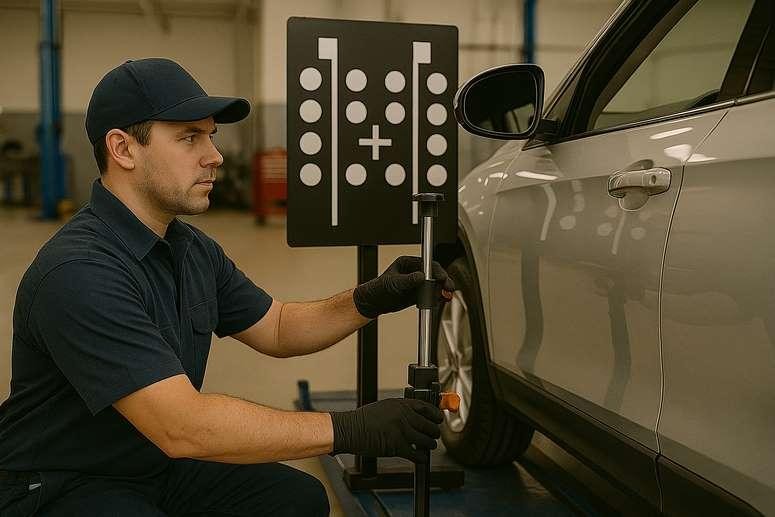
That single line item ballooned an otherwise modest repair. The mirror itself was almost secondary to the bill. Smaller-scale calibration is still common on more ordinary cars. Mirrors with sensors, indicators, or cameras typically need calibration once replaced, and that service generally costs $75 to $200.
Even Lexus dealer estimates reflect this layered pricing. A Lexus ES350 door mirror replacement has been estimated between $1,238 and $1,264 in total.
Of that, labor runs $55 to $81, while the parts themselves are priced around $1,183. Notice how small the labor slice is compared to the part and its embedded technology. The mirror assembly, not the wrench time, drives the number.
Calibration exists because these systems are safety-critical. A blind-spot sensor that’s off by a few degrees isn’t a minor glitch. It can miss a motorcycle in your blind spot entirely. Shops calibrate because the alternative is a lawsuit waiting to happen.
OEM vs. Aftermarket: Where You Can Actually Save
Not every dollar spent on a mirror is unavoidable. Part sourcing makes a real difference. Part source matters a great deal, since used OEM, new aftermarket, and new OEM components can produce very different totals for the same vehicle.
Brand-new OEM mirrors typically start around $75 to $300, with luxury or technology-heavy assemblies climbing much higher from there. OEM parts guarantee fit and function. That matters more with sensor-equipped mirrors than it ever did with basic ones.
OEM parts usually offer better compatibility and durability, but often cost 20% to 50% more than aftermarket alternatives. That premium isn’t just brand loyalty. Aftermarket sensor mirrors don’t always support every original feature correctly.
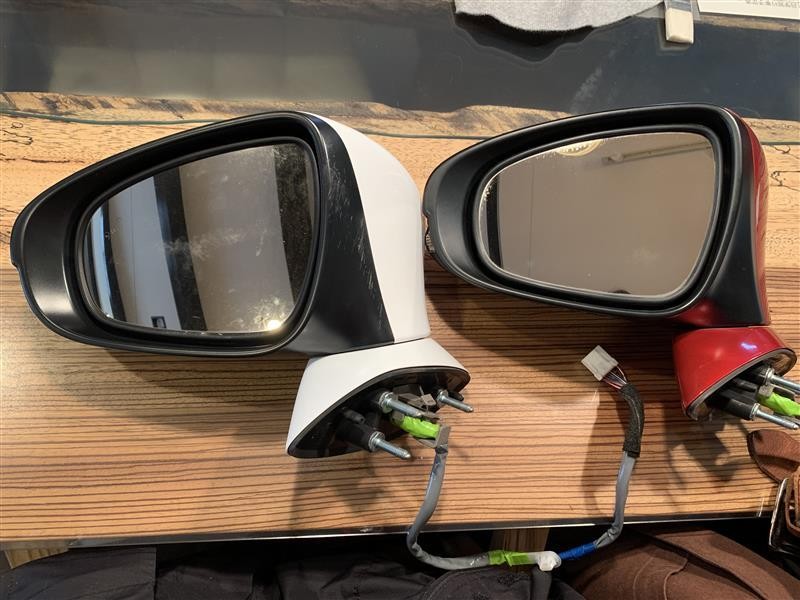
Used OEM parts split the difference. A functioning take-off mirror from a salvage yard can include the exact same sensor as new. eBay listings reflect this market reality. Complete used mirror assemblies with integrated blind-spot cameras for popular models like the Toyota Camry have sold for around $500, plus shipping.
That’s still real money. But it undercuts a brand-new dealer part significantly. The catch is compatibility. A used mirror still has to match your exact trim, camera generation, and wiring harness.
Buying the wrong version means paying twice. Once for the wrong part, and again for the correct one. Shops that break out labor honestly help here too. A good shop separates mirror removal, reinstallation, calibration, and painting into distinct charges, rather than one vague flat fee. That transparency lets you find where savings are actually possible.
Insurance, Deductibles, and Real Repair Bills
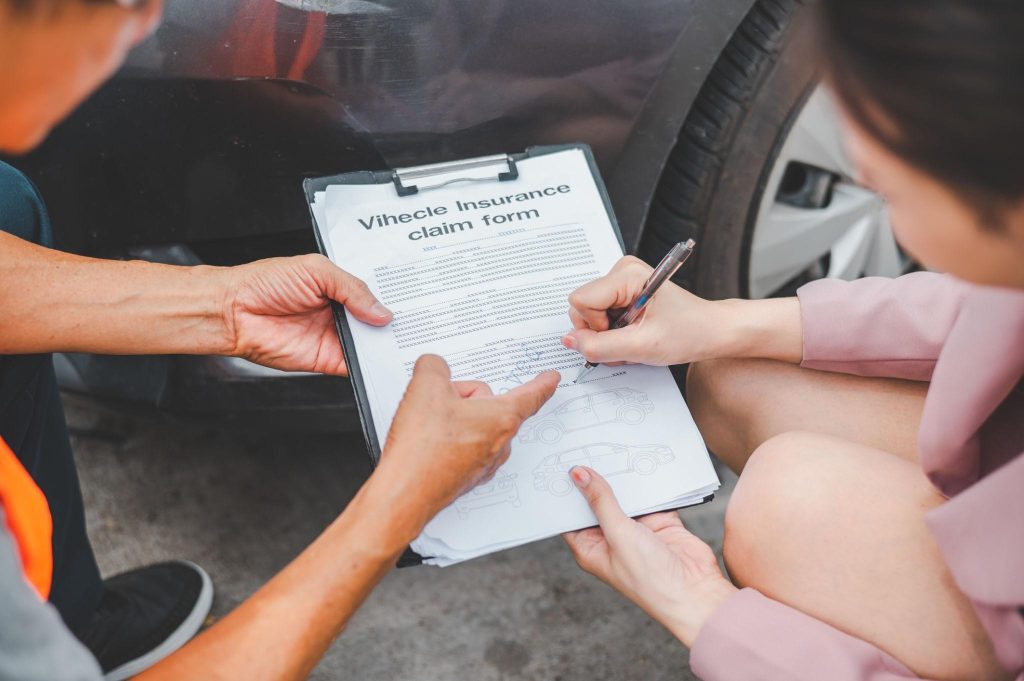
Whether to file an insurance claim depends heavily on the mirror’s complexity. This is a genuinely useful calculation. Basic mirror replacements often total around $100 to $200 for simpler vehicles, which usually doesn’t clear a typical deductible.
Paying out of pocket makes sense there. Filing a claim would just raise your premium for nothing. Sensor-equipped mirrors flip that logic entirely. Repairs involving blind-spot monitoring, cameras, and calibration can easily reach $800 to $1,500 or more, making an insurance claim worthwhile.
A practical rule of thumb: if total repair cost is less than roughly 1.5 times your deductible, paying directly usually makes more sense. Above that threshold, claims start saving real money.
Real-world quotes back this up. Fancy mirrors with sensors or cameras are probably going to start at least $1,000, even before labor is added. Compare that to older, simpler cars. A 2005 Toyota Corolla mirror averages just $150 to $200 total.
A newer BMW 330i, by contrast, can average as high as $1,060. Same basic function, vastly different price tag. The gap comes entirely from technology packed into the housing. Corollas from that era have manual or basic power mirrors.
Modern BMWs bundle heating, blind-spot detection, memory settings, and auto-dimming glass into one unit. Every one of those features multiplies the part’s complexity and price.
Insurance adjusters increasingly understand this distinction. Comprehensive coverage, which typically handles glass and mirror damage from things like vandalism or road debris, becomes far more valuable on tech-heavy vehicles.
What This Means Going Forward
Side mirrors aren’t going back to simple glass and plastic. Regulatory pressure is pushing the opposite direction. Blind-spot warning systems are increasingly standard, not optional. Cameras are creeping into more trim levels every model year.
That means the $1,000 mirror isn’t an outlier anymore. It’s becoming the norm for a growing share of new vehicles. Drivers can still manage the cost. Requesting itemized quotes helps.
Ask specifically whether calibration is included, or billed separately. Some shops won’t include diagnostics and calibration initially, and if it’s omitted, you may end up paying for it later.
Comparing OEM, aftermarket, and used parts before committing also matters. So does understanding your deductible before deciding whether to file a claim at all.
The physical crack in your mirror is the easy part to diagnose. The invisible electronics behind it are what really set the price. Understanding that difference is the best defense against sticker shock at the repair counter.
Also Read: Why Ignoring a Small Windshield Chip Gets Expensive Fast
