
Some machines refuse to die. Across the world, there are engines still turning, still breathing, still powering lives long after the factories that built them went silent.
These are not museum pieces behind glass. They are working engines, hauling freight, pumping water, moving people, and grinding grain in places where replacement parts have not been manufactured in decades.
The year 1995 feels like a distant era. The Soviet Union had already collapsed. Eastern Bloc industries had crumbled. Many Western manufacturers had moved on to newer models.
Supply chains that once stretched across continents simply vanished overnight. Yet in remote corners of Cuba, Central Asia, Sub-Saharan Africa, and beyond, engineers and mechanics refused to accept that their machines were dead.
These men and women became legends in their own workshops. They fabricated parts by hand. They reverse-engineered components from memory. They traded spare pieces like gold. In some villages, a single functioning engine meant the difference between harvest and hunger, between clean water and disease.
This is not just a story about mechanical ingenuity. It is a story about human stubbornness, resourcefulness, and the deep bond between people and the machines that sustain them. These nine engines are still running and their stories are extraordinary.
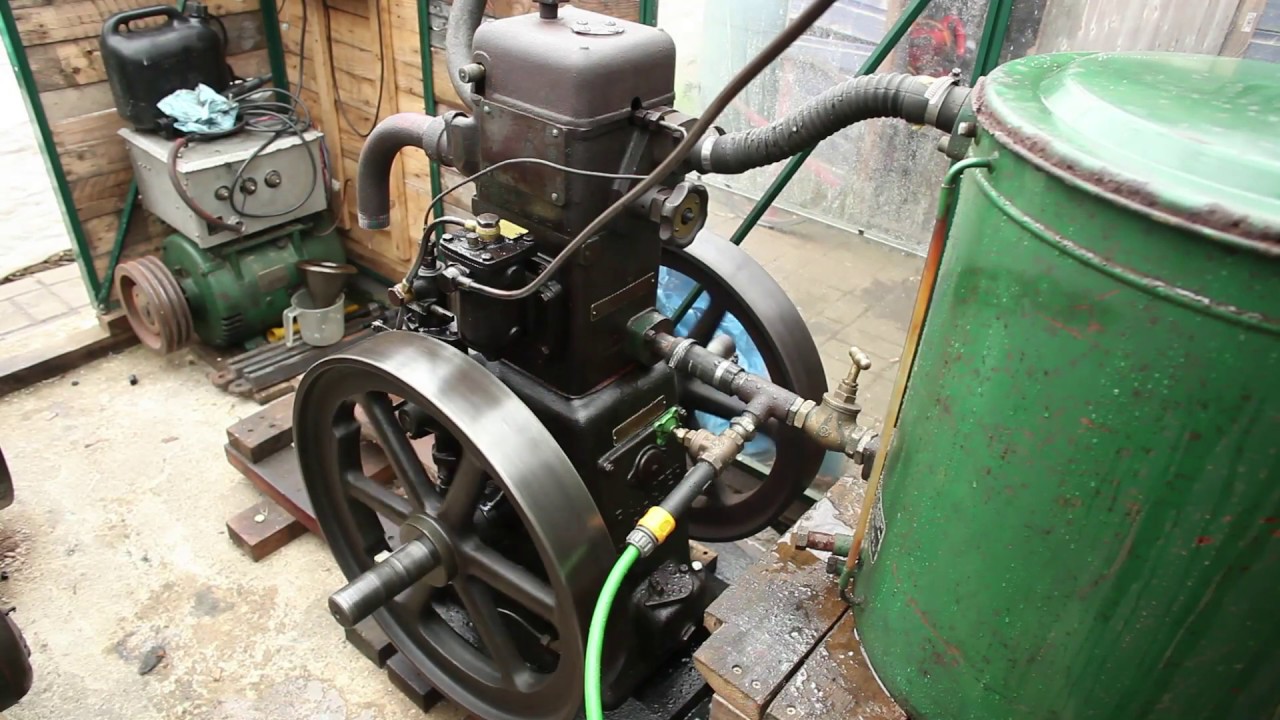
1. The Lister CS Diesel Engine
The Lister CS engine was born in England in 1929. It was built by R.A. Lister and Company in Dursley, Gloucestershire. The original factory stopped producing the classic CS model decades ago. Yet across South and Southeast Asia, this engine never stopped working.
Walk through any rural district in Bangladesh or the Ganges plains of India. You will hear a distinctive slow, rhythmic thud. That sound is the Lister CS a single-cylinder, slow-running diesel engine that has become the mechanical heartbeat of entire agricultural communities.
The engine runs at just 650 RPM. That low speed is the secret to its legendary durability. Most modern engines spin at three to four times that speed, wearing themselves out far faster.
In Bangladesh alone, hundreds of thousands of these engines power irrigation pumps. They lift water from rivers and canals onto rice paddies across the country. Without them, millions of acres of farmland would go dry.
The original Lister parts supply dried up long ago. British manufacturing of the CS line effectively ended. But that did not stop local workshops from stepping in.
In Bogra, a city in northern Bangladesh, entire streets are dedicated to Lister engine workshops. Mechanics here can rebuild a Lister CS from almost nothing. They fabricate pistons, regrind crankshafts, and recast cylinder liners using local metal.
These craftsmen learned their trade from their fathers. Their fathers learned from theirs. The knowledge passed down like a family heirloom, generation to generation.
Licensed copies of the Lister CS were also manufactured in India under brands like Fieldmarshal and Kirloskar. Some of these Indian copies are still in limited production. But even those lines have scaled back dramatically.
The engines that run today are often 30, 40, or even 50 years old. They have been rebuilt so many times that almost no original part remains. Mechanics joke that the engine is still the same Lister it has just had everything replaced except its soul.
Farmers trust the Lister CS because it starts with a hand crank, needs no electricity, and can run on low-grade diesel or even vegetable oil. In regions with unreliable power grids, that independence is priceless.
A farmer in rural Myanmar once said that losing his Lister would be like losing a working ox. It is not a machine to him. It is a partner in survival.
The Lister CS proves that good engineering does not expire. It simply adapts. As long as there are hands skilled enough to keep it alive, this engine will keep turning long after the factory that made it fades from memory entirely.
2. The ZIL-130 Truck Engine
The ZIL-130 was a Soviet workhorse. It was produced by the Zavod imeni Likhacheva factory in Moscow starting in 1963. The truck and its engine were designed to survive brutal Russian winters and neglected dirt roads.
Production of the original ZIL-130 ceased in the 1990s as the Soviet Union collapsed. The factory pivoted, restructured, and eventually shut down many of its classic lines. But in Kazakhstan, Uzbekistan, Georgia, and Azerbaijan, the ZIL-130 never retired.
These trucks are everywhere across Central Asia. They carry cotton, watermelons, construction materials, and livestock across world that would destroy modern vehicles. Their engines are pushed hard every single day.
The ZIL-130’s V8 petrol engine displaces 6.0 litres. It produces around 150 horsepower modest by modern standards but extraordinarily reliable by any measure. The engine was designed with massive tolerances, meaning parts did not need to be perfectly precise to work well together.
That design philosophy is what kept these engines alive. When a part wears out, a local machinist can fabricate a replacement within those wide tolerances. Precision is not required. Durability is.
In Tashkent’s old industrial districts, workshops specializing in ZIL engines operate out of crumbling Soviet-era garages. The mechanics inside are artists. They have kept these engines running for decades without any factory support.
Some parts still trickle in from Ukraine and Russia through informal trade networks. But those supplies are unpredictable. Most repairs rely on local skill and improvisation.
Drivers across the region speak of their ZIL-130 trucks with deep affection. The truck is rough, loud, and thirsty for fuel. But it never lets them down in the ways that matter.
In Georgia’s mountainous regions, ZIL-130 trucks go through roads that modern logistics companies refuse to attempt. The trucks climb passes, ford streams, and endure freezing temperatures without complaint.
Local governments in several Central Asian countries have tried to replace ZIL fleets with modern Chinese or Korean trucks. The results have been mixed. Modern trucks break down in remote areas where no spare parts exist. The ZIL, by contrast, can be fixed with basic tools and local knowledge.
The ZIL-130 engine is a monument to Soviet engineering philosophy build it tough, build it simple, build it to last. That philosophy continues to pay dividends thirty years after the factory stopped caring.
3. The Chevrolet 235 Inline-Six
Cuba is the world’s greatest living museum of American automobiles. Walking through Havana is like stepping into 1955. Pastel-coloured Chevrolets, Buicks, and Fords roll through streets lined with crumbling colonial buildings.
The US trade embargo began in 1962. American car parts stopped arriving overnight. Cuban mechanics were left with vehicles and no supply chain. What happened next was nothing short of mechanical genius.
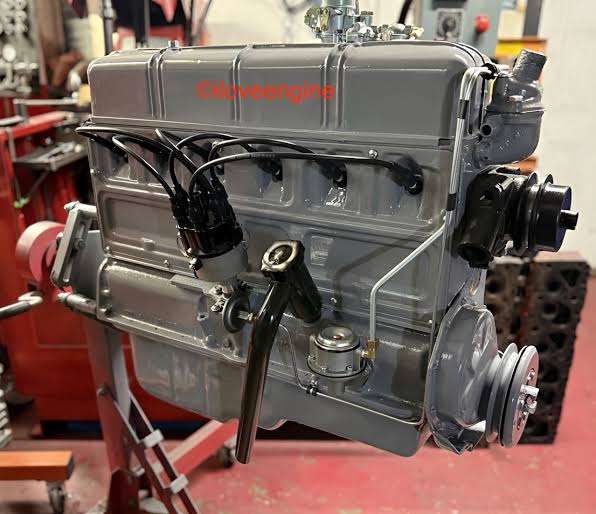
The Chevrolet 235 inline-six engine, used in trucks and cars throughout the late 1940s and 1950s, became one of the most rebuilt engines in Cuba. Parts for this engine stopped arriving from the United States more than sixty years ago.
Cuban mechanics, known as “mecánicos”, became some of the most resourceful engineers on earth. They fabricated valve seats from bronze. They machined pistons from aluminium stock. They adapted Soviet engine components from Russian vehicles that arrived during the Cold War era.
The 235 engine is fundamentally simple. It has no complex electronics, no computer management systems, and no proprietary sensors. That simplicity is its greatest advantage in a country cut off from global supply chains.
In Havana’s backstreet garages, an engine rebuild can take weeks. Mechanics source parts from junkyards, trade components between colleagues, and manufacture pieces that have not been commercially available for decades.
Some Cuban mechanics have become specialists in particular engine families. They know every dimension, every clearance, every torque specification from memory. No manual needed. The knowledge lives in their hands.
The cars that carry these engines often have hybrid identities. A 1957 Chevrolet body might sit above a Russian Lada suspension. The Chevrolet 235 engine might be mated to a Soviet gearbox. The result is something entirely Cuban born from necessity and improvisation.
Tourists who ride in these classic cars rarely understand what they are experiencing. They see vintage style. What they are actually sitting inside is one of the world’s most extraordinary experiments in mechanical endurance.
Cuban authorities have recently allowed limited imports of some goods. But the classic car culture runs deep. Many mecánicos have no interest in modern parts. Their pride is in keeping the old engines alive on their own terms.
The Chevrolet 235 in Cuba is more than an engine. It is a symbol of resistance, ingenuity, and national identity forged in decades of isolation.
4. The Deutz Air-Cooled Diesel
The Deutz air-cooled diesel engine was developed in Germany by Klöckner-Humboldt-Deutz AG. It became one of the most successful agricultural and industrial engines of the 20th century. Its greatest advantage was its air-cooled design it needed no water, no radiator, and no coolant.
In Sub-Saharan Africa, that advantage proved transformative. Water is scarce in many regions. Coolant leaks can destroy a water-cooled engine within minutes. The Deutz simply did not have that problem.
Deutz engines were sold across Africa through the 1970s and 1980s. They powered tractors, generators, water pumps, and construction equipment. When the manufacturer restructured and updated its product lines, parts availability for older models collapsed.
But in countries like Mali, Niger, Chad, and Burkina Faso, these engines kept working. They had no choice but to keep working. Local mechanics in Sahel towns developed extraordinary skills with Deutz engines. They learned to recondition injectors using basic hand tools. They fabricated fuel line fittings from available metal stock. They reground worn valve seats with improvised tools.
The air-cooled design meant fewer components. Fewer components meant fewer things to fail. The engines proved remarkably resistant to the dust, heat, and rough conditions of the African interior.
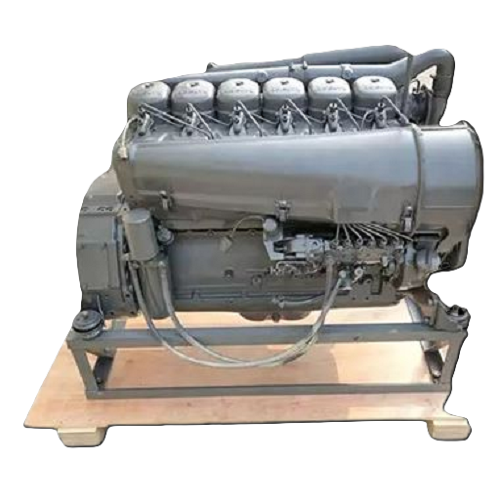
In remote areas, a functioning Deutz engine on a water pump can serve an entire village. It draws water from underground wells for drinking, cooking, and small-scale irrigation. When that engine fails, the consequences are immediate and severe.
That knowledge that lives depend on these machines sharpens the skills of every mechanic who works on them. There is no margin for error. There is no tow truck. There is no parts delivery service.
German engineering companies did eventually produce updated Deutz models for the African market. But the price points were beyond the reach of rural communities. The old engines, kept alive through skill and determination, remained in service.
Agricultural NGOs working in the Sahel have documented Deutz engines running continuously for over 40 years. Some of these engines have been rebuilt multiple times. Yet they continue to perform their essential functions without failure.
The Deutz air-cooled diesel is proof that the right engine, in the right environment, with the right people caring for it, can outlast every commercial expectation placed upon it.
Also Read: 5 Used Luxury Sedans With Reliable Air Conditioning vs 5 Prone to Evaporator Leaks
5. The Praga V3S Engine
The Praga V3S was a Czechoslovak truck produced from 1953 onwards. It was built by the Praga factory in Prague and became one of the most iconic vehicles of the Communist bloc. Its three-cylinder two-stroke diesel engine was unlike anything else on the road.
Production of the V3S wound down after the political changes of 1989. The factory transitioned to new products. Parts for the classic V3S engine became increasingly difficult to find through official channels.
Yet across the Czech Republic, Slovakia, the former Yugoslavia, and Poland, these trucks refused to stop. They continued working on farms, in forests, and on construction sites long after their commercial lifespan officially ended.
The V3S engine has a unique sound a distinctive, uneven rattle that mechanics and drivers can identify from hundreds of metres away. In rural Bohemia and Moravia, that sound is still heard regularly during harvest seasons.
What kept the V3S alive was a combination of factors. The engine is mechanically straightforward. Spare parts were produced in such large quantities during the Communist era that stockpiles existed in warehouses and barns across the region.
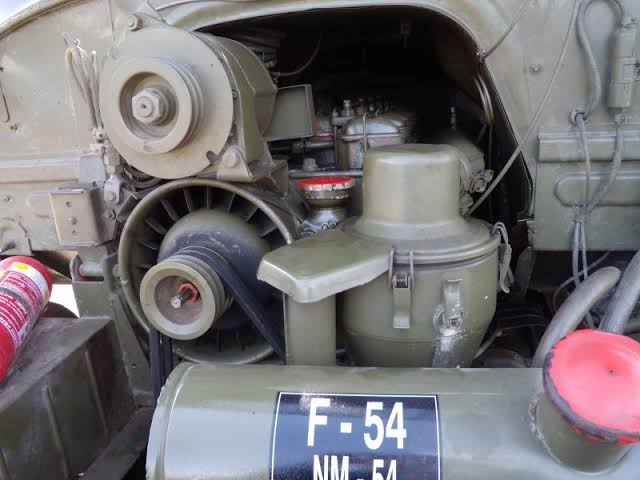
Enthusiast communities also played a crucial role. In the Czech Republic, clubs dedicated to preserving and running Praga V3S trucks formed after 1989. These clubs shared parts, knowledge, and workshop time.
Military surplus vehicles also fed the civilian market. Armies across the Warsaw Pact operated V3S trucks in enormous numbers. As these were decommissioned, their engines and parts entered the civilian supply chain.
Mechanics who worked on these engines during their careers became invaluable resources for younger enthusiasts. Retired army mechanics, factory workers, and farm engineers passed on their knowledge through informal apprenticeships.
In Slovenia and Croatia, V3S trucks are still used in mountain forestry operations. The truck’s narrow body and excellent low-gear torque make it ideal for tight forest tracks that modern vehicles cannot go through.
Farmers in Slovakia speak of their V3S with the same affection one might have for an old working dog. It is reliable, stubborn, and completely dependable in conditions that would defeat a younger, softer machine.
The Praga V3S engine is a relic of a vanished political system. But in the fields and forests of Eastern Europe, it continues to demonstrate that honest engineering, properly maintained, does not care about politics or history.
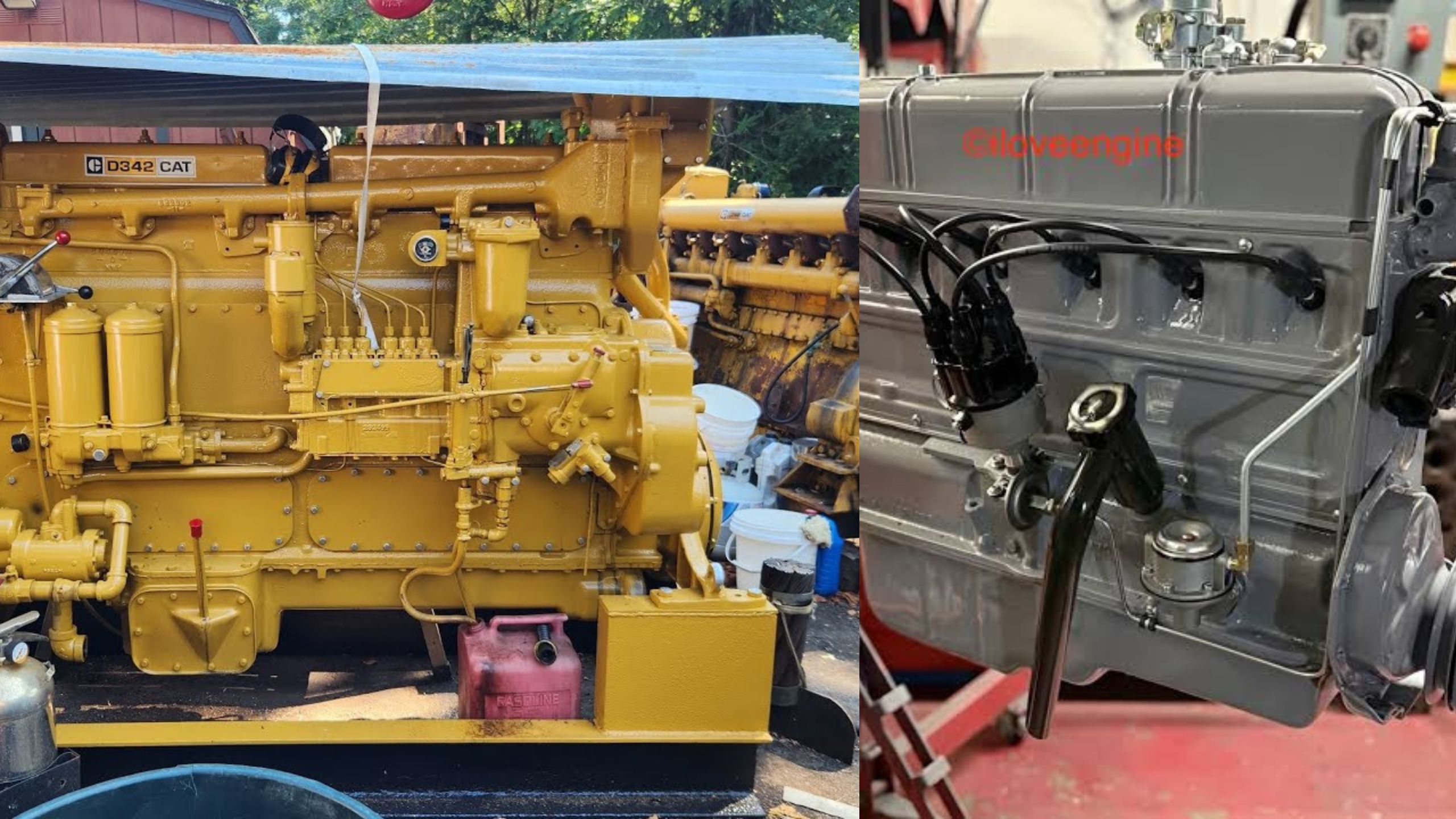
6. The Caterpillar D342
The Caterpillar D342 was a large displacement diesel engine produced by Caterpillar Inc. through the 1960s and 1970s. It was used in heavy earthmoving equipment, generators, and marine applications. Caterpillar discontinued the D342 and its parts program decades ago.
But in remote mining regions of Bolivia, Peru, and Colombia, D342-powered machines continue to operate. These are often generators at high-altitude mines, or engines powering processing equipment far from any city.
At altitudes above 4,000 metres, diesel engines perform differently. The thin air reduces power output and complicates fuel delivery. The D342 was set up for these conditions decades ago by experienced field engineers. That setup has never been changed because it works.
Caterpillar’s official parts program for the D342 ended years ago. Aftermarket suppliers picked up some of the slack. But in the most remote locations, even aftermarket parts are difficult to obtain quickly.
Mine operators in these regions have built extensive in-house workshops. They employ machinists who can fabricate piston rings, regrind crankshafts, and rebuild fuel injection systems using manual machine tools.
The cost of stopping a mine generator or processing engine can be catastrophic. Lost production time at a gold or silver mine can cost tens of thousands of dollars per day. That economic reality justifies enormous investment in keeping old engines running.
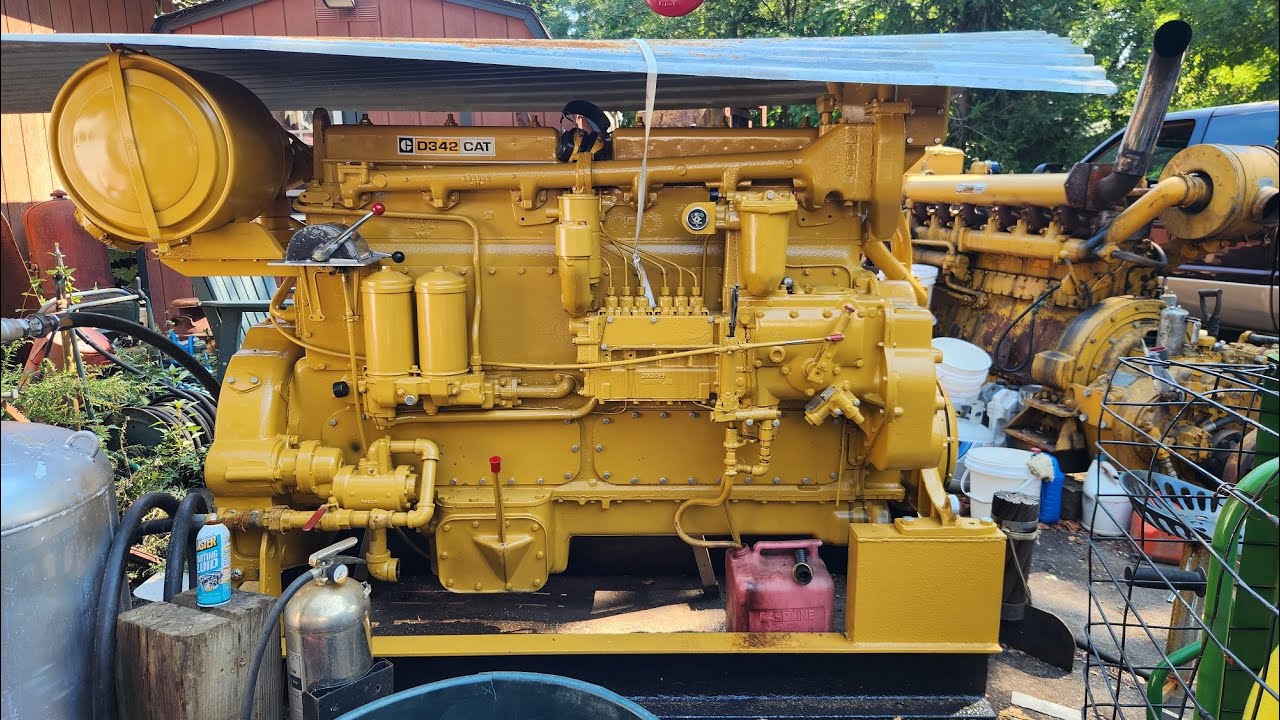
Some mines have maintained stockpiles of D342 parts for decades. When a part fails, the stockroom is searched before any outside supplier is contacted. These stockpiles have sustained operations for years beyond what any manufacturer would have predicted.
Caterpillar’s newer engine families are more efficient and more powerful. But they also require sophisticated diagnostic equipment and trained dealer technicians. In a remote mountain mine, that support structure does not exist.
The D342 can be diagnosed, repaired, and returned to service using skills and tools available in the field. That self-sufficiency is its greatest modern advantage.
Engineers who have spent careers maintaining D342 engines in South American mining operations often describe a deep respect for the machine. It is honest in its mechanics. It tells you what is wrong through sound and behaviour rather than through error codes on a screen.
The Caterpillar D342 survives because it was built before the era of planned obsolescence. It was built to work. And work is what it continues to do.
7. The Rolls-Royce Merlin
The Rolls-Royce Merlin is perhaps the most famous piston engine ever built. It powered the Spitfire, the Hurricane, the Lancaster bomber, and the North American P-51 Mustang. It played a direct role in determining the outcome of the Second World War.
Rolls-Royce ceased production of the Merlin for new manufacture long ago. The last factory-fresh Merlin left the production line in the post-war period. Official support and parts manufacturing ended decades before 1995.
Yet across the United Kingdom, the United States, Canada, Australia, and New Zealand, Merlin-powered aircraft continue to fly regularly. Air shows, memorial events, and private collections keep these engines running and roaring.
The Merlin is a supercharged V12 engine of 27 litres displacement. It produces over 1,000 horsepower in most configurations. Running a Merlin at full power is one of the most viscerally thrilling experiences in aviation.
Specialist companies have filled the parts gap. Firms like Retrotec in the United Kingdom and Pacific Fighters in the United States have invested in tooling and manufacturing capability to produce Merlin components to original specifications.
These companies employ machinists trained in heritage techniques. They work from original Rolls-Royce drawings, some of which were sourced from archives and private collections. Every part produced is a small act of historical preservation.
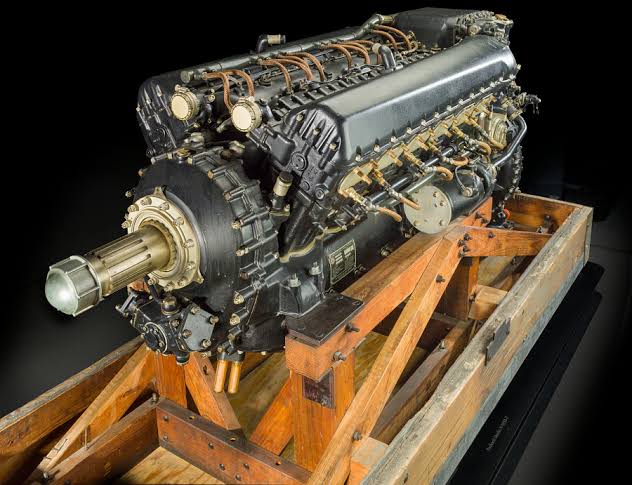
The Merlin’s complexity makes maintenance enormously challenging. The engine has hundreds of precision components. Its supercharger alone requires specialist knowledge to rebuild correctly.
Experienced Merlin engineers are a small and aging community. The knowledge required to correctly overhaul a Merlin engine takes years to develop. Organisations like the Vintage Aircraft Trust work actively to train new engineers before the older generation retires.
Owners of Merlin-powered aircraft pay extraordinary sums for maintenance and overhaul. A complete engine rebuild can cost several hundred thousand dollars. Yet demand for flying Merlins remains strong.
The sound of a Merlin at full power is described by those who have heard it as genuinely emotional. Veterans who worked on these engines during the war have been known to weep when they hear one run again.
The Rolls-Royce Merlin survives because of passion, investment, and a collective refusal to let the sound of history fall permanently silent. It is perhaps the most lovingly maintained obsolete engine on earth.
8. The GAZ-51 Engine
The GAZ-51 was a Soviet light truck produced from 1946 through to 1975. Its inline-six petrol engine was derived from a pre-war American design that the Soviet Union licensed from Ford during the industrialisation drive of the 1930s. It was built tough, built simple, and built in enormous numbers.
After production ended and the Soviet state collapsed, GAZ-51 trucks scattered across the former Soviet Union. In rural Russia, Siberia, and Mongolia, these trucks became permanent fixtures of agricultural and transport life.
Parts supply from official sources ended decades ago. But the GAZ-51 engine is essentially a simplified version of a 1930s American six-cylinder design. Its architecture is so well understood that skilled machinists can fabricate almost every component.
In Mongolia, the GAZ-51 became indispensable for moving goods across the vast steppe. There are no railways across much of the country. Roads are often unpaved tracks. The GAZ-51 handles these conditions with ease.
Mongolian mechanics developed their own maintenance traditions around the engine. They adapted lubrication practices for extreme cold. They modified carburettors for high-altitude operation in mountainous western Mongolia. They shared techniques across communities through informal networks.
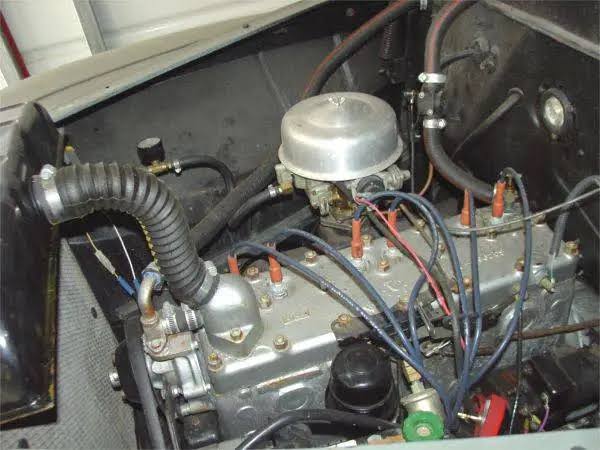
In remote Siberian villages, GAZ-51 trucks are sometimes the only motorised transport available. When the engine needs repair, the mechanic must improvise. There is no other option.
Soviet-era engineering schools trained mechanics extensively on GAZ engines. That training produced generations of skilled technicians. Retired mechanics in Russian villages remain valuable community resources, called upon whenever a GAZ engine needs attention.
The GAZ-51 engine also shares many characteristics with other Soviet powerplants of its era. Mechanics familiar with one engine family can often apply their knowledge to another. This cross-compatibility of skills extended the effective life of all these engines significantly.
In Mongolia today, international development organisations trying to replace GAZ-51 trucks with modern vehicles have encountered unexpected resistance. Local drivers prefer machines they understand and can fix themselves over modern vehicles that require dealer technicians.
That preference is not nostalgic. It is entirely practical. Self-sufficiency in transport is not a luxury in rural Mongolia. It is a survival requirement.
The GAZ-51 engine, born from a Ford design of the 1930s, channelled through Soviet industrialism, and maintained by Mongolian steppe mechanics, is one of the most remarkable examples of mechanical endurance in the modern world.
9. The EMD 567
The Electro-Motive Division 567 engine is a two-stroke diesel designed by General Motors. It entered production in 1938 and powered an entire generation of American locomotives. The 567 series was eventually superseded by more modern designs. Parts availability for original 567 components declined sharply from the 1990s onwards.
But on the railways of India, Pakistan, Ethiopia, and several other nations, EMD 567-powered locomotives continue to haul freight and passengers. These are not museum trains. They are working assets in national rail networks.
The 567 engine family is extraordinarily robust. Its two-stroke design delivers power with mechanical simplicity. The engine has no camshaft-driven valvetrain in the conventional sense, relying instead on ports and blowers. That simplicity reduces failure points significantly.
Indian Railways operated hundreds of EMD-powered locomotives over decades. When parts availability declined, the railway’s workshop network responded with remarkable ingenuity. Central workshops at Patiala and Varanasi developed the capability to manufacture 567-series components domestically.
Indian engineers reverse-engineered components they could not source. They worked from original drawings, from physical measurements of worn parts, and from consultation with retired engineers who had worked on these engines their entire careers.
The result was a domestic supply chain that extended the operational life of 567-powered locomotives by decades. Some of these locomotives have now accumulated millions of kilometres of service.
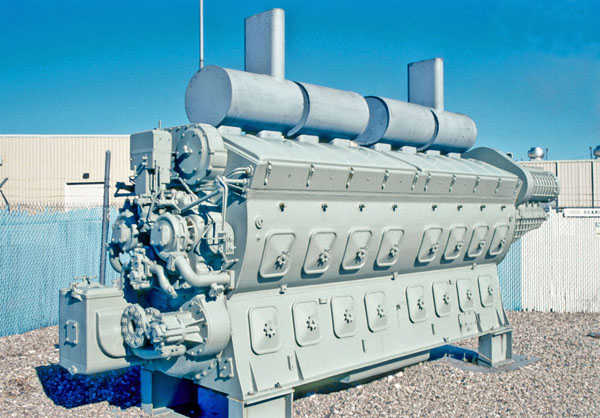
In Ethiopia, the railway network that connects Addis Ababa to Djibouti was built partly using EMD-powered traction. Maintaining these locomotives in a country with limited industrial infrastructure required creative problem-solving at every level.
Ethiopian railway engineers travelled to India to learn from Indian Railways’ experience with EMD maintenance. That transfer of knowledge between developing nations, bypassing the original manufacturer entirely, is a remarkable story of South-South technical cooperation.
The EMD 567 engine rewards careful maintenance. Its tolerances are generous. Its design philosophy favours durability over peak performance. Engineers who learn its character find it a forgiving and reliable machine.
Retired EMD engineers from General Motors have occasionally been brought in as consultants to railways still operating 567-powered equipment. They are often surprised to find engines in better condition than they expected, maintained by people who never had access to official technical support.
The EMD 567 is still turning because the railways that depend on it had no choice but to master it completely. In doing so, they proved something important that with enough skill and determination, even an obsolete engine can keep a nation moving.
Also Read: 6 Rugged Suspensions for American Roads vs 6 Fragile European Air Rides
