
Buying an SUV is one of the biggest financial decisions most people will ever make. The showroom floor is a battlefield where dealers are trained to extract every dollar they can from your wallet. Knowing which vehicles genuinely deserve their price tag and which ones are overpriced disappointments can save you thousands of rupees and years of regret.
Not every SUV is created equal. Some are engineered so well, built with such superior materials, and backed by such strong reliability records that paying full sticker price is genuinely a fair deal. Others are riding waves of clever marketing, brand prestige, or temporary hype that artificially inflate their value far beyond what you actually get.
This guide cuts through the noise. It separates the machines that earn every rupee of their asking price from the ones that should never leave the lot without serious negotiation. Whether you are shopping in the luxury segment, the mainstream mid-size market, or the rugged off-road category, this breakdown will give you the information you need.
The criteria are straightforward: reliability data, real-world ownership costs, resale value trends, feature-to-price ratios, and what actual owners report after years of living with these vehicles. The verdict on each SUV is based on hard facts, not brand loyalty or advertising budgets.
Read every entry carefully before you walk into a dealership. The knowledge you carry into that conversation is your most powerful negotiating tool. Let’s start with the five SUVs that are genuinely worth every penny of their price.
5 SUVs Worth the Sticker Price
These SUVs justify their cost through strong reliability, high resale value, and well-rounded performance, making them smart long-term purchases. Models like the Toyota 4Runner, Honda CR-V, and Lexus RX are known for durability, comfort, and a consistent ownership experience.
They offer a balance of practicality, efficiency, and quality that holds up over time, meaning buyers aren’t just paying for features; they’re investing in vehicles that deliver long-term value, lower depreciation, and dependable performance, making the full price easier to justify.
1. Toyota Land Cruiser
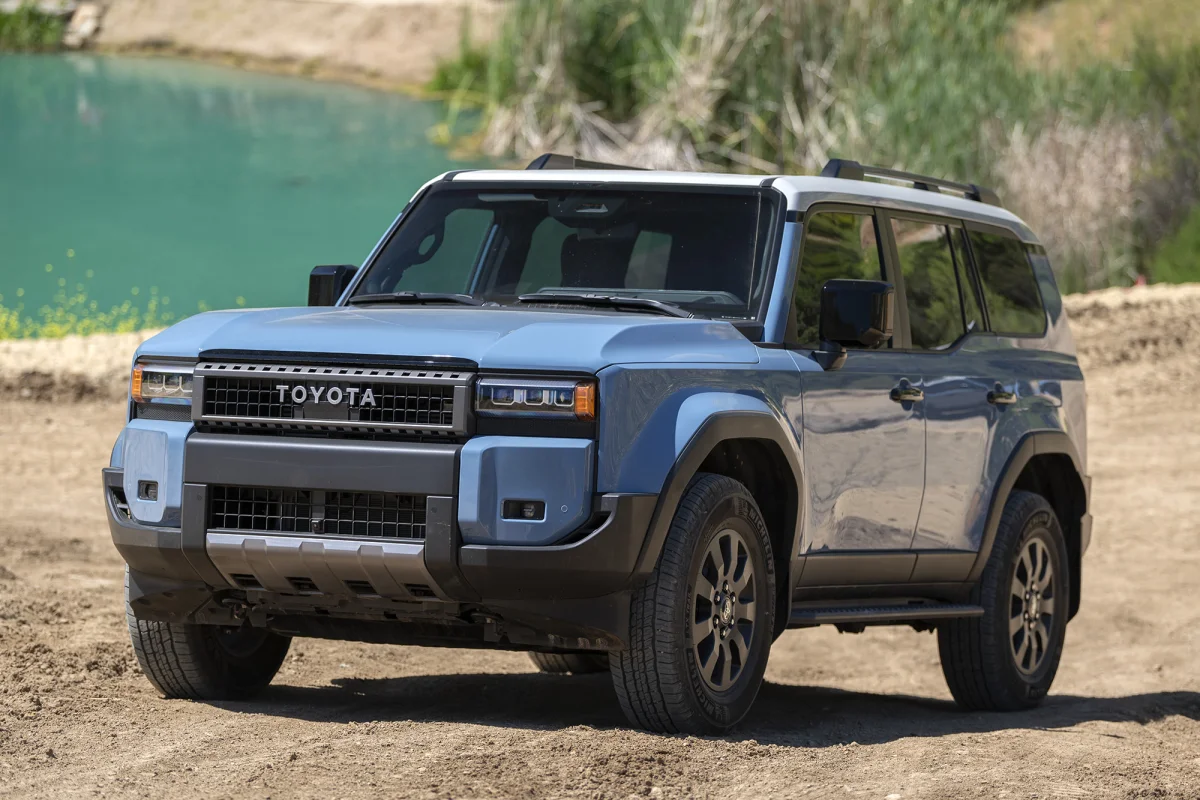
The Toyota Land Cruiser is one of the most respected vehicles ever built by any manufacturer anywhere on earth. It has earned that reputation over seven decades of continuous production and improvement. When Toyota puts a price tag on a Land Cruiser, they are not guessing. They are reflecting decades of engineering refinement, bulletproof mechanicals, and a resale value curve that defies almost everything else in the automotive world.
The Land Cruiser’s reliability is not a marketing claim. It is documented across continents, conflict zones, and some of the harshest terrains on the planet. United Nations fleets, humanitarian organizations, and militaries across the world choose the Land Cruiser specifically because it keeps running when everything else fails. That proven durability is baked into every unit that rolls off the line, whether it is destined for a Mumbai highway or a mountain trail in Uttarakhand.
What makes the Land Cruiser worth full price is the total ownership equation. The depreciation curve on a Land Cruiser is famously gentle. A well-maintained example loses value far more slowly than almost any competitor in the same price bracket. In many markets, including India, used Land Cruisers command prices close to their original purchase price even after several years of ownership. That is not normal. That is exceptional.
The interior quality has dramatically improved in the latest generation. Toyota equipped the new Land Cruiser with a 12.3-inch touchscreen, a premium audio system, a panoramic sunroof, and seating for up to eight passengers with genuine comfort for all rows. The materials feel expensive because they are expensive. Nothing in the cabin feels like a cost-cutting compromise.
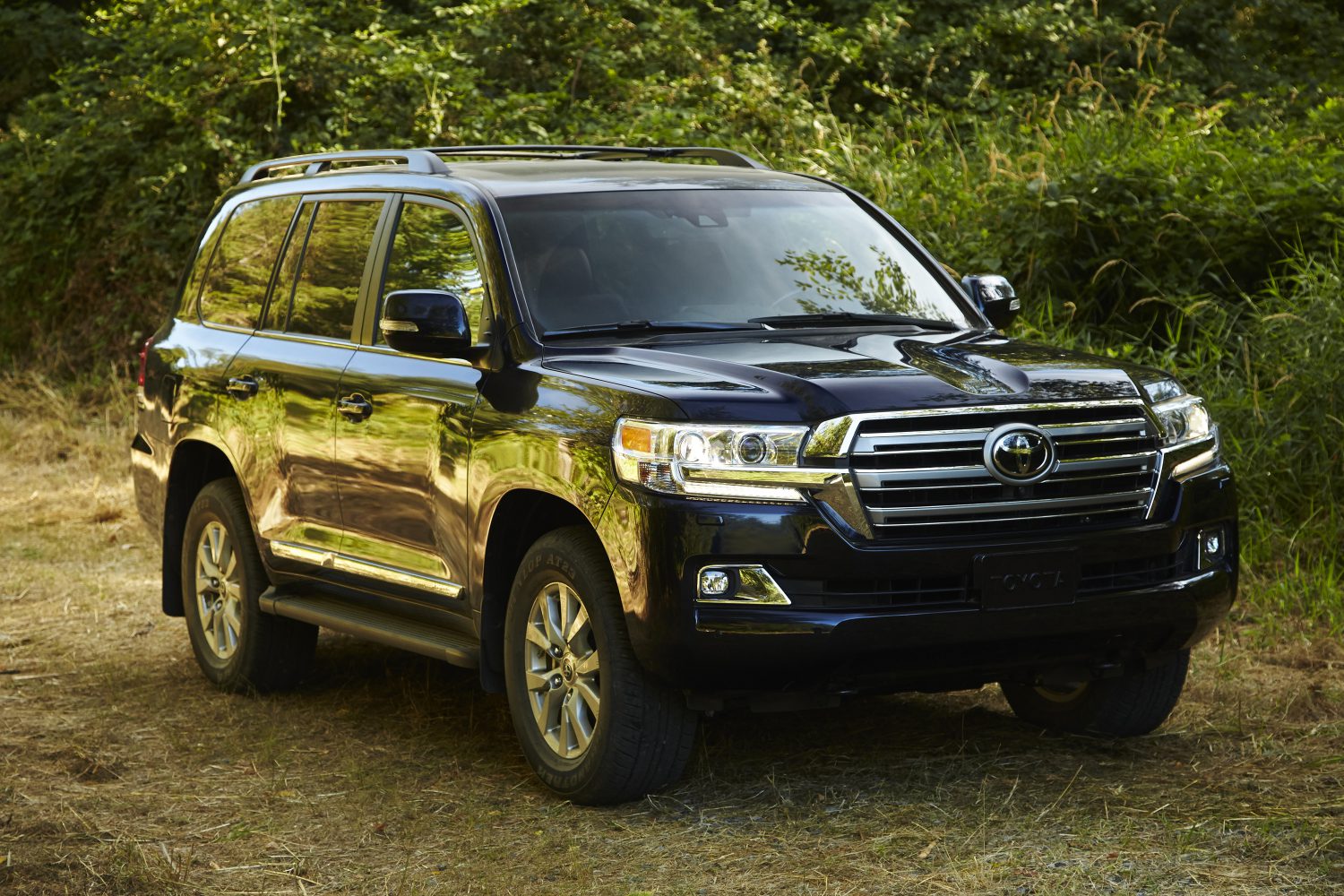
Under the hood sits a twin-turbocharged 3.5-litre V6 producing strong power figures with significantly better fuel efficiency than the old V8. The hybrid powertrain option improves efficiency further without sacrificing the low-end torque that makes the Land Cruiser so capable off-road.
The suspension system is sophisticated, with Kinetic Dynamic Suspension System technology that actively adapts to terrain changes in real time. The Land Cruiser also benefits from Toyota’s legendary after-sales network.
Parts are available everywhere. Mechanics who understand the vehicle are easy to find. Long-term ownership costs are predictably low because major failures are genuinely rare. When you calculate everything, purchase price, maintenance costs, fuel, insurance, and eventual resale value, the Land Cruiser often works out cheaper than rivals that cost less upfront.
Do not negotiate on a Land Cruiser if the dealer is offering a fair delivery timeline. Dealers sometimes have waiting lists precisely because demand consistently exceeds supply. That demand exists for very good reasons.
2. Porsche Cayenne
The Porsche Cayenne is the vehicle that proved a sports car company could build a proper SUV without betraying its soul. When Porsche launched it, the purists protested loudly. When buyers drove it, those protests went quiet almost immediately. Today, the Cayenne is not just a successful SUV. It is the benchmark against which other performance SUVs are measured.
What justifies the Cayenne’s sticker price is how thoroughly it succeeds at two things simultaneously. It handles like a sports car and carries a family like an estate. No other SUV of its size does both things with the same level of competence. The steering feel is immediate and communicative. The chassis responds to inputs with a precision that feels almost startling in a vehicle this size and weight.
The engine range is exceptional across the board. Entry-level Cayenne models use a turbocharged 3.0-litre V6 that would be considered powerful in most sports sedans. Step up to the Cayenne S, and you get a twin-turbo V8.
The Cayenne Turbo GT sits at the top with devastating performance figures that embarrass dedicated sports cars on a racetrack. Every engine option is refined, powerful, and delivers the kind of mechanical satisfaction that Porsche’s engineers have spent their entire careers perfecting.
Porsche’s build quality on the Cayenne is exceptional. The cabin materials, the switchgear, the way every control operates, everything is engineered to a standard that other luxury SUV manufacturers struggle to match. The PCM infotainment system is intuitive, fast, and genuinely enjoyable to use. Seats offer support that remains comfortable across long journeys, a combination that is harder to achieve than it sounds.
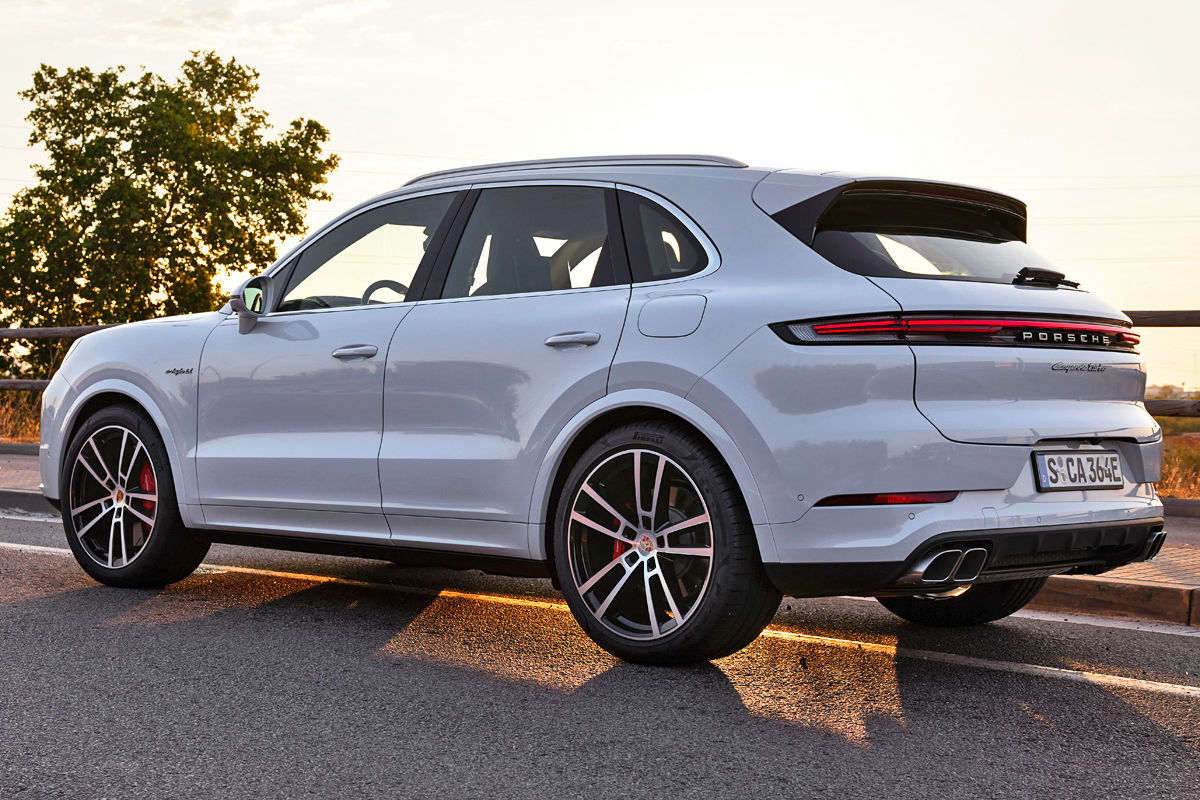
Resale values for the Cayenne are among the strongest in the luxury SUV segment. A three-year-old Cayenne in good condition sells for a surprisingly high percentage of its original price.
This is partly because there are always buyers waiting for used examples in strong condition, and partly because the vehicles age well mechanically and cosmetically.
The Cayenne’s running costs are not cheap, but they are predictable and well-documented. Porsche’s service intervals are generous, and the brand’s reliability ratings have improved dramatically over the past decade.
The Cayenne consistently scores well in long-term ownership surveys. Paying sticker price on a Cayenne is paying for engineering that you will feel every single time you drive it.
3. Mahindra Thar Roxx
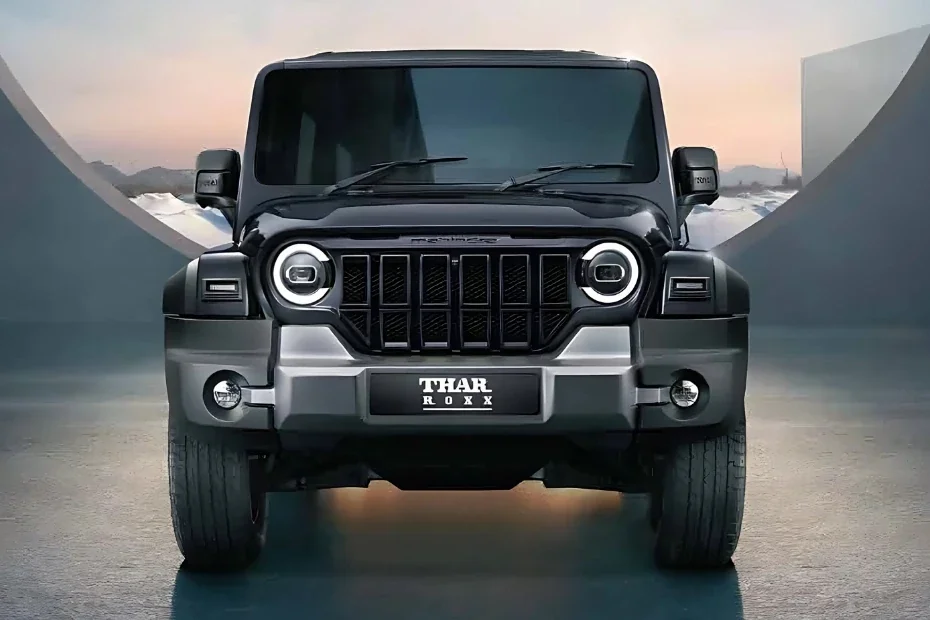
The Mahindra Thar Roxx represents something genuinely significant in the Indian automotive world. It proves that a domestically engineered SUV can compete at a product level with vehicles costing far more. When Mahindra set the price for the Thar Roxx, they did so with a level of confidence that the product could justify every rupee. Having driven extensively through varied Indian conditions, the market has largely confirmed that confidence was warranted.
The Thar Roxx is a five-door body-on-frame SUV built on a significantly updated platform compared to the original Thar. The structural rigidity is noticeably improved. The ride quality, while still appropriately firm for an off-road focused vehicle, is far more livable for daily commuting than the older model. Mahindra has genuinely resolved many of the compromises that body-on-frame SUVs traditionally force on their owners.
Feature content at the Thar Roxx’s price point is genuinely impressive. You get a large touchscreen infotainment system with wireless Apple CarPlay and Android Auto.
A panoramic sunroof is available. Level 2 ADAS safety features are included, which is a remarkable value at this price bracket. The 360-degree camera system makes urban parking manageable despite the vehicle’s dimensions. Mahindra has clearly thought carefully about what Indian buyers want from a modern SUV.
The four-wheel-drive system is properly capable off-road. The low-range gearbox is a genuine mechanical system, not a software simulation. The ground clearance is generous enough to handle serious terrain.
Thar Roxx owners regularly report taking their vehicles on routes that would stop most rivals. The capability is not marketing fiction. It is engineered hardware that works.
Mahindra’s after-sales network in India is extensive. Parts costs are reasonable and widely available. The engines, both the diesel and petrol options, are known quantities with solid reliability records across the broader Mahindra lineup. Long-term ownership costs are predictably manageable.
The Thar Roxx also holds its value remarkably well in the used market, where demand consistently outstrips the supply of well-maintained examples. Paying the full price for a Thar Roxx is a reasonable decision because the product honestly delivers on its promises. In a market segment where many competitors overpromise and underdeliver, honesty itself deserves recognition.
4. Mercedes-Benz GLE
The Mercedes-Benz GLE is the kind of vehicle that gets every major detail right simultaneously. That is genuinely difficult to achieve in a complex product like a large luxury SUV, and the fact that Mercedes has managed it consistently across generations of the GLE is a testament to the engineering resources and brand commitment behind it. This is a vehicle where the full sticker price reflects real value across multiple ownership dimensions.
The GLE’s interior is among the finest in any SUV at any price point. The MBUX infotainment system, controlled through a pair of large curved displays that sweep across the dashboard, is intuitive in a way that many competitors’ systems simply are not. Voice control is genuinely useful. Navigation is accurate and fast. The system learns your preferences over time and adapts accordingly. Technology that actually works is worth paying for.
Ride quality in the GLE with the optional air suspension is remarkable. The system reads the road ahead using cameras and adjusts the suspension proactively before obstacles are reached.
The result is a ride comfort that makes long highway journeys feel genuinely effortless. Passengers in the rear seats, which can include a proper third row in the GLE 450 configuration, are protected from road imperfections in a way that approaches what you would find in a luxury saloon.
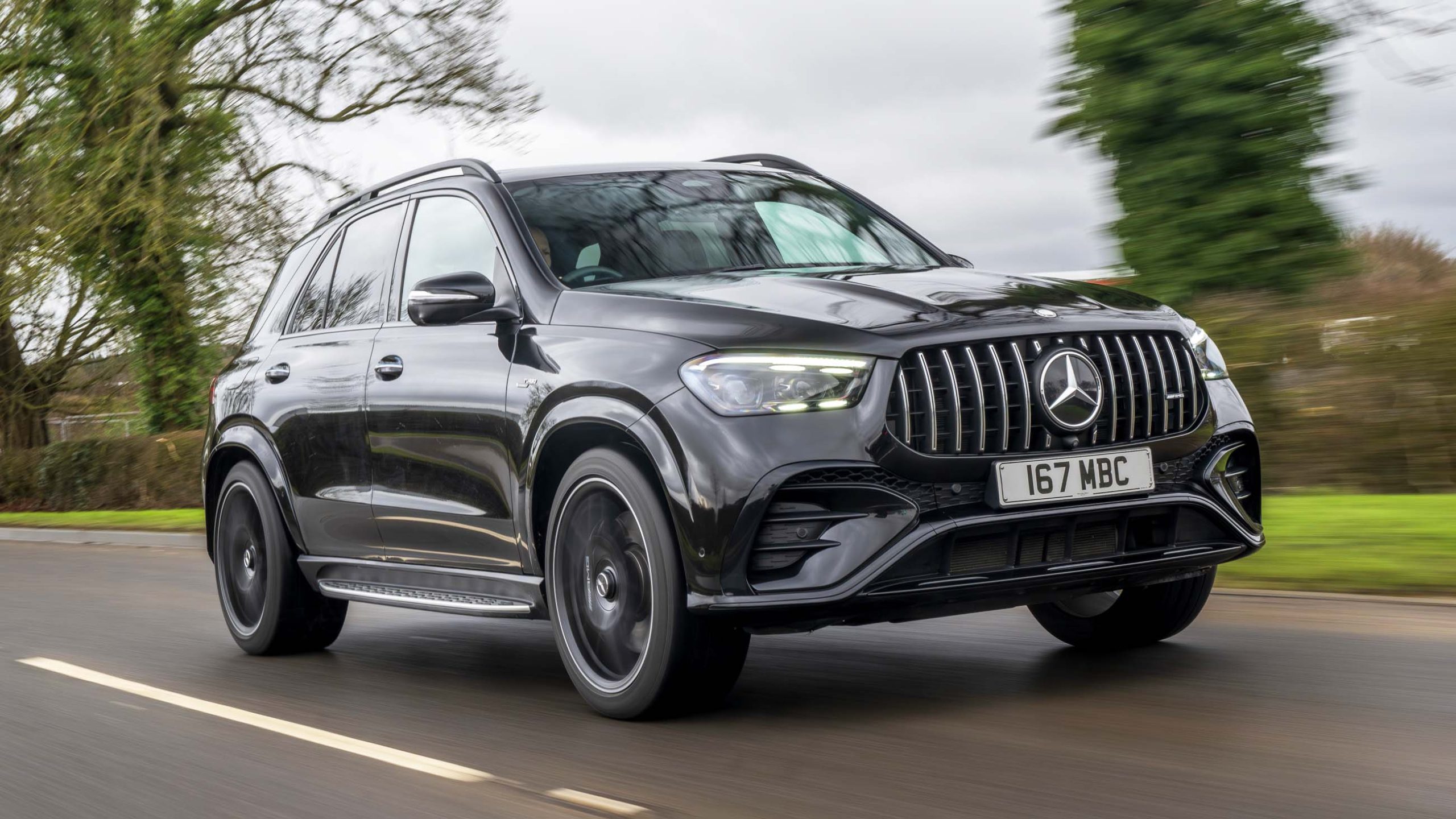
The engine choices are strong across the lineup. The inline-six mild hybrid options deliver genuine performance with improved efficiency. The GLE 63 AMG versions are properly ferocious performers.
The diesel options offer real-world fuel economy that makes large SUV ownership less punishing over time. Every powertrain option feels thoroughly developed rather than an afterthought.
Mercedes also offers a plug-in hybrid version that gives a genuine electric-only range for urban commuting. For buyers who have access to home charging, the running cost mathematics improve dramatically. The PHEV powertrain does not compromise cargo space, seating capacity, or performance in any meaningful way.
Safety technology on the GLE is comprehensive and genuinely useful. Active lane keeping assistance, automatic emergency braking, adaptive cruise control with stop-and-go functionality, and blind-spot monitoring all work consistently well. The suite of safety features is not simply a spec list addition. These systems are calibrated to work predictably without being intrusive, which is an important distinction.
Also Read: 5 Trucks Built In The US And 5 That Just Pretend To Be
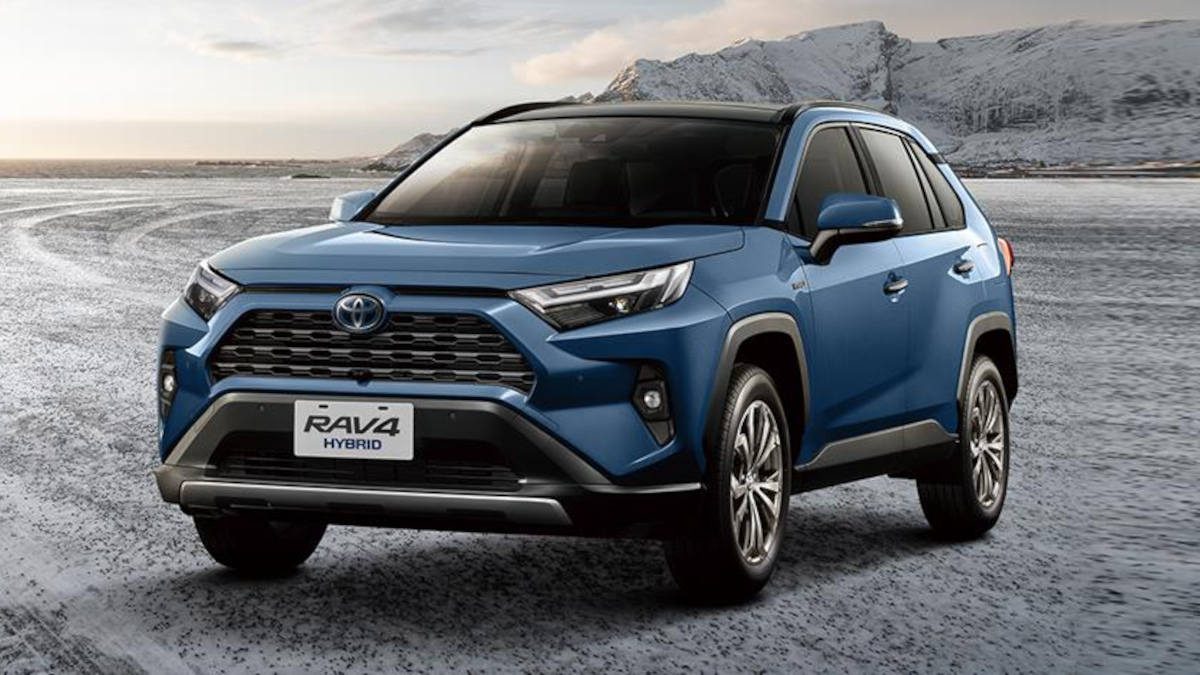
5. Toyota RAV4 Hybrid
The Toyota RAV4 Hybrid is perhaps the most straightforward case on this entire list. It is a vehicle where the purchase price, ownership costs, reliability record, and practicality combine to create a value proposition that is almost impossible to argue against. If you are shopping in the compact SUV segment and you are not seriously considering the RAV4 Hybrid, you should probably reconsider your research process.
The hybrid powertrain in the RAV4 is one of Toyota’s most mature and proven systems. This is not a technology that was rushed to market. It has been developed and refined over years of real-world deployment across multiple vehicles. The system combines a 2.5-litre naturally aspirated petrol engine with electric motors on both axles, which means all-wheel drive is available without a mechanical connection between front and rear. This Electronic On-Demand AWD system works seamlessly and adds genuine capability.
Fuel efficiency is the headline number that most buyers focus on. Real-world fuel consumption figures for the RAV4 Hybrid are genuinely excellent for a family-sized AWD SUV. Over a typical ownership period, the fuel savings versus a comparable non-hybrid SUV are significant enough to meaningfully offset any initial price premium. The mathematics strongly favour the hybrid version over its petrol-only sibling when total cost of ownership is calculated honestly.
Practicality is another area where the RAV4 simply delivers without compromise. Cargo space is generous. Rear seat legroom is adult-friendly. The loading area has a practical, usable shape that accommodates real luggage rather than just small bags. The driving position gives good visibility in all directions. Nothing about the RAV4’s packaging feels like a workaround.
Toyota’s reliability data for the RAV4 is excellent across all versions, and the hybrid system specifically has shown remarkable durability in long-term ownership studies.
Hybrid battery degradation has proven to be minimal across hundreds of thousands of units monitored over extended periods. Toyota backs the hybrid battery with a long warranty that removes the single biggest concern most buyers have about hybrid ownership.
Resale values for the RAV4 Hybrid are consistently among the strongest in its class. Used examples with reasonable mileage sell quickly at prices that reflect strong ongoing demand. Every element of the RAV4 Hybrid’s ownership story points in the same positive direction.
5 You Should Never Pay Full For
These SUVs often suffer from high depreciation, inflated pricing, or poor value in higher trims, making them less appealing at full sticker price. Models like the Infiniti QX80, fully loaded Hyundai Palisade, and top trims of some midsize SUVs can quickly become overpriced compared to what they actually offer.
Many rely on cosmetic upgrades or minor feature additions to justify higher costs, while losing value faster over time. In these cases, buyers are often better off waiting for discounts, incentives, or choosing lower trims to avoid overpaying.
1. Ford EcoSport (Outgoing Generation)
The Ford EcoSport had its moment. When it arrived in India, it genuinely disrupted the compact SUV segment and offered buyers something they had not seen before at that price point. That was then.
The outgoing generation EcoSport that lingered on sale long past its natural product cycle became something quite different from that promising original: an ageing product with outdated technology, unresolved quality issues, and competitors that had simply left it far behind.
The interior of the late-production EcoSport feels noticeably dated compared to anything in its class sold today. The materials are acceptable but not impressive. The infotainment system, which was competitive when introduced, had become one of the least capable touchscreen systems available in its segment. Resolution, responsiveness, and feature set all lagged behind what buyers could find in vehicles costing significantly less.
Reliability concerns accumulated for the EcoSport over its extended production run without being adequately addressed. Transmission smoothness was a persistent complaint across multiple owner forums and survey data.
The three-cylinder EcoBoost engine, while genuinely fun when it was working correctly, had documented sensitivity to fuel quality variations common in parts of India. Repair costs for specific electrical components were higher than the vehicle’s mainstream positioning suggested they should be.
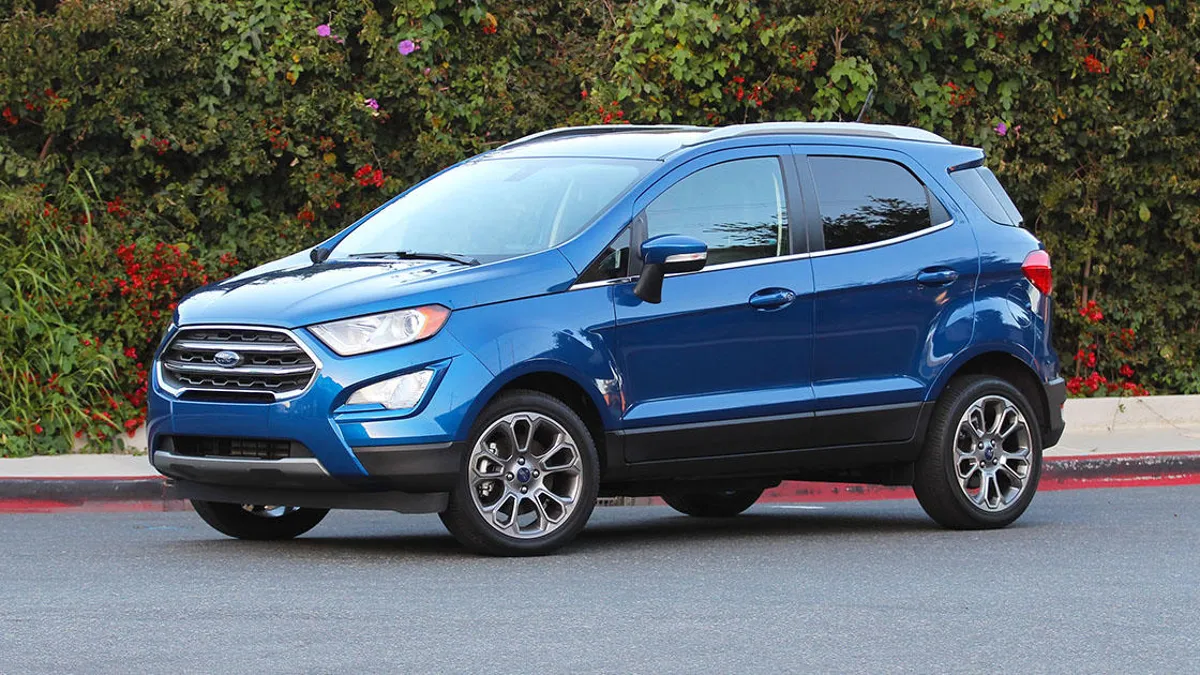
The rear-opening tailgate, which was a charming quirk early in the EcoSport’s life, became an increasingly significant practical annoyance as the SUV segment matured and buyers’ expectations evolved.
Loading and unloading in tight parking spaces was genuinely more difficult than in rivals with conventional tailgates. This is the kind of fundamental ergonomic issue that price reductions cannot solve.
Dealers were aware that the product was ageing and were using the nameplate recognition to maintain prices that the vehicle’s actual competitive standing no longer justified.
Patient buyers who refused to pay full price and negotiated firmly consistently achieved better deals. If you encounter remaining new-old-stock EcoSport examples, never pay anywhere near sticker price. The depreciation from the first day of registration on an outgoing-generation vehicle of this nature is steep and immediate.
The lesson here extends beyond the EcoSport specifically. Any SUV that has not received a significant update in four or more years while its competitors have advanced substantially should be approached with strong negotiating intent. Product age is a legitimate basis for price reduction.
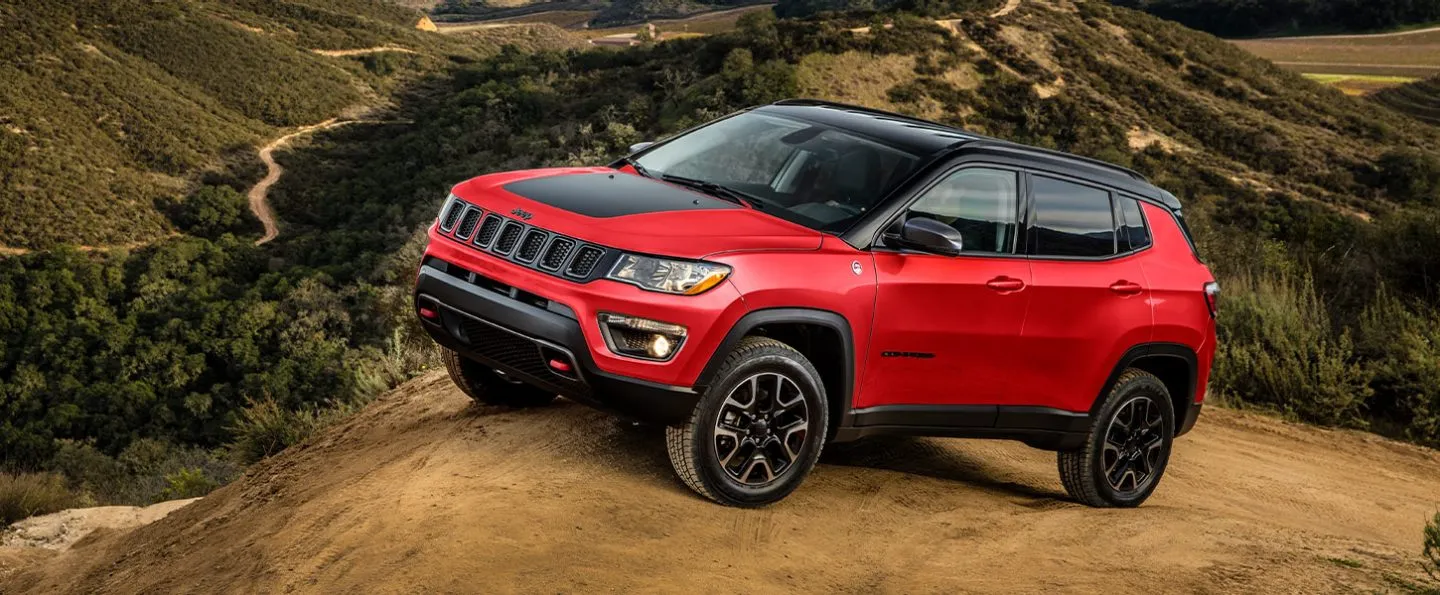
2. Jeep Compass (Base Variants)
The Jeep Compass is a vehicle with a genuine split personality problem. The top-specification variants of the Compass offer enough features, quality, and brand experience to make their prices reasonable. The base and lower-mid variants of the Compass, however, present a very different value calculation one that rarely works out in the buyer’s favour without meaningful negotiation.
The Jeep badge carries strong aspirational weight in India and globally. Dealers lean heavily on that brand prestige to maintain prices on base Compass variants that are, when examined honestly, significantly underspecified for their asking price. The base Compass misses features that buyers can find in Indian-made SUVs costing considerably less. Ventilated seats, wireless charging, a premium sound system, and a panoramic sunroof are all absent at entry levels where rivals include several of them.
The 1.4-litre MultiAir turbocharged petrol engine in the Compass has had documented reliability concerns that Jeep and FCA have been slow to fully resolve. Turbocharger issues and cooling system sensitivity have appeared across multiple owner reports in markets including India. The diesel variant, while more robust, adds significant cost that pushes buyers toward higher trim levels to make the price differential worthwhile. The engine situation creates an uncomfortable middle ground where neither powertrain feels like an obvious choice.
After-sales service is another area where Compass ownership can become frustrating below the top trim levels. Jeep’s dealer network in India, while improved, remains thinner than mainstream competitors like Toyota, Hyundai, or Mahindra.
Parts availability for less common components can involve wait times that mainstream brands simply do not impose on their customers. When something goes wrong and in the Compass at base trim levels, the probability is not negligible the support infrastructure is not as robust as the price suggests it should be.
Depreciation on base and lower-mid Compass variants is steeper than the brand’s aspirational positioning would suggest. The used market is well supplied with Compass examples at lower trim levels, which consistently suppresses resale values. Negotiating five to seven percent off the sticker price on a base or Sport variant of the Compass is entirely achievable and thoroughly warranted.
3. Hyundai Tucson (Specific Trims)
The Hyundai Tucson presents a genuinely interesting case for negotiators because it is a vehicle where specific trim levels represent very different value propositions. The higher-specification Tucson variants with the turbocharged engine and full technology suite are competitive products. The lower and mid-range variants, particularly at launch prices before market discounting normalises, often deliver a value equation that does not hold up to serious scrutiny.
Hyundai’s pricing strategy with the Tucson in India has historically shown a pattern of launching with ambitious prices that gradually moderate as the initial excitement fades and competitors respond. Buyers who enter the market early, paying full sticker price on mid-tier variants, regularly find that their vehicles depreciate faster in the initial period than those who waited or negotiated more aggressively. This is an important pattern to recognise before making any decision.
The mid-tier Tucson variants miss the 360-degree camera system that has become expected at this price point. The seat ventilation and heating combination is absent in middle variants despite being present in similarly priced competitors. Hyundai’s Bluelink connected car technology, while functional, has had connectivity reliability issues that owners have documented across various forums. Technology that does not work consistently has no value regardless of how impressive the spec sheet looks.
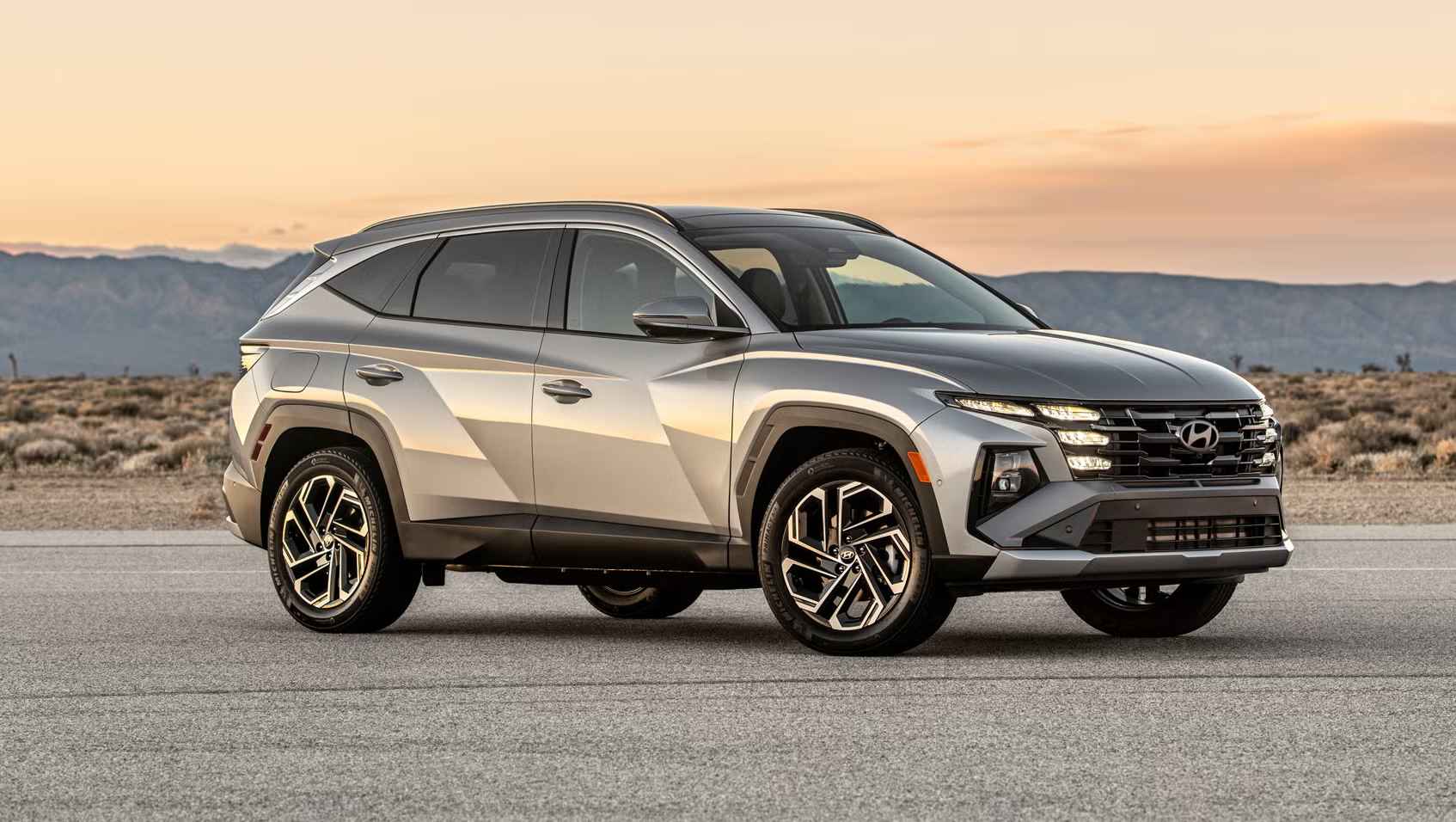
The Tucson’s ride quality over sharp urban road irregularities a very relevant metric for Indian road conditions is acceptable but not exceptional. The suspension tuning that works well on smooth tarmac can transmit abruptness over the potholed surfaces common in many Indian cities. Competitors at similar price points have calibrated their suspension more thoughtfully for the local road reality.
The 2.0-litre naturally aspirated petrol engine available in lower variants is genuinely underpowered for a vehicle of the Tucson’s size and weight. Merging onto expressways, overtaking on single-lane highways, and climbing hill roads all require considerably more planning than they should.
Paying full price for an underpowered version of an otherwise capable vehicle is paying a premium for a product that will frustrate you repeatedly in real-world use.
Negotiate confidently on the Tucson, particularly on variants below the top two trim levels. End-of-month and end-of-quarter timing significantly improves your negotiating position, as Hyundai dealerships work toward volume targets that make them more flexible on pricing.
4. MG Hector (After Initial Hype Period)
The MG Hector arrived in India with enormous fanfare, a genuinely impressive feature list for its launch price, and marketing that positioned it as a technology-forward alternative to the established players. In those early months, the excitement was at least partially justified. The panoramic sunroof, the large touchscreen, and the internet-connected features were genuinely ahead of what the competition offered at that moment. That moment, however, has passed.
The Indian SUV market moves fast. What was segment-leading technology in the Hector at launch has been matched and often exceeded by multiple competitors who came later with similar or better features at comparable or lower prices. The Hector’s advantage has evaporated, but the pricing has not always reflected this reality with appropriate speed. Dealers, particularly for well-equipped variants, have maintained prices that no longer reflect competitive positioning.
Build quality concerns have been a consistent theme in Hector ownership reports that accumulated after the initial honeymoon period. Panel gaps, interior trim fit, and the feel of specific controls have drawn criticism from owners who paid premium prices expecting premium quality. These are not catastrophic failures. They are the accumulated small disappointments that remind an owner, repeatedly, that the vehicle’s physical quality does not match its asking price.
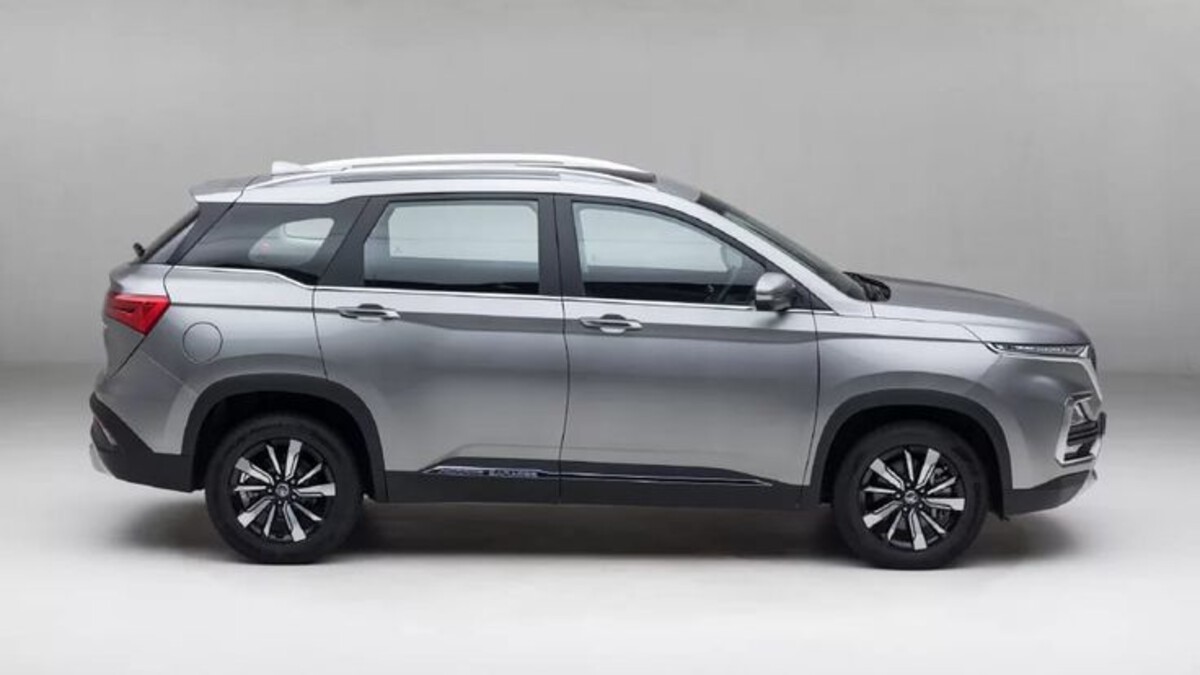
The MG i-SMART connected technology, which was a significant selling point, has experienced software reliability issues that have frustrated owners.
Apps crashing, connectivity dropping, and voice assistant inconsistency are problems that simply should not exist in a vehicle positioned at this price point. Technology that requires frequent workarounds is a quality problem, not a feature advantage.
Morris Garages’ parent company SAIC has also faced brand perception challenges stemming from broader concerns about Chinese automotive brands, which have complicated resale values in India more than in some other markets. This creates a depreciation reality that buyers must factor into their purchase economics.
An MG Hector purchased at full sticker price often depreciates significantly faster than Toyota, Hyundai, or Mahindra equivalents with similar feature content.
Negotiate firmly on any Hector purchase. Discounts of fifty thousand to one lakh rupees or more are regularly achievable with proper timing and confidence. Never pay the window sticker price.
5. Kia Seltos (Higher Variants)
The Kia Seltos deserves a nuanced entry on this list because it is a fundamentally good vehicle whose value proposition varies significantly depending on trim level and the moment in the product cycle when you are buying.
The base and lower-mid Seltos variants are genuinely strong buys. The highest-specification variants, however, require careful consideration before committing to full sticker price.
The top Seltos variants price themselves into territory where they begin competing against vehicles with significantly stronger long-term ownership mathematics.
The fully-loaded Seltos costs approach the entry points of larger, better-equipped SUVs from brands with stronger resale value histories. This is a classic automotive pricing trap where the temptation to add features pushes you into a price bracket where you would be better served by a different vehicle entirely.
Kia’s rapid model update cycle, while a positive sign of product investment, creates a specific risk for top-trim buyers. When Kia introduces a significant facelift or next-generation Seltos which historically happens on relatively compressed timescales the previous generation’s resale value drops with unusual speed.
Top-trim variants, because they cost more initially, lose larger absolute sums in this depreciation event. Lower-trim buyers are relatively insulated by their lower initial investment.
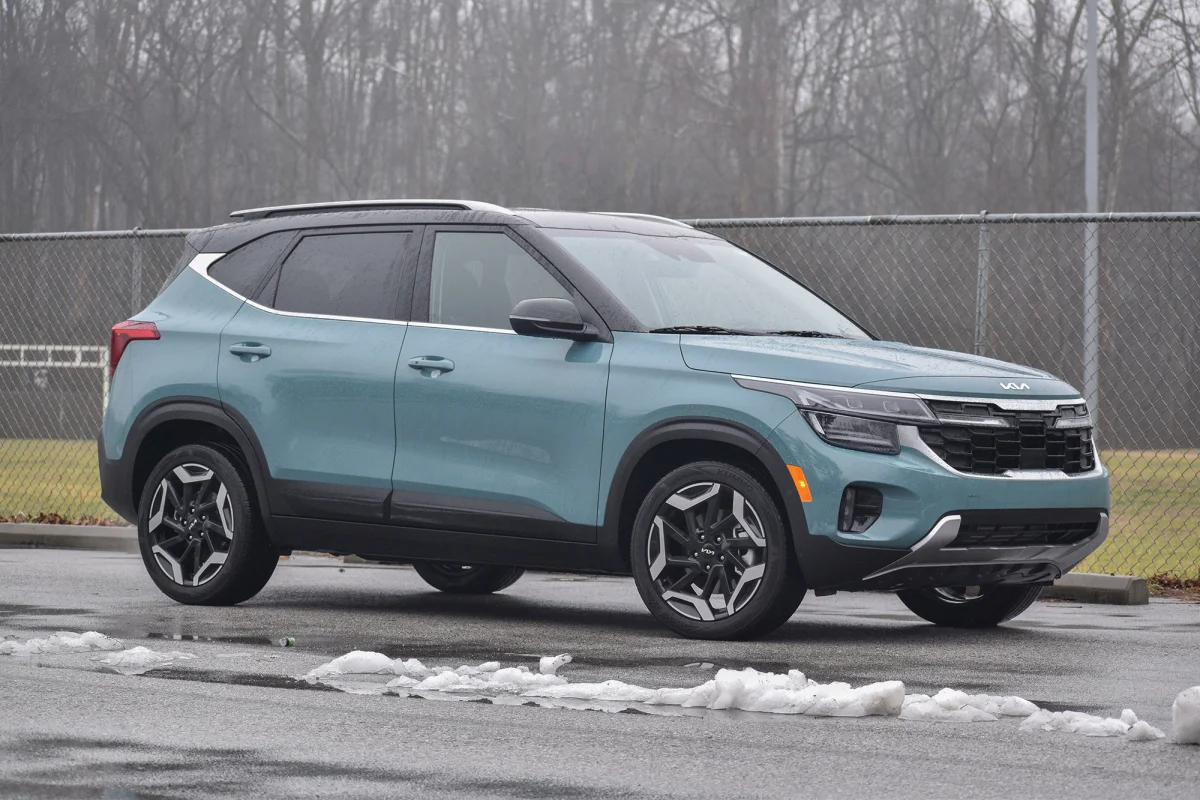
The turbocharged petrol engine options in higher Seltos variants are genuinely enjoyable to drive. That enjoyment, however, comes with service cost realities that lower-trim buyers do not face. Turbocharged engines require more attention, more precise maintenance, and can generate higher repair bills when issues arise. The running cost advantage over naturally aspirated alternatives narrows considerably when these factors are properly accounted for.
Kia’s connected car features, while impressive in their specification, have been variable in real-world reliability across user reports. Over-the-air updates have sometimes introduced new issues rather than resolving existing ones. The technology is promising but has not yet achieved the seamless reliability that justifies paying premium prices without negotiation.
Negotiate any Seltos purchase above the mid-tier variants with confidence. Dealers regularly offer exchange bonuses, accessories packages, and finance rate reductions that effectively reduce the cost by meaningful amounts.
Consumer festive season offers during Navratri and Diwali periods regularly produce discounts that justify waiting if your timeline is flexible. Walking in prepared with competitor pricing information is your strongest negotiating tool.
Also Read: 5 SUVs That Look Better Than A Range Rover And 5 That Look Cheap Next To One
