
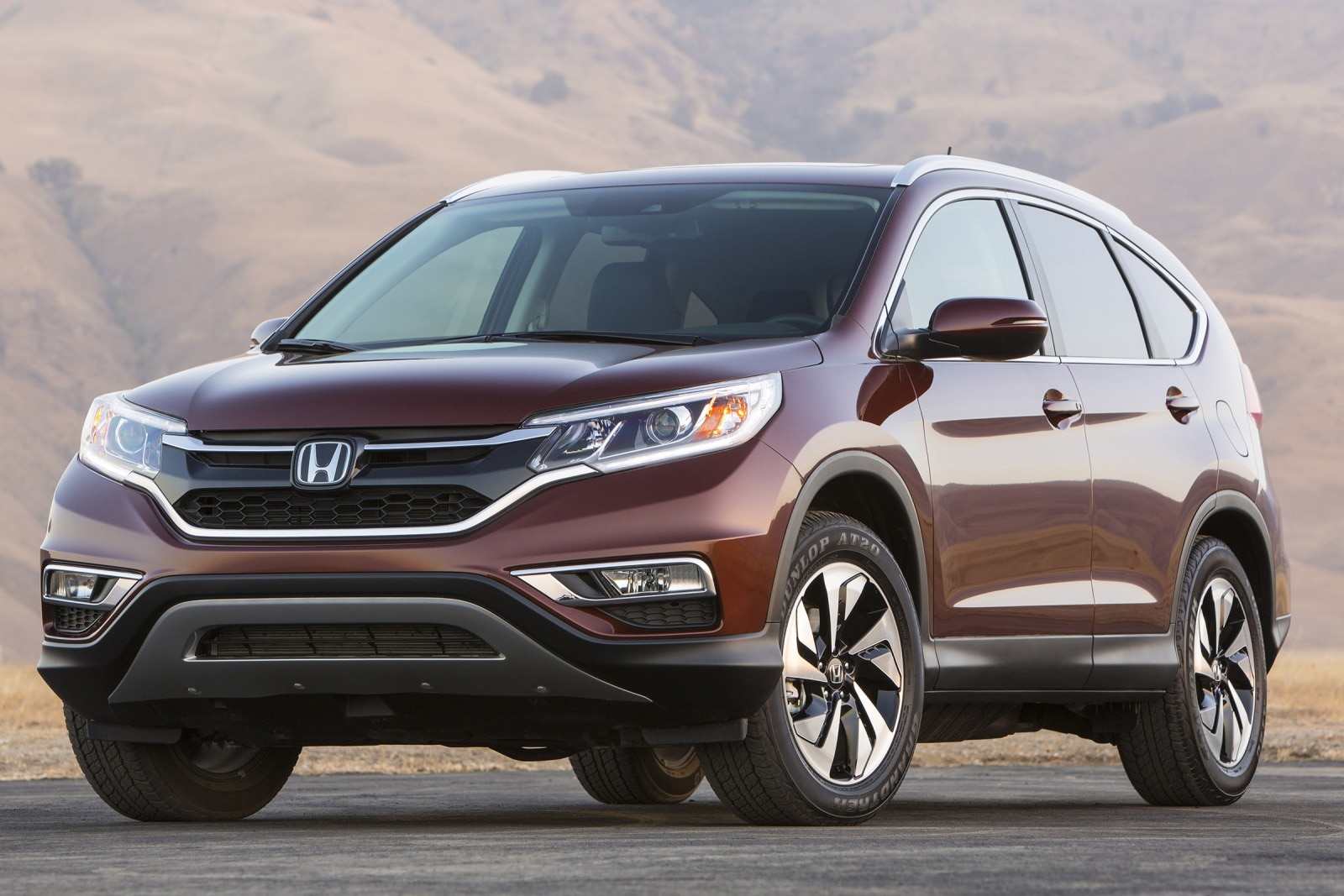
Compact SUVs have become the most popular vehicle segment. Millions of buyers choose them every year for their versatility and comfort. They offer the perfect balance between car-like handling and SUV practicality.
However, owning a compact SUV goes far beyond the sticker price. Annual maintenance costs can vary dramatically from one model to another. Some compact SUVs cost less than $500 per year to maintain.
Others can drain your wallet with $1,200 or more in annual upkeep. Understanding these costs before buying can save you thousands of dollars over time. Reliability ratings, parts availability, and labor complexity all play a role. Japanese brands like Toyota and Honda consistently top reliability charts.
Korean brands like Hyundai and Kia have made massive strides in recent years. European brands like Volkswagen and BMW tend to carry higher maintenance bills.
American options like the Ford Escape sit comfortably in the middle ground. This comprehensive guide ranks the most popular compact SUVs from lowest to highest annual maintenance cost. Each entry includes detailed specifications, common issues, and ownership insights. Whether you prioritize saving money or performance, this guide will help you make a smarter purchase decision.
1. Toyota RAV4, ~$429/Year
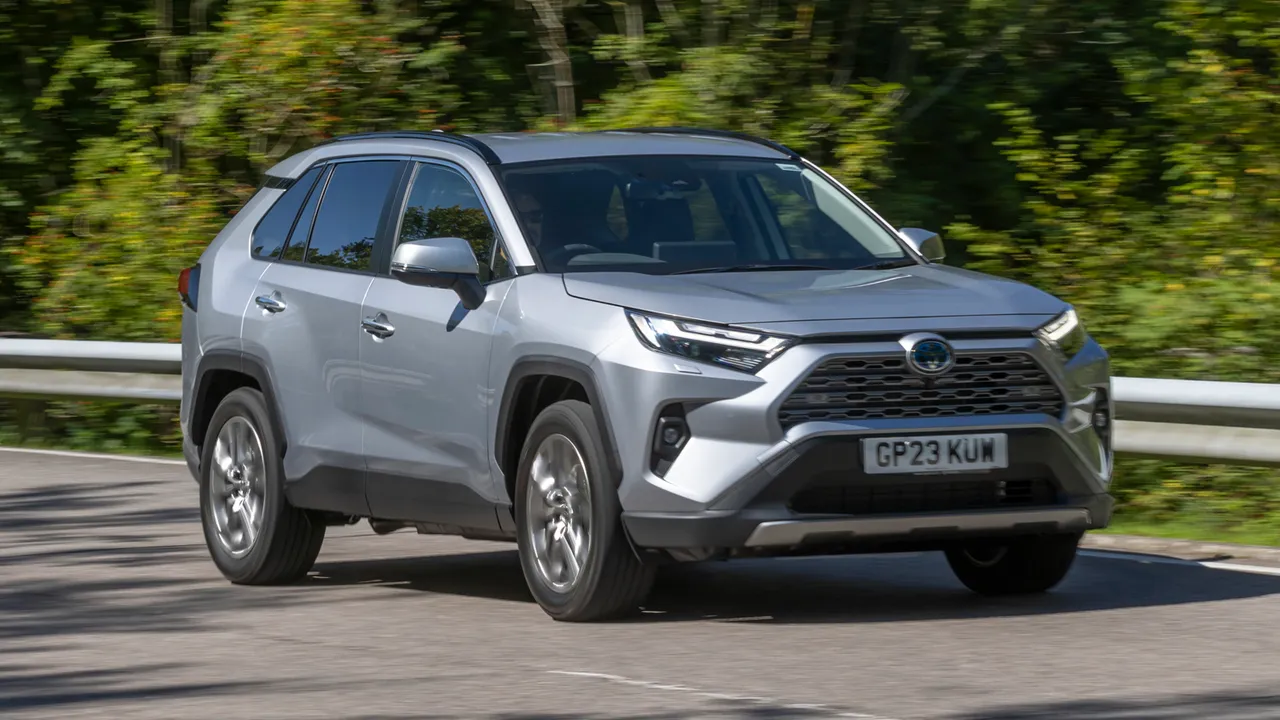
The Toyota RAV4 consistently ranks as the least expensive compact SUV to maintain annually. It has earned this reputation through decades of engineering refinement and rock-solid dependability.
Owners across the globe trust the RAV4 to deliver low-cost, hassle-free ownership. Toyota’s legendary build quality means fewer unexpected repair bills throughout the ownership period.
The RAV4’s 2.5-liter four-cylinder engine is one of the most proven powerplants on the market. It requires minimal maintenance beyond standard oil changes and air filter replacements. Toyota engineers designed this engine with simplicity and longevity as the primary goals. Even at 150,000 miles, many RAV4 engines run without major mechanical failures.
Oil change intervals are set at every 10,000 miles using synthetic oil. This reduces the frequency of service visits compared to older maintenance schedules. Brake pads on the RAV4 typically last between 40,000 and 60,000 miles. This is well above the industry average, saving owners significant money over time.
| Feature | Specification |
|---|---|
| Engine | 2.5L 4-cylinder DOHC |
| Horsepower | 203 hp @ 6,600 RPM |
| Torque | 184 lb-ft @ 5,000 RPM |
| Length | 180.9 to 181.1 inches (4,600 to 4,601 mm) |
| Width | 73.0 to 74.0 inches (1,855 mm) |
The RAV4 Hybrid variant shares much of the same mechanical DNA as the standard model. Its hybrid battery is covered under an 8-year, 100,000-mile warranty by Toyota. Regenerative braking in the hybrid significantly reduces brake wear even further. Many hybrid RAV4 owners report original brake pads lasting well beyond 80,000 miles.
Toyota’s parts network is the most extensive in the automotive world. Replacement components are widely available at every level of the supply chain. Independent mechanics can service the RAV4 without specialized equipment or proprietary tools. This keeps labor rates competitive and prevents dealer monopoly on repairs.
The RAV4 also holds its resale value exceptionally well. This compounds the financial benefit beyond just low maintenance costs. Buying a RAV4 means lower repair bills and stronger long-term investment value. It is simply the most financially sensible compact SUV available today.
2. Honda CR-V, ~$456/Year
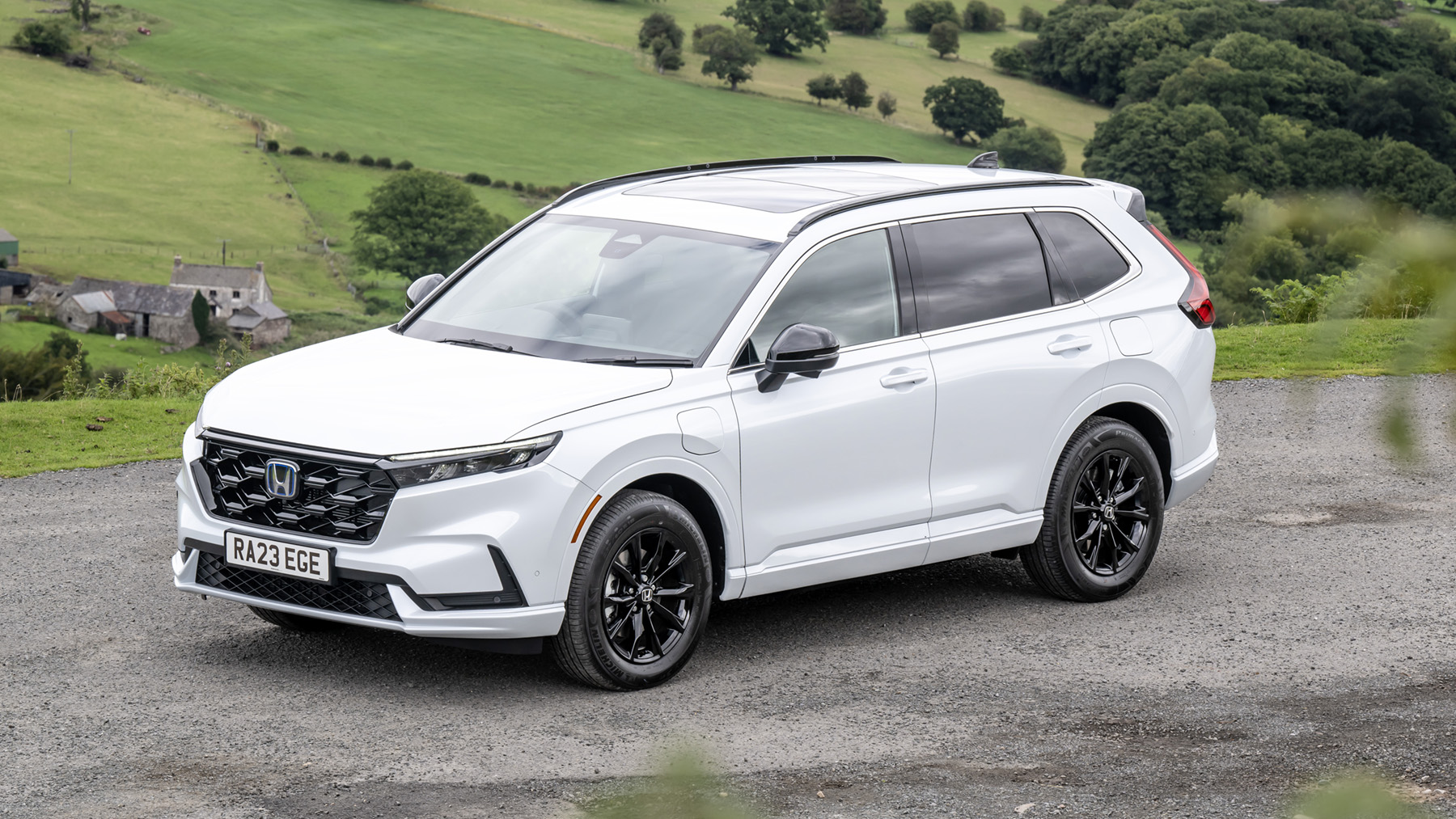
The Honda CR-V is a perennial favourite among budget-conscious SUV buyers. It combines a thoughtful interior layout with mechanically sound engineering.
Honda’s commitment to long-lasting drivetrains makes the CR-V one of the cheapest SUVs to own over time. Its annual maintenance cost hovers just above the RAV4, making it an equally strong financial choice.
The CR-V uses a 1.5-liter turbocharged engine that delivers strong low-end torque. This engine is efficient in daily commuting scenarios, especially in stop-and-go traffic.
Honda’s VTEC technology helps maintain power delivery while conserving fuel. The result is a driving experience that feels more responsive than the engine displacement suggests.
Honda’s CVT transmission has been refined significantly in recent generations. Earlier CR-V CVTs received criticism for a rubbery, disconnected driving feel. The latest units are smoother and more reliable than their predecessors. Most CR-V CVTs last well beyond 150,000 miles with proper fluid changes every 30,000 miles.
| Feature | Specification |
|---|---|
| Engine | 1.5L Turbocharged 4-cylinder |
| Horsepower | 190 hp @ 5,600 RPM |
| Torque | 179 lb-ft @ 1,700 RPM |
| Length | 184.8 inches (4,694 mm) |
| Width | 73.5 inches (1,867 mm) |
One documented concern involves oil dilution in the 1.5T engine in colder climates. Fuel can occasionally mix with engine oil during short-trip cold-weather driving. Honda released a software update to address this issue on the most affected model years. Owners in warmer climates rarely experience this problem at all.
The CR-V’s brake system is straightforward and affordable to service. Pads and rotors are widely available from both OEM and aftermarket suppliers. A full brake job on the CR-V costs significantly less than comparable European models. Routine tire rotations and alignment checks round out the most common annual maintenance needs.
The CR-V consistently earns top safety scores from both IIHS and NHTSA. Its structural integrity reduces the likelihood of expensive collision-related repairs. Honda dealerships are plentiful, and independent mechanics are very familiar with the platform. Owning a CR-V means spending less time and money at the repair shop year after year.
3. Mazda CX-5, ~$468/Year
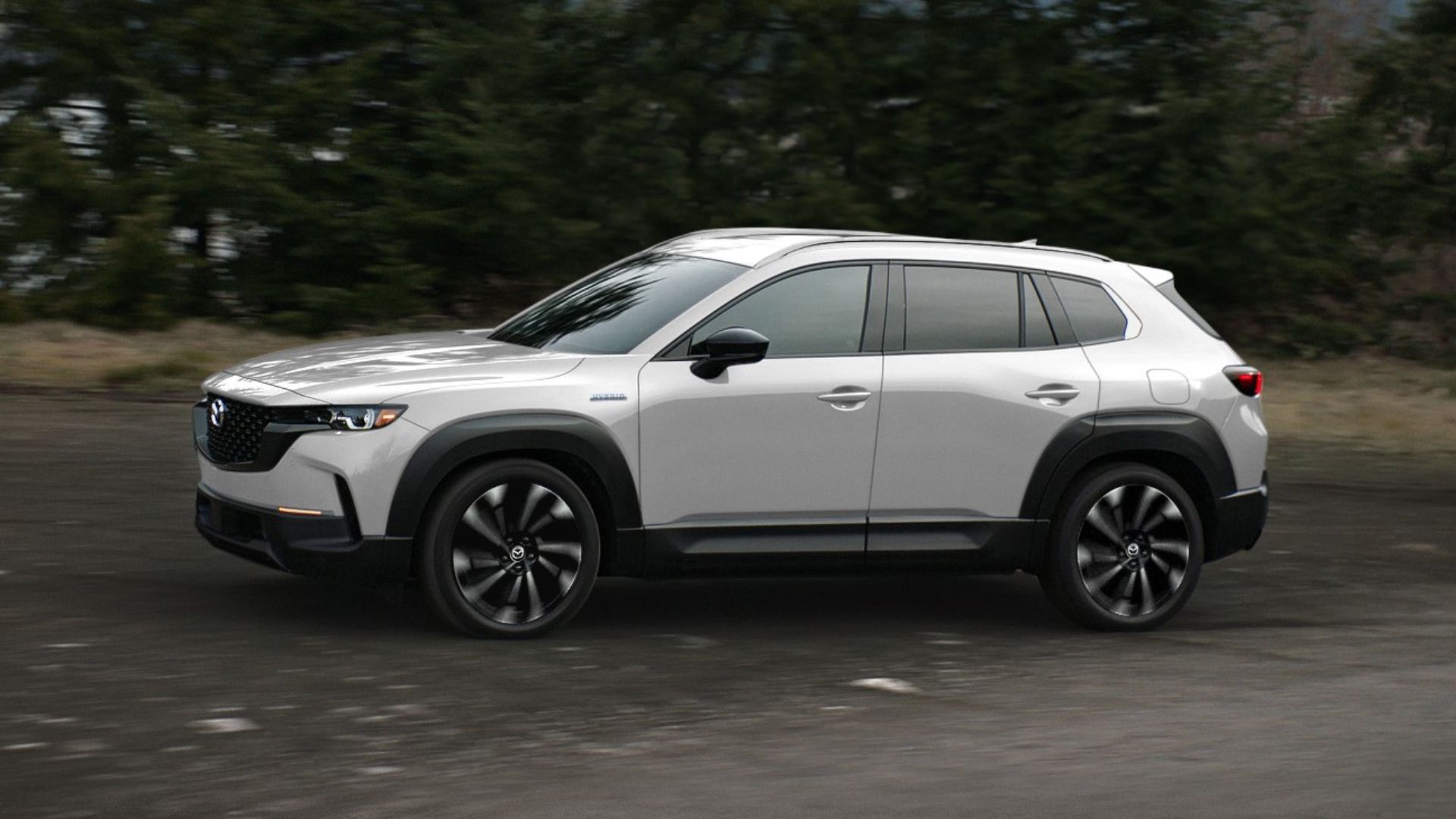
The Mazda CX-5 punches far above its price class in terms of interior quality and driving dynamics. Despite its near-premium positioning, its maintenance costs remain refreshingly low.
Mazda’s SkyActiv engineering philosophy prioritizes mechanical efficiency and long component life. The CX-5 delivers a driving experience closer to a luxury SUV without the luxury repair bills.
Mazda’s SkyActiv-G engine uses a high compression ratio for improved thermal efficiency. This design extracts more power and economy from each drop of fuel burned. The naturally aspirated setup avoids the complexity and potential failure points of turbocharging. Fewer forced induction components mean fewer expensive repairs over the vehicle’s lifetime.
The CX-5’s 6-speed automatic transmission is a traditional unit rather than a CVT. Traditional automatics are generally more durable and less expensive to service long-term. Fluid changes every 40,000–60,000 miles keep this transmission operating smoothly. Most independent transmission shops can service the unit without specialized Mazda tools.
| Feature | Specification |
|---|---|
| Engine | 2.5L SkyActiv-G 4-cylinder |
| Horsepower | 187 hp @ 6,000 RPM |
| Torque | 186 lb-ft @ 4,000 RPM |
| Length | 180.1 inches (4,575 mm) |
| Width | 72.6 inches (1,844 mm) |
Mazda uses higher-grade materials throughout the CX-5’s cabin and mechanical systems. Body panels are thicker than the segment average, reducing noise and improving structural rigidity. Better materials generally translate to longer service intervals and lower replacement frequency. This attention to detail pays off significantly in long-term ownership costs.
The CX-5 Turbo variant uses a 2.5-liter turbocharged engine producing 256 hp. This version carries slightly higher maintenance costs due to added turbo system complexity. Premium fuel is required for the turbocharged model, adding to long-term running costs. Most buyers find the base 2.5-liter naturally aspirated engine more than sufficient.
CX-5 parts availability is growing as the model gains global popularity. Prices for common maintenance items like filters, belts, and pads are competitive. Mazda dealership service departments are known for honest service recommendations. Independent mechanics also find the CX-5 easy to work on due to its logical layout.
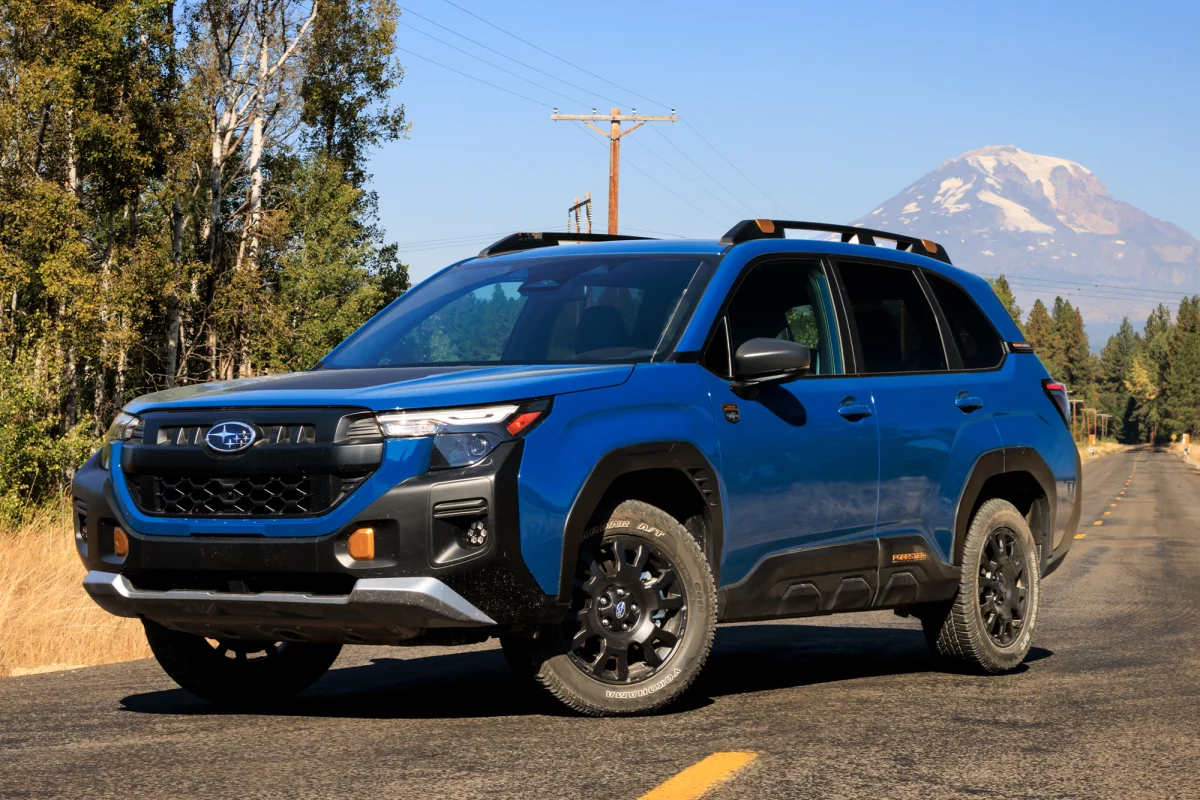
4. Subaru Forester, ~$512/Year
The Subaru Forester appeals strongly to outdoor enthusiasts and all-weather drivers. It comes standard with Subaru’s Symmetrical All-Wheel Drive on every trim level.
This standard AWD adds some complexity compared to front-wheel-drive base models. However, the Forester’s maintenance costs remain reasonable for what it offers.
Subaru’s horizontally-opposed Boxer engine is a unique design that sits low in the chassis. This low center of gravity contributes to the Forester’s excellent handling and stability.
The Boxer design is durable but requires slightly more labor for certain service procedures. Head gasket access, for example, takes longer than on conventional inline engines.
Subaru’s CVT transmission is branded as the Lineartronic unit on the Forester. It offers smooth, seamless acceleration suited to the Forester’s comfortable driving character.
CVT fluid should be changed every 30,000 miles for optimal longevity. Neglecting CVT fluid changes is the most common cause of early transmission failure on this model.
| Feature | Specification |
|---|---|
| Engine | 2.5L Subaru Boxer 4-cylinder |
| Horsepower | 182 hp @ 5,800 RPM |
| Torque | 176 lb-ft @ 4,400 RPM |
| Length | 183.3 inches |
| Width | 72.0 inches |
The Forester’s standard AWD system uses a viscous coupling center differential. This passive system requires no additional electronic management or complex programming. AWD-related maintenance is limited to differential fluid changes every 30,000 miles. The simplicity of this setup keeps AWD maintenance costs lower than electronically managed systems.
Older Subaru Boxer engines (pre-2011) were known for head gasket failures. Modern Forester engines use revised multi-layer steel head gaskets that are far more durable. Owners of 2014 and newer Foresters rarely encounter this historical issue. The problem has been effectively engineered out of the current-generation engine family.
The Forester is a strong choice for buyers who need reliable year-round traction. Its moderate maintenance costs make it an accessible option for adventurous families. Subaru dealerships are widely available across North America. The brand also has a passionate enthusiast community that generates abundant DIY maintenance resources.
Also Read: 10 Pickups Where the Frame Outlasts Three Owners
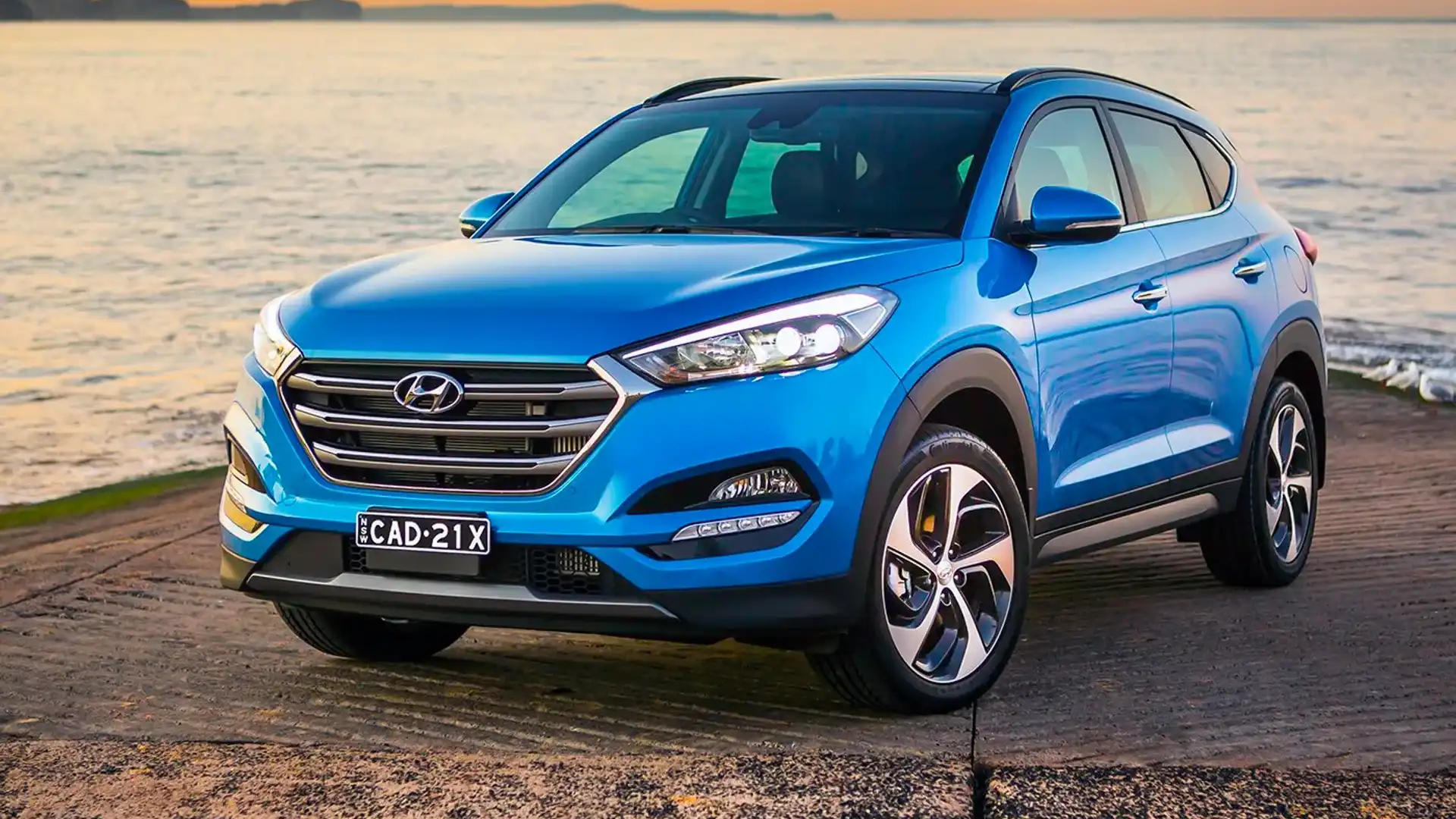
5. Hyundai Tucson, ~$544/Year
The Hyundai Tucson represents South Korea’s best effort in the mainstream compact SUV segment. It offers a compelling combination of features, style, and competitive pricing.
Hyundai’s reliability has improved dramatically over the past decade. Tucson now competes seriously with Japanese rivals on long-term dependability metrics.
The Tucson’s 2.5-liter naturally aspirated engine is smooth and reliable in everyday use. It avoids the complexity of turbocharging for buyers who prioritize long-term simplicity.
Service intervals are set at 7,500 miles, which is slightly shorter than those of Toyota or Honda. This means marginally more frequent oil changes, adding a small amount to annual costs.
Hyundai also offers a 1.6-liter turbocharged engine in the Tucson lineup. This engine produces 180 hp and is paired with a 7-speed dual-clutch transmission.
Dual-clutch transmissions can be more expensive to service than traditional automatics. Buyers who prioritize the lowest maintenance costs should lean toward the base 2.5-liter option.
| Feature | Specification |
|---|---|
| Engine | 2.5L 4-cylinder (base) |
| Horsepower | 187 hp @ 6,100 RPM |
| Torque | 178 lb-ft @ 4,000 RPM |
| Length | 4,630 mm (182.3 inches) |
| Width | 1,865 mm (73.4 inches) |
Hyundai’s HTRAC AWD system is electronically controlled and highly capable. It can send up to 50% of the torque to the rear wheels when needed. The system adds some complexity versus a front-wheel-drive configuration. However, most owners find the added traction worth the minimal additional maintenance requirement.
The Tucson’s braking system is conventional and affordable to maintain. OEM brake components are reasonably priced and widely available online. Most independent mechanics charge $150–$250 for a standard brake pad replacement on the Tucson. Rotor replacement adds another $100–$150 per axle if needed simultaneously.
Dealer service departments have grown more competent and better-equipped in recent years. The Tucson is now a smart choice for budget-minded buyers who want modern features at a fair price.
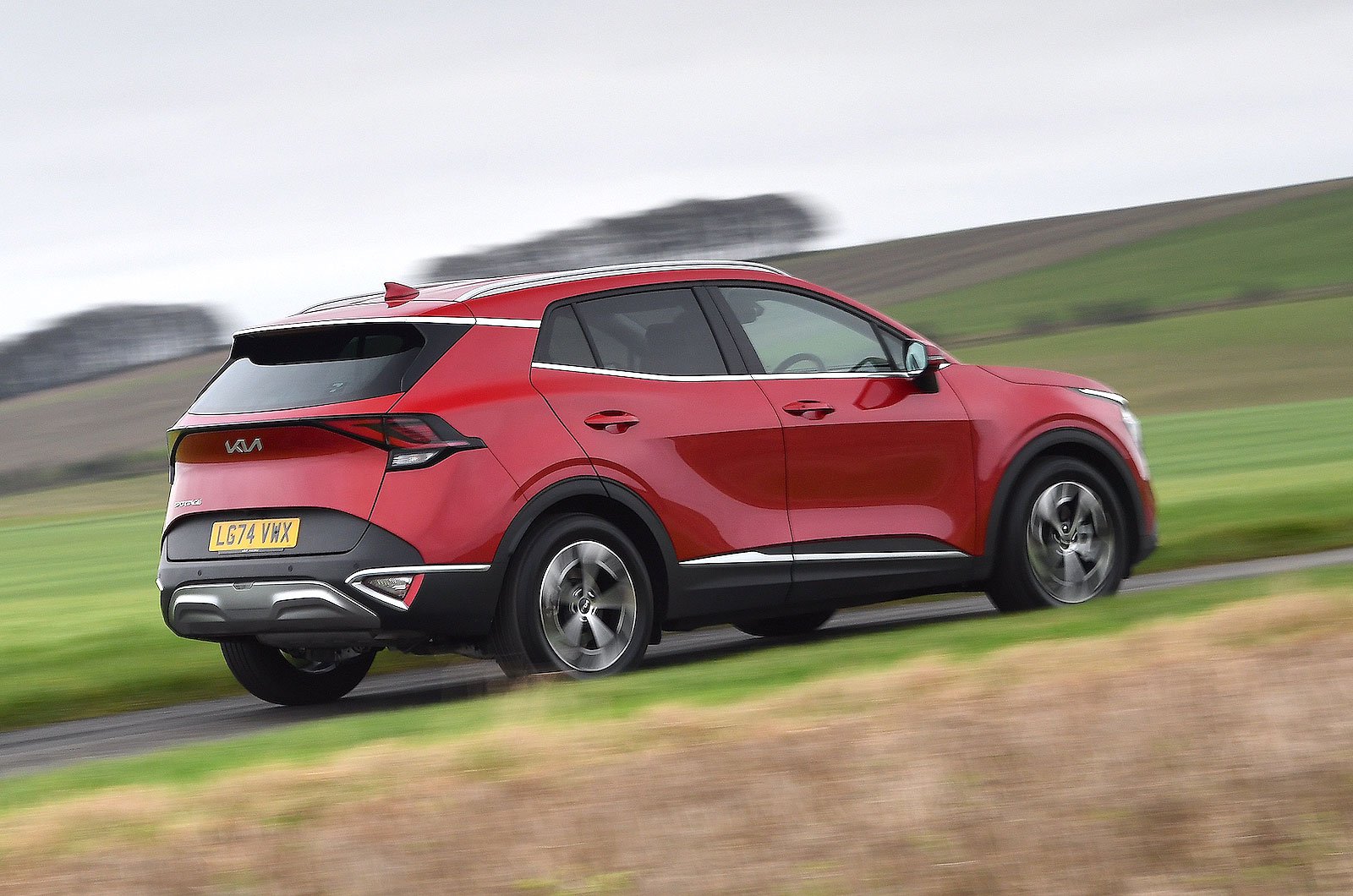
6. Kia Sportage, ~$553/Year
The Kia Sportage shares its platform with the Hyundai Tucson but offers a distinctly bold design. Kia’s design language has evolved dramatically, making the Sportage one of the segment’s most eye-catching options.
Maintenance costs align closely with Tucson, given their shared mechanical architecture. The Sportage appeals to buyers who want reliability without sacrificing visual impact.
The Sportage’s 2.5-liter base engine is shared directly with the Tucson. This part’s commonality is excellent news for long-term parts availability and cost control. Service procedures are nearly identical between the two vehicles. Mechanics familiar with one vehicle can service the other without additional training.
Kia also offers a 1.6T hybrid and plug-in hybrid Sportage variant. These models carry higher upfront costs but lower fuel expenses over time. Hybrid battery warranties extend to 10 years/100,000 miles on all Kia hybrid models. This generous coverage reduces the financial risk associated with hybrid battery replacement.
| Feature | Specification |
|---|---|
| Engine | 2.5L 4-cylinder (base) |
| Horsepower | 187 hp @ 6,100 RPM |
| Torque | 178 lb-ft @ 4,000 RPM |
| Length | 184.4 inches (4,684 mm) |
| Width | 73.4 inches (1,864 mm) |
The Sportage’s suspension system uses a conventional MacPherson strut front setup. This is one of the most common and affordable suspension configurations to service. Shock absorber replacement is straightforward, and aftermarket parts are plentiful. Alignment costs are comparable to those of other mainstream compact SUVs in this segment.
Kia’s 10-year/100,000-mile powertrain warranty is a significant ownership benefit. This coverage provides substantial financial protection for new vehicle buyers. However, the extended warranty only applies to the original owner of the vehicle. Used Sportage buyers should factor reduced warranty coverage into their total cost of ownership calculations.
The Sportage competes directly with the RAV4 and CR-V in terms of space and features. Its slightly lower pricing creates better initial value for comparable specification levels. Combined with reasonable maintenance costs, the Sportage offers a strong ownership package. It is a particularly smart choice for first-time SUV buyers seeking style and practicality.
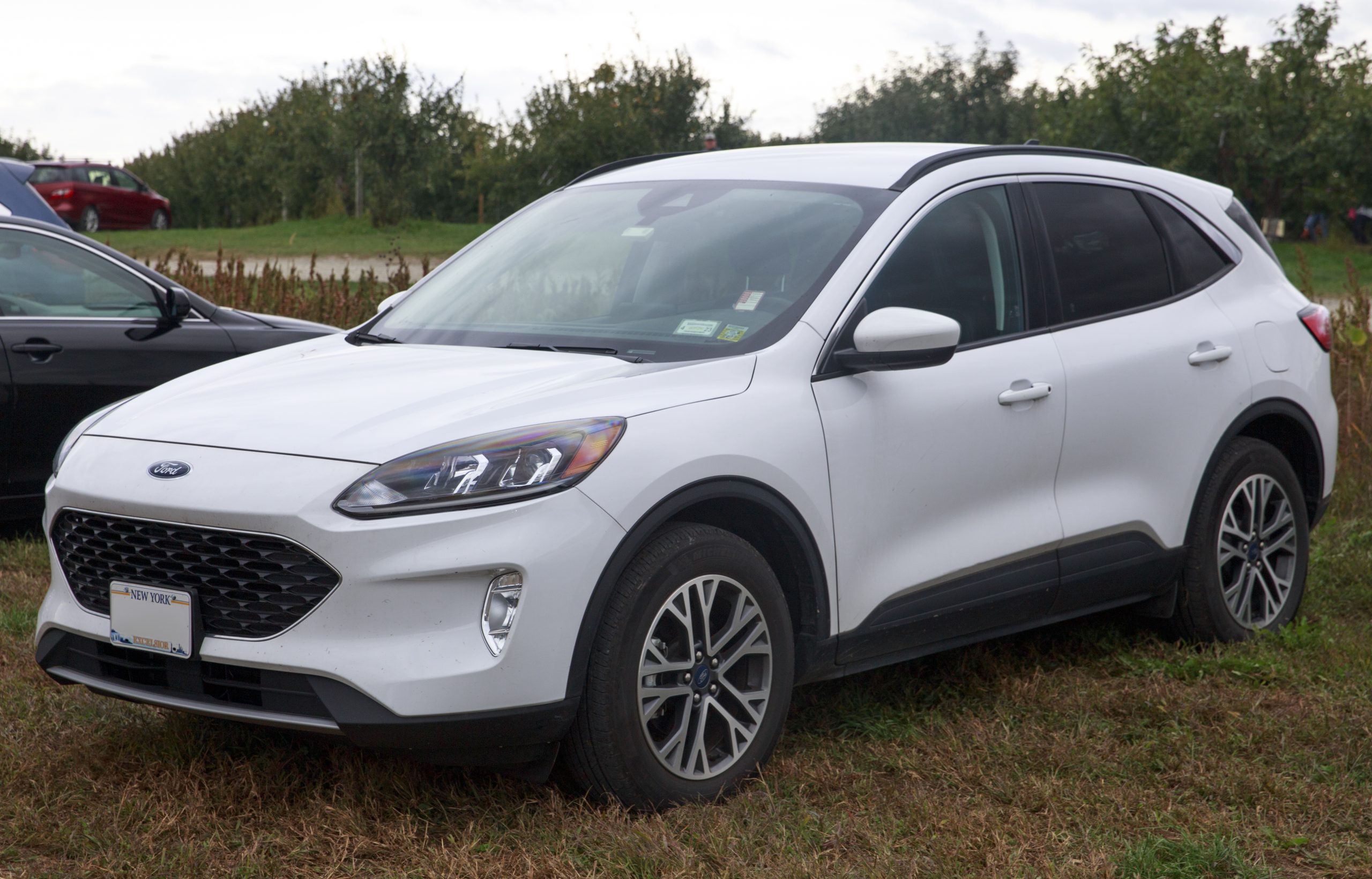
7. Ford Escape, ~$600/Year
The Ford Escape has been a cornerstone of the American compact SUV market for over two decades. It offers a diverse powertrain lineup, including turbocharged gas, hybrid, and plug-in hybrid options.
The Escape’s maintenance costs sit comfortably in the middle of the segment. Ford’s wide dealer network ensures convenient and competitive service access nationwide.
The base 1.5-liter EcoBoost three-cylinder is Ford’s most fuel-efficient Escape engine. It delivers competitive power output despite its small displacement through turbocharging.
Turbocharged engines generally require more careful maintenance than naturally aspirated designs. Regular oil changes using the correct synthetic oil specification are critical for long-term engine health.
Ford’s EcoBoost engines have a mixed reliability history across various applications. The Escape’s 1.5T unit has been more reliable than earlier EcoBoost engines in other Ford vehicles.
However, owners should be vigilant about coolant system maintenance on this engine. Early coolant leaks have been documented on some model years and should be addressed promptly.
| Feature | Specification |
|---|---|
| Engine | 1.5L EcoBoost Turbocharged 3-cylinder (base) |
| Horsepower | 181 hp @ 6,000 RPM |
| Torque | 190 lb-ft @ 1,400 RPM |
| Length | 181.2 inches (4,602 mm) |
| Width | 74.1 inches (1,882 mm) |
The optional 2.0-liter EcoBoost four-cylinder is more powerful but carries higher fuel and maintenance costs. It produces 250 hp and pairs with an 8-speed automatic transmission. This engine is better suited to buyers who frequently tow or carry heavier loads. Maintenance intervals and costs are similar to the 1.5T but with slightly higher fuel consumption.
The Escape Hybrid uses a 2.5-liter Atkinson-cycle engine paired with an electric motor. This powertrain delivers 44 MPG combined, which is exceptional for a compact SUV. Hybrid maintenance benefits include reduced brake wear from regenerative braking. The Ford hybrid system uses a proven design shared with several other Ford and Lincoln models.
The Escape’s slightly higher maintenance cost versus Japanese rivals reflects its turbocharged powertrain complexity. However, the cost premium over a RAV4 or CR-V is relatively modest in absolute terms. For buyers who prioritize American engineering and prefer Ford’s dealer network, the Escape remains a sensible choice. Its hybrid variant especially makes financial sense for high-mileage urban drivers.
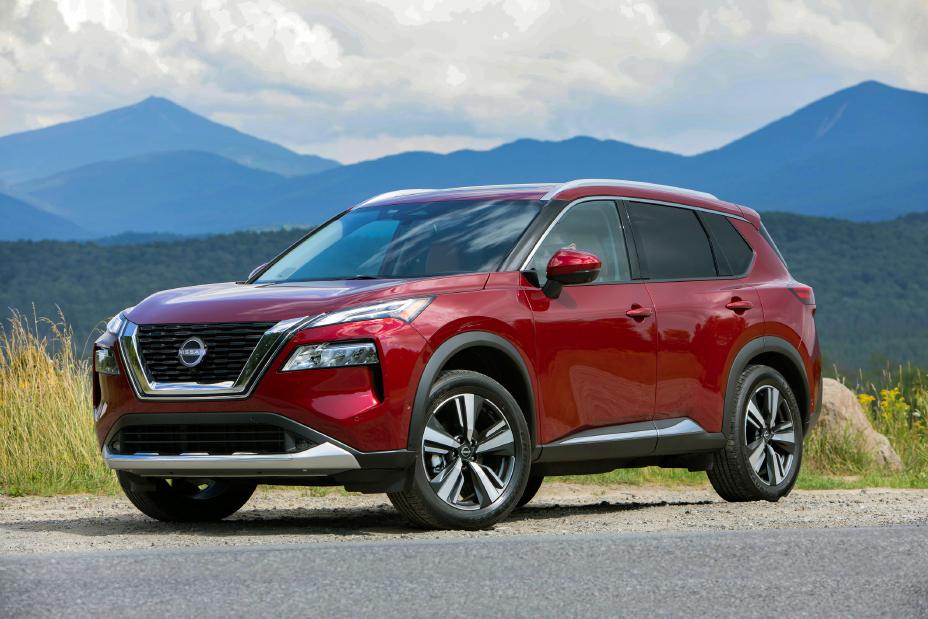
8. Nissan Rogue, ~$612/Year
The Nissan Rogue is one of America’s best-selling compact SUVs, prized for its comfortable ride and spacious cabin. It prioritizes passenger comfort over driving dynamics.
Maintenance costs are average for the segment, neither impressively low nor alarmingly high. The Rogue suits buyers who want a relaxed, uncomplicated ownership experience.
The Rogue’s Variable Compression Turbo engine is a genuinely innovative technology. It can alter its compression ratio between 8:1 and 14:1 in real time for optimal efficiency.
This technology is impressive on paper, but it introduces additional mechanical complexity. Long-term reliability data on this engine are still accumulating, as it is a relatively new design.
Nissan’s Xtronic CVT has a somewhat mixed long-term reputation among owners. Earlier Nissan CVTs had documented reliability issues at higher mileages.
The current generation has been improved, but still carries some uncertainty for high-mileage buyers. Regular CVT fluid changes every 30,000 miles are strongly recommended to maximize transmission lifespan.
| Feature | Specification |
|---|---|
| Engine | 1.5L Variable Compression Turbo 3-cylinder |
| Horsepower | 201 hp @ 5,600 RPM |
| Torque | 225 lb-ft @ 2,400 RPM |
| Length | 183.0 inches (4,648 mm) |
| Width | 72.4 inches (1,839 mm) |
The Rogue’s suspension tuning prioritizes comfort over handling precision. This soft setup means body roll is noticeable in cornering situations. Shock absorbers and struts may wear slightly faster on rough roads due to softer spring rates. Replacement costs for front struts average $400–$600 per axle, including labor.
Nissan’s ProPilot Assist semi-autonomous driving system is standard on higher trims. This system uses radar and cameras to maintain lane position and following distance. Camera and radar calibration after windshield replacement can add $200–$400 to repair costs. This is worth factoring into long-term ownership budgeting for higher-trim models.
The Rogue’s comfortable interior and smooth ride make it a favourite for family road trips. Its generous cargo space and comfortable rear seating are genuine ownership advantages. Maintenance costs are not class-leading but are entirely manageable for most buyers. The Rogue is a solid all-rounder with no major financial surprises in normal ownership scenarios.
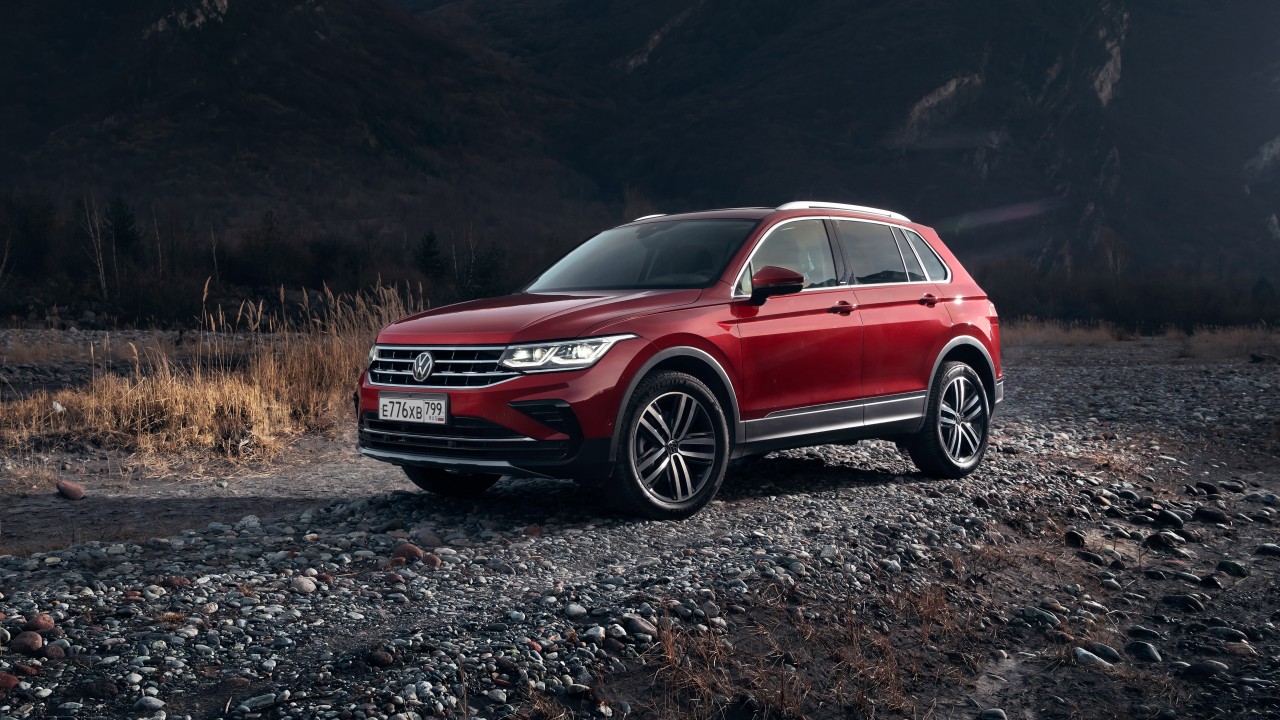
9. Volkswagen Tiguan, ~$756/Year
The Volkswagen Tiguan offers genuine European build quality and a more premium driving experience. Its interior quality and refinement exceed most Japanese competitors at a similar price point.
However, this premium experience comes with noticeably higher annual maintenance costs. The Tiguan is best suited for buyers who genuinely value the VW ownership experience.
The Tiguan’s 2.0T TSI engine is a sophisticated, high-output unit. It delivers strong low-end torque ideal for highway merging and passing maneuvers.
VW’s turbocharged engines require premium synthetic oil and strict adherence to service intervals. Skipping oil changes or using incorrect oil grades can lead to expensive carbon buildup on intake valves.
Direct injection engines like the TSI are prone to carbon deposit accumulation on intake valves. This issue, known as carbon buildup, requires periodic walnut blasting to resolve.
A walnut blasting service typically costs $300–$500 and is needed every 40,000–60,000 miles. This is a predictable but unavoidable additional expense for TSI engine owners.
| Feature | Specification |
|---|---|
| Engine | 2.0L TSI Turbocharged 4-cylinder |
| Horsepower | 184 hp @ 4,400 RPM |
| Torque | 221 lb-ft @ 1,600 RPM |
| Length | 4,509 mm (177.5 inches) |
| Width | 1,839 mm (72.4 inches) |
VW’s DSG (Direct Shift Gearbox) dual-clutch transmission is available on some Tiguan variants. DSG fluid and clutch pack service is required every 40,000 miles. This service is more expensive than traditional automatic transmission fluid changes. Budget approximately $300–$500 for a full DSG service at a VW dealership or qualified independent shop.
The Tiguan’s 4MOTION AWD system is electronically sophisticated and highly capable. It provides excellent traction in adverse weather conditions. However, Haldex AWD coupling service is required every 40,000 miles. Neglecting this service can lead to premature AWD component failure and expensive repairs.
The Tiguan is a rewarding vehicle to own for drivers who appreciate European engineering. Its long wheelbase version offers genuinely practical three-row seating as an option. Fuel economy is below the segment average, adding to total annual running costs. Buyers should enter Tiguan ownership with a realistic budget for slightly higher routine maintenance expenses.
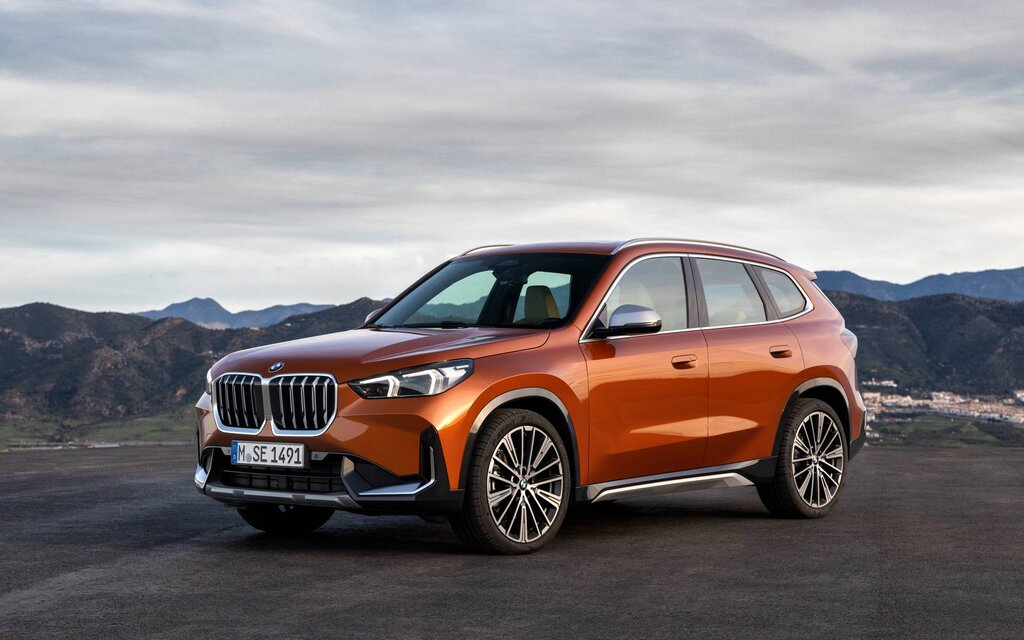
10. BMW X1, ~$1,034/Year
The BMW X1 occupies the luxury end of the compact SUV spectrum. It delivers genuinely sporty driving dynamics that no mainstream competitor can match.
However, this performance and prestige come with significantly higher annual maintenance costs. The X1 is best suited for buyers who prioritize the driving experience above all else.
The X1’s 2.0-liter TwinPower Turbo engine produces a class-leading 241 horsepower. It delivers smooth, effortless power delivery that raises every driving scenario.
BMW’s engine requires premium fuel and BMW-approved synthetic oil for all services. Using non-approved fluids can void warranties and potentially cause expensive engine damage.
BMW’s service intervals are extended, but their costs per visit are substantially higher. A standard oil change at a BMW dealer can cost $150–$200 versus $50–$80 at a Toyota dealer.
Spark plug replacement requires more labor time due to tight engine bay packaging. Cooling system maintenance is more complex and uses specialized BMW-specific coolant formulations.
| Feature | Specification |
|---|---|
| Engine | 2.0L TwinPower Turbo 4-cylinder |
| Horsepower | 241 hp @ 5,000 RPM |
| Torque | 295 lb-ft @ 1,450 RPM |
| Length | 4,500 mm (177.2 inches) |
| Width | 1,845 mm (72.6 inches) |
Brake maintenance on the X1 is a premium expense. BMW favors larger, higher-performance brake components compared to mainstream rivals. Front brake pad and rotor replacement typically costs $600–$900 at a BMW dealership. Independent specialist shops can reduce this cost to $400–$600 using quality aftermarket components.
BMW’s xDrive AWD system is sophisticated and electronically controlled. It provides exceptional traction and dynamic stability in all driving conditions. The system requires periodic transfer case and differential fluid changes. These services add to the already raised annual maintenance budget for xDrive-equipped models.
The X1 is genuinely exceptional as a driver’s SUV. Its steering precision, body control, and powertrain refinement are in a different class. For buyers who see their vehicle as a driving tool rather than just transportation, the X1 justifies its higher costs. However, budget-conscious buyers should carefully consider whether the premium experience justifies the significant financial premium.
