
There is a primal, visceral connection between human beings and the sound of a powerful engine. Throughout automotive history, certain machines have transcended mere transportation and become acoustic experiences in their own right.
The rumble of a V8 at idle, the scream of a high-revving flat-six, or the thunderous bark of a supercharged V8 at wide-open throttle these are sounds that make hearts race and necks snap in parking lots worldwide.
Factory exhaust notes are engineered combinations of science and artistry. Automakers spend millions of dollars and thousands of engineering hours tuning intake systems, exhaust headers, muffler configurations, and resonator placement to achieve exactly the right sound profile. Some manufacturers embrace the loud, antisocial roar as a marketing tool. Others stumble into legendary noise almost by accident.
The cars featured here represent the absolute pinnacle of factory-authorized noise. These are vehicles that arrived at dealerships, passed regulatory tests, carried full warranties, and still managed to assault eardrums in ways most aftermarket exhaust companies can only dream about.
From American muscle to Italian exotica, from British grand tourers to German engineering masterpieces, these eight machines define what it means to be thunderously, gloriously, unforgettably loud straight from the factory floor.
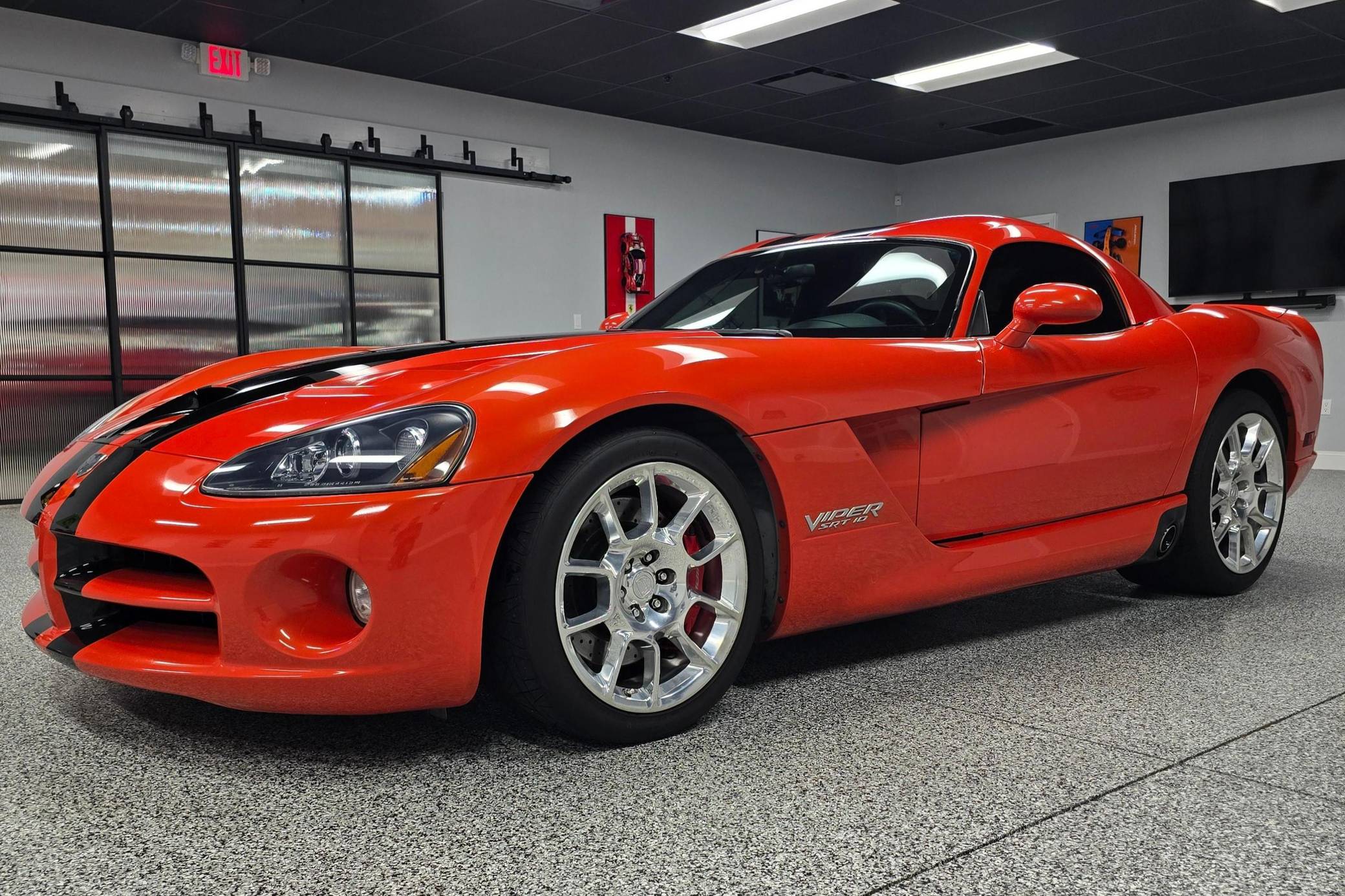
1. Dodge Viper SRT (2013–2017)
The Dodge Viper has always been the automotive world’s equivalent of a barely domesticated predator. The fifth-generation SRT Viper took this philosophy to an extreme that left competitors genuinely shaken.
At its core sat an 8.4-liter naturally aspirated V10 engine the largest displacement V10 ever used in a production sports car. That engine produced 640 horsepower and 600 lb-ft of torque in standard trim, all channeled through a six-speed manual transmission.
The exhaust system was deliberately tuned to maximize auditory drama. Side-exit exhaust pipes routed combustion gases out behind the front wheels and ahead of the rear axle.
This placement created an exhaust note that sat directly beside the driver’s right shoulder, making the sound not just heard but physically felt. The decibel levels measured near the driver’s ear routinely exceeded 100 dB at full throttle levels typically associated with construction equipment and rock concerts.
What made the Viper’s sound uniquely terrifying was the character of its V10 rumble. Ten firing pulses per revolution created an irregular, almost unpredictable cadence.
It sounded like nothing else on earth not quite like a V8, not quite like a V12. The exhaust crackled violently on deceleration, creating a machine-gun staccato that rattled windows in passing buildings.
The Viper’s exhaust note was so aggressive that the car struggled to pass noise regulations in several European markets. Dodge engineers had to develop alternative muffler configurations specifically for those regions. Even with the quieter European specification, the car remained among the loudest road-legal vehicles available.
Key Specifications:
- Engine: 8.4-liter naturally aspirated V10
- Horsepower: 640 hp
- Torque: 600 lb-ft (813 Nm)
- Length: 4,463 mm
- Width: 1,930 mm
The track-focused ACR (American Club Racer) variant amplified everything further. Its less restrictive exhaust tuning pushed noise levels to levels that required hearing protection during extended track sessions. No other American production car of the era could match the Viper’s raw, unfiltered acoustic aggression.
2. Ferrari F12berlinetta (2012–2015)
Ferrari’s F12berlinetta represented the Italian marque at the absolute peak of naturally aspirated engine development. The 6.3-liter V12 mounted ahead of the driver produced 731 horsepower and revved to an 8,700 RPM redline.
That specific combination of displacement, cylinder count, and high-revving capability created an exhaust note widely regarded as among the greatest sounds in automotive history.
The sound profile of the F12 changed dramatically across its rev range. At low RPM, it produced a deep, authoritative rumble befitting a large-displacement grand tourer.
Above 4,000 RPM, the character shifted into something harder and more mechanical. By 7,000 RPM, it had become a full-throated howl that caused involuntary smiles on every nearby pedestrian.
Ferrari engineers spent enormous resources on the exhaust system design. The V12 used a flat-plane crankshaft arrangement that contributed to the distinctive high-frequency shriek.
Individual cylinder pipes were carefully tuned for length and diameter to optimize acoustic resonance across the entire RPM range. The result was an engine that sounded different and increasingly dramatic at every throttle position.
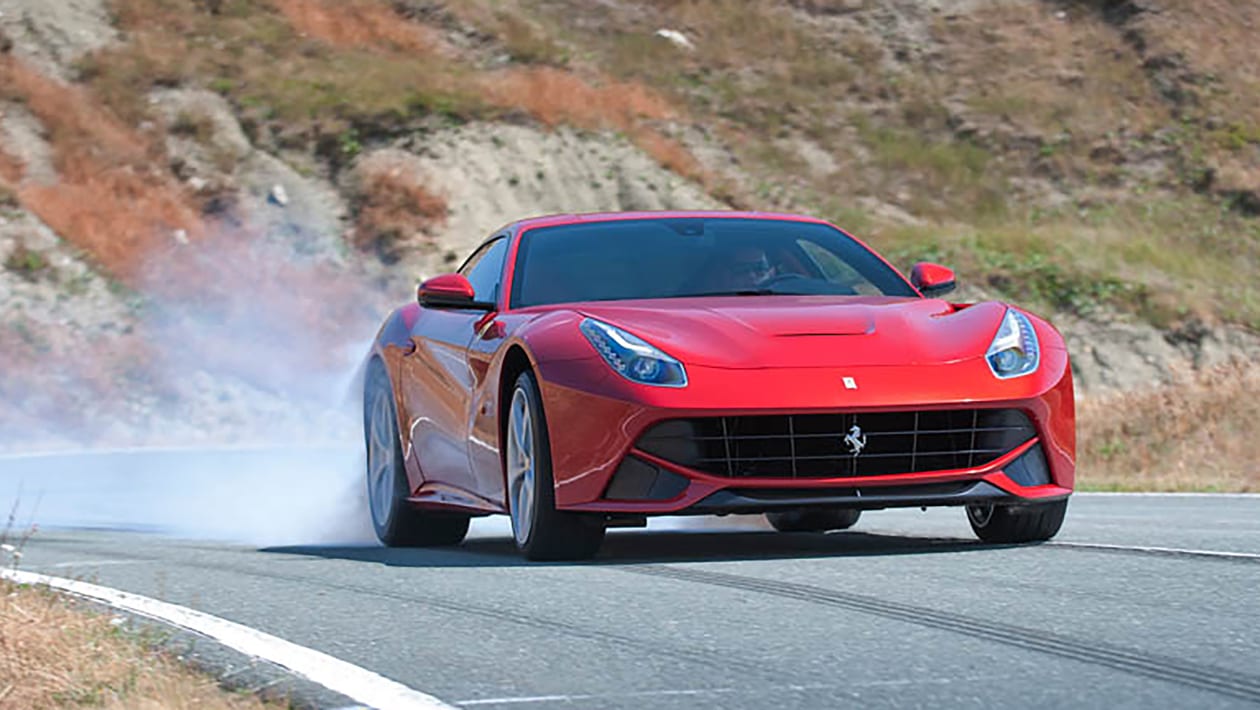
The F12 produced approximately 104 dB at full throttle, loud enough to require hearing protection during extended high-speed runs. Track day drivers reported the sound becoming almost uncomfortable through a full lap of aggressive driving.
This was not accidental; Ferrari’s acoustic engineers considered the exhaust note an integral performance metric alongside horsepower and lap times.
Key Specifications:
- Engine: 6.3-liter naturally aspirated V12
- Horsepower: 731 hp
- Torque: 509 lb-ft (690 Nm)
- Length: 4,525 mm
- Width: 1,942 mm
The successor model, the 812 Superfast, added an additional 118 horsepower and pushed the sound even further. But many Ferrari enthusiasts argue the F12berlinetta achieved the perfect balance between volume and musical quality, loud enough to be theatrical, refined enough to be genuinely beautiful.
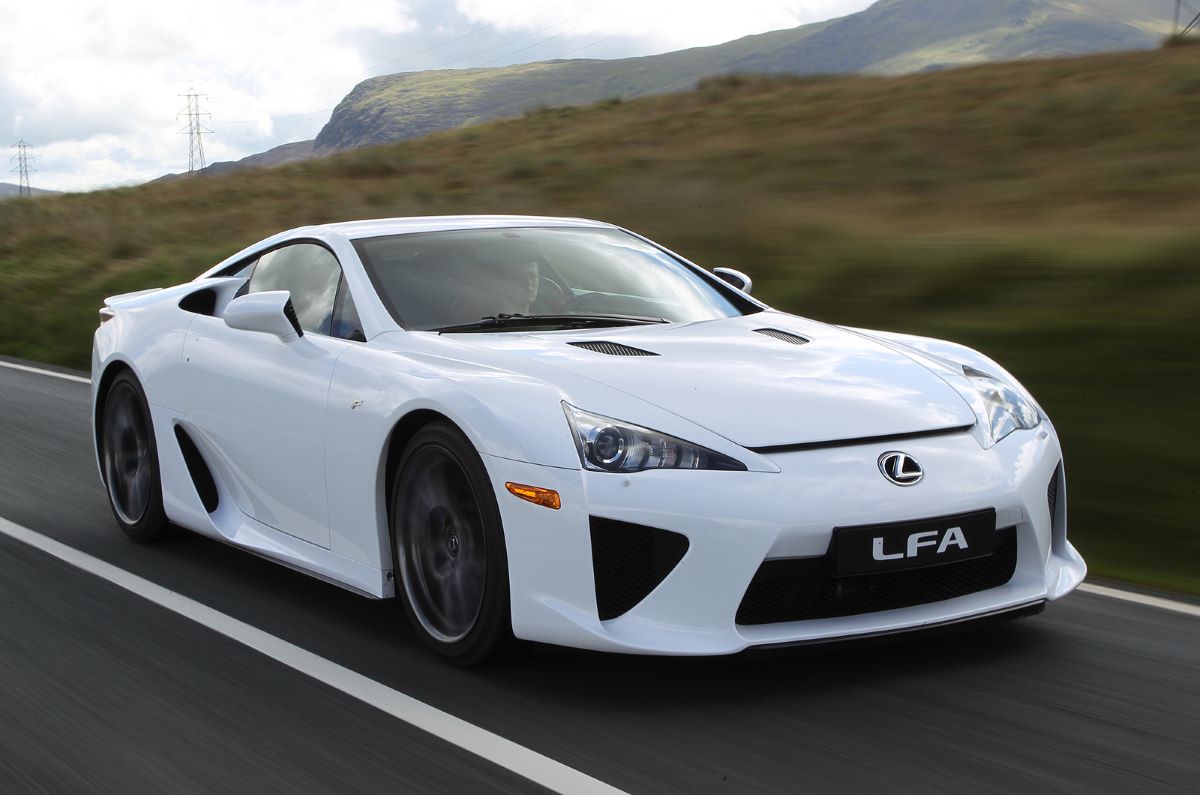
3. Lexus LFA (2010–2012)
Lexus built only 500 examples of the LFA supercar, and each one was essentially a rolling demonstration of acoustic engineering science. The 4.8-liter V10 engine was developed over a decade at enormous expense.
It produced 552 horsepower and revved to a 9,000 RPM redline with a throttle response so immediate that conventional analog tachometers could not track it accurately. Lexus was forced to develop a digital tachometer specifically to keep up.
The exhaust note of the LFA was described by automotive journalists as the most beautiful sound ever produced by a production car. It was not simply loud, it was extraordinarily musical.
The V10 configuration produced a sound sitting precisely between Ferrari’s V8 scream and V12 howl. Yamaha, Lexus’s partner in engine development, applied musical instrument engineering principles to the exhaust system design. This was not metaphorical involvement Yamaha’s musical division contributed directly to acoustic tuning.
The exhaust pipes exited at the center of the rear bumper through two large oval outlets. The system used titanium construction throughout to save weight and improve acoustic properties.
At full throttle, the LFA produced approximately 103 dB, comparable to a Boeing 737 on takeoff from a reasonable distance. The sound carried a clarity and resonance completely unlike any domestic or European competitor.
Toyota engineers conducted extensive psychoacoustic research during LFA development. They measured not just volume but the emotional response humans had to different frequency profiles.
The final exhaust tuning was selected not merely for loudness but for the specific combination of frequencies most likely to trigger an emotional response in listeners.
Key Specifications:
- Engine: 4.8-liter naturally aspirated V10
- Horsepower: 552 hp
- Torque: 354 lb-ft (480 Nm)
- Length: 4,505 mm
- Width: 1,895 mm
The LFA’s sound has become legendary to a degree disproportionate to its limited production numbers. Videos of LFA exhausts have accumulated hundreds of millions of views online. It remains the definitive case study in how acoustic engineering can become a primary product differentiator.
4. Jaguar F-Type SVR (2016–Present)
Jaguar’s F-Type was designed from the start as a driver-focused sports car with theatrical presence. The SVR (Special Vehicle Racing) variant took the car’s inherent aggression and amplified every dimension to its maximum.
The 5.0-liter supercharged V8 produced 575 horsepower and 516 lb-ft of torque through an eight-speed automatic transmission. All-wheel drive provided traction that allowed the full power to be deployed with less drama but undiminished noise.
The exhaust system was the car’s defining characteristic. Jaguar’s engineers designed an active exhaust with bypass valves that could route gases through or around the main mufflers.
In its most aggressive setting, with Sport mode engaged and the bypass valves open, the F-Type SVR produced a sound that was genuinely shocking in its intensity. Cold starts on quiet streets became acts of minor neighborhood disturbance. Full-throttle acceleration runs were simply antisocial by any measurable standard.
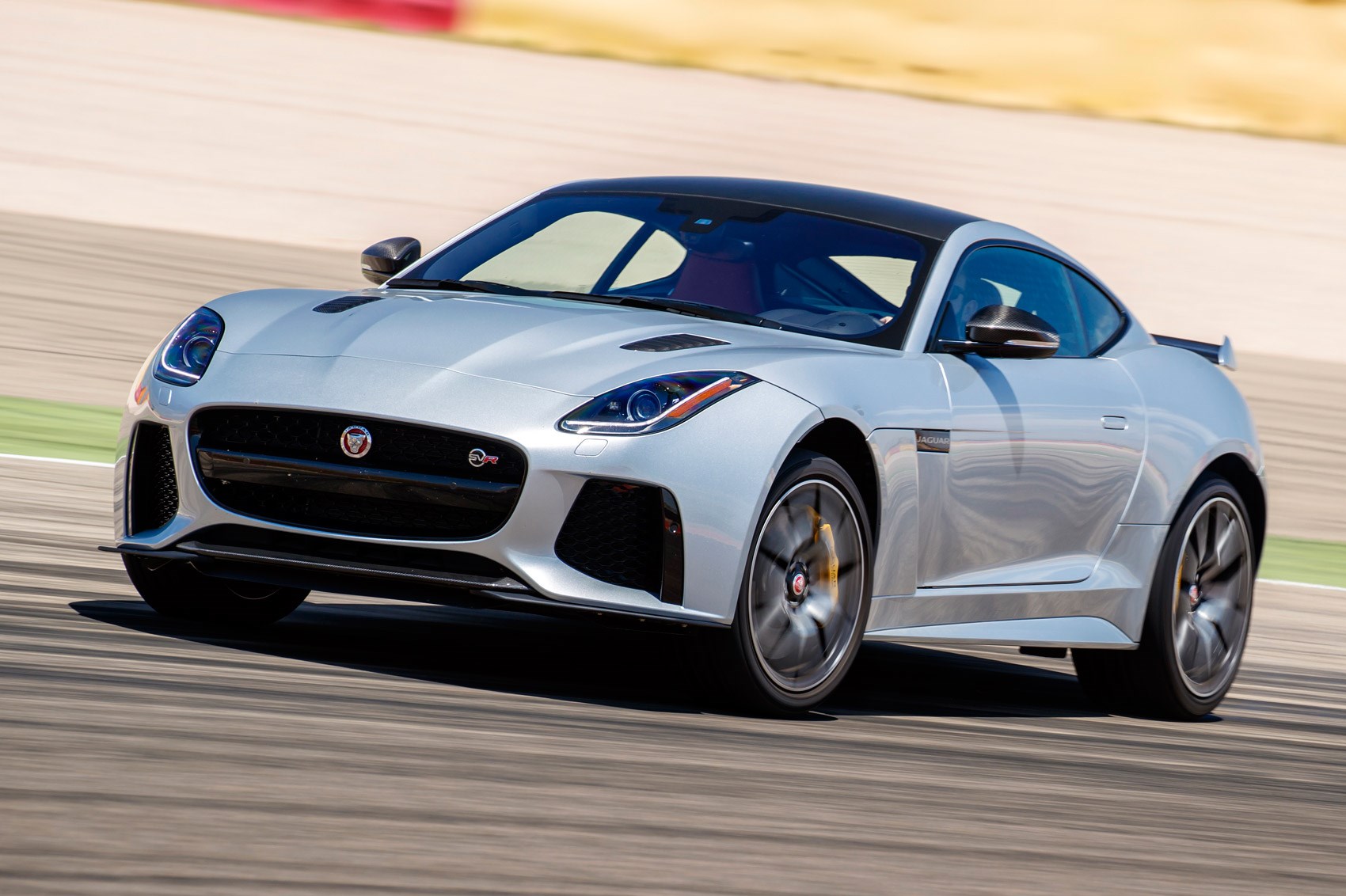
The pop-and-bang behavior on deceleration was particularly theatrical. Lifting off the throttle at high RPM resulted in a machine-gun series of backfires from both exhaust tips. This was not accidental or a tune applied by owners it came from the factory, passed emissions testing, and was covered by warranty. Jaguar’s engineers calibrated the ignition timing specifically to create this effect in Sport mode.
The F-Type SVR’s exhaust measured approximately 104 dB at full throttle, consistently placing it among the loudest production cars ever tested. The active system allowed owners to reduce the volume in quieter settings, but most SVR owners rarely used this capability. The point, after all, was the noise.
Key Specifications:
- Engine: 5.0-liter supercharged V8
- Horsepower: 575 hp
- Torque: 516 lb-ft (700 Nm)
- Length: 4,470 mm
- Width: 1,923 mm
The coupe and convertible variants produced slightly different sound characters. The convertible, with its folding fabric roof, delivered the exhaust directly into the cabin in a way that made conversations above 4,000 RPM essentially impossible. This was widely considered a feature rather than a drawback
Also Read: 10 Cars That Can Be Remotely Disabled If Stolen
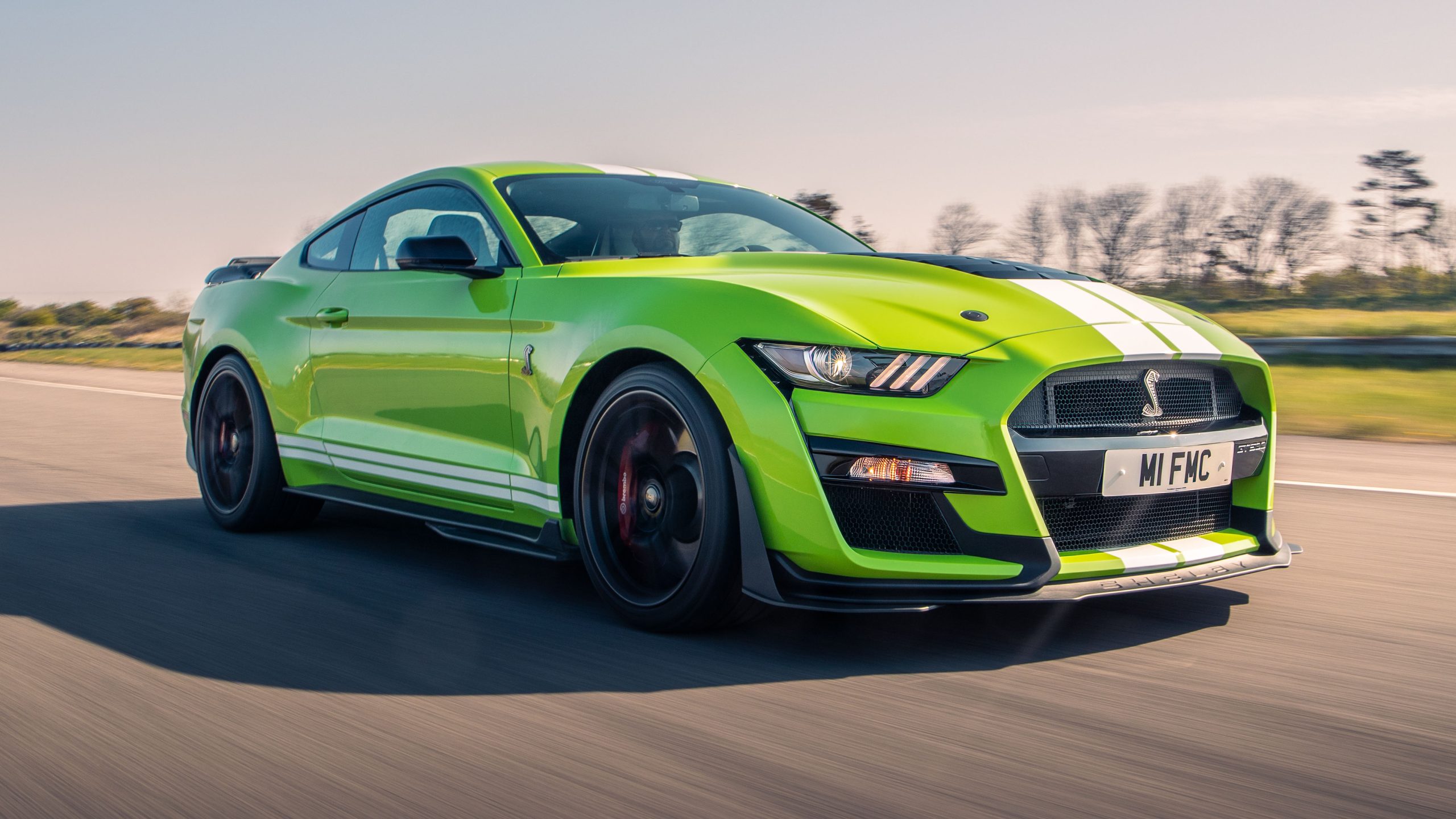
5. Ford Shelby GT500 (2020–Present)
Ford’s most powerful production Mustang pushed both performance and acoustic territory into new ground. The 5.2-liter supercharged V8, a flat-plane crank engine unusual in American muscle car tradition, produced 760 horsepower, making it the most powerful street-legal Ford ever produced at launch.
The flat-plane crankshaft gave it a more aggressive exhaust note than traditional cross-plane V8s, with a higher-frequency character that bordered on European supercar territory.
The exhaust system used active valves similar to Jaguar’s setup. In Normal mode, it operated with reduced bypass for neighborhood civility. In Sport and Track modes, the valves opened fully, delivering a sound that could only be described as relentless.
The supercharger added its own acoustic dimension, a high-pitched mechanical whine layered underneath the exhaust note that created a composite sound unlike anything else in American production.
Ford engineers specifically tuned the exhaust note in collaboration with the company’s performance division. They conducted blind listening tests with groups of enthusiasts to identify the exact frequency mix most likely to generate emotional responses.
The final result was deliberately louder than previous Shelby GT500 generations, reflecting Ford’s research showing buyers actively valued acoustic drama as a purchase motivator.
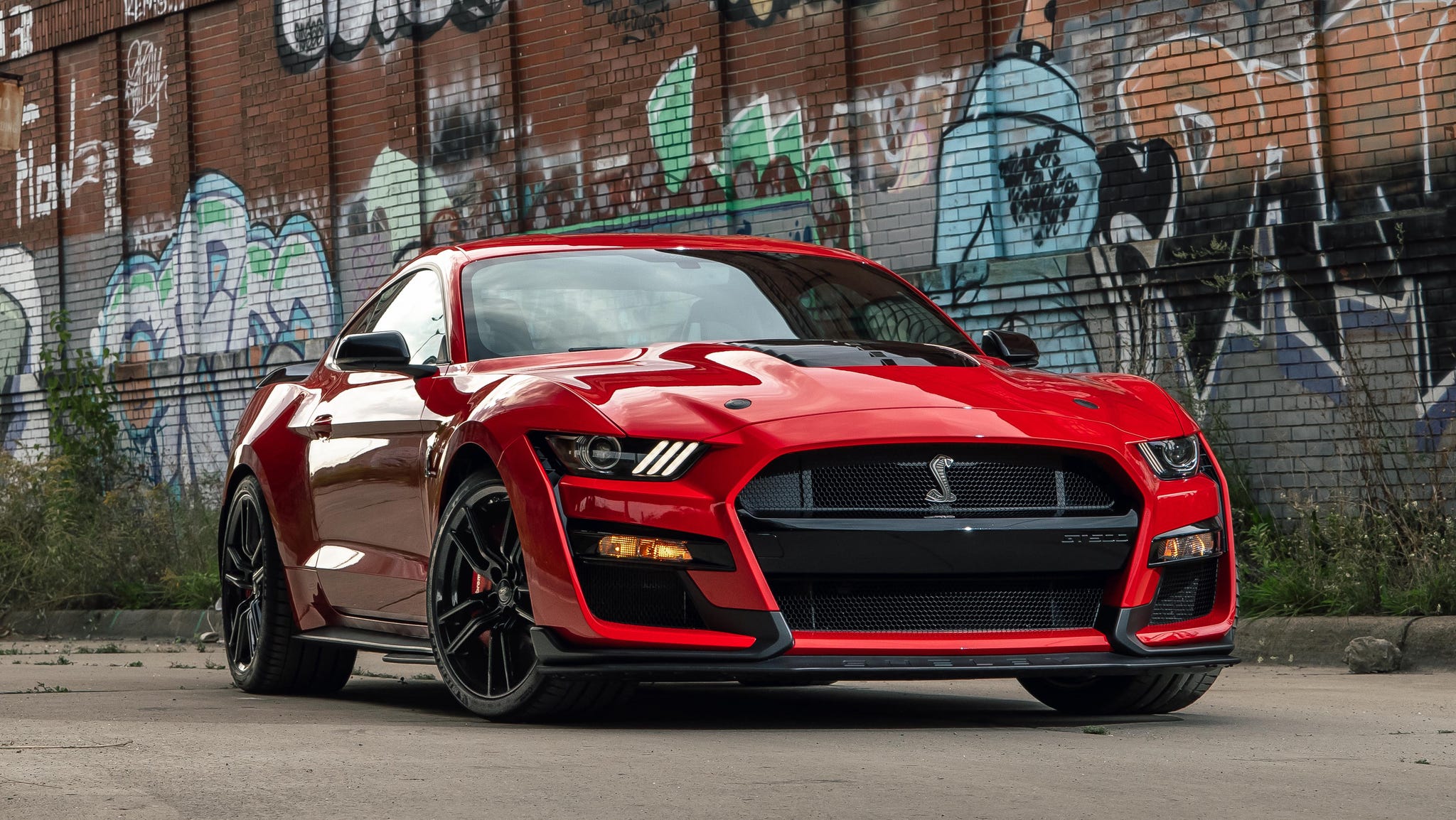
The 2020 GT500 measured approximately 102 dB at full throttle during independent testing. Exhaust exit temperatures at maximum output reportedly exceeded 1,200 degrees Fahrenheit, requiring heat shields and careful underbody management. The exhaust pipes exited below the rear bumper through two sets of dual outlets, each measuring 3.5 inches in diameter.
Key Specifications:
- Engine: 5.2-liter supercharged flat-plane V8
- Horsepower: 760 hp
- Torque: 625 lb-ft (847 Nm)
- Length: 4,788 mm
- Width: 1,916 mm
The GT500 Carbon Fiber Track Pack variant received additional exhaust tuning that pushed sound levels even higher. Track-day drivers reported the exhaust becoming physically uncomfortable during sustained high-RPM running on the circuit. This was Ford’s most aggressive factory exhaust tuning since the original 427 Cobra.
6. Lamborghini Huracán Performante (2017–2019)
Lamborghini’s Huracán Performante represented the Sant’Agata manufacturer at its most focused and least compromised. The 5.2-liter naturally aspirated V10 produced 630 horsepower and revved to 8,500 RPM.
But raw specifications barely captured what made this car memorable. The exhaust system was a masterpiece of acoustic engineering that turned what could have been mere noise into a genuinely electrifying experience.
The Performante used an Akrapovič titanium exhaust system as standard equipment. This was significant because Akrapovič systems normally cost thousands of dollars as optional upgrades the Performante made it standard specification.
The titanium construction saved weight relative to steel while improving acoustic properties at high frequencies. The result was an exhaust note with a crystalline clarity that differentiated it from the heavier sound of turbocharged competitors.
At full throttle, the Huracán Performante measured approximately 107 dB among the highest figures ever recorded for a standard production car. The sound had a violent, aggressive edge entirely appropriate to a car that had set the Nürburgring production car lap record at the time of its introduction. The exhaust crackled and popped aggressively on deceleration, with individual combustion events audible as distinct, sharp reports.
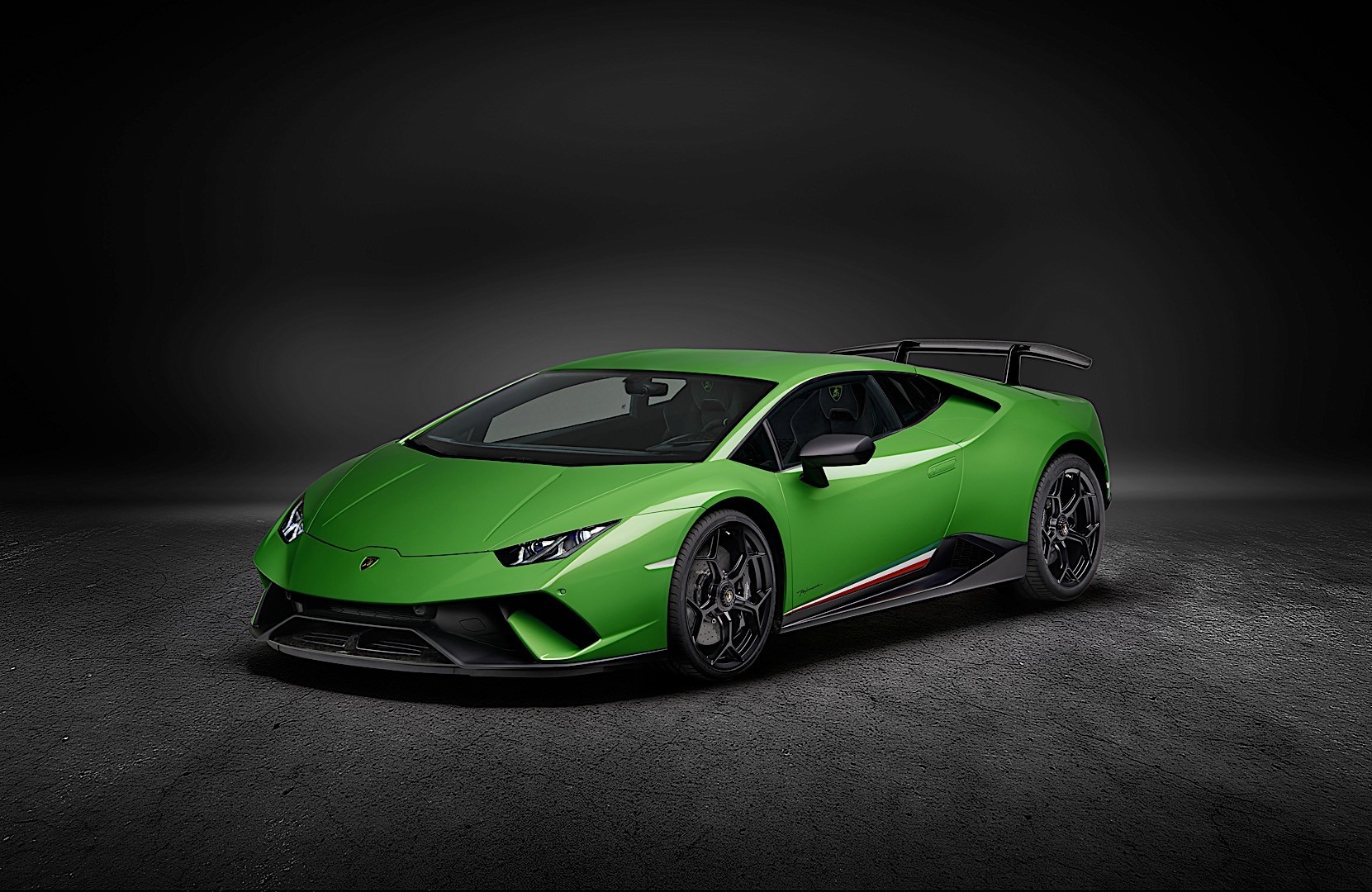
The V10 configuration contributed significantly to the acoustic character. Ten-cylinder engines produce an exhaust pulse frequency that sits in the range of 50–200 Hz, precisely the range most stimulating to human auditory perception. Lamborghini’s engineers exploited this with exhaust tuning that amplified the most emotionally stimulating frequency components.
Key Specifications:
- Engine: 5.2-liter naturally aspirated V10
- Horsepower: 630 hp
- Torque: 443 lb-ft (600 Nm)
- Length: 4,459 mm
- Width: 1,924 mm
The ALA (Aerodinamica Lamborghini Attiva) aerodynamic system on the Performante used the exhaust gases in the active aerodynamic management, integrating the exhaust system into the car’s performance engineering in a way no previous Lamborghini had attempted.
7. BMW M5 CS (2021–2022)
BMW’s M5 CS occupied a peculiar position in the loud car pantheon. Unlike every other car on this list, it did not look like a loud car. It wore a conventional sedan body. It had four doors.
It carried a factory warranty and could theoretically be used for school runs and business travel. Then it started, engaged Sport Plus mode, and produced a sound completely inconsistent with its conservative appearance.
The 4.4-liter twin-turbocharged V8 produced 627 horsepower, the highest figure BMW had ever offered in a production M car at that point. The exhaust system used active flaps managed by the M Sport exhaust mapping.
In its most aggressive configuration, the M5 CS produced approximately 100 dB at full throttle, remarkable for a turbocharged engine, which inherently suppresses exhaust noise compared to naturally aspirated alternatives. The turbochargers act as acoustic barriers, the M5 CS managed these sound levels despite them reflecting extraordinary engineering effort.
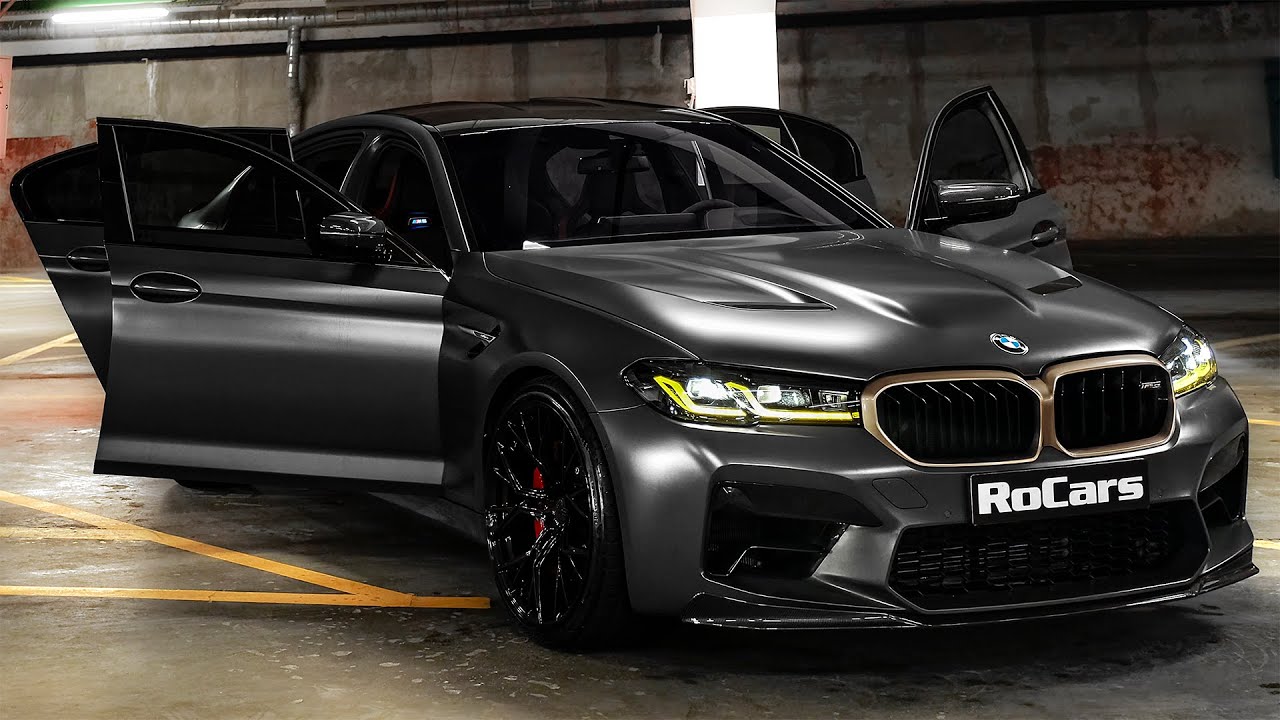
The M5 CS was notable for the quality and character of its exhaust note rather than pure volume alone. BMW’s engineers worked to preserve the V8 exhaust character through the acoustic distortion introduced by twin turbochargers. The result was a sound with a distinct rumble at low RPM transitioning into a hard, aggressive bark at high RPM. Cold-start pop sequences and deceleration crackles were particularly theatrical.
The exhaust system used titanium components to reduce weight as part of the CS (Competition Sport) weight reduction program. Every kilogram saved contributed to the car’s track capability, but the titanium also contributed to improved acoustic properties at high frequencies, adding a resonance and clarity absent from the standard M5’s steel system.
Key Specifications:
- Engine: 4.4-liter twin-turbocharged V8
- Horsepower: 627 hp
- Torque: 553 lb-ft (750 Nm)
- Length: 4,938 mm
- Width: 1,903 mm
The M5 CS demonstrated that extreme exhaust noise was no longer exclusively the territory of two-seat sports cars and mid-engined exotica. A four-door family sedan could deliver comparable acoustic drama when engineered with sufficient ambition. BMW sold every M5 CS built, suggesting the market for loud, practical sports sedans was considerably larger than anyone had anticipated.
8. Porsche 911 GT3 RS (992, 2022–Present)
Porsche’s 911 GT3 RS represents something increasingly rare in modern performance car development: a major manufacturer committing fully to natural aspiration in an era of universal turbocharged downsizing.
The 4.0-liter flat-six engine produced 518 horsepower and revved to a 9,000 RPM redline. These numbers do not fully capture why the GT3 RS belongs among the loudest factory cars ever sold.
The exhaust note was extraordinary for reasons beyond volume. The flat-six configuration placed the engine behind the rear axle with the exhaust system running beneath the engine and exiting at the very rear of the car.
The proximity of the exhaust exits to both the driver (through chassis structure) and bystanders (through the central rear outlets) created an immediacy and impact disproportionate to the measured decibel figure. At approximately 101 dB at full throttle, it was technically quieter than some competitors, but the character and intensity made it feel louder.
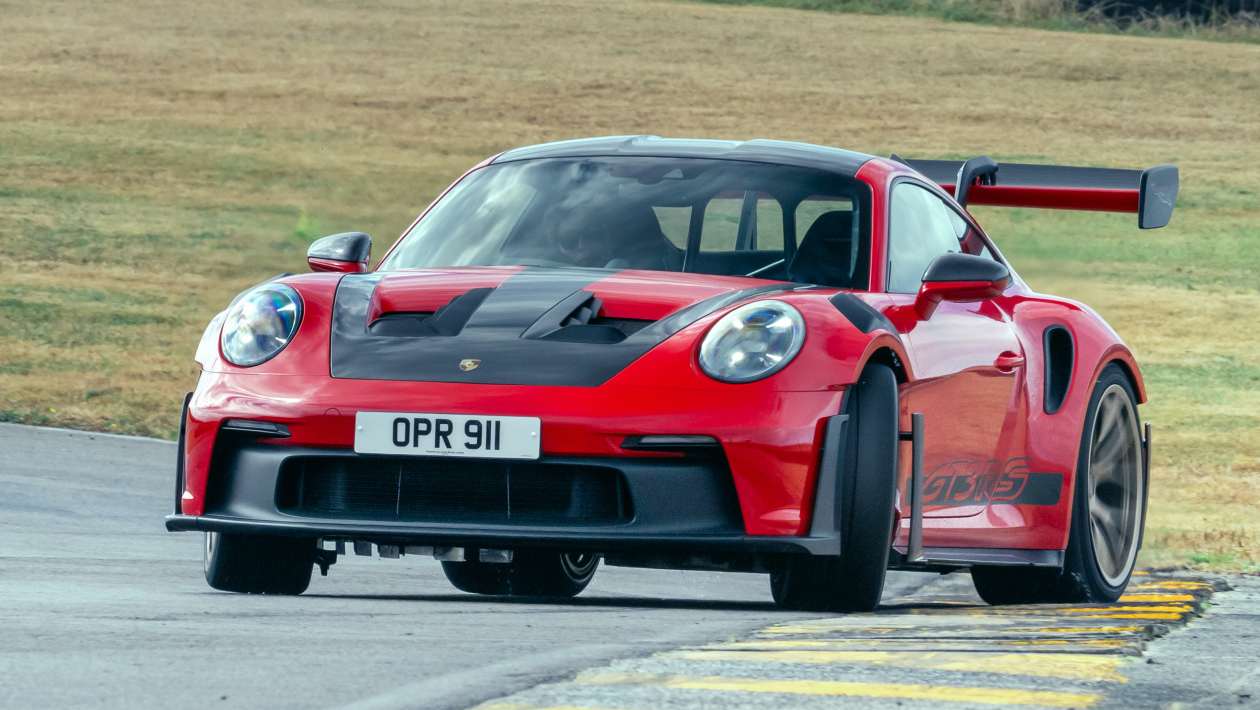
The distinctive flat-six exhaust tone had no equivalent in the automotive world. It was neither a V8 rumble nor a V10 howl but something specifically Porsche, a high-revving mechanical symphony with intake induction noise layered through the firewall into the cabin.
The titanium exhaust system fitted as standard to the GT3 RS added a higher-frequency resonance that gave the sound an almost ceramic quality at the 9,000 RPM limit.
Porsche’s acoustic engineers designed the exhaust system to work in conjunction with the intake system. The deliberately unsilenced air filter box and intake ducting allowed induction noise to reach the driver directly.
This created a composite soundtrack exhaust from behind, intake from below that surrounded the driver in sound from multiple directions simultaneously.
Key Specifications:
- Engine: 4.0-liter naturally aspirated flat-six
- Horsepower: 518 hp
- Torque: 343 lb-ft (465 Nm)
- Length: 4,557 mm
- Width: 1,900 mm
The GT3 RS carried additional significance as potentially one of the last high-revving, naturally aspirated Porsche sports cars before electrification transforms the lineup permanently.
Porsche engineers and executives acknowledged publicly that future regulations may make it impossible to offer a naturally aspirated sports car in major markets.
The GT3 RS exhaust note was, therefore, not just an acoustic achievement but potentially a farewell to the finest possible example of a sound that may never return to the roads in factory form again.
Also Read: 7 Vehicles Where the Emissions Test Fails Most Often
