
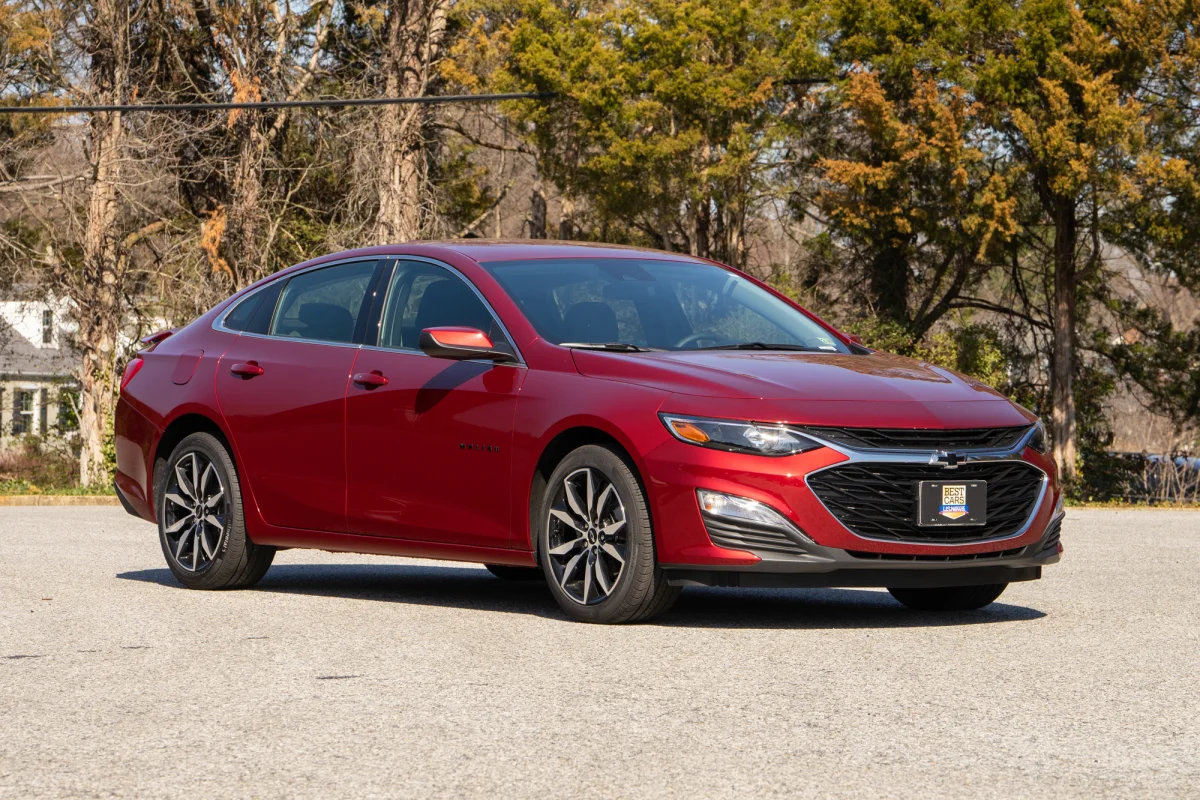
Road safety has always been a moving target. As vehicles on American roads grow heavier, taller, and more powerful, the crash tests designed to protect occupants must evolve alongside them.
For decades, the Insurance Institute for Highway Safety (IIHS) used a side-impact barrier weighing around 3,300 pounds traveling at roughly 31 mph. That standard worked reasonably well in an era when most vehicles were passenger cars of similar size.
Today, however, SUVs and pickup trucks dominate the roads, making up nearly 78% of all new vehicle sales. The average new vehicle weighs over 4,200 pounds, a dramatic increase from the 3,200-pound average of the 1980s.
The updated IIHS side-impact test now uses a heavier barrier at higher speed, delivering 82% more energy than the old test. The weight of the barrier was increased from 3,300 pounds to 4,200 pounds, and the speed was raised from 31 mph to 37 mph, to better reflect current road conditions. The results have been alarming.
In 2021, 93% of vehicles tested earned a top “Good” rating in the original side-impact test. Yet when subjected to the updated version, many of those same vehicles fell to marginal or poor ratings.
This article examines eight vehicles that failed the new side-impact test their crash results, what went wrong, and the key specifications that define each model.
1. 2022 Chevrolet Malibu
The Chevrolet Malibu has long been a staple of the American midsize sedan market. It offers a comfortable ride, competitive pricing, and a refined interior that appeals to everyday commuters. For years, it was considered a reasonably safe choice. That perception changed sharply when IIHS subjected it to the new side-impact test.
The Chevy Malibu received an rating of “Poor” in the IIHS side-impact crash test, losing out to key rivals like the Honda Accord, Toyota Camry, and Nissan Altima.
Of all the vehicles tested in the midsize sedan batch, the Malibu fared the worst. The Altima and Malibu showed substantial intrusion into the occupant compartment, and injury measures indicated a high risk of head or neck injuries for the driver in the Malibu.
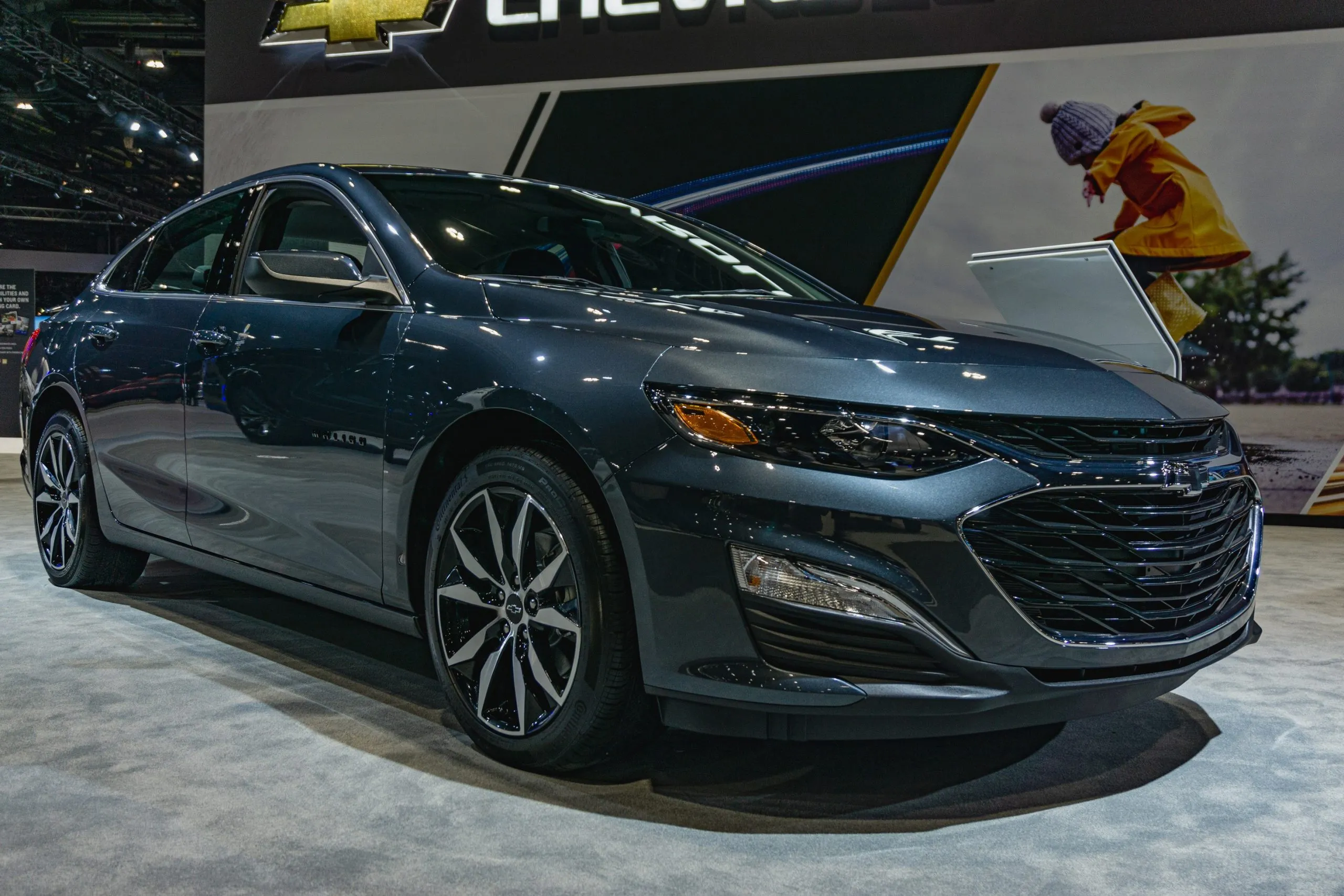
The cabin integrity during the crash was deeply concerning. The structural cage of the Malibu buckled considerably under the force of the new heavier barrier. In all three of the worst-performing vehicles, the heads of either the driver or rear passenger dummy or both slipped below the side-curtain airbag to contact the windowsill.
This is a critical failure the side curtain airbag is specifically designed to prevent head contact with hard surfaces, yet the Malibu’s geometry allowed the dummy’s head to bypass it entirely.
One reason sedans fared worse than SUVs is that vehicles sitting lower to the ground allow the striking barrier to hit higher on the door panel, according to IIHS President David Harkey.
The Malibu’s low ride height made it particularly vulnerable to the taller, heavier barrier. The door structure was overwhelmed at a point where the occupant’s torso and head were most exposed.
The Malibu’s failure sent a clear message to General Motors. A vehicle that had earned consistent “Good” ratings under the old test was now exposing significant structural deficiencies. GM discontinued the Malibu for the 2024 model year, though the reasons were multifaceted, with declining sedan sales also playing a role.
Specifications:
- Engine: 1.5L turbocharged 4-cylinder (base) / 2.0L turbocharged 4-cylinder (higher trims)
- Horsepower: 160 hp (1.5L) / 250 hp (2.0L)
- Torque: 184 lb-ft (1.5L) / 258 lb-ft (2.0L)
- Length: 193.8 inches
- Width: 72.9 inches
2. 2022 Nissan Altima
The Nissan Altima is one of the best-selling midsize sedans in the United States. It targets value-conscious buyers who want comfort and practicality.
With its available all-wheel drive and sleek styling, it has carved a loyal niche in the competitive midsize segment. However, the new IIHS side-impact test exposed a fundamental weakness in its structure.
The Nissan Altima showed substantial intrusion into the occupant compartment, and injury measures indicated a high risk of torso and pelvis injuries for the driver.
The force of the heavier barrier broke through the door structure at a dangerous level, allowing significant deformation into the area where the driver sits. This level of intrusion dramatically increases the risk of life-threatening injuries in a real-world crash.
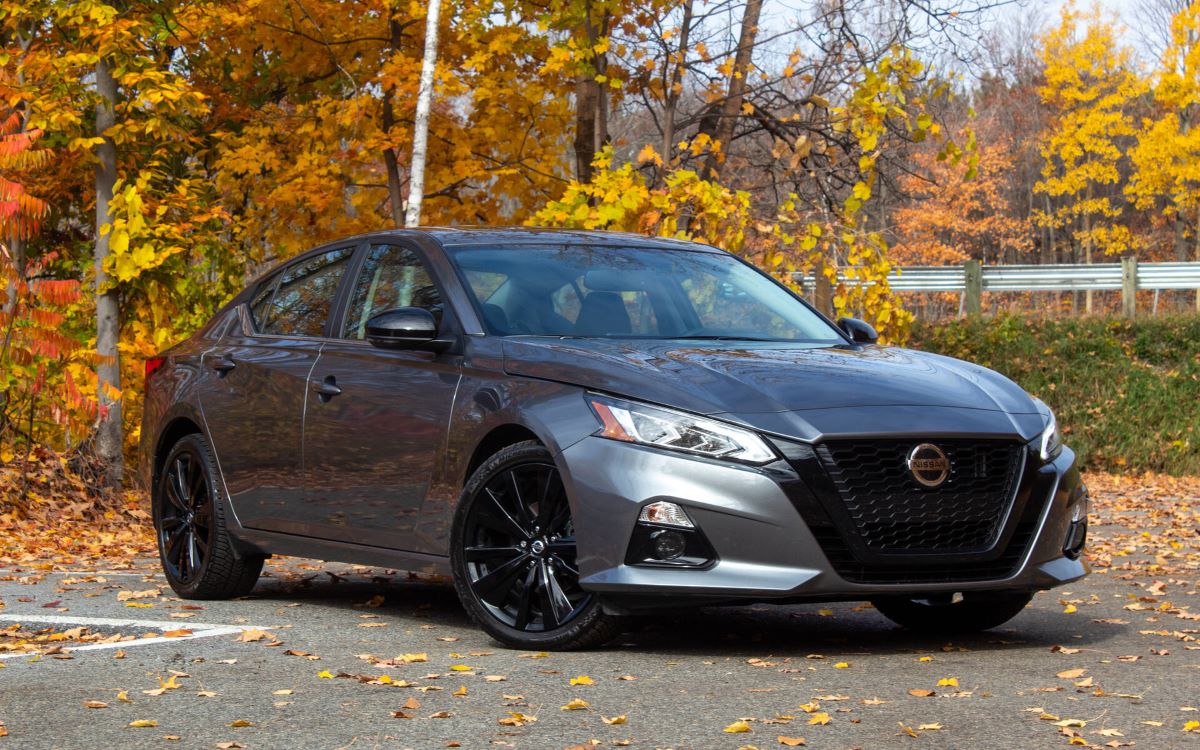
The Altima’s side curtain airbag system was not enough to compensate for the structural compromise. Head injuries in the worst-performing vehicles were reported to slip past the airbag and hit the windowsill, and torso and pelvis injuries were prominent, though they were less pronounced in the Altima than in the Camry and the Malibu.
Still, the picture was damning the Altima’s body-in-white simply was not engineered to handle a collision from a vehicle of modern SUV proportions.
Nissan’s engineers designed the Altima to pass the older, lighter barrier test. That test used a 3,300-pound barrier, which closely mirrored the weight of vehicles on the road in the early 2000s.
Today’s reality is entirely different. The updated barrier at 4,200 pounds reflects the weight of a modern crossover or SUV, the most common vehicle type in America today.
The Altima’s poor performance raised questions about Nissan’s broader approach to structural safety. Buyers who had chosen the Altima specifically for its safety credentials were left questioning a vehicle they trusted. Nissan subsequently worked on structural upgrades in later model years to address the deficiency.
Specifications:
- Engine: 2.5L 4-cylinder naturally aspirated / 2.0L VC-Turbo 4-cylinder
- Horsepower: 188 hp (2.5L) / 248 hp (2.0L VC-Turbo)
- Torque: 180 lb-ft (2.5L) / 273 lb-ft (2.0L VC-Turbo)
- Length: 192.9 inches
- Width: 72.9 inches
3. 2022 Toyota Camry
Few cars carry the reputation of the Toyota Camry. It is the best-selling car in America year after year, beloved for its reliability, low cost of ownership, and perceived safety.
The Camry has consistently earned strong ratings under the old IIHS side-impact test for many years. That is precisely why its performance in the updated test came as such a shock.
The 2022 Toyota Camry earned a “Poor” rating in the new IIHS side-impact test, citing a higher risk of intrusion into the cabin and a higher risk of injury.
Toyota loyalists were understandably startled. A vehicle synonymous with safety had been exposed as inadequate against the forces of a modern crash scenario involving a heavier striking vehicle.
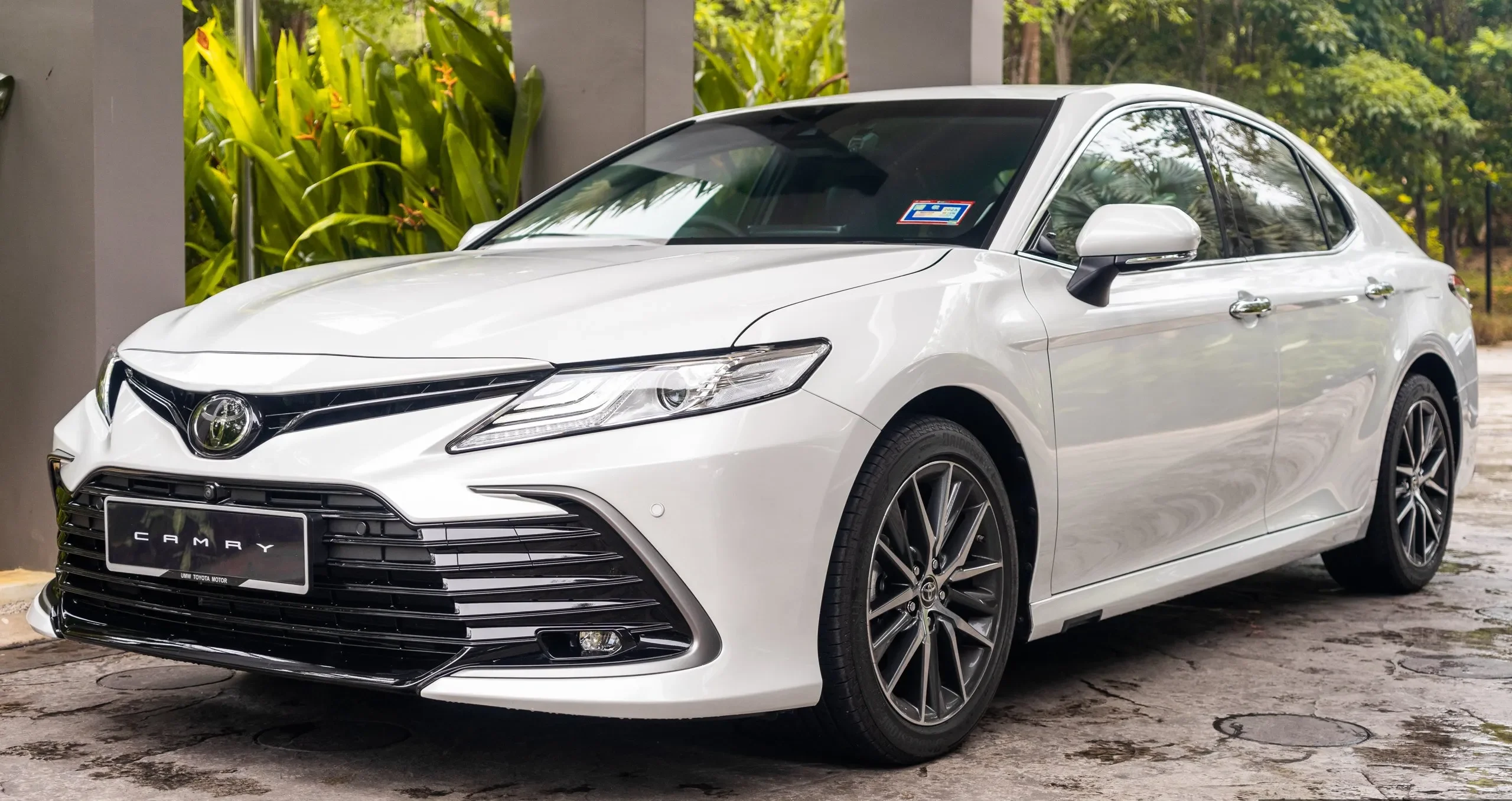
The injury measures for the Camry indicated a moderate risk of torso and pelvis injuries for the driver and a high risk of pelvis injuries for the rear passenger.
While the Camry’s structural cage held up slightly better than the Malibu or Altima, the injury data was still alarmingly high. Rear passengers were found to be at particularly raised risk, with the dummy’s pelvis absorbing dangerous levels of force.
The Camry’s safety cage held up better than the Altima and Malibu’s, but the sedan scored marginal ratings in the driver torso, pelvis, and head categories, as well as a poor rating in the rear-occupant pelvis category.
The side curtain airbag deployment geometry proved insufficient. The dummy’s head moved downward past the inflated curtain and made contact with the window sill.
Toyota responded by making structural improvements in the 2023 Camry, and vehicles built after January 2023 were subsequently awarded the Top Safety Pick+ designation. This showed that the fix was achievable but it underscored just how quickly a vehicle’s safety credentials can erode when the goalposts shift.
Specifications:
- Engine: 2.5L 4-cylinder (base) / 3.5L V6 (optional) / 2.5L hybrid
- Horsepower: 203 hp (2.5L) / 301 hp (3.5L V6)
- Torque: 184 lb-ft (2.5L) / 267 lb-ft (3.5L V6)
- Length: 192.7 inches
- Width: 72.4 inches
4. 2022 Honda Accord
The Honda Accord has for decades been regarded as one of the safest and most dependable midsize sedans on the market. It consistently tops reliability surveys and typically earns strong crash test scores.
When IIHS applied its new, more demanding side-impact test, the Accord did not collapse entirely but it did fall well short of expectations, earning a “Marginal” rating, which is just one step above the lowest “Poor” designation.
The Honda Accord earned a “Marginal” rating in the new IIHS side-impact test, due to an raised risk of impact on the driver’s head. The specific concern was the driver’s head making contact with the windowsill after dropping below the deployed side curtain airbag. This kind of injury can result in serious traumatic brain injury or fatal outcomes in real-world accidents.
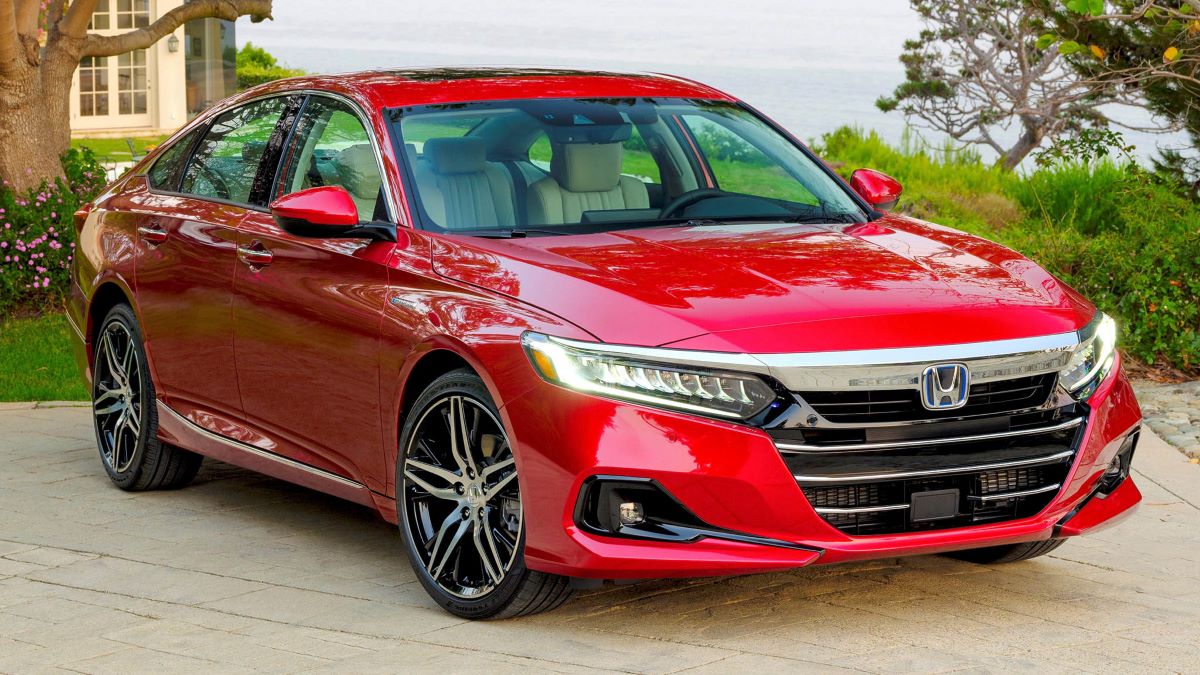
In the Accord, the injury measures for the driver’s pelvis were slightly raised, and the test showed that the driver’s head moved down past the side curtain airbag to contact the windowsill during the crash.
Honda’s airbag deployment was not calibrated to account for the trajectory of an occupant’s head under the forces generated by the heavier, faster barrier. The old test was essentially a different physical challenge, and the Accord’s restraint system was tuned for it.
The Accord’s result highlighted an important industry-wide issue. Manufacturers had been building and optimizing their vehicles specifically around IIHS test parameters that no longer reflected real-world crash dynamics.
The Accord had aced the old side-impact test as had virtually every other car in the segment. But the new test unmistakably revealed that “good enough for the old test” was not good enough for the roads of today.
Honda subsequently invested in redesigning the Accord’s safety structure. The tenth-generation Accord and the later eleventh generation incorporated updated structural reinforcements and side airbag geometry improvements that substantially improved side-impact protection.
Specifications:
- Engine: 1.5L turbocharged 4-cylinder / 2.0L turbocharged 4-cylinder
- Horsepower: 192 hp (1.5L) / 252 hp (2.0L)
- Torque: 192 lb-ft (1.5L) / 273 lb-ft (2.0L)
- Length: 195.7 inches
- Width: 73.3 inches
Also Read: 10 Cars Small Enough for San Francisco Driveway Parking
5. 2022 Hyundai Palisade
The Hyundai Palisade quickly became one of America’s most popular three-row family SUVs since its introduction in 2020. It offered a premium feel at a mainstream price, excellent interior space, and a suite of advanced safety features. Consumer Reports praised it.
Buyers loved it. Yet when placed in front of IIHS’s updated side-impact barrier, it returned a “Marginal” rating a disappointing result for a vehicle marketed heavily on family safety credentials.
Among the midsize SUVs tested in the new side-impact evaluation, the Hyundai Palisade earned a marginal rating, placing it below vehicles like the Ford Explorer, Mazda CX-9, and Volkswagen Atlas, which all earned good ratings. For a vehicle that many families purchased precisely because they believed it to be safer, this was a hard pill to swallow.
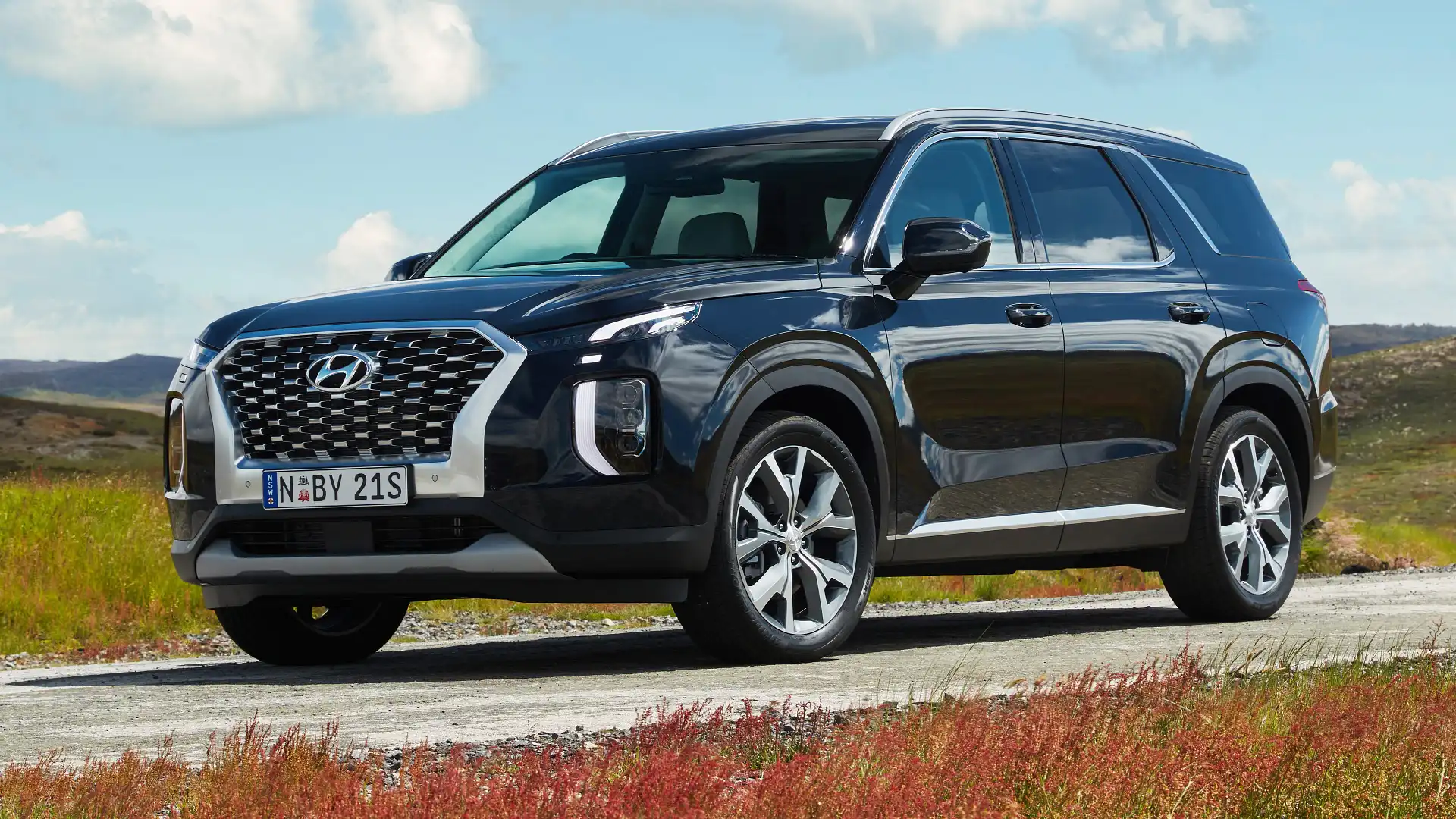
The Palisade’s marginal result came despite its size advantage over the sedans that fared even worse. Being an SUV, it sits higher from the ground, which theoretically means the barrier strikes lower on the door closer to where structural reinforcement is strongest. Yet the Palisade’s specific door structure and side airbag calibration were not sufficient to meet the demands of the updated test.
Beginning with 2023 models, Hyundai implemented structural reinforcements as well as front and rear side airbag improvements to improve occupant protection in side-impact crashes. This admission was significant.
It confirmed that the pre-2023 Palisade had structural and airbag deficiencies that required engineering intervention. The Palisade’s owners who had purchased 2020, 2021, and 2022 models were left with vehicles that had measurably lower side-impact protection.
The Palisade’s story is a cautionary tale about how quickly popularity can mask safety deficiencies. Millions of buyers trusted the Palisade based on its award status under the old test criteria, only to later discover that a tougher evaluation told a different story.
Specifications:
- Engine: 3.8L V6 naturally aspirated
- Horsepower: 291 hp
- Torque: 262 lb-ft
- Length: 196.1 inches
- Width: 78.1 inches
6. 2025 Cadillac XT6
The Cadillac XT6 sits at the premium end of the American three-row SUV market. It features a sophisticated interior, advanced technology, and the prestige of one of America’s most storied automotive brands. Buyers paying luxury prices tend to assume they are getting the best in every category, including safety. The IIHS’s evaluation of the 2025 XT6 shattered that assumption in dramatic fashion.
The 2025 Cadillac XT6 received not one, but two poor performance ratings from IIHS. In the moderate overlap area and side collision, the XT6 received the lowest rating possible. In fact, only in the small overlap did the XT6 receive the top rating of good. Two “Poor” ratings at once is an extremely unusual result. The midsize luxury SUV segment had many safety award winners, making the XT6’s result stand out even more starkly.
The side-impact failure of the XT6 pointed to a fundamental problem with its body structure under lateral impact loads. The door architecture and associated structural reinforcements were insufficient to manage the forces generated by the heavier IIHS barrier. Occupant compartment intrusion was significant enough to put both the driver and rear passenger at serious injury risk.
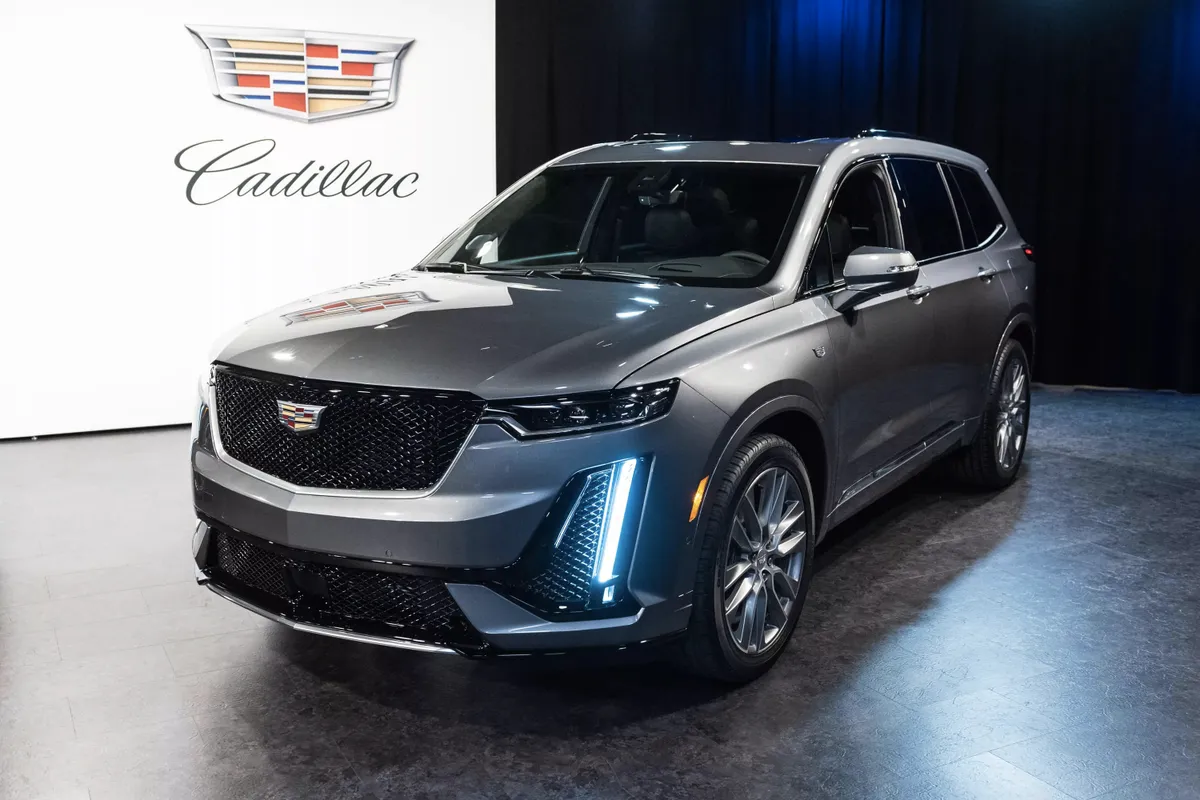
For Cadillac, this was a reputational concern of the highest order. The brand’s tagline has long centered on bold, confident luxury. Safety is an implicit promise in that equation. Having the XT6 score at the bottom of its segment in not one but two IIHS crash categories exposed a gap between Cadillac’s marketing and its engineering priorities.
General Motors subsequently faced pressure to address the XT6’s structural deficiencies. The result highlighted how even well-resourced automakers with premium positioning can fall short when safety testing evolves faster than their engineering update cycles.
Specifications:
- Engine: 3.6L V6 naturally aspirated
- Horsepower: 310 hp
- Torque: 271 lb-ft
- Length: 200.7 inches
- Width: 75.6 inches
7. 2025 Ford F-150 Crew Cab
The Ford F-150 is the best-selling vehicle in the United States, year after year, by a wide margin. It is a cultural institution as much as it is a truck. Millions of Americans drive it for work, family transport, and recreation.
Its safety features have traditionally been strong, and Ford has historically invested heavily in crash protection. But the updated IIHS testing criteria exposed a serious weak point specifically in rear-seat protection.
The Ford F-150 Crew Cab lost its IIHS award for 2025 due to a “Poor” rating in the updated rear-seat moderate overlap crash test. The test was updated to include a small female dummy in the rear seat a critically important change that finally assessed whether smaller occupants, particularly women and teenagers, were protected in the back. The F-150 failed to adequately protect that rear occupant.
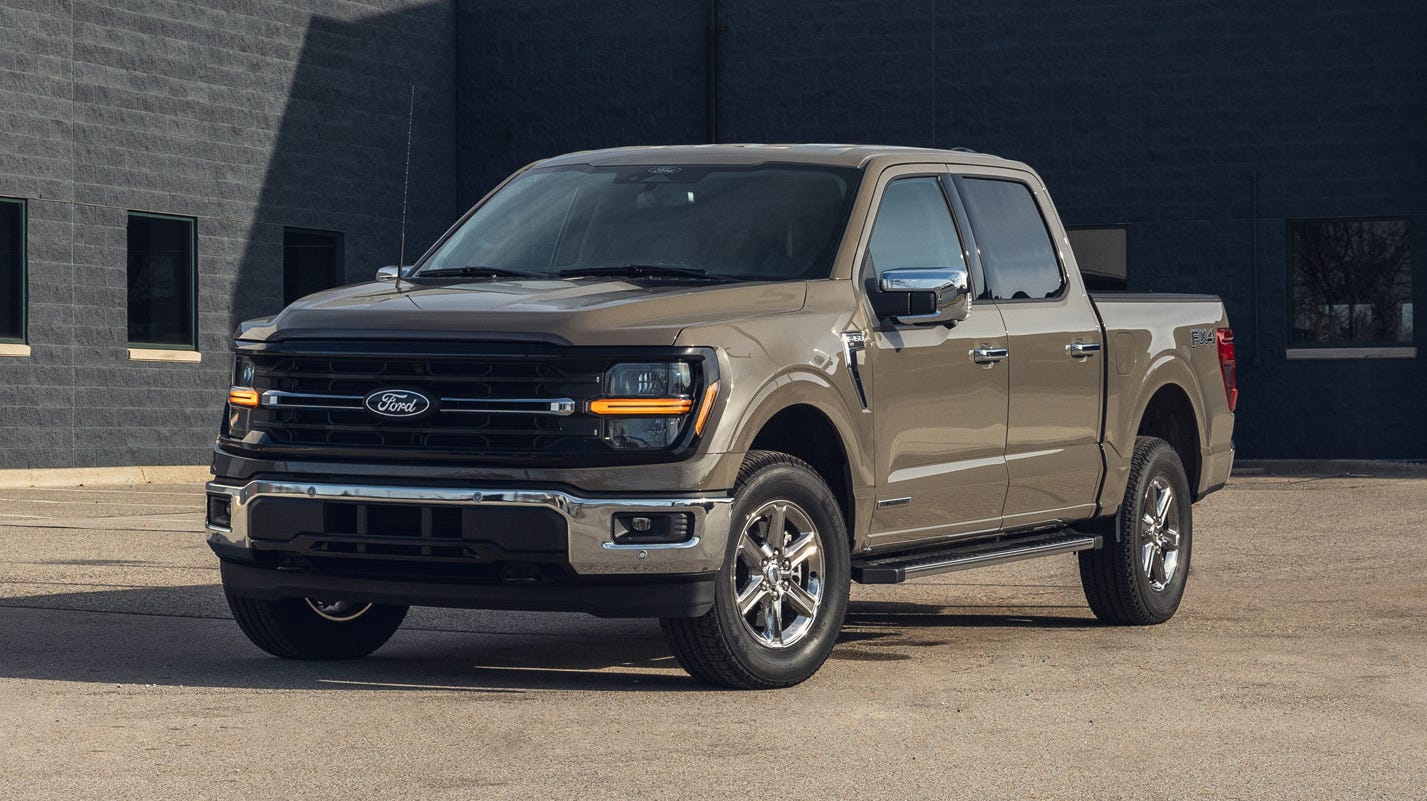
The Ford F-150 crew cab fails the updated test, with rear-seat injury measures rated Poor and rear-seat kinematics also rated Poor. It dropped off the awards list as a result. The rear-seat kinematics issue is particularly concerning it means the movement of the rear dummy during the crash was highly dangerous, indicating the seatbelt and seat geometry were not adequately restraining the occupant.
The F-150’s failure sent a message across the entire pickup truck market. If the most sophisticated, best-engineered truck on the market could not adequately protect rear-seat occupants in a crash, then the entire segment had work to do. For families who use the rear seats of their F-150 to transport children, this was deeply unsettling information.
Ford acknowledged the shortcomings and began working on updates to the rear seat belt system and seat geometry. The F-150 remains America’s best-selling vehicle, but this episode demonstrated that commercial success and crash safety are not always the same thing.
Specifications:
- Engine: 2.7L EcoBoost V6 / 3.5L EcoBoost V6 / 5.0L V8
- Horsepower: 325 hp (2.7L) / 400 hp (3.5L) / 400 hp (5.0L V8)
- Torque: 400 lb-ft (2.7L) / 500 lb-ft (3.5L) / 410 lb-ft (5.0L V8)
- Length: 231.7 inches (SuperCrew 5.5 ft. bed)
- Width: 79.9 inches
8. 2025–26 Ram 1500 Crew Cab
The Ram 1500 is Ford’s most direct competitor in the full-size pickup segment. It has built a reputation for ride quality that rivals luxury SUVs, an interior that feels more car-like than any truck in its class, and a broad powertrain lineup that spans from fuel-efficient mild-hybrids to potent V8s.
Ram has positioned itself as the premium pickup the truck for buyers who want more refinement. Safety, however, has proven to be a different matter.
The 2025–26 Ram 1500 crew cab failed to qualify for either the IIHS Top Safety Pick or Top Safety Pick+ award. This is a significant finding for one of America’s most popular trucks.
Ram sold hundreds of thousands of 1500s every year, and a large proportion of buyers are families who use the rear seat regularly for children and passengers.
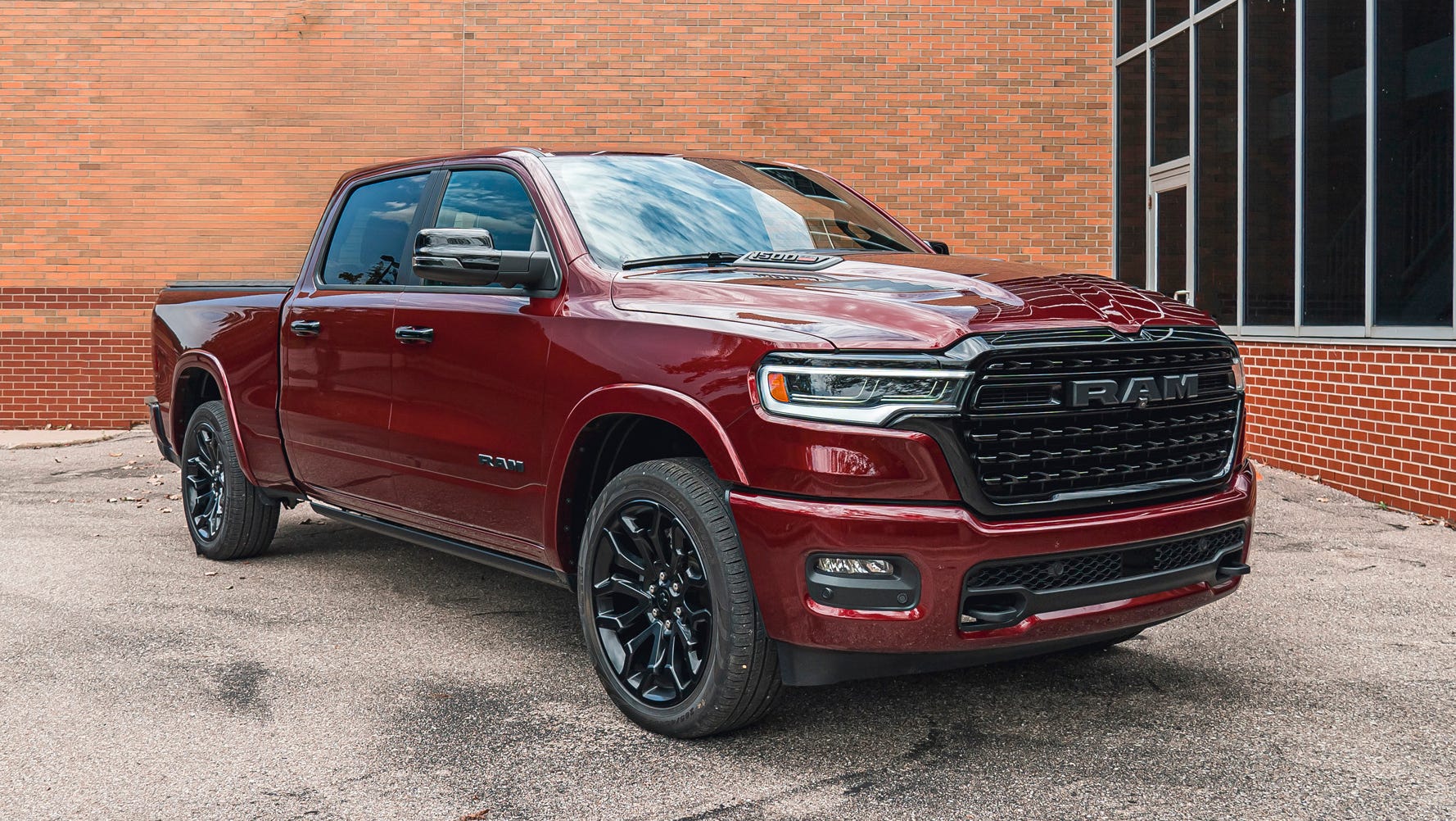
The Ram 1500’s issues mirrored the wider challenge facing pickup trucks: the rear seats of these vehicles were effectively designed as secondary considerations for decades.
The structural and restraint engineering was focused on the front occupants, and the updated IIHS tests which specifically evaluate rear-seat protection exposed that gap across the truck segment.
The Ram 1500’s large, upright body also creates a specific challenge in side-impact scenarios. Despite the truck sitting high from the ground, the wide door panels and the relatively limited side-structure reinforcement in certain body areas can allow intrusion into the cab.
Ram’s engineers face the challenge of maintaining the truck’s comfort-oriented ride characteristics while adding the structural stiffness that modern crash tests demand.
Stellantis, Ram’s parent company, has been working to address these shortcomings in subsequent model years. The pressure from IIHS’s updated criteria has forced a rethink of how pickup trucks approach occupant protection for all seating positions.
Specifications:
- Engine: 3.6L Pentastar V6 / 5.7L HEMI V8 / 3.0L EcoDiesel V6
- Horsepower: 305 hp (3.6L) / 395 hp (5.7L HEMI) / 260 hp (3.0L Diesel)
- Torque: 269 lb-ft (3.6L) / 410 lb-ft (5.7L HEMI) / 480 lb-ft (3.0L Diesel)
- Length: 232.9 inches (Crew Cab, 5’7″ bed)
- Width: 82.1 inches
Also Read: 10 Cars More Expensive in California Because of Emissions Rules
