
When we talk about cars, the conversation usually revolves around speed, horsepower, or fuel efficiency. But there is another dimension that is just as fascinating, sheer, overwhelming weight.
The heaviest cars ever built are monuments to excess, engineering ambition, and, in many cases, the philosophy that true luxury simply cannot be light. These machines were built to intimidate, to protect, and to impress. They represent eras when bigger truly meant better.
Weight in an automobile comes from many sources. Armour plating for heads of state, hand-stitched leather interiors, V12 and V16 engines displacing over seven litres, reinforced steel chassis, and bullet-resistant glass all add up. Some of these cars were built during the Great Depression, yet cost more than a modest house.
Others were Soviet-era state limousines designed to carry generals and general secretaries. A few were German wartime machines that could survive a land mine. What unites them all is mass extraordinary, astonishing, and occasionally terrifying mass.
This list ranks the ten heaviest cars ever made from the lightest to the heaviest. Importantly, we are talking about passenger cars only, not trucks, not SUVs, not vans.
All weights refer to curb weight, meaning the car is fully fuelled with standard equipment but carrying no passengers or cargo. The results are both surprising and spectacular. These are not just cars, they are rolling engineering legends.
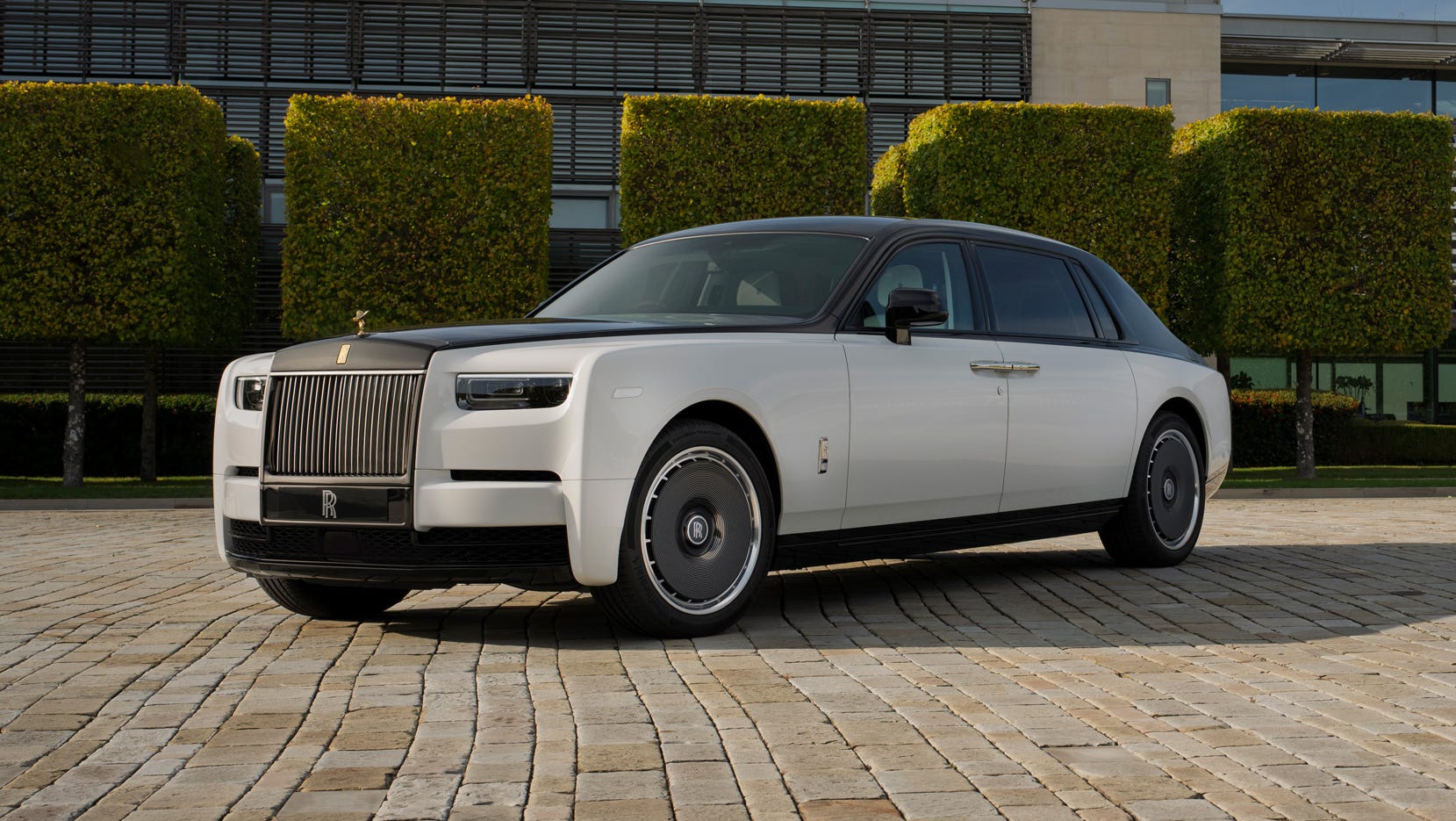
10. Rolls-Royce Phantom Extended Wheelbase (Series II), 2,725 kg (6,008 lbs)
The Rolls-Royce Phantom needs no introduction. It is the undisputed symbol of aristocratic motoring, a machine built with more craft than almost any other car on the planet.
The Phantom Extended Wheelbase (EWB) variant is the longest and heaviest version of the Phantom lineage. It stretches over 19 feet (232 inches) in total length and measures nearly seven feet wide. The extended wheelbase adds considerable rear-cabin space for passengers who, in Rolls-Royce tradition, are not expected to be doing the driving themselves.
At its heart sits a 6.75-litre twin-turbocharged V12 engine producing 453 horsepower and 531 lb-ft of torque. Despite weighing over 2,700 kilograms, the Phantom EWB can accelerate from 0 to 60 mph in around 5.7 seconds. The top speed is electronically limited to 149 mph.
The weight of the Phantom EWB is a direct consequence of its construction philosophy. Rolls-Royce builds its bodies using an aluminium spaceframe, but the sheer amount of luxury material layered inside lambswool carpeting, hand-stitched leather, real wood veneers, thick acoustic insulation, and a starlight headliner made with hundreds of fibre-optic strands adds hundreds of kilograms.
The doors alone are extraordinarily heavy, partly because they are suicide-style rear-hinged and partly because they contain extensive sound-deadening material.
The Phantom EWB also features a rear partition window, individual climate zones, and a bespoke audio system. Every car is essentially hand-built to order at the Goodwood factory in England. No two cars are exactly alike, and buyers often spend months customising their vehicle.
Key Specifications:
- Engine: 6.75-litre twin-turbo V12
- Power: 453 hp
- Torque: 531 lb-ft
- Length: 232 inches
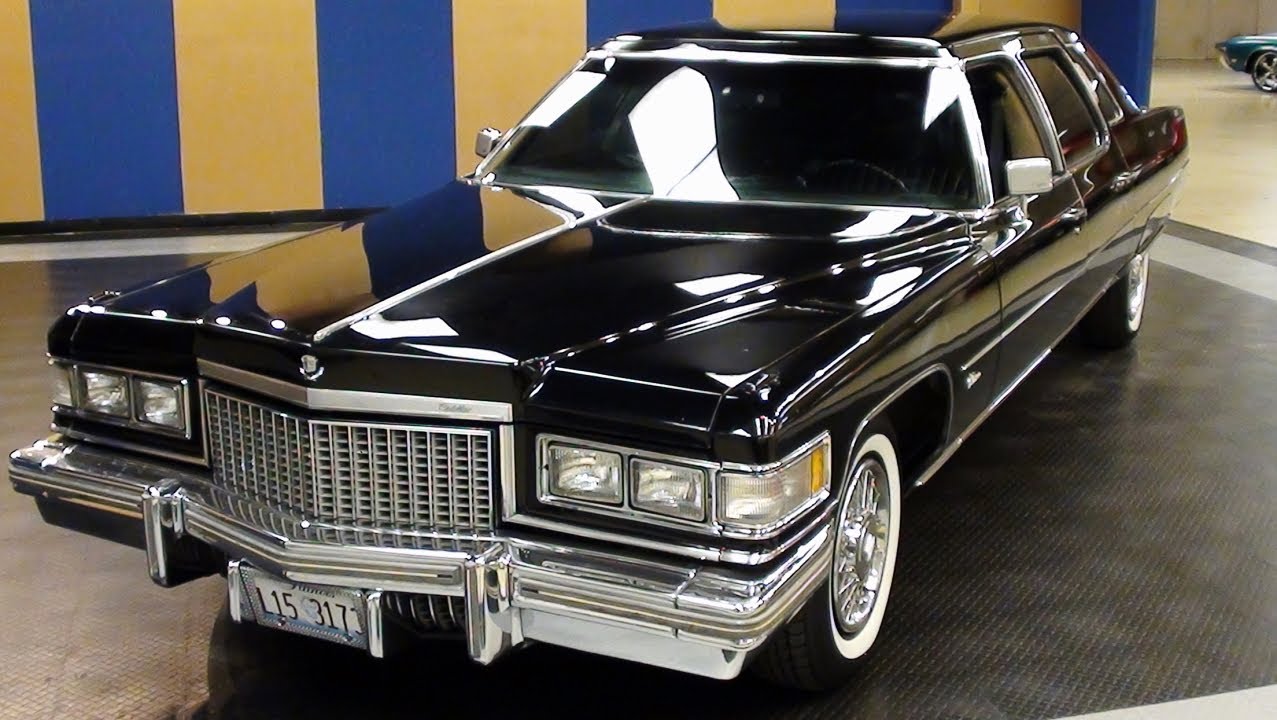
9. Cadillac Fleetwood Seventy-Five Limousine (1975), 2,725 kg (6,008 lbs)
The Cadillac Fleetwood Seventy-Five represented more than just an automobile. It stood as a moving symbol of American automotive influence during the 1970s. At the time, Detroit embraced the idea that size defined luxury and presence, and this model embodied that belief more than any other. With its imposing proportions and commanding road presence, the Fleetwood Seventy-Five became the clearest example of how far that design philosophy could be taken.
The 1975 version of the Seventy-Five Limousine represented the pinnacle of GM’s baroque excess. It used a massive 8.2-litre (500 cubic inch) V8 engine, one of the largest passenger car engines ever put into production.
This engine produced around 190 horsepower, which sounds modest, but in the context of the early 1970s emissions regulations, it was a respectable number.
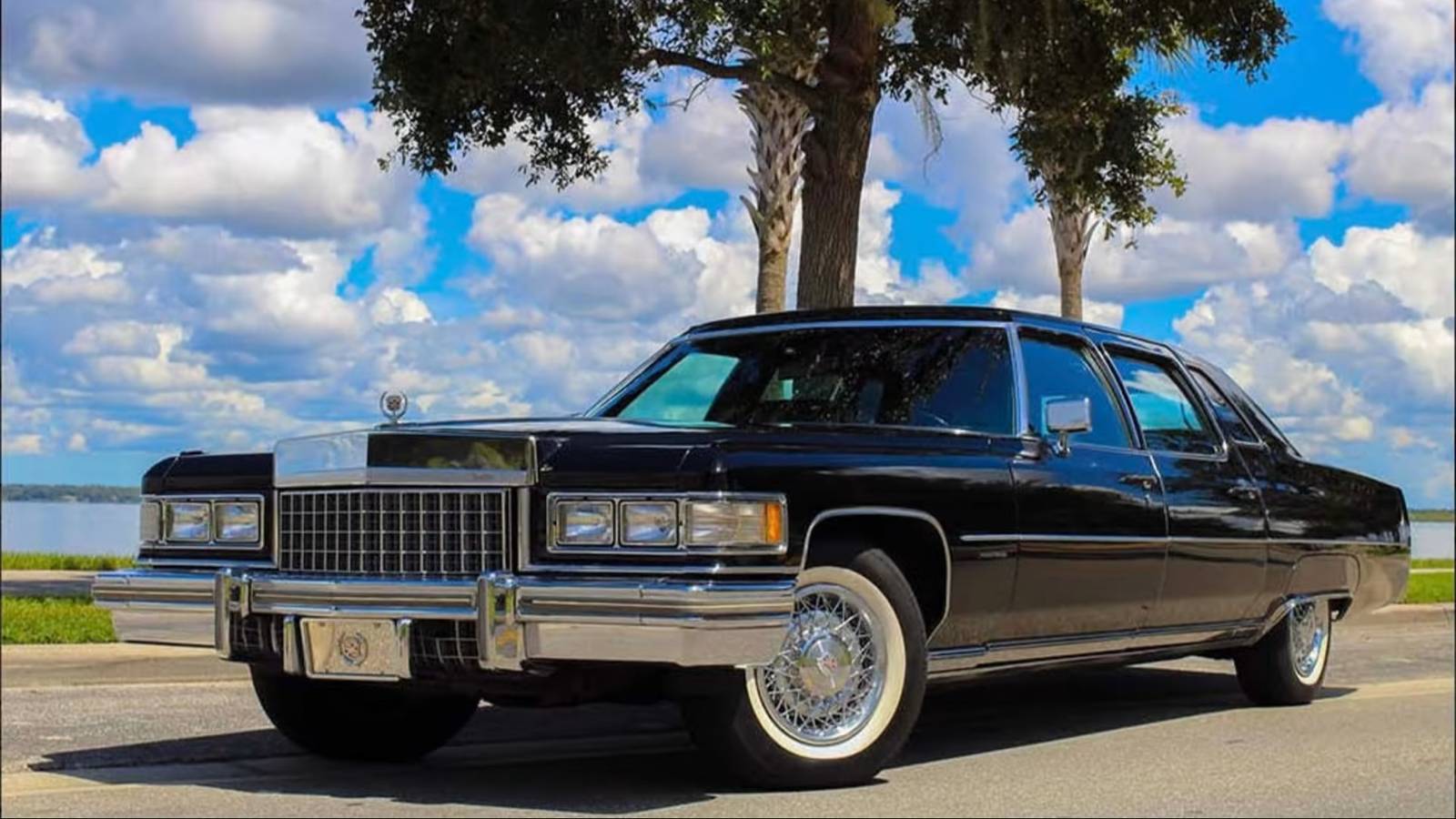
The car stretched over 252 inches, which is 21 feet in length. It was designed primarily as a chauffeur-driven vehicle, with a partition separating the driver from the rear cabin. The rear seats could accommodate up to six passengers in supreme comfort. Jump seats could bring that number even higher.
The weight of the Fleetwood came from its traditional body-on-frame construction, its massive steel body panels, its enormous engine, and the thick padding and sound-deadening that Cadillac used throughout. There was no aluminium or carbon fibre here, just pure, unapologetic American steel.
This car was a staple of state funerals, presidential motorcades, and Hollywood limousine fleets. It represented the last gasp of the truly enormous American luxury car before the oil crisis of the mid-1970s forced a rethink. After 1976, Cadillac was forced to downsize considerably, and the era of the truly giant American car began to fade.
Key Specifications:
- Engine: 8.2-litre V8 (500 cu in)
- Power: ~190 hp
- Length: 252 inches
- Transmission: 3-speed THM400 automatic
8. Bentley Mulsanne Extended Wheelbase (2016), 2,730–2,751 kg (6,019–6,064 lbs)
Bentley has long held the belief that the weight of a car is intrinsically linked to its identity. The brand’s engineers were once reportedly instructed that a lighter Bentley would “spoil the driving experience.” Nowhere is that philosophy more dramatically demonstrated than in the Mulsanne Extended Wheelbase.
The Mulsanne EWB is one of the most opulent rear-seat environments ever created for a production car. The rear cabin adds 250 mm to the standard Mulsanne’s wheelbase, transforming an already palatial interior into something approaching a private jet. Rear passengers have access to individual reclining seats, fold-out tables, and a full entertainment and connectivity suite.
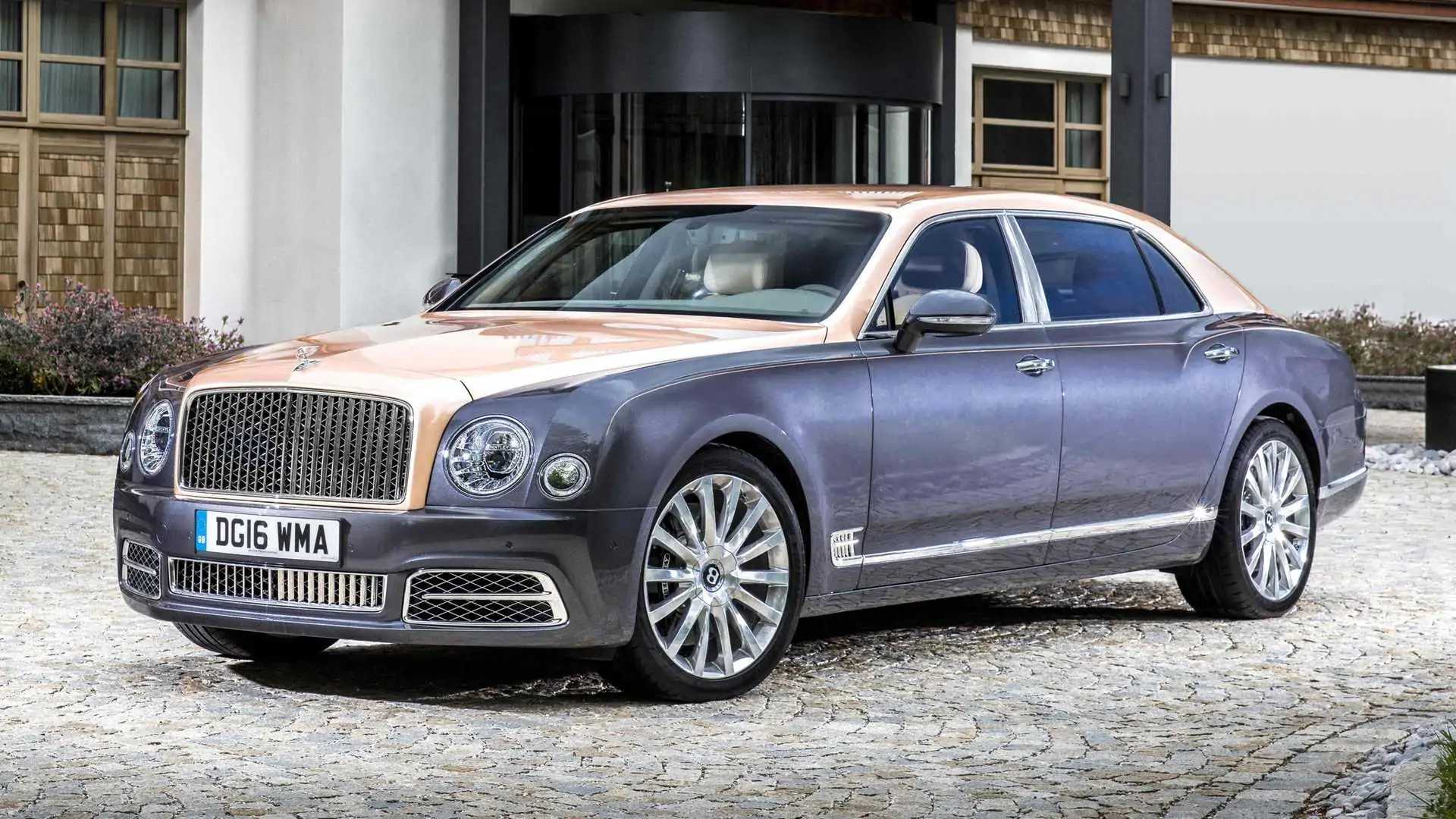
Power comes from the legendary 6.75-litre twin-turbocharged V8 engine, a unit with roots stretching back to the 1950s but thoroughly modernised. In its Mulsanne Speed configuration, this engine produces 530 horsepower and a remarkable 811 lb-ft of torque. The standard Mulsanne produces 505 horsepower.
Despite its enormous mass, approaching 2,751 kilograms in some configurations, the Mulsanne EWB can still reach 60 mph from a standstill in around 5.1 seconds. This speaks to the sheer, relentless torque of the V8 engine. The top speed of the standard Mulsanne is 184 mph.
The body is constructed from hand-formed steel, and the interior uses the finest available hides, wood veneers, and metal finishes. A single car can take up to 130 hours of skilled labour to complete at the Crewe factory. The Mulsanne was discontinued in 2020, making these final EWB versions particularly collectible.
Key Specifications:
- Engine: 6.75-litre twin-turbo V8
- Power: 505 hp (530 hp Speed)
- Torque: 752 lb-ft (811 lb-ft Speed)
- Length: 229.3 inches (EWB)
7. ZIL-4104 Soviet State Limousine, 3,400 kg (7,500 lbs)
The ZIL-4104 is perhaps the most politically loaded car on this list. Built by the Zavod Imeni Likhacheva factory in Moscow, this was the official state limousine of the Soviet Union’s highest officials during the late 1970s and early 1980s.
The ZIL-4104 was not available for public purchase. It was produced exclusively for the Soviet state. Only around 50 cars were built per year, and the total production run between 1978 and 1985 yielded approximately 106 vehicles. These were assigned to Politburo members, Communist Party General Secretaries, and senior government ministers.
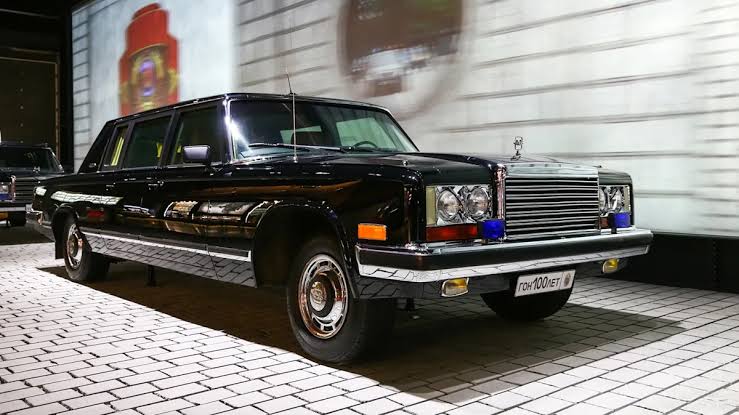
The car was powered by a 7.7-litre V8 engine producing approximately 315 horsepower, mated to either a 2-speed or 3-speed automatic transmission depending on the production year. It was a sophisticated unit by Soviet standards, developed in isolation from Western automotive engineering.
The ZIL-4104 stretched an enormous 249.6 inches in length over 20 feet. It rode on a bespoke chassis developed from the earlier ZIL-114. The body was made from heavy-gauge steel, and the construction was deliberately overbuilt to provide passive protection for its occupants. There was no lightweight engineering here; the Soviet philosophy prioritised durability and intimidation over efficiency.
Weighing 3,400 kilograms, the ZIL-4104 is one of the heaviest production passenger cars ever built. Its sheer scale meant it required a chauffeur and travelled at relatively modest speeds. It remained in service until the dissolution of the Soviet Union, when ZIL’s state patronage collapsed.
Key Specifications:
- Engine: 7.7-litre V8
- Power: ~315 hp
- Length: 249.6 inches
- Transmission: 2/3-speed automatic
6. Cadillac V-16 (1934–1935 Town Cabriolet), 2,900 kg (6,390 lbs)
Wait, how does the Cadillac V-16 rank sixth if its weight appears lower than the ZIL’s? Because this list is ordered by the absolute heaviest variant of each model, certain special-body V-16 configurations pushed well beyond the base figure.
However, for fair comparison, the 1934–35 Town Cabriolet configuration at 6,390 lbs is the established peak for this model. It is presented here in the context of its monumental historical importance.
The Cadillac V-16 was produced between 1930 and 1940, coinciding almost entirely with the Great Depression. The starting price was $5,350 at a time when a standard Ford cost under $500. It was never intended for ordinary Americans.
It was built for industrialists, movie stars, and the extraordinarily wealthy who refused to let economic catastrophe dampen their appetite for the finest automobiles.
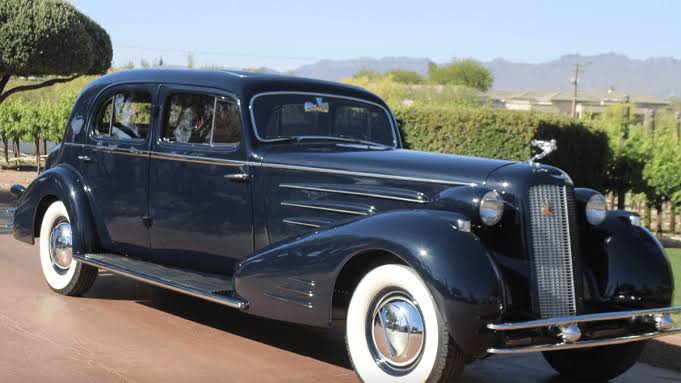
The engine was a 452 cubic inch (7.4-litre) overhead-valve V16, built by joining two V8 engines to a shared aluminium-alloy crankcase. It produced 185 horsepower, an astonishing figure for 1930. The engine ran remarkably smoothly, with virtually no vibration detectable at any speed.
Fifty-four different semi-custom body styles were offered, ranging from sporty roadsters to formal limousines and open-air phaetons. The heftiest of all was the 1934 and 1935 Town Cabriolet with modified V-windshield, which tipped the scales at 6,390 pounds on a body length of 240 inches, 20 feet exactly. The car’s body-on-frame construction, enormous steel panels, and lavish interior appointments all contributed to the final figure.
Cadillac reportedly lost money on every single V-16 it sold. Despite that, it remains one of the most beautiful and significant cars in American automotive history.
Key Specifications:
- Engine: 452 cu in (7.4L) V16
- Power: 185 hp
- Length: 240 inches
- Transmission: 3-speed synchromesh manual
Also Read: 10 Best Vehicles for Rural Gravel Roads
5. Mercedes-Maybach 62, 2,855 kg (6,294 lbs)
The Mercedes-Maybach 62 was the most ambitious attempt by Daimler to resurrect the Maybach name and challenge Rolls-Royce and Bentley at the very top of the luxury market.
Launched in 2003 alongside the shorter Maybach 57, the 62 was the flagship designed not to be driven by its owner but to envelop them in the rear cabin.
At 242.72 inches (20.23 feet) in length, the Maybach 62 was genuinely imposing on the road. The standard model used a 5.5-litre V12 engine. The range-topping “62 S” variant received a 6.0-litre twin-turbocharged V12 with twin liquid-to-air intercooled turbochargers, producing 612 horsepower.
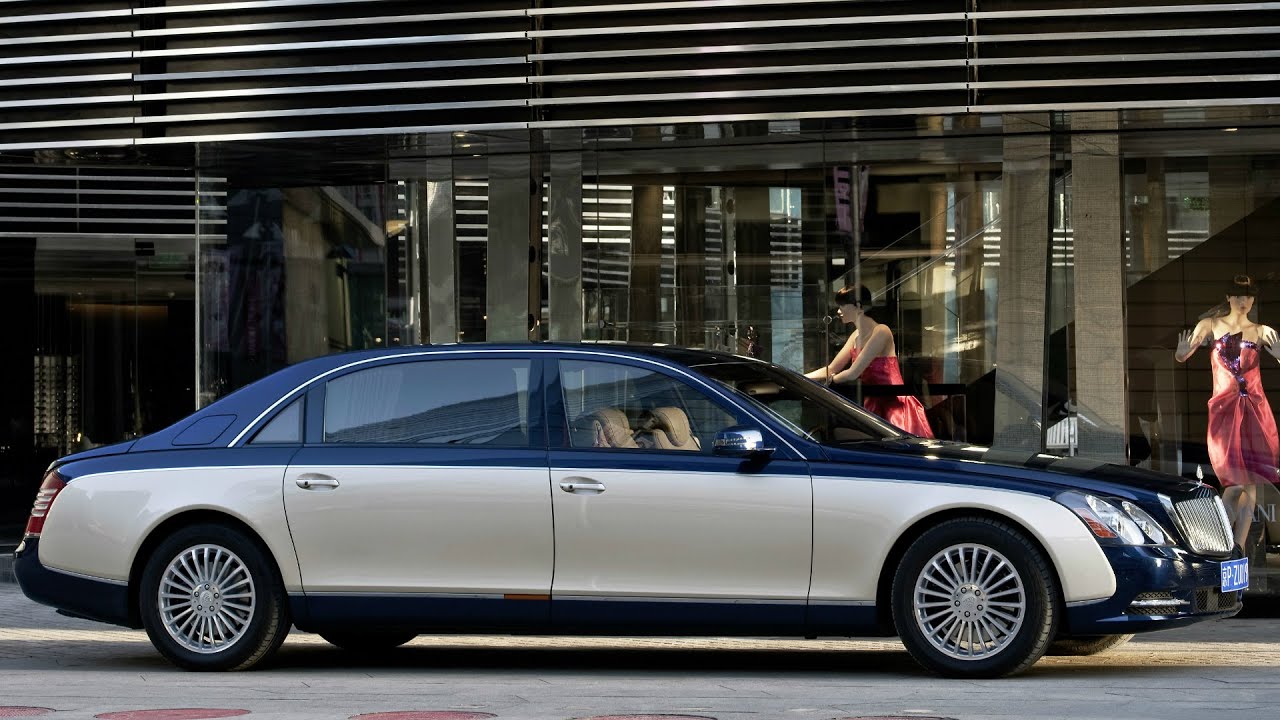
The interior was a masterpiece of excess. Rear passengers enjoyed a 21-speaker Bose surround sound system, electrohydraulic massaging seats that could recline to near-horizontal, individual climate control zones, and a rear centre-console refrigerator. An optional panoramic glass sunroof, partition glass divider, and non-smoker package rounded out the customisation options.
All of this luxury required a robust, heavy platform. The Maybach 62 weighed 2,855 kilograms, placing it far above even the Rolls-Royce Phantom of the same era. Despite this mass, the 62 S could reach 60 mph in around 4.8 seconds and had an electronically limited top speed of 155 mph.
The Maybach brand was discontinued in 2012 due to poor sales. The 62 simply failed to displace Rolls-Royce and Bentley in the hearts of ultra-wealthy buyers. It has since been revived as the Mercedes-Maybach sub-brand, but without the weight or ambition of the original 62.
Key Specifications:
- Engine: 6.0-litre twin-turbo V12 (62 S)
- Power: 612 hp
- Torque: 738 lb-ft
- Length: 242.72 inches
4. Coach, ~3,175 kg (7,000 lbs)
The Bugatti Type 41 Royale is one of the most legendary automobiles in history, not because of its performance or sales success, but because of its sheer ambition and rarity.
Only six were ever completed, and two of those never found buyers during the original production run between 1927 and 1933. Each one was built to be a different custom body style, making every example unique.
Ettore Bugatti originally designed the Royale to be sold exclusively to royalty and heads of state. The asking price was equivalent to several times the average annual wage of the era. In 1987, the Kellner Coach variant of the Type 41 was sold at auction for $9.7 million, a record at the time. It remains one of the most valuable cars ever to change hands.
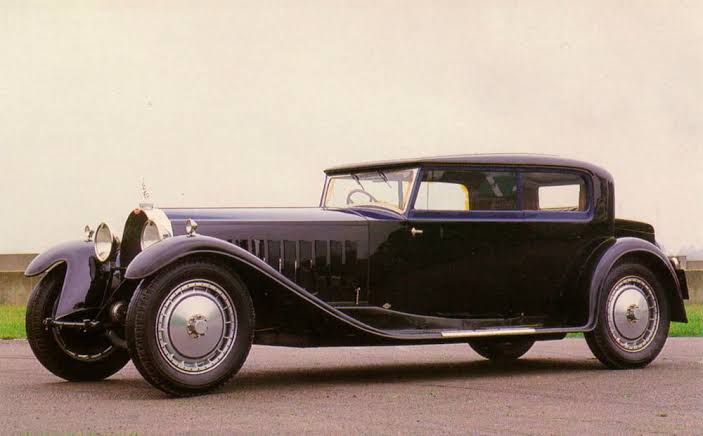
The engine is extraordinary. Bugatti began with a 14.7-litre aircraft engine he had designed for the French government and scaled it down to a 12.7-litre inline straight-eight producing 300 horsepower. The engine alone measured over four feet in length, which necessitated an extremely long bonnet and a total car length of 21 feet, the longest on this list.
The Kellner Coach body configuration could push the Royale’s curb weight to approximately 7,000 pounds (3,175 kg), depending on the coachbuilder’s choices.
To keep this engine lubricated, a dry-sump system moved 23 litres of oil through the engine at a time, while 43 litres of cooling oil prevented overheating. The wheels alone measured 24 inches in diameter.
The Royale was a commercial failure but an artistic and engineering triumph. It was the grandest expression of the prewar luxury automobile, and nothing built since has quite matched its scale or audacity.
Key Specifications:
- Engine: 12.7-litre inline straight-8
- Power: 300 hp
- Length: 252 inches (21 feet)
- Wheel diameter: 24 inches
3. Rolls-Royce Phantom III (1936–1939), ~3,175 kg (7,000–7,700 lbs)
The Rolls-Royce Phantom III was the last great pre-war Rolls-Royce and the only one ever fitted with a V12 engine until the modern era. It was produced between 1936 and 1939, with a total of 727 units completed before the Second World War brought production to a halt.
The Phantom III was a genuine technical tour de force for its era. The engine was a 7.34-litre (447 cubic inch) V12 that produced around 165 horsepower.
While modest by modern standards, this was a sophisticated unit with overhead valves, hydraulic tappets, and a level of refinement that was unmatched at the time. The engine’s smoothness was its defining characteristic.
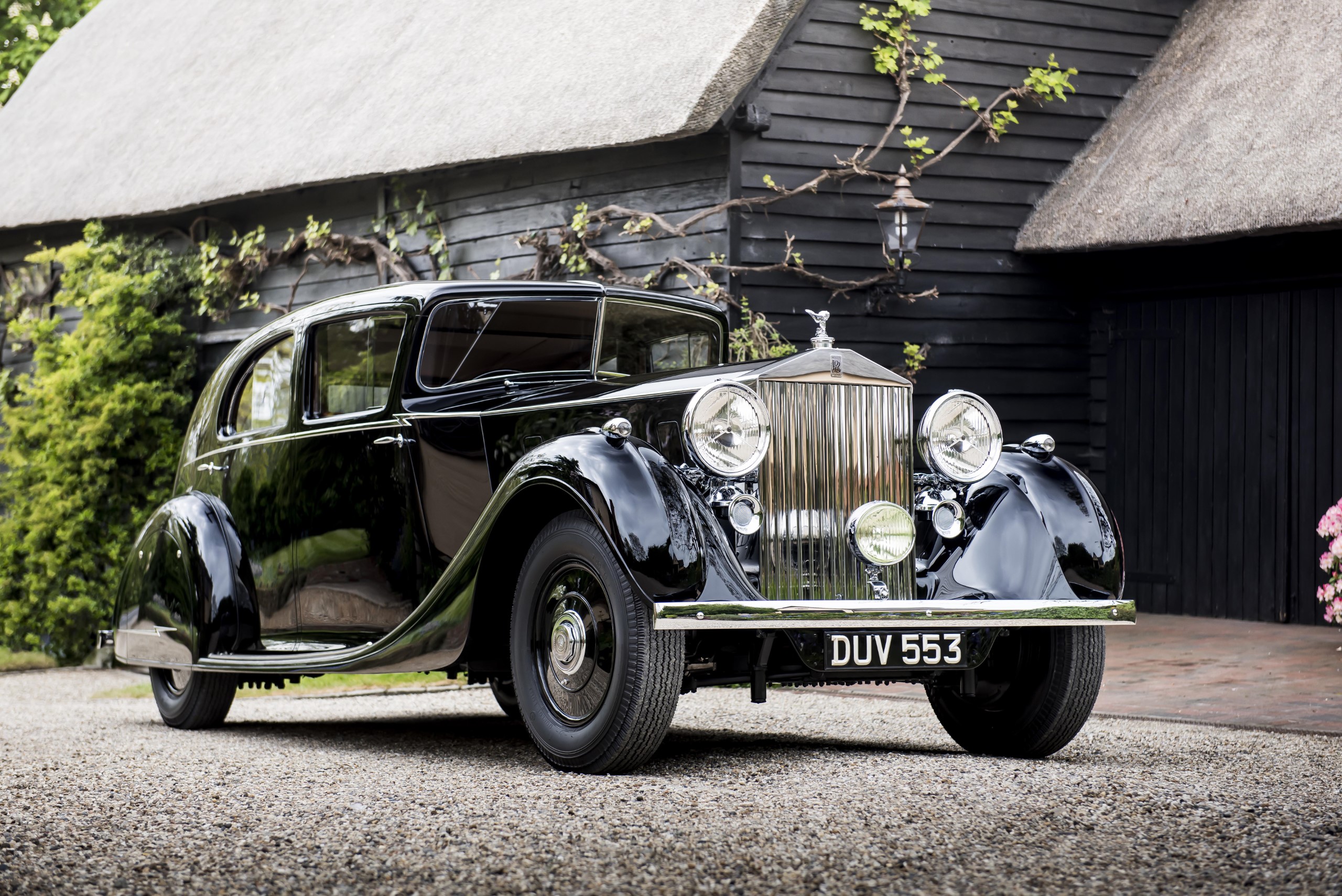
Because the Phantom III used a separate coach-built body supplied by third-party coachbuilders, the curb weight varied considerably depending on the body chosen. The chassis alone weighed approximately 4,050 pounds (1,837 kg).
When fitted with a full enclosed limousine body such as the Barker and Co. four-door saloon, the total weight could reach approximately 7,700 pounds, just under 3,500 kilograms.
The wheelbase measured 142 inches, and total length varied between 195 and 220 inches depending on the body. The car used a 4-speed manual gearbox, which was a demanding proposition given the vehicle’s mass. Hydraulic brakes at all four corners helped manage the considerable weight.
The Phantom III was used by royalty, aristocracy, and the extremely wealthy on both sides of the Atlantic. Its combination of engineering sophistication, hand-built quality, and sheer physical presence established it as the benchmark luxury automobile of its era. A fully restored Phantom III today commands prices well into seven figures.
Key Specifications:
- Engine: 7.34-litre V12 (447 cu in)
- Power: ~165 hp
- Wheelbase: 142 inches
- Transmission: 4-speed manual
2. Mercedes-Benz 770K (Grosser Mercedes), ~4,800 kg (10,582 lbs)
The Mercedes-Benz 770K, officially known as the Großer Mercedes, meaning the “Grand Mercedes,” is the heaviest and most historically significant car ever produced by Mercedes-Benz.
It was built between 1930 and 1943 across two generations. The armoured versions of this vehicle carried some of the most powerful and dangerous political figures of the 20th century.
Adolf Hitler used the car as his primary state vehicle throughout most of his time in power. Emperor Hirohito of Japan also made use of the 770K, while Pope Pius XII was transported in one during official state occasions. Far from being ordinary luxury automobiles, these vehicles functioned as armored fortresses designed to shield their occupants from assassination attempts.
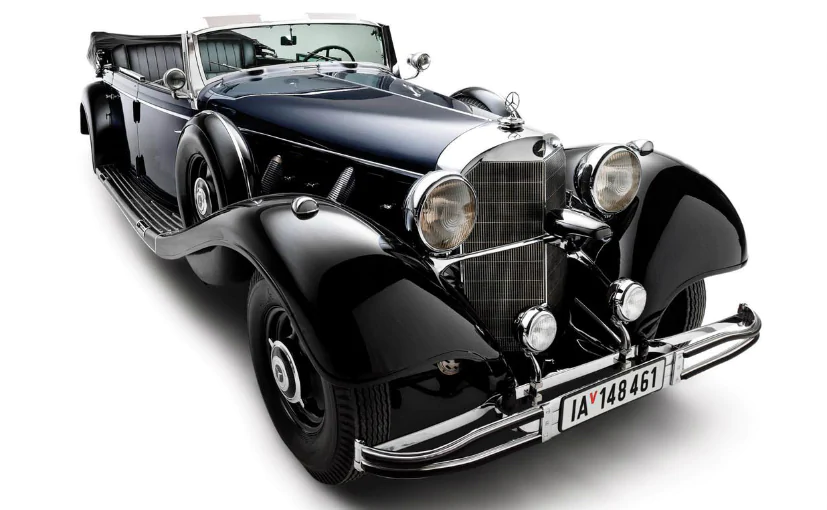
The armoured version of the 770K explained the extraordinary weight. The floor was reinforced with mine-proof steel plating. The windowpanes used several centimetres of laminated bulletproof glass.
The doors were entirely armour-plated. A retractable armour plate sat behind the rear seat to prevent shots from the back. All of this protection pushed the curb weight to approximately 10,582 pounds, close to five tons.
To move this extraordinary mass, Mercedes fitted a 7.655-litre supercharged inline-8 (technically a supercharged V8 in later specs) producing 230 horsepower at 3,200 rpm. This gave the car a top speed of approximately 87 mph, remarkable for a five-ton vehicle of this era.
The car stretched over 19 feet in length and used four-wheel independent suspension, a significant technical achievement at the time. The braking system was hydraulic at all four corners. Despite the weight, the ride quality was reportedly excellent, a testament to the engineering sophistication of pre-war Mercedes-Benz.
Only a handful of the fully-armoured examples survive today. Those that do are kept in museums and are among the most historically charged automobiles in existence.
Key Specifications:
- Engine: 7.655-litre supercharged inline-8
- Power: 230 hp @ 3,200 rpm
- Top Speed: 87 mph
- Length: 19+ feet
- Armour: Mine-proof floor, bulletproof glass, armour-plated doors
1. ZiL-41052 (Armoured State Limousine), ~3,400–6,000 kg (up to ~13,228 lbs, armoured)
The ZiL-41052 sits at the very apex of this list. It is the heaviest passenger automobile ever built for state use, and its armoured configuration represents the absolute upper limit of what a production-based car has ever weighed.
Built by the Zavod Imeni Likhacheva plant in Moscow, the ZiL-41052 was an armoured variant of the ZiL-41047 limousine. The base ZiL-41047 was itself already a colossal vehicle.
The armoured 41052 variant was developed during the final years of the Soviet Union to carry General Secretary Mikhail Gorbachev, and only approximately 234 armoured examples of ZiL vehicles in this lineage were ever assembled by hand.
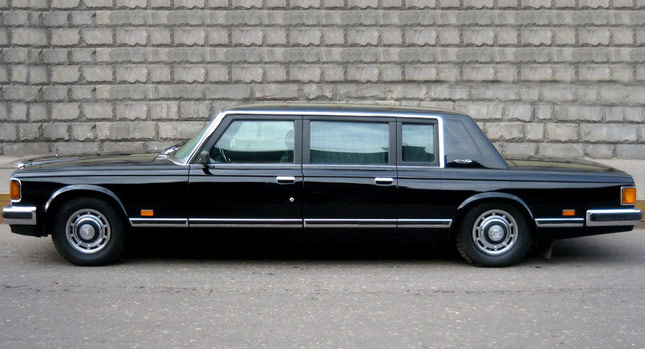
The standard ZiL-41047 was powered by a 7.7-litre V8 engine producing around 315 horsepower, mated to an automatic transmission. The car measured 249.6 inches in length, over 20 feet.
But in the fully armoured 41052 configuration, virtually every panel was replaced with armour-grade steel. The glass was replaced with multi-layer bulletproof glass several inches thick. The floor was reinforced against explosive devices.
All of this armour drove the curb weight of the fully kitted 41052 to figures estimated between 6,000 kilograms and beyond in the most heavily armoured configurations, making it the single heaviest production-based passenger car in history.
The 7.7-litre V8, despite its 315 horsepower, could only accelerate this machine from 0 to 62 mph in approximately 13 seconds. The top speed was limited to around 75 mph.
The ZiL-41052 carried Gorbachev through the tumultuous final years of the Soviet state, from glasnost through the 1991 coup attempt. After the dissolution of the USSR, ZiL lost its state funding and slowly wound down.
The final ZiL vehicles were assembled by hand in small numbers into the 2010s. The factory has since closed, but the cars and the extraordinary weight they carried both literally and historically endure as monuments to an era when political power was measured in steel.
Key Specifications:
- Engine: 7.7-litre V8
- Power: ~315 hp
- Length: 249.6 inches | 0–62 mph: ~13 seconds
- op Speed: ~75 mph
Also Read: 10 Best Cars for Mountain Living
