
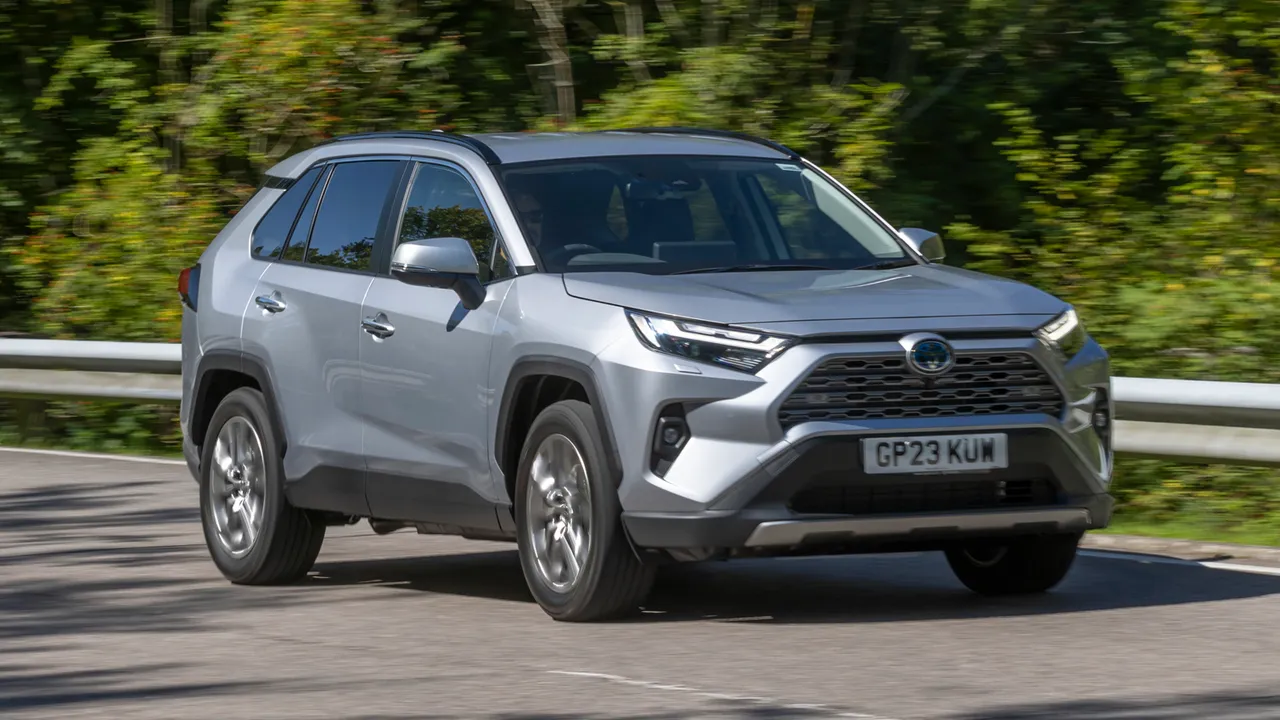
Toyota is taking one of the most significant steps in the history of its best-selling SUV. The redesigned Toyota RAV4, one of the most popular vehicles in North America, is entering a new generation with a major change under the hood: every version will now be electrified.
The decision marks the end of conventional gasoline-only RAV4 models and reflects Toyota’s growing confidence in hybrid technology.
Early reviews of the redesigned SUV are beginning to emerge as journalists and automotive reviewers get behind the wheel, offering a first look at what buyers can expect from the next chapter of the company’s hugely successful compact crossover.
The new RAV4 arrives at a crucial time for Toyota. Competition in the compact SUV segment has never been fiercer, with rivals introducing more advanced technology, improved efficiency, and increasingly sophisticated interiors.
By making hybrid power standard across the lineup, Toyota is aiming to strengthen a vehicle that has already become one of the best-selling models in the United States.
Initial impressions suggest the automaker is not relying solely on improved fuel economy. The latest redesign also brings updates to ride quality, convenience features, safety systems, and trim-level differentiation.
Also Read: Tesla Model X Lost 61% Value in 5 Years
Toyota Commits Fully to Hybrid Power
Perhaps the most important change is Toyota’s decision to eliminate traditional gasoline-only powertrains from the RAV4 lineup.
The company has spent decades building its reputation as a leader in hybrid technology, and the RAV4 has played a major role in that strategy. In recent years, hybrid versions have accounted for a growing percentage of sales as consumers increasingly prioritize fuel efficiency without fully committing to electric vehicles.
With the new generation, Toyota is effectively betting that demand for hybrids has reached a point where a gasoline-only alternative is no longer necessary.
Automotive reviewers who recently tested the redesigned model noted that the hybrid system delivers smooth power delivery while maintaining the efficiency advantages buyers have come to expect from Toyota’s electrified vehicles.
The move also aligns with broader industry trends. While many automakers are investing heavily in fully electric vehicles, hybrids continue to gain popularity among consumers who want lower fuel consumption without concerns about charging infrastructure. For Toyota, the transition appears less like a gamble and more like a natural evolution.
A Familiar Shape With Modern Updates
Although the RAV4 remains instantly recognizable, Toyota has made noticeable changes to its appearance.
The new model adopts a sharper and more modern design language while retaining the rugged crossover proportions that helped make previous generations so successful. The front fascia has been revised, lighting elements have been updated, and trim-specific styling gives buyers more visual distinction across the lineup.
Rather than completely reinventing the vehicle, Toyota appears to have focused on refining an already successful formula.
That approach is understandable. The current RAV4 has consistently ranked among the best-selling vehicles in America, and dramatic styling changes could risk alienating existing customers.
Early reviews suggest the updated design manages to look more contemporary while preserving the practicality and familiarity that many buyers appreciate. The result is an SUV that feels fresh without abandoning its established identity.
Ride Comfort Receives Attention
One area where reviewers have reported meaningful improvements is ride quality. Compact SUVs often face the challenge of balancing comfort, handling, and practicality.
Improvements in one area can sometimes come at the expense of another. Toyota’s engineers appear to have focused heavily on making the new RAV4 more comfortable during everyday driving.
Journalists who participated in early drives noted a smoother ride over rough pavement and better isolation from road imperfections. Refinements to the suspension system and chassis tuning seem to contribute to a more composed driving experience.
These changes may not generate the same headlines as horsepower figures or advanced technology features, but they are likely to have a significant impact on daily ownership.
For many buyers, the RAV4 serves as a family vehicle, commuter, and road-trip companion. Comfort improvements can therefore be just as important as performance enhancements.
The updates suggest Toyota listened closely to customer feedback when developing the new generation.
More Convenience and Technology
The redesign also brings a range of updates aimed at improving convenience. Modern consumers increasingly expect their vehicles to function as extensions of their digital lives. Automakers have responded by introducing larger displays, enhanced connectivity features, and more intuitive interfaces.
Toyota appears determined to keep the RAV4 competitive in that environment. Reviewers have highlighted improvements to the SUV’s technology offerings, including updated infotainment systems and enhanced user interfaces. The company has also introduced new convenience features designed to simplify daily use.
These upgrades are important because buyer expectations continue rising throughout the compact SUV segment.
Vehicles such as the Honda CR-V, Hyundai Tucson, Kia Sportage, and Mazda CX-50 have all raised the bar in recent years, forcing manufacturers to continually improve their products. The latest RAV4 appears designed to ensure Toyota remains at the forefront of the category.
New Trims Expand Buyer Choice
Another notable aspect of the redesign is the introduction of additional trim levels. Rather than offering a one-size-fits-all approach, Toyota is expanding the lineup to better address varying customer preferences. Some buyers prioritize efficiency, while others seek more rugged styling, additional technology, or premium features.
The expanded trim strategy allows Toyota to target multiple audiences simultaneously. Industry analysts have noted that trim diversification has become increasingly important as consumers demand more personalized vehicle configurations. Automakers are responding by creating distinct identities for different versions of the same model.
The redesigned RAV4 follows that trend, giving buyers a wider range of choices while maintaining the vehicle’s core strengths. This flexibility could help Toyota attract both returning customers and first-time buyers.
Safety Remains a Major Focus
Safety has become one of the most competitive areas of the automotive industry, and Toyota continues to invest heavily in advanced driver-assistance technologies.
The new RAV4 receives updates aimed at enhancing both active and passive safety performance. Early reviews indicate improvements to driver-assistance systems, along with refinements designed to make the technologies operate more naturally.
Features such as adaptive cruise control, lane-centering assistance, collision avoidance systems, and pedestrian detection have become increasingly important purchasing considerations for many consumers.
Toyota has consistently earned strong safety ratings across much of its lineup, and the company appears determined to maintain that reputation with the redesigned SUV.
For family-oriented buyers, these updates may prove just as influential as styling or efficiency improvements.
A Key Vehicle for Toyota’s Future
The importance of the RAV4 extends far beyond a typical model redesign. As one of Toyota’s highest-volume vehicles, the SUV plays a critical role in the company’s sales performance and broader product strategy. Any major change to the RAV4, therefore, carries significant implications.
By making the lineup hybrid-only, Toyota is sending a clear message about where it sees the market heading. The company believes many consumers want greater efficiency and lower emissions, but are not yet ready to transition fully to electric vehicles.
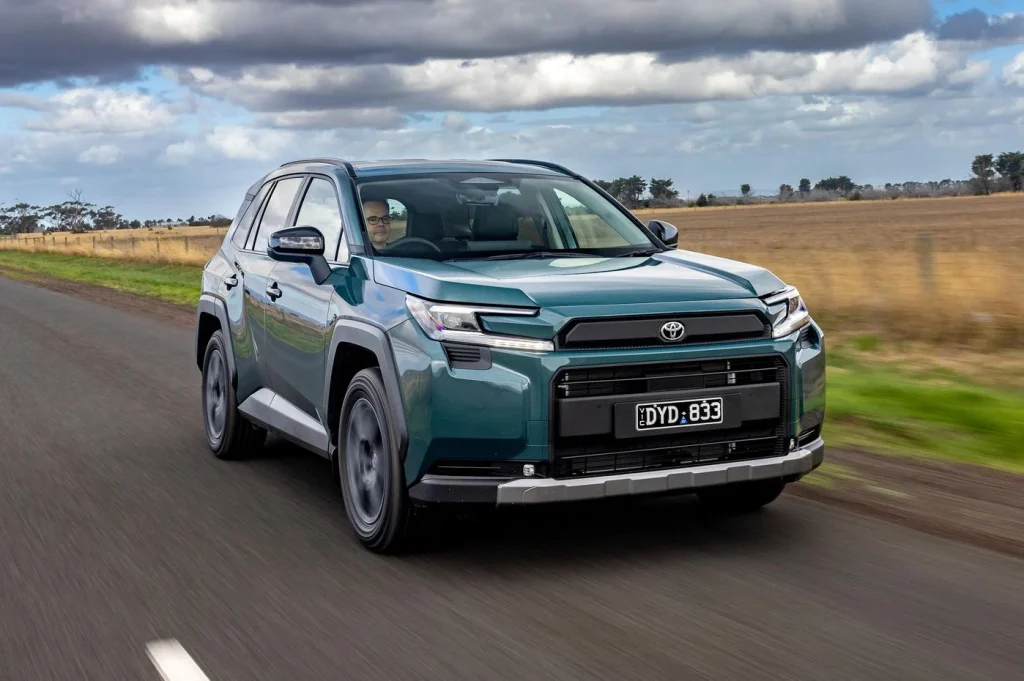
The redesigned RAV4 reflects that philosophy. Rather than forcing customers into a fully electric future, Toyota is offering a middle ground that combines familiar ownership experiences with meaningful efficiency gains.
Building on a Winning Formula
The RAV4 has spent years establishing itself as one of the most successful vehicles in the automotive industry. That success created a difficult challenge for Toyota: improving the SUV without disrupting the qualities that made it so popular in the first place.
Early reviews suggest the company may have found the right balance. The move to a hybrid-only lineup represents the headline change, but the redesign extends much further. Improvements in comfort, technology, safety, and trim-level variety indicate that Toyota approached the project as a comprehensive update rather than a simple powertrain revision.
As the new generation reaches dealerships, it will enter one of the most competitive segments in the market. Yet the RAV4 begins that journey from a position of strength.
With hybrid power now standard and a host of refinements throughout the vehicle, Toyota is betting that its best-selling SUV can remain one of the industry’s benchmarks for years to come.
Also Read: Consumer Reports Names The Ford F-150: A Top Pick For 2026
