
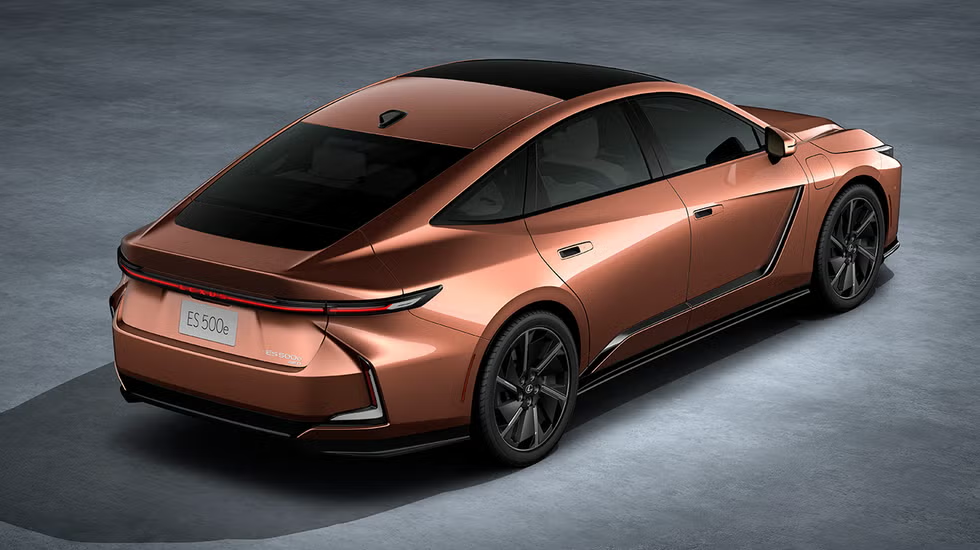
Lexus is taking one of the biggest steps in the history of its best-selling luxury sedan. The eighth-generation Lexus ES is introducing a fully electric powertrain, marking a significant expansion of the brand’s electrification strategy while maintaining the comfort-focused character that has defined the model for decades.
Long known as a dependable and refined luxury sedan, the ES has traditionally relied on gasoline and hybrid powertrains to attract buyers seeking comfort, efficiency, and reliability. The new generation changes that formula by adding all-electric variants to the lineup, giving customers another option as the luxury market continues shifting toward electrification.
Consumer Reports recently examined the redesigned ES and highlighted the addition of the new electric models, which will start at $48,795 in the United States. The move places Lexus directly into an increasingly competitive segment where traditional luxury manufacturers are racing to expand their EV offerings.
For Lexus, the launch represents more than just another model introduction. It is a signal that one of the brand’s most important nameplates is preparing for an electric future.
Also Read: GM Develops Integrated Rooftop Connectivity Hub Module
The ES Enters the EV Era
The headline development is the arrival of two fully electric variants. Lexus will offer the ES 350e as the entry-level electric model, featuring a single-motor front-wheel-drive configuration. Buyers seeking additional performance can step up to the ES 500e, which adds a dual-motor all-wheel-drive system and a higher starting price.
Consumer Reports noted that the ES 350e starts at $48,795, while the range-topping ES 500e reaches $60,195. Those figures position the sedan competitively against other luxury EVs while keeping it within reach of many buyers who may already be considering premium gasoline or hybrid alternatives.
The introduction of both front-wheel-drive and all-wheel-drive options reflects Lexus’ effort to appeal to a broad audience.
Some customers prioritize efficiency and range, while others value additional traction and performance. By offering two distinct electric configurations, the company provides flexibility without fundamentally altering the ES’s luxury-oriented mission.
A Focus on Driving Range
One of the most important factors for any electric vehicle is range, and Lexus appears to understand that reality.
Consumer Reports highlighted Lexus’ estimate of approximately 300 miles of driving range for the single-motor ES 350e. While official EPA figures have yet to be finalized, that estimate places the sedan within the competitive range expected by modern EV buyers.
Range anxiety remains a concern for many consumers considering their first electric vehicle. Although charging infrastructure continues to improve across North America, buyers still pay close attention to how far a vehicle can travel on a single charge.
A 300-mile target helps position the ES as a practical daily driver capable of handling commuting, road trips, and routine errands without frequent charging stops.
For Lexus, achieving competitive range figures is essential because many traditional ES buyers value convenience and ease of ownership above all else.
The company appears determined to ensure that electrification does not compromise those strengths.
Luxury Remains the Priority
Despite the addition of electric power, Lexus has not abandoned the qualities that made the ES successful.
For decades, the sedan has built its reputation around comfort, refinement, and a quiet driving experience. Those characteristics remain central to the vehicle’s identity, even as its powertrain options evolve.
Early reviews suggest the redesigned ES continues emphasizing passenger comfort and cabin isolation. In many ways, electrification naturally complements those goals. Electric motors operate more quietly than traditional engines and deliver smooth acceleration without the shifts associated with conventional transmissions.
The result is a driving experience that aligns closely with what many Lexus customers already expect.
Rather than transforming the ES into a sports sedan, Lexus appears focused on enhancing the relaxed and refined character that has long distinguished the model.
That approach could prove particularly appealing to existing owners considering a transition to electric power.
A More Modern Design
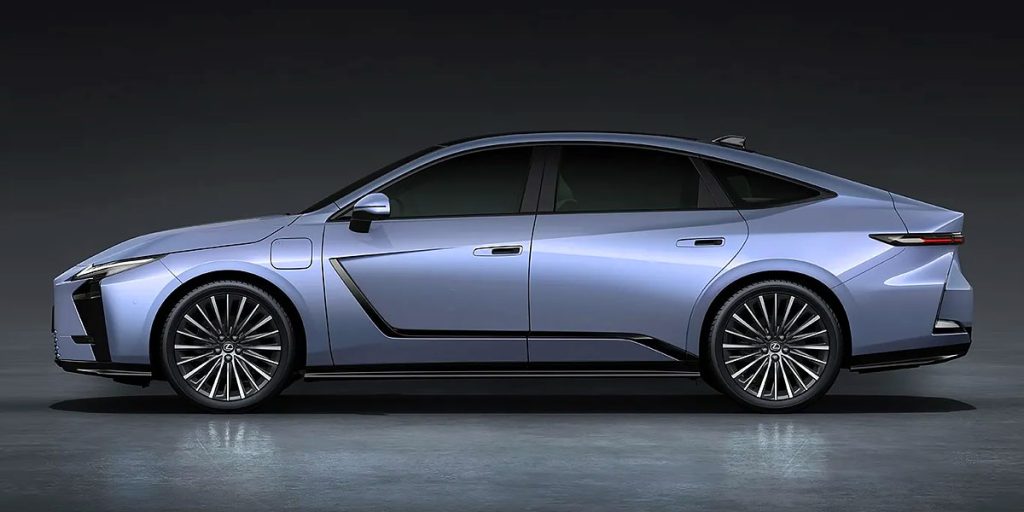
The eighth-generation ES also introduces a fresh design language. While retaining the sedan’s familiar silhouette, Lexus has updated both the exterior and interior to reflect the company’s latest styling direction. Sharper lines, revised lighting elements, and a more contemporary cabin help modernize the vehicle without abandoning its recognizable identity.
Design plays an increasingly important role in the luxury EV segment. Many buyers expect electric vehicles to look distinct from their gasoline-powered counterparts. Lexus appears to have struck a balance between innovation and familiarity, creating a sedan that feels modern without becoming overly futuristic.
Inside, technology receives significant attention. Larger digital displays, enhanced connectivity features, and updated user interfaces bring the ES in line with contemporary luxury-car expectations.
These improvements are particularly important as consumers increasingly evaluate vehicles based on their digital experiences as much as their driving characteristics.
Competition Is Intensifying
The luxury EV market is becoming one of the most competitive segments in the automotive industry.
Tesla remains a major force, while traditional manufacturers such as BMW, Mercedes-Benz, Audi, Cadillac, Genesis, and Lucid continue to introduce new electric products. Buyers now have more choices than ever before.
Lexus enters this environment with several advantages. The brand has spent decades building a reputation for quality, reliability, and customer satisfaction. Those attributes have helped attract loyal customers who may now be considering electric alternatives.
The ES’s established reputation could provide an important edge. Rather than launching an entirely new nameplate, Lexus is electrifying one of its most recognizable and successful models.
Existing customers already understand what the ES represents, making the transition to an electric version potentially less intimidating. That familiarity may prove valuable as the company expands its EV portfolio.
Electrification Without Abandoning Hybrids
The launch of the electric ES also reflects Lexus’ broader strategy. Unlike some manufacturers that have aggressively shifted toward all-electric lineups, Lexus has generally pursued a more gradual approach. The company continues investing in hybrids, plug-in hybrids, and battery-electric vehicles simultaneously.
That flexibility allows consumers to choose the level of electrification that best fits their needs. The ES lineup exemplifies this philosophy by offering multiple powertrain options rather than forcing buyers into a single solution.
Industry analysts often note that consumer adoption of electric vehicles varies significantly depending on region, infrastructure availability, and individual driving habits. Maintaining a diverse portfolio enables Lexus to adapt to those differences more effectively. The electric ES becomes another piece of that larger strategy.
A Major Milestone for Lexus
The arrival of the ES Electric represents a significant moment for both the model and the brand.
Consumer Reports’ coverage highlights a vehicle that embraces electrification while remaining faithful to the characteristics that made the ES one of Lexus’ most successful products. Starting at $48,795, the new electric sedan offers buyers an entry point into luxury EV ownership backed by one of the industry’s most established premium brands.
The estimated 300-mile range of the ES 350e should help address practical concerns, while the more powerful ES 500e provides an option for customers seeking additional performance and all-wheel-drive capability.
Most importantly, Lexus has not attempted to reinvent the ES entirely. Instead, the company has adapted a proven formula to meet changing market demands.
As luxury buyers increasingly consider electric vehicles, the new ES gives Lexus a stronger position in one of the industry’s fastest-growing segments.
For a model that has spent decades serving as the brand’s comfort-focused sedan, the move into the electric era feels less like a departure and more like a natural next step.
Also Read: US to Keep Tariffs on USMCA Trading Partners Ahead of Treaty Review
