
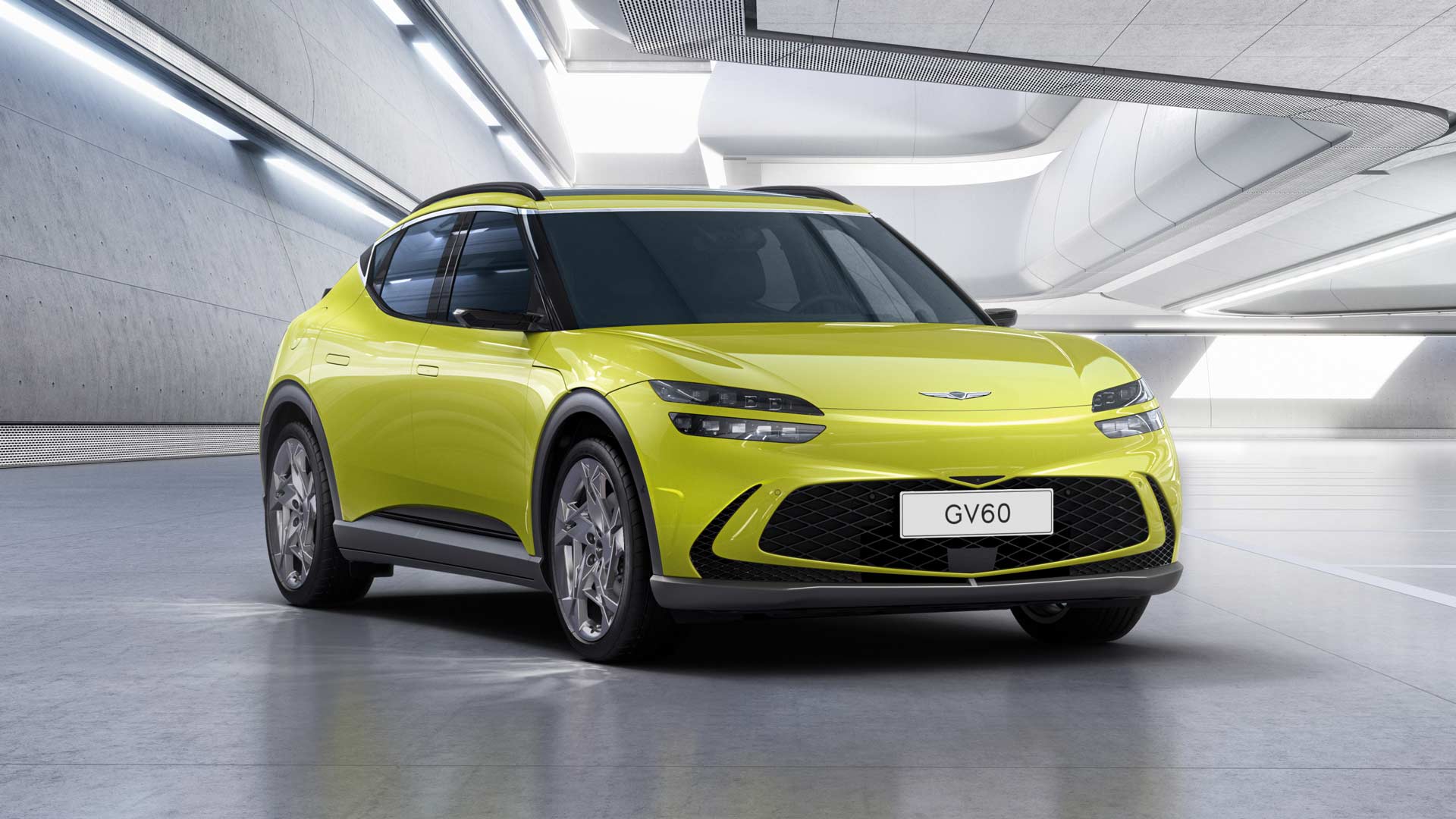
Genesis is giving its smallest electric vehicle a significant update for the 2026 model year, addressing two of the most important factors influencing EV purchasing decisions today: driving range and charging convenience.
The luxury brand has confirmed that the 2026 GV60 will receive an increase in driving range while also becoming one of a growing number of vehicles equipped with a factory-installed North American Charging Standard (NACS) port, allowing direct access to Tesla’s extensive Supercharger network without requiring an adapter.
The changes arrive at a pivotal moment for the electric vehicle industry. While automakers continue investing billions in electrification, consumers remain focused on practical concerns such as charging availability, travel convenience, and real-world usability.
Manufacturers increasingly recognize that expanding charging access can be just as important as adding horsepower, improving technology, or introducing new styling features.
For Genesis, the updated GV60 represents more than a routine mid-cycle enhancement. It reflects a broader industry movement toward charging standardization and demonstrates how automakers are adapting to evolving consumer expectations.
As electric vehicles become more mainstream, buyers are placing greater emphasis on convenience and infrastructure, areas where Tesla has maintained a significant advantage for years.
The addition of a native NACS charging port, combined with improvements to driving range, positions the GV60 to compete more effectively in an increasingly crowded luxury EV segment. It also highlights the growing collaboration between traditional automakers and the charging ecosystem that has emerged around Tesla’s network.
Also Read: Stellantis Recalls 419,035 Jeep Grand Cherokees Over A Side-Airbag Software Fault
Charging Access Has Become a Major Competitive Advantage
For much of the modern EV era, vehicle manufacturers competed primarily on battery size, acceleration figures, technology features, and driving range. While those factors remain important, charging accessibility has emerged as one of the industry’s most significant battlegrounds.
Consumers consistently identify charging infrastructure as one of their primary concerns when considering an electric vehicle purchase. While home charging satisfies most daily driving needs, public charging remains essential for long-distance travel and for drivers who do not have access to dedicated charging equipment at home.
Tesla spent years building its Supercharger network, creating what many industry analysts consider the most comprehensive and reliable fast-charging system in North America. The network now includes thousands of charging locations strategically positioned along major travel corridors and within urban centers.
Until recently, most non-Tesla vehicles required adapters or special arrangements to access those chargers. The 2026 GV60 changes that equation.
By integrating the North American Charging Standard directly into the vehicle, Genesis owners will be able to connect to compatible Tesla Superchargers without carrying additional hardware. The process becomes simpler, faster, and more convenient, particularly for drivers who frequently travel long distances.
For consumers comparing luxury electric vehicles, that capability may prove highly attractive.
The Industry Moves Toward a Common Standard.
Genesis is far from alone in embracing the NACS connector. Over the past two years, a growing list of automakers has announced plans to adopt Tesla’s charging standard. The shift represents one of the most significant infrastructure developments in the history of the electric vehicle industry.
For years, North America operated with multiple charging standards, creating confusion for consumers and complicating charging network expansion.
Different vehicles often required different connectors, while compatibility concerns added unnecessary complexity to EV ownership. The adoption of NACS is gradually reducing those barriers.
Automakers increasingly view charging standardization as essential to accelerating broader EV adoption. Consumers generally prefer simple solutions, and the ability to access a large charging network without adapters removes one of the friction points that has discouraged some potential buyers.
Industry observers believe the move could have long-term implications for competition within the EV market.
Rather than forcing consumers to choose vehicles based partly on charging compatibility, manufacturers can increasingly compete on product quality, technology, performance, and pricing.
For Genesis, joining this transition aligns the brand with one of the industry’s most important trends.
More Range Addresses Consumer Priorities
The second major update for the 2026 GV60 involves improved driving range. Although Genesis has not positioned the vehicle as a long-distance champion within the EV segment, extending range remains one of the most effective ways to improve customer satisfaction.
Even drivers who rarely approach the limits of their battery capacity often view range as an important measure of convenience and flexibility.
Range anxiety continues to influence purchasing decisions despite substantial improvements in battery technology.
Many consumers remain concerned about unexpected detours, weather-related efficiency losses, or charging station availability during longer trips. An additional range helps reduce those concerns and can make an electric vehicle feel more versatile in everyday use.
The improvement also reflects broader advances occurring throughout the industry. Battery technology continues to evolve, allowing manufacturers to extract greater efficiency from existing platforms.
Improvements in energy density, software management, and aerodynamics have enabled many automakers to increase range without dramatically increasing battery size.
For Genesis, enhancing the GV60’s driving capability strengthens the vehicle’s appeal in a segment where buyers closely compare specifications before making purchasing decisions.
Every additional mile matters when consumers evaluate competing luxury EVs.
The GV60’s Role in the Genesis Lineup
Since its introduction, the GV60 has occupied a unique position within the Genesis portfolio. Unlike larger luxury SUVs that prioritize passenger space and utility, the GV60 was designed as a more compact, technology-focused electric crossover.
It serves as an entry point into the brand’s EV lineup while showcasing many of the advanced features that Genesis hopes will define its future products.
The vehicle shares elements of its underlying architecture with other products from the Hyundai Motor Group, including the Hyundai Ioniq 5 and Kia EV6. However, Genesis has differentiated the GV60 through premium materials, distinctive styling, and a more upscale ownership experience.
The model has generally received positive reviews from automotive journalists and industry experts.
Critics frequently praised its interior design, build quality, technology integration, and driving dynamics. The vehicle demonstrated that Genesis could successfully translate its luxury ambitions into the electric era while maintaining a unique identity within a competitive marketplace.
The latest updates build upon that foundation rather than fundamentally changing the vehicle’s character.
Instead of pursuing dramatic redesigns, Genesis has focused on improving aspects of ownership that matter most to consumers.
Luxury EV Competition Continues to Intensify
The GV60 operates within one of the fastest-growing and most competitive segments of the automotive industry.
Luxury electric crossovers have become a focal point for manufacturers seeking to attract affluent buyers interested in new technology. Nearly every major premium brand now offers at least one electric SUV, with additional models arriving each year.
This competitive environment places pressure on manufacturers to continually improve their products.
Features that once seemed groundbreaking quickly become expected. Range figures increase. Charging speeds improve. Software capabilities expand. Buyers have more options than ever before, making differentiation increasingly difficult.
Genesis has responded by emphasizing value, design, and technology. The addition of direct Supercharger access strengthens the brand’s competitive position because charging convenience remains a meaningful advantage in real-world ownership.
While performance specifications often dominate marketing materials, many consumers ultimately care more about how easily a vehicle fits into daily life. Simplifying the charging experience helps address that concern directly.
Why Charging Convenience Matters More Than Ever
The significance of the NACS transition extends beyond technical specifications. As electric vehicles move beyond early adopters and into the mainstream market, convenience becomes increasingly important.
Consumers who are new to EV ownership often prioritize simplicity and familiarity. Complicated charging requirements can create uncertainty, particularly for buyers transitioning from gasoline-powered vehicles. A native Tesla-compatible charging port reduces that complexity.
Drivers gain access to one of the largest fast-charging networks in North America without needing to research adapters, compatibility requirements, or alternative charging solutions. The experience becomes more intuitive, helping reduce one of the perceived obstacles to EV ownership.
Industry analysts frequently point to charging accessibility as a critical factor influencing future adoption rates.
While battery technology continues to improve, the ability to charge conveniently remains equally important. Automakers that successfully address both areas are likely to strengthen their position in the market.
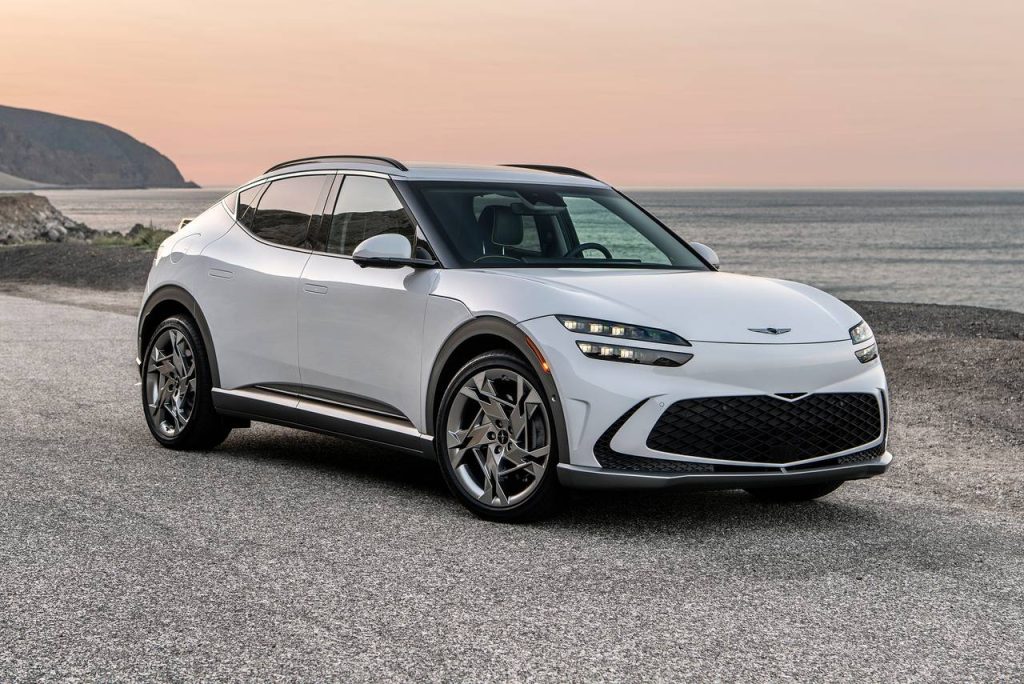
Genesis appears determined to do exactly that with the updated GV60.
Looking Ahead to the 2026 Model Year
The changes introduced for the 2026 Genesis GV60 may appear straightforward on paper, but they address two of the most important issues facing the electric vehicle industry.
More range enhances practicality. Direct access to Tesla’s Supercharger network improves convenience. Together, those updates make the vehicle easier to live with and more attractive to prospective buyers.
The announcement also reflects larger shifts occurring throughout the automotive sector. Charging standardization is gaining momentum, battery technology continues to advance, and manufacturers are increasingly focusing on the ownership experience rather than relying solely on headline performance figures.
For Genesis, the updated GV60 strengthens an already competitive product while reinforcing the brand’s commitment to electrification. The company has steadily expanded its EV ambitions in recent years, and improvements like these demonstrate a willingness to adapt as consumer expectations evolve.
As competition intensifies across the luxury electric vehicle market, practical enhancements may ultimately prove more valuable than dramatic redesigns.
The 2026 GV60 embraces that philosophy, offering meaningful improvements in the areas that many drivers care about most.
In a market where convenience and confidence increasingly influence purchasing decisions, those changes could help Genesis attract a broader audience while strengthening its position among luxury EV competitors.
Also Read: Stellantis Confirms Second Range-Extender SUV for Michigan Plant
