
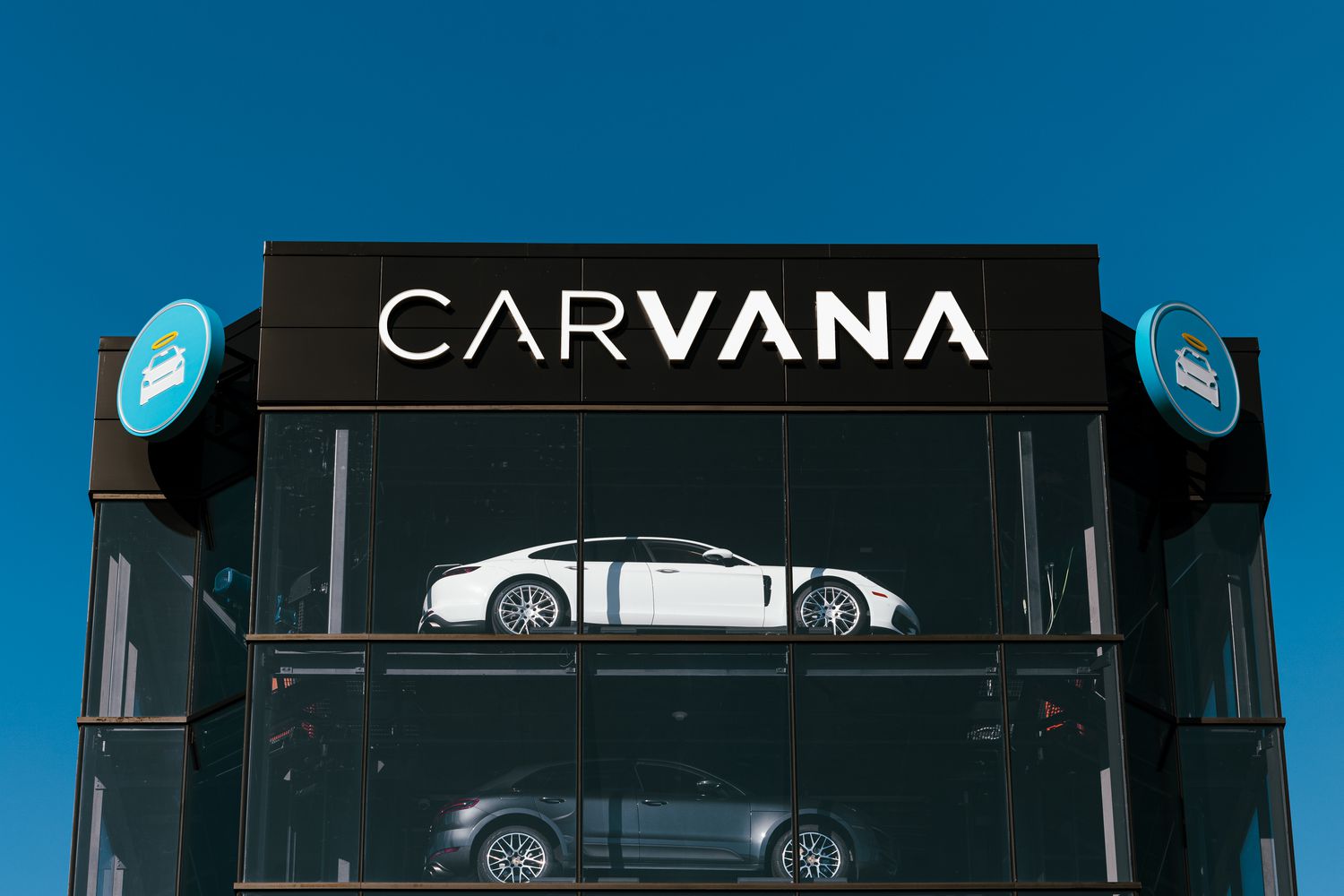
For more than a decade, Carvana has shaped its brand around making car buying as convenient as online shopping. The company aimed to replace the traditional dealership experience with a faster and more streamlined process that eliminated lengthy negotiations and in-person hassle.
The company disrupted the used-car market with fixed pricing, digital paperwork, home delivery, and its now-famous car vending machines. Now, Carvana is attempting something far more ambitious.
The company is bringing that same digital-first philosophy to the new-car market, and in the process, it is reimagining what a dealership should be.
Instead of traditional showrooms dominated by sales desks, finance offices, and negotiation rooms, Carvana is creating what it calls “new-car playgrounds.”
According to a recent Wall Street Journal report, the concept transforms dealerships into spaces where customers can show vehicles, scan QR codes for information, schedule test drives, and complete purchases largely through their smartphones.
The goal is not to sell cars through traditional dealership tactics but to create an environment where consumers can interact with vehicles while conducting most of the transaction digitally.
The experiment could have significant implications for the future of automotive retailing. If successful, it may challenge long-standing assumptions about how dealerships operate and how consumers prefer to purchase vehicles.
Also Read: Carvana’s Move Into New Vehicle Sales Could Disrupt the U.S. Auto Retail Landscape
A Radical Departure From Traditional Dealerships
For decades, the dealership business has followed a familiar formula. Customers arrive at a showroom, meet with a salesperson, browse inventory, negotiate pricing, discuss financing options, review trade-in values, and eventually move into a finance office to complete paperwork. The process can take hours and often involves multiple rounds of negotiation.
Carvana’s model turns that approach upside down. According to The Wall Street Journal, visitors to Carvana’s redesigned Stellantis dealership in Dallas encounter giant digital displays that can be controlled through their smartphones.
After selecting vehicles of interest, shoppers are directed to outdoor display areas where they can examine the vehicles in person. QR codes provide additional information and allow customers to request test drives with minimal staff involvement.
The dealership still exists physically, but its purpose has changed. Instead of serving primarily as a sales environment, it functions more like a product-experience center. That distinction is central to Carvana’s strategy. “We’re Trying to Present Cars.”
Perhaps the clearest explanation of Carvana’s philosophy came from Tom Taira, the company’s president of special projects.
According to The Wall Street Journal, Taira told reporters, “We’re not trying to sell cars here. We’re trying to present cars.” That statement captures a growing shift in consumer behavior.
Modern buyers often complete extensive research before ever stepping onto a dealership lot. Pricing comparisons, financing estimates, reviews, vehicle specifications, and even trade-in valuations are frequently handled online.
For many customers, the dealership visit is no longer about gathering information. It is about confirming a decision they have already made.
Carvana’s playground concept reflects the understanding that certain parts of the car-buying process still benefit from an in-person experience. The physical location is centered on activities that are difficult to recreate online, such as sitting inside the vehicle, inspecting interior materials, assessing comfort levels, and taking a test drive. Most other steps in the purchasing journey are increasingly handled through digital platforms.
Stellantis Became the Launch Partner
Carvana’s move into new vehicles became possible through a series of dealership acquisitions.
According to both The Wall Street Journal and industry reports, the company has acquired seven Stellantis dealerships since beginning its expansion into the franchise business. These dealerships sell Chrysler, Dodge, Jeep, and Ram vehicles, providing Carvana with a legal pathway into the heavily regulated new-car market.
The arrangement is significant because new-vehicle sales operate under a completely different regulatory framework than used-car sales.
State franchise laws generally require new vehicles to be sold through franchised dealerships. Rather than attempting to bypass those regulations, Carvana has entered the system directly by becoming a dealer itself.
This strategy allows the company to apply its digital retail expertise while remaining compliant with existing laws.
Industry analysts view the move as one of the most important developments in auto retailing in years.
The numbers are already turning heads.
Perhaps the strongest argument for Carvana’s approach is the early sales performance. According to The Wall Street Journal, Carvana’s dealership in Casa Grande, Arizona, increased monthly sales dramatically after the company took over.
The location reportedly went from selling roughly 30 to 50 vehicles per month under its previous ownership to approximately 350 vehicles monthly, making it one of Stellantis’ top-performing dealerships. Other reports indicate even stronger results in some months.
Autoweek reported that the dealership exceeded 700 monthly sales at one point after Carvana implemented its retail strategy, a dramatic increase from historical performance levels.
Those figures have attracted considerable attention throughout the dealership community. The question is no longer whether Carvana can sell new vehicles. The question is whether its model can scale.
Why Consumers May Like the Concept
The traditional dealership experience has long been one of the least popular aspects of vehicle ownership.
Consumer surveys consistently indicate that many people dislike negotiating prices, spending long periods completing paperwork, and dealing with financing arrangements. Carvana’s approach is designed to reduce much of this hassle and create a more streamlined buying experience.
Vehicles carry fixed pricing. Customers can complete significant portions of the transaction online. Test drives remain available, but the purchase process itself becomes far more streamlined.
For shoppers who already know what they want, the approach may feel considerably more efficient.
A customer can browse inventory from home, compare vehicles digitally, visit the dealership only when necessary, and finalize the transaction without lengthy negotiations.
The process resembles modern e-commerce more than traditional automotive retail. That similarity is intentional.
Traditional Dealers Are Watching Closely
Not surprisingly, Carvana’s expansion has generated concern among established dealers. According to The Wall Street Journal, some Stellantis dealers have expressed frustration over the company’s rapid growth and its ability to sell vehicles far beyond traditional geographic boundaries.
Several dealers reportedly raised concerns during private meetings regarding Carvana’s role within the franchise system. The anxiety is understandable.
Carvana already possesses advantages that many traditional dealers lack. It operates a nationwide logistics network, has extensive experience with online transactions, and has spent years refining digital purchasing systems.
Those capabilities become powerful assets when applied to new-vehicle sales. At the same time, some industry leaders view Carvana’s approach differently.
National Automobile Dealers Association President Mike Stanton told The Wall Street Journal that Carvana’s model actually reinforces the idea that consumers still want physical locations where they can interact with vehicles before purchasing.
From that perspective, Carvana is not eliminating dealerships. It is redefining their purpose.
The Economics Could Be Disruptive
Beyond the customer experience, Carvana’s model may offer another important advantage: lower operating costs.
According to dealership consultant Erin Kerrigan, quoted by The Wall Street Journal, traditional dealerships devote a substantial portion of expenses to payroll, commissions, and sales-related staffing. Carvana’s technology-driven approach reduces reliance on those structures.
Sales advocates remain available, but they function more as product guides than commission-based closers.
If Carvana can maintain strong sales volumes while operating with lower staffing costs, it may create a financial model that competitors struggle to match.
That possibility is one reason industry analysts have described Carvana’s move into franchised dealerships as potentially transformative. Autoweek cited analyst John Murphy, who called the company’s entry into the franchise business one of the most disruptive forces auto retailing has seen in decades.
The Future of the Dealership May Be Changing
Carvana’s new-car playgrounds remain a relatively small experiment. According to The Wall Street Journal, new vehicles currently account for only a small fraction of the company’s inventory, and executives continue describing the initiative as a test.
Yet the broader significance is difficult to ignore. For decades, dealerships have primarily functioned as places where transactions occur. Carvana is betting that the future dealership will function differently: as a place where customers experience products while transactions happen digitally.
The idea reflects broader changes in consumer behavior across multiple industries. Shoppers increasingly research online, expect transparent pricing, and value convenience over traditional sales processes.
Automotive retailing has largely resisted those trends because of franchise laws and longstanding business practices. Carvana is now testing whether those barriers are beginning to weaken.
Carvana’s push into new-car sales represents more than a business expansion. It is an attempt to redefine the role of the dealership itself.
By transforming showrooms into “playgrounds” focused on vehicle exploration and test drives while shifting transactions to smartphones and online platforms, the company is challenging decades of conventional wisdom about automotive retailing.
According to The Wall Street Journal, the concept emphasizes presentation rather than selling, allowing customers to control much of the purchasing process themselves.
Whether the model becomes the future of auto retail remains uncertain. Traditional dealerships still possess advantages in service operations, local relationships, and customer support. But Carvana’s early results suggest many consumers are ready for a different buying experience.
If the company’s experiment succeeds, the dealership of the future may look less like a sales floor and more like a product showroom where the cars are physical, but the purchase happens almost entirely online.
Also Read: Slate’s Sub-$30,000 EV Truck Reportedly Lining Up Carvana for Sales
