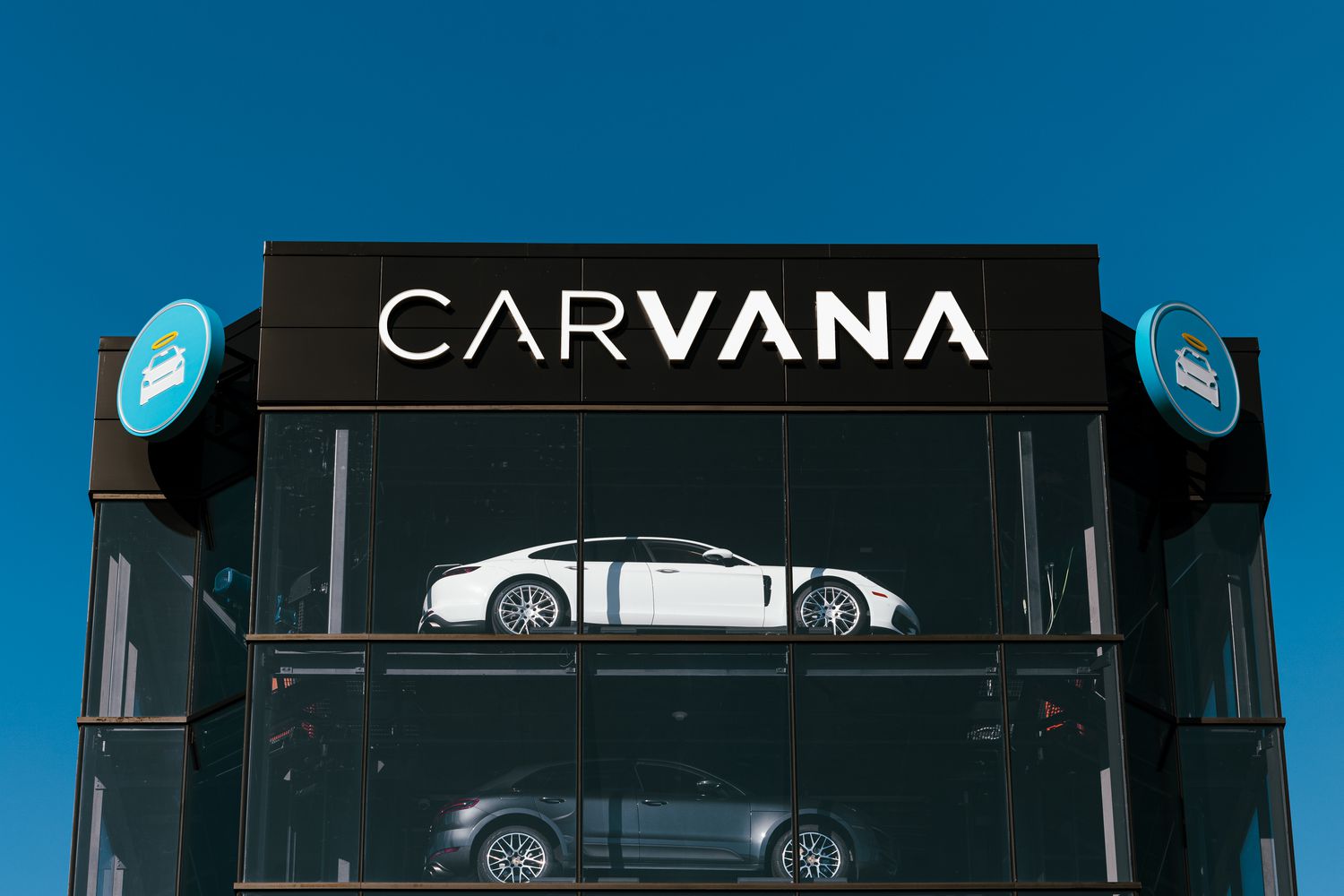
For years, Carvana has been one of the most recognizable names in online used-car retailing. The company built its reputation on a simple promise: make buying a vehicle as easy as purchasing almost any other product online.
Through digital financing tools, home delivery services, and its signature car vending machines, Carvana challenged many of the conventions that had defined automotive retailing for decades.
Now, the company appears poised to test whether that same formula can work in the new-vehicle market.
According to a recent report from The Wall Street Journal, Carvana has quietly acquired multiple franchised dealerships representing Chrysler, Dodge, Jeep, and Ram brands, giving the company a foothold in the highly regulated new-car business.
While the acquisitions themselves may seem limited compared with the thousands of dealerships operating across the United States, industry observers believe the move could signal a much larger strategic shift.
If Carvana succeeds in bringing its digital-first retail model to new vehicles, it could force traditional dealerships, manufacturers, and even regulators to rethink how cars are sold in America.
Also Read: Ford Recalls 2025–2026 Explorer, Ranger, and Bronco Models Over Engine Failure Risk
A Calculated Step Beyond Used Vehicles
Carvana’s rise has been closely tied to the used-car market. Since its founding in 2012, the company has focused on eliminating many of the frustrations consumers associate with buying vehicles.
Rather than spending hours at a dealership negotiating prices and completing paperwork, buyers could browse inventory online, arrange financing, and schedule delivery from their homes.
That strategy helped the company grow rapidly, especially during the pandemic years when consumers became increasingly comfortable making large purchases online.
According to Carvana’s financial filings, the company sold hundreds of thousands of vehicles annually before facing significant challenges during the automotive market correction of 2022.
High vehicle prices, rising interest rates, and mounting debt created concerns about the company’s future. However, after implementing aggressive cost-cutting measures and restructuring efforts, Carvana returned to profitability and regained investor confidence.
Many analysts viewed that turnaround as proof that the company had moved beyond survival mode and could begin showing new growth opportunities. The new-vehicle market appears to be one of those opportunities.
Why New-Car Sales Are a Different Challenge
Unlike used vehicles, new cars are sold through one of the most protected retail systems in the United States.
For decades, state franchise laws have largely prevented automakers from selling directly to consumers. Instead, manufacturers rely on independently owned dealerships to market, sell, finance, and service vehicles.
The system has created thousands of local businesses and remains a powerful force in the automotive industry. Because of these laws, Carvana cannot simply begin selling new vehicles online nationwide.
Instead, as The Wall Street Journal reported, the company is entering the market through dealership ownership. By acquiring franchised stores, Carvana gains access to manufacturer inventory and can legally sell new vehicles while operating within the existing regulatory framework.
This approach is particularly significant because it does not attempt to disrupt the franchise system from the outside. Rather, it seeks to modernize it from within. That distinction may ultimately prove critical to Carvana’s long-term success.
Stellantis Appears To Be the Starting Point
The company’s early acquisitions have focused on dealerships representing brands owned by Stellantis, including Chrysler, Dodge, Jeep, and Ram.
According to The Wall Street Journal, one of Carvana’s newly acquired Arizona dealerships quickly became Stellantis’ highest-volume retail location in the United States.
Such performance naturally attracted attention across the industry because it suggests the company’s retail strategy may be capable of driving substantial sales volume. The relationship also appears beneficial for Stellantis.
Over the past two years, Stellantis has faced challenges involving dealer inventory levels, pricing concerns, and slowing demand for some products. A retail partner capable of leveraging sophisticated digital marketing and nationwide logistics could help the automaker reach customers more efficiently.
Industry analysts have noted that Stellantis may view Carvana as a valuable experiment in modern retailing, particularly as younger consumers increasingly expect digital purchasing experiences.
While neither company has publicly outlined expansive plans, the early results are being watched closely.
Consumer Expectations Are Changing
The automotive industry has spent years discussing digital retailing, but progress has often been uneven.
Many dealerships now offer online financing applications, trade-in estimates, and digital inventory browsing. However, the full purchasing experience frequently still requires in-person visits and extensive paperwork.
Consumer expectations, meanwhile, continue to evolve. According to data from Cox Automotive, an increasing percentage of buyers prefer completing significant portions of the vehicle-purchasing process online.
Consumers have become accustomed to transparent pricing, rapid transactions, and home delivery services across multiple industries. Carvana’s business model aligns directly with those expectations.
The company has built an extensive technology infrastructure designed to simplify transactions and reduce friction throughout the purchasing process. If those systems can be successfully adapted for new vehicles, consumers may begin expecting similar convenience from traditional dealerships.
That shift in expectations could ultimately prove more disruptive than Carvana’s actual sales volume. History shows that industries often change when consumer behavior changes first.
Traditional Dealerships Have Reasons To Be Concerned
Many dealership groups have invested heavily in digital tools during the past decade, but few possess the same level of online retail expertise as Carvana.
The company already operates a nationwide logistics network, sophisticated inventory management systems, and large-scale vehicle transportation operations. These capabilities were developed to support used-car sales, but many can also support new-vehicle retailing.
According to reporting from Automotive News, dealership executives have been closely monitoring Carvana’s expansion because of the potential competitive implications.
Unlike many local dealerships that operate within specific metropolitan areas, Carvana’s brand recognition extends across the country. The company also benefits from a customer base already familiar with online vehicle transactions.
That combination could make it easier for Carvana to attract buyers who may never have considered purchasing a new vehicle online.
The concern for traditional retailers is not necessarily that Carvana will immediately dominate new-car sales. Rather, the concern is that the company could accelerate industry-wide changes that force dealerships to modernize more rapidly.
The Service Department Question
Despite the excitement surrounding Carvana’s strategy, several major challenges remain. One of the most significant involves service operations.
New-car dealerships generate substantial revenue through maintenance, warranty work, repairs, and parts sales. These activities often provide more stable profits than vehicle sales themselves.
A digital-first sales model may simplify purchasing, but customers still need locations for routine maintenance and warranty repairs.
Industry experts frequently point out that the service relationship remains one of the strongest advantages traditional dealerships possess. Building and maintaining that infrastructure requires significant investment and operational expertise.
Carvana must demonstrate that it can support customers throughout the ownership cycle, not simply during the purchase process.
Success in new-vehicle retailing will ultimately depend on much more than online ordering technology.
A Broader Shift Across the Industry
Carvana’s expansion comes at a time when the automotive sector is already undergoing a profound transformation.
According to Reuters, major automakers have increased investments in digital retail tools, direct-order systems, and customer-facing technology platforms. Manufacturers increasingly recognize that consumers want greater flexibility regarding how vehicles are researched, purchased, and delivered.
The growth of electric vehicles has further accelerated this trend. Many EV buyers are younger, more technologically engaged, and more comfortable with online transactions than traditional car shoppers.
At the same time, companies such as Tesla demonstrated that consumers are willing to embrace alternative purchasing models under the right circumstances.
Carvana’s strategy represents another step in this broader evolution. Rather than replacing dealerships entirely, the company is attempting to redefine how dealerships operate.
The ultimate impact of Carvana’s move into new-vehicle sales remains uncertain. The company still faces regulatory complexities, operational challenges, and intense competition from established dealership groups.
New-car retailing is a fundamentally different business from selling used vehicles, and success in one area does not guarantee success in the other. Yet the significance of the move extends beyond immediate sales figures.
As The Wall Street Journal observed, Carvana’s dealership acquisitions have already sparked discussion throughout the industry about the future of automotive retailing. The company has proven that consumers are willing to buy used vehicles online.
The next question is whether those same consumers will embrace a similar approach when purchasing new vehicles. If the answer is yes, the effects could reach far beyond Carvana itself.
Traditional dealerships would face increasing pressure to streamline transactions, improve transparency, and invest in digital infrastructure. Manufacturers could gain new insights into how modern consumers prefer to shop. And buyers might ultimately benefit from a faster, more convenient purchasing experience.
For now, Carvana’s expansion remains relatively small in scale. But some of the most significant shifts in the automotive industry have begun with seemingly modest experiments. Whether this becomes one of them will be closely watched by dealers, automakers, investors, and consumers alike.
Also Read: Honda Recalls About 880,000 Vehicles Over Rear Subframe Issue