

Porsche is reportedly preparing one of its most significant manufacturing changes in years by moving production of the Cayenne SUV from its Bratislava, Slovakia, plant back to Leipzig, Germany.
According to a report by Germany’s Frankfurter Allgemeine Zeitung cited by Reuters, the move is intended to improve capacity utilization at Porsche’s Leipzig facility, which has been operating below its potential as the luxury automaker grapples with slowing demand and mounting pressure to reduce costs.
The proposal comes at a challenging time for Porsche. The company has been dealing with weaker sales in China, increasing competition from domestic Chinese EV manufacturers, U.S. tariffs, and rising development costs associated with electrification and software.
CEO Michael Leiters has repeatedly acknowledged that Porsche must become leaner and more efficient if it wants to restore profitability while continuing to invest in future technologies.
Reuters recently reported that the company is pursuing additional cost-cutting measures after operating margins fell sharply during the past year, prompting management to reassess production capacity across its global manufacturing network.
If approved, the relocation would represent far more than a simple production transfer. It would strengthen Porsche’s long-term commitment to manufacturing in Germany while helping secure employment at its Leipzig factory, one of the company’s most important production sites.
Also Read: 10 Charging Mistakes That Shorten An EV Battery’s Life
Leipzig Could Become Porsche’s SUV Hub Again
The Leipzig plant has played a major role in Porsche’s modern history. The original Cayenne was built there before production gradually expanded to Volkswagen Group’s factory in Bratislava, Slovakia, where the SUV currently shares manufacturing resources with other Volkswagen Group models.
According to Reuters, Porsche now believes returning Cayenne production to Leipzig would improve factory utilization and provide greater flexibility as it reshapes its manufacturing footprint.
The move would also reinforce earlier statements by CEO Michael Leiters, who has repeatedly emphasized that Leipzig remains a key pillar of Porsche’s long-term production strategy despite the company’s ongoing restructuring efforts.
The Cayenne remains one of Porsche’s highest-volume models and an important contributor to global revenue. Moving production back to Germany would therefore have strategic significance extending well beyond a single assembly line.
Industry analysts note that concentrating more production in Leipzig could simplify logistics while allowing Porsche to better coordinate future model launches, particularly as both electric and combustion-powered vehicles continue sharing manufacturing resources during the industry’s transition toward electrification.
Lower Labor Costs in Slovakia Remain a Challenge
Although relocating production offers operational benefits, the proposal faces an important economic obstacle.
According to the Frankfurter Allgemeine Zeitung report cited by Reuters, Porsche has indicated that moving Cayenne production to Germany would only be financially viable if workers in Leipzig agree to wage concessions.
Manufacturing costs in Slovakia remain significantly lower than in Germany, creating a substantial difference in labor expenses that Porsche would need to offset before approving the transfer.
Discussions with employee representatives are reportedly ongoing, although Porsche has declined to officially confirm the reported production plans. Company representatives acknowledged that negotiations with labor groups continue but stopped short of commenting directly on the newspaper’s claims.
The issue reflects a broader challenge facing many European automakers. While governments and labor organizations want to preserve domestic manufacturing jobs, companies must also remain competitive against manufacturers operating in regions with significantly lower production costs.
Porsche’s Broader Restructuring Is Driving the Decision
The proposed relocation of Cayenne production cannot be viewed in isolation. It forms part of Porsche’s wider effort to adapt its manufacturing strategy to a rapidly changing automotive industry.
During the past two years, the luxury carmaker has faced slowing demand in several key markets, particularly China, where domestic premium brands have gained significant ground in both the electric and conventional vehicle segments.
China has traditionally been Porsche’s largest single market, but weaker consumer spending and intense competition have reduced sales growth.
At the same time, premium Chinese manufacturers are introducing technologically advanced electric vehicles at increasingly competitive prices, forcing established European brands to rethink both pricing strategies and production costs.
Reuters has reported that Porsche is implementing additional cost-saving initiatives after lowering its financial outlook earlier this year. The company is reviewing investments, improving manufacturing efficiency, and reducing operating expenses while continuing to fund future electric vehicle development.
Shifting Cayenne production to Leipzig could become another important piece of that broader restructuring strategy by making better use of existing German production capacity. Rather than allowing the Leipzig facility to operate below its potential, Porsche hopes to increase output while maintaining greater control over one of its most profitable vehicle lines.
The Cayenne Remains One of Porsche’s Most Important Models
Although Porsche is known worldwide for the iconic 911 sports car, the Cayenne has become one of the company’s most commercially significant vehicles.
Since its introduction in 2002, the luxury SUV has transformed Porsche’s business model. Many industry observers initially questioned whether a sports car manufacturer should build an SUV, but the Cayenne quickly became a commercial success, generating the revenue needed to finance future vehicle development and expand Porsche’s global presence.
Today, alongside the Macan, the Cayenne consistently ranks among Porsche’s highest-selling models worldwide. The SUV appeals to buyers seeking luxury, performance, practicality, and advanced technology in a single package.
Because of its strong global demand and high profit margins, any manufacturing decision involving the Cayenne carries major financial implications for the company.
Keeping production efficient while maintaining Porsche’s strict quality standards is therefore essential as competition intensifies across the premium SUV segment.
Leipzig’s Role Continues to Grow
Porsche’s Leipzig facility has evolved into one of the company’s most advanced manufacturing sites.
Originally established to assemble the first-generation Cayenne, the factory later expanded production to include the Panamera and, more recently, the all-electric Macan. Significant investments in robotics, automation, digital manufacturing, and flexible assembly systems have enabled Leipzig to produce multiple vehicle types on shared production lines.
That flexibility has become increasingly valuable as manufacturers balance production between internal combustion engines, hybrids, and fully electric vehicles.
Instead of building entirely separate factories for each powertrain, companies are increasingly designing facilities capable of assembling different vehicle types according to changing market demand.
Industry analysts believe adding Cayenne production back to Leipzig would further improve the plant’s efficiency while helping Porsche maximize returns on its existing manufacturing investments.
Labor Negotiations Could Determine the Final Outcome
Despite the strategic advantages, one major hurdle remains before production can move. According to Reuters, Porsche has made clear that relocating the Cayenne would require labor cost reductions at the Leipzig factory.
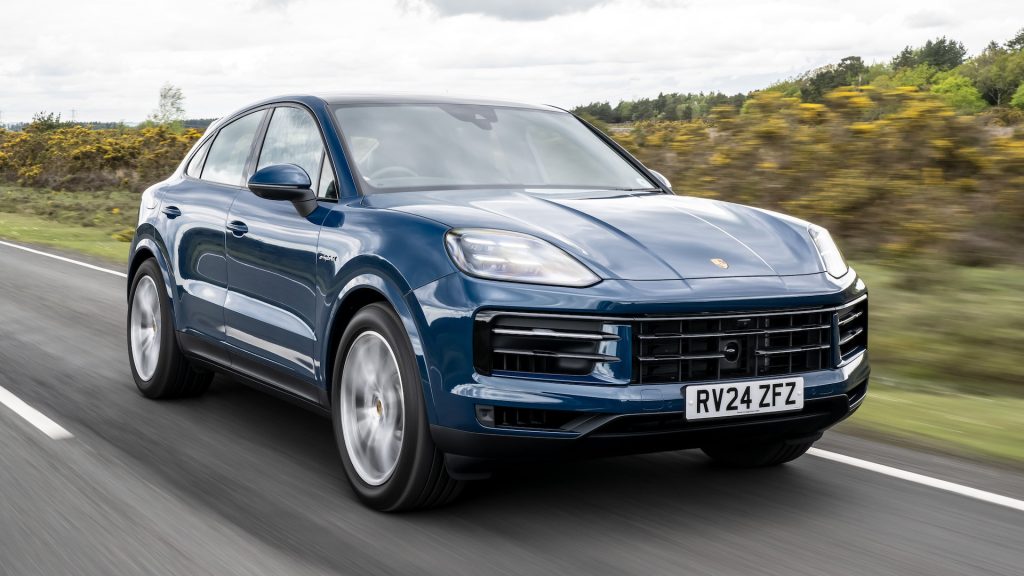
German manufacturing wages remain considerably higher than those in Slovakia, where the current Cayenne is assembled alongside several Volkswagen Group vehicles.
Employee representatives are expected to play a critical role in determining whether an agreement can be reached.
Germany’s automotive industry has a long tradition of negotiations between manufacturers and labor unions, with both sides typically seeking compromises that protect jobs while maintaining competitiveness.
Workers understandably want to preserve wages and employment security, while management argues that controlling production costs is essential if Porsche hopes to compete successfully against global rivals. Finding that balance will likely determine whether the proposed relocation proceeds.
What It Means for Volkswagen Group
The decision also carries implications beyond Porsche itself. The Bratislava factory is one of Volkswagen Group’s most important manufacturing facilities, producing vehicles for several brands, including Volkswagen, Audi, Porsche, and others.
If Cayenne production leaves Slovakia, Volkswagen Group will need to determine how best to utilize the available capacity.
At the same time, increasing production in Leipzig could strengthen Germany’s position within Volkswagen Group’s manufacturing network, particularly as the company reassesses factory utilization across Europe.
Industry experts note that many global automakers are currently reviewing production footprints to improve efficiency while preparing for the transition toward electric mobility. Porsche’s reported plans fit within that broader industry trend of optimizing existing factories rather than investing immediately in entirely new production facilities.
A Decision That Could Shape Porsche’s Future
Although Porsche has not officially confirmed the production transfer, the reported proposal highlights the difficult choices facing premium automakers as the industry undergoes one of its biggest transformations.
The company must balance rising development costs, weaker demand in key markets, increasing global competition, and the enormous investment required for electrification while continuing to deliver the quality and profitability expected from one of the world’s most prestigious automotive brands.
If negotiations with employees prove successful, shifting Cayenne production to Leipzig could improve factory utilization, strengthen Porsche’s German manufacturing base, and support the company’s long-term restructuring efforts. If an agreement cannot be reached, Porsche may be forced to reconsider how it manages production across its European facilities.
Whatever the final decision, it reflects a broader reality confronting the global automotive industry. Manufacturing strategies are no longer based solely on production volume. Companies must also consider labor costs, supply chain resilience, logistics, technology investments, and rapidly changing consumer demand.
For Porsche, the future of the Cayenne production line has therefore become much more than an operational adjustment. It represents another important step in preparing the company for an increasingly competitive automotive industry.
Also Read: 10 Sports Cars With the Most Expensive Tires to Replace
