Electric vehicle buyers in Canada are about to witness a significant milestone as Lotus prepares to become the first Chinese-owned and manufactured automaker to officially begin retail deliveries under Canada’s new trade agreement with China.
According to Reuters, the first shipment of Lotus electric vehicles will arrive in Canada in July, marking the beginning of a broader strategy that could reshape the country’s EV market and introduce greater competition for established manufacturers.
The arrival goes beyond the launch of another luxury electric vehicle. It represents the first tangible result of the trade agreement reached earlier this year between Canadian Prime Minister Mark Carney and Chinese President Xi Jinping.
The deal allows up to 49,000 Chinese-built electric vehicles to enter Canada annually under a significantly reduced tariff structure, creating an opportunity for brands that previously faced prohibitive import costs.
Reuters reported that China’s ambassador to Canada, Wang Di, confirmed Lotus vehicles will arrive next month, with a delivery ceremony planned in Montreal.
Lotus, now majority-owned by Geely Holding Group, will lead the way before larger Chinese manufacturers such as BYD and Chery complete regulatory approvals for their own Canadian launches.
Industry analysts view the move as an important test of consumer demand and dealer acceptance before additional Chinese brands enter the market.
Also Read: 10 Best Project Cars For First-Time Modifiers
A New Trade Policy Opens Canada’s EV Market
The Lotus shipment is closely tied to Canada’s changing trade strategy. Earlier this year, the Canadian government agreed to reduce tariffs on a limited number of Chinese-built electric vehicles as part of a broader trade framework designed to strengthen economic ties with China while diversifying trade beyond the United States.
Reuters reported that the agreement permits up to 49,000 Chinese EVs per year to enter Canada at the standard 6.1% tariff instead of the much higher duties that had previously made imports commercially impractical.
The annual quota will gradually increase over the coming years, providing additional room for manufacturers to expand their presence if consumer demand proves strong.
The agreement has attracted considerable attention because it creates one of the first major openings for Chinese EV manufacturers in a North American market.
While the United States has continued to tighten restrictions on Chinese-made vehicles through tariffs and regulatory measures, Canada has chosen a different path by allowing controlled market access.
Government officials believe increased competition could provide consumers with more vehicle choices while encouraging investment in Canada’s growing electric vehicle ecosystem.
Lotus Becomes the First Mover
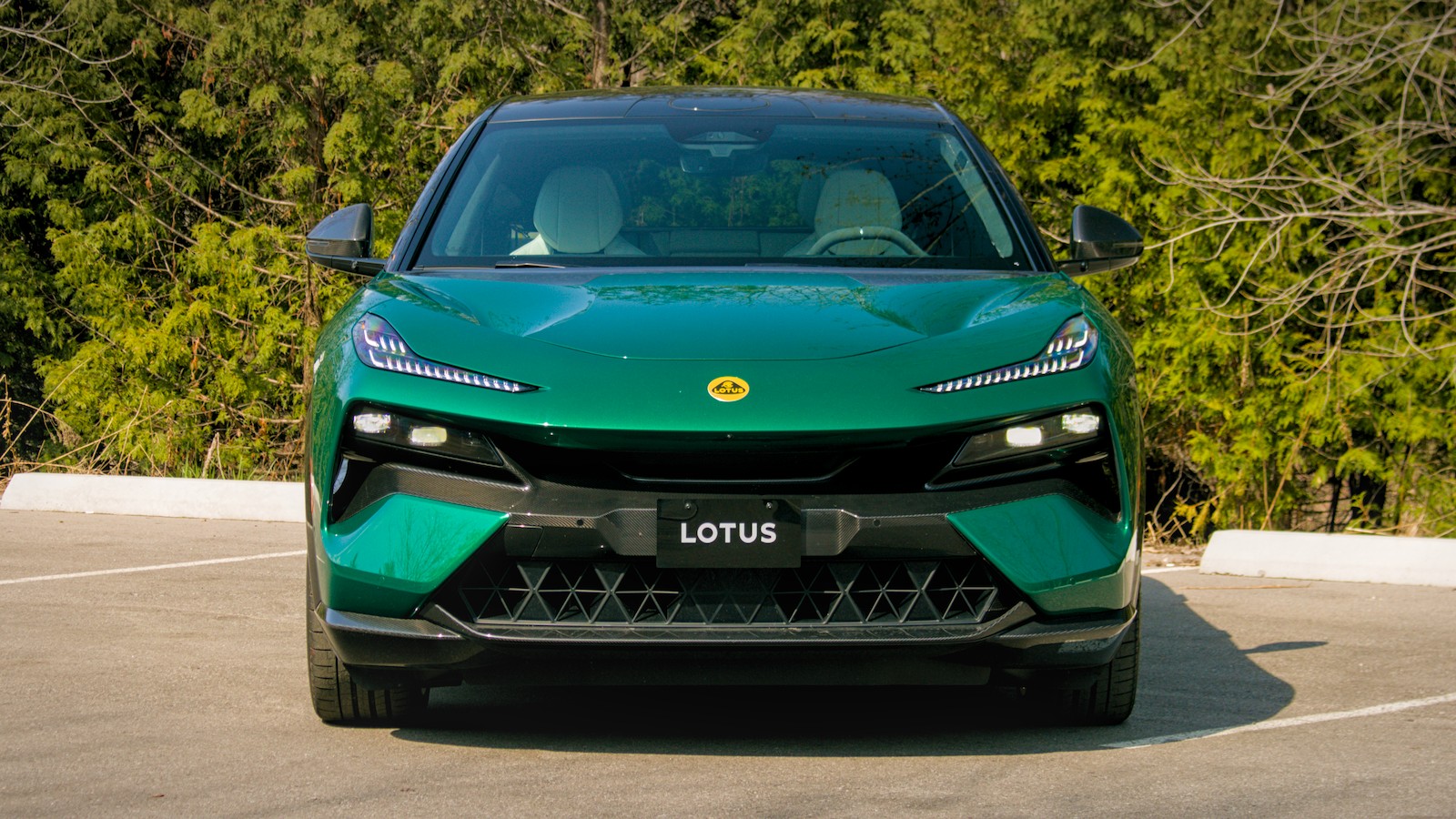
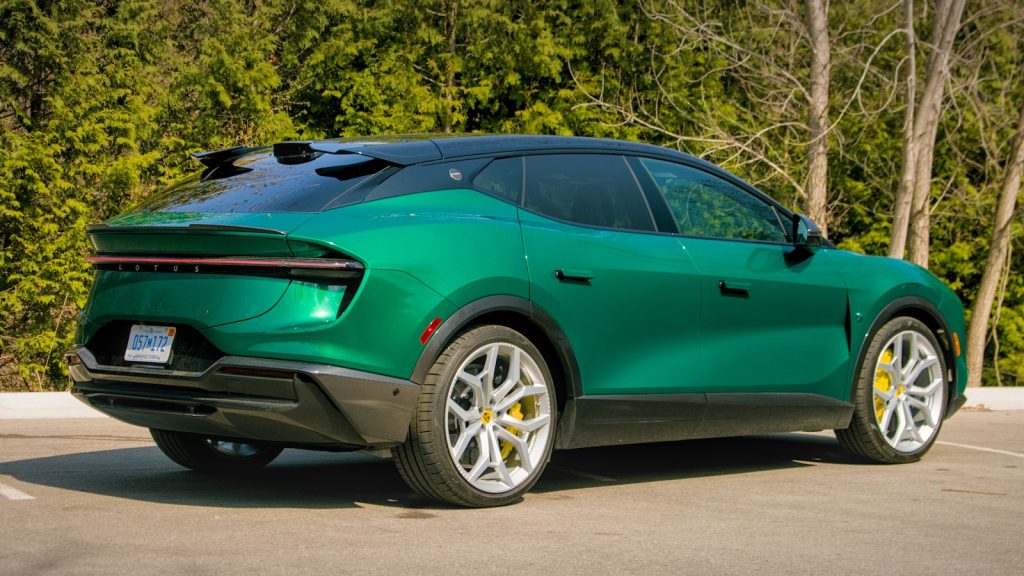
Rather than beginning with an affordable mass-market vehicle, the first Chinese-built EV entering Canada will be the premium Lotus Eletre SUV.
Lotus announced earlier this year that the first batch of 18 Eletre vehicles had already departed from its manufacturing facility in Wuhan, China, and were loaded onto a ship bound for Canada. The company expects those vehicles to arrive in Montreal during July before deliveries begin through its expanding dealer network.
The launch represents a major milestone for Lotus, which has spent the past several years transforming itself from a niche British sports car manufacturer into a global premium electric vehicle brand under Geely’s ownership.
The company has already established several Canadian dealerships and plans to continue expanding its retail footprint throughout the country. Lotus executives have described Canada as an important strategic market because of growing EV adoption and favorable consumer interest in premium electric SUVs.
Pricing has also become far more competitive under the revised tariff structure. Industry reports indicate the reduced import duties have significantly lowered the retail price of the Eletre compared with what it would have cost under Canada’s previous tariff policy, making the luxury SUV considerably more attractive to potential buyers.
More Chinese Automakers Are Watching Closely
Lotus may be the first company to benefit from Canada’s revised import policy, but it is unlikely to remain the only one for long. Industry analysts believe the launch will serve as a real-world test for other Chinese manufacturers evaluating opportunities in the Canadian market.
If Lotus establishes a positive reputation among consumers and dealers, brands such as BYD, Chery, Zeekr, and other Geely-owned marques could accelerate their own expansion plans.
Reuters reported that several Chinese automakers have already expressed interest in entering Canada under the new framework, although many are still working through regulatory approvals, dealer agreements, and product certification requirements.
The controlled import quota allows manufacturers to measure demand without flooding the market while also allowing Canadian regulators to monitor the impact of increased competition on domestic retailers and consumers.
Unlike the United States, where Chinese-built EVs continue to face steep tariffs and political opposition, Canada has chosen a more measured approach by allowing limited access through negotiated trade agreements.
Supporters argue this creates more competition and gives consumers access to advanced electric vehicles that might otherwise never reach the market.
Lotus Is No Longer Just a Sports Car Brand
For decades, Lotus was known primarily for lightweight sports cars such as the Elise, Exige, and Evora. Under Geely’s ownership, however, the British marque has undergone one of the most dramatic transformations in the automotive industry.
The company has invested heavily in electrification, digital technology, and premium SUVs, expanding well beyond its traditional niche. The Eletre became Lotus’ first electric SUV, followed by the Emeya electric grand touring sedan.
Both vehicles are built in Wuhan, China, while Lotus continues engineering and performance development at its historic headquarters in Hethel, England.
Executives say this global manufacturing strategy allows Lotus to combine British engineering heritage with China’s advanced EV production capabilities.
The company has repeatedly emphasized that its vehicles continue to deliver the handling characteristics expected from the Lotus name while benefiting from Geely’s investment in battery technology, software development, and large-scale manufacturing.
That transformation has significantly increased Lotus’ global ambitions. Instead of competing only in the sports car segment, the company now aims to challenge premium electric brands, including Tesla, Porsche, BMW, Mercedes-Benz, and Lucid, in multiple markets.
Why Canada Represents an Attractive Market
Canada has become an increasingly important destination for electric vehicle manufacturers. Federal and provincial purchase incentives, growing charging infrastructure, and rising consumer awareness have contributed to steady EV adoption over the past several years.
Luxury electric SUVs have become one of the fastest-growing categories within that market. Buyers seeking long driving range, advanced technology, and premium interiors now have more options than ever before, creating an opportunity for brands like Lotus to establish themselves before the segment becomes even more crowded.
Industry observers also point to Canada’s geography as an advantage. Large metropolitan areas such as Toronto, Vancouver, Montreal, Calgary, and Ottawa have continued expanding public charging networks, making ownership more practical for both urban commuters and long-distance travelers.
The country’s willingness to welcome additional manufacturers through controlled trade agreements may also encourage greater investment in dealership infrastructure, service networks, and charging partnerships over the coming years.
Challenges Still Lie Ahead
Despite the opportunity, Lotus faces several obstacles as it enters Canada. Brand recognition remains relatively limited compared with established luxury manufacturers. While automotive enthusiasts are familiar with Lotus’ performance heritage, many mainstream consumers know little about the company or its transition into electric vehicles.
Pricing will also remain a challenge. Even with lower tariffs, the Eletre competes in the premium luxury segment, where buyers can already choose from the Tesla Model X, Porsche Macan Electric, BMW iX, Mercedes-Benz EQE SUV, Audi Q8 e-tron, and Rivian R1S.
Convincing customers to choose a relatively unfamiliar brand will require strong product quality, competitive ownership costs, and reliable after-sales support.
Another key issue is service infrastructure. Expanding dealerships is only one part of establishing a successful automotive business.
Customers also expect readily available replacement parts, factory-trained technicians, software support, and efficient warranty service. Lotus has stated that building a comprehensive retail and service network is a priority as deliveries begin.
Political uncertainty could also influence future expansion. Trade agreements can evolve with changing governments and economic conditions, meaning manufacturers entering new markets must remain prepared for potential regulatory adjustments.
What This Means for Canada’s EV Industry
The arrival of Lotus could have implications that extend far beyond one luxury brand. Greater competition typically encourages manufacturers to improve technology, pricing, and customer service.
If additional Chinese automakers eventually enter Canada, consumers may benefit from broader vehicle choices and faster innovation across the industry.
Established automakers are also paying close attention. Increased competition from Chinese EV manufacturers has already transformed markets across Europe and Asia, forcing traditional companies to accelerate product development while placing greater emphasis on affordability and software technology.
Canada may now become another important battleground in that global competition. For policymakers, the challenge will be balancing consumer choice with support for domestic manufacturing and existing automotive investments.
The government has spent billions of dollars attracting battery plants and EV production facilities to Canada, making it important to ensure imported vehicles complement rather than undermine those long-term industrial goals.
A Significant Moment for the Global EV Market
The arrival of the first Lotus electric vehicles in Canada marks more than the launch of a new luxury SUV. It signals the beginning of a new chapter in Canada’s automotive market, one shaped by evolving trade policies, intensifying global competition, and the rapid growth of electric mobility.
As the first Chinese-built EV brand to officially enter Canada under the new agreement, Lotus will serve as a closely watched case study for automakers, policymakers, dealers, and consumers alike. If the launch proves successful, it could pave the way for additional Chinese manufacturers to establish a presence in Canada over the next several years.
For Lotus, the opportunity is equally significant. The company is no longer relying solely on its legendary sports car heritage. Instead, it is positioning itself as a modern global EV manufacturer capable of competing in one of the world’s most competitive premium automotive markets.
The first deliveries scheduled for July will, therefore, represent not only a milestone for Lotus but also an early indication of how Canada’s electric vehicle market may evolve as new international competitors enter the country.
Also Read: 10 Most Dominant Cars In Formula 1 History