
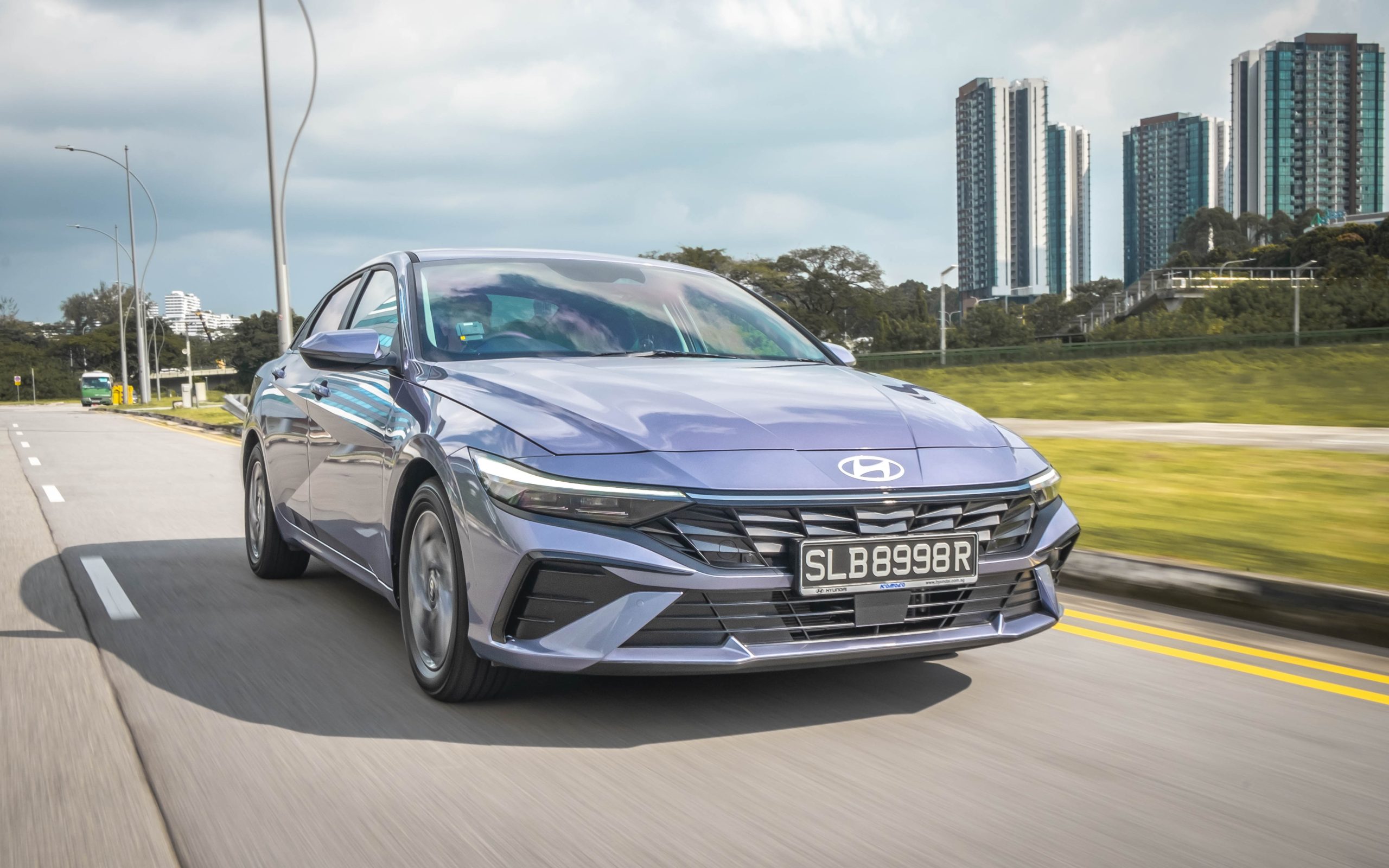
Hyundai has pulled the wraps off the eighth-generation Elantra, revealing one of the boldest redesigns in the model’s 35-year history.
Revealed at the 2026 Busan Mobility Show in South Korea, where it continues to wear the Avante nameplate, the compact sedan adopts Hyundai’s new “Art of Steel” design language, grows in size, and introduces an AI-powered infotainment system that signals the company’s broader push toward software-defined vehicles.
The redesigned model is scheduled to go on sale in South Korea during the third quarter of 2026, with global markets, including North America, expected to receive it as the 2027 Hyundai Elantra.
The new Elantra arrives at a time when many manufacturers are reducing their sedan lineups in favor of SUVs and crossovers. Hyundai, however, continues to invest heavily in passenger cars, believing there remains strong global demand for efficient, technology-rich compact sedans.
The Elantra has long been one of Hyundai’s best-selling vehicles worldwide, and the latest generation is designed to strengthen its position by combining dramatic styling, more interior space, improved hybrid technology, and next-generation digital features.
Also Read: 10 Most Dominant Cars In Formula 1 History
Hyundai’s New ‘Art of Steel’ Philosophy Takes Center Stage
The most obvious change is the exterior design. Hyundai says the new Elantra is the first mainstream sedan to fully embrace its “Art of Steel” design philosophy, which first appeared on the Initium concept and later influenced the latest Nexo hydrogen SUV.
Instead of the flowing surfaces seen on previous Elantras, the new model features crisp body lines, muscular fenders, flush door handles, and an angular profile intended to emphasize the strength and precision of stamped steel.
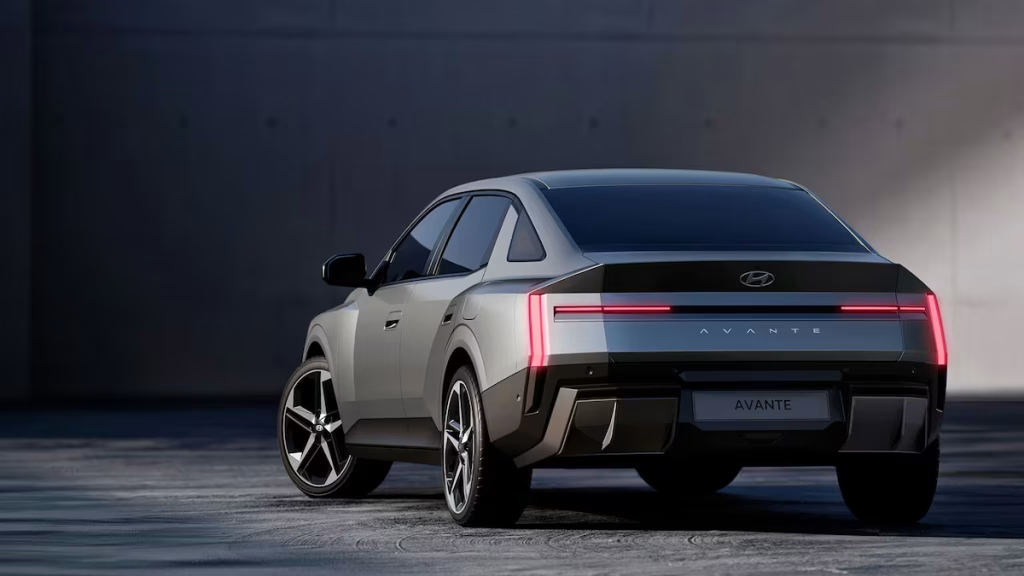
The front fascia adopts thin vertical LED lighting connected by a horizontal light signature, creating a distinctive H-shaped appearance that continues across the rear with a full-width taillight.
The profile is equally dramatic. A new rear quarter window, wider stance, and pronounced wheel arches give the sedan proportions that resemble a larger midsize vehicle rather than a traditional compact car.
Even the 18-inch alloy wheels use geometric five-spoke patterns that complement the sharp exterior styling. According to Hyundai designers, every surface was intended to make the sedan appear stronger and more technically sophisticated than its predecessor.
Bigger Dimensions Bring More Interior Space
Beyond the styling, Hyundai has increased the Elantra’s footprint. The new model is 55 mm longer and 30 mm wider than the outgoing generation, while the wheelbase has been stretched to 2,750 mm.
Those changes translate into noticeably improved rear-seat legroom and a cabin that Hyundai says approaches midsize-sedan levels of comfort.
The longer wheelbase also allows for a more spacious center console and improved storage throughout the cabin. Hyundai has relocated the gear selector to a steering-column-mounted stalk, freeing additional space between the front seats for larger cupholders, dual wireless charging pads, and extra storage compartments.
The dashboard adopts a much cleaner layout with fewer physical controls, although Hyundai has retained dedicated buttons for frequently used climate functions rather than moving every feature into the touchscreen.
That decision reflects growing customer demand for easier-to-use interiors after many manufacturers shifted almost entirely to touch-based controls.
AI Takes a Bigger Role Inside the Cabin
One of the biggest technological upgrades is Hyundai’s new Pleos Connect infotainment system, built on Android Automotive OS. The software introduces a faster interface, expanded app support, cloud-based connectivity, and Hyundai’s new Gleo AI assistant.
Rather than functioning only as a voice-command system, Gleo uses generative AI to understand conversational requests, answer questions, control vehicle functions, assist with navigation, and learn driver preferences over time.
Hyundai says the system is designed to make interacting with the vehicle feel more natural while enabling future over-the-air software updates that can add new features throughout the car’s life cycle.
Depending on the trim level, buyers can choose between a standard 12.9-inch touchscreen and a larger 14.6-inch display.
A slim digital instrument display sits closer to the windshield, while ambient lighting, redesigned door panels, and upgraded materials give the cabin a more premium appearance than previous Elantra models.
Hybrid Powertrain Takes Center Stage
Alongside its dramatic redesign, Hyundai is placing greater emphasis on electrification with an updated hybrid powertrain expected to play a leading role in the new Elantra lineup.
While complete specifications for every global market have yet to be announced, Hyundai confirmed the sedan will continue offering multiple powertrain choices, with the hybrid receiving efficiency and refinement improvements aimed at reducing fuel consumption without sacrificing everyday performance.
The company believes hybrids will remain a key part of its strategy as consumers increasingly seek practical alternatives to fully electric vehicles.
According to Hyundai executives, the latest hybrid system has been engineered to deliver smoother acceleration, quieter operation, and better full driving efficiency while meeting tightening emissions regulations across major global markets.
The renewed focus on hybrid technology reflects broader industry trends. Hybrid vehicle sales have grown steadily in North America and several Asian markets as buyers look for improved fuel economy without depending entirely on public charging infrastructure.
Analysts expect this demand to continue over the next several years, making hybrid-powered sedans an important segment despite the industry’s long-term transition toward battery-electric vehicles.
Safety Technology Continues to Advance
Hyundai has also expanded the Elantra’s suite of driver assistance technologies. The sedan will feature the latest version of Hyundai SmartSense, including upgraded adaptive cruise control, lane-centering assistance, forward collision avoidance, blind-spot monitoring, rear cross-traffic alert, highway driving assistance, and improved parking support.
Several systems now use enhanced cameras and radar sensors to respond more quickly to changing traffic conditions.
The company says artificial intelligence also plays a growing role in these systems by helping process information from multiple sensors simultaneously.
This allows the vehicle to make faster decisions when detecting pedestrians, cyclists, or sudden changes in surrounding traffic. Hyundai has continued investing heavily in advanced safety technologies as consumer expectations and crash-test standards become increasingly demanding worldwide.
Software Is Becoming Just As Important As Hardware
The eighth-generation Elantra represents more than just a styling update. It reflects Hyundai’s broader transformation into a software-driven mobility company.
The new Pleos Connect infotainment platform allows the sedan to receive over-the-air software updates, ensuring navigation, entertainment, and connected services remain current without requiring dealership visits.
Hyundai’s Gleo AI assistant is expected to evolve through software improvements, adding new capabilities as artificial intelligence technology advances.
According to Hyundai, future software updates may introduce additional personalization features, expanded voice controls, and deeper integration with smartphones and connected home devices.
This approach mirrors a growing trend across the automotive industry, where manufacturers increasingly treat vehicles as digital platforms capable of improving throughout their lifespan.
A Strong Statement in a Changing Sedan Market
The redesigned Elantra arrives as many manufacturers continue shifting resources toward SUVs and electric crossovers. Hyundai, however, believes there is still significant global demand for stylish, fuel-efficient sedans that combine advanced technology with everyday practicality.
By introducing the “Art of Steel” design language to one of its highest-volume models, Hyundai is signaling that bold styling will remain central to its future product strategy.
Combined with a larger cabin, improved hybrid technology, AI-powered infotainment, and enhanced safety features, the new Elantra aims to raise expectations within the compact sedan segment.
Its official debut at the Busan Mobility Show also demonstrates Hyundai’s intention to showcase South Korea as a hub for the company’s latest design and technology innovations before the model reaches international markets.
Industry analysts expect the 2027 Elantra to compete aggressively against rivals such as the Toyota Corolla, Honda Civic, Nissan Sentra, and Mazda3 by offering a stronger combination of technology, efficiency, and modern styling.
As Hyundai accelerates its transition toward software-defined vehicles, the new Elantra serves as an early example of how artificial intelligence, connected services, and next-generation design will shape the company’s future lineup.
Rather than simply refreshing a popular sedan, Hyundai has positioned the eighth-generation Elantra as a showcase for technologies that are likely to appear across much of its global portfolio in the years ahead.
Also Read: 10 Non-Volvo Cars That Use A Volvo Engine
