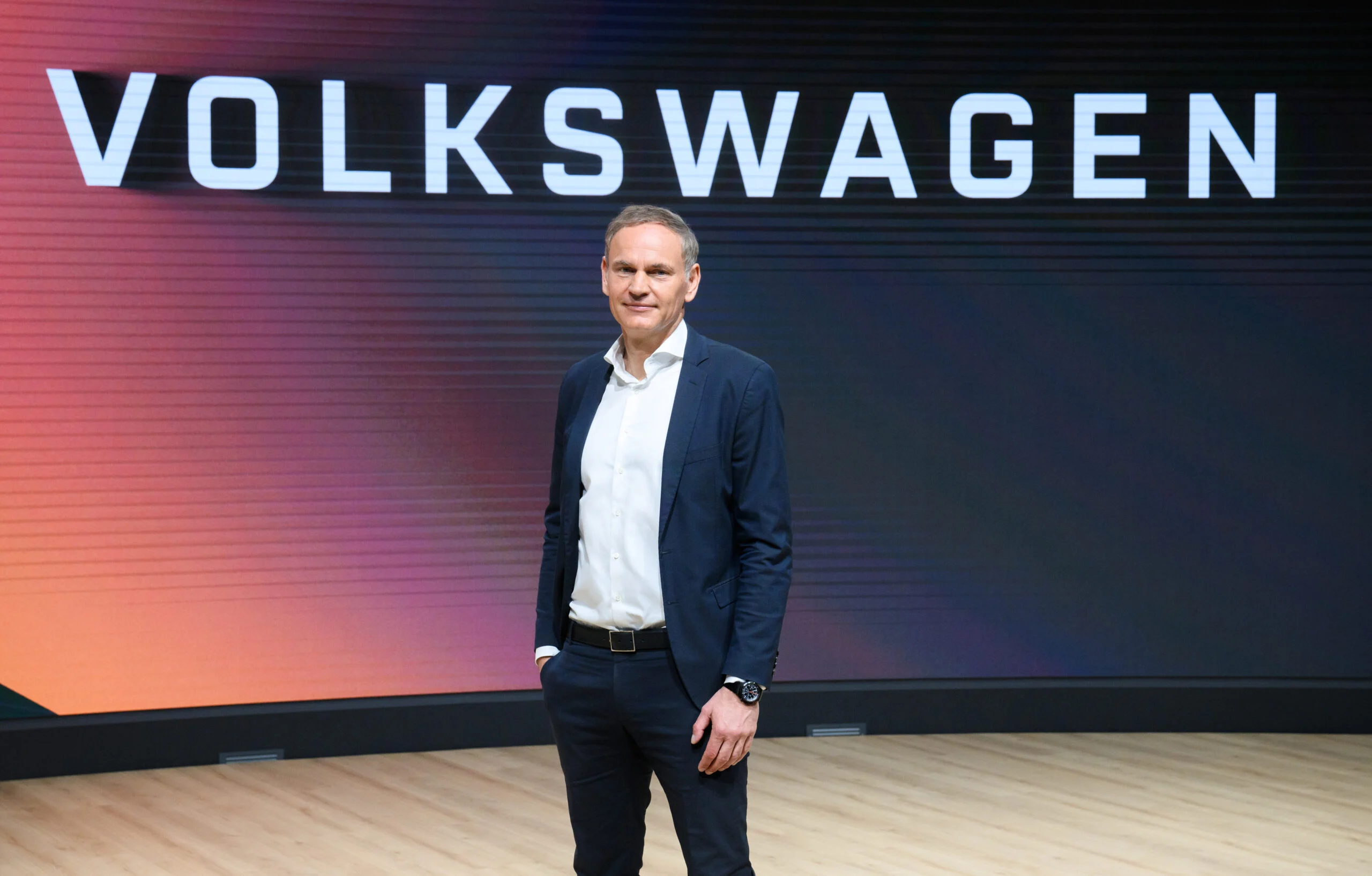
Volkswagen is preparing for what could become the most significant transformation in its nearly 90-year history.
According to multiple reports, CEO Oliver Blume is pushing a far-reaching restructuring plan that could eliminate up to 100,000 jobs worldwide, close four German production plants, reduce planned investment by billions of euros, and even spin off the company’s core passenger-car and components businesses as standalone entities.
If approved, the overhaul would represent one of the largest restructuring efforts ever undertaken by a global automaker.
The proposals come as Europe’s largest carmaker struggles with a rapidly changing automotive environment. Rising competition from Chinese manufacturers, slowing vehicle demand across Europe, higher production costs, and tariffs affecting exports have placed enormous pressure on Volkswagen’s profitability.
Company executives have acknowledged that the traditional strategy of designing vehicles in Germany, building them in Europe, and exporting them worldwide is becoming increasingly difficult to sustain under current market conditions.
While Volkswagen has already announced cost-cutting measures over the past two years, the latest proposals go much further and could fundamentally reshape how the company operates.
Also Read: 10 Best Project Cars For First-Time Modifiers
Pressure Is Building on Europe’s Largest Automaker
Volkswagen entered the decade expecting electric vehicles to drive its next phase of growth. Instead, the company has seen EV demand slow in several major markets while facing fierce competition from Chinese manufacturers that have rapidly expanded both production capacity and technological capabilities.
Brands such as BYD, SAIC, Chery, and Leapmotor have dramatically increased their presence in China and Europe, offering competitively priced electric vehicles that have challenged Volkswagen’s long-standing market leadership.
China, once Volkswagen’s largest profit engine, has become one of its most difficult markets as domestic manufacturers continue to gain market share.
At the same time, the company faces additional pressure from U.S. tariffs, weaker consumer demand across Europe, and the enormous investment required to develop next-generation electric vehicles, batteries, and automotive software.
Reuters reported that executives now believe these combined challenges are costing the company tens of billions of euros annually, forcing management to reconsider almost every aspect of its business.
Up to 100,000 Jobs Could Be Eliminated
The most striking element of the restructuring proposal is the potential elimination of up to 100,000 positions across Volkswagen’s global workforce.
The automaker currently employs more than 650,000 people worldwide. If the reported target is approved, roughly one in every six jobs could eventually disappear through layoffs, early retirement programs, and natural attrition.
Reuters noted that the proposal would effectively double Volkswagen’s previously announced workforce reduction plans, making it one of the largest job-cutting programs ever seen in the automotive industry.
The company had already agreed to significant workforce reductions through 2030, but executives now reportedly believe those measures alone will not restore Volkswagen’s competitiveness.
CEO Oliver Blume has repeatedly argued that the company must become leaner and more efficient if it hopes to compete against lower-cost rivals while continuing to invest heavily in electrification and digital technologies.
Four German Factories Face an Uncertain Future
Alongside workforce reductions, Volkswagen is reportedly considering ending production at four German facilities.
According to Reuters, the plants in Hanover, Zwickau, Emden, and Audi’s Neckarsulm site could gradually cease vehicle production after current model cycles end.
Closing these facilities would place more than 45,000 additional jobs at risk and mark an unprecedented step for a company that has historically protected domestic manufacturing capacity.
Germany has long served as the heart of Volkswagen’s manufacturing operations, making any factory closure politically sensitive. The facilities support thousands of direct employees while also sustaining extensive supplier networks and regional economies.
The German government has already indicated it wants to prevent domestic factory closures. Government officials have stated that keeping industrial production competitive remains a priority, although they also acknowledged that final decisions rest with Volkswagen’s management and supervisory board.
Resistance From Unions and Politicians Could Shape the Outcome
Although Volkswagen’s management argues that deep structural reforms are necessary, turning the proposals into reality will be far from straightforward.
The company has one of the most unique governance structures in the automotive industry, with labor representatives and the German state of Lower Saxony holding significant influence over major corporate decisions.
According to Reuters, Oliver Blume’s broader vision extends beyond reducing costs. By spinning off the Volkswagen passenger-car division and components business into separate entities, management hopes to simplify the company’s structure and give each business greater operational flexibility.
However, such a move would challenge the long-standing balance of power established under the Volkswagen Law, which gives labor unions and Lower Saxony substantial control over strategic decisions.
IG Metall, Germany’s largest industrial union, has already made its position clear. Union leaders described any attempt to weaken employee influence as unacceptable and pledged to oppose measures that threaten jobs or reduce worker representation.
Lower Saxony Premier Olaf Lies has also stated that the state will not support changes that diminish labor’s role within Volkswagen, arguing that employee participation has been central to the company’s success for decades.
That opposition means any restructuring proposal is likely to face lengthy negotiations before it can move forward.
Investors See Opportunity but Also Significant Risks
While labor groups remain firmly opposed, some investors believe Volkswagen has little choice but to pursue more aggressive reforms.
The company’s market valuation has fallen sharply in recent years despite owning valuable businesses such as Porsche and Traton. Reuters noted that Volkswagen’s majority stakes in those two companies alone are worth roughly €44 billion, exceeding the group’s total market value of about €37.6 billion.
That disconnect has strengthened calls for management to simplify the company’s structure and unlock value for shareholders.
Some analysts have compared the proposed restructuring to Siemens’ strategy of separating business units into more focused companies.
Citi analysts suggested that carving out weaker operations could allow investors to better value Volkswagen’s stronger businesses while giving individual divisions more freedom to respond to market changes.
However, others caution that restructuring alone will not solve Volkswagen’s biggest problem: declining demand for some of its vehicles.
Speaking to Reuters, Deka investment manager Ingo Speich argued that high costs are only part of the challenge. He said Volkswagen must also deliver products that customers genuinely want to buy, warning that cost reductions cannot compensate for weak sales or an uncompetitive model lineup.
A Defining Moment for Volkswagen
The proposals are expected to be presented to Volkswagen’s supervisory board in early July, and even if they receive initial backing, negotiations with unions and political stakeholders could take months. The outcome will likely determine how Europe’s largest automaker competes during the next decade.
If approved, the restructuring would rank among the biggest in automotive history, affecting up to 100,000 employees, reshaping Volkswagen’s manufacturing footprint in Germany, reducing future investment, and potentially rewriting the company’s corporate structure.
At the same time, management believes these changes are necessary to compete against lower-cost Chinese rivals, navigate the expensive transition to electric vehicles, and restore long-term profitability.
Whether Oliver Blume can secure support for such sweeping reforms remains uncertain. What is clear is that Volkswagen has reached a pivotal point in its history.
The decisions made over the coming months will not only influence the future of one of the world’s largest automakers but could also reshape Germany’s automotive industry as it adapts to an increasingly competitive global market.
Also Read: 10 Most Dominant Cars In Formula 1 History