
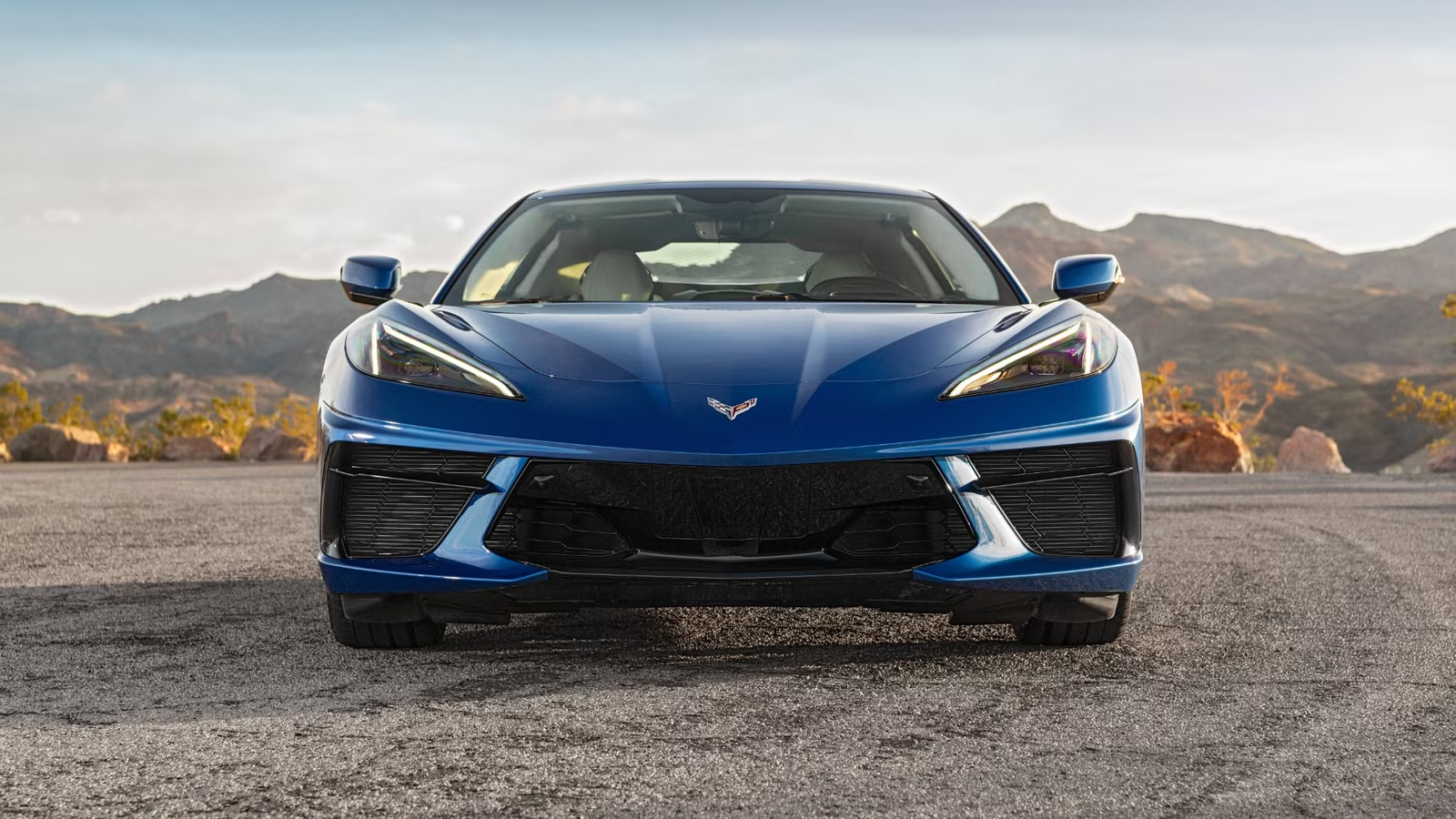
The Chevrolet Corvette Stingray has reached a milestone once reserved for exotic supercars. General Motors has officially confirmed that the 2027 Corvette Stingray is now capable of a 200 mph top speed, making it the first base Stingray in the model’s 72-year history to break the 200 mph barrier.
The announcement was made on National Corvette Day, commemorating the launch of the original Corvette on June 30, 1953, and highlighting how far Chevrolet’s flagship sports car has evolved over the decades.
The achievement is particularly significant because it was accomplished by the standard production Stingray rather than a high-performance variant such as the Z06 or ZR1. Chevrolet confirmed that the record-setting run was completed using a base 1LT coupe without the optional Z51 Performance Package.
Engineers explained that the Z51 package adds aerodynamic downforce to improve track performance, but that extra downforce also slightly reduces maximum top speed. By using the standard aerodynamic configuration, Chevrolet was able to unlock the car’s full straight-line performance.
The new top speed represents a noticeable improvement over the previous C8 Stingray, which reached 194 mph. According to Chevrolet engineers, the increase comes primarily from the introduction of the new 6.7-liter naturally aspirated LS6 V8, replacing the previous powerplant and delivering substantially more performance.
The updated engine produces 535 horsepower and 520 lb-ft of torque, making it the most powerful naturally aspirated engine ever fitted to a standard Corvette Stingray. Engineers told Road & Track that the additional six miles per hour came almost entirely from the increased engine output rather than aerodynamic changes.
Beyond the headline number, Chevrolet says the LS6 was designed to provide stronger acceleration throughout the rev range while maintaining the instant throttle response and distinctive exhaust note that have long defined naturally aspirated Corvette V8s.
The engine features revised cylinder heads, a higher-flow intake system, updated combustion chambers, and numerous internal refinements intended to improve both durability and high-speed performance.
The Corvette’s mid-engine layout continues to play a critical role in achieving these performance figures. By positioning the engine behind the driver, Chevrolet has optimized weight distribution and traction, allowing the Stingray to convert its additional power into greater stability at extremely high speeds.
Combined with the eight-speed dual-clutch transmission introduced with the C8 generation, the drivetrain enables rapid gear changes while keeping the engine within its optimal power band during full-throttle acceleration.
Chevrolet also emphasized the value proposition of the achievement. With a starting price of $73,495, the 2027 Corvette Stingray becomes the least expensive new production car capable of reaching 200 mph.
According to Road & Track, the next-cheapest new vehicle capable of exceeding the double-century mark is General Motors’ own Cadillac CT5-V Blackwing, which reaches approximately 205 mph at a considerably higher price point. That makes the Corvette one of the best performance bargains currently available in the global sports car market.
The announcement also reflects the remarkable evolution of the Corvette nameplate. When the first production Corvette debuted in 1953, it produced just 150 horsepower from its inline-six engine and had a top speed of roughly 105 mph.
More than seven decades later, the base Stingray has nearly doubled that figure while offering vastly superior braking, handling, safety technology, comfort, and everyday usability.
The 200 mph milestone illustrates not only advances in engine development but also improvements in aerodynamics, chassis engineering, tire technology, and transmission design.
Chevrolet’s performance lineup has expanded significantly in recent years, with models such as the hybrid E-Ray, track-focused Z06, and the ultra-high-performance ZR1 pushing the Corvette into territory traditionally occupied by European supercars.
Even so, the Stingray remains the entry point into the Corvette family, making its new performance capability particularly impressive.
For Chevrolet, the achievement reinforces the Corvette’s reputation as a sports car that delivers world-class performance without carrying the six-figure price tag often associated with 200 mph vehicles.
As performance standards continue rising across the industry, the 2027 Corvette Stingray demonstrates that attainable American sports cars can still compete with some of the fastest production vehicles in the world while remaining accessible to a much broader range of enthusiasts.
Also Read: 8 Cheapest BMW Cars Ever Made – Ranked
Engineering Improvements Go Beyond the Bigger Engine
While the new LS6 V8 is the headline feature of the 2027 Corvette Stingray, Chevrolet says the car’s improved performance comes from a combination of engine, transmission, cooling, and aerodynamics rather than horsepower alone.
The updated eight-speed dual-clutch transmission has been recalibrated to deliver quicker gear changes and better utilize the engine’s broader torque curve. Revised launch control and traction management software also helps the Stingray accelerate more consistently under a variety of driving conditions.
Cooling has been upgraded with improved airflow management and larger heat exchangers to keep engine and transmission temperatures under control during sustained high-speed driving and track use.
Aerodynamics also played a major role in reaching the 200 mph milestone. Chevrolet confirmed the record was achieved using the standard body configuration rather than the optional Z51 Performance Package.
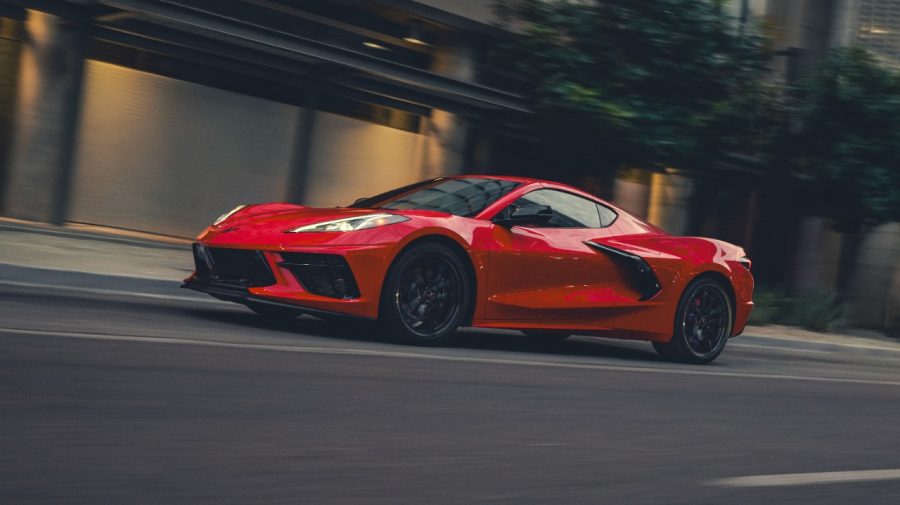
While the Z51 package generates more downforce for improved track handling, it also creates additional drag that slightly reduces maximum top speed.
Chevrolet Stays Committed to the Naturally Aspirated V8
At a time when much of the automotive industry is shifting toward turbocharged and electrified powertrains, Chevrolet continues to invest in naturally aspirated V8 performance.
The new LS6 delivers immediate throttle response, smooth power delivery, and the unmistakable V8 sound that Corvette buyers have long appreciated.
According to Road & Track, Chevrolet developed the engine to make the standard Stingray significantly quicker while maintaining clear performance separation from higher-performance models such as the Z06 and ZR1.
Supercar Performance Without a Supercar Price
With a starting price of around $73,495, the 2027 Corvette Stingray becomes the least expensive new production vehicle capable of reaching 200 mph. Comparable performance from European sports cars typically comes with six-figure price tags, reinforcing the Corvette’s reputation as one of the industry’s best performance values.
Despite its impressive speed, the Stingray remains practical enough for everyday use, offering a comfortable interior, modern technology, dual cargo compartments, and ride quality suitable for daily driving.
A Historic Milestone for the Corvette
The original 1953 Corvette produced just 150 horsepower and reached approximately 105 mph. More than seven decades later, the entry-level Stingray has nearly doubled that top speed while delivering dramatic improvements in handling, braking, technology, and refinement.
The 2027 Corvette joins an expanded lineup that includes the hybrid E-Ray, track-focused Grand Sport, high-revving Z06, and range-topping ZR1. Yet it is the standard Stingray that now achieves one of the most significant milestones in Corvette history.
Breaking the 200 mph barrier demonstrates how far Chevrolet’s flagship sports car has evolved while staying true to its core mission of delivering world-class performance at an attainable price.
For enthusiasts, the latest Stingray proves that exceptional speed no longer requires an exotic badge or an extraordinary budget, cementing the Corvette’s place among the world’s elite performance cars.
Beyond the headline performance figures, the 2027 Corvette Stingray reflects Chevrolet’s continued investment in keeping the Corvette competitive in an era of rapidly advancing sports cars and electric performance vehicles.
Rather than relying solely on electrification to improve speed, Chevrolet has demonstrated that careful engineering, refined aerodynamics, and an advanced naturally aspirated V8 can still deliver extraordinary results.
As emissions regulations tighten and more manufacturers transition toward hybrid and electric powertrains, the Stingray may represent one of the last opportunities for enthusiasts to experience a high-revving, naturally aspirated American V8 capable of exceeding 200 mph.
That achievement makes this Corvette not only historically significant but also a fitting celebration of one of the automotive world’s most iconic nameplates.
Also Read: The Average Car Has Just a 4.8% Chance of Reaching 250,000 Miles
