
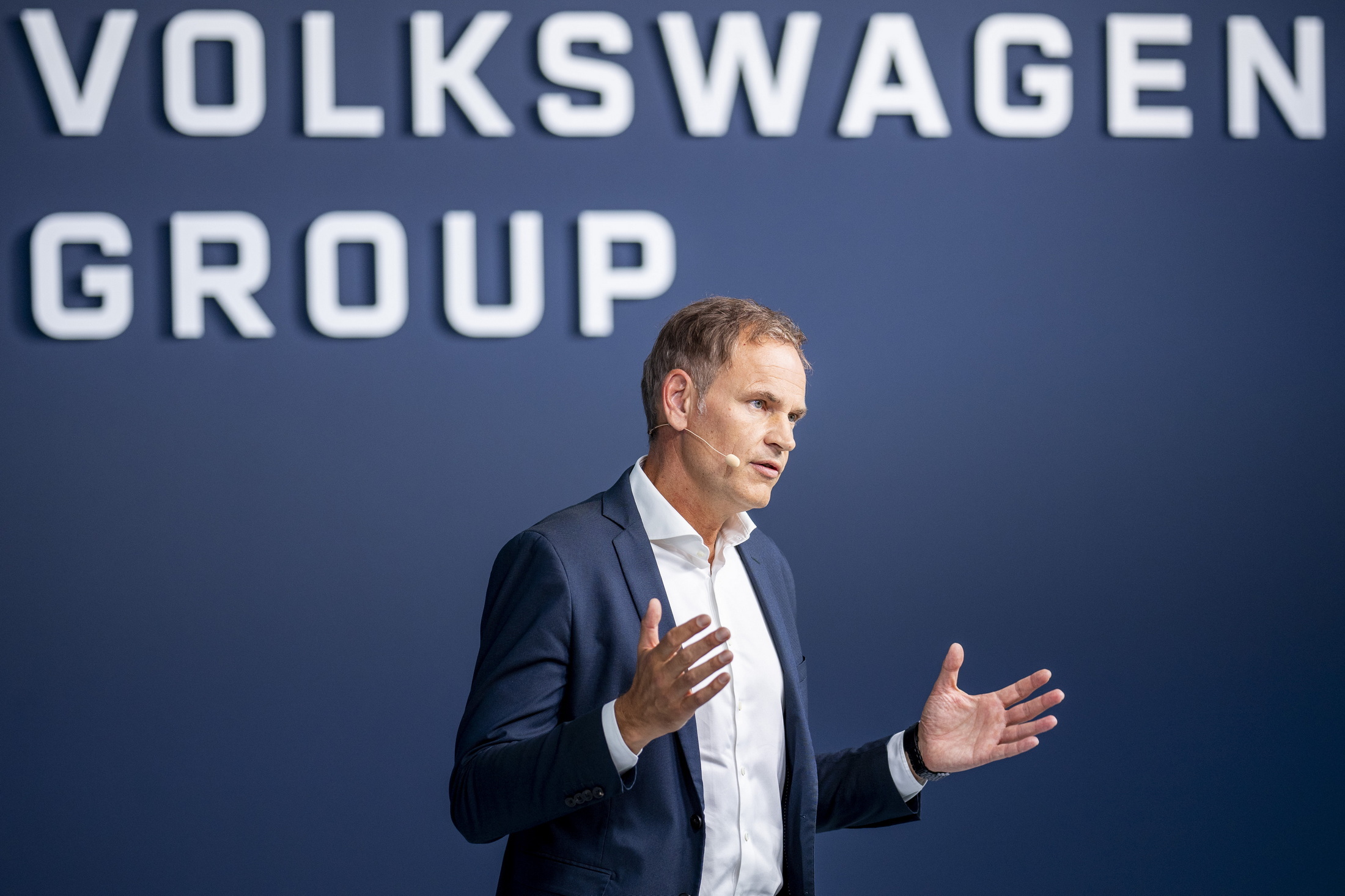
Volkswagen is preparing for one of the most dramatic transformations in its nearly 90-year history.
Facing shrinking profit margins, intense competition from Chinese automakers, slowing electric vehicle demand in several key markets, and the financial impact of U.S. tariffs, Europe’s largest automaker has revealed a sweeping restructuring strategy that could reshape not only its manufacturing footprint but also the vehicles it offers worldwide.
At the center of the overhaul is a plan to significantly reduce production capacity, simplify the company’s sprawling model lineup, and cut costs across its global operations.
Executives believe the company can no longer sustain the expansive portfolio that fueled its growth for decades. Instead, Volkswagen intends to focus on fewer, more profitable vehicles while improving manufacturing efficiency and accelerating product development.
Although many of the proposed changes are centered on Europe, the consequences are expected to reach every major market, including North America. Volkswagen’s global production strategy has traditionally relied on sharing platforms, powertrains, and engineering resources across multiple regions.
As those operations become leaner, future vehicle offerings in the United States and Canada are likely to evolve alongside the company’s broader restructuring.
According to Reuters, Volkswagen’s supervisory board met on July 9 to consider what executives describe as the company’s largest restructuring effort to date.
The proposal includes reducing annual production capacity, streamlining the model range by as much as half, and implementing additional workforce reductions as the company seeks to restore long-term profitability.
Also Read: 8 Hidden Features in the Volkswagen Atlas
A Historic Turning Point for Volkswagen
The restructuring marks a defining moment for CEO Oliver Blume, who has spent the past several years attempting to modernize Volkswagen while navigating one of the most challenging periods in the automotive industry’s history.
Volkswagen continues to face mounting pressure from several directions simultaneously. Sales growth in China has slowed dramatically as domestic manufacturers such as BYD, Geely, and Chery continue gaining market share with competitively priced electric vehicles.
At the same time, European demand has weakened amid economic uncertainty, while tariffs imposed on vehicle imports into the United States have increased costs for several of Volkswagen Group’s brands.
Internally, the company has also struggled with rising labor costs, complex manufacturing operations, and an enormous product portfolio spread across multiple brands, including Volkswagen Passenger Cars, Audi, Porsche, Škoda, SEAT, CUPRA, Bentley, Lamborghini, Ducati, MAN, and Volkswagen Commercial Vehicles.
According to Reuters, Volkswagen’s operating margin has fallen sharply since 2021, highlighting the urgency behind management’s restructuring plans. Executives argue that maintaining the current business structure is no longer financially sustainable in today’s competitive global market.
Cutting Production Capacity to Match Demand
One of the most significant aspects of the restructuring involves reducing the company’s manufacturing capacity.
Volkswagen plans to lower its annual global production capability from approximately 10 million vehicles to around 9 million. The reduction reflects management’s belief that global demand no longer justifies maintaining excess factory capacity, particularly in Germany.
Unused production lines create substantial fixed costs, reducing profitability even when sales remain relatively stable. Rather than operating factories below optimal utilization rates, Volkswagen intends to consolidate production into fewer facilities capable of running more efficiently.
According to Reuters, the company has been evaluating several German plants as part of the restructuring, including facilities in Hanover, Emden, Zwickau, and Audi’s Neckarsulm site. While final decisions remain subject to negotiations with labor representatives, management believes reducing excess capacity is essential to restoring competitiveness.
The proposal represents one of the largest manufacturing reorganizations ever attempted by a European automaker.
Fewer Models, Greater Profitability
Perhaps the most surprising element of Volkswagen’s strategy is its willingness to significantly reduce the number of vehicles it sells.
According to Reuters and reports from the supervisory board meeting, executives are considering reducing the full model lineup by as much as 50 percent. Rather than offering numerous overlapping vehicles across multiple brands, Volkswagen plans to focus on products capable of generating stronger returns.
The company believes excessive product complexity has increased engineering costs, manufacturing expenses, and supply chain challenges without producing proportional sales growth.
Many current Volkswagen Group vehicles already share common architectures such as the MQB, MEB, MLB, and PPE platforms. Even with these shared foundations, maintaining dozens of body styles, trim levels, engines, and regional variations has become increasingly expensive.
Simplifying the lineup would allow engineers to concentrate investment on fewer models while shortening development cycles and improving production efficiency.
Reuters reported that Volkswagen’s leadership now prioritizes profitability over total sales volume, signaling a significant shift from the strategy that guided the company for decades.
Workforce Reductions and Plant Closures
The restructuring is also expected to affect thousands of employees. Although Volkswagen has not officially confirmed final numbers, Reuters previously reported that management has considered expanding workforce reductions to as many as 100,000 positions over multiple years, including previously announced cuts.
The company has already agreed to tens of thousands of voluntary departures in recent years, but executives now believe additional reductions may be necessary as production volumes decline.
Potential factory closures have generated particularly strong opposition from Germany’s powerful labor unions.
According to Reuters, employee representatives organized demonstrations ahead of the supervisory board meeting, arguing that management should prioritize new products and industrial investment rather than eliminating jobs.
Union leaders have demanded greater transparency regarding the future of affected facilities and insist that workers should not bear the full burden of the company’s restructuring.
Negotiations between management and labor representatives are expected to continue for several months.
What It Means for North America
Although most restructuring measures are centered in Europe, North American customers will likely notice changes over time.
Volkswagen increasingly develops vehicles as global products, meaning manufacturing, engineering, and investment decisions made in Germany frequently influence future products sold in the United States.
A smaller global lineup could translate into fewer niche vehicles reaching American dealerships while placing greater emphasis on high-volume models such as the Atlas, Tiguan, Golf GTI, Golf R, and future electric SUVs.
The company may also accelerate efforts to standardize powertrains, software platforms, and vehicle architectures across regions to reduce engineering costs.
North American operations themselves remain strategically important because the United States continues to represent one of Volkswagen’s largest profit opportunities outside Europe despite recent tariff challenges.
Industry analysts expect future investments to focus increasingly on vehicles capable of generating higher margins rather than expanding the full number of available models.
Electric Vehicles Remain Central to the Strategy
Despite reducing its model lineup, Volkswagen is not abandoning electrification. Instead, executives appear determined to make the company’s electric vehicle business financially sustainable.
The automaker continues investing billions of dollars in next-generation battery technology, software development, and scalable EV platforms. However, management now wants future electric vehicles to achieve stronger profitability before expanding production further.
Competition has become especially fierce in China, where domestic manufacturers have dramatically lowered prices while introducing increasingly advanced electric vehicles.
Volkswagen believes concentrating engineering resources on fewer, better-positioned products will improve its ability to compete globally without sacrificing technological innovation.
The restructuring therefore reflects a shift toward disciplined investment rather than reduced commitment to electrification.
Simplifying a Complex Automotive Empire
Beyond manufacturing and product reductions, Volkswagen is also reviewing its corporate structure.
According to Reuters, executives are evaluating ways to simplify the organization, including potential changes affecting the passenger car division and components business. The goal is to create a company capable of making decisions more quickly while reducing administrative complexity that has historically slowed product development.
Managing ten automotive brands across multiple continents inevitably creates overlapping responsibilities, duplicated engineering programs, and lengthy decision-making processes.
Executives believe a leaner organizational structure will improve responsiveness as technology evolves more rapidly and global competition intensifies.
This internal transformation could ultimately become just as significant as the reductions in production capacity and vehicle models.
A Defining Moment for Volkswagen’s Future
Volkswagen’s restructuring represents far more than a conventional cost-cutting exercise. It reflects a recognition that the automotive industry has entered a new era where profitability, manufacturing flexibility, and technological efficiency matter more than sheer production volume.
The company built its reputation by offering one of the world’s broadest vehicle portfolios, supported by massive manufacturing capacity across Europe and beyond.
That strategy delivered decades of success but has become increasingly difficult to sustain amid changing consumer demand, rising development costs, geopolitical uncertainty, and aggressive competition from Chinese manufacturers.
According to Reuters, Volkswagen’s leadership believes decisive action is necessary to ensure the company remains competitive over the long term, even if those decisions involve painful workforce reductions, factory restructuring, and a substantially smaller product lineup.
For consumers, particularly those in North America, the immediate impact may be limited. However, the vehicles arriving in dealerships later this decade will almost certainly reflect the decisions being made today in Wolfsburg.
A leaner Volkswagen could mean fewer models but stronger investment in each one, creating products that are more profitable for the company while remaining competitive in an automotive market undergoing one of its most significant transformations in modern history.
Also Read: The Volkswagen ID. Buzz Returns for 2027 With New Trims and a Camping-Focused Tourer
