
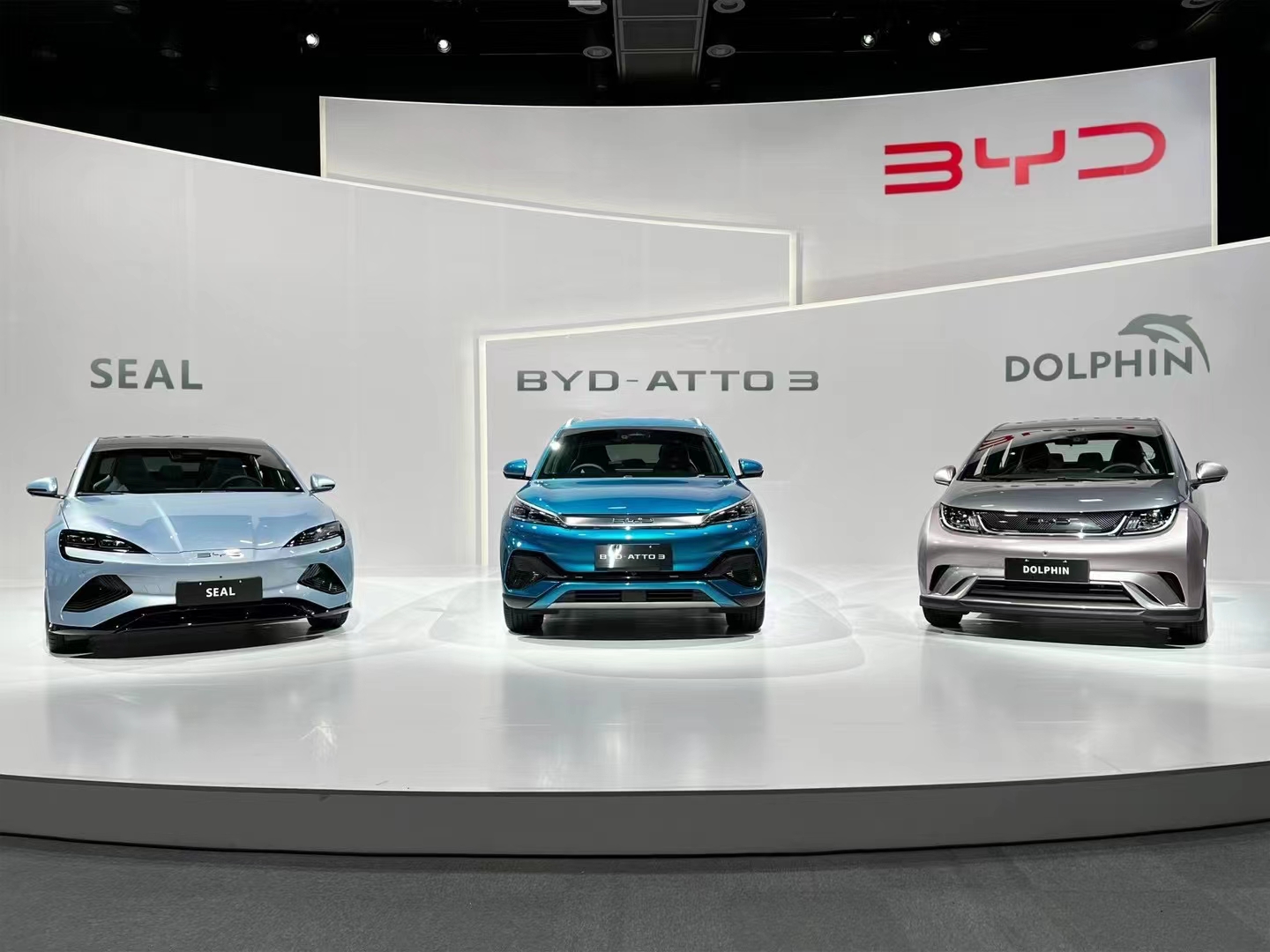
China has stepped up its oversight of the country’s automotive industry after regulators in Shanghai summoned Tesla, BYD, and several other major automakers to a compliance meeting focused on online marketing practices and the publication of vehicle information.
The move is the latest sign that Chinese authorities are broadening their efforts to regulate an industry that has become increasingly competitive, with automakers relying on aggressive pricing, digital advertising, software-based promotions, and social media campaigns to attract buyers.
According to Reuters, the meeting was organized by the Shanghai Municipal Administration for Market Regulation and other local government agencies. Officials instructed automakers to comply with advertising regulations, consumer protection laws, and rules governing automotive information shared through online platforms.
Regulators emphasized that vehicle specifications, pricing, discounts, financing offers, and promotional claims must accurately reflect the products being sold and should not mislead consumers.
The compliance meeting comes during a period of intense competition in China’s auto market, where manufacturers are battling for market share amid slowing demand growth and shrinking profit margins.
Industry analysts say the latest regulatory action demonstrates that Beijing wants competition to remain vigorous but fair, with greater transparency for consumers and stricter adherence to marketing standards.
Also Read: 10 Toyota Models That Tell the Brand & #8217;s Story
Regulators Expand Oversight Beyond the Industry’s Price War
China’s automotive market has undergone a dramatic transformation over the past three years. Electric vehicle adoption has accelerated rapidly, domestic manufacturers have expanded production capacity, and nearly every major global automaker now competes alongside dozens of Chinese brands.
This fierce competition has triggered repeated rounds of price cuts. Companies have lowered vehicle prices, introduced zero-interest financing, offered free insurance packages, extended warranties, and bundled software features at little or no additional cost.
While these promotions have helped stimulate sales, they have also reduced profitability across much of the industry.
According to Reuters, Shanghai regulators used the compliance meeting to remind automakers that marketing practices must comply with Chinese law. Officials stressed that promotional materials should accurately describe vehicle capabilities, pricing, incentives, and technical specifications.
Companies were also instructed to avoid misleading advertising and ensure that consumers receive clear information before making purchasing decisions.
The meeting reflects a broader regulatory shift. Instead of focusing only on vehicle safety or manufacturing standards, Chinese authorities are paying closer attention to how automakers communicate with consumers through websites, livestreams, social media platforms, and online sales channels.
As digital marketing becomes increasingly important, regulators are seeking greater transparency and consistency in how manufacturers present vehicle information.
Tesla and BYD Among the Industry Leaders Attending
Among the companies reportedly attending the meeting were Tesla and BYD, two manufacturers that occupy very different positions within China’s automotive landscape.
Tesla continues to operate one of its most important global manufacturing facilities in Shanghai. Gigafactory Shanghai remains a major export hub, producing the Model 3 and Model Y for both domestic customers and international markets.
Since opening in 2019, the factory has become one of Tesla’s most efficient production sites and has played a critical role in the company’s global growth strategy.
China is also one of Tesla’s largest individual markets. The company competes directly with a growing number of domestic manufacturers that now offer advanced electric vehicles across nearly every price segment. As competition has intensified, Tesla has repeatedly adjusted pricing and introduced financing incentives to maintain sales momentum.
BYD, meanwhile, has become China’s largest automaker by new-energy vehicle sales and one of the world’s leading electric vehicle manufacturers. The company has expanded rapidly through a broad lineup that includes battery electric vehicles and plug-in hybrids ranging from affordable compact cars to premium luxury models.
Unlike Tesla, BYD benefits from extensive vertical integration. The company manufactures many of its own batteries, semiconductors, and electric drivetrains, giving it greater control over costs and supply chains.
Reuters noted that the compliance meeting did not accuse any individual automaker of violating regulations.
Instead, officials gathered multiple manufacturers to reinforce expectations that all companies operating in the market should strengthen internal compliance systems and ensure their advertising practices meet legal requirements.
The Crackdown Comes as Competition Intensifies
The compliance meeting also takes place against the backdrop of one of the most competitive automotive markets in the world.
China remains the world’s largest vehicle market, with annual sales exceeding 30 million vehicles. Domestic manufacturers including BYD, Geely, Chery, SAIC, Great Wall Motor, Li Auto, Nio, Xpeng, Leapmotor, and Xiaomi are introducing new models at an unprecedented pace while expanding into international markets.
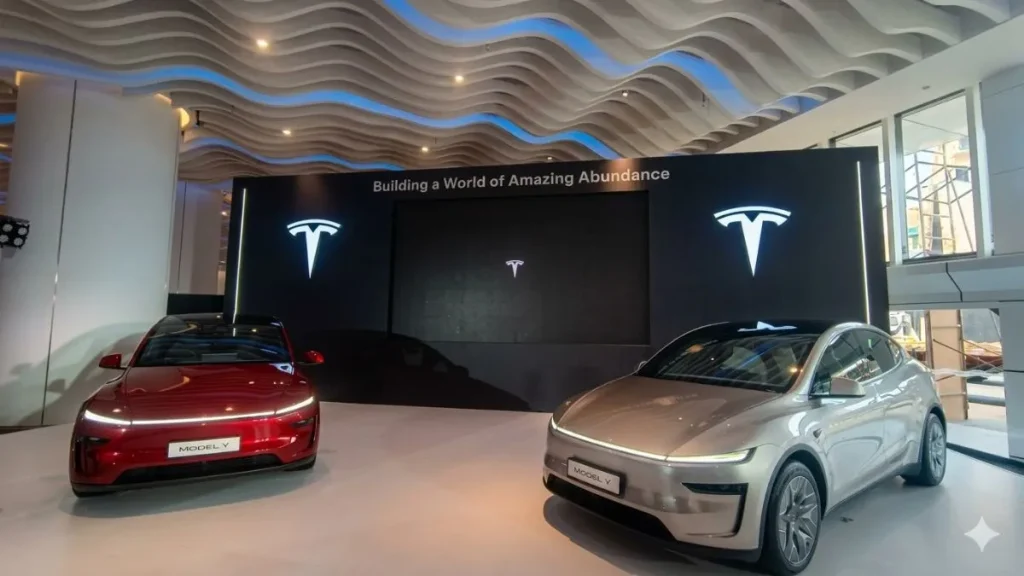
Global manufacturers such as Tesla, Volkswagen, Toyota, BMW, Mercedes-Benz, Honda, Nissan, and General Motors continue investing heavily to maintain their positions despite losing market share to local competitors.
This intense competition has contributed to an industry-wide price war that Chinese officials have attempted to moderate.
Earlier this year, Chinese authorities urged automakers to avoid destructive price competition that could weaken the industry’s long-term financial health. Regulators instead encouraged companies to compete through innovation, product quality, and customer service while ensuring promotional materials remain accurate and transparent.
Analysts believe regulators are attempting to create a healthier competitive environment where companies can continue innovating without engaging in misleading promotional practices.
Implications for Tesla, BYD, and Other Automakers
For Tesla, the meeting is unlikely to produce immediate operational changes, but it reinforces the importance of maintaining compliance within one of the company’s most important global markets.
Tesla has increasingly relied on digital sales, direct-to-consumer purchasing, and online configuration tools, making accurate product information essential to its business model.
BYD and other Chinese manufacturers may also review internal compliance procedures to ensure promotional materials meet evolving regulatory expectations.
Companies could strengthen internal approval processes for advertising campaigns, provide additional disclosures regarding vehicle capabilities, and improve oversight of dealership marketing materials distributed online.
Automakers operating in China already comply with detailed regulations covering emissions, safety standards, cybersecurity, and connected vehicle technologies. The latest action suggests marketing compliance will receive greater attention going forward.
What It Means for Consumers and the Industry
For consumers, stronger regulatory oversight could improve transparency during the vehicle purchasing process.
Clearer advertising standards may reduce confusion surrounding financing offers, software features, autonomous driving capabilities, charging performance, and promotional pricing. Buyers would be better positioned to compare competing vehicles using accurate and consistent information.
For the broader industry, the compliance meeting highlights China’s determination to guide the development of its automotive sector while preserving fair competition.
The government continues to support electric vehicle adoption and technological innovation, but it is also signaling that rapid growth should not come at the expense of consumer protection or market integrity.
As Chinese automakers continue expanding internationally and foreign manufacturers deepen their investments within China, regulatory compliance is becoming as important as engineering excellence and manufacturing efficiency.
The Shanghai meeting represents another step in China’s evolving oversight of the automotive industry.
Rather than targeting a single company, regulators appear to be establishing expectations for the entire market.
For Tesla, BYD, and their competitors, success in China will increasingly depend not only on producing competitive vehicles but also on ensuring every aspect of their marketing, pricing, and customer communication complies with a regulatory environment that is becoming more comprehensive each year.
The outcome is unlikely to slow competition in the world’s largest automotive market. Instead, it may encourage manufacturers to compete with greater transparency while reinforcing consumer confidence at a time when China’s automotive industry is entering a new phase of technological innovation and global expansion.
Also Read: 10 Chevrolet Camaro Model Years That Tell the Whole Story
