
Vehicle recalls often focus on serious mechanical failures, defective components, or safety systems that could increase the risk of a crash.
Nissan’s latest U.S. recall is different. Instead of faulty brakes, airbags, or steering components, the automaker is recalling more than 168,000 full-size SUVs because they carry incorrect certification labels displaying inaccurate weight information.
Although the issue may appear minor at first glance, federal regulations require automakers to provide accurate certification labels because they contain critical information about a vehicle’s weight ratings, occupant capacity, and compliance with federal safety standards.
Incorrect labels can lead owners to unknowingly overload their vehicles, potentially affecting handling, braking performance, and tire safety.
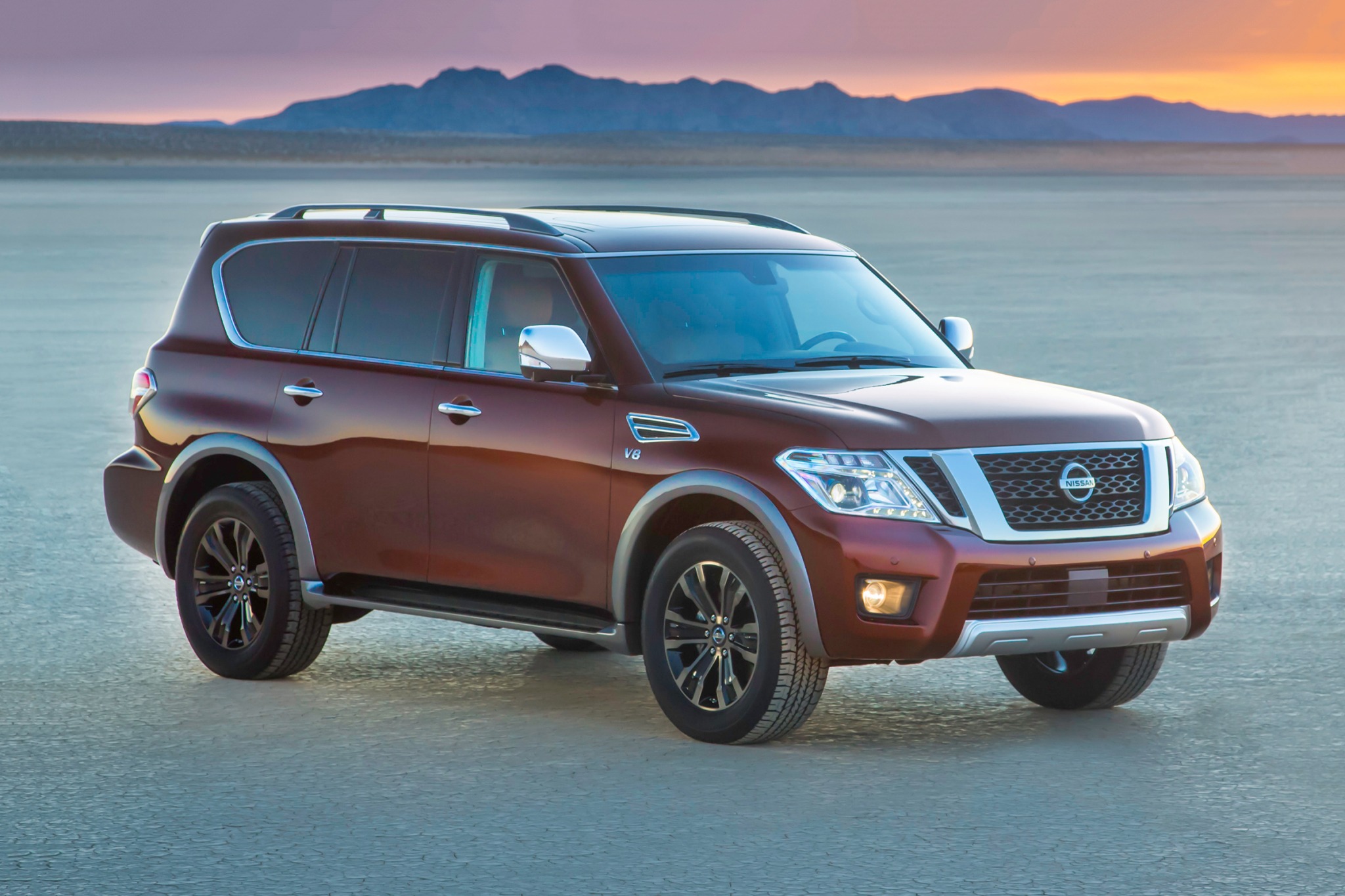
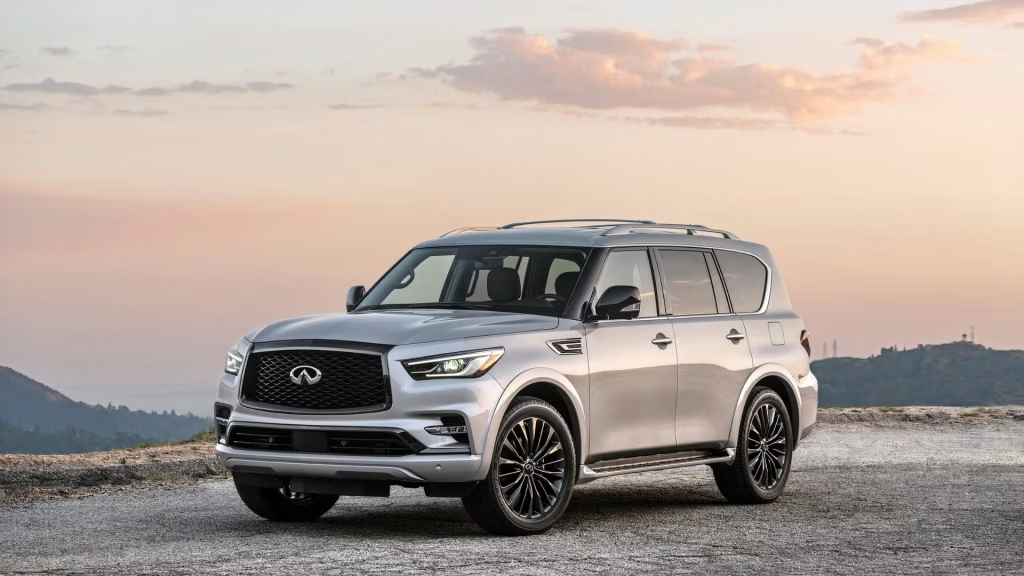
The recall affects thousands of Nissan Armada and Infiniti QX80 SUVs sold across the United States. According to documents filed with the National Highway Traffic Safety Administration (NHTSA), Nissan has already begun notifying dealers, while owners will receive replacement labels free of charge.
The campaign is another reminder that automakers are required to correct even administrative or labeling errors when they could influence vehicle safety or regulatory compliance.
Also Read: 10 EVs Ranked by Charging Speed
The Recall Covers More Than 168,000 SUVs
According to the National Highway Traffic Safety Administration, Nissan is recalling approximately 168,000 vehicles because the certification labels installed during production contain incorrect Gross Vehicle Weight Rating (GVWR) and Gross Axle Weight Rating (GAWR) information.
These figures represent the maximum safe operating weight of the vehicle and the maximum allowable weight that can be carried by each axle.
The recall includes certain model-year Nissan Armada and Infiniti QX80 SUVs manufactured for the U.S. market.
NHTSA states that while the physical vehicles were built correctly, the labels attached to them do not accurately reflect the certified weight specifications required under Federal Motor Vehicle Safety Standard (FMVSS) No. 567, which governs vehicle certification labeling.
Because the incorrect information appears on the certification label rather than in the vehicle’s mechanical components, the issue does not involve a manufacturing defect affecting engine performance, suspension, braking systems, or crashworthiness.
However, federal law requires manufacturers to correct labeling errors that could influence safe vehicle operation or regulatory compliance.
NHTSA classified the campaign as a safety recall because certification labels are considered an essential part of a vehicle’s federally mandated safety information.
Why Vehicle Weight Labels Matter
Many drivers rarely look at the certification label located on the driver’s side door jamb, but it serves an important purpose. The label lists several critical specifications, including the vehicle identification number (VIN), manufacturing date, tire recommendations, gross vehicle weight rating, and gross axle weight ratings.
These weight limits determine how much cargo, passengers, towing equipment, and trailer tongue weight a vehicle can safely carry without exceeding its engineered limits.
According to NHTSA, exceeding a vehicle’s certified weight capacity can increase stopping distances, place excessive stress on suspension components, overload tires, and negatively affect steering stability.
While the incorrect label does not automatically mean owners have overloaded their SUVs, inaccurate weight information could lead some drivers to unintentionally exceed safe operating limits.
For owners who regularly tow boats, campers, utility trailers, or horse trailers, accurate weight ratings are particularly important because payload calculations directly affect towing safety.
What Caused the Labeling Error?
NHTSA’s recall documents indicate the issue originated during the vehicle certification process rather than during assembly of the SUVs themselves.
According to Nissan’s report submitted to federal regulators, certain certification labels were produced with incorrect gross vehicle weight rating and gross axle weight rating values.
The automaker determined that the labels did not accurately represent the certified specifications for the affected vehicles, creating a compliance issue under federal safety regulations.
Importantly, Nissan has not identified any mechanical defects associated with the recall. The SUVs themselves were manufactured according to their intended engineering specifications, and there have been no reports suggesting that suspension systems, brakes, frames, or powertrains fail to meet design requirements. Instead, the problem is limited to the information printed on the certification labels.
After identifying the discrepancy, Nissan notified NHTSA and initiated a voluntary safety recall in accordance with federal reporting requirements.
The Remedy Is Simple but Required by Law
Unlike recalls involving replacement engines, airbags, or fuel system components, this campaign involves a relatively straightforward repair.
According to NHTSA, dealers will inspect the affected vehicles and install new certification labels containing the correct weight information. The repair will be performed at no cost to owners.
Replacement labels will display the proper Gross Vehicle Weight Rating and Gross Axle Weight Ratings required for each vehicle, restoring compliance with federal certification standards.
Although the repair itself is expected to take only a short amount of time, Nissan encourages owners to respond promptly after receiving their recall notice rather than delaying the appointment.
As with all federally mandated recalls, dealerships are prohibited from charging customers for the repair.
How Owners Can Check if Their SUV Is Included
Nissan will begin mailing owner notification letters explaining the recall and scheduling repair procedures. Owners can also determine whether their vehicle is included before receiving a letter.
The National Highway Traffic Safety Administration recommends checking a vehicle’s 17-digit VIN through its recall lookup database, which provides the latest recall information for vehicles sold in the United States.
Nissan owners may also contact their local dealership, where service departments can verify whether a specific Armada or Infiniti QX80 is covered under the campaign.
Owners purchasing used vehicles should also verify recall status, since open recalls remain attached to the vehicle rather than the original owner.
Federal law requires manufacturers to provide recall repairs free of charge regardless of changes in ownership, provided the recall remains open.
Vehicle Label Recalls Are More Common Than Many Drivers Realize
Although recalls involving incorrect certification labels rarely receive the same attention as engine failures or airbag defects, they occur more frequently than many consumers realize.
Over the past decade, multiple manufacturers, including Ford, General Motors, Stellantis, Toyota, Mercedes-Benz, and BMW, have issued recalls involving inaccurate tire pressure labels, incorrect payload information, seating capacity errors, and certification label discrepancies.
These recalls typically arise from printing errors, supplier mistakes, or documentation issues during production rather than defects in the vehicles themselves. Federal regulators treat these issues seriously because certification labels provide owners with legally required information needed for safe vehicle operation.
Even when the vehicle performs exactly as designed, inaccurate labels can create confusion regarding payload limits or towing capacity. Automakers therefore have a legal obligation to correct these errors once discovered.
Nissan’s Broader Focus on Safety Compliance
The latest recall demonstrates Nissan’s continued responsibility to address both mechanical and regulatory issues affecting its vehicles. While the company has faced larger recalls in the past involving airbags, braking systems, and electrical components, this campaign highlights another aspect of vehicle safety that often goes unnoticed.
Modern vehicles are subject to hundreds of federal regulations covering everything from crash protection and emissions to lighting systems, labeling requirements, and occupant safety information. Manufacturers must certify compliance with every applicable standard before vehicles can be sold in the United States.
When inaccuracies are later identified, companies are expected to notify regulators promptly and initiate corrective action, regardless of whether the issue involves a major component failure or a documentation error.
Industry analysts note that proactive recalls of this nature generally reflect manufacturers’ efforts to maintain compliance with federal safety requirements rather than waiting for enforcement action.
A Preventive Measure Rather Than a Mechanical Defect
For most owners, Nissan’s latest recall should not raise concerns about the reliability or structural integrity of their Armada or Infiniti QX80. The issue does not involve engine performance, braking capability, steering systems, suspension durability, or crash protection.
Instead, the recall focuses on ensuring that every affected SUV carries accurate federally required certification information regarding its weight ratings.
According to the National Highway Traffic Safety Administration, proper certification labels help drivers understand the safe operating limits of their vehicles, particularly when carrying heavy cargo or towing trailers.
Even though replacing a door-jamb label may seem insignificant compared with repairing a mechanical defect, accurate information plays an important role in helping owners operate their vehicles safely and within their designed limits.
For Nissan, issuing the recall promptly allows the company to correct the compliance issue before inaccurate weight information contributes to improper vehicle loading.
For owners, responding to the recall will simply involve visiting a dealership to receive an updated certification label, ensuring their SUV reflects the correct federally approved specifications for years to come.
Also Read: 10 Motorcycle Dealer Fees Buyers Can Refuse to Pay
