
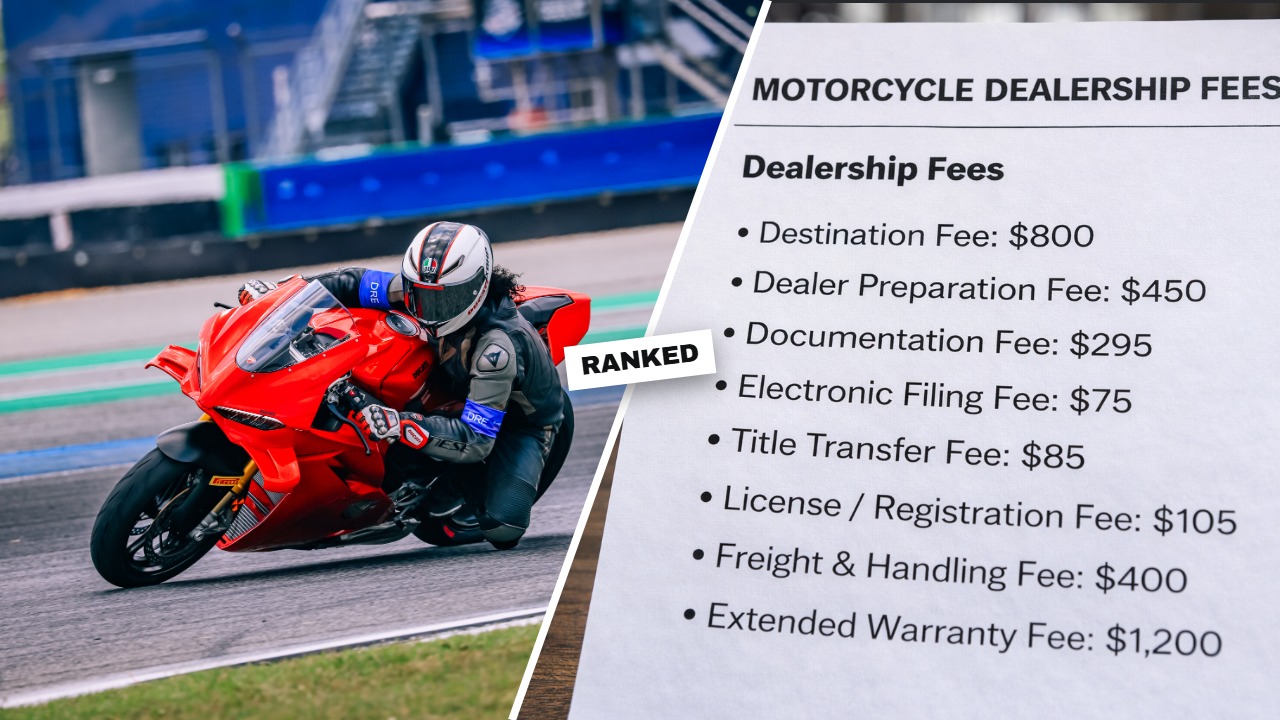
Buying a motorcycle is an exciting experience, but the final price shown during negotiations can sometimes look very different from the advertised number. Many buyers focus on the motorcycle’s base price while overlooking additional charges added by dealerships.
Some fees may cover legitimate services, while others are simply extra costs that increase the final amount. Understanding dealer fees gives buyers more confidence during negotiations and helps them identify charges that may be reduced, removed, or challenged.
Freight and setup fees are common examples that often create confusion because they may already be connected to the dealership’s regular business expenses.
Also Read: 10 Three-Pedal Cars That Keep Driving Fun Alive
1. Freight Fees Added Separately to the Motorcycle Price
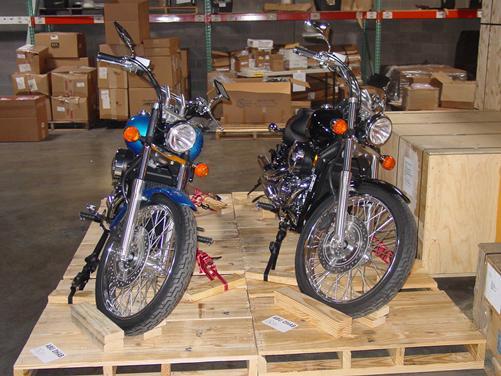
Freight fees are among the most common charges motorcycle buyers encounter. Dealerships may add these fees to cover transportation expenses from the manufacturer’s facility to the showroom.
Transportation costs are real, especially when motorcycles travel long distances before reaching customers. However, buyers should examine whether the freight charge is already included in the motorcycle’s advertised price or whether it appears as a separate addition during negotiations.
Many buyers assume that every freight charge must be accepted because the motorcycle physically needs to be transported. That assumption can create unnecessary costs.
Dealerships often have flexibility in how they structure pricing, and freight may simply be a separate line item used to increase the total transaction amount. A buyer can ask the dealership to remove the charge or adjust the motorcycle’s selling price to compensate for it.
The ability to negotiate freight fees depends on factors such as demand, inventory levels, and dealership policies. A popular motorcycle with limited availability may provide less negotiation room.
A model that has been sitting in inventory for several months may give buyers more leverage. Dealers are often willing to adjust pricing when they want to complete a sale, especially when customers are prepared and understand the numbers.
Before agreeing to a freight charge, buyers should compare prices from multiple dealerships. Some dealerships advertise lower motorcycle prices but add large freight charges later.
Others may advertise a higher price that already includes transportation costs. Comparing the final out-the-door price provides a clearer picture than comparing only the advertised motorcycle price.
A buyer can approach freight discussions by asking simple questions. Asking whether freight is negotiable, whether it is already included in the price, and how the amount was calculated can reveal useful information.
Dealerships may not remove every freight fee, but informed buyers can often negotiate a better total price by addressing this charge directly.
2. Motorcycle Setup Fees That May Be Negotiable
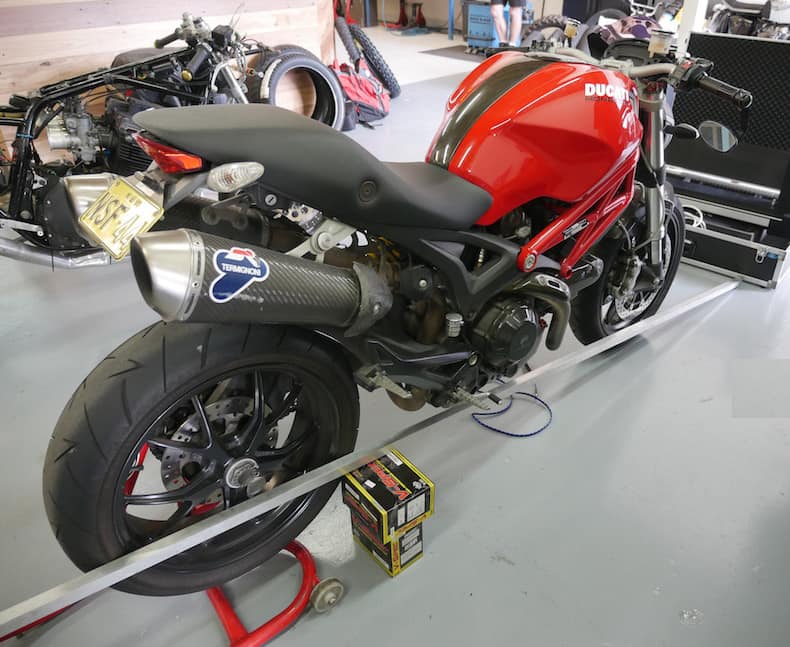
Setup fees are designed to cover the preparation required before a motorcycle reaches the customer. A new motorcycle may arrive partially assembled, requiring dealership technicians to complete certain tasks.
These tasks can include installing mirrors, attaching handlebars, checking controls, adding fluids, adjusting components, and performing safety inspections. Since these services require employee time, dealerships argue that setup fees represent legitimate labor costs.
The issue for many buyers is not whether preparation work exists but whether the listed fee matches the actual work performed.
A setup charge of several hundred dollars may seem excessive when the motorcycle already carries a manufacturer preparation process. Buyers should request a detailed explanation of what the setup fee includes before accepting the charge.
Some dealerships bundle setup costs into the motorcycle’s final price rather than listing them separately. Others display setup as its own line item.
A separate charge can make the motorcycle appear cheaper at first glance while increasing the final purchase amount later. This practice is why buyers should always focus on the total cost instead of the initial advertised figure.
Negotiating setup fees is often possible because dealerships control how these charges are presented. Buyers can ask for the fee to be removed, reduced, or included in the negotiated motorcycle price.
If the dealership refuses to eliminate the charge, the buyer can request a lower motorcycle price to offset the additional amount.
Customers should also consider whether they are receiving meaningful value from the service. Proper motorcycle preparation matters for safety and performance, so buyers should not reject necessary inspections or assembly work. The focus should be on avoiding unreasonable charges while ensuring the motorcycle is delivered correctly prepared.

3. Documentation Fees That Add Extra Cost to Paperwork
Documentation fees are common in vehicle sales, including motorcycle purchases. Dealerships use these charges to cover administrative tasks involved in completing a transaction.
These tasks may include preparing contracts, processing paperwork, organizing registration documents, and handling records related to the sale. Since paperwork requires employee time, many dealerships consider documentation fees a normal part of doing business.
The concern among buyers is that documentation fees can vary widely between dealerships. Some stores charge modest amounts, while others add large fees that significantly increase the final purchase price.
A buyer may not notice this charge until the final paperwork is prepared, which can make the transaction feel more expensive than expected. Reviewing every line item before signing helps prevent surprises.
Unlike government taxes or registration costs, documentation fees are usually controlled by the dealership. This means they may be negotiable depending on the dealer’s policies.
Some dealerships have fixed documentation fees that they apply to every customer, while others may adjust the charge during negotiations. Asking questions about the fee creates an opportunity to discuss the price.
Buyers should avoid focusing only on removing a single fee. A dealership may refuse to eliminate a documentation charge but reduce the motorcycle price by the same amount.
The goal should be securing the lowest final cost rather than winning a negotiation over one specific line item. Looking at the complete purchase agreement provides a clearer view of the deal.
A good strategy is to request an out-the-door price before committing to the purchase. This figure includes the motorcycle cost, dealer charges, taxes, and required fees.
Comparing out-the-door prices from different dealerships makes it easier to identify which seller provides the best value. A lower advertised price does not always mean a cheaper final transaction.

4. Advertising Fees Passed From Dealer to Buyer
Advertising fees are sometimes included in motorcycle purchase agreements as a way for dealerships to recover marketing expenses.
Dealers spend money on online listings, promotional campaigns, local advertising, and other methods used to attract customers. These activities help businesses reach potential buyers, but customers may question whether they should directly pay for those expenses.
Advertising is a normal operating cost for any business. Motorcycle dealerships use marketing because it supports their sales operations and helps bring customers into their stores.
When an advertising fee appears as a separate charge, buyers may reasonably ask why they should cover a dealership expense in addition to paying for the motorcycle itself.
Some dealerships explain advertising fees as a manufacturer-related charge. In certain cases, manufacturers provide advertising support programs that involve regional promotions or cooperative marketing arrangements.
However, buyers should understand exactly what they are paying for before accepting the charge. A vague explanation is a good reason to request clarification. Negotiating advertising fees can be challenging because dealerships may consider them part of their standard pricing structure. However, customers can still ask for adjustments.
If a dealer cannot remove the fee, buyers can negotiate the motorcycle price, accessories, service packages, or other parts of the transaction to achieve a better deal. Transparency is important during any motorcycle purchase. Buyers should feel comfortable asking what each charge represents and why it applies.
A dealership that clearly explains its fees makes it easier for customers to trust the transaction. A dealership that avoids explaining charges may create concerns about the pricing process.
5. Dealer Preparation Packages and Added Service Charges
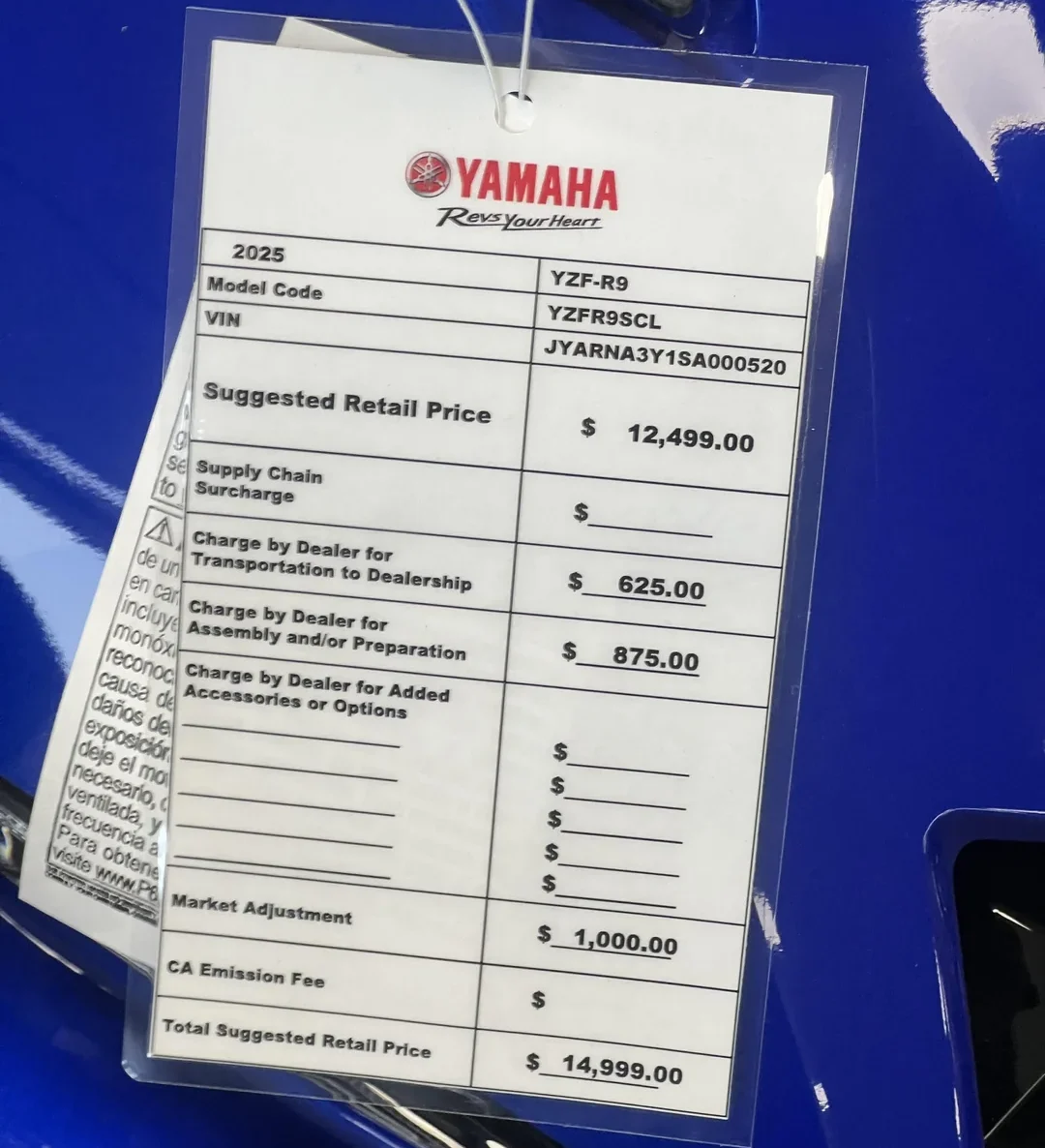
Some dealerships offer preparation packages that go beyond basic motorcycle setup. These packages may include additional inspections, cleaning, protective treatments, maintenance checks, or convenience services.
Dealers often present these packages as ways to improve the ownership experience, but buyers should carefully evaluate whether the services provide useful value.
A preparation package may include services that sound appealing but have limited importance for a new motorcycle. For example, a cleaning service or protective coating may be something a buyer does not need immediately. Customers should ask for a detailed list of included services and determine whether those items are worth the added cost.
Optional packages are different from necessary preparation work. A motorcycle must be properly assembled and inspected before delivery, but additional services are often choices rather than requirements.
Buyers should understand this difference because dealerships may sometimes present optional products as if they are standard parts of the purchase process. Negotiating these packages is usually easier than negotiating mandatory fees. Since these services are often optional, customers can decline them completely.
A buyer should never feel pressured to accept additional products or services simply because they appear on a sales worksheet. Taking time to review the agreement can prevent paying for unwanted items.
The best approach is to decide what services matter before signing paperwork. If a buyer wants paint protection, extended maintenance coverage, or additional care packages, those choices can be considered separately.
Keeping optional purchases separate from the motorcycle price helps maintain control over the final spending amount.
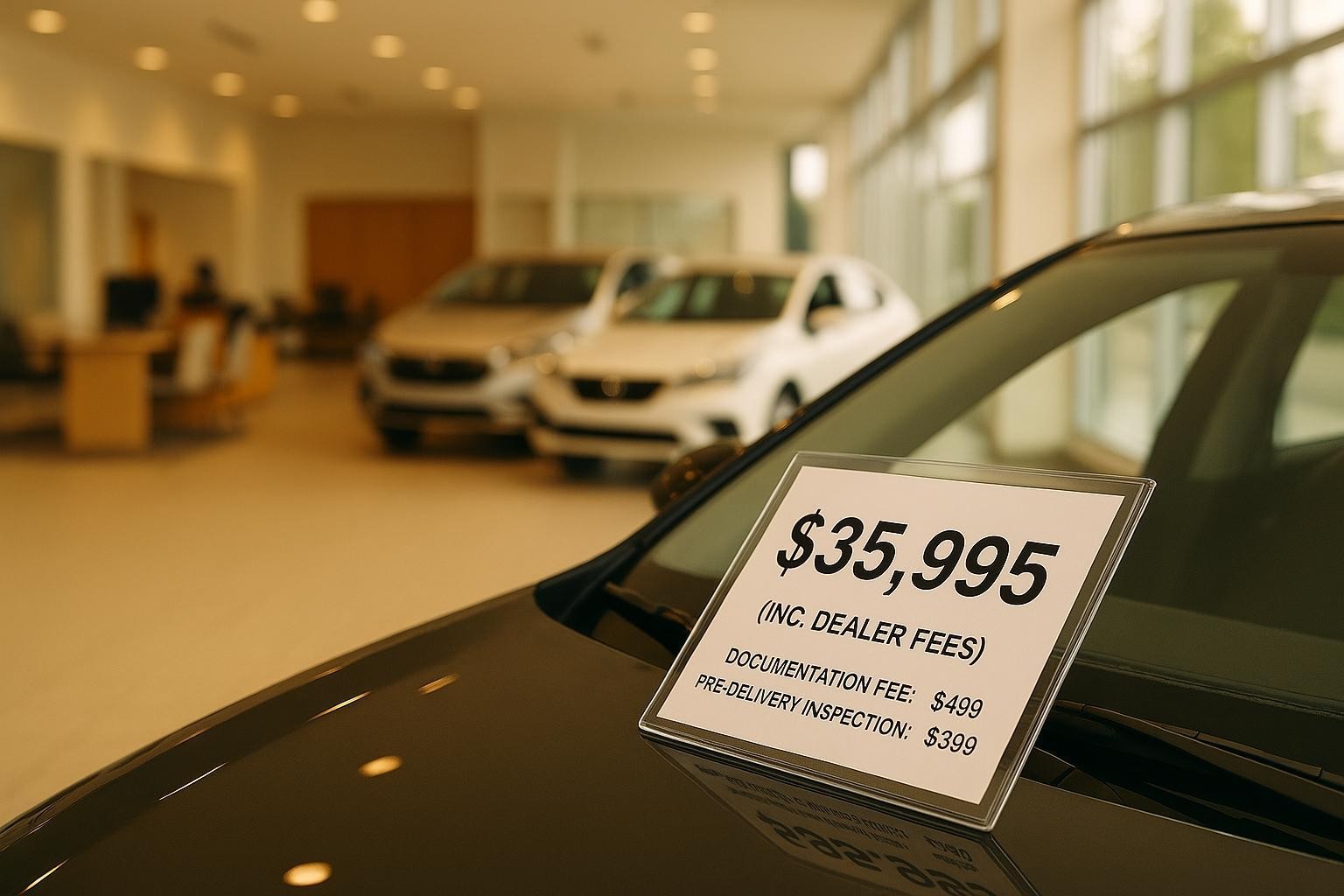
6. Destination Charges and Manufacturer Delivery Costs
Destination charges are similar to freight fees because they relate to transportation. Manufacturers and dealerships use these charges to account for shipping motorcycles from production facilities to sales locations.
These costs can include transportation arrangements, handling, and logistics involved in moving motorcycles through the supply chain. Some buyers accept destination charges without question because transportation is necessary. However, the way these costs are presented matters.
A destination charge may already be included in manufacturer pricing information, or it may appear separately during the dealership negotiation process. Buyers should confirm whether the amount represents a genuine additional cost or simply a separate pricing method.
Motorcycle manufacturers often publish suggested retail prices that may not include every dealership charge. This creates a difference between the advertised motorcycle price and the final amount paid by the customer.
Understanding this difference helps buyers prepare realistic budgets and avoid being surprised during final negotiations. A buyer can ask the dealership for a complete breakdown of destination-related charges.
Questions about where the motorcycle was shipped from, how the cost was calculated, and whether the fee applies equally to all models can provide useful information. Clear answers help customers determine whether the charge is reasonable.
Negotiating destination fees depends on market conditions and dealership flexibility. Some dealers may not remove the charge but may offer discounts elsewhere.
Buyers should remember that the final purchase amount matters more than whether a specific fee remains on the agreement. A successful negotiation focuses on total savings.

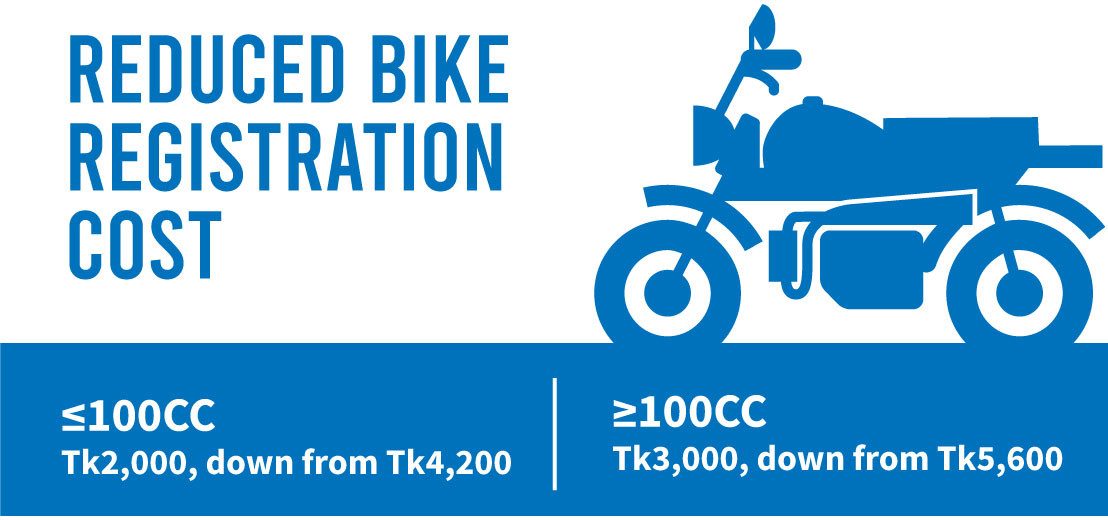
7. Vehicle Registration Processing Fees Buyers Should Review
Registration processing fees are charges connected with preparing paperwork for government registration.
Dealerships often handle registration tasks as a convenience for buyers, saving them time by submitting documents, completing forms, and coordinating with local agencies. Since these tasks require administrative effort, dealers may include a processing fee as part of the transaction.
The important question for buyers is whether the fee reflects a necessary service or an inflated administrative charge. Registration itself usually involves government-required expenses such as title fees, plate costs, and taxes.
Those costs are separate from dealership processing charges. Customers should ask for a clear distinction between official government fees and dealership-added charges. Some buyers prefer allowing dealerships to handle registration because it reduces the amount of work required after purchasing a motorcycle.
Convenience can have value, especially for customers who have limited time or are unfamiliar with the registration process. However, convenience does not mean every processing fee is automatically worth accepting.
A buyer who wants to reduce costs can ask whether they can complete registration independently. In many areas, customers have the option to handle certain registration steps themselves.
If a dealership charges a significant amount for this service, completing the process directly with the appropriate agency may save money.
The best way to approach registration fees is through understanding rather than automatic rejection. Buyers should determine which charges are required, which services are optional, and which amounts can be negotiated. A detailed purchase agreement should clearly separate government expenses from dealership fees so customers know exactly where their money is going.
8. Electronic Filing and Technology Fees
Technology has changed how motorcycle dealerships manage sales paperwork. Many dealers use digital systems for contracts, customer records, financing applications, and registration submissions. Some dealerships pass the cost of these systems to customers through electronic filing fees or technology charges.
These fees may seem small compared with the motorcycle’s purchase price, but several smaller charges can add hundreds of dollars to the final amount.
Buyers should review every additional fee because a collection of minor expenses can have a noticeable effect on the total cost. A motorcycle purchase involves many separate charges, and each one contributes to the final payment.
Dealerships often explain technology fees as costs related to maintaining modern sales systems. While these systems are useful for businesses, buyers may question whether they should directly pay for general operating expenses. Similar to advertising expenses, technology costs are often part of running a dealership.
Negotiating technology fees follows the same principle as other dealer charges. Customers can ask for the fee to be removed or request a discount elsewhere. A dealer may have fixed policies regarding certain charges, but adjustments to the motorcycle price or included services can still create a better agreement.
Before signing, buyers should request a complete list of dealership-added fees. Understanding the full cost prevents customers from making decisions based only on the motorcycle’s sticker price.
A transparent transaction allows buyers to compare offers accurately and choose the option that provides the best financial value.
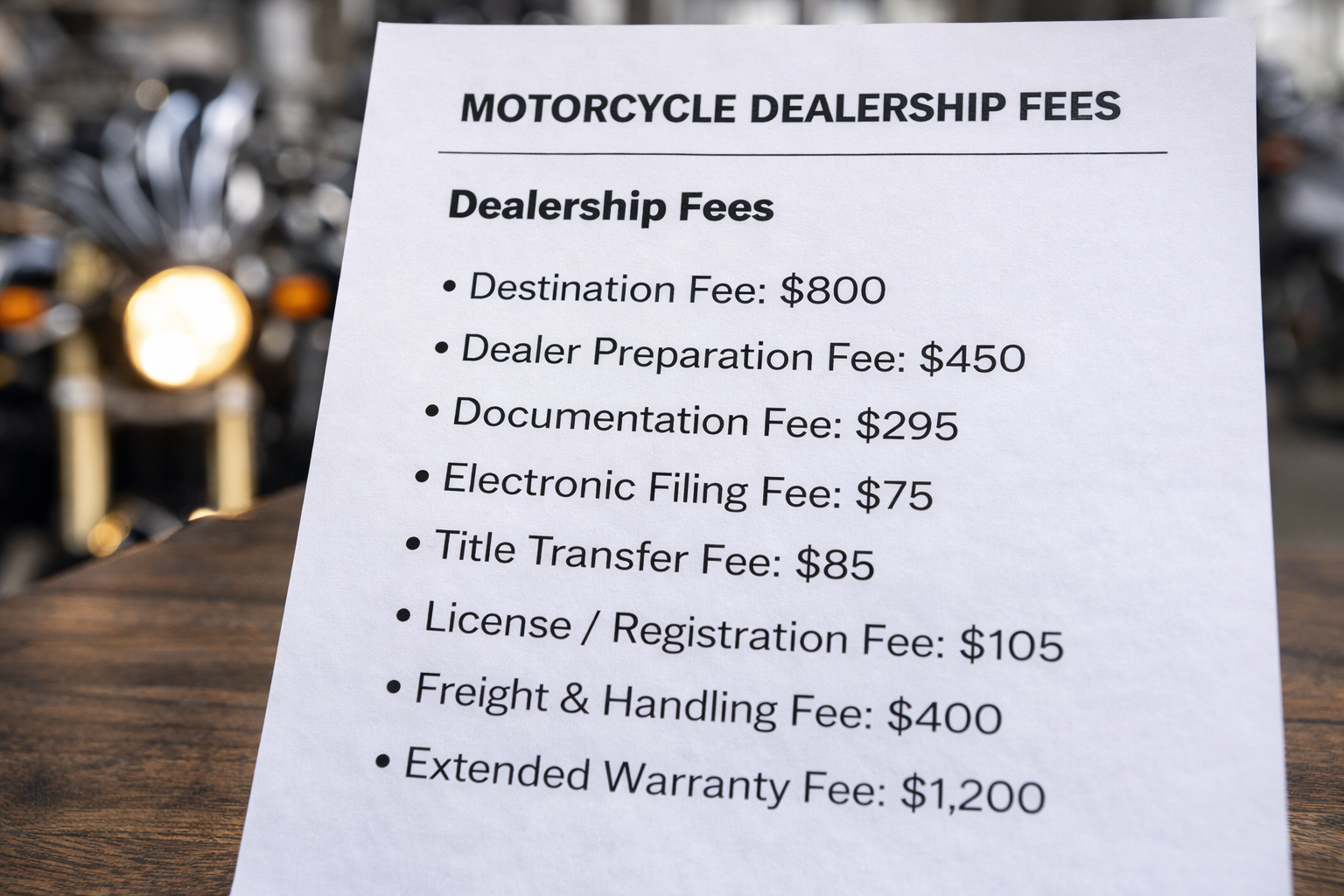
9. Pre-Delivery Inspection Charges
A pre-delivery inspection is a normal part of preparing a motorcycle for a customer. Dealership technicians inspect important components before delivery to confirm that the motorcycle is safe and ready for use. These checks may include examining controls, tire pressure, fluid levels, electrical systems, and basic operating functions.
The challenge comes when dealerships charge separately for inspections that may already be included in their standard preparation process.
A buyer may question why they should pay an additional fee for work that is necessary before any motorcycle can reasonably be delivered. Businesses typically include preparation activities within their operating expenses.
A detailed explanation of the inspection process can help buyers determine whether the charge is reasonable. Customers can ask what specific tasks are completed, how long the inspection takes, and whether the fee covers additional services. Clear information allows buyers to decide whether the cost provides meaningful value.
Safety-related preparation should always remain a priority. A motorcycle that has been properly inspected reduces the chance of problems after delivery. Buyers should not request shortcuts that affect safety or reliability.
The focus should be on understanding the charge and negotiating unfair pricing rather than avoiding necessary maintenance procedures.
If the inspection fee seems excessive, buyers can discuss alternatives with the dealership. They may request that the fee be included in the negotiated motorcycle price or ask for additional value, such as accessories or service credits. Negotiations work best when both sides focus on the total transaction rather than individual charges.
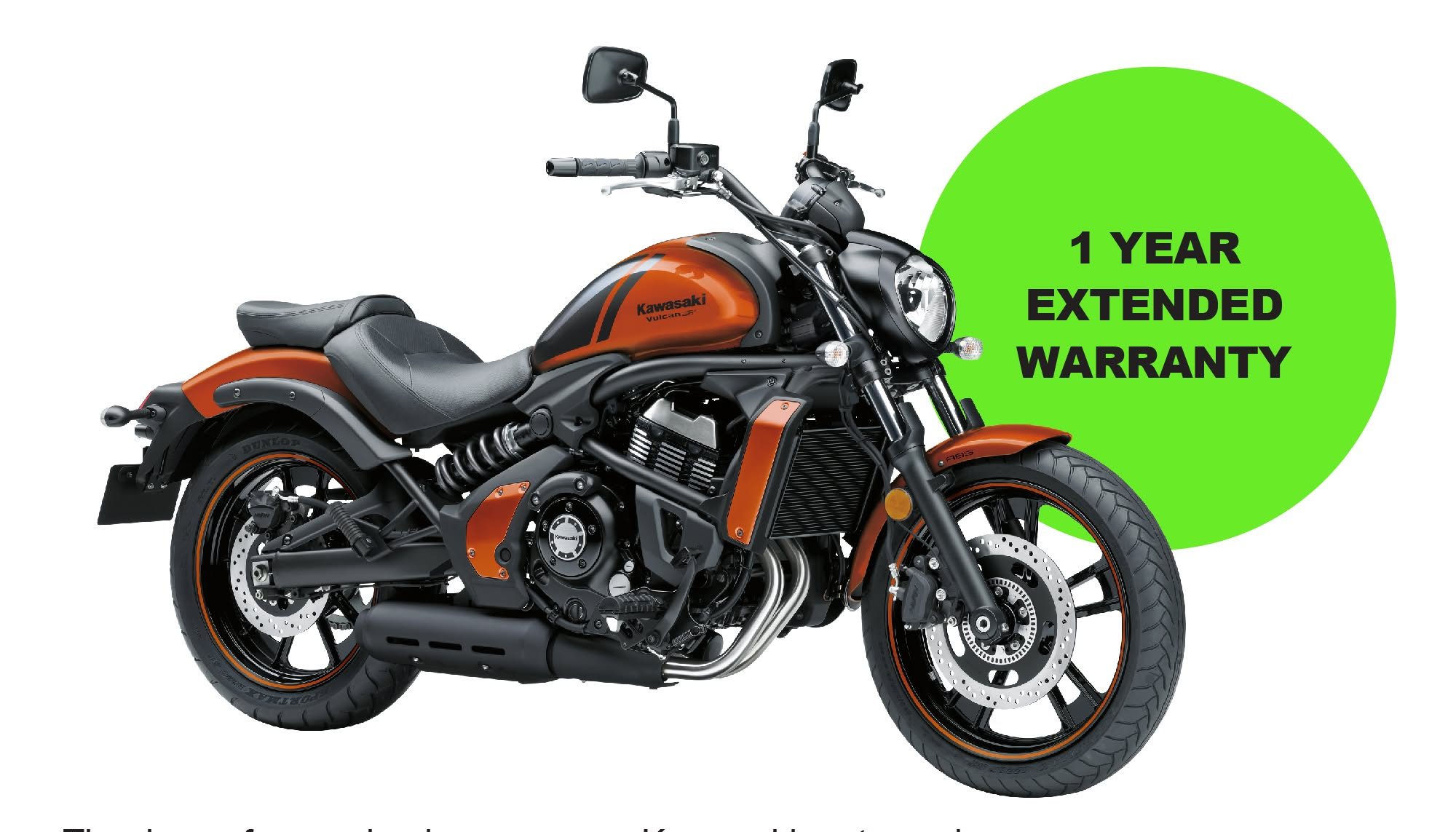
10. Extended Protection and Dealer Add-On Packages
Extended protection packages are among the most common optional products offered during motorcycle purchases.
These packages may include additional coverage plans, protective treatments, maintenance products, theft protection services, or appearance-related products. Some riders find these options useful, while others prefer not to purchase them.
The key difference between protection packages and required fees is choice. A motorcycle buyer is generally not required to purchase optional products simply because they appear during the sales process.
Dealerships may present these packages as valuable additions, but customers should decide based on their personal needs and budget.
Buyers should carefully review what each package includes before agreeing to purchase it. Some products may provide useful benefits, while others may duplicate coverage already available through existing insurance or manufacturer programs. Understanding the details prevents paying for services that do not provide meaningful advantages.
Sales discussions can sometimes move quickly, especially near the end of a motorcycle purchase. Customers who are excited about taking their new bike home may overlook optional charges added during final paperwork.
Taking time to review the contract carefully helps ensure that every product included is something the buyer actually wants. A smart purchasing approach involves separating the motorcycle itself from optional extras. First, negotiate a fair price for the motorcycle.
After that, consider additional products individually. This method gives buyers greater control and makes it easier to decide which services are worth the additional expense.
