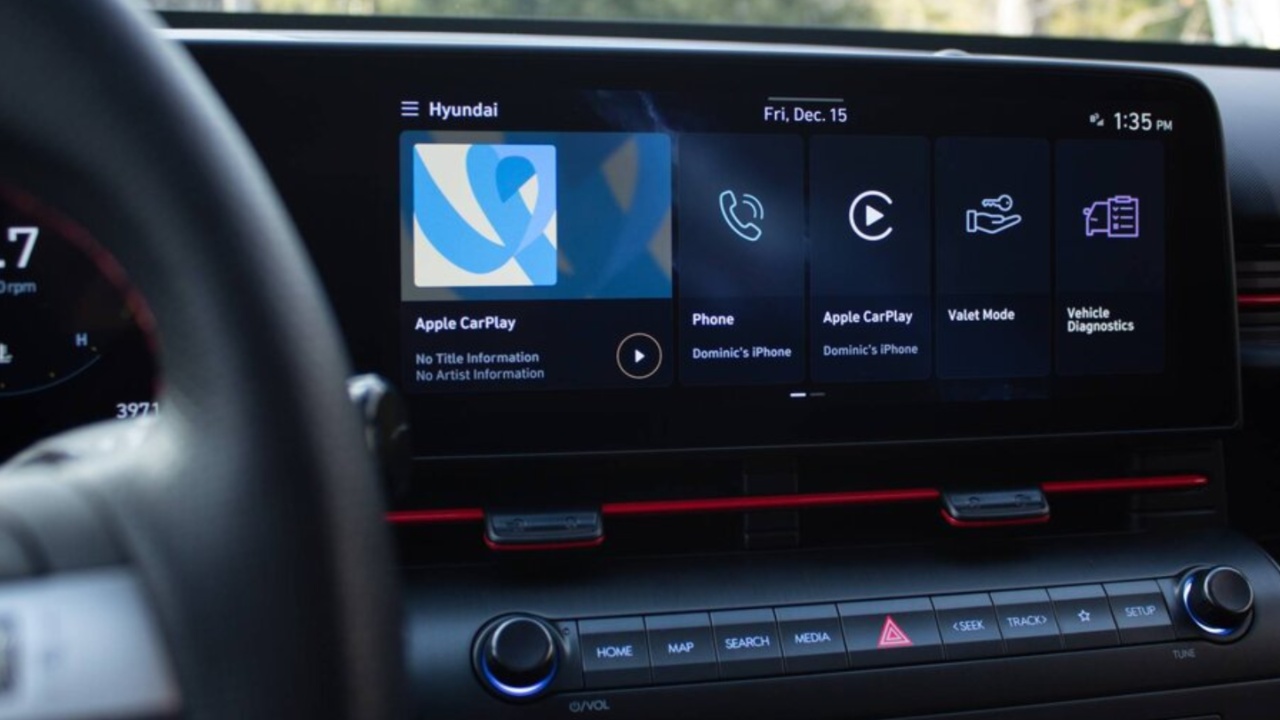
Hyundai has introduced a next-generation AI-powered infotainment platform that will serve as the digital backbone for many of its future vehicles, marking another major step in the automaker’s transformation from a traditional vehicle manufacturer into a software-driven mobility company.
The new system combines artificial intelligence, cloud connectivity, enhanced navigation, over-the-air software updates, and advanced voice recognition to create a more intuitive and personalized driving experience.
The announcement comes as automakers around the world increasingly compete not only on vehicle performance and design but also on digital capabilities.
Modern consumers expect their vehicles to function much like smartphones, offering seamless software updates, intelligent voice assistants, personalized recommendations, and continuously improving features throughout the vehicle’s lifespan.
According to the Hyundai Newsroom, the company’s latest infotainment platform incorporates AI-powered voice controls capable of understanding more natural conversational language while delivering faster responses and greater personalization.
The system also introduces enhanced navigation features, expanded cloud connectivity, and more comprehensive over-the-air update capabilities, positioning Hyundai to compete more aggressively in the rapidly evolving software-defined vehicle market.
Also Read: 8 Used Motorcycles Selling Above Original MSRP
Hyundai Accelerates Its Software-Defined Vehicle Strategy
The introduction of the new infotainment platform reflects Hyundai Motor Group’s broader shift toward software-defined vehicles (SDVs), an approach that places software at the core of vehicle features, performance, and overall functionality.
Traditionally, vehicle features were largely fixed once a car left the factory. Today, manufacturers are shifting toward software platforms that allow vehicles to receive new functions, security improvements, performance enhancements, and user interface upgrades long after purchase.
According to Hyundai, the new infotainment architecture has been designed to support this evolving approach by allowing continuous software improvements through over-the-air updates rather than requiring dealership visits.
The company believes this strategy will enable vehicles to remain technologically current for much longer while improving customer convenience and reducing maintenance requirements.
Industry analysts view software-defined vehicles as one of the automotive industry’s most significant technological transformations, comparable to the transition from mechanical systems to electronic controls several decades ago.
Artificial intelligence is the defining feature of Hyundai’s new infotainment system. Unlike conventional voice assistants that rely primarily on predetermined commands, the new AI platform is designed to understand more natural conversational language.
According to Hyundai, drivers can speak in everyday phrases rather than memorizing specific commands, allowing the system to interpret requests more accurately while responding conversationally.
For example, instead of issuing separate commands for navigation, climate control, or entertainment, drivers can make more complex requests that combine multiple actions.
The AI assistant is also expected to learn user preferences over time, enabling personalized recommendations based on frequently visited destinations, preferred climate settings, driving habits, and entertainment choices.
This adaptive capability reflects the growing role artificial intelligence plays in improving both convenience and safety by reducing the need for drivers to interact with physical controls while driving.
Enhanced Navigation Improves Everyday Driving
Navigation technology also receives a substantial upgrade under Hyundai’s new platform. According to the Hyundai Newsroom, the next-generation navigation system combines cloud-connected mapping with real-time traffic information, route optimization, and continuously updated road data.
Rather than relying solely on maps stored within the vehicle, cloud integration enables the system to process changing traffic conditions, road closures, accidents, weather impacts, and charging station availability more efficiently.
For electric vehicle owners, navigation enhancements are particularly valuable. The platform can intelligently recommend charging stops based on battery state of charge, driving conditions, route elevation, and charger availability, helping reduce range anxiety during longer journeys.
Industry experts note that intelligent route planning has become an increasingly important differentiator among modern electric vehicles as charging infrastructure continues to expand globally.
One of the platform’s most important features is its expanded over-the-air (OTA) software capability.
According to Hyundai, future vehicles equipped with the new infotainment system will receive software updates remotely, allowing new features, bug fixes, security improvements, and performance enhancements to be installed without visiting a dealership.
Over-the-air updates have become a major focus across the automotive industry because they allow manufacturers to improve vehicles throughout their operational life.
Instead of waiting for annual model updates, customers can receive ongoing improvements that enhance vehicle functionality long after purchase.
Hyundai says the new platform supports broader OTA capabilities than previous generations, covering not only infotainment software but also additional vehicle systems where appropriate.
This approach helps reduce service appointments while ensuring customers always have access to the latest software improvements.
Connectivity has become a defining feature of modern vehicles, and Hyundai’s latest platform significantly expands those capabilities.
According to Hyundai, the infotainment system integrates cloud-based services that allow vehicles to communicate with external networks in real time.
Drivers can access remote vehicle functions through smartphone applications, monitor vehicle status, receive maintenance notifications, and manage charging schedules for electric models.
Cloud connectivity also enables more accurate traffic information, weather updates, live parking availability, and online points of interest.
As connected vehicle ecosystems become increasingly sophisticated, automakers are investing heavily in digital services that extend beyond traditional transportation.
Industry analysts expect recurring software and connected service subscriptions to become an increasingly important source of revenue for global manufacturers over the coming decade.
Improved User Experience Through Digital Integration
Hyundai has also focused heavily on improving the full user experience. According to the company, the new interface has been designed to provide faster processing speeds, smoother graphics, simplified menus, and improved touchscreen responsiveness.
Digital displays are expected to integrate more seamlessly with navigation, media, vehicle information, and driver assistance systems.
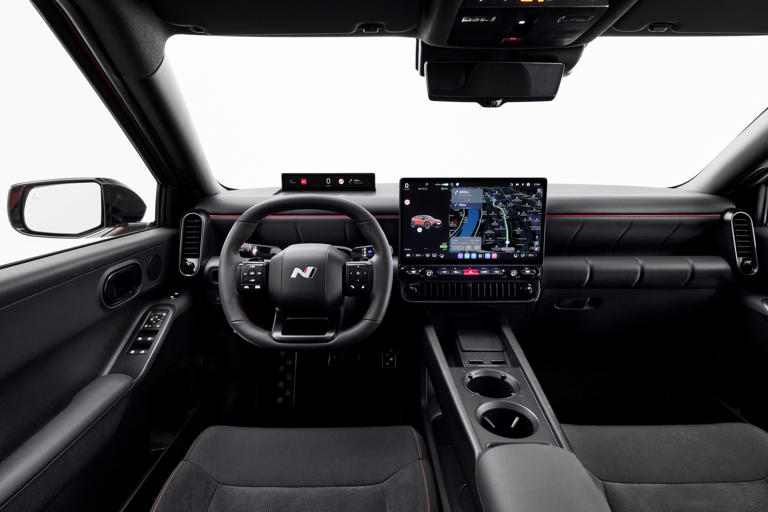
The platform also supports wireless smartphone connectivity, allowing Apple CarPlay and Android Auto integration without requiring physical cables where supported.
Multi-device connectivity enables passengers to connect personal devices more easily, while expanded personalization features allow multiple driver profiles to store seating positions, navigation history, climate preferences, and entertainment settings.
These improvements reflect broader consumer expectations that vehicle technology should provide the same responsiveness and ease of use found in modern consumer electronics.
The new infotainment platform will play an important role across Hyundai’s growing lineup of battery-electric and hybrid vehicles.
According to Hyundai, future electric models will benefit from deeper integration between navigation, battery management, charging systems, and energy optimization software.
Drivers will receive more accurate range predictions based on weather conditions, terrain, traffic, driving style, and accessory usage.
Charging recommendations will also become more intelligent, helping optimize trip planning while minimizing travel delays.
Industry observers note that software integration is becoming just as important as battery technology in determining the full electric vehicle ownership experience.
Manufacturers capable of delivering seamless digital ecosystems may gain an important competitive advantage as EV adoption continues to accelerate.
Hyundai enters an increasingly competitive landscape where software capabilities are becoming major purchasing considerations.
Tesla has long been recognized for its software-first approach and extensive over-the-air update capabilities.
Mercedes-Benz continues expanding its MB.OS software architecture, BMW has invested heavily in its latest iDrive platform, while General Motors, Volkswagen, Ford, Toyota, Honda, and Stellantis are all developing increasingly sophisticated software-defined vehicle ecosystems.
Technology companies have also become more closely involved in the automotive industry. Google Automotive Services, Apple CarPlay Ultra, Amazon Alexa integration, and artificial intelligence platforms from several leading technology providers are reshaping how drivers interact with their vehicles.
Rather than competing solely through horsepower or fuel economy, automakers now compete equally through software quality, connectivity, and digital services.
Hyundai’s latest infotainment platform reflects a broader transformation occurring throughout the automotive industry. Vehicles are evolving from primarily mechanical machines into intelligent, connected digital platforms capable of continuous improvement throughout their service lives.
According to the Hyundai Newsroom, artificial intelligence, cloud connectivity, over-the-air updates, and advanced voice interaction form the foundation of the company’s next-generation infotainment strategy.
By integrating these technologies into future models, Hyundai aims to deliver vehicles that become smarter, more personalized, and more capable over time.
As customer expectations continue shifting toward seamless digital experiences, the importance of software within the automotive industry will only continue to grow.
Hyundai’s new AI-powered infotainment platform positions the company to compete more effectively in that future by combining intelligent voice interaction, enhanced navigation, connected services, and continuous software evolution into a single integrated ecosystem.
While hardware remains critical to vehicle performance, the company’s latest announcement demonstrates that software is becoming just as essential in defining the modern driving experience.
Also Read: 8 Motorcycle Scams Costing Buyers Thousands