
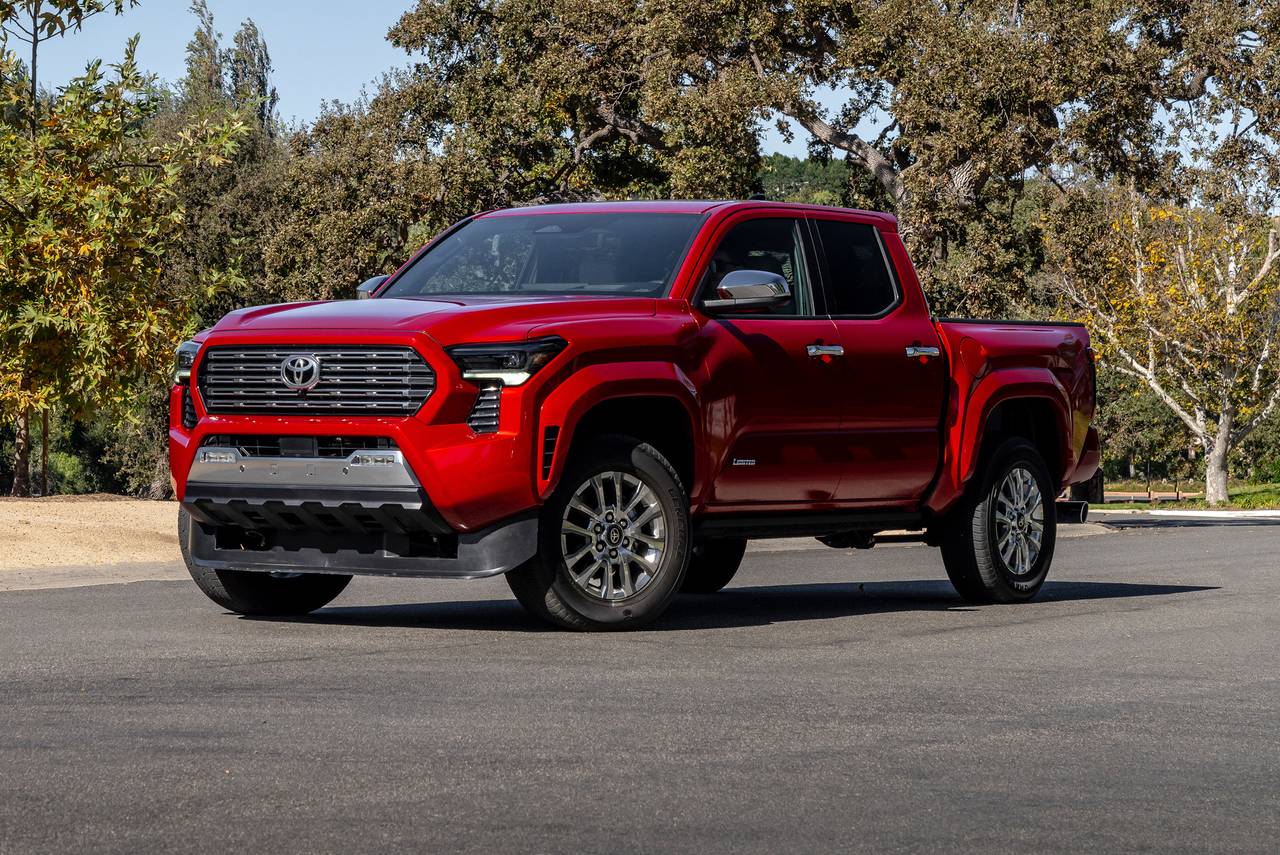
Toyota has reclaimed the top position in Consumer Reports’ 2026 vehicle-reliability rankings, moving ahead of Subaru after the Japanese automaker led the previous year’s survey.
Subaru finished second, while Lexus took third place, creating a top three dominated by brands closely connected through shared engineering, long-standing manufacturing discipline, and conservative product-development strategies.
The result is important because reliability remains one of the strongest influences on new-car buying decisions.
A vehicle can offer striking design, strong acceleration, large screens, and advanced driver-assistance technology, but buyers still care about whether it will start every morning, avoid expensive repairs, retain its value, and remain dependable after warranty coverage expires.
Consumer Reports’ reliability rankings are based on survey responses from vehicle owners, who report problems across a range of categories.
These include engine and transmission issues, electrical faults, infotainment glitches, climate-control failures, suspension problems, body hardware concerns, and other ownership complaints. The organization uses those responses to predict reliability for new models and rank brands.
Toyota’s return to first place does not mean every Toyota is problem-free, and Subaru’s drop to second does not mean it has become unreliable.
The difference between leading brands can be small, and individual model performance matters more than a badge alone. Still, the ranking shows that Toyota’s broad lineup has regained enough consistency to move past Subaru in the latest study.
Also Read: 10 Hidden Features In The Toyota Tacoma
Toyota’s Return Is Built on Familiar Strengths
Toyota’s reliability reputation was built over decades, not through one standout model or one successful year. The company has traditionally relied on gradual engineering changes, long production cycles, widely shared components, and powertrains that are updated carefully rather than replaced too quickly.
That approach can appear conservative compared with brands that introduce major new technology at a faster pace. But it often reduces the risk of unexpected problems.
Toyota tends to use proven engines, transmissions, hybrid systems, and electronic components across several models, allowing the company to identify issues before they spread through a larger lineup. The 2026 ranking suggests that strategy is working again.
Toyota’s lineup includes some of the industry’s most established nameplates, including the Corolla, Camry, RAV4, Highlander, Prius, Sienna, Tacoma, Tundra, and 4Runner. Many of these vehicles have large owner bases and long production histories, giving Consumer Reports a substantial pool of data.
Hybrid technology is another major advantage. Toyota has spent more than two decades refining its hybrid systems, and its conventional hybrids have generally earned a stronger reliability record than newer plug-in hybrids and many battery-electric vehicles.
The company’s hybrid powertrains use relatively familiar mechanical systems alongside electric motors and batteries that have been developed across multiple generations.
That does not mean Toyota has avoided every problem. The redesigned Tacoma, Tundra, and bZ4X have faced reliability concerns in recent reports, showing that even highly ranked brands can struggle when introducing new platforms, engines, or software systems.
Toyota’s first-place finish reflects the strength of its lineup as a whole, not perfection across every vehicle.
Subaru Remains One of the Industry’s Safest Bets
Subaru’s second-place result should still be viewed as a strong performance. The brand was Consumer Reports’ top-ranked automaker in the previous year’s reliability study, and it also retained the Best Complete Automotive Brand title in Consumer Reports’ 2026 report card.
That broader report card includes reliability, road-test performance, owner satisfaction, and safety, rather than reliability alone.
Subaru’s reliability strength comes from a different version of the same philosophy used by Toyota. The company maintains a relatively focused lineup and shares key components across many of its vehicles.
Its symmetrical all-wheel drive system, boxer engines, infotainment architecture, and vehicle platforms appear across the Crosstrek, Forester, Outback, Impreza, Legacy, Ascent, and other models.
Using common hardware reduces the risk of introducing too many untested systems at once. When Subaru updates a model, it often carries forward proven components rather than completely reinventing the vehicle.
That strategy has helped models such as the Forester and Impreza perform well in reliability surveys. The Crosstrek, Outback, Legacy, and Ascent have also tended to score at or above average in Consumer Reports data, while the Solterra electric SUV has been a weaker point.
Subaru’s challenge is that its lineup is smaller than Toyota’s and more dependent on a limited number of shared technologies. That can be an advantage when those systems work well, but a problem with one major component can affect several models at once.
For 2026, Subaru remains one of the strongest choices for buyers who want all-wheel drive, practical interiors, strong safety equipment, and a proven ownership record. Falling from first to second does not change that.
Lexus Holds Third Place
Lexus finished third in the Consumer Reports reliability ranking, continuing its position as one of the most dependable luxury brands.
The brand benefits from Toyota engineering, but it is not simply a Toyota with more leather and a higher price. Lexus models often use different suspension tuning, interior materials, infotainment systems, body structures, and powertrain calibrations.
Still, the company shares many of Toyota’s core mechanical strengths, including naturally aspirated engines, hybrid systems, and a cautious approach to new technology.
Lexus also led the premium category in J.D. Power’s 2026 U.S. Vehicle Dependability Study for the fourth consecutive year. That study measures problems reported by original owners of 2023-model-year vehicles after three years of ownership. Lexus recorded 151 problems per 100 vehicles, the best result among premium brands.
The two studies use different methods, so their rankings should not be treated as identical. Consumer Reports relies on owner-survey data across a broad range of model years, while J.D. Power focuses on three-year-old vehicles.
Yet both reports point to the same conclusion: Lexus remains one of the safest luxury-brand choices for buyers who want premium comfort without taking on the repair risk often associated with more complex European luxury vehicles.
Why Toyota Moved Back Ahead
Toyota’s rise reflects more than brand loyalty. It reflects how reliability rankings are affected by product cycles.
A brand can fall in the rankings when it launches several new models at once, introduces new engines, adopts a new infotainment system, or shifts to an unfamiliar battery-electric platform. New technology can improve performance and efficiency, but it can also create more opportunities for early problems.
Toyota has faced that issue with some recent launches. The redesigned Tacoma and Tundra have introduced new turbocharged engines and more complicated electronics, while the bZ4X electric SUV represents a newer type of product for the company.
However, Toyota’s lineup remains large enough that established models can offset weaker results from newer vehicles. The Corolla, Camry, Prius, RAV4, Highlander, Sienna, and many Lexus-derived systems continue to provide the company with a dependable foundation.
Subaru, by comparison, has a smaller lineup. Its models perform well, but there are fewer vehicles available to balance out a weaker result from one product. The Solterra, which shares much of its architecture with the Toyota bZ4X, has been one of the brand’s less reliable models in Consumer Reports data.
Toyota’s first-place return also reflects the broader strength of conventional hybrids. Consumer Reports has repeatedly found that traditional hybrids tend to be among the most dependable vehicle types because they combine mature gasoline-engine technology with hybrid systems that have been refined over many years.
Fully electric vehicles and plug-in hybrids have improved, but they have still reported more problems than conventional gasoline cars in recent Consumer Reports surveys.
Reliability Is Becoming More About Software
The 2026 results arrive as automakers face a new reliability challenge: software. Older reliability studies focused heavily on engines, transmissions, rust, suspension wear, and mechanical failures.
Those problems still matter, but modern owners increasingly report issues involving touchscreen systems, phone connectivity, digital instrument displays, driver-assistance sensors, cameras, wireless charging pads, and over-the-air updates.
J.D. Power’s 2026 study found that the industry average rose to 204 problems per 100 vehicles, the highest result since the organization redesigned its study in 2022. Infotainment problems and dissatisfaction with software updates were among the major complaints.
Toyota and Subaru have an advantage because neither company has rushed as aggressively into screen-heavy, software-dependent vehicle designs as some competitors. Their vehicles still use digital technology, but their product strategies remain more cautious than brands trying to turn every car into a constantly updated software platform.
That restraint may not make their cabins feel as futuristic as the newest electric luxury vehicles. It can, however, reduce the number of systems that may create frustration for owners over time.
What Buyers Should Take From the Rankings
The most important lesson is that reliability should be evaluated at the model level, not only the brand level.
A Toyota Corolla Hybrid may be a safer long-term choice than a newly redesigned Toyota truck. A Subaru Forester may have a different reliability outlook than a Solterra EV. A Lexus ES may have a different ownership profile than a high-performance Lexus model with newer technology.
Buyers should use brand rankings as a starting point, then research the specific vehicle, engine, transmission, and model year they are considering. They should also check recalls, warranty coverage, insurance costs, maintenance requirements, and owner complaints.
A high-ranking brand does not guarantee that every vehicle will be trouble-free. A lower-ranked brand does not mean every model is a poor choice. Reliability surveys are most useful when they help buyers narrow their choices before looking closely at individual vehicles.
Toyota’s return to the top of Consumer Reports’ 2026 reliability ranking shows that the company’s cautious engineering strategy still delivers results.
Subaru remains close behind and continues to hold Consumer Reports’ broader Best Complete Automotive Brand title. Lexus rounds out a Japanese-led top three while also maintaining its position as the leading premium brand in J.D. Power’s long-term dependability study.
For buyers, the rankings reinforce a familiar message: proven powertrains, gradual updates, shared components, and restrained technology often produce the strongest ownership experience.
Also Read: 10 Cars Worth More Used Today Than Their Original MSRP
