
Toyota built its global reputation with dependable sedans, practical SUVs, and pickup trucks capable of accumulating hundreds of thousands of miles. Yet the Japanese manufacturer has also created historically significant sports cars and rare performance machines that collectors have valued at extraordinary prices.
Documented auction results show that individual Toyota vehicles have sold for more than $2 million in the United States, challenging the long-standing belief that seven-figure collector values are reserved mainly for European exotics.
This ranking uses documented public auction sales and places the cars according to the highest significant sale figures attached to specific Toyota vehicles.
Charity auctions are clearly identified because the winning bid can reflect both the car’s importance and the fundraising purpose. Records from Gooding & Company, Barrett-Jackson, Toyota’s U.S. pressroom, and manufacturers’ historical specifications provide the factual basis for the leading entries.
Rarity alone does not explain these prices. Competition history, first-production status, unique specifications, and connections to influential figures can completely change what a buyer is willing to pay.
The eight Toyotas in this ranking demonstrate how a brand best known for sensible transportation also produced cars important enough to become major collector pieces.
Also Read: 10 Car Brands Most Likely to Cross 250,000 Miles
1. 1967 Toyota-Shelby 2000 GT
No Toyota has produced a more dramatic documented auction result than chassis MF10-10001. At Gooding & Company’s 2022 Amelia Island auction, this 1967 Toyota-Shelby 2000 GT sold for $2,535,000. Gooding identified the result as a world record for the Toyota marque and, at the time of the sale, the highest auction price achieved by a Japanese car.
The reason for that figure goes far beyond the standard 2000GT’s established collector status. This car was one of the examples associated with Carroll Shelby’s Toyota racing program. Toyota turned to Shelby American as part of an effort to establish the 2000GT in American production-car racing.
Only three 2000GTs were prepared for the program, giving this particular machine a competition connection that ordinary road-going examples cannot duplicate.
Chassis MF10-10001 carries another important distinction. Gooding & Company identified it as the first serial-numbered 2000GT. That combination of an early chassis number, Shelby history, and racing significance created a level of provenance rarely found in Japanese collector cars.
The $2.535 million result becomes easier to understand when the car is viewed as a surviving piece of both Toyota and American motorsport history rather than simply an old sports coupe.
The engineering underneath the body was equally ambitious for its era. Yamaha’s historical specifications list a 1,988 cc DOHC inline-six producing 150 PS and 176.5 Nm of torque. Converted for a U.S.-focused comparison, that torque figure is approximately 130 lb-ft.
The same factory’s historical data records a length of 4,175 mm and a width of 1,600 mm, equal to roughly 164.4 inches and 63.0 inches.
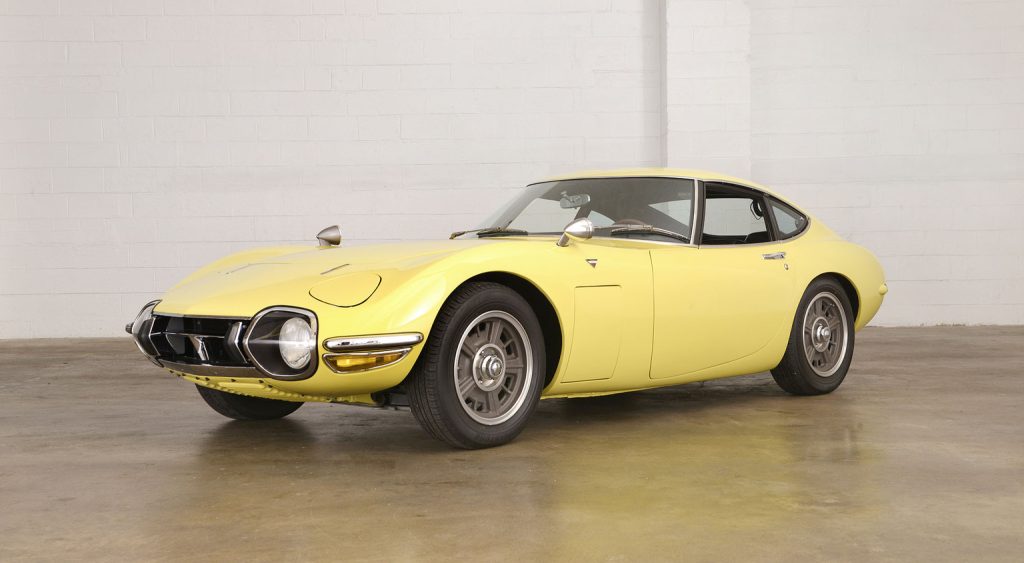
The 2000GT was Toyota proving that a Japanese manufacturer could build a sophisticated, high-performance grand tourer. MF10-10001 added Carroll Shelby and genuine competition history to that foundation. A wide record-setting sale remains the strongest documented evidence of just how valuable the right Toyota can become.
- Engine: 2.0-liter DOHC inline-six
- Torque: Approximately 130 lb-ft
- Horsepower: 150 PS, approximately 148 hp
- Length/Width: 164.4 inches / 63.0 inches
2. 2020 Toyota GR Supra Global #1
A completely different kind of value pushed the first production fifth-generation Toyota GR Supra to $2.1 million. The car crossed the block at the 2019 Barrett-Jackson Scottsdale auction, where its winning bid benefited the American Heart Association and the Bob Woodruff Foundation.
Toyota’s U.S. pressroom confirmed both the $2.1 million result and the car’s status as the first production 2020 GR Supra, known as “Global #1.”
This was not a normal market transaction, and that distinction matters. The sale was a charity auction, meaning the $2.1 million price should not be interpreted as the ordinary collector value of a 2020 Supra.
Buyers at major charity events may bid far beyond conventional vehicle values because the money supports designated causes. Still, the transaction is a documented U.S. auction sale of a Toyota, earning Global #1 its position in this ranking.
Toyota made sure the car itself could not be confused with a standard dealership example. The first-production Supra received a one-off matte gray exterior, red mirror caps, matte black wheels, and a red interior.
Toyota CEO Akio Toyoda also signed the car’s dashboard. Its VIN ended in 20201, a deliberate reference to the 2020 model year and its status as production number one.
Mechanically, Global #1 represented the U.S.-specification Supra at launch. Toyota announced a turbocharged 3.0-liter inline-six with 335 horsepower and 365 lb-ft of torque for the 2020 model.
Those figures were sent through an eight-speed automatic transmission to the rear wheels. The U.S. launch specification measured 172.5 inches long and 73.0 inches wide, making the reborn Supra a compact two-seat sports car rather than a large grand tourer.
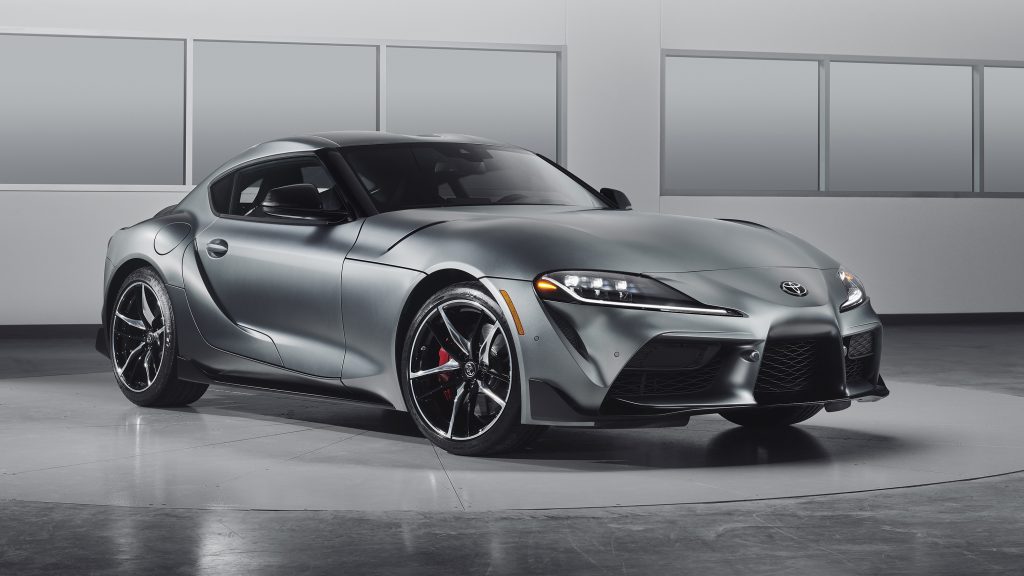
Its price came from a mixture of first-production significance, special presentation, Supra nostalgia, and philanthropy. Unlike the Shelby 2000 GT, this car did not need decades of racing history to reach seven figures.
It became valuable at the very beginning of its life because it marked the official production return of one of Toyota’s most recognizable performance names after a lengthy absence from the U.S. new-car market.
- Engine: 3.0-liter turbocharged inline-six
- Torque: 365 lb-ft
- Horsepower: 335 hp
- Length/Width: 172.5 inches / 73.0 inches
3. 1967 Toyota 2000GT MF10-10134
Before the Shelby-prepared 2000GT reset the Toyota auction record in 2022, another 1967 example had already demonstrated that Japan’s collector cars could break the seven-figure barrier.
Chassis MF10-10134 sold for $1,155,000 at RM Auctions’ Don Davis Collection sale in Fort Worth, Texas, in April 2013. The result was a landmark at the time, setting an auction record for the 2000GT and a production Japanese automobile.
What made the transaction especially important was the car’s place within the regular production story. It was not sold as a modern charity vehicle, and it did not rely on the competition provenance carried by the Shelby machine at the top of this ranking.
Instead, collectors were bidding on an exceptionally rare left-hand-drive 2000GT from one of Toyota’s most ambitious engineering programs.
The 2000GT’s scarcity has always been central to its desirability. Production was extremely limited, while U.S.-market, left-hand-drive cars represented only a small part of the total run.
Toyota created the model at a time when Japanese manufacturers were still working to establish serious performance credentials internationally. Its low body, long hood, covered headlamps, and carefully shaped cabin gave it an identity completely removed from Toyota’s practical passenger cars.
Mechanical sophistication strengthened the car’s reputation. The 1,988 cc inline-six used a double-overhead-cam cylinder head and produced 150 ps. Triple carburetors, a five-speed manual transmission, four-wheel disc brakes, and independent suspension made the specification unusually advanced for a Japanese road car of the late 1960s.
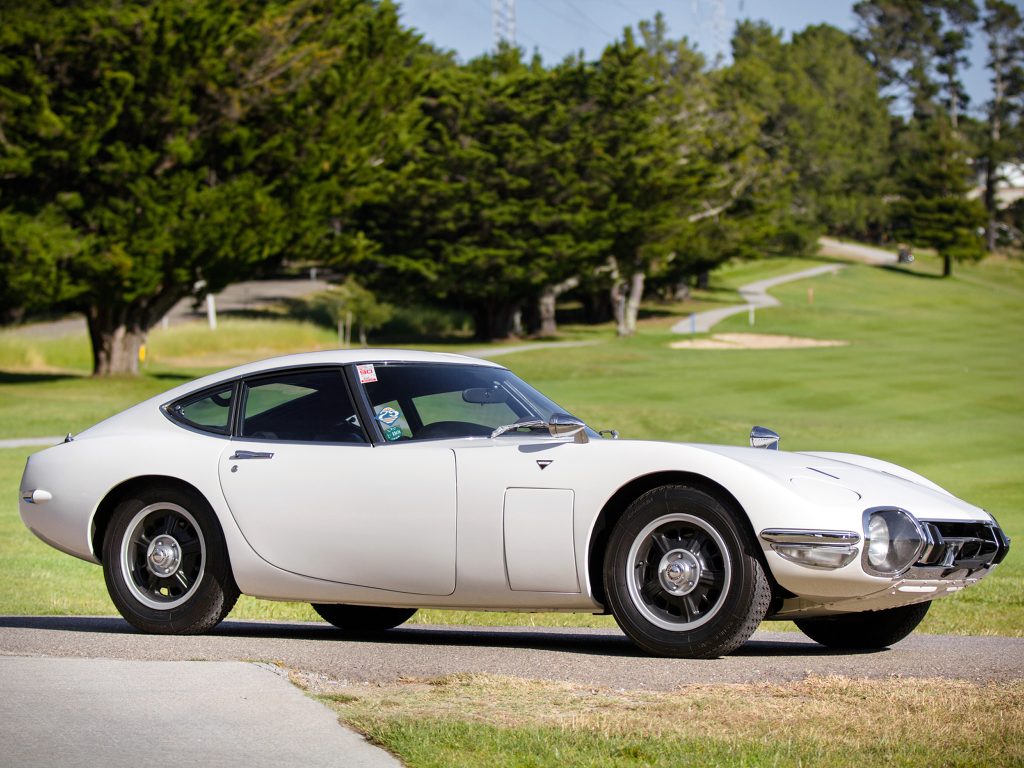
Toyota’s historical material also credits the 2000GT with a top speed of 137 mph, a figure that reinforced its genuine high-performance intentions. The $1.155 million sale was more than an expensive purchase. It became a major moment in the international recognition of Japanese collector cars.
Years before multimillion-dollar Supras and Shelby-connected Toyotas appeared at auction, MF10-10134 proved that collectors were prepared to pay European-exotic money for the right Toyota.
- Engine: 2.0-liter DOHC inline-six
- Torque: Approximately 130 lb-ft
- Horsepower: 150 PS, approximately 148 hp
- Length/Width: 164.4 inches / 63.0 inches
4. 2022 Toyota Tundra Capstone VIN 001
A pickup truck might seem like an unexpected entry among Toyota’s most expensive auction vehicles, but the first 2022 Tundra Capstone carried unusual significance. At the 2022 Barrett-Jackson Scottsdale auction, VIN 001 sold for $700,000.
The truck was auctioned for charity, with proceeds supporting the Toyota U.S. Paralympic Fund. Together with a second early-production Tundra TRD Pro that brought $550,000, the two trucks generated more than $1.2 million.
The Capstone was important because it represented a new luxury direction for Toyota’s full-size pickup. Positioned at the top of the third-generation Tundra range, the trim combined serious truck capability with features intended to compete in the increasingly expensive premium pickup market.
The VIN 001 designation gave the auction vehicle a direct production milestone that no later Capstone could reproduce. Rather than fitting the truck with a traditional V8, Toyota used its i-FORCE MAX hybrid system. A 3.4-liter twin-turbocharged V6 worked with an electric motor integrated into the powertrain.
U.S. specifications rated the combination at 437 horsepower and 583 lb-ft of torque. Those figures were substantial enough to give the Tundra its strongest factory powertrain at the time while also signaling Toyota’s move away from the previous generation’s naturally aspirated V8.
Luxury details separated the Capstone from ordinary work-oriented pickups. Toyota equipped the flagship trim with 22-inch wheels, semi-aniline leather-trimmed seating, acoustic front side glass, a panoramic moonroof, and upscale interior finishes.
The CrewMax configuration also gave passengers a spacious four-door cabin, helping the truck serve as a luxury vehicle without abandoning its pickup body.
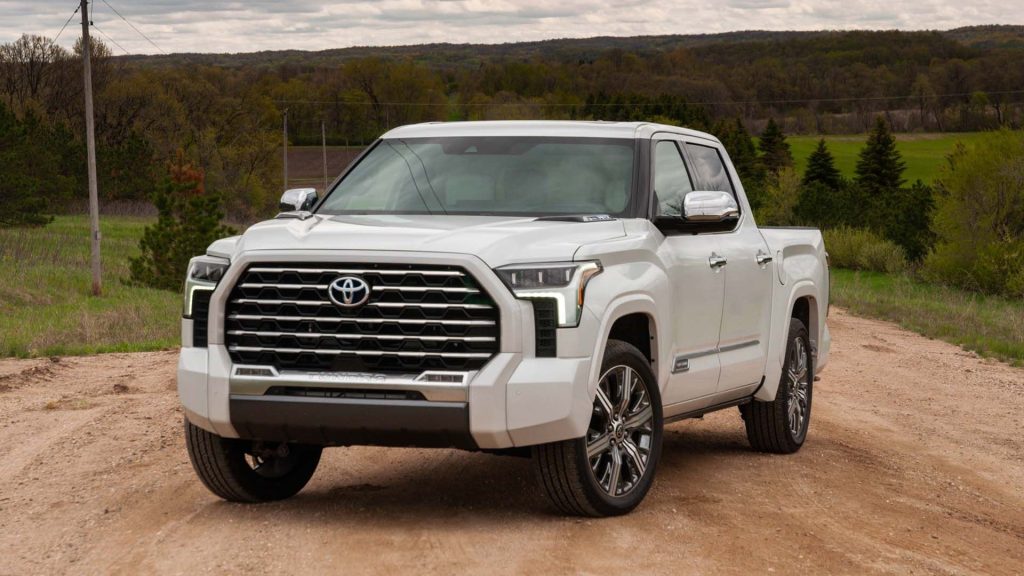
Its $700,000 auction price should not be confused with normal resale value. Charity bidding and first-production status were decisive factors in the result. Even with that qualification, the transaction remains documented and historically notable.
Few Toyota pickup trucks have ever generated a comparable winning bid, making Capstone VIN 001 one of the most expensive individual Toyota vehicles publicly sold in the United States.
- Engine: 3.4-liter twin-turbocharged V6 i-FORCE MAX hybrid
- Torque: 583 lb-ft
- Horsepower: 437 hp
- Length/Width: 233.6 inches / 80.2 inches
5. 2022 Toyota Tundra TRD Pro VIN 002
Toyota’s redesigned full-size truck generated another extraordinary charity result when the 2022 Tundra TRD Pro VIN 002 crossed the Barrett-Jackson auction block in Scottsdale.
The winning bid reached $550,000, with 100 percent of the hammer price benefiting the Toyota U.S. Paralympic Fund. Barrett-Jackson described VIN 002 as one of the first two Toyota 4×4 hybrid pickups sold in North America.
There is an important distinction between this truck and the Capstone listed earlier. Although both came from the third-generation Tundra family, VIN 002 represented the off-road-focused TRD Pro configuration rather than Toyota’s luxury-oriented Capstone trim.
Its identity was built around trail capability, aggressive chassis equipment, and the new electrified powertrain. The early VIN added a production milestone that an ordinary dealership Tundra could never recreate.
Power came from Toyota’s i-FORCE MAX twin-turbocharged V6 hybrid system. Barrett-Jackson’s auction documentation lists 437 horsepower and 583 lb-ft of torque, with a 10-speed automatic transmission handling power delivery.
The electric motor was incorporated into the powertrain to supplement the gasoline engine, helping the new Tundra produce substantially more torque than many buyers expected after Toyota retired the previous truck’s naturally aspirated V8.
TRD Pro hardware gave the pickup a purpose beyond straight-line output. The 2022 U.S.-spec truck used FOX internal-bypass shocks, a TRD front stabilizer bar, an aluminum front skid plate, and a suspension lift designed to improve its off-road stance.
Toyota also fitted all-terrain tires and model-specific visual details. This was a factory-developed trail truck, not a standard Tundra decorated with an appearance package.
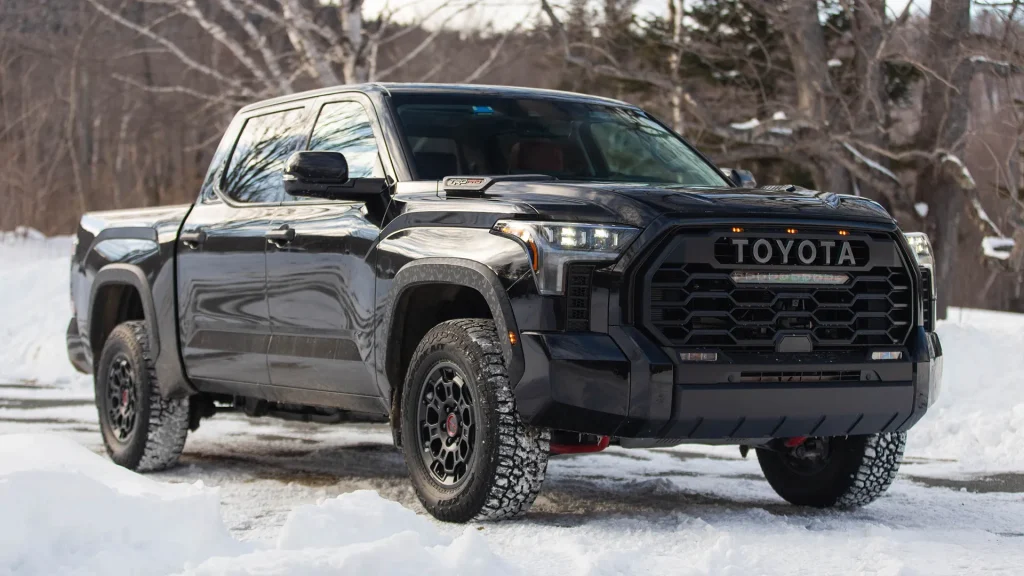
The $550,000 bid cannot be treated as the normal market value of a 2022 TRD Pro. Charity auctions operate under different financial circumstances, and the donation component can push bids far beyond retail pricing.
Even so, the transaction is documented, the vehicle’s early-production identity is clear, and the hammer price places VIN 002 among the costliest individual Toyota vehicles sold at a major U.S. auction.
- Engine: 3.4-liter twin-turbocharged V6 i-FORCE MAX hybrid
- Torque: 583 lb-ft
- Horsepower: 437 hp
- Length/Width: 233.6 inches / 80.2 inches
6. 1967 Toyota 2000GT MF10-10100
Chassis MF10-10100 tells a collector-car story shaped by rarity, long-term ownership, and a carefully documented restoration. When RM Sotheby’s offered the car as part of the Elkhart Collection in 2020, bidding ended at $912,500.
The auction house identified it as one of only 62 original left-hand-drive, U.S.-market 2000GT examples, immediately separating it from the larger group of right-hand-drive cars produced for other markets.
Its history adds substance to the price. According to RM Sotheby’s auction record, the Toyota spent more than 30 years with its original owner, American racer Otto Linton. Long-term ownership can be especially valuable in the collector market because it may create a clearer historical chain than a car that has repeatedly changed hands.
MF10-10100 later received restoration work from Maine Line Exotics and was returned to its original Solar Red finish.
The 2000GT was already an expensive proposition when new. RM Sotheby’s historical material states that Toyota priced the model at more than $7,000 in 1967, approximately $1,000 above the Jaguar E-Type and Porsche 911 and more than $2,500 beyond a Chevrolet Corvette at the time.
That pricing helps explain why the Toyota was rare from the beginning. It was a costly halo car from a Japanese manufacturer still establishing its performance image in the American market.
Beneath the compact body sat a 2.0-liter twin-cam straight-six paired with a five-speed manual transmission. Four-wheel disc brakes and independent suspension gave the Toyota an advanced mechanical specification for its period. Rather than relying on huge displacement, the 2000GT used a sophisticated engine and lightweight sports-car philosophy to demonstrate Toyota’s engineering ability.
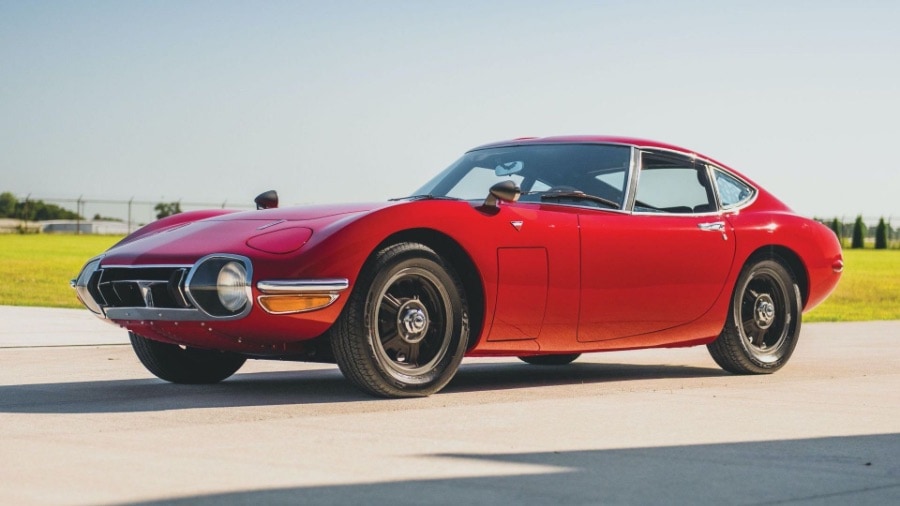
MF10-10100’s $912,500 result was therefore driven by more than the badge on its hood. U.S.-market rarity, left-hand drive, a lengthy connection to Otto Linton, and specialist restoration created a highly specific collector profile. RM Sotheby’s documented sale confirms that even without Shelby racing history, a properly presented 2000GT with distinguished provenance can approach the million-dollar level.
- Engine: 2.0-liter DOHC inline-six
- Torque: Approximately 130 lb-ft
- Horsepower: 150 PS, approximately 148 hp
- Length/Width: 164.4 inches / 63.0 inches
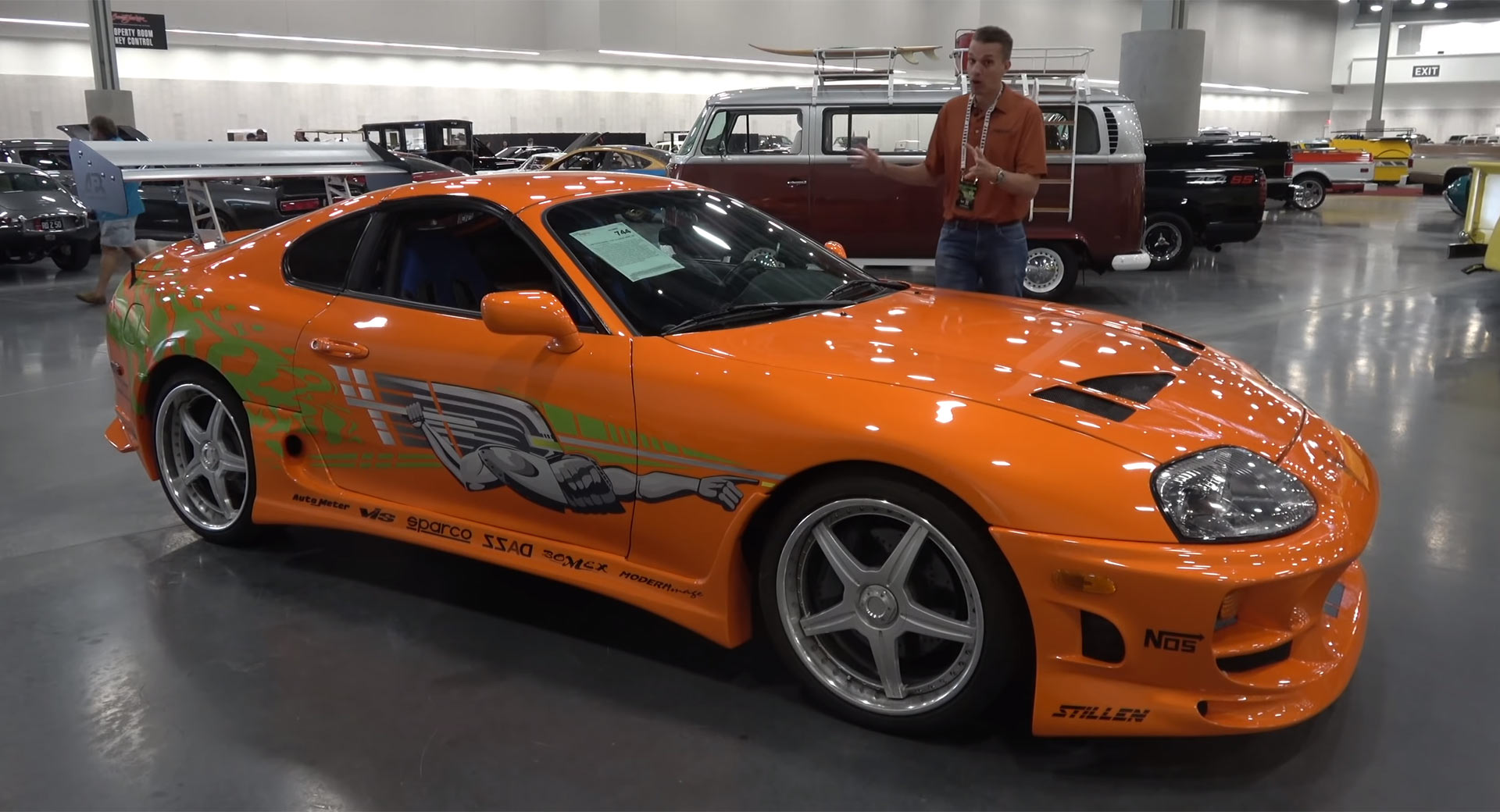
7. 1994 Toyota Supra From The Fast and the Furious
Few Toyotas possess a screen identity strong enough to change their value completely, but the orange 1994 Supra associated with The Fast and the Furious is an exception. At Barrett-Jackson’s 2021 Las Vegas auction, the movie car generated a $550,000 sale price.
Contemporary reporting on the transaction noted a $500,000 hammer bid plus auction fees, while Barrett-Jackson publicized the result at $550,000. The price placed the car in rare financial territory for an A80-generation Supra. This Supra’s importance begins with its on-screen role. Paul Walker drove the car as Brian O’Conner in the 2001 film The Fast and the Furious.
Built by Eddie Paul at The Shark Shop in California, the Toyota became part of the movie’s climactic action and helped turn the fourth-generation Supra into a global pop-culture symbol. The same vehicle was later altered for 2 Fast 2 Furious before eventually being restored to its recognizable orange movie appearance.
Its visual specification is almost as famous as the Toyota badge itself. The Lamborghini Diablo Candy Orange paint, Bomex front spoiler and side skirts, APR rear wing, Dazz Motorsport Racing Hart M5 wheels, and elaborate side graphics recreated the image audiences associated with Brian O’Conner’s Supra.
Inside, the presentation included movie-related details designed to preserve the car’s cinematic identity.
The mechanical reality is particularly interesting. This was not the heavily modified twin-turbo hero car that its movie storyline might suggest. Auction information identified the car with Toyota’s naturally aspirated 2JZ-GE 3.0-liter inline-six and a four-speed automatic transmission.
U.S. specifications for the naturally aspirated 1994 Supra rated the engine at 220 horsepower and 210 lb-ft of torque. That makes the car’s $550,000 result a powerful example of provenance outweighing raw factory performance.
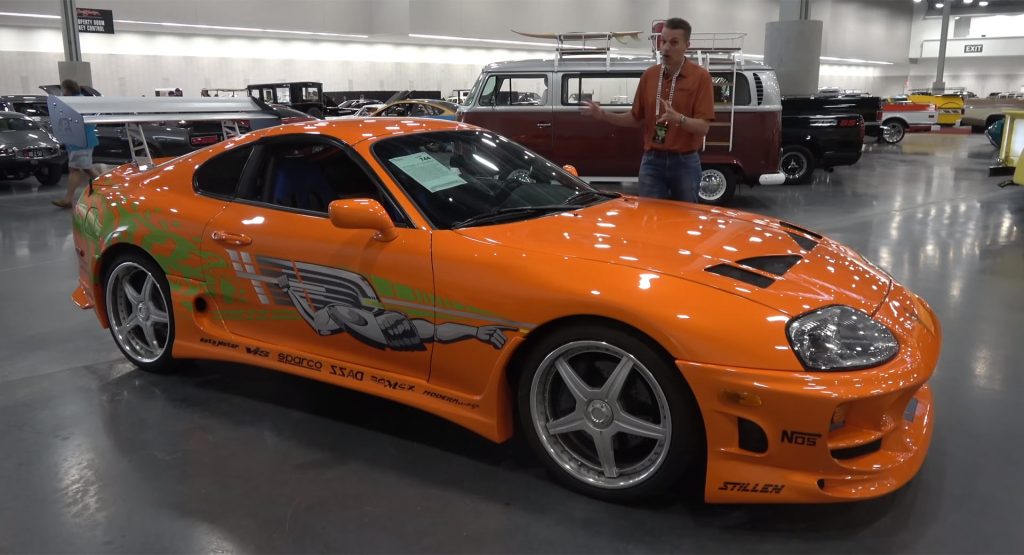
Collectors were buying a physical piece of modern automotive cinema. Countless modified Supras have copied its appearance, but only a limited number of genuine film cars can claim direct production history.
This example’s connection to Paul Walker’s character and one of the most influential car films of the 21st century created value that mileage, horsepower, and ordinary condition guides could never calculate.
- Engine: 3.0-liter naturally aspirated 2JZ-GE inline-six
- Torque: 210 lb-ft
- Horsepower: 220 hp
- Length/Width: 177.8 inches / 71.3 inches
8. 1968 Toyota 2000GT MF10-10136
A Solar Red 1968 Toyota 2000GT, chassis MF10-10136, delivered another remarkable auction result at RM Auctions’ 2013 Monterey sale. The car sold for $935,000, confirming that collector demand for Toyota’s landmark sports car extended beyond a single record-setting example.
RM Sotheby’s archived auction record documents the sale figure, chassis number, engine number, and the car’s U.S. auction location in Monterey, California.
MF10-10136 approached the market with engineering specifications that still read impressively for a Japanese performance car conceived during the 1960s. RM’s auction documentation described a 2,000 cc Yamaha aluminum DOHC inline-six using triple Solex twin-choke side-draft carburetors.
The engine produced 150 bhp and was connected to a five-speed fully synchronized manual transmission with overdrive. Four-wheel independent suspension and power-assisted Dunlop disc brakes at all four corners added technical depth to the package.
Toyota was not chasing mass-market sales when it developed the 2000GT. The company wanted a machine capable of demonstrating that Japanese engineering belonged in the same international conversation as established European sports cars.
The car’s low roof, tightly proportioned two-seat cabin, long hood, and restrained bodywork gave it an instantly recognizable shape. More importantly, its sophisticated chassis ensured that the design was supported by serious mechanical ability.
The 2000GT was exceptionally scarce from the beginning. RM Sotheby’s records state that only 351 examples were built before production ended in 1970.
Period pricing above $7,000 also made the Toyota more expensive than both the Jaguar E-Type and Porsche 911 by roughly $1,000, while its price exceeded a contemporary Corvette by more than $2,500.
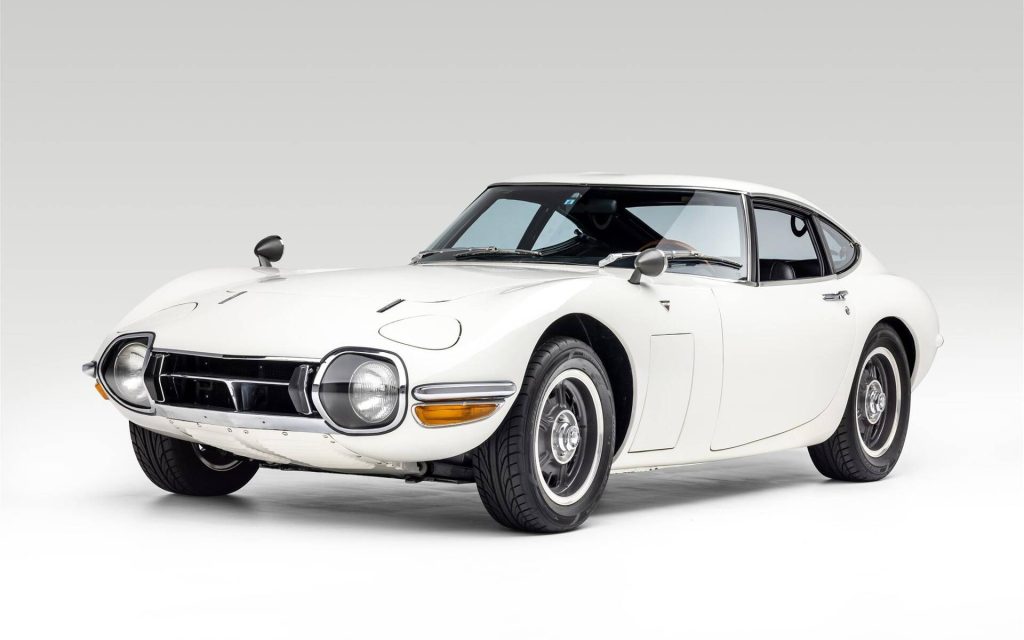
That historical context helps explain MF10-10136’s $935,000 result. Buyers were not evaluating it like an ordinary vintage Toyota. They were competing for one of the earliest Japanese halo sports cars to gain lasting international collector recognition.
Its Yamaha-developed twin-cam engine, tiny production run, and documented Monterey sale give the car a financial history worthy of a place among the costliest Toyotas sold at auction.
- Engine: 2.0-liter DOHC inline-six
- Torque: Approximately 130 lb-ft
- Horsepower: 150 bhp
- Length/Width: 164.4 inches / 63.0 inches
Also Read: 10 Cars That Still Comes Without Big Touchscreens
