
Modern cars are engineering marvels of the 21st century. They accelerate faster, crash safer, and pollute less than any vehicle in automotive history. But beneath all that innovation lies a growing and costly problem that millions of car owners are only now beginning to understand.
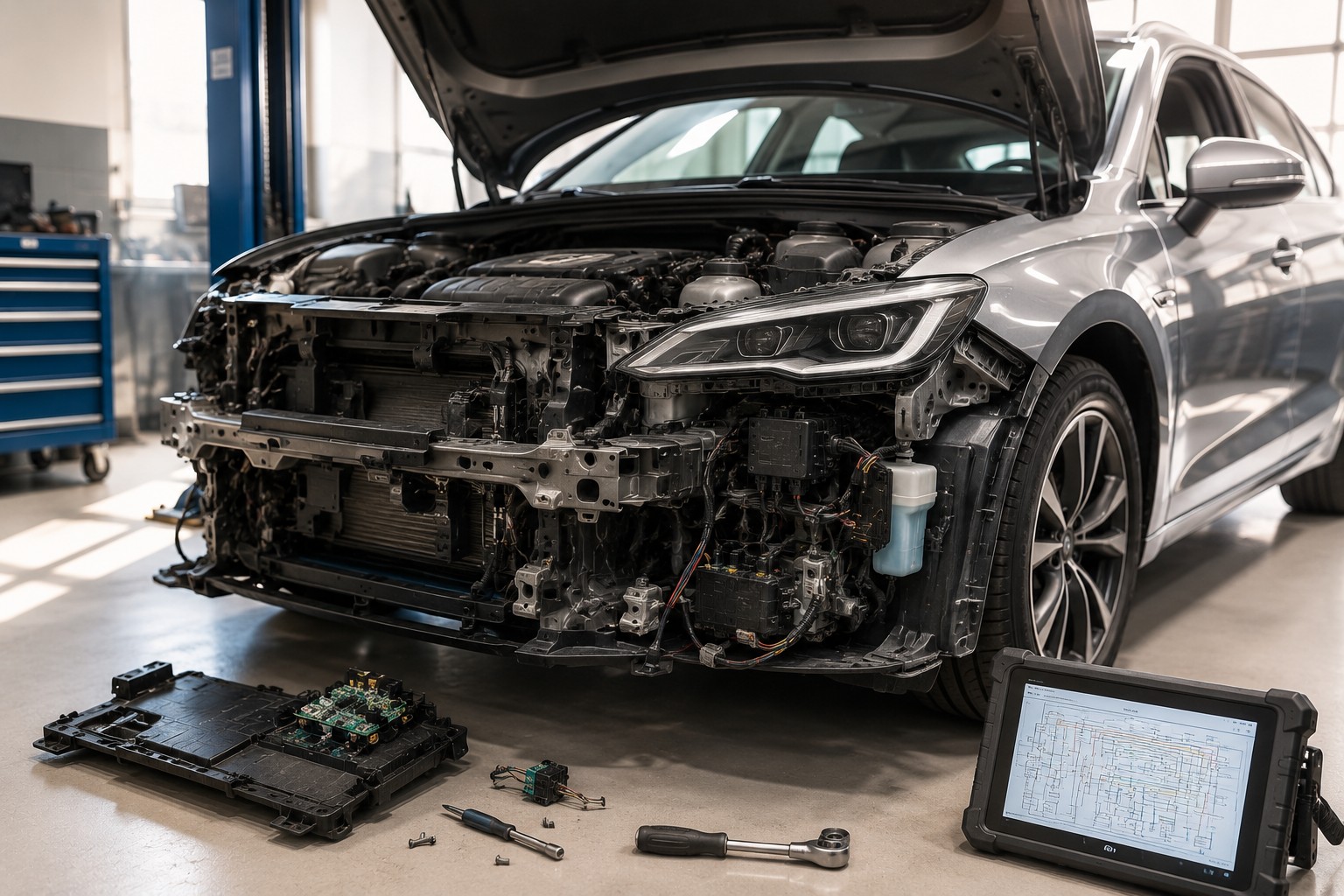
A generation ago, a reasonably skilled home mechanic could fix most common car problems in a driveway. Today, that same person opens the hood and finds sealed modules, proprietary connectors, and software systems that require expensive diagnostic tools just to read. The car has transformed from a mechanical machine into a networked computing platform.
This transformation did not happen randomly. Automakers made calculated design decisions over several decades. Some were driven by genuine engineering demands around safety and emissions. Others were shaped by a powerful corporate incentive controlling the aftermarket repair industry, worth hundreds of billions of dollars globally.
The result is a transportation ecosystem where car owners are increasingly locked out of their own vehicles. Independent mechanics are being squeezed out. Repair costs are climbing faster than inflation. And vehicles that could be fixed are being declared total losses instead.
This article examines the real forces behind why modern cars are so difficult to repair. It covers software lockouts, proprietary supply chains, deliberate design choices, and the multi-billion-dollar industry built on keeping you dependent on the dealership.
Software Has Become the Invisible Wall Between You and Your Car
Modern vehicles are no longer primarily mechanical machines. They are sophisticated computer networks that happen to have engines, wheels, and seats attached to them.
A typical new vehicle sold today contains between 100 and 150 individual Electronic Control Units. These are dedicated microcomputers that manage specific vehicle functions. They govern fuel delivery, transmission shifting, braking force distribution, suspension damping, climate control, lighting, and dozens of other systems simultaneously.
These ECUs do not operate independently. They communicate constantly through internal vehicle networks using protocols like CAN bus, LIN bus, and increasingly Ethernet-based systems. When one module changes its status, it sends signals to others in real time. The car functions as a tightly integrated electronic organism.
When something malfunctions, the relevant ECU stores a Diagnostic Trouble Code. Reading that code sounds simple. But there are two levels of diagnostic access, and the gap between them is enormous.
The consumer-accessible OBD-II port, mandated by U.S. law since 1996, allows generic code readers to access standardized emissions-related fault codes.

Any mechanic or car owner can read these, but the deeper, manufacturer-specific codes, the ones that actually diagnose complex problems, are locked behind proprietary protocols. Accessing them requires official dealer diagnostic hardware that can cost between $5,000 and $25,000 per brand. An independent shop servicing multiple brands cannot realistically afford every system.
This diagnostic gap alone creates an enormous repair advantage for dealerships. Manufacturers like BMW, Mercedes-Benz, Toyota, and General Motors have developed their own dealer-exclusive diagnostic platforms. ISTA for BMW. XENTRY for Mercedes. Techstream for Toyota. Each operates as a proprietary gateway that independent mechanics cannot fully access without licensing agreements or expensive subscriptions.
Software locking has extended even further into physical component replacement. A growing practice called “parts pairing” ties specific components to a vehicle’s central computer using unique identifiers. When a new part is installed, the car’s system checks whether that part has been authorized. If it has not been digitally paired by a manufacturer-authorized technician, the part may function poorly or not at all.
Apple introduced this concept in smartphones with its iPhone parts. Automakers noticed. Tesla, BMW, Stellantis, and others now apply software pairing to components including batteries, cameras, displays, and even door handles. A genuine replacement part from the same manufacturer physically fits perfectly, but electronically refuses to operate until officially registered.
Tesla has been particularly aggressive in this space. Independent researchers and repair advocates have documented cases where Tesla’s systems disabled or limited functionality on vehicles serviced outside the official network. The company has faced legal pressure over these practices in multiple countries.
Automakers publicly justify software integration on the grounds of safety, reliability, and system optimization. They argue that unauthorized parts or improper calibrations can compromise crash avoidance systems, ABS performance, or airbag deployment. These concerns are not entirely without merit for genuinely safety-critical components.
But the same locking mechanisms are applied to components that have no safety implications whatsoever. Interior screens, heated seat functions, and ambient lighting systems on some vehicles require dealer authorization to replace or activate. That has nothing to do with safety. It has everything to do with revenue control.
Software has quietly become the most powerful tool automakers use to maintain dominance over the $500 billion global automotive repair and maintenance industry. You own the car. But increasingly, the manufacturer controls what can be done to it.
Also Read: 6 Trucks With Genuinely Useful Center Consoles vs 6 That Just Took Up Space
Proprietary Parts and the Engineered Destruction of the Independent Supply Chain
Physical component design has changed just as dramatically as software over the past two decades. Automakers have systematically moved away from industry-standard parts toward proprietary components available exclusively through official dealer channels.
In earlier automotive eras, most serviceable components followed shared engineering standards. Brake pads, filters, belts, alternators, and starters were produced to universal specifications. An independent supplier could manufacture a quality replacement part that fit hundreds of vehicle applications. Competition between suppliers kept prices reasonable. Mechanics had genuine choices.
That open ecosystem has been deliberately dismantled across many vehicle categories. Manufacturers now engineer components with unique geometries, connector types, and integrated electronics that serve no engineering purpose other than making third-party replication difficult.
These parts carry internal manufacturer codes rather than industry-standard reference numbers. Third-party suppliers cannot easily reverse-engineer or legally replicate them without risking intellectual property disputes.
The problem is compounded by the electronics now embedded in nearly every physical component. A modern vehicle’s headlight assembly is a perfect example of this trend. On a vehicle from the 1990s, a headlight was a sealed beam unit.
On a 2024 luxury vehicle, the headlight assembly contains adaptive LED modules, a stepper motor for directional movement, integrated rain sensors, a dedicated control module communicating on the vehicle network, and a proprietary connector. The cost difference between replacing these two items is staggering from approximately $30 to over $2,000.
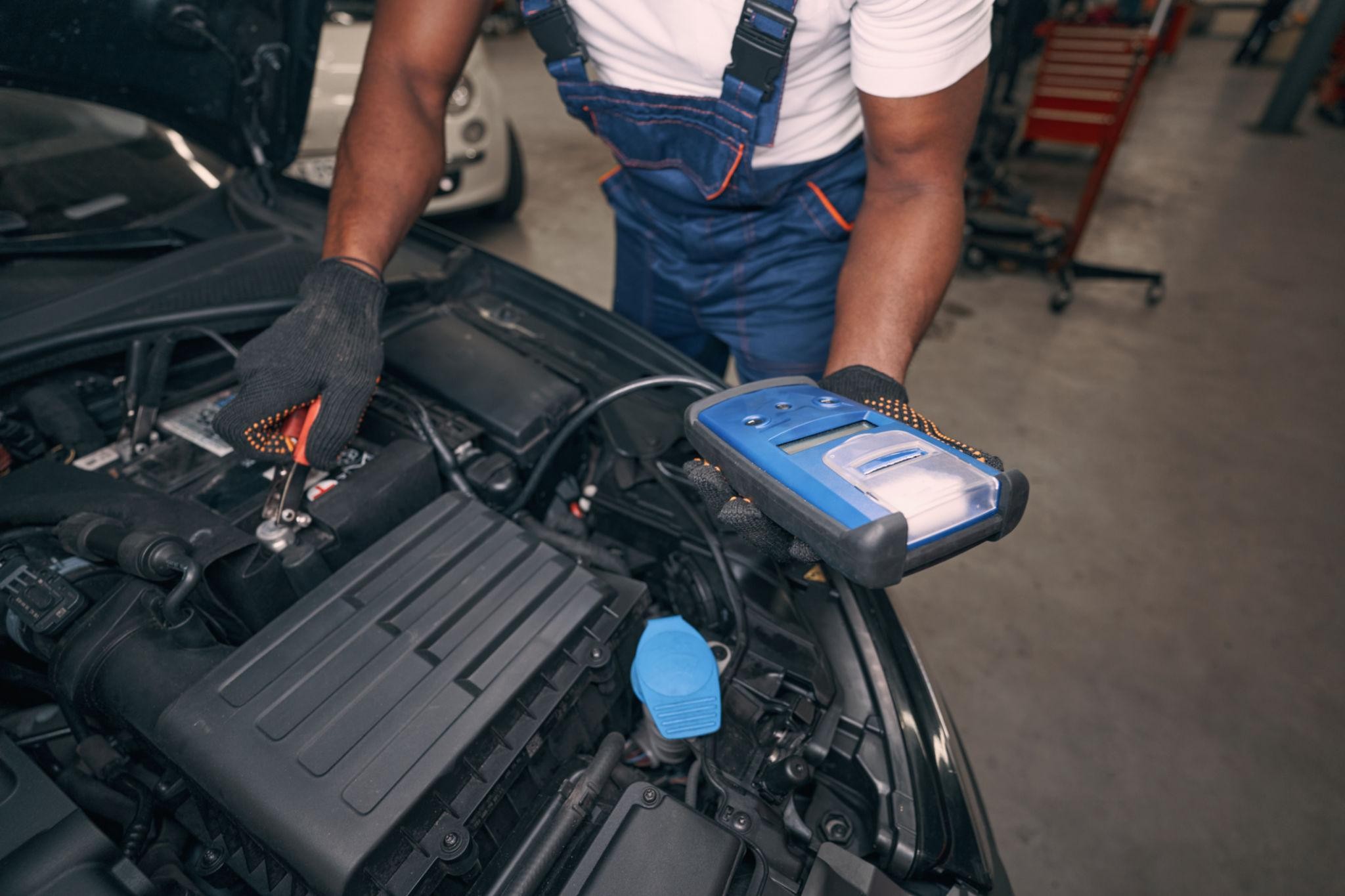
Windshields tell a similar story. Camera-based driver assistance systems lane keeping, automatic emergency braking, and traffic sign recognition, rely on cameras mounted directly behind the windshield. The camera’s angle, position, and calibration are critical to accurate system performance. When a windshield is replaced, the camera must be recalibrated using a specialized target board and diagnostic software.
This recalibration process, called ADAS (Advanced Driver Assistance Systems) calibration, requires equipment that costs between $3,000 and $60,000, depending on the system. Most independent auto glass shops cannot perform it. Customers are frequently referred back to dealers for this single step, adding several hundred dollars to what was once a routine repair.
The same pattern appears across steering, suspension, braking, and exhaust systems. Electronic power steering racks require software initialization after replacement.
Brake corner modules with integrated wheel speed sensors and electronic parking brake actuators need coding after installation. Even replacing a simple battery on many modern European vehicles requires registering the new battery’s specifications with the car’s energy management system, a step that, if skipped, can cause premature battery failure and charging irregularities.
Automakers have also used the concept of “lifetime” fluids and sealed components as a profitability tool disguised as a convenience feature. Transmissions marketed as containing “lifetime” fluid are built without serviceable drain plugs or easy dipstick access.
The unstated reality is that these transmissions often fail significantly earlier than traditionally serviced units. When they do fail, the sealed design ensures the repair requires dealership-level service on an expensive proprietary unit.
The independent research firm Lang Marketing estimated that the U.S. automotive aftermarket generated over $450 billion annually. Automakers have watched this revenue flow to independent parts manufacturers and repair shops for decades. The shift toward proprietary parts and closed supply chains is, in large part, a corporate strategy to recapture that revenue stream.
Designed to Be Discarded, How Modern Car Construction Kills Repairability
The physical architecture of modern vehicles has fundamentally changed in ways that make traditional repair increasingly impractical. These changes reflect genuine engineering advances in safety and efficiency. But they also have consequences for repairability that are rarely acknowledged in manufacturer marketing.
Decades ago, automotive design gave strong consideration to service access. Engine bays were spacious relative to engine size. Components were mounted with sufficient clearance for tools to reach bolts without gymnastics. Repair manuals were sold in bookstores. Engineering philosophy assumed that technicians would regularly need access to nearly every component.
Modern vehicle packaging is governed by a completely different set of priorities. Pedestrian safety regulations require lower hood lines and specific crumple zone behaviors. Aerodynamic efficiency demands tighter body panel tolerances and lower front ends.
Crash performance standards push structural elements into positions that were previously left open for service access. The result is an engine bay that looks spectacular in promotional photography and is genuinely painful to work on.
Certain notorious examples have become legendary among mechanics. The spark plugs on some Ford 5.4-liter Triton V8 engines used in F-150 trucks and Expeditions were threaded directly into aluminum heads with minimal engagement.
They were positioned so deeply in the cylinder head that removal without the proper technique caused them to break off inside the engine. A spark plug replacement on some configurations became an engine-out procedure. Ford sold millions of these trucks. The design problem was known internally before production.
Modern structural engineering has introduced ultra-high-strength steel (UHSS) and boron steel into vehicle body construction in large quantities. These materials are genuinely superior for crash energy management.
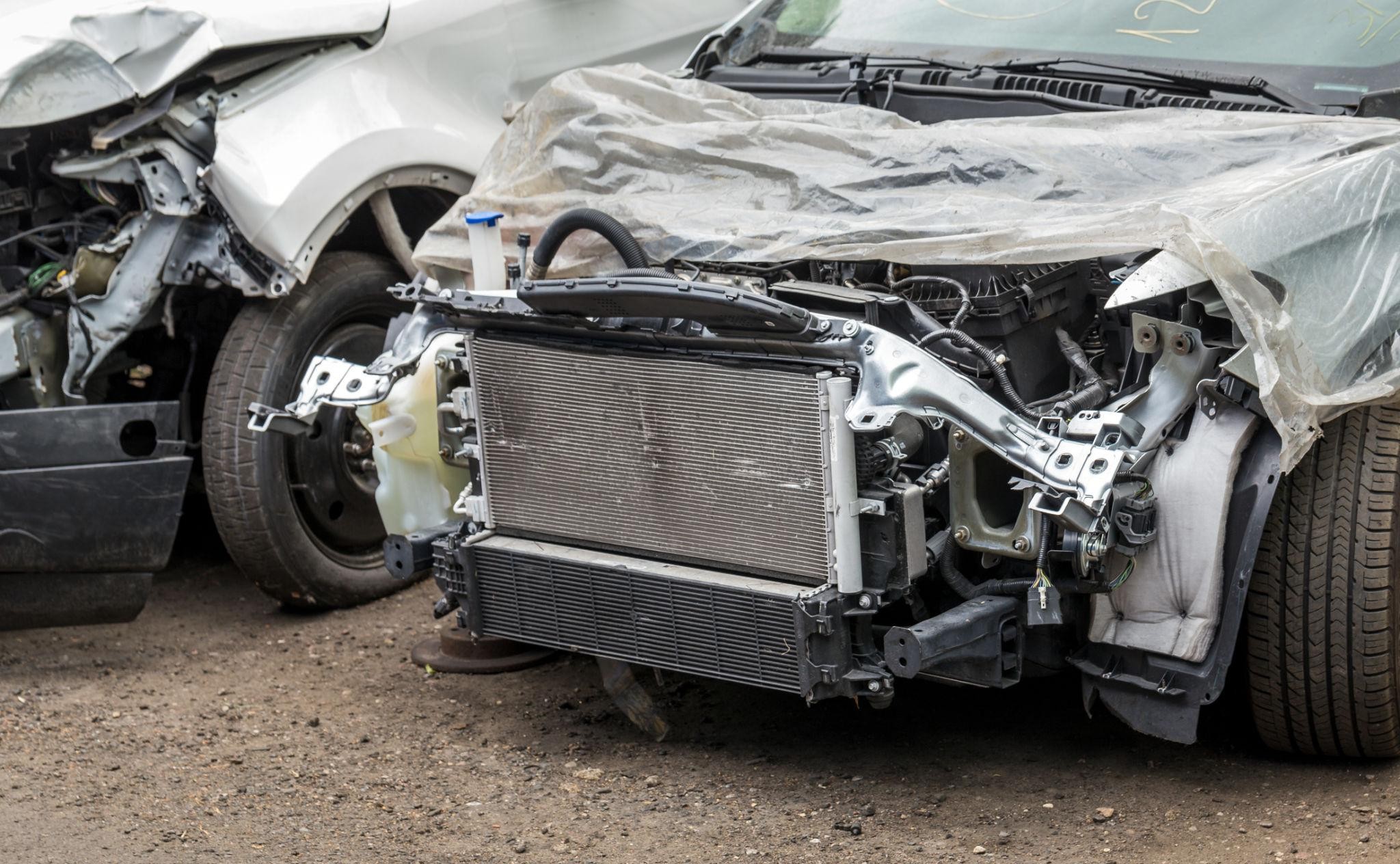
They absorb and redirect collision forces in ways that have dramatically reduced fatalities in modern accidents. But they cannot be straightened, hammered, or heated for reshaping the way conventional steel can. Once deformed, these sections must be cut out and replaced.
Cutting and welding UHSS requires specialized MIG brazing equipment, structural measuring systems, and precise factory repair procedures that many traditional body shops do not possess. Insurance actuaries understand this. When a modern vehicle sustains structural damage that would have been repaired on an older vehicle, insurers increasingly determine that the cost of correct repair exceeds the vehicle’s market value. The car is totaled and crushed.
According to data from CCC Intelligent Solutions, the percentage of collision-damaged vehicles declared total losses has risen steadily over the past decade. In 2023, the total loss threshold was reached more frequently than at any prior recorded point. Many of these vehicles had functioning drivetrains, interiors, and electronics. Only the structural repair cost made them financially unrepairable under current standards.
Adhesive bonding has replaced mechanical fasteners across enormous sections of modern vehicle bodies. Structural adhesives add rigidity, reduce noise, and eliminate the need for spot welds in many areas. They genuinely improve the vehicle as originally assembled. But they make disassembly for repair extremely difficult. Panels bonded with structural adhesive cannot be removed without destroying the bond and often damaging surrounding material.
Aluminum-intensive construction, used extensively by Ford in the F-150 from 2015 onward and by Jaguar Land Rover across their lineup, introduced another repair challenge. Aluminum requires different welding techniques, different tools, and separate work areas to avoid cross-contamination with steel particles that cause corrosion. Many shops had to invest $30,000 to $50,000 in new equipment just to certify the repair of a single vehicle model.
What emerges from examining all three of these forces together, software lockouts, proprietary parts, and architectural complexity, is not a picture of coincidental engineering evolution. It is a portrait of an industry that has systematically redefined the relationship between a product and its owner.
The modern car is extraordinary technology. It is also increasingly a product that you are permitted to use but not permitted to understand, service, or repair on your own terms. The right to repair your vehicle, once assumed, once obvious, has been quietly and profitably engineered away.
Also Read: 4 Trucks With Clutches That Last 200,000 Miles vs 4 That Need Replacing at 60,000
