
When shopping for a pickup truck, most buyers focus on towing capacity, payload ratings, engine power, and off-road credentials. Very few walk into a dealership and ask the salesperson, “How quiet is the cabin?” Yet cabin noise, especially wind noise at highway speeds, is one of the most important factors in long-term driving satisfaction.
A truck that howls and whistles at 70 mph turns every long-distance journey into an exhausting ordeal. One that glides along in near silence makes even the most demanding road trip feel effortless.
Cabin noise in pickup trucks comes from several sources. Wind turbulence builds around the A-pillars, side mirrors, door gaps, and windshield edges as speed increases. Road noise rises from tires, underbody panels, and chassis vibration.
Engine and exhaust noise creep in through the firewall. Automakers combat these intrusions with acoustic glass, active noise cancellation systems, triple-seal door gaskets, sound-deadening floor and door liners, and aerodynamic body shaping.
The good news is that several modern trucks have become impressively refined. The bad news is that others still fall noticeably short, with owners and reviewers describing experiences that sound like “driving with the windows down.”
In this detailed breakdown, we examine four pickups that set the standard for cabin quietness and four that continue to frustrate owners with persistent wind noise problems. Whether you prioritize luxury comfort or simply want to hold a conversation without raising your voice, this guide will help you choose wisely.
4 Pickups With the Quietest Cabins
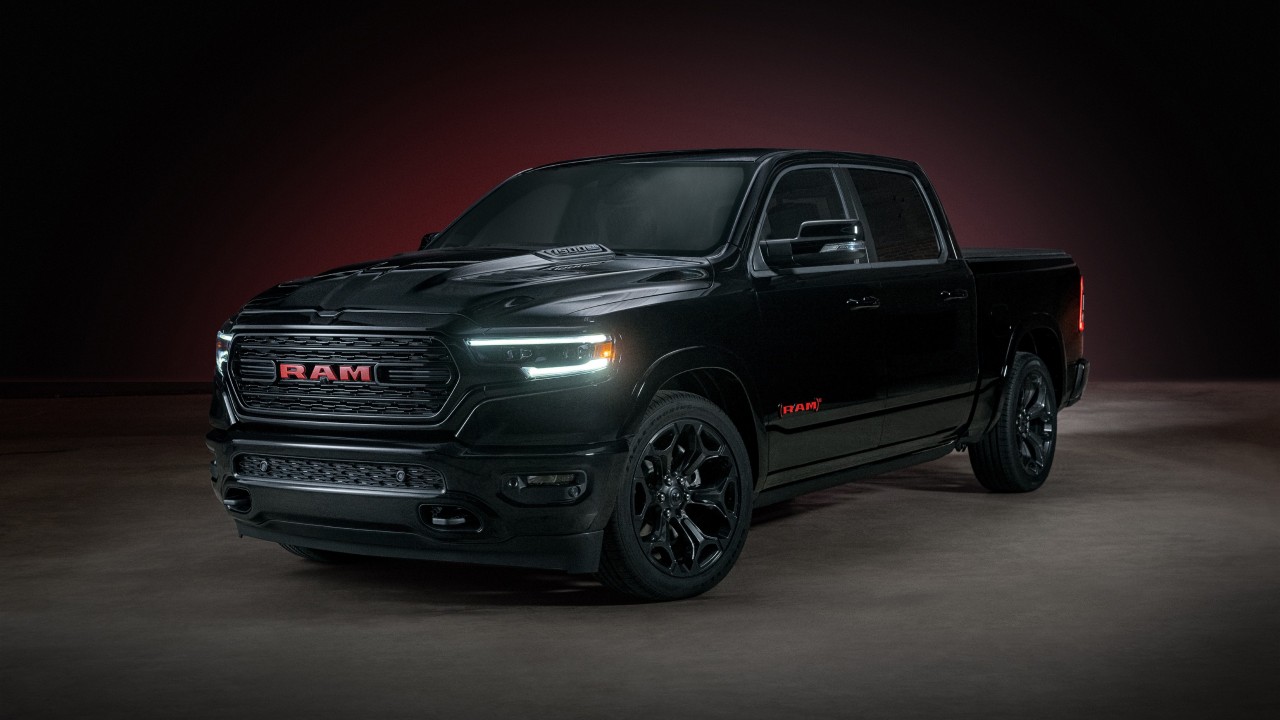
These pickups are known for excellent sound insulation, aerodynamic design, and refined interiors, creating a calm and quiet driving experience even at highway speeds. Models like the Ram 1500, Ford F-150, and GMC Sierra 1500 stand out with acoustic glass, better door sealing, and improved cabin materials that reduce wind and road noise.
The Chevrolet Silverado also offers a well-insulated cabin and smoother ride, helping keep noise levels low on long drives. These trucks are ideal for comfort-focused buyers who want a more premium, peaceful driving environment.
1. Ram 1500
When people talk about luxury and silence in a full-size pickup truck, the conversation almost always begins with the Ram 1500. This truck has spent years building a reputation as the most refined half-ton on the American market. It does not just compete with other trucks for cabin quietness, it competes with premium sedans and luxury SUVs.
The Ram 1500 earned a perfect score in Consumer Reports’ noise level testing for multiple model years in a row. That is a rare achievement in the truck segment, where most pickups struggle to balance toughness with refinement. Ram engineers achieved this by treating the cabin like a sound isolation chamber rather than an afterthought.
Reviewers have consistently described the result as “shockingly quiet for a truck.” One U.S. News expert evaluation noted that the cabin quietness in the Ram 1500 is unrivaled by other full-size trucks from Detroit, particularly if the driver exercises reasonable throttle restraint. The truck earns a 9.5 out of 10 score from U.S. News, partly on the strength of its cabin refinement.
Even the base Tradesman trim benefits from this noise-reduction architecture to a significant degree. As buyers move up to the Laramie, Rebel, or Limited trims, the experience becomes progressively more insulated and luxurious. Higher trim levels add more sound-absorbing materials, softer door seals, and additional layers of acoustic treatment between the outer body panels and the interior.
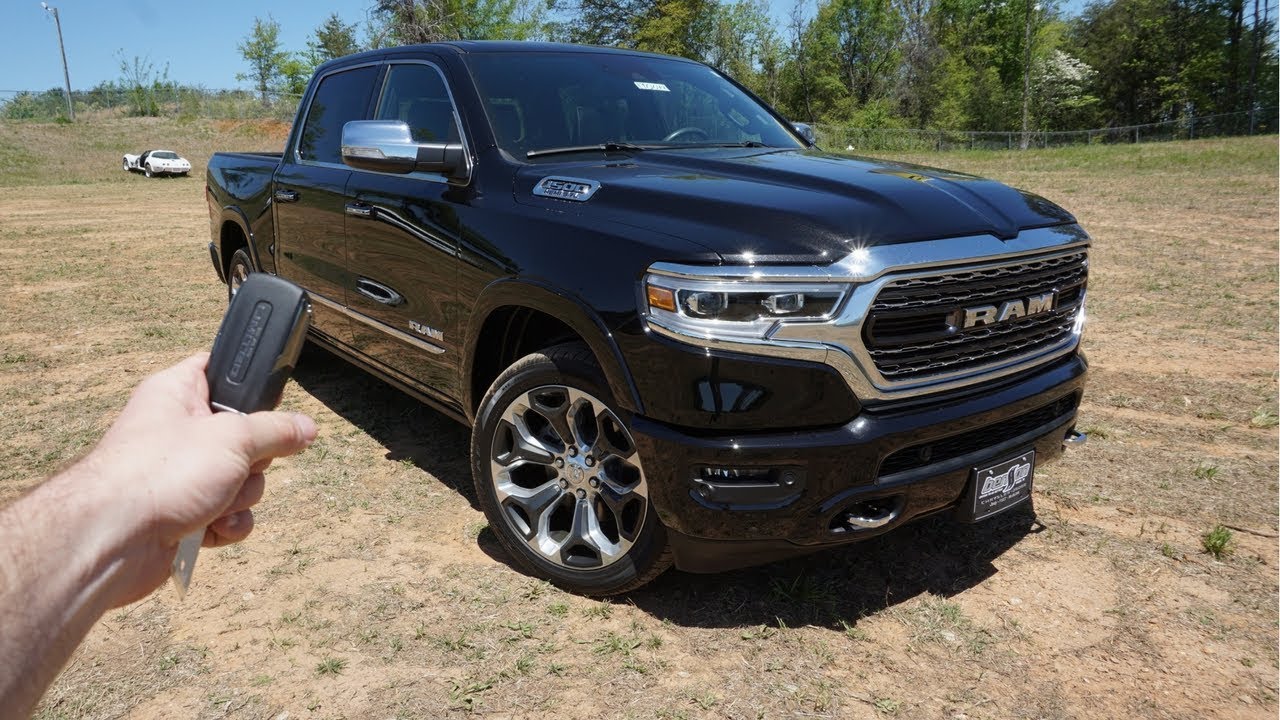
The Ram 1500’s air suspension, available on higher trims, also plays a supporting role in cabin quietness. By providing a smooth, floating ride quality, it reduces the structural vibrations that often transmit noise directly into the cabin through the frame and suspension components. The result is a truck that floats down the road rather than crashing and thudding through imperfections.
On the highway at 70 mph, the Ram 1500 generates cabin noise levels that several automotive testers have measured in the low-to-mid 60-decibel range. That is comparable to a quiet conversation and genuinely remarkable for a body-on-frame pickup truck. Rival trucks typically measure several decibels higher under the same conditions, and even a few extra decibels translate to a significant increase in perceived loudness.
The Ram 1500 proves definitively that a working truck does not have to be a noisy truck. It remains the benchmark that every competitor chases when it comes to cabin refinement and wind noise suppression in the full-size segment.
2. Ford F-150
The Ford F-150 holds the title of America’s best-selling vehicle for over four decades. What few buyers realize is that alongside its legendary capability, the F-150 has quietly become one of the most acoustically refined trucks.
Consumer Reports awarded the F-150 a perfect score in its interior noise testing, placing it alongside the Ram 1500 at the very top of the truck segment for cabin quietness.
Ford’s approach to noise reduction is comprehensive and begins with the glass itself. The company equips the F-150 with its proprietary SoundScreen acoustic windshield technology across a wide range of trims.
This specialized glass features a thickened interlayer membrane sandwiched between two panes, which absorbs and dissipates external noise frequencies that would otherwise pass straight into the cabin. Front door glass on higher trims also carries this acoustic treatment, creating an additional barrier against wind and road noise.
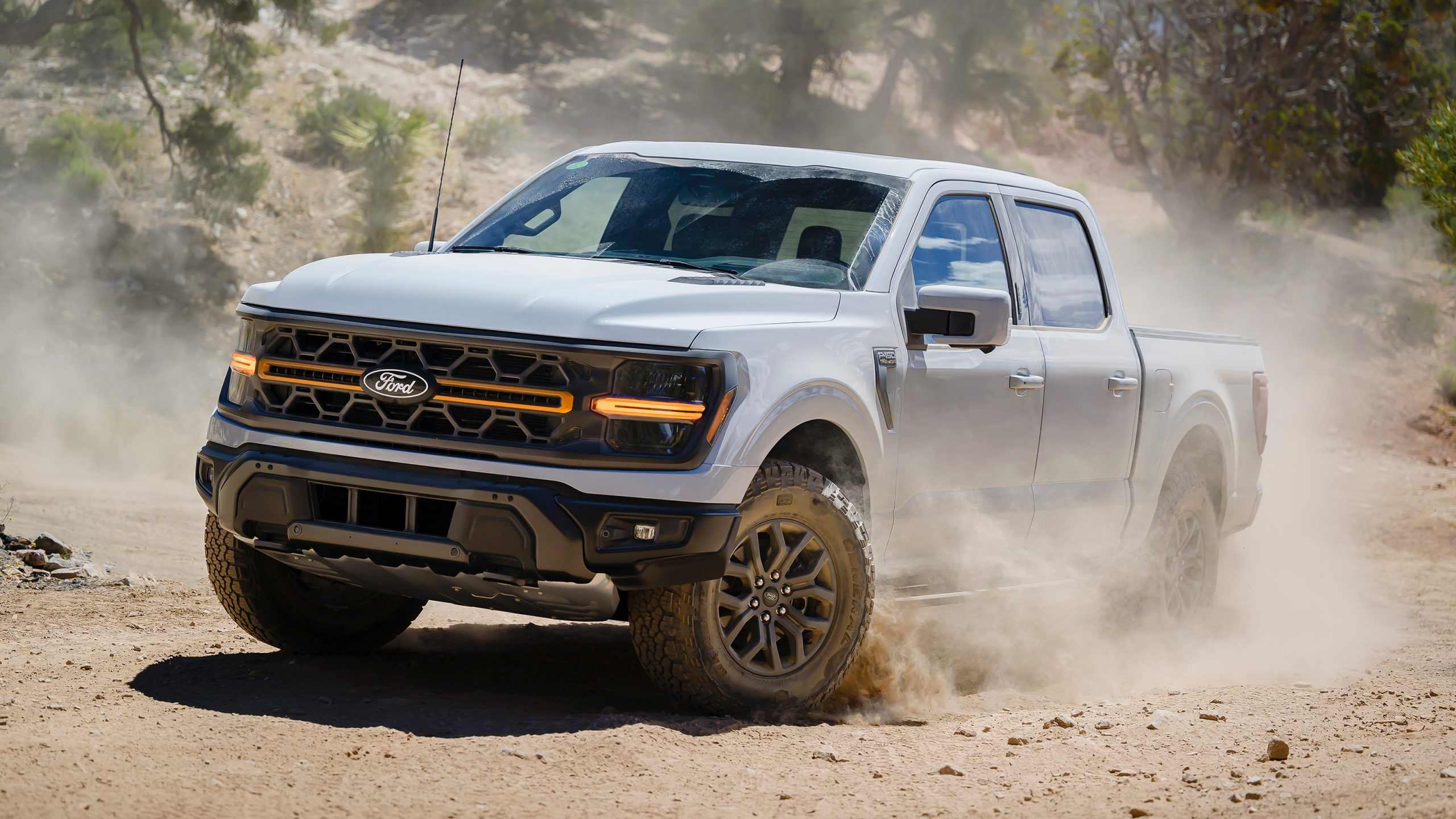
One owner who drove a 2024 Lariat trim described the truck as the quietest vehicle they had ever owned, quieter than the BMW 520i and Lexus GS350 they had owned previously.
That statement captures something important about where the modern F-150 sits in the automotive. It is no longer just a truck that happens to be quiet. It is genuinely quiet by any standard, including those set by dedicated luxury vehicles.
Ford enhanced this foundation with improved door seals, acoustic underbody insulation, and wheel well liners that trap and absorb road noise before it can travel up through the floorpan.
The firewall insulation prevents engine noise from creeping into the cabin, and the result is that even the turbocharged EcoBoost engines, which can be heard clearly outside the truck, produce only the faintest hum inside under normal driving conditions.
The F-150’s quiet cabin experience does vary somewhat by trim level. The Lariat and above trims receive additional acoustic materials and benefit fully from the SoundScreen glass across more windows. However, even XLT trims with the standard 302A package have been noted by owners as significantly quieter than earlier-generation F-150s or rival trucks in the same price range.
The F-150 proves that mass-market success and acoustic refinement are not mutually exclusive. It is a truck that works hard when you need it to and rests quietly when the journey demands peace and calm.
3. GMC Sierra 1500 Denali Ultimate
The GMC Sierra 1500 Denali Ultimate is the most premium expression of GM’s full-size truck lineup, and it approaches cabin quietness as a non-negotiable luxury attribute.
Reviewers and long-term owners have repeatedly described the Denali Ultimate’s interior as “whisper-quiet,” with one detailed test describing it as offering a “very quiet cab” that is “an joy to drive.” For buyers willing to spend at the top of the Sierra lineup, the acoustic experience rewards that investment.
GMC distinguishes the Denali and Denali Ultimate trims from lower Sierra configurations with an additional sound and vibration package that is not available on mid-range trims like the AT4.
This package layers extra insulation throughout the cabin, focusing on the doors, floor, and roof panels where external noise most commonly infiltrates. The combination creates a noticeably calmer interior environment compared to trucks at similar price points.
The Sierra 1500 Denali uses acoustic glass as part of its standard fitment on higher trims. This glass, featuring the thickened acoustic interlayer that characterizes premium automotive glazing, addresses wind noise at the source by preventing external frequency transmission through the windshield and front side windows.
In back-to-back comparisons with the Chevrolet Silverado, a platform sibling, reviewers consistently note that the Sierra Denali is measurably and perceptibly quieter, specifically because of the superior insulation package and acoustic glass treatment.
The Sierra’s adaptive suspension system also contributes to the quiet riding experience in an indirect but important way. By absorbing road imperfections before they translate into structural vibration, the suspension prevents a significant secondary noise source from developing.
On well-maintained highway surfaces, the 2024 and 2025 Sierra 1500 Denali Ultimate genuinely floats along in a fashion that reviewers have compared to high-end European luxury sedans.
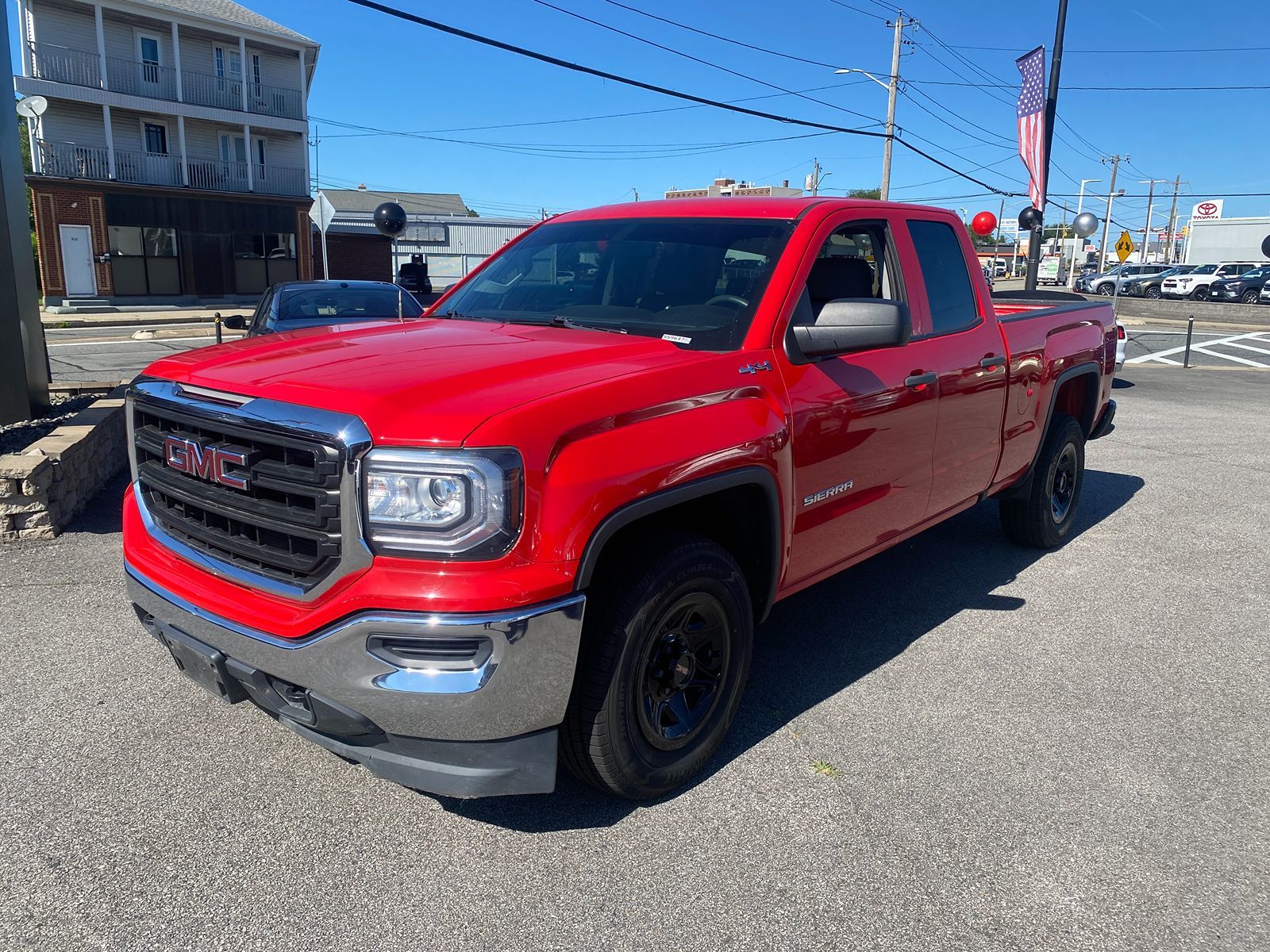
One independent reviewer summed up the 2024 Sierra 1500 Denali Ultimate as a truck with a ride quality that makes cabin occupants feel “wholly isolated from the outside world” on maintained road surfaces. That is a powerful description that resonates with buyers who spend significant time on long-distance highway drives, whether for business or recreation.
Under the hood, the Denali Ultimate’s 6.2-liter V8 engine operates with a smoothness that minimizes cabin intrusion. The 10-speed automatic transmission shifts with such seamlessness that it effectively makes power delivery invisible and silent to passengers.
When driven at normal highway speeds with a relaxed throttle, the powertrain adds virtually nothing to the ambient sound level inside the truck. The Bose Premium Series 12-speaker audio system fitted to the Denali Ultimate benefits enormously from the acoustically treated cabin around it. Sound quality in the Sierra Denali Ultimate is exceptional, in part because there is so little competing background noise to overcome.
Music reproduction, podcast clarity, and hands-free phone conversation all reach a level of fidelity that feels more appropriate to a high-end listening room than to a pickup truck.
It is proof that GMC’s “Professional Grade” tagline extends well beyond mechanical durability to encompass the kind of sensory refinement that raises daily driving into something genuinely pleasurable.
Also Read: Is Your Car Spying On You? What Automakers Really Collect
4. Honda Ridgeline
The Honda Ridgeline occupies a unique position in the pickup truck market. It is the only mainstream truck in America built on a unibody platform, the same structural approach used by cars and crossover SUVs rather than the body-on-frame construction shared by all other pickups.
This architectural difference is one of the most significant reasons why the Ridgeline delivers a cabin experience that is consistently quieter than most of its competitors.
Body-on-frame trucks inherently have a junction between the body and chassis that becomes a pathway for vibration and noise transmission. Every bump, road irregularity, and drivetrain pulse travels through the frame and into the body, generating sounds that occupants hear and feel inside the cabin.
The Ridgeline eliminates this junction entirely. Its integrated body and frame structure is far more rigid and acoustically sealed than any body-on-frame alternative.
The Ridgeline’s unibody construction allows Honda’s engineers to apply automotive-grade noise insulation techniques that are simply not as effective in body-on-frame trucks.
Sound-deadening materials can be applied to a continuous, unified structure without the acoustic gaps and transfer points that exist at body mount locations. The result is a cabin that absorbs and dissipates road noise with unusual efficiency.
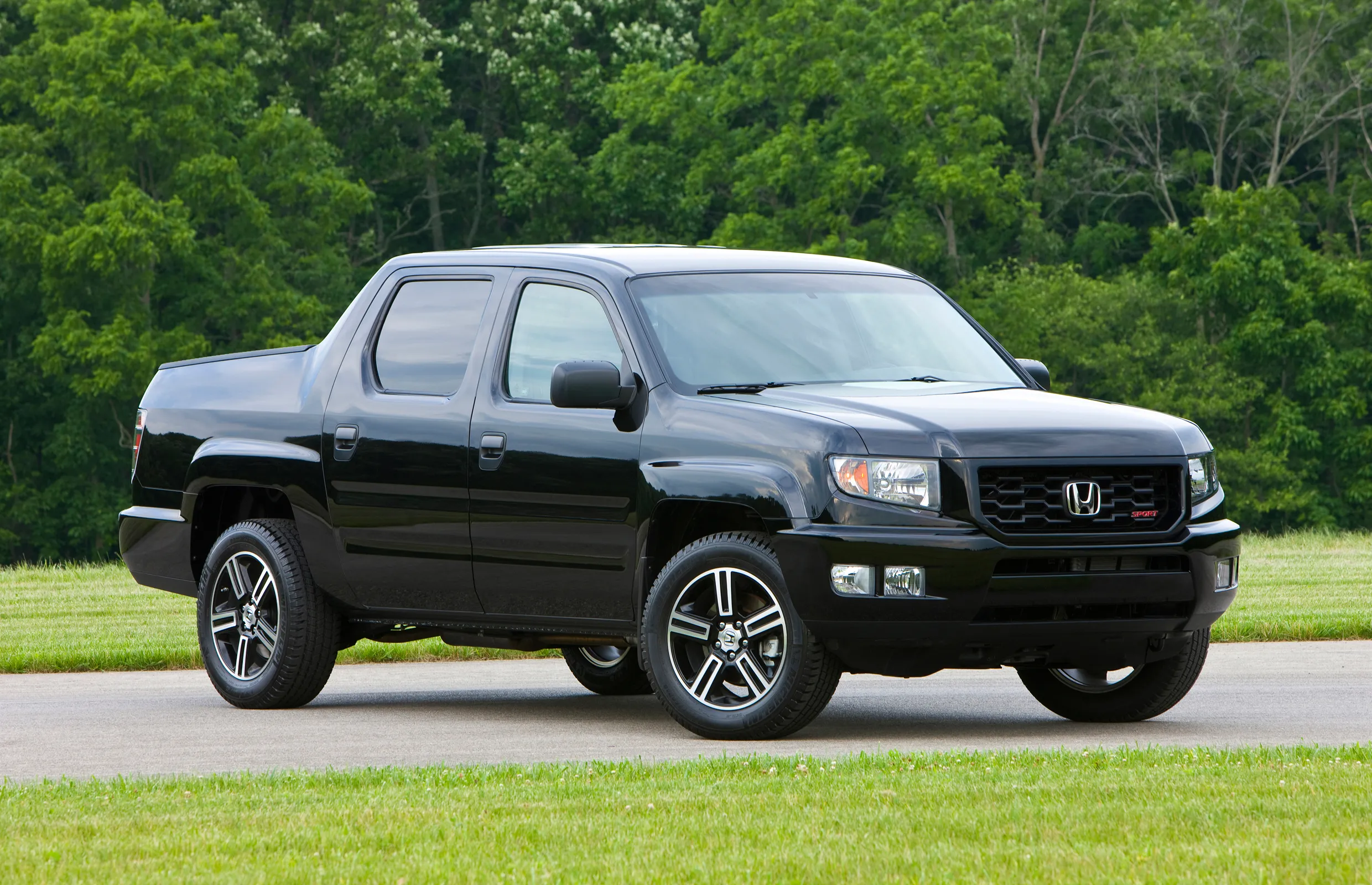
At highway speeds, the Ridgeline maintains a cabin environment that owners consistently describe as car-like rather than truck-like. This is not accidental. Honda targets the buyer who wants real truck utility, a proper bed, meaningful towing capacity, and available all-wheel drive without sacrificing the sensory refinement of a well-built sedan or SUV.
The Ridgeline’s wind noise management at highway speeds benefits from Honda’s extensive aerodynamic development work, with flush-fitting exterior panels and precise weatherstrip alignment creating tight seals around every door and window.
The Ridgeline’s cabin also benefits from its inherently lower ride height compared to most full-size trucks. A lower profile generates less aerodynamic drag and turbulence at highway speeds, which directly reduces the wind noise that passengers experience.
While competitors sit high on the road and catch wind in their large, upright body surfaces, the Ridgeline presents a more car-like aerodynamic profile that slips through highway air with less turbulence.
For buyers who commute long distances, travel frequently with passengers, or simply value the ability to hold a normal conversation at highway speeds without raising their voices, the Ridgeline represents one of the most compelling combinations of truck utility and cabin refinement currently available. It does not match the towing capacity of full-size competitors, but in terms of acoustic comfort, it consistently punches well above its weight class.
4 With Cabin Wind Noise
These pickups are often associated with higher wind noise due to less refined aerodynamics, weaker insulation, or basic door sealing, especially at highway speeds. Older designs or lower trims may allow more air noise into the cabin.
Issues like whistling around mirrors, door gaps, or roof lines can make long drives less comfortable. While still capable trucks, they may feel less refined compared to competitors with better noise control and cabin insulation.
1. Nissan Frontier
The Nissan Frontier received a complete redesign for the 2022 model year, and in many respects, the new truck is a significant improvement over the previous generation.
It brought a genuinely modern cabin, a more capable twin-turbocharged engine, and considerably improved interior materials. However, one problem followed the redesign into production and has persisted through the 2022, 2023, 2024, and 2025 model years: significant wind noise at highway speeds.
The Frontier’s wind noise issue is not a minor quibble or a minor irritation reported by a handful of hypersensitive owners. It is a pervasive complaint documented across multiple owner forums, professional reviews, and even Nissan’s own dealer service network.
CARFAX’s editorial review of the Frontier was direct about the problem, noting “significant wind noise at highway speeds” and quoting a passenger as asking, “Do they intend for it to be this loud?” That is a damning description for a vehicle that cost its owner many thousands of dollars.
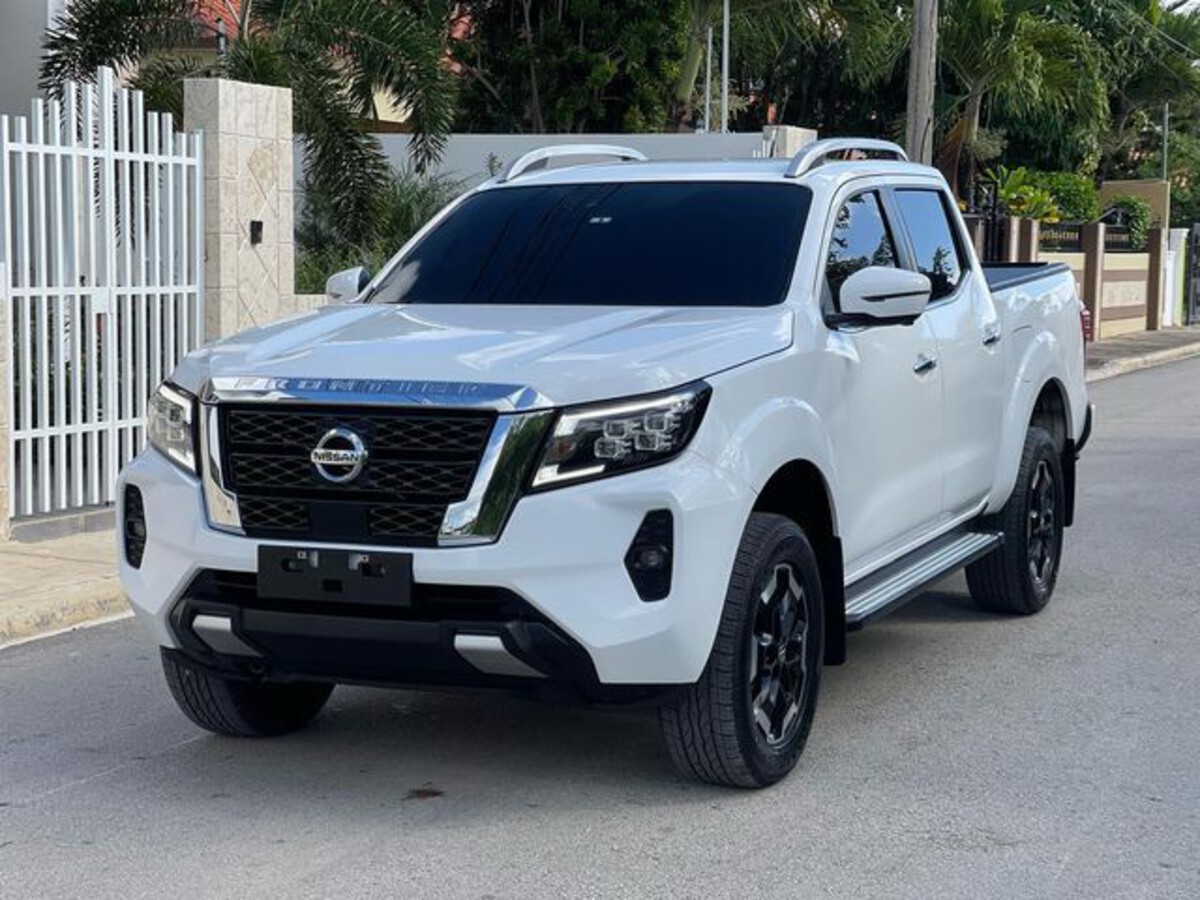
The primary source of the Frontier’s wind noise issue has been traced to windshield installation and sealing problems. Multiple owners across different model years have reported that the windshield gasket was either misaligned from the factory or insufficiently sealed against the body, allowing air to enter the cabin and generate a persistent whistle, howl, or rush that intensifies with vehicle speed. At 70 mph and above, affected trucks can sound as though a window has been left partially open.
Nissan’s own dealer service records acknowledge the problem as a known issue. Multiple owners who brought their trucks in for service have been told that the windshield placement was incorrect from the factory, the result of robotic assembly equipment placing the windshield in the wrong position.
In some cases, dealers have replaced entire windshields under warranty. In others, only the gasket seal was replaced. Results have been mixed, with some owners reporting complete resolution and others finding that the noise persists even after multiple repair attempts.
For buyers who primarily use the Frontier for work in and around town, or who rarely travel at highway speeds for extended periods, the wind noise issue may be manageable or even unnoticeable.
For commuters, long-distance travelers, or buyers who simply expect a 2024 or 2025 truck to be reasonably quiet on the highway, the Frontier can be a disappointing choice until the windshield sealing issue is definitively resolved by a dealer.
2. Toyota Tundra (3rd Generation, 2022–2025)
The third-generation Toyota Tundra arrived for the 2022 model year with enormous excitement. After years of selling essentially the same truck without major updates, Toyota completely reinvented the Tundra with a modern twin-turbocharged V6 engine, a completely redesigned interior, and available hybrid technology.
Early reviews praised the new truck enthusiastically. However, as real-world owners accumulated miles, a familiar problem emerged: notable wind noise at highway speeds.
The Tundra’s wind noise complaints span the 2022, 2023, 2024, and 2025 model years. Owners across multiple forums have reported persistent sounds originating from the A-pillars, door seals, and windshield area at speeds above 60 mph.
A particularly common complaint involves crosswind driving, where the large, upright body of the Tundra catches wind aggressively and channels it toward gaps in the door and window sealing. At 70 mph in strong crosswinds, multiple owners describe the noise as “very loud” and deeply fatiguing over long distances.
Toyota’s own third-generation design introduced an unexpected issue with weather stripping. In the 2022 model year rollout, Toyota removed weather stripping from certain door positions that had been present on the earlier generation Tundra and on the larger Sequoia.
This deletion appears to have contributed to the wind noise problem, as the missing stripping left gaps where air could enter the cabin more easily than on the previous generation. Some owners discovered that installing aftermarket weather stripping in the affected positions significantly reduced their wind noise.
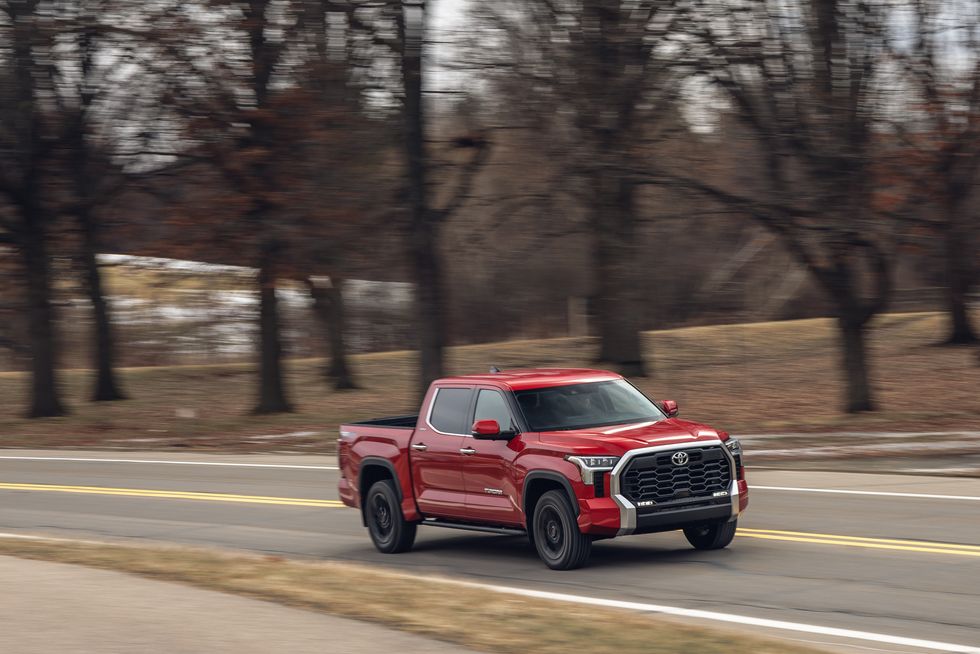
One comprehensive documentation of known 2022–2024 Tundra problems compiled by truck industry journalists lists “serious wind noise” alongside other recurring issues, including door rattles, interior rattles, and various mechanical concerns.
The fact that wind noise made the list of known problems rather than appearing as an isolated complaint indicates that the issue is widespread enough to be considered a systematic characteristic of the third-generation Tundra rather than a random quality control defect.
Automotive industry observers have also noted that the 2026 Tundra could be in line for a significant refresh, partly driven by persistent owner feedback about issues including wind noise and other quality concerns accumulated over the generation’s production run.
If Toyota addresses these acoustic problems in a future refresh, it would mark a meaningful improvement for buyers who love the Tundra’s capability but find its highway manners less refined than they expected.
For buyers considering the Tundra, it is strongly advisable to take extended test drives that include substantial highway mileage at real-world cruising speeds.
Pay particular attention to driving in crosswind conditions and with the windows fully closed. If the noise is acceptable during the test drive, the truck may be a good fit. If it is already noticeable during a brief evaluation, extended ownership is likely to make it more frustrating rather than less.
3. Chevrolet Silverado 1500
The Chevrolet Silverado 1500 received a significant interior upgrade for the 2022 model year that addressed longstanding complaints about its previously austere and outdated cabin.
The new interior brought better materials, an improved infotainment system, and a substantially more competitive interior design. What the refresh did not comprehensively address, however, was the Silverado’s persistent reputation for wind and cabin noise that exceeds what buyers expect from a truck in its price class.
The Silverado’s wind noise complaints are not new. They trace back through multiple generations of the truck, with owners across the years consistently reporting whistling and rushing sounds from the A-pillars, front door seams, and windshield edges at highway speeds.
That description points to a broader NVH strategy that prioritizes minimal noise under gentle driving conditions but does not provide the same comprehensive suppression that the Ram 1500 and F-150 deliver across a wider range of driving situations. When the throttle is pressed or road surfaces become rough, the Silverado’s acoustic limitations become more apparent.
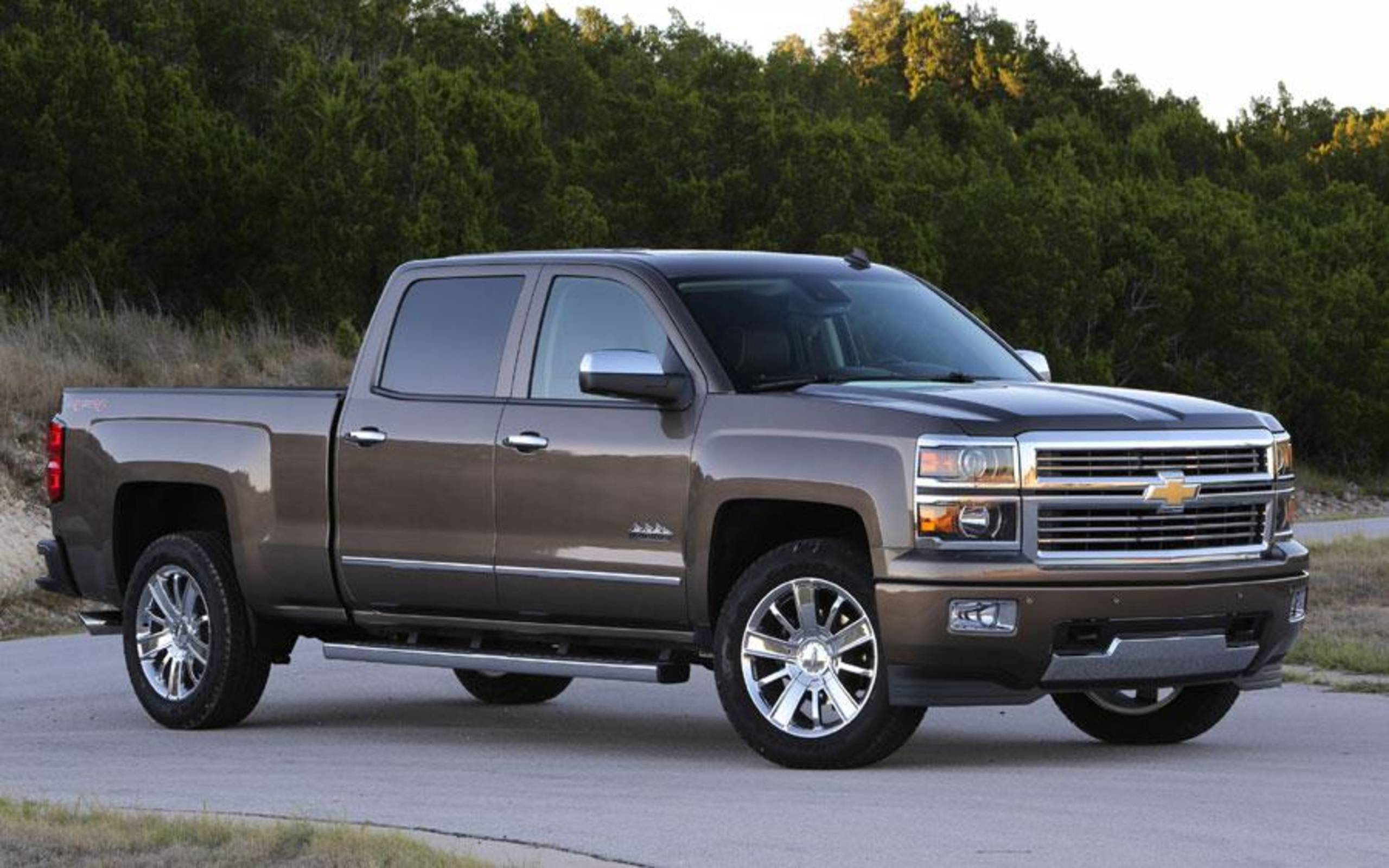
The Silverado’s extended cab body style, sometimes called the “double cab,” has historically been identified as particularly prone to wind noise. The smaller rear doors and the geometry of the rear door sealing in this configuration create additional opportunities for air infiltration at highway speeds.
Forum discussions going back many years feature Silverado extended cab owners describing wind noise levels so severe that the radio could not mask the sound, and so consistent that replacing the door weatherstripping provided only minimal improvement.
Modern Silverado wind noise complaints often trace back to the front door seals and the A-pillar area. Multiple owners have reported visiting dealers for wind noise diagnosis only to find that adjusting door alignment achieved nothing, replacing weatherstripping made no perceptible difference, and resealing the windshield also failed to resolve the problem. In some cases, the dealer service record amounts to a series of failed attempts with no definitive solution offered.
For buyers who cross-shop the Silverado and the Sierra, the comparison strongly favors the Sierra if cabin quietness is a priority. The additional investment in NVH suppression that GMC applies to the Sierra, particularly Denali trim, produces a measurably and perceptibly quieter interior that makes long highway driving considerably more comfortable.
The Silverado remains an excellent truck in many respects, but cabin wind noise management remains an area where it lags behind its key competitors.
4. Nissan Frontier King Cab / Older Ford Super Duty Configurations
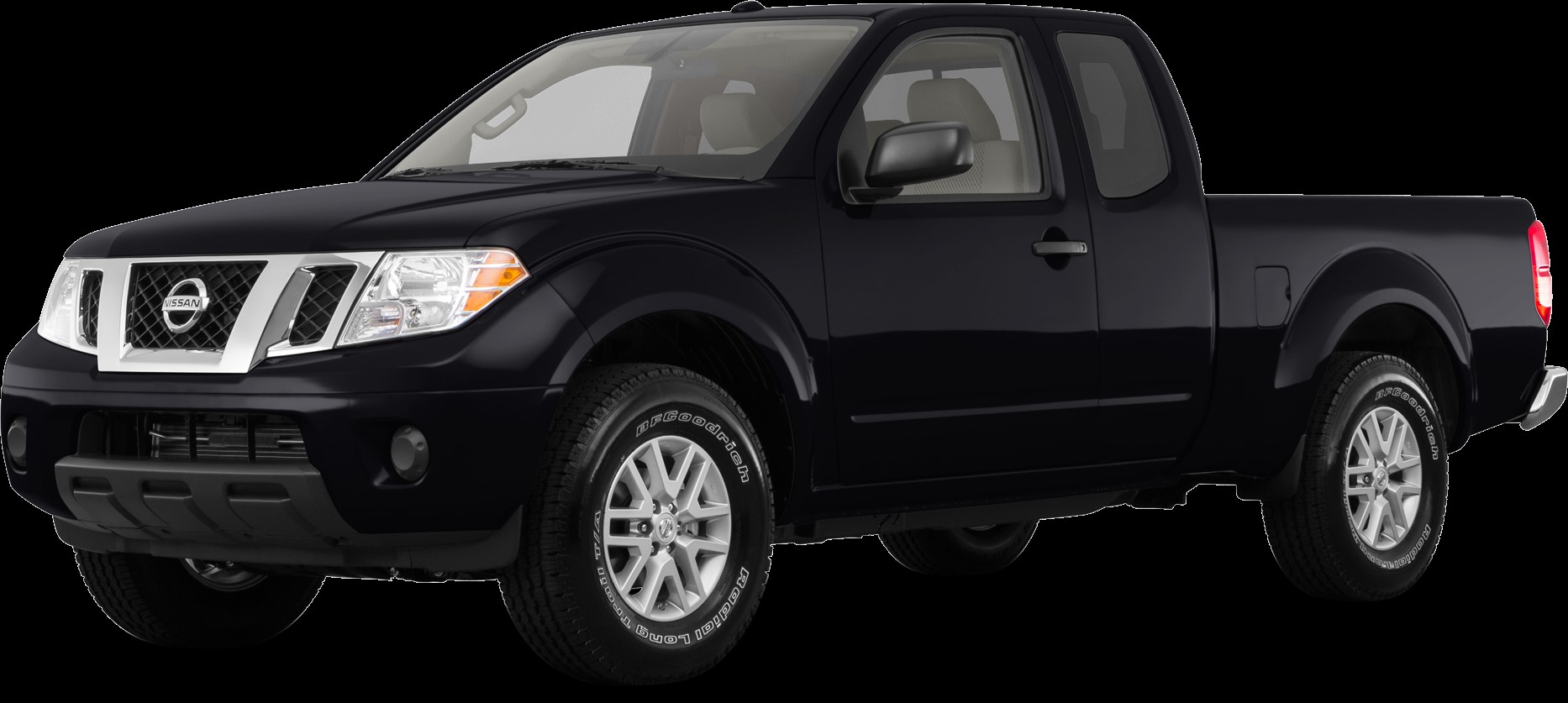
While the Nissan Frontier in crew cab form has its wind noise struggles, the King Cab configuration deserves particular attention as a wind noise problem amplified by body design.
The half-door, rear-hinged door arrangement of the King Cab creates an inherently more complex sealing challenge than conventional full-size rear doors.
When these half-doors are not perfectly aligned and sealed, which appears to be a persistent quality control issue, the result is a cabin that sounds dramatically louder at highway speeds than any full-size truck currently on sale.
The Frontier King Cab’s wind noise problem is compounded by the truck’s limited acoustic treatment budget. Nissan positioned the Frontier as an affordable, capability-focused midsize truck, which means that the extensive acoustic engineering investment present in premium full-size trucks, such as active noise cancellation, multiple layers of acoustic glass, and comprehensive sound-deadening panels, is simply not part of the Frontier’s design architecture.
When the door sealing works correctly, the truck is acceptably quiet for its class. When sealing issues develop, there is no fallback layer of acoustic treatment to buffer the intrusion.
The older Ford Super Duty, specifically the F-250 and F-350 in their work-truck and lower trim configurations, presents a different but related cabin noise challenge.
These heavy-duty trucks are engineered primarily for maximum capability: towing, hauling, and working under extreme loads. Acoustic refinement has historically been a secondary concern in the Super Duty lineup, and in base XL and XLT trims at highway speeds, the cabin reflects this prioritization.
What both the Frontier King Cab and the base Super Duty configurations share is a design philosophy that accepts cabin noise as an inherent characteristic rather than treating it as an engineering problem to be solved.
In an era when the Ram 1500, F-150, and Sierra Denali have proven that even working trucks can achieve near-luxury acoustic refinement, this approach increasingly feels like a meaningful shortcoming rather than an acceptable tradeoff.
Buyers who prioritize quiet on long hauls, commutes, and family road trips would do well to seriously evaluate these noise characteristics before committing to a purchase.
Also Read: 10 Engines With Timing Chain Tensioners That Never Require Replacement
