
Four thousand dollars does not sound like much in today’s car market. New vehicles average well over $40,000, and even modestly priced used cars regularly push past $15,000 at dealerships. But here is something worth knowing: a $4,000 budget, used wisely, can still put a genuinely reliable sedan in your driveway. Not a project car.
Not a rusted-out gamble. A real, dependable vehicle that starts every morning, handles daily commuting, and does not drain your savings account on repairs every other month. Finding that vehicle requires knowing which models to target. Some cars age gracefully.
Their engines run past 200,000 miles with basic care, their parts are inexpensive and widely available, and their mechanical designs are simple enough that most repairs are affordable even at a shop. Other cars of the same age and price look clean on the surface but carry expensive repair histories, discontinued parts, or engineering that makes even routine work complicated.
This page focuses on eight sedans that fall into the first category. Each one has a documented track record of long-term reliability, a repair ecosystem that keeps costs manageable, and enough of a market presence that finding a clean example under $4,000 is a realistic goal with some patience and smart shopping.
Some of these are older model years of vehicles you already know. Others are less obvious choices that deserve more attention than they typically receive in budget car conversations. Pricing in the used market fluctuates based on mileage, condition, location, and timing. The $4,000 figure used throughout this article reflects a realistic private-party purchase ceiling for the model years and mileage ranges discussed.
Dealer pricing will typically run higher. Private sellers, Facebook Marketplace, and Craigslist are where this budget works most effectively. Research each vehicle’s value on Kelley Blue Book and Edmunds before making any offer.
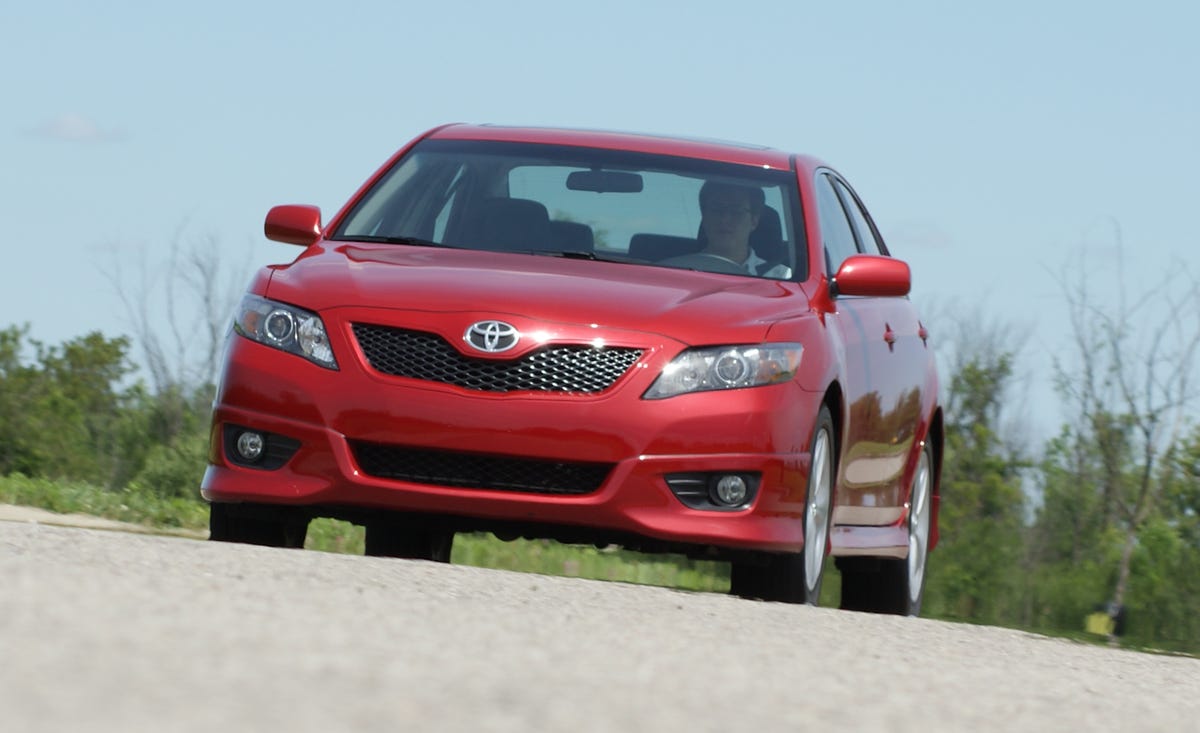
1. Toyota Camry LE (2010 to 2013)
Estimated Price: $2,500 to $4,000
If you ask any mechanic, automotive journalist, or long-term reliability researcher which used sedan under $4,000 they would hand to a family member who cannot afford a repair mistake, a huge percentage of them will say the same thing: a clean Toyota Camry from the 2010 to 2013 generation. That answer has not changed much in years, and it is backed by data rather than brand loyalty.
A 2011 Toyota Camry LE 2.5L 4-cylinder sedan with 130,000 to 160,000 miles regularly appears in the private market for $2,500 to $4,000, depending on condition, service history, and location. At that price and mileage, a well-maintained example has a realistic remaining service life of 80,000 to 120,000 additional miles before any major mechanical intervention is required, assuming basic maintenance is kept current. Few vehicles at any price deliver that kind of remaining value proposition.
Toyota’s 2AR-FE four-cylinder engine, which powers the base Camry LE in this generation, is one of the most thoroughly proven four-cylinder powertrains in modern automotive history. Oil changes, air filters, spark plugs, and timing chain inspections are the meaningful service items on this engine’s schedule.
There is no timing belt to replace during a service interval. There are no variable valve timing failures that commonly afflict competitors. Real-world owner data shows these engines routinely reaching 250,000 miles with basic maintenance and no internal work. Transmission reliability on the 6-speed automatic in this generation is equally strong.
Unlike some competitors whose transmissions require expensive rebuilds by 100,000 miles, the Camry’s transmission in this era has a documented track record of lasting the life of the vehicle with regular fluid changes. A fresh transmission fluid service at the time of purchase is inexpensive and extends the remaining service life considerably.
Parts availability is another reason this generation Camry makes the under-$4,000 list so consistently. Literally millions of these vehicles were sold in the United States, which means the aftermarket parts ecosystem is enormous. Brake pads, rotors, suspension components, sensors, and body parts are all widely available from multiple suppliers at competitive prices.
A buyer in almost any American city can find these parts at local auto parts stores or online without waiting for special orders or paying premiums for limited-availability components. Interior space is genuinely comfortable. Rear-seat legroom in this Camry generation is adequate for adult passengers, making it useful for families with older children or for buyers who regularly carry adults.
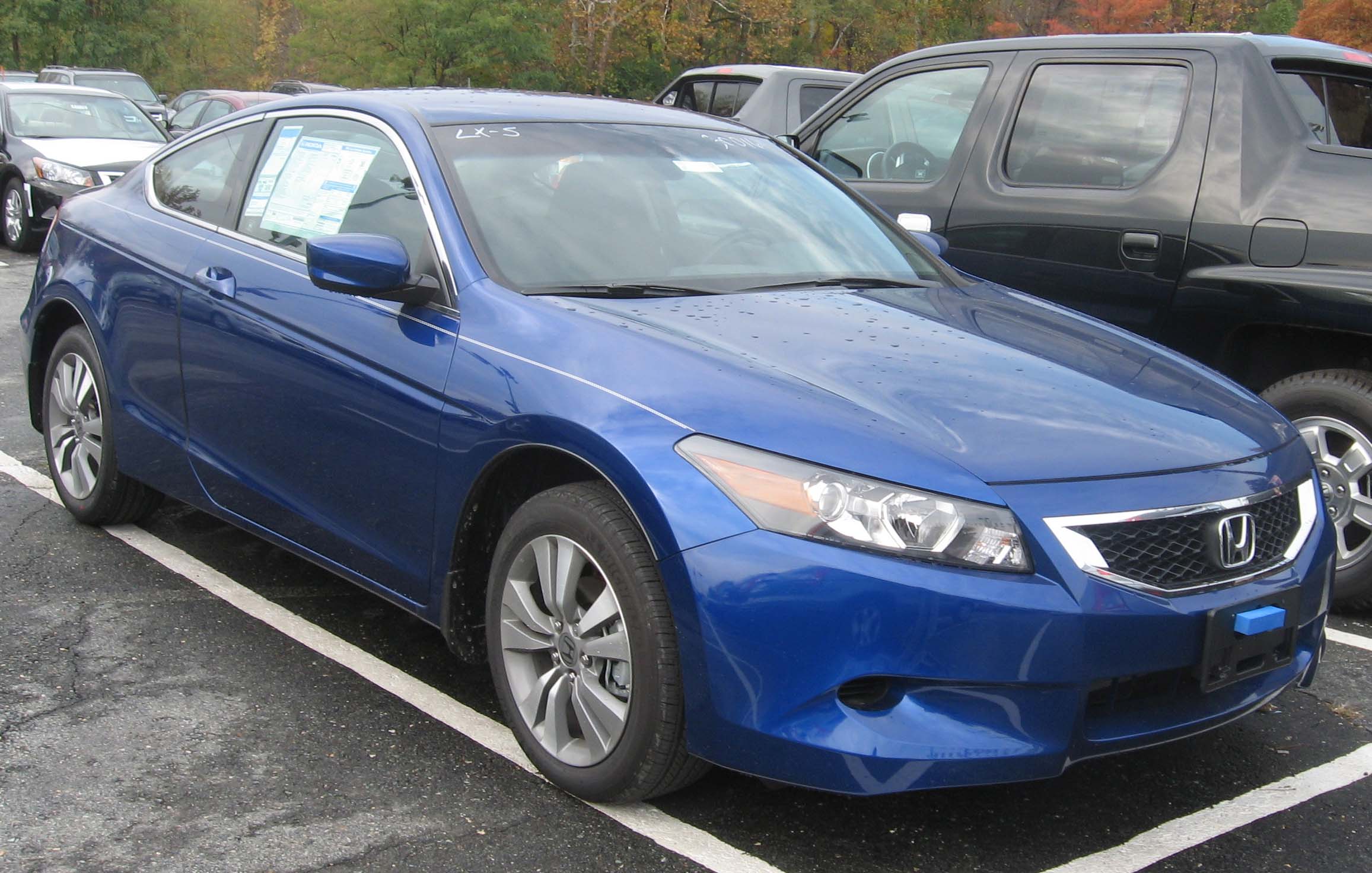
2. Honda Accord LX (2008 to 2012)
Estimated Price: $3,000 to $4,000
Honda’s eighth-generation Accord, produced from 2008 to 2012, represents a period when Honda was engineering vehicles with exceptional attention to mechanical durability and straightforward serviceability. A 2009 Honda Accord LX 2.4L sedan with 120,000 to 150,000 miles is regularly available in the private market for $3,000 to $4,000, and a clean example at that mileage range still has substantial useful life ahead of it.
Honda’s K24Z3 four-cylinder engine, used in the base Accord LX of this generation, shares design DNA with Honda engines that have appeared in various forms across dozens of models and millions of vehicles. Engine longevity data on this family of powertrains is extensive and overwhelmingly positive.
Owners regularly report exceeding 200,000 miles on original engines with no internal work beyond regular oil changes. Carbon buildup on intake valves, which affects some direct-injection engines, is not a concern here because this engine uses port injection, where the fuel spray helps keep intake valves clean.
One area requiring attention on this Accord generation is the timing chain. Unlike a timing belt, which requires scheduled replacement at known intervals, the timing chain is designed to last the life of the engine. However, oil change neglect on these engines can accelerate timing chain wear, leading to stretching that produces a rattling noise at startup.
Fuel economy from the 2.4-liter four-cylinder runs approximately 21 to 30 miles per gallon in mixed driving at this age, which is reasonable for a vehicle in this price range. Air conditioning compressor longevity is generally strong in this generation, which matters more than buyers often realize when purchasing a vehicle of this age in warm climates.
Also Read: 8 Sedans With Working Adaptive Cruise Control: A Complete 2026 Guide
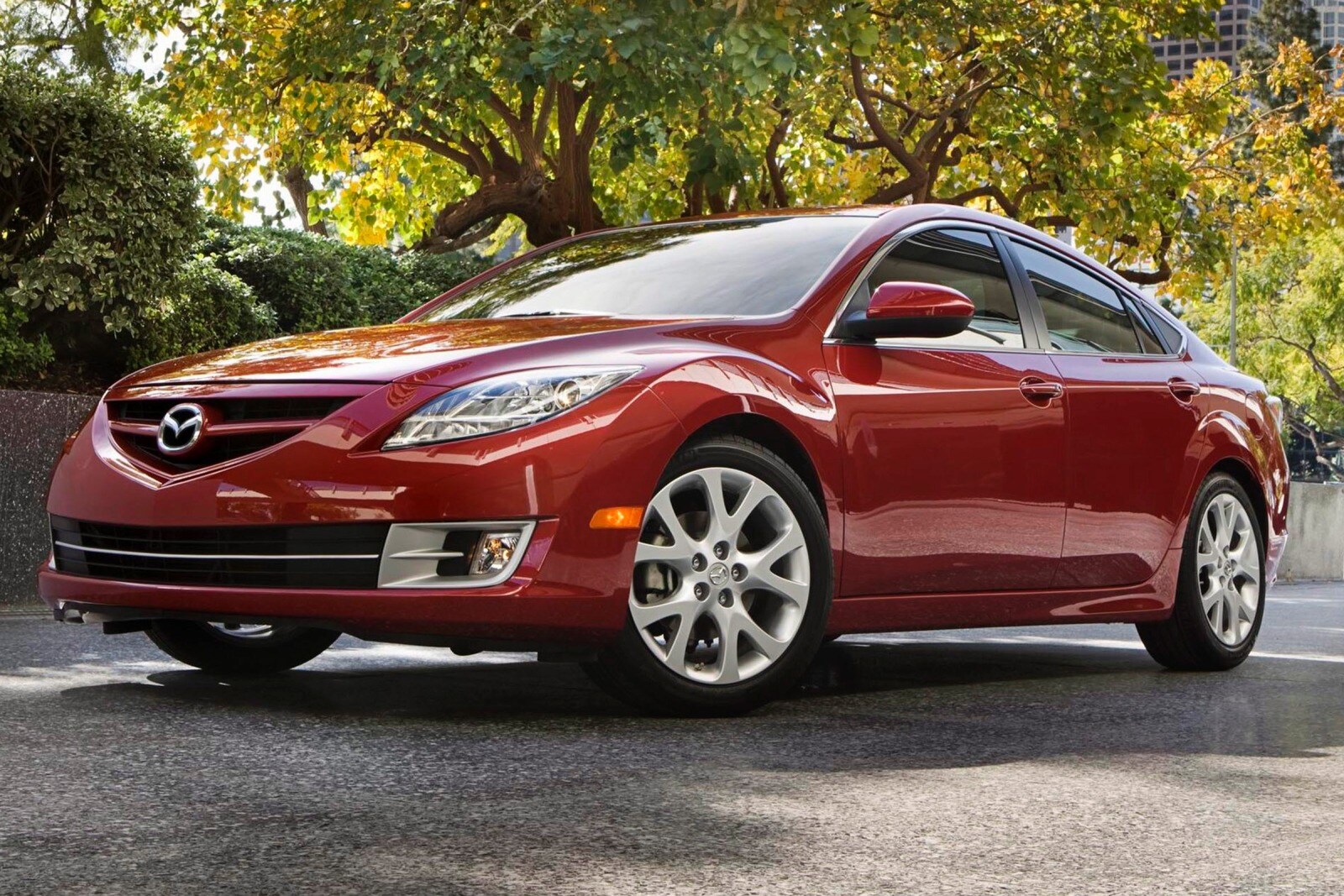
3. Mazda6 i Sport (2009 to 2013)
Estimated Price: $2,500 to $3,800
The Mazda6 i Sport, produced between 2009 and 2013, occupies a position in the midsize sedan category that many budget buyers miss. While shoppers with limited funds often default to Toyota Camry or Honda Accord models due to long-standing brand familiarity, the Mazda6 from this period frequently sells for less money despite offering comparable mechanical durability and a more rewarding driving feel.
This pricing gap exists largely because demand for the Mazda badge is softer in the sub-four-thousand-dollar bracket, not because of inferior engineering. For buyers willing to look beyond habitual choices, this model presents a sensible opportunity.
Private sale listings regularly show a 2010 Mazda6 i Sport sedan fitted with the 2.5 litre engine and showing between one hundred and twenty thousand and one hundred and forty five thousand miles priced from two thousand five hundred to three thousand eight hundred dollars.
Vehicles in similar cosmetic and mechanical condition wearing Camry or Accord badges often attract higher asking prices. The difference is not academic. It can translate into money left for immediate maintenance, insurance, or future repairs, all of which matter greatly at this level of purchase.
At the heart of this generation Mazda6 is the L5 VE 2.5 litre four cylinder engine. This power unit shares core design principles with other Mazda engines from the same era and has developed a strong reputation for endurance when serviced correctly. Documented owner experiences show examples reaching two hundred thousand miles without internal engine failure.
The use of port fuel injection avoids intake valve deposit problems associated with certain newer designs, while the timing chain layout removes the cost and anxiety tied to belt replacements. Consistent oil servicing remains essential, as neglected oil changes can accelerate chain wear.
Where the Mazda6 separates itself most clearly from its mainstream rivals is in driving behaviour. Steering feedback is sharper, body movement through bends is better managed, and the driver’s seating position feels deliberately arranged rather than merely functional.
These traits matter to drivers who value involvement rather than viewing a car purely as a moving appliance. At identical purchase prices, few competitors from this period provide a similar level of road feel without compromising daily usability. Cabin construction also stands up well with age.
Materials on frequently touched surfaces tend to resist wear, and assembly quality remains intact even past one hundred and thirty thousand miles when basic care has been maintained. It is common to find Mazda6 interiors that feel tighter and cleaner than competing vehicles of equal age and mileage. This contributes to a sense of ownership satisfaction that is often underestimated when shopping on a tight budget.
Inspection before purchase should focus on predictable wear areas rather than hidden defects. Front suspension struts can wear and produce noise over uneven surfaces. Replacement components are affordable and widely stocked, but identifying the issue provides room for price discussion.
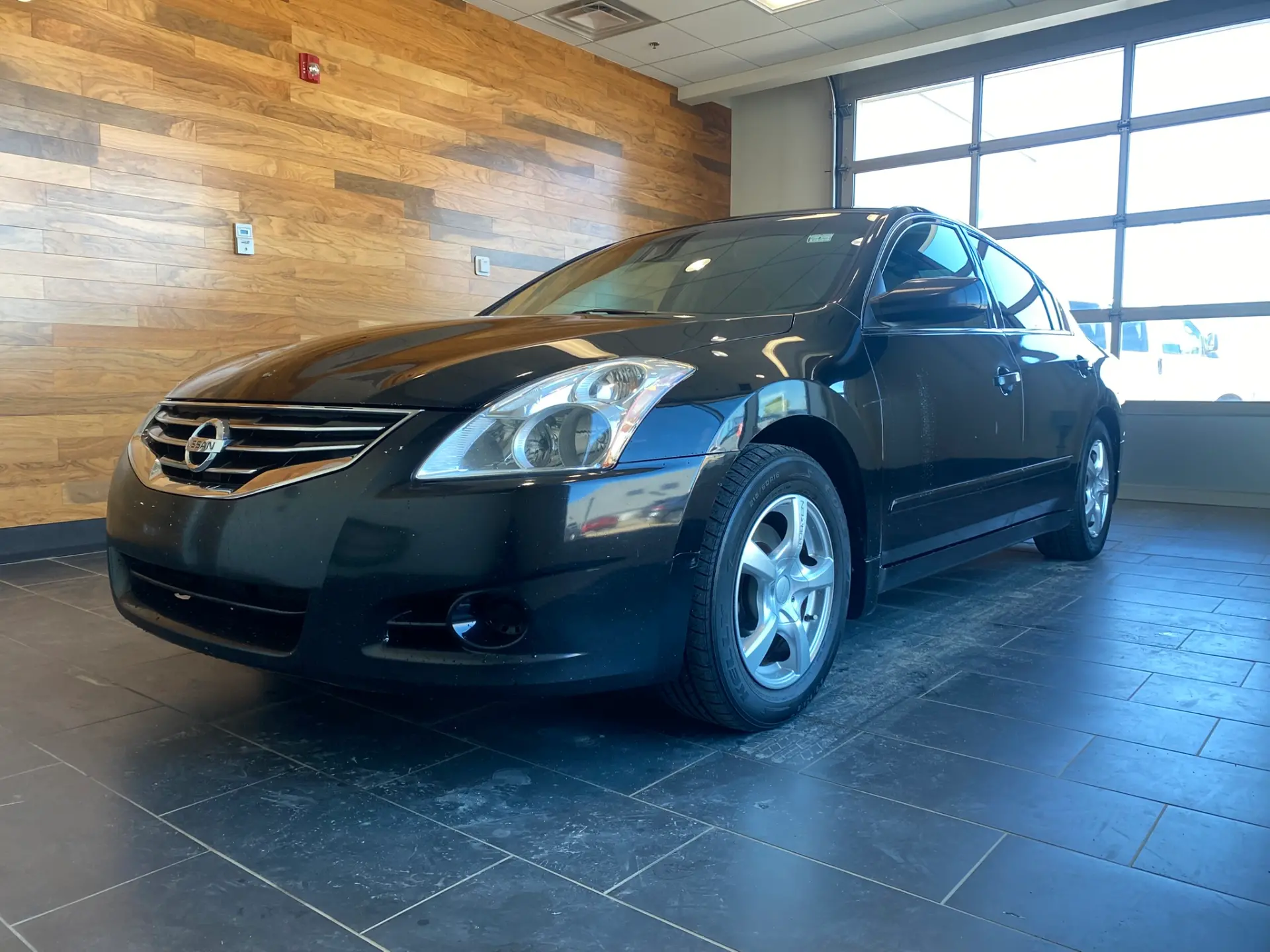
4. Nissan Altima 2.5 S (2010 to 2014)
Estimated Price: $2,500 to $3,800
The Nissan Altima 2.5 S built between 2010 and 2014 is one of the most common midsize sedans available to buyers working within a strict four-thousand-dollar ceiling. High production numbers during these years created a large used supply, which continues to influence pricing today. As a result, buyers encounter many options with varying mileage, condition, and maintenance history. When chosen carefully, this generation Altima can deliver long service life and controlled running costs.
Private sellers frequently list a 2012 Altima 2.5 S with mileage ranging from one hundred and ten thousand to one hundred and forty thousand miles at prices between two thousand five hundred and three thousand eight hundred dollars. Vehicles with tidy interiors, straight body panels, and recorded servicing deserve attention because they offer dependable transportation for less money than many rivals.
Abundant availability also gives buyers leverage during negotiation, since walking away from a poor example is rarely difficult. Power comes from Nissan’s QR25DE 2.5 litre four cylinder engine, a unit known for durability when maintained on schedule. Many owners report mileages approaching or exceeding one hundred and eighty thousand miles on original engines without internal damage.
Fuel usage remains reasonable for a midsize sedan, with mixed driving figures commonly falling between the high twenties and low thirties per gallon. This efficiency helps control weekly expenses, an important factor for cost-conscious households relying on one vehicle.
The primary concern with this Altima generation lies not with the engine but with certain continuously variable transmissions fitted to many examples. Some units experienced early failure at higher mileage, particularly where transmission fluid was never replaced. Initial service guidance did not strongly stress fluid changes, leading many owners and workshops to skip this task entirely.
A vehicle reaching advanced mileage without any documented transmission servicing presents a serious financial risk for a budget buyer. Risk management begins with careful questioning and inspection. Ask directly for evidence of CVT fluid replacement, ideally performed around sixty thousand-mile intervals. Documentation showing repeated service greatly improves confidence in remaining lifespan.
Without such records, pricing should reflect the possible cost exposure. An alternative approach is choosing a manual transmission version, which was offered during these years. These cars avoid the transmission concern and use a simpler mechanical layout, though they appear less frequently on the market.
Beyond drivetrain considerations, the Altima offers genuine strengths in daily use. Cabin space is generous, especially in the rear seats, making it suitable for families or regular adult passengers. Boot capacity supports grocery runs and travel needs without strain. Ride quality remains comfortable on uneven road surfaces, and control placement is straightforward, reducing distraction during routine driving.
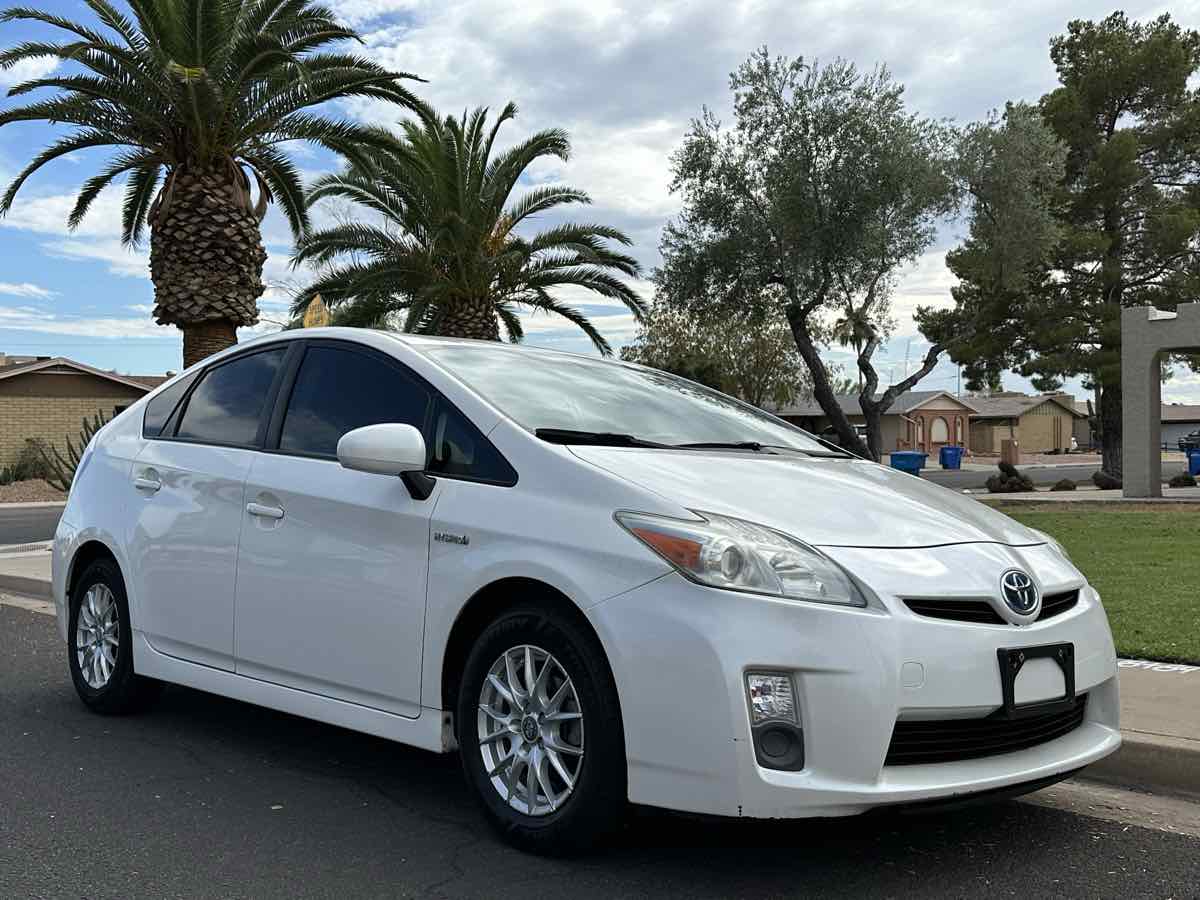
5. Toyota Prius Two (2010 to 2013)
Estimated Price: $3,000 to $4,000
Suggesting a hybrid vehicle in a budget used car discussion sometimes raises eyebrows. Battery replacement fears, specialized repair costs, and the general perception that hybrid technology is fragile have kept many buyers away from older Prius models in the affordable used market. Those fears are largely outdated when applied to this specific generation, and a buyer who avoids the third-generation Toyota Prius Two on those grounds is potentially walking past one of the best values in the under-$4,000 used car market.
A 2011 Toyota Prius Two with 130,000 to 170,000 miles regularly appears in private sale listings for $3,000 to $4,000. At that mileage, the hybrid battery in a well-maintained example is very likely still performing adequately. Toyota’s third-generation Prius NiMH battery pack has a documented track record of lasting 200,000 miles or more in real-world use.
Taxi fleet data, Uber driver reports, and long-term owner surveys all show these batteries outlasting initial buyer concerns by a wide margin. Individual cells can degrade, and a battery scan at a Toyota dealer or hybrid specialist shop costs under $100 and tells you the state of health of each cell module before you buy.
Fuel economy is where this vehicle separates itself from every other option on this list. Even at 150,000 miles, a third-generation Prius in reasonable condition returns 42 to 48 miles per gallon in mixed driving. At $3.50 per gallon and 15,000 miles driven annually, a Prius buyer spends roughly $1,094 to $1,250 per year in fuel.
A comparable Camry at 32 miles per gallon spends approximately $1,641 per year. That $400 to $550 annual fuel saving is not insignificant for a buyer on a tight budget. Over three years of ownership, the Prius’s fuel advantage produces $1,200 to $1,650 in savings that help offset any minor repair costs.
Brake system longevity on the Prius is exceptional due to regenerative braking, which recovers energy during deceleration and reduces the mechanical demand on conventional friction brakes. Prius owners commonly report original brake pads lasting 100,000 miles or more, which dramatically reduces maintenance costs compared to conventional vehicles.
For a budget buyer trying to keep total operating costs as low as possible, that extended brake life adds real financial value beyond the fuel savings.
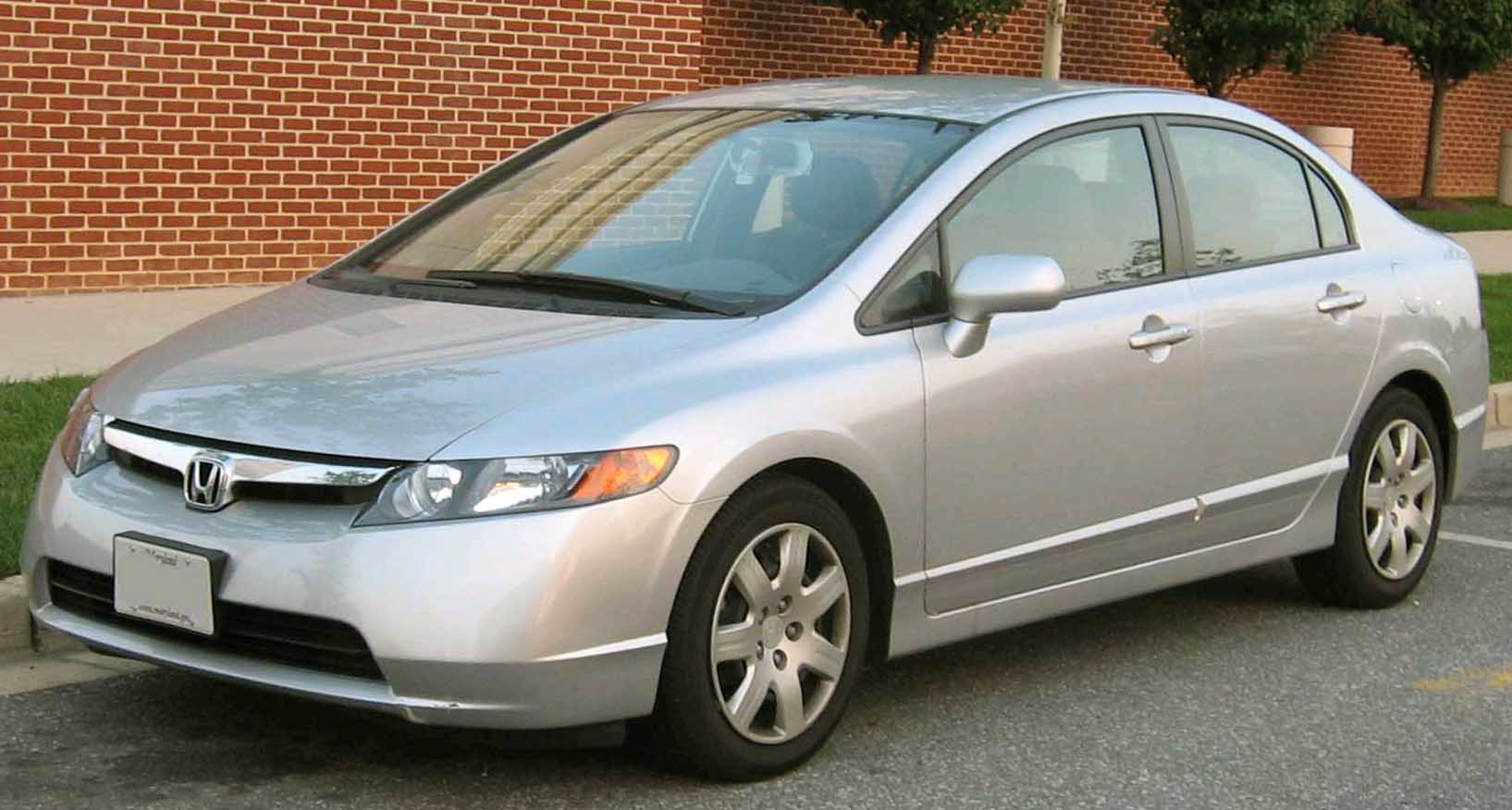
6. Honda Civic LX Sedan (2006 to 2011)
Estimated Price: $2,500 to $3,800
Honda’s eighth-generation Civic, produced from 2006 to 2011, is compact, fuel-efficient, and mechanically bulletproof when properly maintained. A 2008 Honda Civic LX Sedan with 120,000 to 155,000 miles sells in the private market for $2,500 to $3,800, and a clean example at that mileage range with documented service history represents one of the most financially safe purchases in this entire price tier.
Honda’s R18A1 1.8-liter four-cylinder engine, used in the base Civic LX of this generation, is one of the simplest and most durable powertrains Honda has produced. Port injection keeps the intake valves clean without periodic cleaning interventions. Timing chain design eliminates the timing belt replacement cost that adds to the ownership expense of some competitors.
Real-world longevity reports consistently show these engines reaching 200,000 to 250,000 miles on original internals with regular oil changes. Fuel economy from the 1.8-liter engine in mixed driving runs approximately 25 to 33 miles per gallon, depending on driving conditions and the age of the vehicle.
For a daily commuter who drives 12,000 to 15,000 miles per year, the Civic’s efficiency reduces annual fuel costs compared to larger sedans, which helps offset any maintenance spending and keeps total ownership costs low. Suspension components in this Civic generation are durable and inexpensive to replace when wear does occur. Front strut replacement, rear shock absorber service, and control arm bushing work are all straightforward jobs that independent shops handle quickly.
Parts availability from multiple aftermarket suppliers keeps costs reasonable. A buyer who encounters worn suspension components at purchase can factor the repair cost into their offer rather than walking away from an otherwise solid vehicle. What to inspect: check for oil consumption, as some examples of this generation Civic engine have a known tendency toward slightly elevated oil consumption at higher mileage.
This is not a dealbreaker but warrants monitoring. Check the exhaust system from below for rust, particularly on examples from salt-belt states. Inspect the automatic transmission fluid condition, as neglected fluid can accelerate wear in the 5-speed automatic. Manual transmission examples are excellent and worth prioritizing if available in your search.
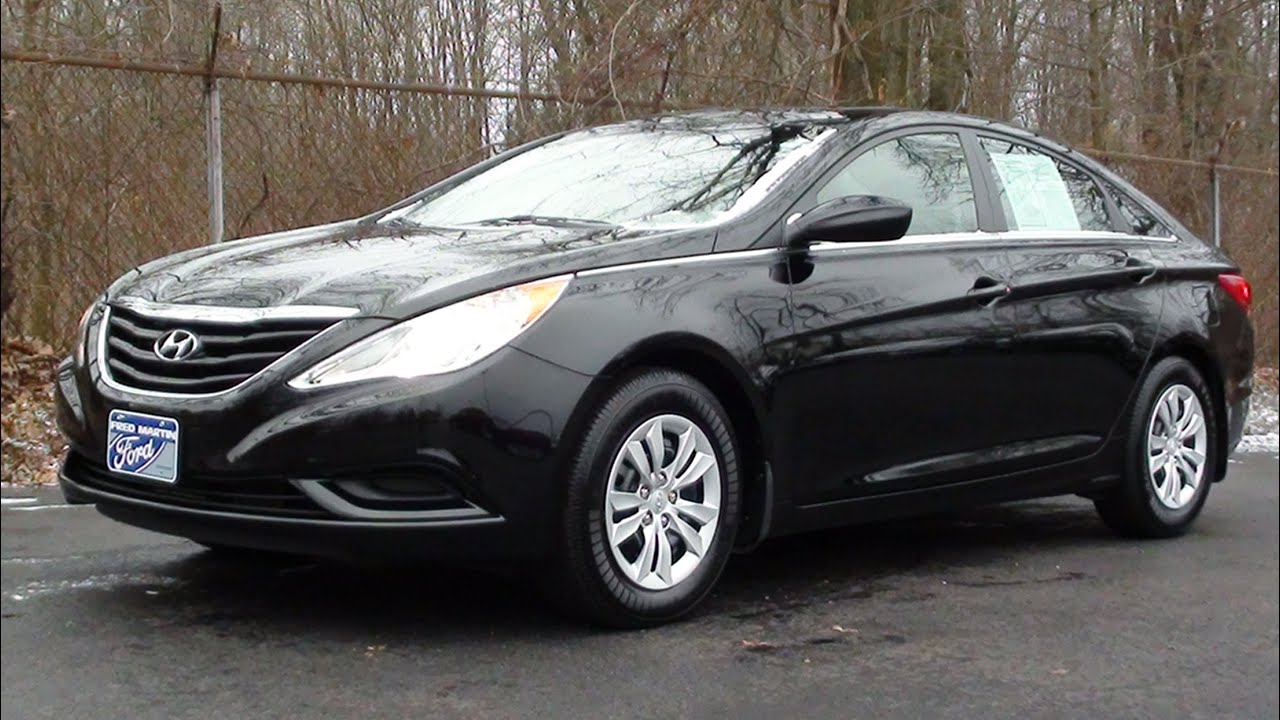
7. Hyundai Sonata GLS (2011 to 2014)
Estimated Price: $2,800 to $4,000
The sixth-generation Hyundai Sonata GLS, introduced for the 2011 model year, represented a clear change in how Hyundai approached midsize sedan design, engineering standards, and long-term durability. Before this period, the Sonata was often viewed as a cost-driven alternative rather than a first choice.
That perception changed sharply with this redesign. Improved structural integrity, refined interior materials, and better powertrain calibration allowed the Sonata to compete directly with established rivals. Today, this same generation has reached a price point that places it comfortably below four thousand dollars in the private resale market, making it an appealing option for buyers who want space and comfort without financial strain.
Most listings within this budget range involve the GLS trim powered by the 2.4 litre four cylinder engine, typically showing mileage between one hundred and ten thousand and one hundred and forty five thousand miles. At this stage of ownership, condition and service history matter far more than mileage alone.
When properly maintained, this engine has demonstrated strong durability, with many examples continuing reliable operation well beyond two hundred thousand miles. Fuel consumption remains reasonable for a midsize sedan, offering efficiency that suits daily commuting while still providing sufficient power for highway travel.
One technical issue associated with this generation deserves careful attention before purchase. Certain production batches of the Theta II 2.4 litre engine were linked to oil consumption and bearing wear problems. Hyundai addressed this through an extended warranty programme that applies to specific vehicles identified by VIN.
Buyers considering a 2011 to 2014 Sonata should always verify the VIN through Hyundai’s service database. This simple check clarifies whether the vehicle qualifies for extended engine coverage or falls outside the affected production range. That information plays an important role in assessing purchase risk and future repair exposure.
When this verification process confirms that the vehicle is either covered or unaffected, the Sonata GLS becomes a strong budget candidate. Interior quality remains one of its strongest attributes. The dashboard layout feels orderly and modern, even by current standards.
Materials used on frequently touched surfaces hold up well, and seat comfort remains a highlight during longer journeys. Rear seating space accommodates adult passengers without discomfort, which makes the car suitable for family use or ride-sharing duties.
Also Read: 5 Sedans With Air Conditioning That Lasts Forever vs 5 That Doesn’t
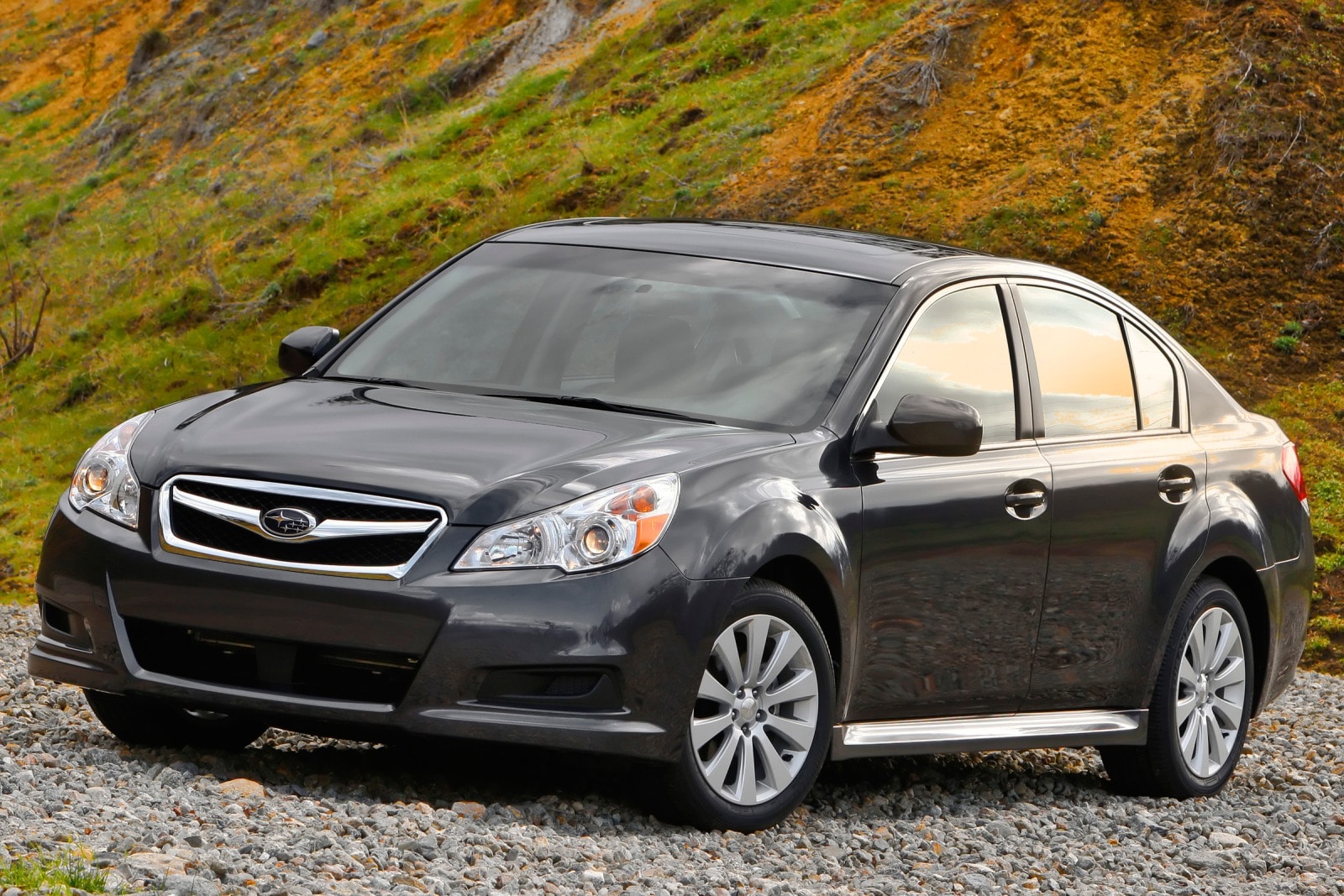
8. Subaru Legacy 2.5i Premium (2010 to 2014)
Estimated Price: $3,200 to $4,000
Finding a used sedan priced below four thousand dollars with standard All Wheel Drive remains uncommon. The Subaru Legacy 2.5i Premium from the 2010 to 2014 production years fills that gap for buyers who place high value on traction and stability in difficult driving conditions.
In private sale listings, examples with mileage ranging from one hundred and twenty thousand to one hundred and fifty thousand miles regularly appear within the three thousand two hundred to four thousand dollar range. This places All Wheel Drive capability within reach of budget-conscious buyers who live in regions where road conditions can change rapidly.
The Legacy’s drivetrain centres on the 2.5 litre EJ25 horizontally opposed four cylinder engine paired with Subaru’s symmetrical All Wheel Drive system. This combination has built a strong reputation for durability when maintained correctly. One known maintenance concern requires special attention during the buying process.
Some EJ25 engines developed head gasket seepage, particularly in vehicles where cooling system servicing was neglected. For this reason, a pre-purchase inspection should always include a cooling system pressure test, a combustion gas test for the coolant, and careful inspection of oil and coolant condition. Skipping this step increases ownership risk unnecessarily.
A Legacy that passes these checks and shows evidence of proper coolant maintenance presents a far stronger ownership prospect. Clean coolant, stable operating temperature, and absence of cross-contamination signal a powertrain capable of extended service life.
When these conditions are met, the Legacy delivers dependable performance and steady traction across wet, icy, or uneven road surfaces. This capability holds practical value for drivers who regularly face snow, heavy rain, steep inclines, or unpaved access roads.
Ride quality in this generation favours balance. The longer wheelbase provides composed highway manners, while suspension tuning maintains control without harshness. Steering remains predictable, and the car feels planted during poor weather conditions. Interior space supports everyday needs, offering adequate rear seat comfort and a trunk suited for routine cargo. Materials feel functional rather than luxurious, yet they age well when treated with care.
