

Toyota’s top executive in North America is sounding the alarm over what he believes has become the single biggest issue facing the automotive industry today: affordability.
In a recent interview with Automotive News, Toyota Motor North America CEO Ted Ogawa warned that rising vehicle prices are placing enormous pressure on consumers and reshaping the market in ways automakers can no longer ignore.
His comments arrive at a time when average new vehicle prices in the United States remain thousands of dollars higher than they were just a few years ago, while lower-cost models continue disappearing from dealership lots across the country.
Ogawa’s remarks stand out because they come from one of the industry’s most powerful and financially stable companies.
Toyota has consistently remained among the strongest-performing automakers in North America thanks to its reputation for reliability, strong hybrid lineup, and disciplined production strategy. When Toyota publicly acknowledges affordability as a crisis, industry analysts tend to pay attention.
The executive also warned that uncertainty surrounding the future of the United States-Mexico-Canada Agreement, commonly known as USMCA, could create major consequences for manufacturing costs and supply chains throughout North America.
At the same time, Ogawa confirmed that buyers hoping for Toyota’s long-rumored compact pickup truck will need to remain patient a little longer, despite enormous consumer demand for an affordable smaller truck.
Taken together, the comments paint a picture of an industry caught between rising costs, political uncertainty, changing consumer habits, and growing frustration from buyers who increasingly feel priced out of the market.
Also Read: Nissan CEO Says Turnaround Has Finally Pushed Automaker Back Into Growth Mode
Toyota Says Affordability Has Reached a Breaking Point
For years, rising vehicle prices were often discussed as a gradual industry trend. Today, many executives believe the situation has become far more serious.
Ted Ogawa’s comments reflect growing concern that ordinary buyers are struggling to keep pace with the cost of modern vehicles.
New car prices have climbed sharply since the pandemic years, driven by supply chain disruptions, inflation, technology costs, rising interest rates, and a market shift toward larger SUVs and premium trims. The result has been a dramatic reduction in affordable choices.
Vehicles priced below $25,000 have nearly disappeared from the American market, leaving many first-time buyers and middle-income households with few realistic options outside the used car segment.
Monthly payments on new vehicles have surged as financing amounts and borrowing costs both increased simultaneously. Toyota appears increasingly aware of the danger this creates.
The company historically built much of its success around practical, dependable vehicles accessible to mainstream consumers. Models like the Corolla and Camry became staples of the American market precisely because they offered reliability without luxury-level pricing.
If affordability continues to deteriorate, even brands with strong reputations risk losing future customers. Ogawa reportedly emphasized that the issue now affects the entire industry rather than isolated market segments.
Consumers are keeping vehicles longer, delaying purchases, and becoming far more sensitive to monthly payment levels than they were several years ago.
Dealers across North America have already reported growing resistance from buyers shocked by modern transaction prices. That pressure is forcing automakers to rethink their future strategies carefully.
The Industry’s shift toward expensive vehicles is creating problems.
One of the biggest reasons affordability has collapsed involves the industry’s overwhelming focus on larger, more profitable vehicles.

Automakers spent years moving away from compact sedans and inexpensive commuter cars in favor of SUVs, crossovers, luxury trims, and high-margin trucks. That strategy boosted profits significantly, especially during the post-pandemic years when inventory shortages allowed companies to prioritize premium models.
Toyota itself benefited from strong demand for vehicles like the RAV4, Highlander, Tacoma, and Tundra.
However, the long-term consequences are now becoming clearer. As affordable entry-level cars disappeared, many younger buyers and middle-income consumers found themselves increasingly unable to enter the new vehicle market at all.
Ogawa’s comments suggest Toyota understands the risk of continuing down that path indefinitely.
Automakers rely heavily on attracting younger customers early because those buyers often remain loyal for years if their first ownership experience goes well. When entry-level options vanish completely, companies risk shrinking their future customer base. The problem extends beyond sticker prices alone.
Insurance costs, registration fees, fuel prices, and financing expenses have all increased alongside vehicle prices. Many consumers who technically qualify for loans are still reconsidering purchases because total ownership costs feel overwhelming.
That shift is changing buyer behavior rapidly. Hybrid demand has surged as consumers search for ways to offset fuel costs, while used vehicles remain heavily sought after because genuinely affordable new options are becoming increasingly rare.
Toyota’s Compact Truck Remains Highly Anticipated
Among the most interesting parts of Ogawa’s interview was the discussion of Toyota’s long-rumored compact pickup truck, a vehicle that enthusiasts and dealers have discussed for years.
Smaller pickups have experienced renewed interest in the American market as buyers search for practical utility vehicles without the massive size and pricing associated with full-size trucks.
Ford’s Maverick proved there is substantial demand for compact trucks that prioritize affordability, fuel economy, and daily usability over maximum towing numbers. Naturally, many consumers expected Toyota to respond quickly.
The company’s reputation for durability and reliability makes it a strong candidate for success in the compact truck category. Rumors surrounding a smaller Toyota pickup have circulated repeatedly, especially as buyers continue showing strong interest in practical entry-level trucks. However, Ogawa indicated that customers will need to keep waiting.
While he acknowledged the high demand and growing popularity of compact pickups, Toyota does not appear ready to launch its smaller truck immediately.
That delay has frustrated some dealers who believe the company could compete extremely well against Ford’s Maverick if it entered the segment soon. The hesitation likely reflects broader industry pressures.
Developing entirely new vehicles requires enormous investment, and automakers are already balancing spending across electrification, software systems, hybrid technology, and emissions compliance. Toyota may simply be moving cautiously to ensure any future compact truck meets profitability and production goals before reaching the market.
Still, the demand clearly exists. Consumers increasingly want smaller, simpler trucks that feel attainable financially while still offering practical utility. Full-size pickups have become so large and expensive that many buyers now see compact trucks as a more realistic alternative. Toyota understands that opportunity, even if the company is not ready to move immediately.
USMCA Uncertainty Could Create Major Industry Problems
Ogawa also expressed concern about the future of the United States-Mexico-Canada Agreement, warning that failure to renew or maintain the trade framework could create serious consequences throughout the North American auto industry.
The agreement plays a critical role in modern automotive manufacturing because supply chains now operate across borders constantly.
Vehicles assembled in the United States often contain parts produced in Canada and Mexico, while engines, transmissions, electronics, and other components move between countries repeatedly during production. Any disruption to that system could increase costs substantially.
Automakers depend on predictable trade policies to manage pricing, manufacturing investment, and supply chain planning. If tariffs or trade restrictions intensify, companies may face higher production expenses that eventually reach consumers through even more expensive vehicles. For Toyota, the issue is especially important because the company maintains major manufacturing operations throughout North America.
The automaker operates numerous facilities across the United States, Canada, and Mexico, all deeply connected through integrated supply networks. Political uncertainty surrounding trade agreements, therefore, creates significant concern inside the company.
Ogawa’s warning reflects broader industry anxiety. Automakers are already dealing with inflation, technology investment costs, and changing consumer demand. Additional trade disruptions could place even more strain on affordability at a time when many buyers already feel financially stretched.
Toyota Is Trying to balance growth with practicality.
One reason Toyota’s comments resonate strongly is that the company has generally avoided some of the more aggressive industry mistakes seen elsewhere during recent years.
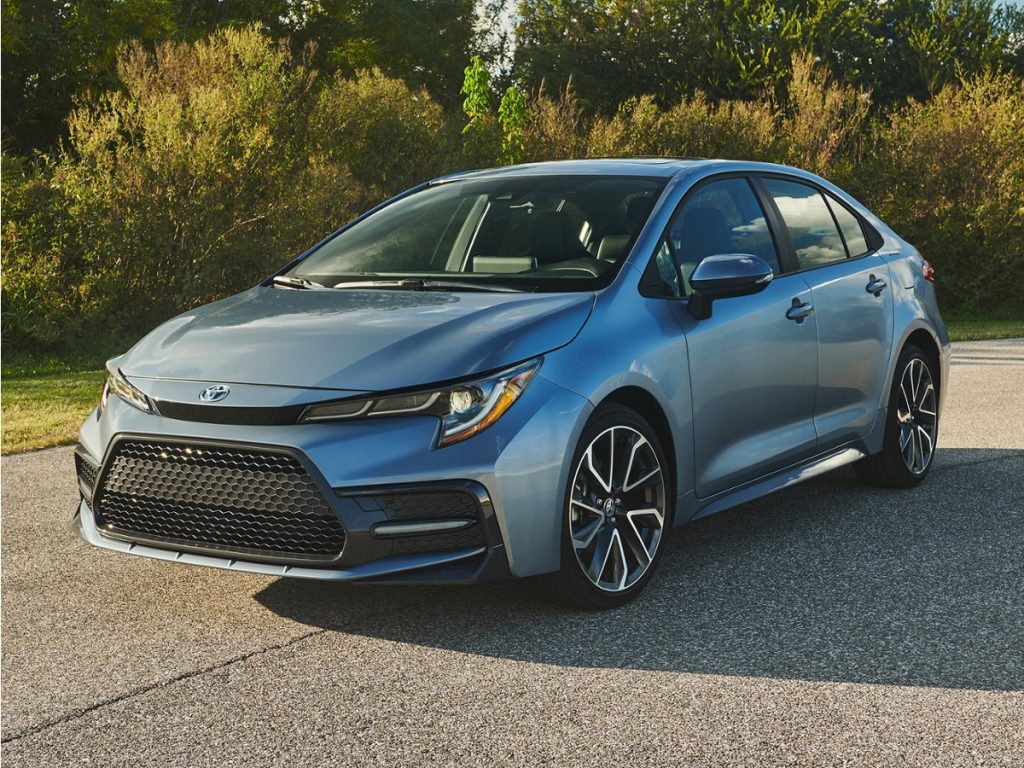
Toyota moved more cautiously into fully electric vehicles compared with rivals that invested heavily in EV-only strategies. Instead, the company focused strongly on hybrids, which continue performing extremely well as consumers search for fuel-efficient alternatives without charging complications. That strategy now appears increasingly validated.
Hybrid demand has grown rapidly throughout North America, and Toyota remains one of the strongest players in the segment. Buyers appreciate the balance hybrids provide between efficiency and practicality, particularly as gasoline prices remain unpredictable. At the same time, Toyota still recognizes that the affordability problem is worsening.
Even reliable, fuel-efficient vehicles become difficult to justify when transaction prices rise too high. Ogawa’s remarks suggest the company understands that long-term industry health depends on maintaining access for ordinary consumers rather than focusing entirely on premium products. The challenge is finding a workable balance.
Automakers need strong profits to fund future technology development and manufacturing investment. Yet pushing prices too high risks alienating the very customers who once formed the foundation of the market.
That tension now sits at the center of the automotive business. Toyota’s warning makes clear that affordability is no longer viewed as a secondary issue. For many executives, it has become the defining challenge shaping the future of the industry itself.
