
Some motorcycles are fast, some are rare, and a few quietly rewrite history. The eight machines in this list do all three, and they now command prices that rival or exceed brand-new luxury cars. From early engineering breakthroughs to full MotoGP technology, these vintage Japanese motorcycles represent decades of innovation from brands like Honda, Suzuki, and Kawasaki.
What makes them extraordinary is not only performance but timing. Each model marked a turning point, whether it was the birth of the superbike era, the rise of lightweight race replicas, or the arrival of race-derived electronics and materials in road machines. Today, collectors are paying six-figure sums for machines that were once ridden hard, modified, or even considered too extreme for their time.
In this breakdown of eight vintage Japanese motorcycles now worth more than new cars, we explore how engineering ambition, rarity, and racing heritage transformed these bikes from everyday performance machines into some of the most valuable two-wheel collectibles in the world.
1. Honda CBX1000 (1978–1982)
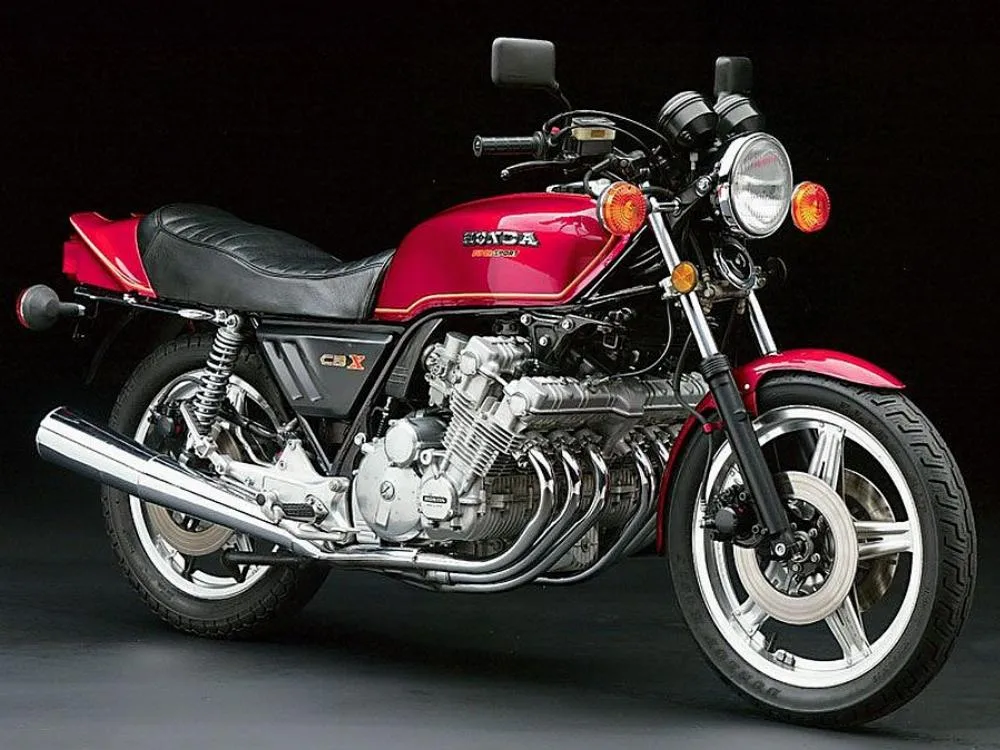
The Honda CBX1000 stands as one of the most iconic motorcycles of the late 1970s, admired for its dramatic styling, engineering ambition, and unforgettable sound. Powered by a massive 1,047cc DOHC inline-six engine producing 105 horsepower, it became the world’s most powerful production motorcycle at launch. Its six carburetors and six exhaust headers gave the bike a unique “jet engine” character, delivering a thrilling scream up to 9,000 rpm and making it one of the most visually and mechanically distinctive motorcycles ever built.
Today, CBX1000s in excellent condition typically sell for $25,000–$35,000, with pristine examples often valued higher than many new vehicles, including a Mazda CX-30. Collectors especially favor the early 1978–1979 naked models, produced before Honda introduced fairings and Pro-Link suspension. Bikes with factory paint, original exhaust systems, and matching engine and frame numbers command the highest premiums.
The CBX1000 also inspires strong emotional attachment among enthusiasts. The writer recalls a vivid dream of riding one, describing the protruding engine head, distinctive exhaust note, and even the bike’s unusual width while parking it. That experience deepened a long-standing fascination, raising questions about whether the CBX1000 represents the ultimate motorcycle worth owning.
A rare full-fairing CBX1000B spotted for sale in Western Australia reignited this curiosity and prompted reflections on the realities of ownership: what makes the CBX1000 special, whether it lives up to expectations, what alternatives exist, and how much buyers should reasonably pay. More than a collectible machine, the CBX1000 symbolizes aspiration, nostalgia, and the pursuit of a dream for many riders.
2. Suzuki GSX-R750 Limited Edition (1986)
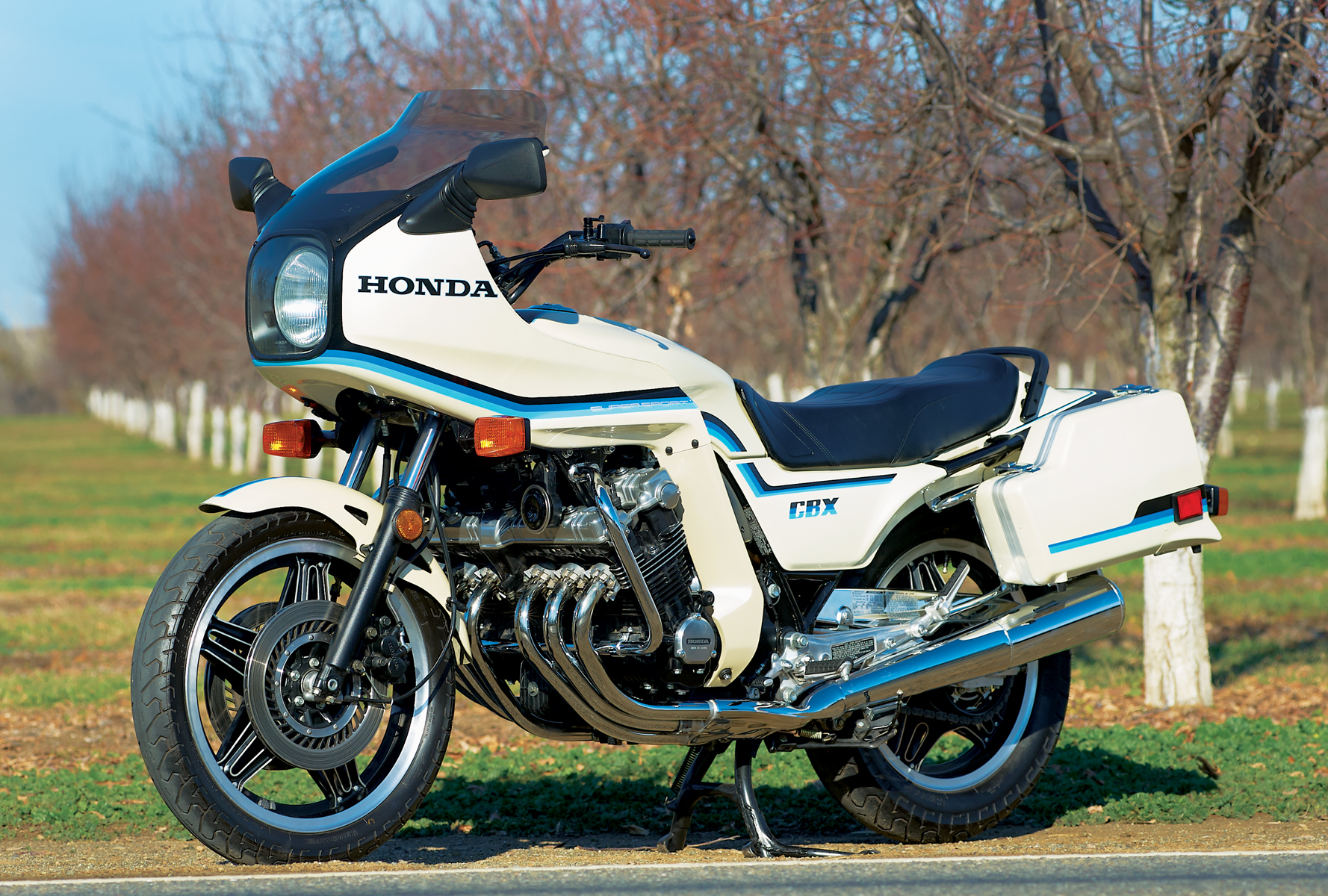
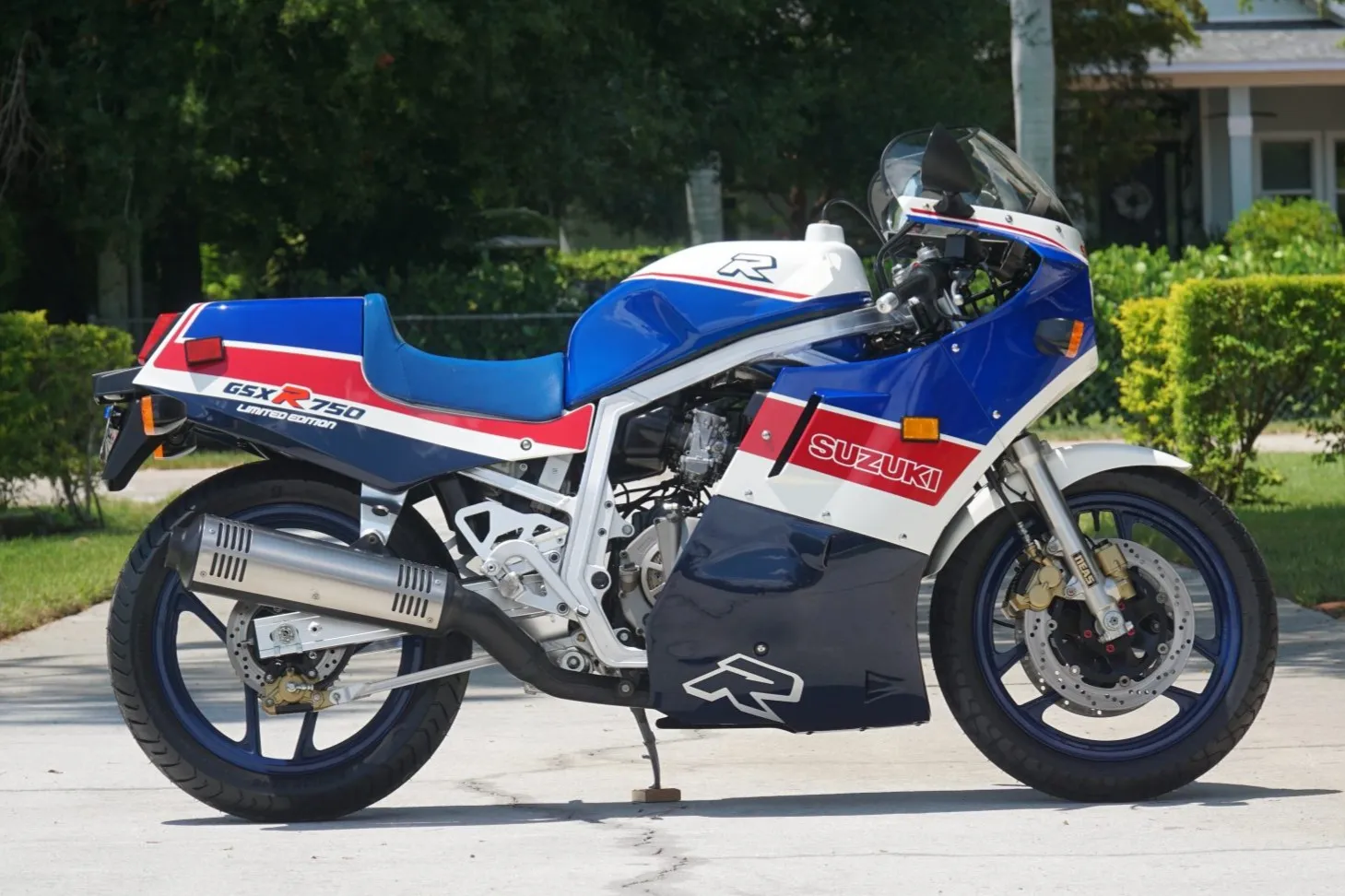
The Suzuki GSX-R750 Limited Edition transformed sportbike history by establishing the blueprint for modern middleweight superbikes. Introduced by Suzuki in 1986, the GSX-R750 Limited Edition combined lightweight engineering with race-focused technology, weighing only 388 pounds while producing around 100 horsepower from its aggressive 749cc air/oil-cooled inline-four engine. With adjustable suspension, full fairings, aluminum construction, and razor-sharp handling, it set a new standard for lightweight performance motorcycles and inspired the race-replica era.
Compared with other 750cc sportbikes of its time, the GSX-R750 was remarkably agile and significantly lighter than rivals. The Limited Edition improved on the already capable standard version by shaving additional weight and introducing track-oriented enhancements.
Exclusive features included a dry clutch, a GSX-R1100-spec 41mm fork with electronic anti-dive technology, stronger brakes with larger rotors and opposed-piston calipers, an aluminum-bodied remote-reservoir shock, wider handlebars, and lightweight aluminum protection components. These upgrades enhanced handling, braking, and race performance, making the bike especially desirable for aspiring racers.
Built primarily to satisfy homologation requirements for racing, only 299 units were imported in 1986, making surviving examples exceptionally rare. Many were heavily modified, crashed, stolen for parts, or ridden hard, leaving unmodified, low-mileage bikes increasingly scarce.
Collectors place the highest value on motorcycles in original white-and-blue factory paint with complete stock parts and showroom-level condition. Since replacement components, particularly dry clutch parts, are difficult and expensive to source, originality significantly impacts value.
Today, pristine GSX-R750 Limited Editions typically sell for $25,000–$35,000, reflecting their status as pioneering superbikes and highly sought-after collector machines.
- Engine: 749cc DOHC Inline-4 (air/oil-cooled, 16-valve)
- Horsepower: 106 hp
- Torque: 46.3 lb-ft
- Length: 83.5 in (2,120 mm)
- Width: 29.3 in (745 mm)
3. Kawasaki Z1 900 (1972)
The Kawasaki Z1 900 is widely regarded as one of the most important motorcycles ever built. Introduced by Kawasaki, it was developed as a direct response to the breakthrough success of the Honda CB750 Four. Its goal was simple but ambitious: build a machine that would surpass Honda in power, refinement, and prestige.
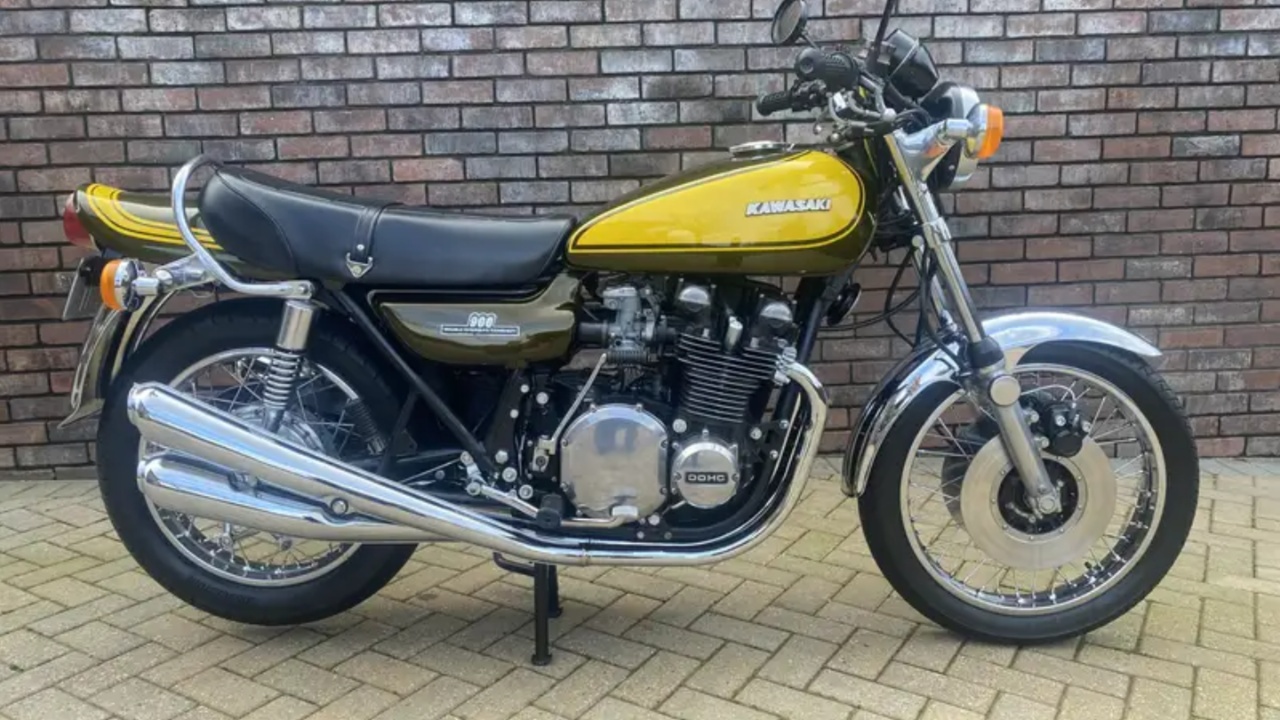
At its core, the Z1 used a 903cc DOHC inline-four engine producing around 82 horsepower. This made it the first mass-produced double overhead cam four-cylinder motorcycle, a major engineering milestone at the time. With a top speed near 130 mph, it earned the nickname “King of the Motorcycles” and set a new benchmark for performance in the early 1970s.
The motorcycle was not just about speed. It combined strong engine durability with balanced handling and a comfortable riding position. Wide handlebars and a stable chassis made it surprisingly easy to control for its era. Riders appreciated its smooth power delivery and its ability to perform reliably over long distances, which helped it build a reputation for everyday usability as well as performance.
Design also contributed to its lasting appeal. Factory color schemes such as candy brown and candy green became highly collectible, and original, well-preserved examples are especially sought after today. Many surviving bikes have been restored or modified, which makes untouched versions significantly more valuable.
In today’s collector market, the Z1 900 typically sells for $16,000 to $55,000, depending on condition and originality. High-end examples can exceed the price of a new Toyota Camry, reflecting its status as a landmark machine. Strong aftermarket support also means it remains one of the more maintainable vintage superbikes, which adds to its long-term desirability among enthusiasts.
- Engine: 903cc DOHC Inline-4 (air-cooled)
- Horsepower: 82 hp
- Torque: 54.2 lb-ft
- Length: 86.6 in (2,200 mm)
- Width: 31.5 in (800 mm)
4. Kawasaki H2 750 Mach IV (1972)
The Kawasaki H2 750 Mach IV is one of the most notorious motorcycles ever produced. Built by Kawasaki during the early 1970s performance wars, it gained the infamous nickname “widow-maker” because of its extreme power delivery combined with a chassis that struggled to contain it. Today, surviving examples are highly collectible, with well-preserved bikes often reaching $25,000 to $55,000, sometimes exceeding the value of modern cars like a Tesla Model 3.
At its heart, the H2 used a 748cc air-cooled two-stroke inline-triple engine producing around 74 horsepower. For its time, it delivered astonishing acceleration, reaching 0–60 mph in roughly 3.5 seconds. It could exceed 200 km/h, making it one of the fastest production motorcycles of its era. However, its performance came with serious compromises. The frame design and suspension were not fully capable of handling the engine’s aggressive output, which contributed to its reputation for being unpredictable at high speeds.
Despite its reputation, the H2 was not without improvements over earlier Kawasaki two-strokes like the H1. It featured a reinforced frame with larger tubing, a front disc brake instead of a drum, and a steering damper to improve stability. These updates helped, but they did not fully tame the motorcycle’s raw character. Riders described it as thrilling but unforgiving, built more for straight-line speed than balanced handling.
Fuel consumption was another drawback. The H2 was extremely inefficient, often consuming around 10 liters per 100 kilometers, which became more problematic during the oil crisis era. Combined with increasing safety concerns and shifting market demands, production ended in 1976.
Today, collector interest is driven by its rarity, performance reputation, and survival rate. Many original machines were crashed, heavily modified, or raced into the ground, making untouched examples especially valuable. The H2 750 Mach IV remains a symbol of an untamed era in motorcycle engineering when power often came before control.
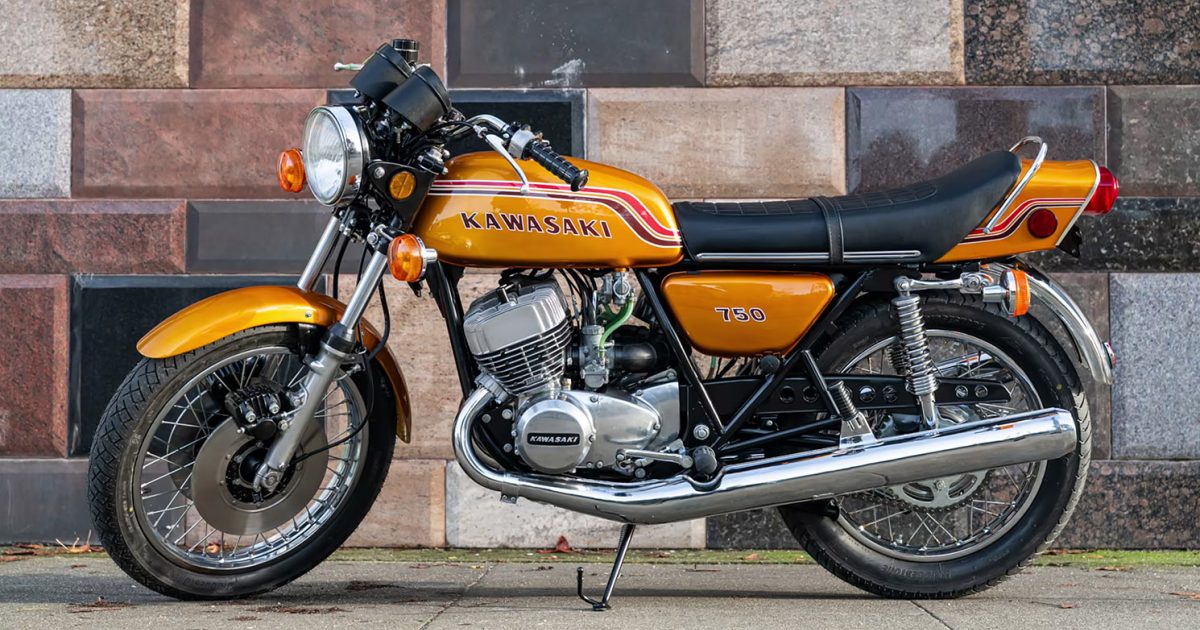
- Engine: 748cc 2-stroke Inline-3 (air-cooled)
- Horsepower: 74 hp
- Torque: 57 lb-ft
- Length: 81.9 in (2,080 mm)
- Width: 33.5 in (850 mm)
Also read: 10 Cars Where the AdBlue System Costs $2,000 to Repair
5. Honda VFR750R RC30 (1988–1990)
The Honda VFR750R RC30 was developed by Honda with a single purpose, to dominate the first World Superbike Championship. Built as a road-legal version of Honda’s factory RVF750 race machine, it redefined what a production-based superbike could be. With magnesium components, titanium fork legs, gear-driven camshafts, and a distinctive single-sided swingarm, the RC30 delivered race-level engineering in a street bike package.
At its core, the RC30 used a 748cc 90-degree V4 engine producing around 112 horsepower in standard form. With race kits, output could exceed 130 horsepower and later even approach 145 horsepower in competition trim. Its 360-degree firing order, lightweight internals, and refined exhaust system gave it strong traction, rapid revving ability, and a signature exhaust note that became part of its identity. Performance was strong enough to push the bike beyond 155 mph while still maintaining precise control through its close-ratio six-speed gearbox and slipper clutch.
The chassis was equally advanced. An aluminum beam frame, compact geometry, and a race-developed Pro-Arm single-sided swingarm created a lightweight and highly stable platform. At just 187 kilograms dry, it matched the weight of many 600cc machines of its era. High-spec suspension, large disc brakes, and magnesium wheels further reinforced its racing focus. The result was a motorcycle that felt compact, responsive, and far ahead of its time in both handling and stability.
Only around 5,000 units were produced, making the RC30 highly exclusive even when new. Today, originality is critical, especially for rare versions such as Rothmans-liveried machines or well-documented low-mileage examples. Values typically range from $35,000 to over $120,000, placing it above the price of many modern performance cars like the Chevrolet Corvette Stingray.
Collectors prize the RC30 for its racing pedigree, including back-to-back World Superbike titles and endurance racing success. Even decades later, it remains widely regarded as the defining Japanese homologation superbike, combining precision engineering, rarity, and proven track dominance into one iconic machine.
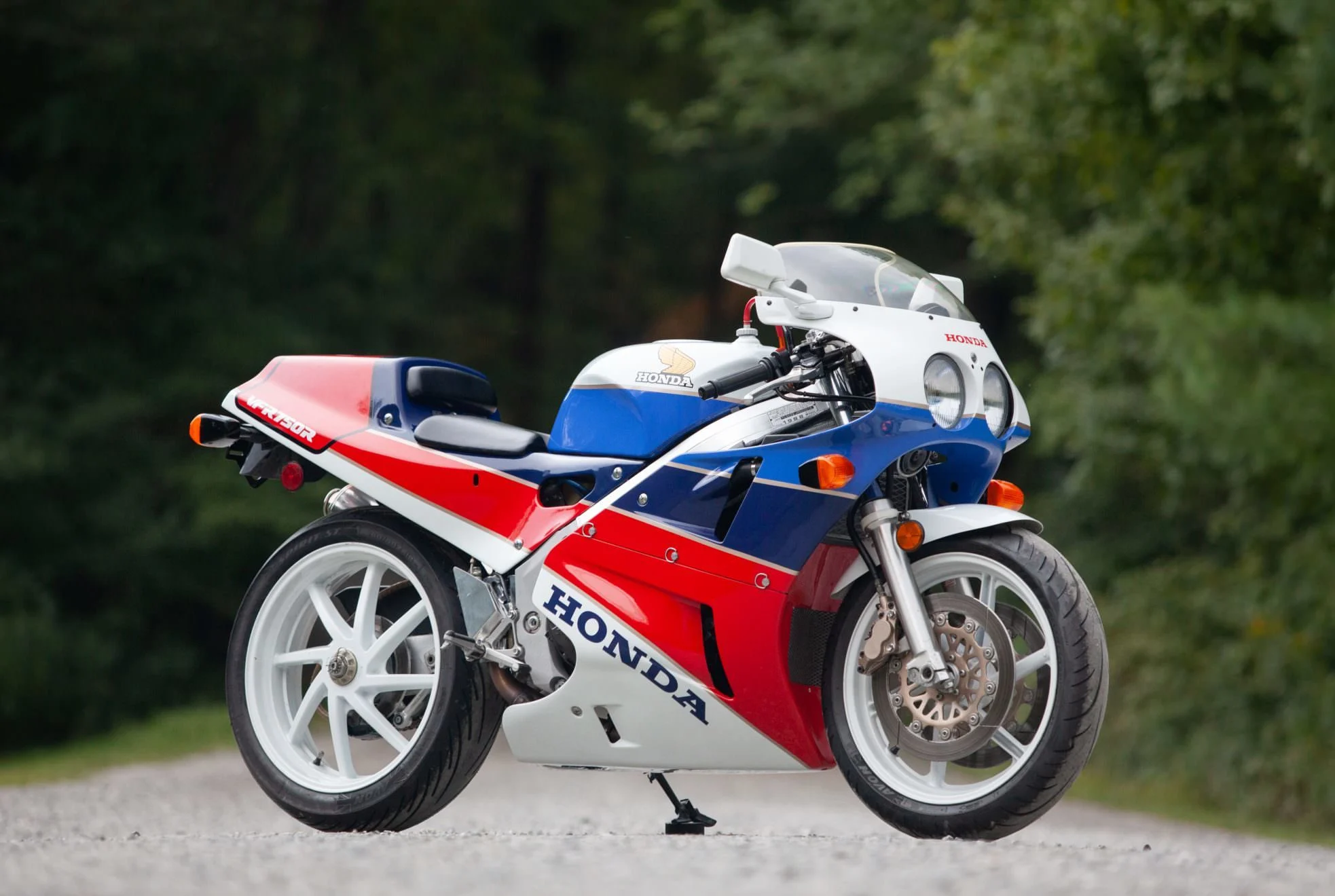
- Engine: 748cc DOHC 90° V4 (liquid-cooled)
- Horsepower: 112–118 hp (export) / 76–77 hp (JDM)
- Torque: 53–56.4 lb-ft (export) / ~51 lb-ft (JDM)
- Length: 80.5 in (2,045 mm)
- Width: 27.6 in (700 mm)
6. Honda NR750 (1992)
The Honda NR750 is one of the rarest and most technically complex motorcycles ever produced by Honda. With only about 300 units built worldwide, it now sells for roughly $85,000 to $150,000, placing it above many high-end modern sports cars. Powered by a 747.7cc V4 engine using oval pistons, twin connecting rods per piston, and eight valves per cylinder, it was designed to simulate the performance potential of a larger multi-cylinder engine. Output reached about 125 horsepower with a redline near 14,000 rpm, making it an engineering showcase rather than a conventional superbike.
The NR750’s defining feature is its oval-piston technology, originally developed through Honda’s long-running “NR” racing experiments. The design allowed more valves per cylinder and higher airflow, but it resulted in extreme mechanical complexity. Each engine was expensive to build and even more expensive to maintain, which is why many owners rarely ride them and treat them as collectible machines instead.
Beyond its engine, the NR750 introduced several design elements that influenced future sportbikes. Its styling included an aerodynamic fairing, single-sided swingarm, and integrated exhaust concepts that later inspired production motorcycles from other manufacturers. Some designers, including Massimo Tamburini, acknowledged the NR750’s influence on later iconic models such as the Ducati 916, particularly in its sharp lines and exhaust placement philosophy.
Despite its innovation, the riding experience is often described as contradictory. The bike is heavy, expensive to repair, and extremely rare in parts availability, which makes owners cautious on the road. Performance is smooth and linear, with excellent high-speed stability and advanced suspension for its era, but it lacks the aggressive character expected from a superbike of its image.
In practice, the NR750 is viewed less as a performance machine and more as a technological statement. It represents Honda’s decade-long attempt to challenge conventional engine design limits. Today, its value is driven as much by rarity and engineering curiosity as by any real-world riding experience, making it one of the most collectible motorcycles ever built.
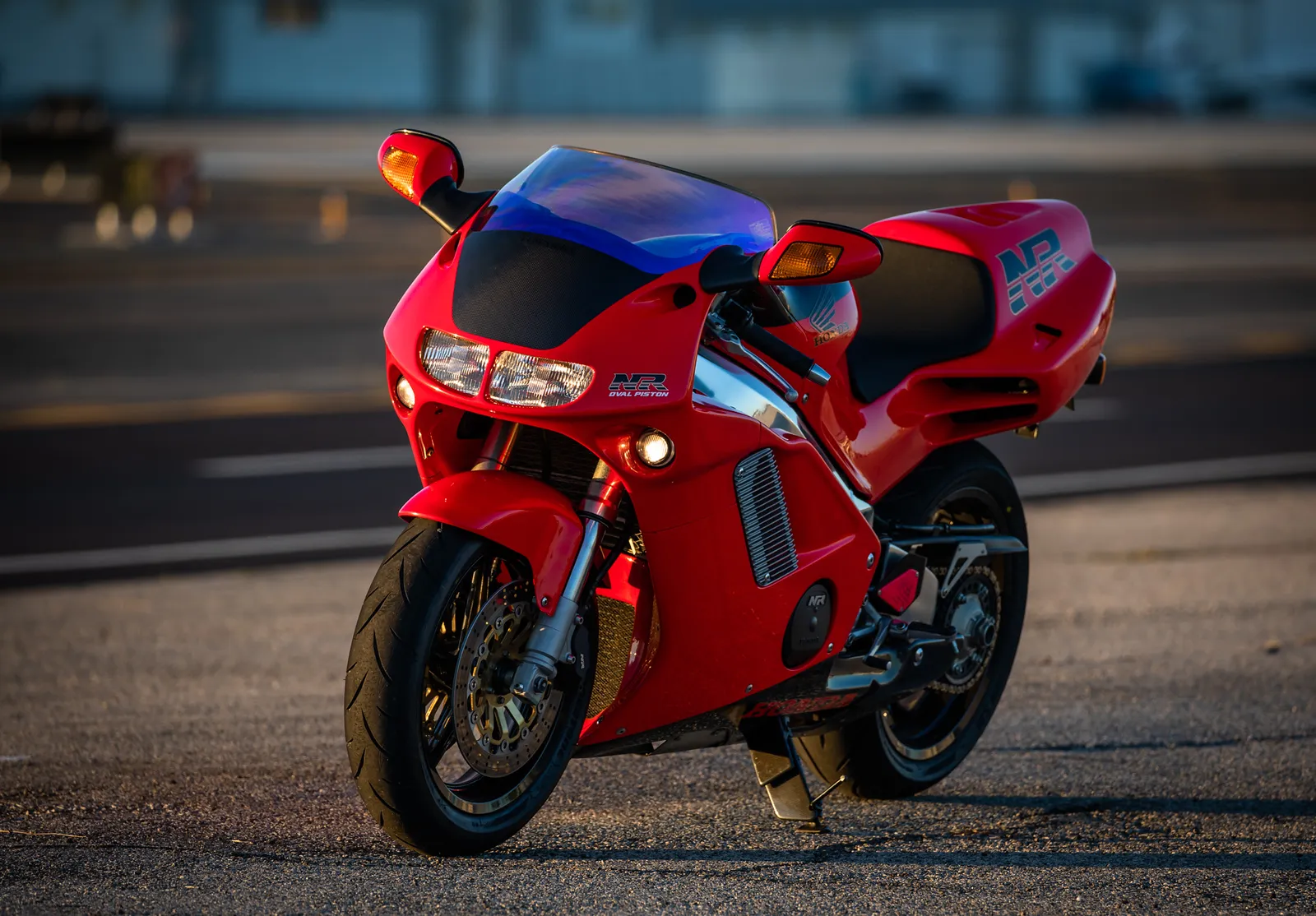
- Engine: 747.7cc DOHC 90° V4 (liquid-cooled, oval piston)
- Horsepower: 125 hp
- Torque: 49 lb-ft
- Length: 84.6 in (2,150 mm)
- Width: 27.6 in (700 mm)
7. Honda RC213V-S (2016)
The Honda RC213V-S represents the closest thing to a full MotoGP machine ever sold to the public by Honda. Powered by a 999cc V4 engine, it produces about 159 horsepower in standard street trim and up to 214–215 horsepower with the official Sport Kit. Originally priced around $184,000, it now trades between $214,000 and over $275,000, placing it above many exotic sports cars. With only about 213 units produced globally, rarity plays a major role in its extreme value.
A defining characteristic of the RC213V-S is its extraordinary lightweight design. At roughly 375 pounds, it is significantly lighter than modern liter-class superbikes, including the Yamaha YZF-R1 and even supercharged machines like the Kawasaki H2. This low mass, combined with near-perfect balance, gives it an unusually intuitive and confidence-inspiring feel. Even at speed, it feels effortless to control, with stability and responsiveness that make it feel smaller and more agile than its actual size suggests.
Performance delivery is another highlight. Even the restricted street version feels stronger than expected due to its low weight, while the full Sport Kit unlocks sharper throttle response, higher revs, and faster acceleration up to a 14,000 rpm redline. The power delivery remains smooth and linear rather than aggressive, making the bike surprisingly approachable despite its extreme capabilities.
Braking and handling are equally advanced. High-spec Brembo systems provide strong, progressive stopping power with excellent feedback, while the chassis remains composed under heavy braking.
The bike does not feel twitchy or unstable; instead, it tracks precisely through corners and allows riders to focus on lines rather than correcting behavior mid-turn. The electronics package, derived from MotoGP technology, offers multiple power modes, traction control levels, and engine braking settings, all working subtly in the background.
With the Sport Kit installed, the RC213V-S becomes even sharper, shedding additional weight and transforming its already elite performance into something closer to a race bike. Riders often describe it as a machine that redefines expectations of motorcycle dynamics, blending stability, speed, and control in an almost unmatched way.
The RC213V-S is less about practicality and more about showcasing MotoGP engineering at its purest level. It stands as one of the most advanced and exclusive motorcycles ever created, offering a riding experience that few will ever encounter.
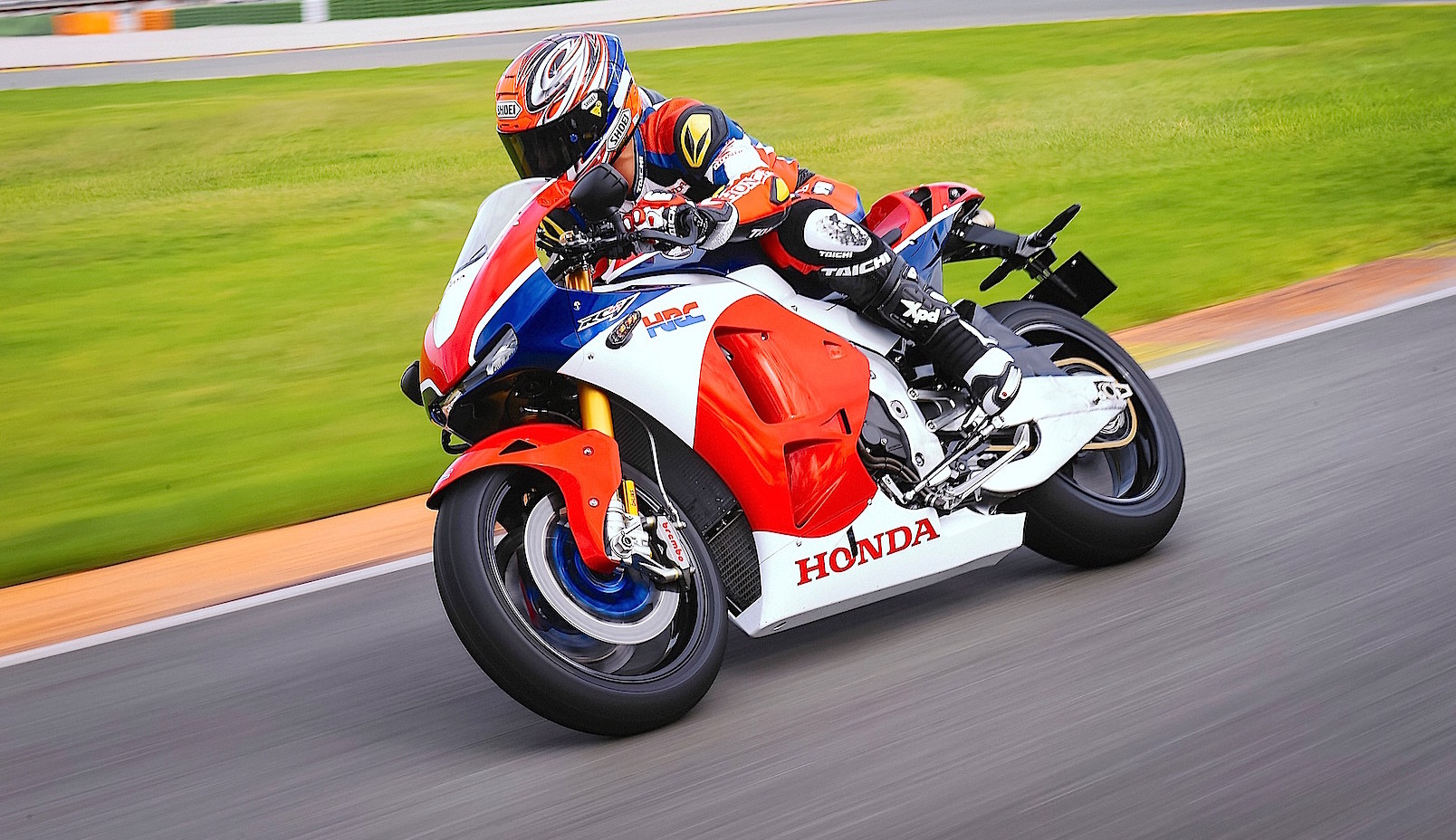
- Engine: 999cc DOHC 90° V4 (liquid-cooled)
- Horsepower: 101 hp / 157 hp / 212–215 hp (with Sports Kit)
- Torque: 66 lb-ft / 75.2 lb-ft / 87 lb-ft
- Length: 81 in (2,110 mm)
- Width: 31 in (790 mm)
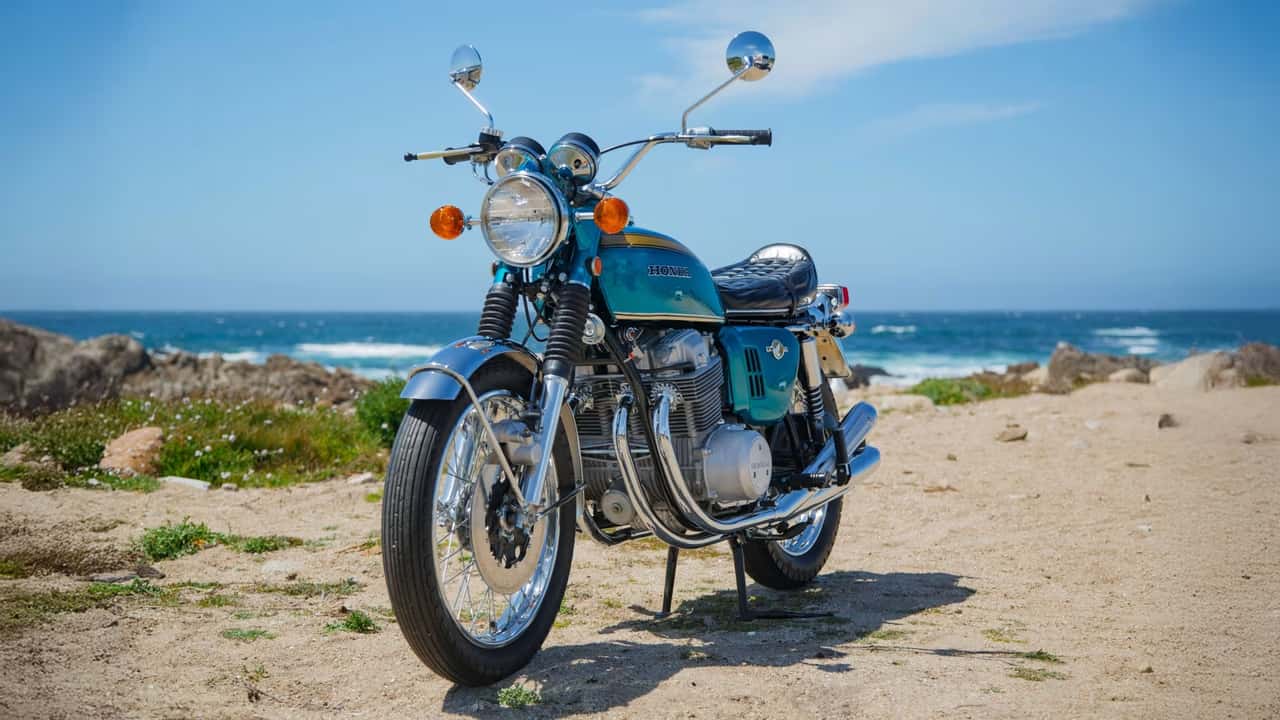
8. Honda CB750 “Sandcast” Prototype (1968)
The Honda CB750 Sandcast Prototype is widely regarded as the most important motorcycle in modern history. Built personally under the direction of Honda founder Soichiro Honda, this one-off prototype laid the foundation for the superbike era and permanently changed global motorcycle design and performance standards.
Powered by a 736cc air-cooled SOHC inline-four engine, the CB750 prototype produced around 67 horsepower and could exceed 120 mph. It introduced a smooth, reliable, and high-revving four-cylinder format that would become the blueprint for future sport and street motorcycles. Its combination of performance, usability, and engineering refinement marked a dramatic shift away from the dominant British heavyweight motorcycles of the time.
What makes the 1968 prototype unique is its hand-built “sandcast” construction process. The engine cases were created using sand molds, producing a distinctive grainy finish before Honda transitioned to mass production methods.
This prototype also featured several one-off components, including special Keihin carburetors, unique cast markings with “HONDA” on the valve cover, and experimental bodywork details such as a rear-hinged seat and modified starter motor housing. These details distinguish it from the later 1969 production run, which itself already became one of the most influential motorcycles ever made.
After being sent to the United States for evaluation in 1968, the CB750 prototype impressed Honda’s American team with its reliability, power delivery, and advanced engineering. Its success quickly led to full-scale production in 1969, which included innovations such as the first mass-produced motorcycle disc brake system.
In the collector market, the prototype represents the pinnacle of motorcycle rarity. When it sold at auction for over $313,000, it demonstrated how highly valued foundational engineering artifacts have become. That price exceeded even modern exotic cars like the Ferrari Roma Spider, highlighting its significance beyond transportation.
More than just a motorcycle, the CB750 Sandcast Prototype is considered the origin point of the superbike category and one of the most influential machines ever created.
- Engine: 736cc SOHC Inline-4 (air-cooled)
- Horsepower: 67 hp
- Torque: 44 lb-ft
- Length: 86.6 in (2,200 mm)
- Width: 35 in (890 mm)
Looking across these eight motorcycles, one pattern becomes clear. Value is no longer defined only by age or mileage, but by significance. Each motorcycle here represents a leap forward in engineering, from the revolutionary Honda CB750 Sandcast prototype to the MotoGP-derived Honda RC213V-S. Together, they trace the evolution of performance motorcycles as they moved from mechanical simplicity to highly specialized, race-bred technology.
Brands such as Honda, Suzuki, and Kawasaki did not just build faster bikes. They built machines that defined entire eras of motorcycling culture and performance expectations.
Today, these motorcycles are no longer just vehicles. They are artifacts of innovation, often sitting in collections or museums rather than on the road. Their prices now reflect scarcity, heritage, and emotional appeal as much as performance. As a result, they often surpass modern cars in value, proving that the most important machines are not always the newest ones, but the ones that changed everything.
Also read: 5 Cars Where Trade-In Beats Private Sale vs 5 Where It Doesn’t
