Motorcycle values are no longer defined by age or mileage alone. Some machines from Honda’s past now command prices that exceed brand-new superbikes because they represent defining breakthroughs in performance, design, and racing history. Across decades, Honda built motorcycles that did more than compete. They reshaped entire categories.
From early engineering experiments like the CR93, to world-dominating race homologations such as the RC30, and category creators like the GL1000 Gold Wing, these machines mark turning points in how motorcycles were designed and used. Others, including the CB750 Sandcast and CBX Super Sport, introduced new levels of complexity and performance that forced the entire industry to evolve.
What unites them is not just rarity, but influence. These are motorcycles that changed expectations for speed, reliability, and innovation. As collector demand grows, their market value continues to climb, often surpassing the price of modern production bikes. They are no longer just vintage machines, but milestones in mechanical history that remain desirable for both emotional and financial reasons.
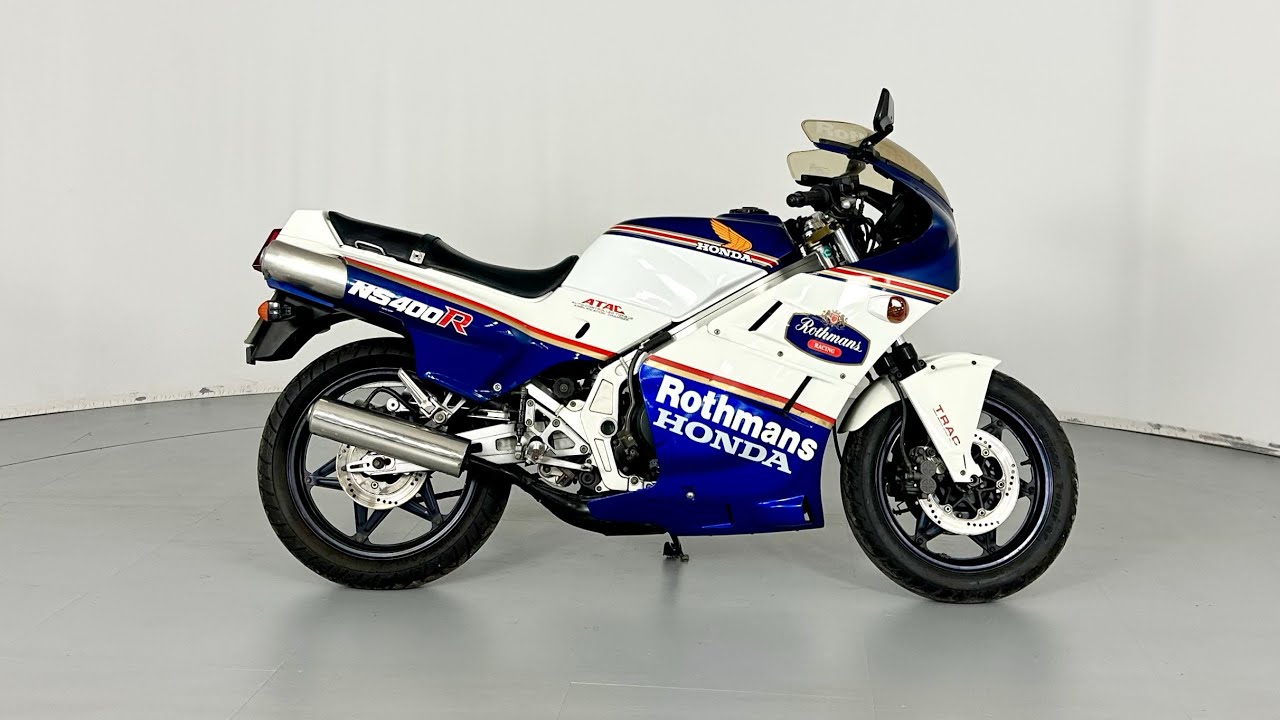
1. Honda NS400R
The 1985 Honda NS400R was Honda’s answer to the growing popularity of race replica motorcycles during the 1980s, though it took a different approach from competitors. While rivals such as Yamaha’s RD500LC and Suzuki’s RG500 used 500cc engines inspired by Grand Prix machines, Honda developed a smaller 387cc V3-powered motorcycle aimed primarily at the Japanese domestic market, where licensing restrictions made mid-sized bikes more attractive. Despite this difference, the NS400R gained attention through its striking Rothmans racing livery and connection to championship rider Freddie Spencer.
Rather than focusing on outright speed, the NS400R emphasized balance, handling, and engineering quality. Its liquid-cooled V3 two-stroke engine produced approximately 72 horsepower in export models and used Honda’s advanced ATAC system, which improved torque at lower engine speeds while maintaining strong top-end performance. Although it lacked the raw power of larger 500cc rivals, the NS400R could still reach speeds of around 126 to 135 mph and delivered a responsive, exciting ride that felt more refined than aggressive.
One of the motorcycle’s strongest features was its exceptional handling. Built using a lightweight aluminum frame adapted from the smaller NS250R, the bike was agile, easy to maneuver, and widely praised for its cornering ability. Premium details, including air-assisted suspension, anti-dive front forks, alloy components, and careful craftsmanship, highlighted Honda’s engineering standards.
Today, the NS400R has become a sought-after collector’s motorcycle due to its rarity, styling, and historical significance. Unlike the Yamaha RD500LC and Suzuki RG500, whose prices have climbed dramatically, mint-condition NS400Rs remain comparatively affordable, with values reaching about $12,000. However, buyers should be cautious of aging mechanical issues, scarce replacement parts, and gearbox wear. Nearly four decades later, the NS400R stands as a unique and highly respected classic.
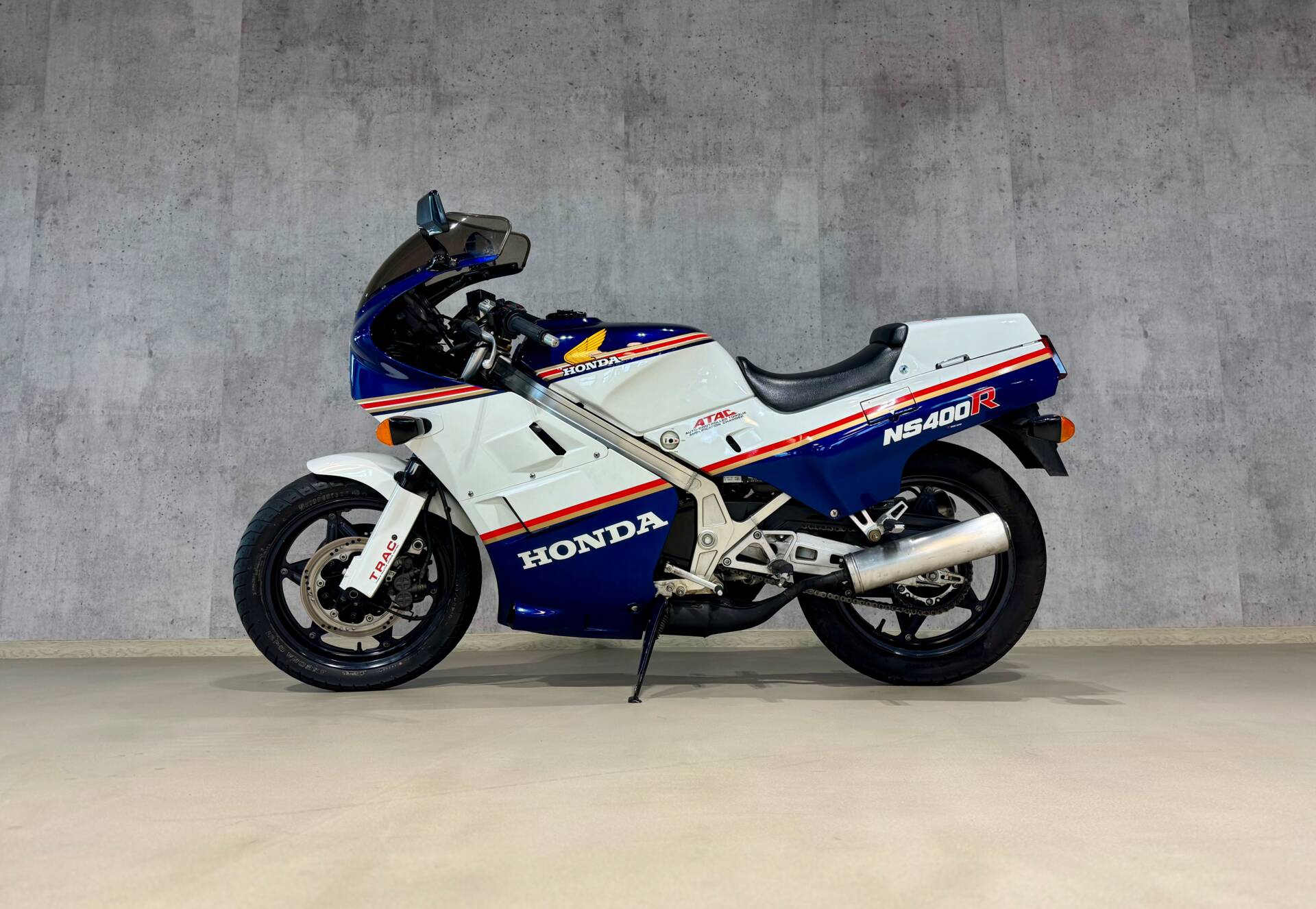
- Engine: 387cc liquid-cooled 2-stroke 90° V3 (V-type 3-cylinder)
- Horsepower: 72 hp (export model) / 59 hp (Japan domestic model)
- Torque: 37 lb-ft (50 Nm)
- Length: 79.7–81.3 in (2.03–2.07 m, market dependent)
- Width: 28.3 in (0.72 m)
2. Honda VF1000R
The Honda VF1000R, produced for the U.S. market between 1985 and 1986, was Honda’s attempt to deliver a race-inspired liter-class sportbike that balanced speed, comfort, and engineering sophistication.
Although it competed against formidable motorcycles such as Kawasaki’s GPZ900R and Yamaha’s FJ1100, the VF1000R carved out its own reputation through its powerful V4 engine, premium styling, and touring capabilities. With a 998cc liquid-cooled, dual overhead cam V4 engine producing up to 117 horsepower and strong torque, the bike offered both thrilling acceleration and comfortable long-distance performance.
Originally introduced to European markets before arriving in the United States, the VF1000R became highly anticipated among American enthusiasts who wanted Honda’s most advanced sport machine. Honda had initially prioritized the more touring-focused VF1000F for North America, frustrating riders seeking a race-oriented superbike. By 1985, the VF1000R finally arrived in dealerships and quickly gained attention for its striking appearance, smooth power delivery, and Honda reliability.
The motorcycle was part of Honda’s broader V4 revolution during the early 1980s. Developed in response to increasing competition from Yamaha, Honda rapidly expanded its V4 lineup across multiple sizes and categories, ranging from sportbikes to cruisers and standards. The VF1000R represented the top end of this strategy, showcasing advanced engineering with liquid cooling, four-valve cylinder heads, and a high-revving engine designed to blend performance with durability.
Despite its sporty image, the VF1000R excelled as a fast and refined sport tourer. Its comfortable ergonomics, stable handling, and impressive top speed of around 149 mph made it practical for both spirited riding and long-distance travel. Today, the VF1000R remains appreciated by collectors for its distinctive V4 character, historical importance, and elegant design. While prices vary depending on condition, pristine examples can reach values of approximately $13,000, reflecting growing admiration for this iconic Honda classic.
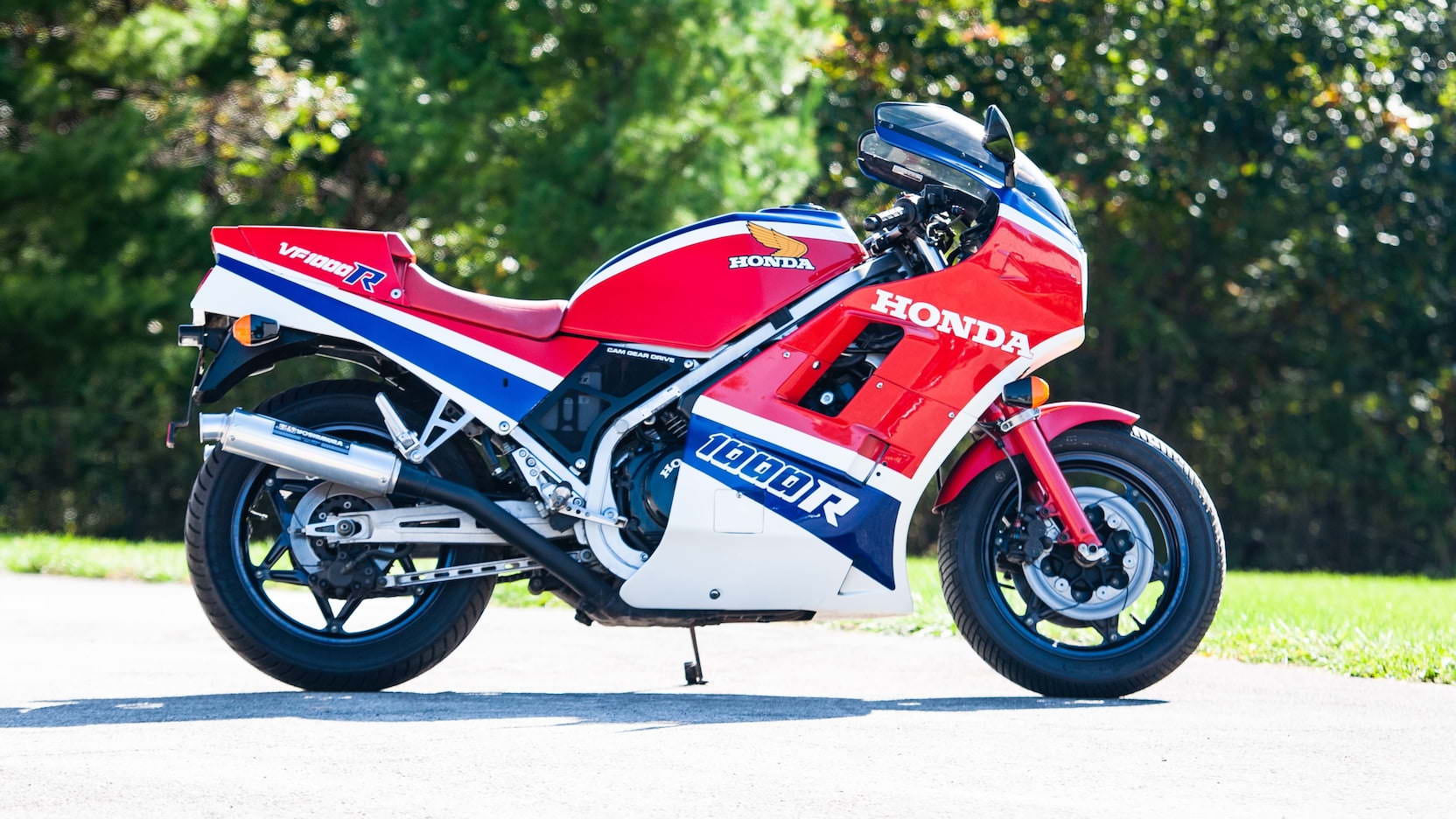
- Engine: 998cc liquid-cooled 90° V4, 4-stroke DOHC (gear-driven cams)
- Horsepower: 130 hp @ 10,500 rpm
- Torque: 68 lb-ft (92.2 Nm) @ 8,000 rpm
- Length: 89.6 in (2.28 m)
- Width: 28.9 in (0.74 m)
3. Honda CX650 Turbo (CX650T)
The 1983 Honda CX650T was Honda’s final turbocharged motorcycle and an evolution of the CX500 Turbo. It used a larger engine and improved tuning to increase performance while maintaining Honda reliability. The model reflected early 1980s interest in forced induction as a way to gain power from smaller displacement engines and stood out as a major technological experiment.
Powered by a 647cc liquid-cooled transverse V-twin pushrod engine, the CX650T used computer-controlled fuel injection and a turbocharger producing up to 19 psi of boost. It delivered around 100 horsepower and 68.5 lb-ft of torque, far more than the standard CX model. Despite weighing about 572 lbs, it could reach 140 mph and run the quarter mile in 11.9 seconds, giving it superbike-level acceleration in a smaller engine class.
The CX650T was produced in very limited numbers, with fewer than 2,000 units sold exclusively in North America. It arrived during a period when Japanese manufacturers were experimenting with turbocharging to meet emissions goals and boost performance. However, high cost, complexity, and reliability concerns limited the success of turbo motorcycles. In the United States, a 50 percent tariff on motorcycles over 700cc also shaped design choices.
Chassis features included Pro-Link rear suspension, anti-dive forks, shaft drive, and a full touring fairing, making it more sport tourer than pure sportbike. Honda later shifted away from turbocharging toward larger naturally aspirated V4 engines. Today, the CX650T is a rare collector motorcycle valued for its technology and uniqueness.
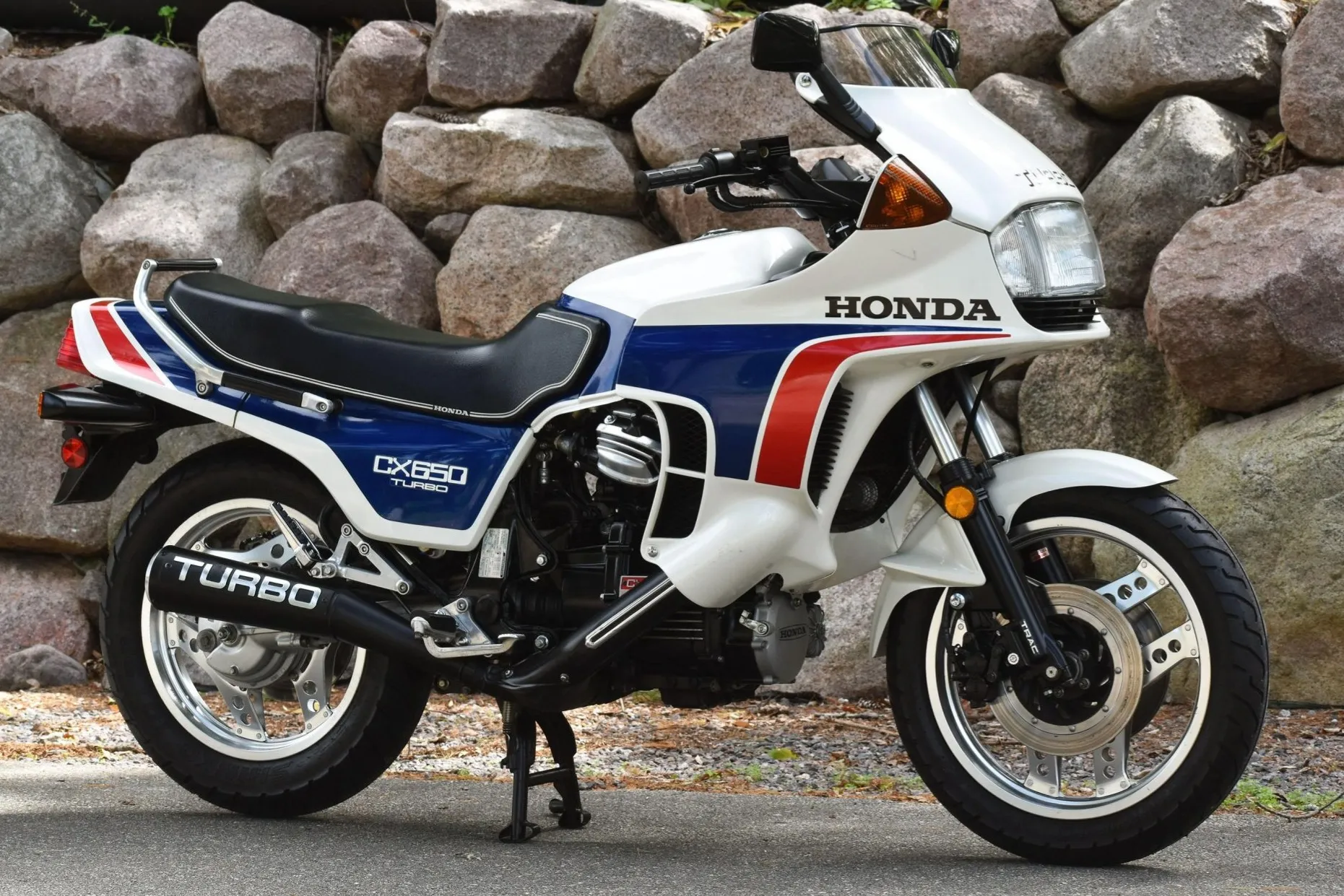
- Engine: 674cc turbocharged liquid-cooled 80° V-twin, SOHC/4-valve per cylinder, fuel-injected
- Horsepower: 100 hp @ 8,000 rpm
- Torque: 68.5 lb-ft (93 Nm) @ 6,000 rpm
- Length: 87.4 in (2,220 mm)
- Width: 30.5 in (775 mm
4. Honda CB450
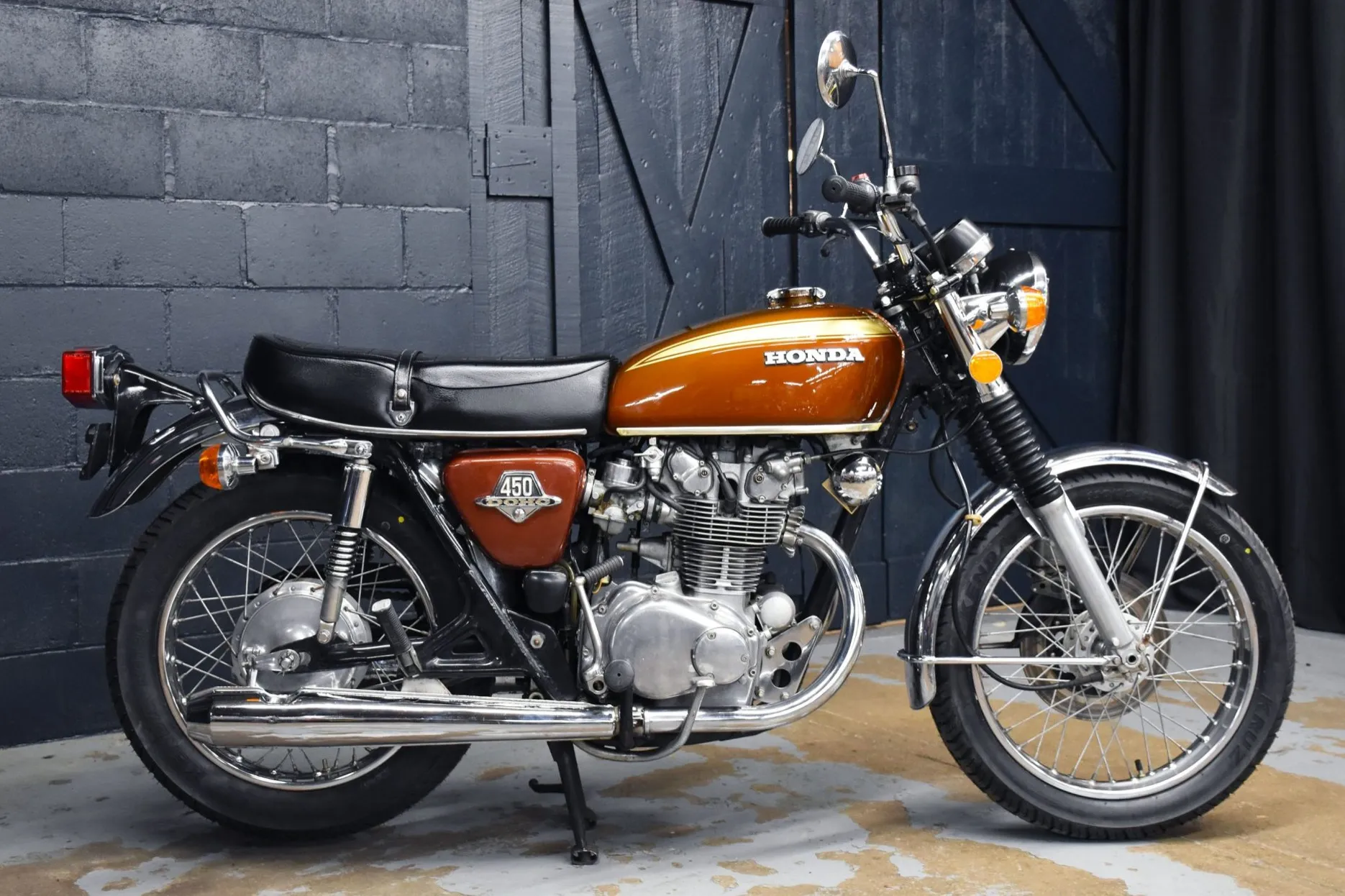
The Honda CB450, introduced in the mid-1960s, was Honda’s bold entry into the large motorcycle market and a key stepping stone toward the legendary CB750. While it is often overshadowed by its bigger sibling, the CB450 earned its own reputation as an advanced and capable middleweight motorcycle that challenged the dominance of British twins in the global market.
Powered by a 445cc parallel-twin engine producing around 45 horsepower and 27.6 lb-ft of torque, the CB450 delivered strong performance for its time, with road tests showing it could exceed 100 mph. It featured a lightweight and compact engine design with twin overhead camshafts, an electric starter, and an unusual torsion-bar valve spring system that allowed high-revving capability up to around 9,500 rpm. This level of engineering sophistication was rare in mid-1960s production motorcycles.
Despite its technical innovation, the early CB450 “Black Bomber” faced criticism, especially in the United States. Riders disliked its styling, heavy weight of about 449 lbs, and awkward four-speed gearbox with wide gear gaps that made city riding less smooth. Ground clearance was also limited, and the bike could feel unwieldy in tight conditions. However, in markets like the UK, it gained popularity and even earned a cult nickname due to its performance and value compared to larger British machines.
Honda continuously improved the CB450 over its production run. Later versions added a fifth gear, revised styling, improved suspension, larger valves, and eventually a front disc brake. These updates made it more practical, refined, and competitive. The CB450 also achieved notable success in racing and production events, proving its durability and speed potential.
The CB450 is regarded as an important and collectible classic. It represents Honda’s early ambition to redefine motorcycle engineering, blending innovation with real-world usability. Pristine examples can reach values of up to $15,000, reflecting their growing appreciation among vintage motorcycle enthusiasts.
- Engine: 444cc air-cooled 4-stroke 180° parallel-twin, DOHC (2 valves per cylinder)
- Horsepower: 45 hp @ 9,000 rpm
- Torque: 27.6 lb-ft (37.4 Nm) @ 7,000–8,500 rpm
- Length: 83.3 in (2,115 mm)
- Width: 30.5 in (775 mm)
5. Honda CBX Super Sport
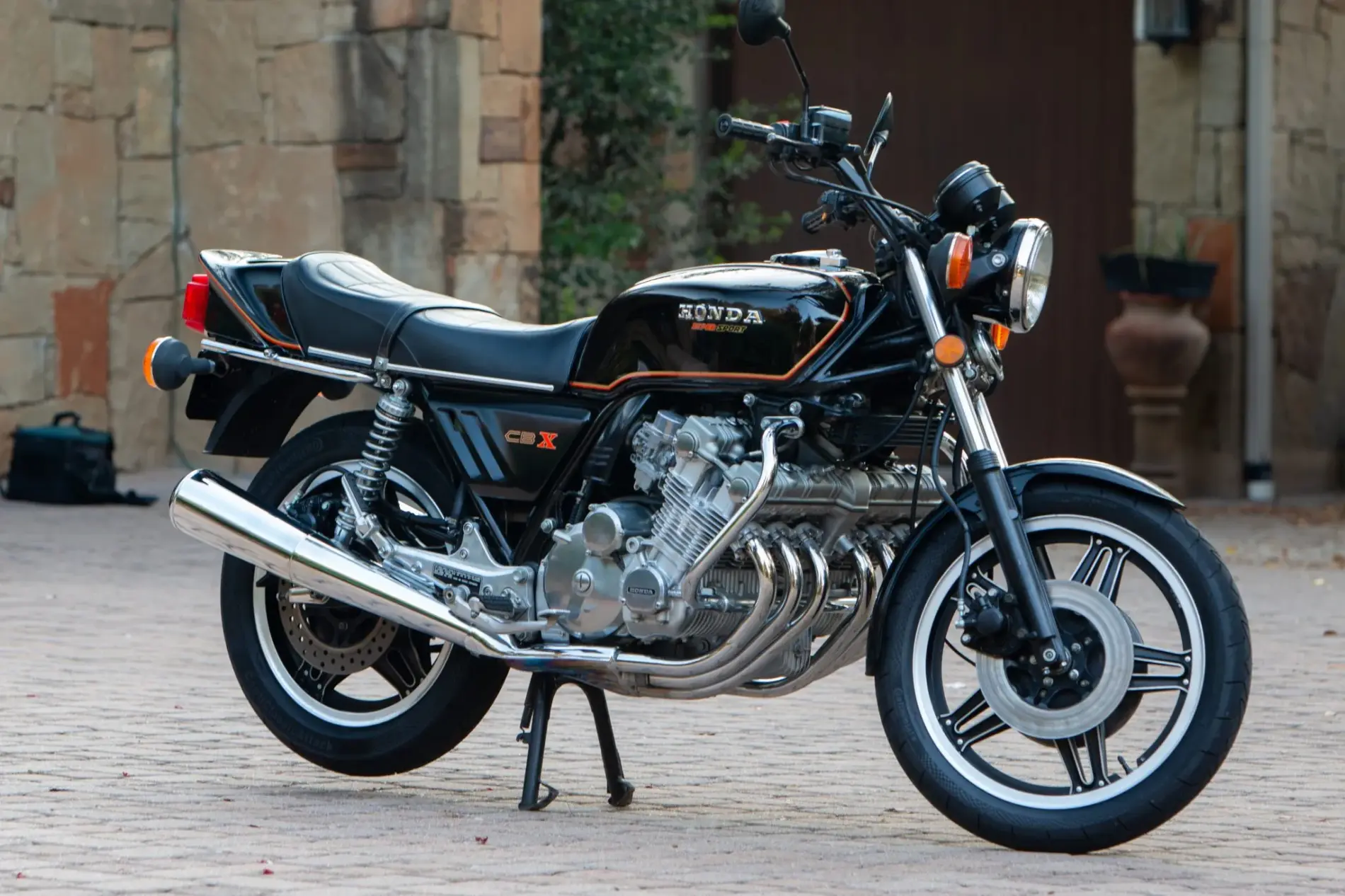
The Honda CBX Super Sport, produced from 1979 to 1982, was one of the most ambitious motorcycles ever created. Built during a competitive era of rapid innovation among Japanese manufacturers, it represented Honda’s decision to push performance and engineering to an extreme level. At its heart was a massive 1,047cc inline six-cylinder, four-stroke engine that set it apart from anything else on the road at the time.
This engine produced around 105 horsepower and 52.2 lb-ft of torque, enabling the CBX to exceed speeds of 130 mph. What truly defined the bike was not just its performance but its character. The inline-six delivered exceptionally smooth power and a distinctive high-revving exhaust note often compared to a Formula 1 car. Despite weighing nearly 600 lbs, the CBX offered thrilling acceleration and a uniquely refined riding experience.
Honda initially launched the CBX as a naked superbike, but later versions evolved into more touring-focused machines with fairings, luggage options, and improved suspension. These changes made it more versatile for long-distance riding but also increased weight and slightly softened its sporting edge.
However, the CBX was not an easy motorcycle to live with. Its six-carburetor setup made tuning and synchronization difficult, and maintenance required significant mechanical knowledge and patience. Fuel consumption was also high, often in the low 20 mpg range, which limited touring range despite its large tank. Handling could feel heavy in fast corners, especially on early models with less refined frames.
Despite its challenges, the CBX Super Sport has become a highly respected classic. It is valued not for practicality but for its engineering brilliance, emotional appeal, and mechanical drama. Today, well-preserved examples can reach up to $18,000, reflecting their status as one of Honda’s most iconic and unforgettable motorcycles.
- Engine: 1,047cc air-cooled DOHC 24-valve inline-6
- Horsepower: 100–105 hp @ 9,000 rpm
- Torque: 63 lb-ft (85 Nm) @ 8,000 rpm
- Length: 87 in (2,220 mm)
- Width: 31 in (780 mm)
Also read: 10 Cars With the Highest Buyback Rates of 2026
6. Honda CB1100R
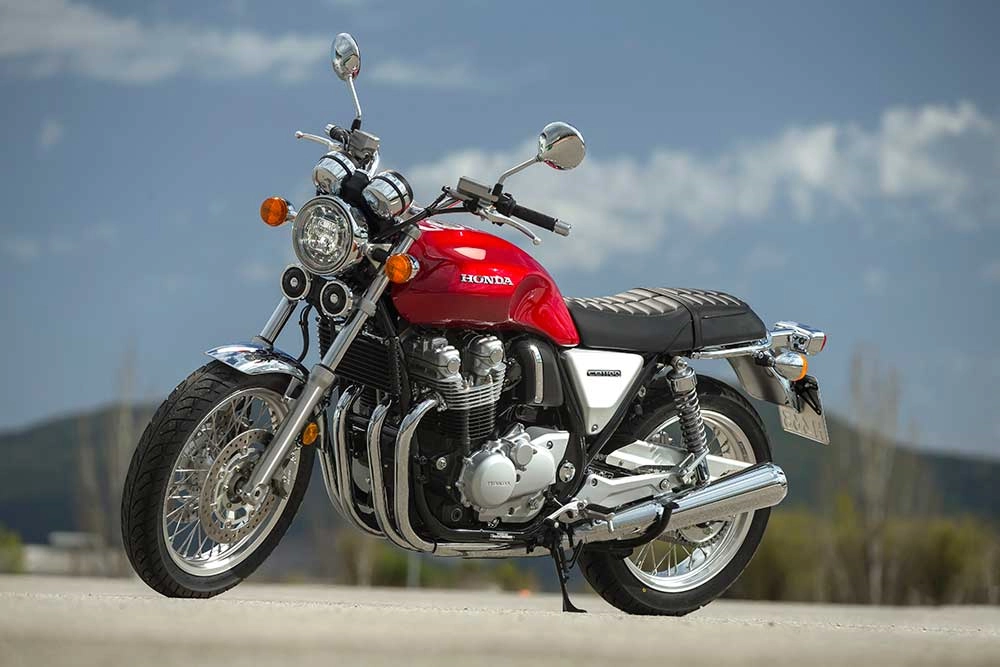
The Honda CB1100R was developed in the early 1980s as a purpose-built homologation special designed to restore Honda’s dominance in superbike racing and production-based competition. Built in response to strong rivals such as the Kawasaki Z1000 and Suzuki GS1000, it marked a turning point for Honda, shifting from cautious road machines to focused performance engineering.
Powered by a 1,062cc inline four-cylinder engine, the CB1100R produced around 120 horsepower and 72.5 lb-ft of torque. Built on the foundation of the CB900F, it was heavily modified with strengthened internals, lighter reciprocating parts, and refined carburetion that gave it crisp throttle response and rapid acceleration. Despite weighing around 500 lbs, the bike delivered exceptional stability and surprisingly agile handling for its size.
Unlike earlier Honda motorcycles, the CB1100R was designed almost entirely for performance. It featured a fiberglass fairing, semi-race ergonomics, rear-set foot controls, and a large fuel tank that placed the rider in a controlled racing crouch. On the road, it felt composed and highly predictable, with excellent chassis feedback that allowed confident high-speed cornering. Its ability to change direction smoothly made it feel lighter than its actual mass.
Braking performance was another highlight. It was among the first Hondas to use twin-piston calipers, paired with strong dual front discs and an anti-dive front fork system. This setup allowed heavy braking deep into corners without upsetting stability. However, its race-focused nature meant high wear on consumables such as tires, chains, sprockets, and brake pads, along with noticeable fuel consumption under hard riding.
The CB1100R also achieved success in endurance racing, most famously winning the Australian Castrol Six Hour race, proving its competitive intent. Today, it is regarded as one of Honda’s most important homologation machines, combining race-winning capability with refined engineering. With values reaching up to $25,000, it remains a highly respected and collectible superbike from Honda’s performance history.
- Engine: 1062cc air-cooled 4-stroke inline-4, 16-valve DOHC
- Horsepower: 115–120 hp @ 9,000 rpm
- Torque: 93–98 Nm @ 7,500 rpm
- Length: 84.8–86.2 in (2,155–2,190 mm)
- Width: 31.7 in (805 mm)
7. Honda GL1000 Gold Wing
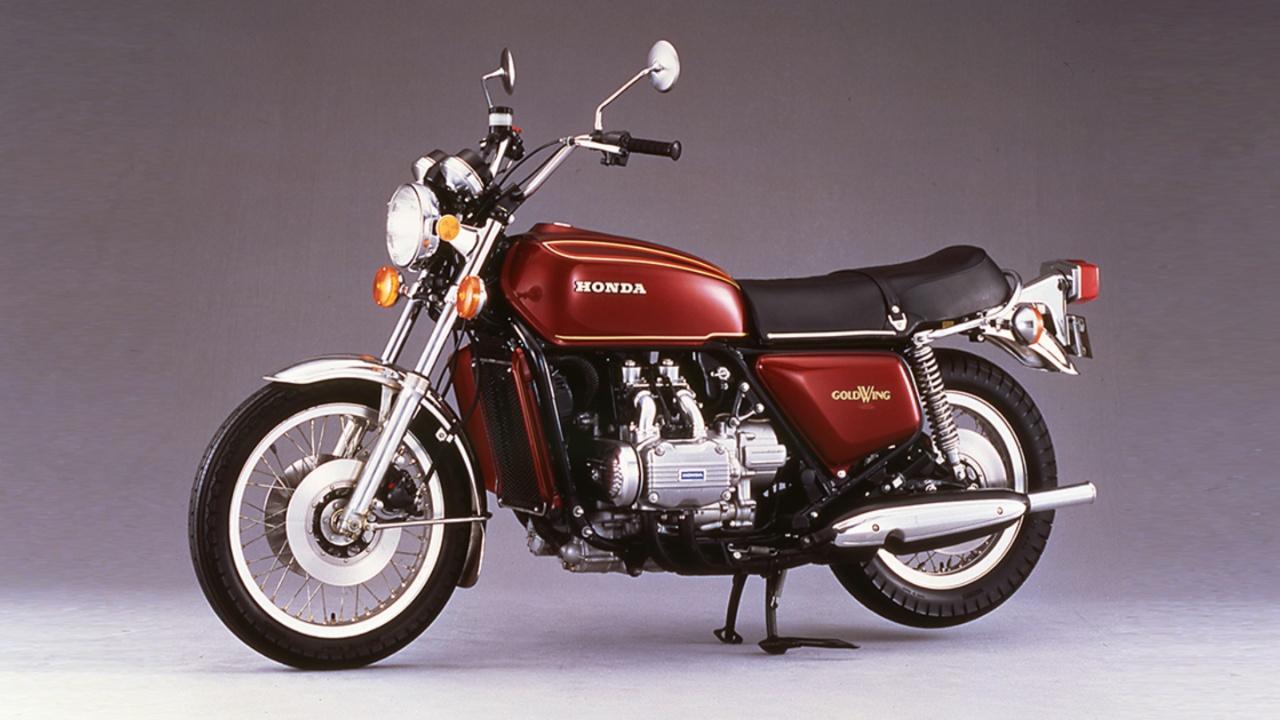
The Honda GL1000 Gold Wing marked a turning point in motorcycle history when it debuted in the mid-1970s, establishing itself as a groundbreaking “supertourer” that combined comfort, technology, and performance in a way few bikes had done before. Powered by a 999cc flat-four boxer engine producing about 78 hp and 61.2 lb-ft of torque, the GL1000 delivered smooth, quiet, and consistent power. Its 602 lb dry weight made it large, but Honda engineered it to handle far more nimbly than expected for its size.
At its core, the GL1000’s engine was highly advanced, using a horizontally opposed layout with two 180-degree parallel twins sharing a crankshaft. It featured single overhead camshafts, belt-driven cams, and a sophisticated lubrication system. The drivetrain used a shaft final drive with built-in shock absorption, while a gear-driven alternator and water cooling system improved refinement and reliability. Honda also incorporated multiple innovations like anti-dive braking forks, electric starting, and extensive electrical systems, making the bike highly complex but extremely capable.
Comfort and touring ability were central to the design. The bike featured a 19-liter fuel tank, a quiet exhaust system rated around 77 dB, and a stable chassis capable of sustained high-speed cruising beyond 110 mph. Its suspension delivered strong stability and composure even under heavy loads, while braking performance from dual front discs and a rear caliper was powerful and controlled.
Despite its strengths, the GL1000 had drawbacks. Fuel range was modest for a touring machine, seat comfort was limited on long rides, and the heavy weight became noticeable in tight, low-speed corners. Carburetion could also feel abrupt in stop-start conditions. Maintenance complexity was another challenge due to its densely packed engineering.
Still, the GL1000 succeeded in redefining expectations for touring motorcycles. It proved that a large, smooth, technologically advanced machine could also be fast, durable, and enjoyable to ride. It laid the foundation for the Gold Wing legacy, one that continues today as one of Honda’s most important and enduring motorcycle lines.
- Engine: 999cc liquid-cooled SOHC flat-4 (horizontally opposed boxer)
- Horsepower: 78–80 hp @ 7,000–7,500 rpm
- Torque: 61–63 lb-ft @ 5,500 rpm
- Length: 90.7 in (2,305 mm)
- Width: 35.2 in (895 mm)
8. Honda CB750 Sandcast
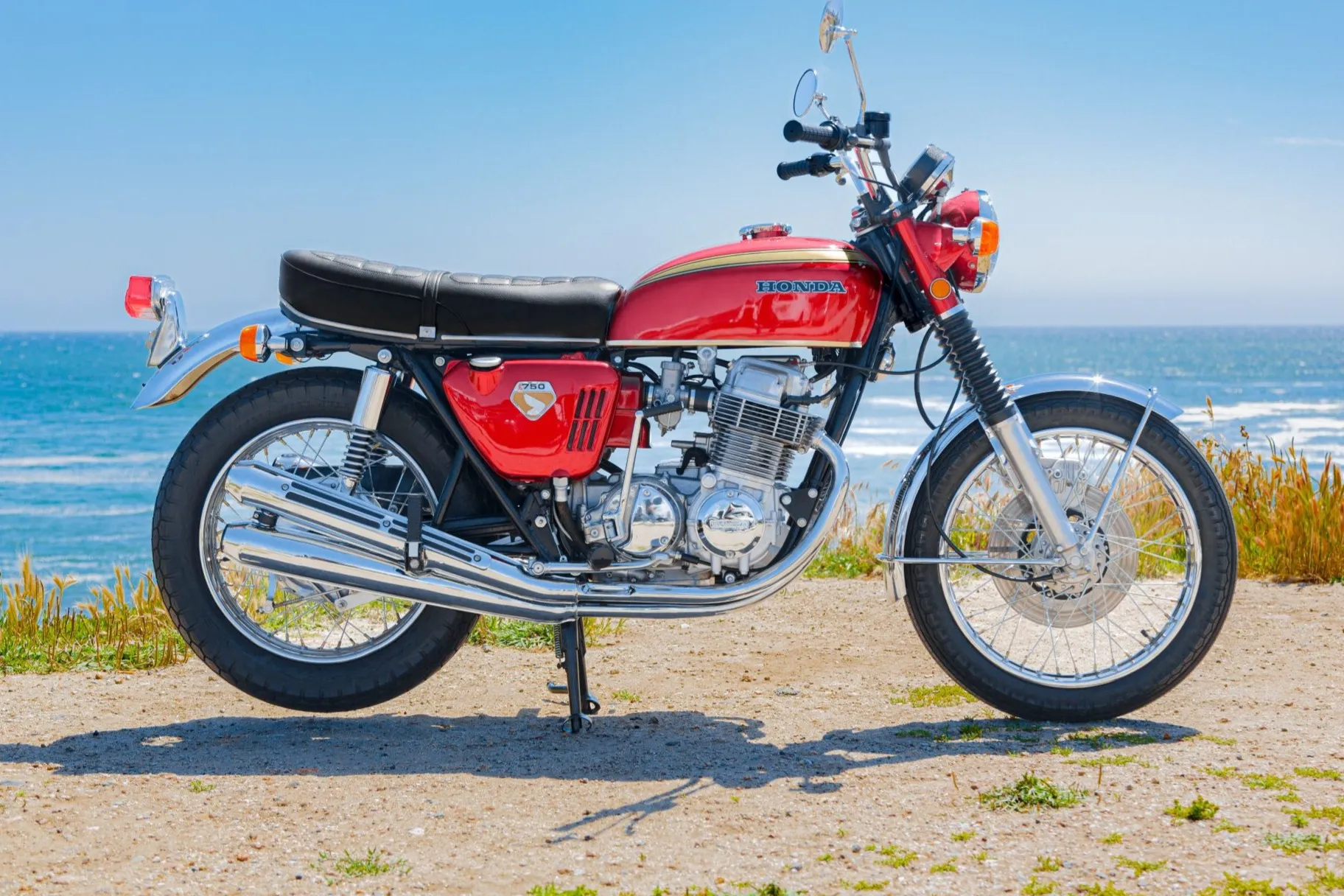
The Honda CB750 Sandcast is widely regarded as the most important motorcycle in modern history, often called the world’s first superbike. Introduced in 1969, it featured a 736cc inline four-cylinder engine producing about 67 hp, paired with a five-speed gearbox and front disc brake. With a curb weight under 500 lb, it delivered performance and refinement that immediately outclassed most competitors and forced the entire motorcycle industry to shift toward multi-cylinder designs.
What makes the Sandcast version especially significant is its status as an early hand-built pre-production model. Unlike later production CB750s, these prototypes used sand-cast engine cases and numerous non-standard components, including unique brake hardware, carburetors, and even internal engine parts such as a billet crankshaft. These differences reveal how Honda engineers were still refining the design before mass production, making each Sandcast effectively a transitional machine between concept and production reality.
Only a very small number of these prototypes were built, and they were used for testing, development, and early evaluation. Many were later abandoned, modified, or heavily worn during experimentation. One surviving example was discovered in rough condition after years of neglect, consisting of a partial chassis and disassembled engine parts that did not match production specifications. Its unusual components immediately identified it as a factory prototype.
Restoration expert Vic World, known for his deep expertise in CB750 models, undertook the complex task of preserving and rebuilding this machine. Rather than fully restoring it cosmetically, he focused on conservation, cleaning, repairing only what was necessary, and preserving its original experimental character. This included fabricating custom gaskets, studying unique oiling systems, and carefully reassembling non-standard engine and chassis components.
The Sandcast CB750 ultimately represents the foundation of the modern motorcycle industry. It not only launched the superbike category but also demonstrated Honda’s engineering ambition on a global scale. Today, surviving examples are extremely rare and highly valuable, serving as historical artifacts that mark the beginning of high-performance four-cylinder motorcycles.
- Engine: 736cc 4-stroke transverse inline-4, SOHC
- Horsepower: 67 hp @ 8,000 rpm
- Torque: 44 lb-ft (60 Nm) @ 7,000 rpm
- Length: 86.6 in (2,200 mm)
- Width: 35.0 in (890 mm)
9. Honda CR93
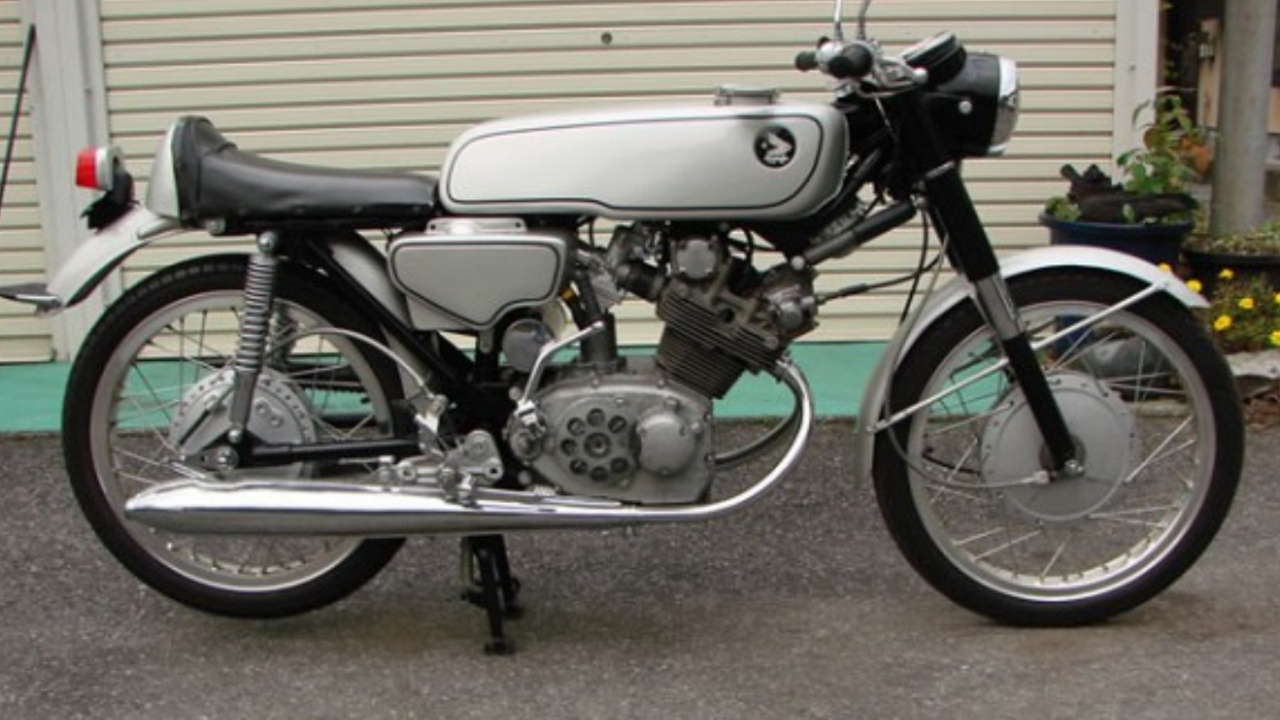
The Honda CR93 is one of the most remarkable small-displacement motorcycles of the early 1960s, proving that a 125cc engine could deliver serious racing performance. Producing around 16.5 hp and capable of exceeding 100 mph, the CR93 shocked competitors with its power-to-weight efficiency and advanced engineering. It became an early symbol of Honda’s racing ambitions and technical innovation.
Honda built both race and street versions, but the street-legal CR93 was extremely rare, with only about 20 to 30 units produced. The street model retained the same core 125cc single-cylinder engine but added essential road equipment such as a headlight, taillight, speedometer, horn, keyed ignition, rear fender, and air filters. It also used different handlebars, a modified seat, and quieter mufflers compared to the race version.
The racing CR93 was even more stripped down. It had no kickstarter, requiring bump starting, and featured freer-flowing exhausts and minimal equipment for maximum performance. Despite these differences, both versions were closely related mechanically, making it easy for owners to convert a street model into a race machine by removing road equipment.
Today, surviving CR93 street versions are exceptionally valuable due to their rarity and originality. Well-preserved examples often retain factory components such as original tires, tool kits, and untouched engine parts, making them highly desirable collector pieces. Many enthusiasts regard them as some of the finest surviving examples of early Honda engineering.
The CR93 also holds historical significance because it demonstrated Honda’s ability to dominate even in small engine classes, laying the foundation for its later success in larger displacement racing and production motorcycles.
- Engine: 124.8cc air-cooled DOHC parallel-twin, 4-stroke, 4-valve (gear-driven cams)
- Horsepower: 18–20 hp @ 11,500–12,500 rpm
- Torque: 7.7 lb-ft (1.07 kg·m) @ 9,200 rpm
- Length: 78.7 in (2,000 mm)
- Width: 23.6 in (600 mm)
10. Honda VFR750R RC30 (1988)
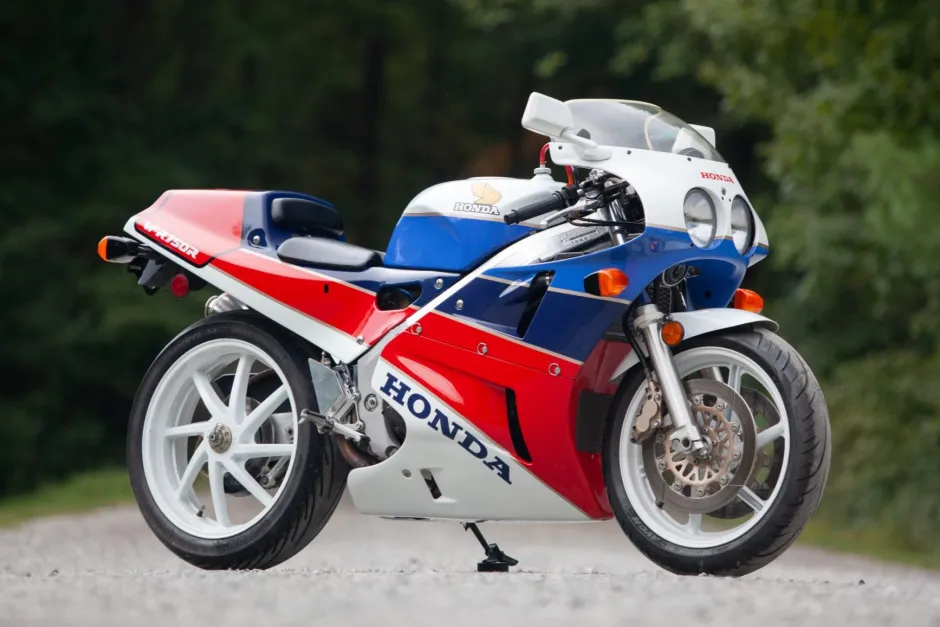
The Honda VFR750R RC30 is widely regarded as the definitive Japanese superbike of the late 1980s, originally built for one purpose: to win the inaugural World Superbike Championship. Based closely on Honda’s factory RVF750 TT-F1 race machine, it was engineered as a near race-ready road bike with minimal compromise, and its success was immediate, taking back-to-back World Superbike titles in 1988 and 1989 along with victories at events like the Isle of Man TT.
Powered by a 748cc 90° V4 engine producing around 112 hp, the RC30 featured advanced race-derived technology for its time, including gear-driven camshafts, titanium conrods, and a distinctive 360° “big-bang” firing order designed to improve traction. Despite modest peak power by modern standards, it could exceed 155 mph thanks to its light 450 lb (dry) weight and tightly engineered six-speed gearbox. A slipper clutch and close ratios made it highly effective both on road and track.
The RC30’s chassis was equally advanced, featuring an aluminium beam frame, fully adjustable suspension, and Honda’s iconic Elf-designed single-sided Pro-Arm swingarm for rapid wheel changes. High-spec components such as 43mm forks, magnesium wheels, and large dual front discs gave it exceptional handling, stability, and racing precision. At just 187 kg dry with a short 1410 mm wheelbase, it felt compact and race-focused, outperforming most rivals in agility and control.
Production was limited to around 5,000 units, making it rare even when new and highly collectible today. Variants differed slightly by market, with some restricted in power or rpm, further affecting desirability. Known issues include early valve seat wear, heat management in traffic, and limited parts availability, all of which add to its demanding ownership experience.
Despite these drawbacks, the RC30 remains a benchmark homologation special. Its combination of engineering purity, racing pedigree, and timeless design has made it one of the most valuable Japanese motorcycles ever built, with prices now regularly exceeding $120,000 for pristine examples.
- Engine: 748cc liquid-cooled 90° V4, 16-valve DOHC (gear-driven cams)
- Horsepower: 112 hp @ 11,500 rpm
- Torque: 53 lb-ft (71.7 Nm) @ 10,500 rp
- Length: 80.5 in (2,045 mm)
- Width: 27.6 in (700 mm)
Also read: 5 Cars Where Trade-In Beats Private Sale vs 5 Where It Doesn’t