
Few motorcycle brands command the same level of respect, loyalty, and historical significance as Harley-Davidson. For more than a century, the company has produced machines that have become symbols of freedom, craftsmanship, and American engineering.
While modern Harley Davidson motorcycles continue to attract riders around the world, many enthusiasts believe the brand’s most fascinating creations were built decades ago. Vintage Harley Davidson motorcycles offer a unique blend of mechanical simplicity, timeless styling, and historical value that modern machines cannot fully replicate.
Collectors, restorers, and motorcycle enthusiasts spend years searching for rare Harley-Davidson models that represent important moments in the company’s development.
Some motorcycles are prized because of their groundbreaking engineering, while others stand out because of their racing success, limited production numbers, or influence on future designs. As the vintage motorcycle market continues to mature, certain Harley-Davidson models have become especially desirable among collectors.
Their values have steadily increased, and well-preserved examples often attract significant attention whenever they appear at auctions or private sales.
One of the most appealing aspects of vintage Harley Davidson ownership is the connection to motorcycling history. Every classic machine tells a story about the era in which it was built. These motorcycles reflect changing technologies, evolving rider preferences, and the broader cultural shifts that shaped transportation and recreation throughout the twentieth century.
Whether displayed in a private collection or ridden on scenic roads, vintage Harley-Davidsons offer an experience that goes far beyond simple transportation.
The motorcycles featured in this guide represent some of the most desirable vintage Harley-Davidson models ever produced. They span multiple decades and showcase the innovation, craftsmanship, and character that helped establish Harley-Davidson as one of the world’s most recognized motorcycle manufacturers.
For collectors looking to invest in a historic machine or enthusiasts seeking a rewarding restoration project, these are eight vintage Harley-Davidsons that are well worth hunting down.
Also Read: 8 Family Cars With Secret Performance Versions
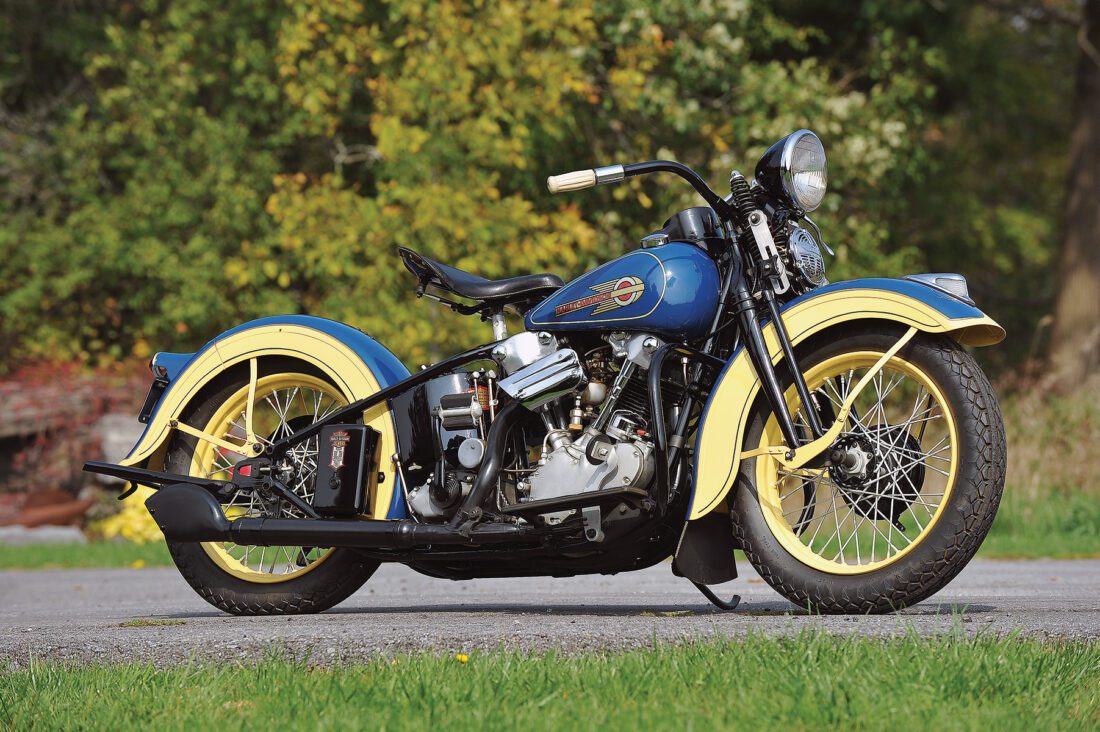
- Engine: 61 cu in (1000 cc) air-cooled 45-degree V-twin, overhead valve
- Horsepower: Approx 40 to 45 hp (varies by year and tuning)
- Torque: Not officially published by Harley Davidson for this era, estimated mid-range V-twin torque
- Length: Approx 85 to 90 inches (2160 to 2290 mm)
- Width: Approx 32 to 34 inches (810 to 860 mm)
1. Harley Davidson EL Knucklehead (1936 to 1947)
The EL Knucklehead stands as one of the most historically important motorcycles ever produced by Harley-Davidson, not just because of its performance, but because it marked a turning point in American motorcycle engineering.
Introduced in 1936, it was the company’s first production overhead valve V-twin engine, replacing the earlier flathead designs that had dominated Harley-Davidson’s lineup for decades. This shift alone placed the Knucklehead in a category of its own, as it demonstrated a clear move toward modern performance engineering at a time when many manufacturers were still relying on older, less efficient engine layouts.
The design of the Knucklehead engine was revolutionary for its era. With improved airflow and combustion efficiency, it delivered significantly more power compared to previous Harley-Davidson motorcycles.
Riders immediately noticed better acceleration, smoother high-speed performance, and improved long-distance reliability. These qualities made it especially appealing during a period when motorcycles were not just recreational vehicles but also practical transportation for work, travel, and even military preparation leading into World War II.
From a collector’s standpoint, the EL Knucklehead is one of the most difficult vintage Harley-Davidsons to acquire in original condition. Many units were heavily modified during the postwar custom motorcycle boom, and others suffered from engine swaps or replacement parts over the decades.
Because of this, matching number examples with authentic factory components is extremely valuable. Restoration work on Knuckleheads also requires specialized expertise due to the rarity of original parts and the precision needed to maintain historical accuracy.
Stylistically, the Knucklehead is widely regarded as one of the most visually striking motorcycles Harley-Davidson ever produced. Its exposed V-twin engine, sweeping fenders, and minimalist prewar design language give it a raw mechanical beauty that modern motorcycles rarely replicate.
Collectors often describe it as a perfect balance between industrial design and early motorcycle artistry, where every component is both functional and visually expressive.
Today, the EL Knucklehead remains a cornerstone of vintage Harley-Davidson collecting. Its importance is not just based on rarity, but on its role as a foundational engineering leap that shaped every Harley-Davidson V-twin engine that followed. Owning one is widely considered owning a piece of the brand’s engineering DNA.
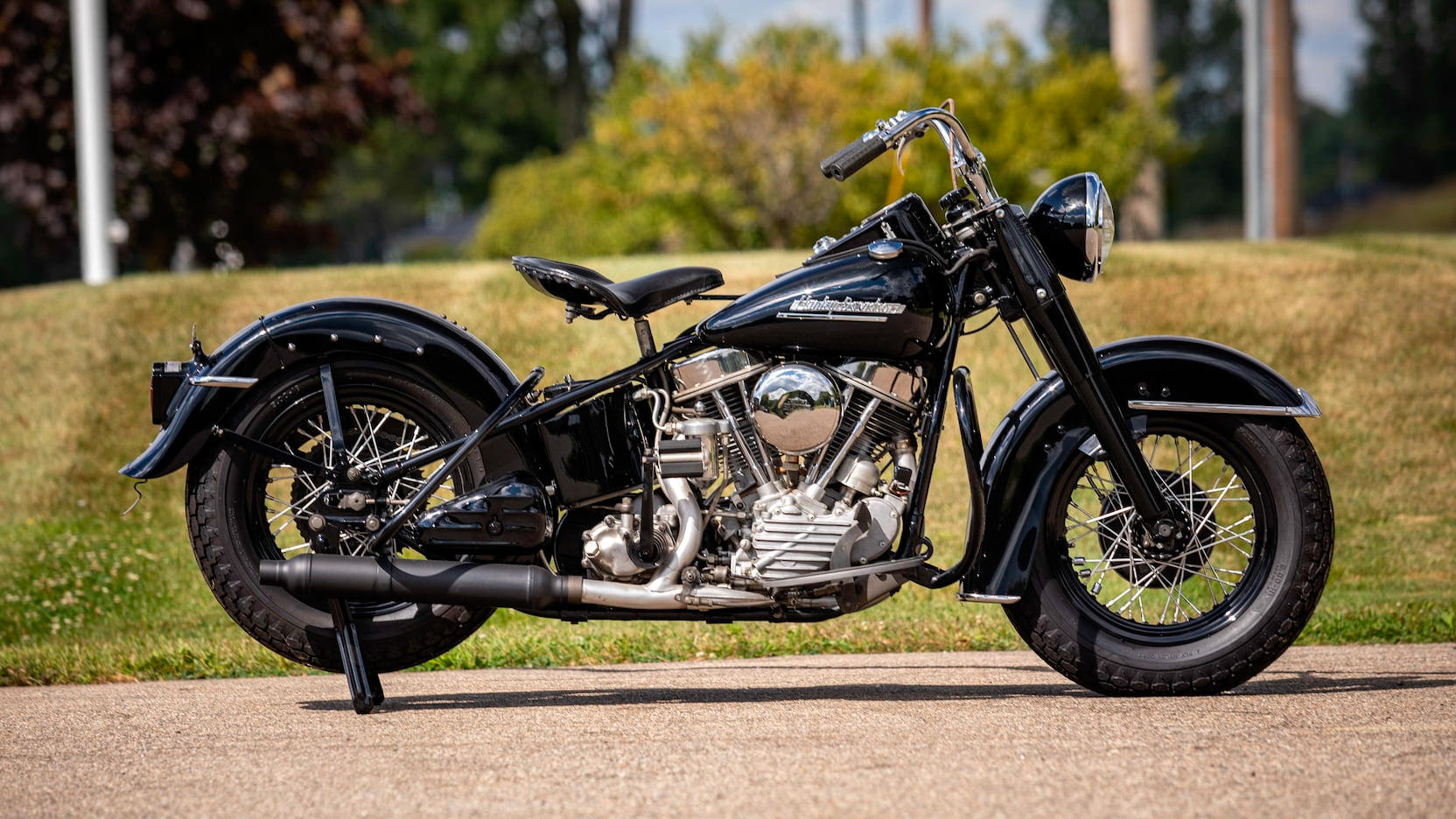
- Engine: 74 cu in (1200 cc) Panhead V-twin, overhead valve
- Horsepower: Approx 50 hp
- Torque: Not officially rated, estimated as strong low-end touring torque
- Length: Approx 95 to 98 inches (2410 to 2490 mm)
- Width: Approx 34 to 36 inches (860 to 910 mm)
2. Harley Davidson FL Hydra Glide (1949 to 1957)
The FL Hydra Glide represents a major leap forward in rider comfort and suspension technology for Harley-Davidson motorcycles. Introduced in 1949, it was the company’s first model to feature hydraulic telescopic front forks as standard equipment.
Before this innovation, Harley Davidson motorcycles relied on springer-style front ends that, while durable and mechanically simple, lacked the refinement needed for long-distance touring comfort. The Hydra Glide fundamentally changed how riders experienced the road.
This improvement in suspension came at a critical time in American motorcycling history. After World War II, motorcycle ownership surged, and more riders began using their machines for leisure touring rather than purely utilitarian transport.
Harley-Davidson recognized this shift and positioned the Hydra Glide as a premium touring motorcycle capable of handling longer journeys with significantly reduced rider fatigue. The smoother ride quality made it especially popular on the expanding highway systems of postwar America.
Mechanically, the Hydra Glide retained Harley Davidson’s large displacement V-twin engines but refined the riding experience through improved stability and handling. Riders appreciated the way the motorcycle absorbed road imperfections compared to earlier rigid or semi-rigid designs.
This not only increased comfort but also boosted rider confidence at higher speeds, which was becoming increasingly important as American roads improved and travel distances increased.
From a collector’s perspective, the Hydra Glide is highly valued because it represents the transition between early Harley-Davidson mechanical simplicity and the more advanced touring motorcycles that followed.
Well-preserved examples are particularly rare, as many were heavily used for long-distance travel and later modified. Original paint schemes, factory accessories, and period-correct components significantly increase both historical authenticity and market value.
The Hydra Glide also holds cultural significance because it symbolizes the rise of the American road trip era. It became associated with freedom, mobility, and the expanding highway culture of the 1950s. For collectors, it is not just a motorcycle but a representation of a major lifestyle shift in mid-century America.
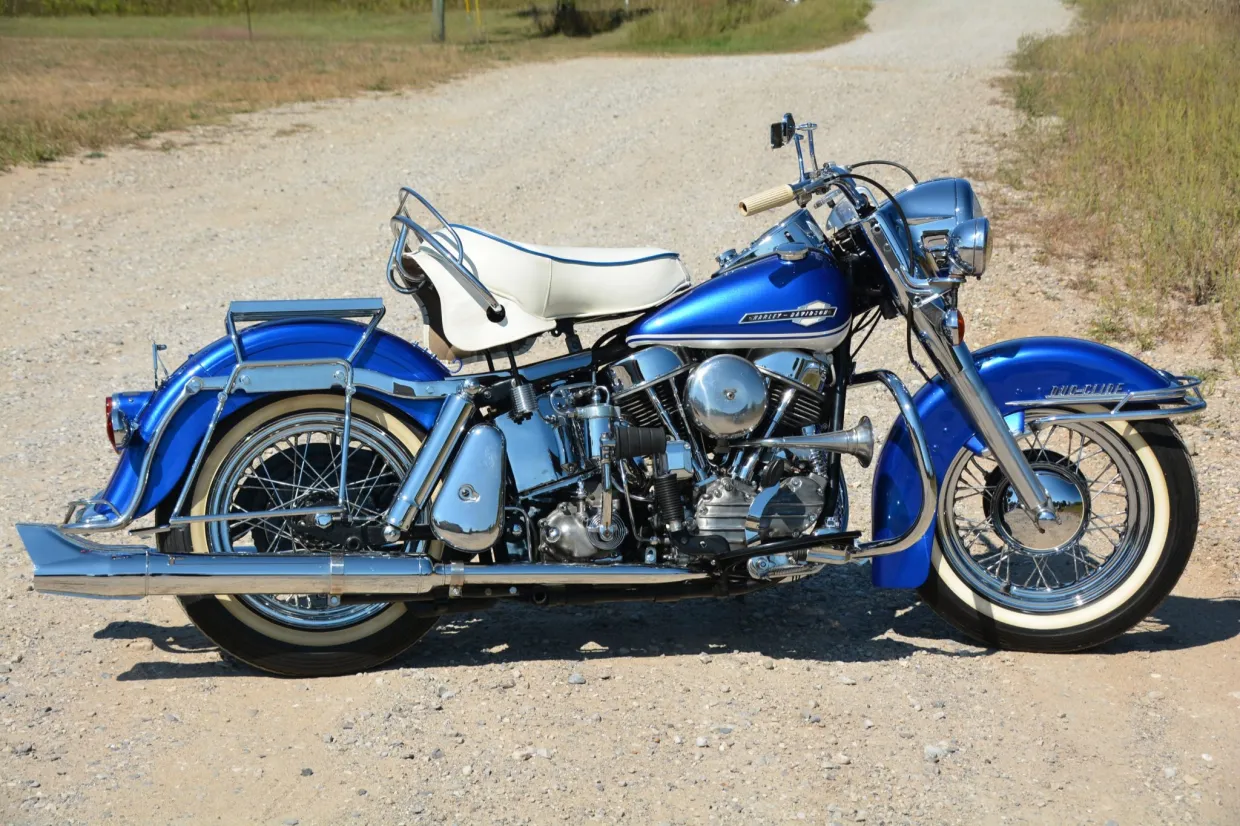
- Engine: 74 cu in (1200 cc) Panhead V-twin
- Horsepower: Approx 50 to 55 hp
- Torque: Not officially published, improved low to mid-range torque over Hydra Glide
- Length: Approx 96 to 100 inches (2440 to 2540 mm)
- Width: Approx 34 to 36 inches (860 to 910 mm)
3. Harley Davidson FLH Duo Glide (1958 to 1964)
The FLH Duo Glide is often considered one of the most important Harley-Davidson touring motorcycles ever built because it introduced rear suspension to the company’s heavyweight lineup.
Prior to its release in 1958, Harley-Davidson motorcycles typically used rigid rear frames or very limited suspension systems, which could make long-distance riding uncomfortable. The addition of a swingarm rear suspension system transformed the riding experience entirely.
This innovation made the Duo Glide one of the first truly comfortable long-distance motorcycles in Harley-Davidson’s history. Riders could now travel greater distances with significantly less fatigue, opening the door to extended touring across the United States.
Combined with the existing hydraulic front forks introduced in the Hydra Glide, the Duo Glide offered a more balanced and controlled ride that set new standards for the industry.
The motorcycle’s name itself reflects its dual suspension system, highlighting the importance of both front and rear improvements working together.
This engineering shift was not just a comfort upgrade but a structural redesign that influenced all future Harley-Davidson touring motorcycles. Many of the principles introduced in the Duo Glide are still visible in modern touring models today.
Collectors value the Duo Glide because it sits at a critical point in Harley-Davidson’s evolution. It represents the moment when the company fully committed to rider comfort and long-distance capability as core design priorities. Original examples are increasingly difficult to find due to heavy usage during their production years, and well-preserved motorcycles often show signs of long touring life.
The Duo Glide also holds appeal because of its classic late 1950s and early 1960s styling. Its balanced proportions, chrome detailing, and strong road presence make it a favorite among vintage motorcycle enthusiasts who appreciate both mechanical innovation and visual design.
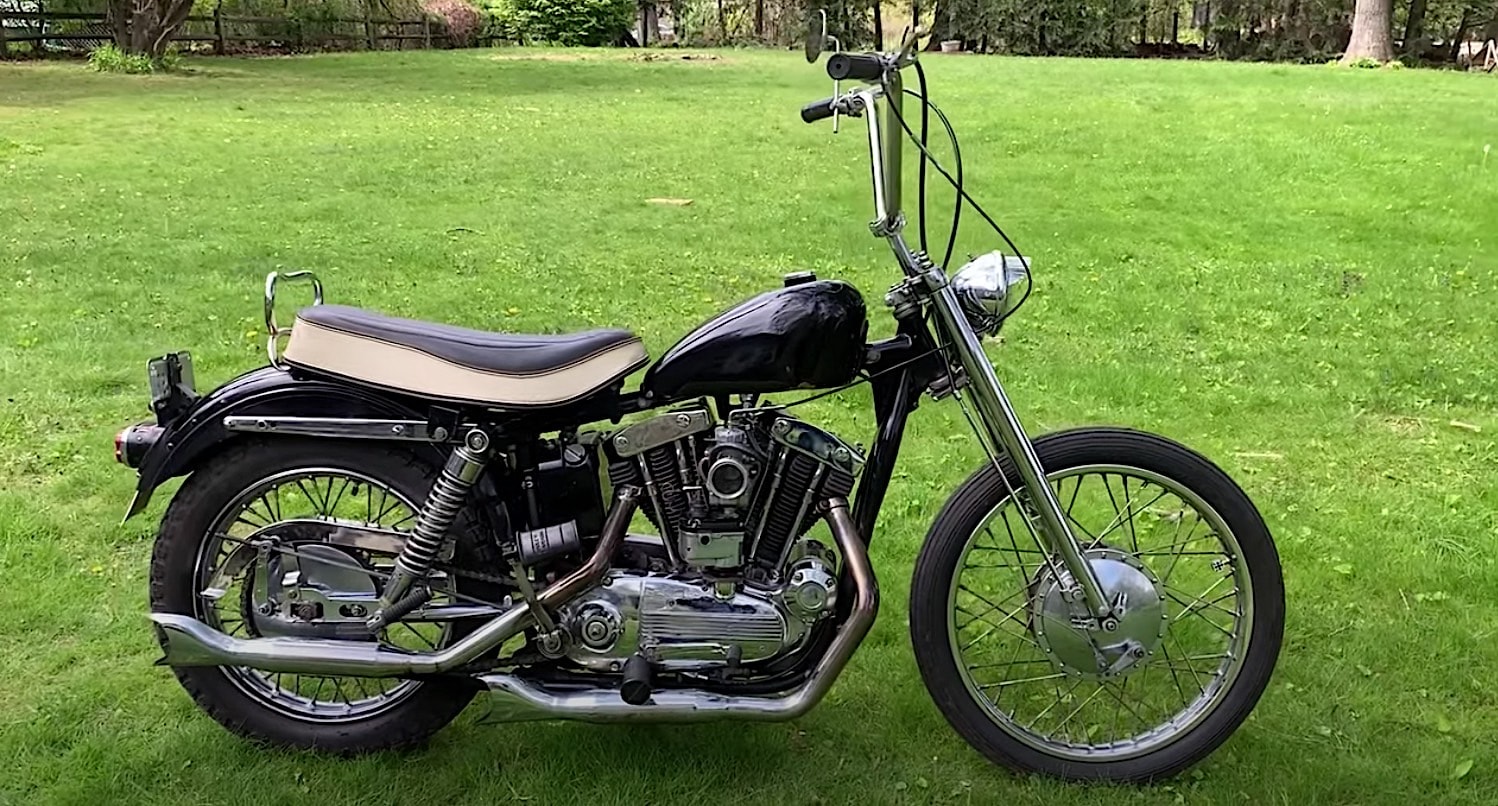
- Engine: 55 cu in (900 cc) Ironhead V-twin
- Horsepower: Approx 40 to 55 hp depending on year and tuning
- Torque: Approx 45 to 55 lb ft (estimated range)
- Length: Approx 85 to 88 inches (2160 to 2240 mm)
- Width: Approx 31 to 33 inches (790 to 840 mm)
4. Harley Davidson XLCH Sportster (1958 to 1971)
The XLCH Sportster represents Harley-Davidson’s push into lighter, more performance-oriented motorcycles during the late 1950s and 1960s.
Unlike the company’s large touring bikes, the Sportster was designed to be faster, more agile, and more accessible to riders who wanted a sportier riding experience. The XLCH variant in particular became known for its stripped-down, high-performance character.
Powered by a smaller but highly responsive V-twin engine, the XLCH delivered impressive acceleration for its time. Its lighter frame allowed for improved handling, making it popular among younger riders and those interested in racing or spirited road riding. This model helped Harley-Davidson compete in a growing market segment that prioritized speed and agility over long-distance comfort.
The minimalist design of the XLCH Sportster is one of its defining features. Without excessive chrome or touring accessories, it showcased a raw mechanical aesthetic that emphasized performance.
Many enthusiasts appreciate the way it reveals the core engineering of Harley-Davidson motorcycles without unnecessary additions. This simplicity also makes restoration projects more approachable compared to larger, more complex touring models.
Culturally, the XLCH Sportster became associated with freedom, rebellion, and American motorcycling identity during the 1960s. It was frequently customized, raced, and modified, which contributed to its strong presence in motorcycle culture. Many early custom bike movements were built around Sportster platforms, reinforcing its reputation as a versatile and adaptable machine.
Today, the XLCH is highly regarded among collectors who appreciate performance heritage and customization history. Original examples are especially valued because many were modified during their lifetime, making untouched versions increasingly rare and desirable.
- Engine: 45 cu in (750 cc) V-twin racing engine (Ironhead-based)
- Horsepower: Approx 70 to 90+ hp depending on race tuning
- Torque: Not officially rated, race-tuned high mid-range torque
- Length: Approx 80 to 85 inches (2030 to 2160 mm)
- Width: Approx 30 to 32 inches (760 to 810 mm)
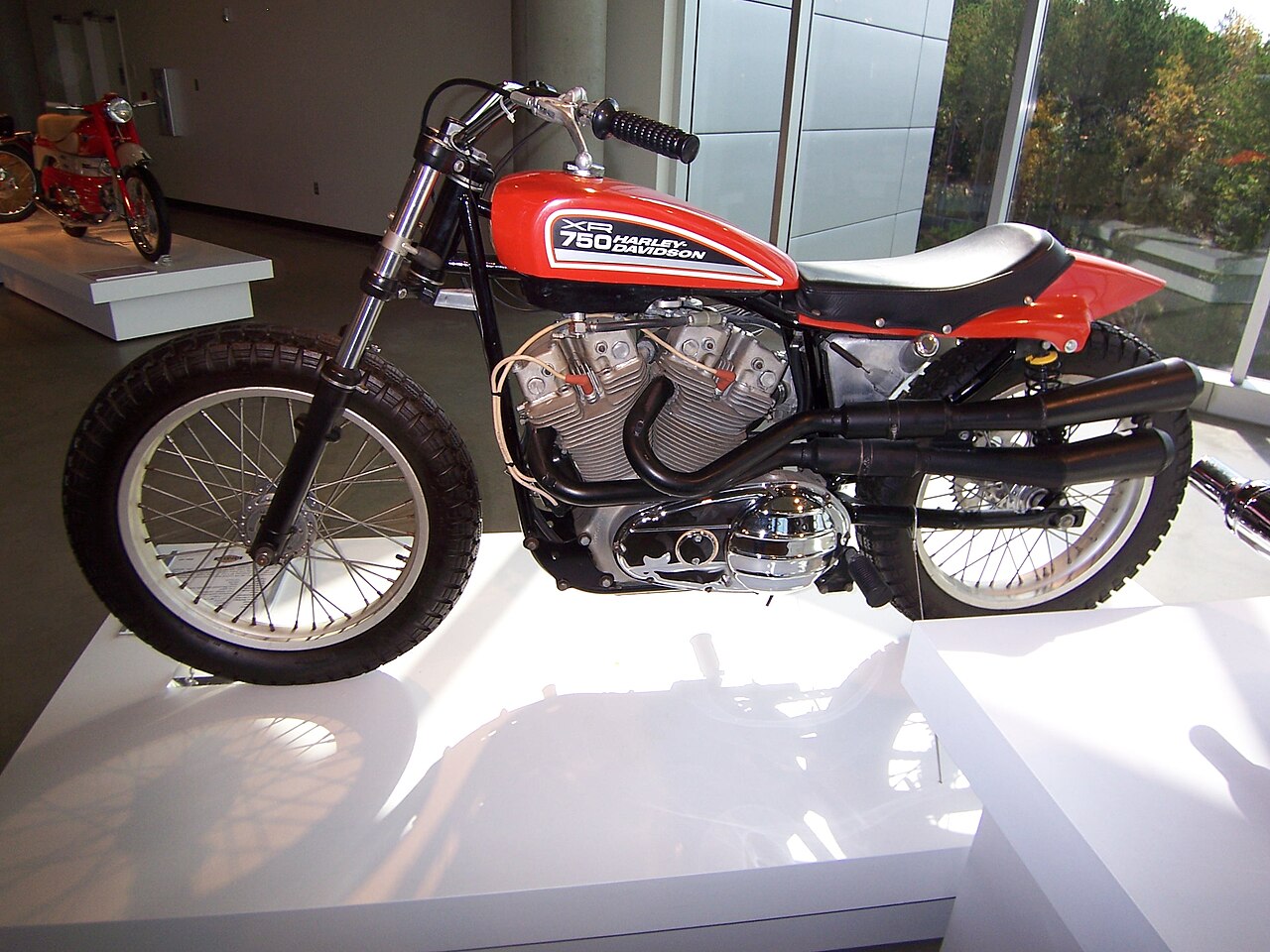
5. Harley Davidson XR750 (1970 to 1980s)
The XR750 is one of the most successful and legendary racing motorcycles ever produced by Harley-Davidson. Unlike most motorcycles designed for street use, the XR750 was built specifically for flat track racing, a discipline that demands high power, lightweight construction, and precise handling. Introduced in 1970, it quickly became the dominant force in American dirt track racing.
The motorcycle’s success came from its carefully engineered balance of power and agility. Its V-twin engine was tuned for high output, while its lightweight frame allowed riders to maintain control at high speeds on oval dirt tracks. These characteristics made it extremely competitive, and it soon became the preferred machine for professional racers across the United States.
One of the most remarkable aspects of the XR750 is its longevity in competitive racing. It dominated professional flat track events for decades, which is an extraordinary achievement in a sport where technology evolves rapidly. Few motorcycles in history have maintained such a consistent winning record over such a long period.
Collectors value the XR750 not only for its performance history but also for its rarity. Genuine racing examples, especially those with documented competition histories, are extremely difficult to acquire. Many were heavily used in professional racing circuits, making surviving original machines even more significant.
The XR750 also holds a special place in motorcycle culture because it represents Harley-Davidson’s competitive spirit. It demonstrates that the company was not only focused on touring and cruising motorcycles but also capable of producing world-class racing machines. This dual identity strengthens its appeal among collectors and enthusiasts alike.
Also Read: 9 Vehicles with Worst Blind Spots
- Engine: 45 cu in (750 cc) flathead V-twin
- Horsepower: Approx 23 to 25 hp
- Torque: Low to mid-range torque optimized for reliability rather than speed
- Length: Approx 86 to 90 inches (2180 to 2290 mm)
- Width: Approx 32 to 34 inches (810 to 860 mm)
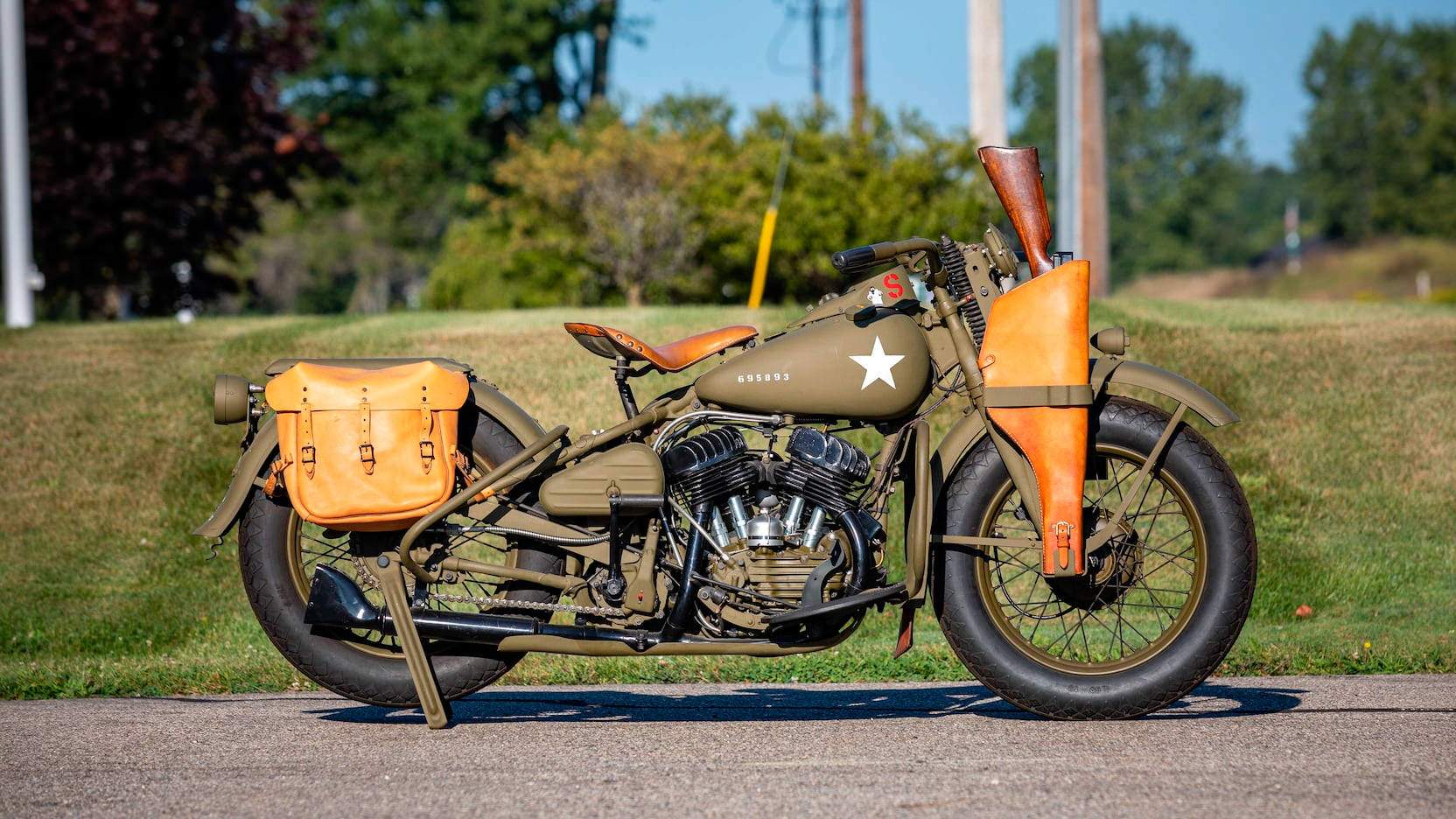
6. Harley Davidson WLA Military Motorcycle (1940 to 1945)
The Harley-Davidson WLA Military Motorcycle is one of the most historically significant machines ever produced by Harley-Davidson, largely because of its direct connection to World War II.
Built specifically for military use, the WLA was designed to meet the strict demands of wartime mobility, reliability, and rugged field conditions. Unlike civilian motorcycles of its era, it was engineered with durability and simplicity as top priorities, ensuring it could operate in harsh environments across multiple continents.
During the war years, thousands of WLAs were produced for Allied forces. These motorcycles were used for dispatch riding, reconnaissance, military police duties, and communication delivery across battlefields.
Their ability to navigate difficult terrain quickly made them essential tools for wartime logistics. Soldiers relied on them in environments ranging from European roads to rough and undeveloped military zones, where reliability often meant the difference between mission success and failure.
Mechanically, the WLA was based on Harley-Davidson’s proven flathead V-twin engine platform, chosen for its simplicity and ease of maintenance. This design allowed soldiers and military mechanics to perform repairs under field conditions with limited tools and spare parts.
The motorcycle’s structure was intentionally straightforward, reducing complexity while increasing reliability in unpredictable combat situations. Its rugged frame and utilitarian design reflected its purpose as a working military machine rather than a consumer product.
From a collector’s perspective, the WLA holds immense historical value due to its wartime heritage. Many surviving examples carry military markings, original paint schemes, and period-correct equipment such as saddlebags, blackout lighting, and rifle mounts.
These details significantly increase authenticity and desirability among collectors who focus on military history and preserved wartime artifacts. Restored WLAs are often displayed in museums, private collections, and historical reenactments.
Today, the WLA is more than just a motorcycle. It is a tangible connection to a global historical event that shaped the modern world. Collectors value it not only for its engineering simplicity but also for its symbolic representation of resilience, service, and technological contribution during one of the most significant periods in human history.
- Engine: 61 cu in (1000 cc) and 74 cu in (1200 cc Panhead V-twin variants)
- Horsepower: Approx 40 to 55 hp depending on displacement
- Torque: Not officially rated, strong low RPM cruising torque
- Length: Approx 90 to 98 inches (2290 to 2490 mm)
- Width: Approx 33 to 36 inches (840 to 910 mm)
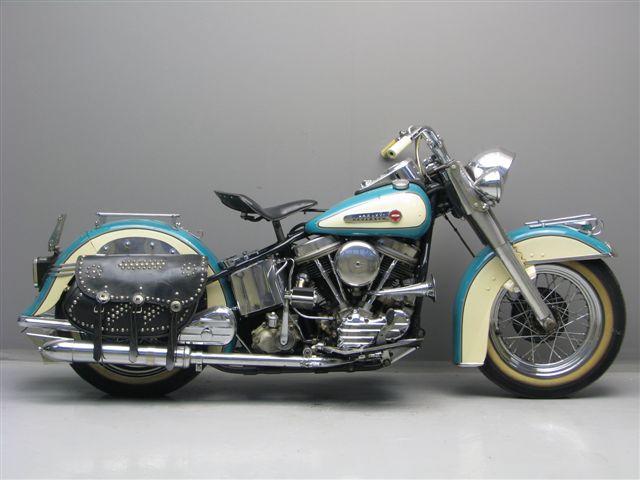
7. Harley Davidson Panhead (1948 to 1965)
The Harley-Davidson Panhead is one of the most beloved and culturally influential engines in the company’s history. Introduced in 1948 as the successor to the Knucklehead, the Panhead featured redesigned aluminum cylinder heads that improved cooling and efficiency.
These new components gave the engine its iconic “pan” shaped appearance, which became one of the most recognizable design traits in vintage motorcycle engineering.
The Panhead engine quickly earned a reputation for being smoother and more reliable than its predecessor. Riders appreciated its improved oil circulation system and reduced mechanical noise, which made long-distance riding more comfortable and dependable.
These enhancements helped Harley-Davidson maintain its dominance in the heavyweight motorcycle market during the postwar era, when demand for touring and cruiser motorcycles was rapidly increasing.
Beyond its mechanical strengths, the Panhead became deeply embedded in American motorcycle culture. It was widely used in early custom motorcycle builds and played a major role in the rise of the chopper movement during the 1950s and 1960s.
Many iconic custom motorcycles featured Panhead engines because of their durability and aesthetic appeal. The engine’s exposed design and symmetrical cylinder layout made it visually perfect for customization and artistic modification.
Collectors highly value Panhead motorcycles because they represent a golden era of Harley-Davidson design evolution. The engine bridges the gap between early mechanical experimentation and more refined postwar engineering.
Finding an original Panhead in good condition is increasingly difficult, as many were heavily modified during the height of custom motorcycle culture. Restored examples often require significant effort to preserve authenticity while maintaining functional performance.
Today, the Panhead is considered one of the most desirable vintage Harley-Davidson engines ever built. It represents a perfect blend of mechanical improvement, cultural influence, and visual identity. For collectors and enthusiasts alike, owning a Panhead is often seen as owning a piece of the foundation of modern American motorcycle culture.
- Engine: 74 cu in (1200 cc) and later 80 cu in (1340 cc V twin)
- Horsepower: Approx 60 to 70 hp (later models higher with tuning)
- Torque: Approx 70 to 80 lb ft (later Evolution-era overlap improvements vary)
- Length: Approx 92 to 100 inches (2340 to 2540 mm)
- Width: Approx 34 to 37 inches (860 to 940 mm)
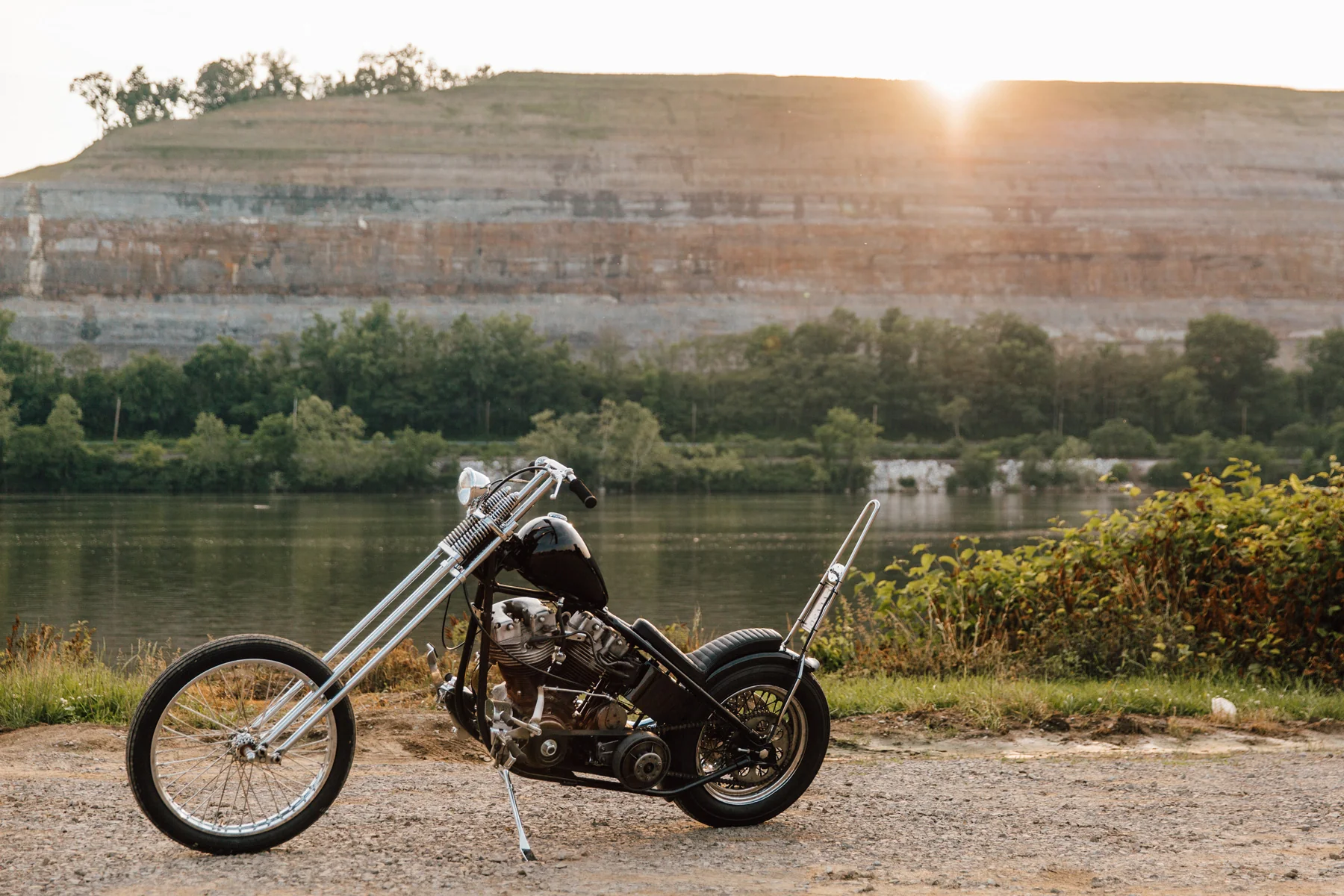
8. Harley Davidson Shovelhead (1966 to 1984)
The Harley-Davidson Shovelhead engine represents a major transitional phase in Harley-Davidson’s engineering history. Introduced in 1966, it replaced the Panhead and brought increased power and performance to Harley’s big twin lineup.
The engine earned its nickname due to the shape of its rocker covers, which resemble the head of a shovel. While its appearance is distinctive, its significance lies in its role in modernizing Harley-Davidson’s performance capabilities during a rapidly evolving motorcycle industry.
The Shovelhead engine delivered noticeable improvements in horsepower compared to its predecessor, making it more suitable for highway cruising and heavier touring motorcycles.
However, its early versions also faced mechanical challenges, particularly in heat management and oil circulation. Over time, Harley-Davidson refined the design, improving reliability and making later versions significantly more dependable than early production models.
Despite its early engineering issues, the Shovelhead became one of the most iconic engines in Harley-Davidson history. It powered a wide range of motorcycles during a transformative era for American motorcycling, including the rise of long-distance touring culture and the explosion of custom chopper building in the 1970s. Its adaptability made it a favorite among builders who valued both performance and customization potential.
From a cultural perspective, the Shovelhead is strongly associated with the golden age of American motorcycle customization. Countless choppers, bobbers, and custom touring bikes were built around this engine platform.
Its exposed mechanical design and strong visual presence made it ideal for riders who wanted to express individuality through motorcycle design. This cultural impact greatly increased its long-term collector value.
Today, the Shovelhead remains one of the most accessible vintage Harley-Davidson engines for collectors entering the classic motorcycle market. While earlier models like the Knucklehead and Panhead have become highly expensive and rare, the Shovelhead offers a more attainable entry point into vintage Harley ownership.
At the same time, well-preserved original examples continue to rise in value as interest in 1970s and early 1980s motorcycles grows steadily.
For enthusiasts, the Shovelhead represents a bridge between classic Harley-Davidson heritage and the more modern era of motorcycle engineering. It carries forward the legacy of the brand while marking the beginning of a more performance-driven and globally competitive Harley-Davidson identity.
