
Modern automakers have stopped treating camping gear as an afterthought. They are building it straight into the vehicle. Today’s adventure rigs come from the factory with air compressors, power inverters, locking differentials, and even kitchens.
You no longer need an aftermarket shop to turn a daily driver into a basecamp on wheels. This shift matters because factory-integrated gear is engineered, tested, and warrantied as part of the vehicle.
This list covers seven standout vehicles built for camping and overlanding in 2026. Each one ships with genuine off-grid hardware straight from the showroom floor.
We cover everything from compact, fuel-sipping SUVs to fully-electric trucks with built-in kitchens. There is also a body-on-frame off-roader, a luxury hybrid, and the legendary adventure van.
Every entry below includes real specifications pulled from manufacturer data and verified reporting. We focused on engine output, torque, and vehicle dimensions for each pick.
We also looked closely at the actual camping-specific hardware bolted on at the factory. Whether you want quiet electric power at a campsite or diesel reliability for remote trails, there is something here.
1. Toyota 4Runner Trailhunter
Toyota built the Trailhunter to be a finished overland rig, not a starting point for modifications. The company calls it a manufacturer-developed overland rig built specifically for those who want to explore the wilderness without needing aftermarket upfitters.
That philosophy shows in nearly every component of the truck. ARB, the respected Australian off-road brand, helped design much of its hardware. The Trailhunter runs exclusively on Toyota’s hybrid powertrain.
The i-FORCE MAX 2.4-liter turbocharged inline-4 hybrid powertrain produces 326 hp at 6,000 rpm in standard form, with the Trailhunter trim rated at 323 hp. Torque is rated at 465 lb-ft at 1,700 rpm, which arrives early and stays flat. That low-end torque is ideal for crawling over rocks or pulling a loaded trailer.
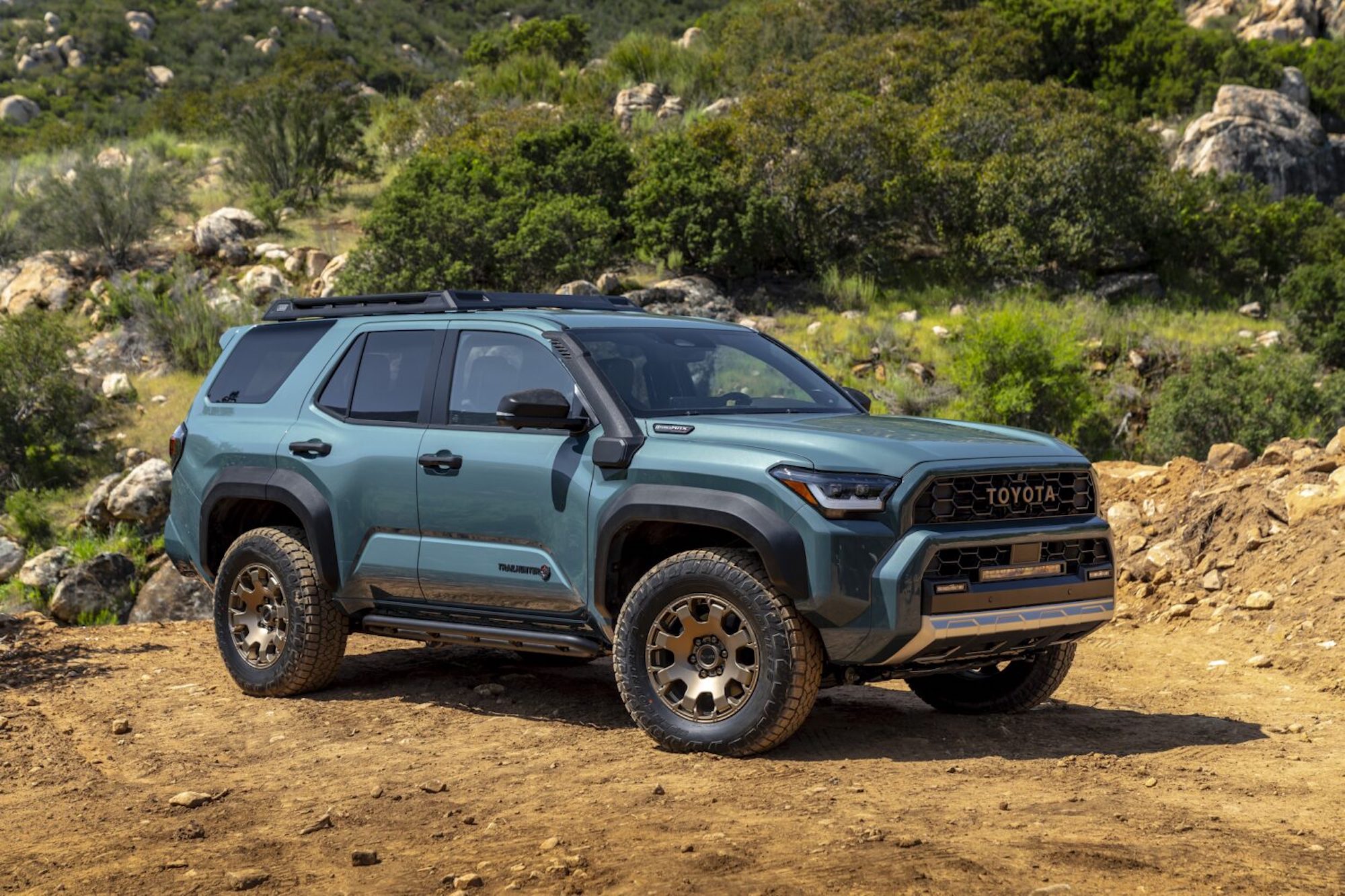
The suspension is where this trim truly separates itself from a stock SUV. ARB supplies a set of Old Man Emu 2.5-inch forged shocks, complete with external piggyback reservoirs in the rear.
Those shocks pair with 33-inch Toyo Open Country all-terrain tires, which lift the SUV two inches up front and 1.5 inches in the rear compared to lesser trims.
Camping-specific hardware is baked in from day one. A two-speed transfer case provides 4×4 capability, an electronic locking rear differential ensures traction, and a built-in 2,400-watt inverter powers gear at camp. There is also a high-mounted snorkel air intake that helps feed clean air to the engine during water crossings.
Toyota and ARB co-engineered the roof rack specifically for this trim. Toyota and ARB also co-developed a new roof-rack setup for the truck, which should help with its gear-hauling needs. That rack is rated to support rooftop tents, awnings, and additional storage boxes for extended trips.
The cabin itself was not forgotten in this overland-focused redesign. A power rear window and hands-free liftgate make loading bulky gear far less of a chore. Toyota also fits a multi-terrain monitor on higher trims, letting drivers see underneath the vehicle on tricky descents.
This combination of proven Toyota reliability and dedicated overland hardware is hard to beat. It remains one of the only true factory-built overland SUVs sold in North America today.
Specifications:
- Engine: 2.4L turbocharged inline-4 hybrid (i-FORCE MAX)
- Horsepower: 323–326 hp
- Torque: 465 lb-ft
- Length: 196.1 in.
- Width: 78.3 in.
2. Toyota Land Cruiser
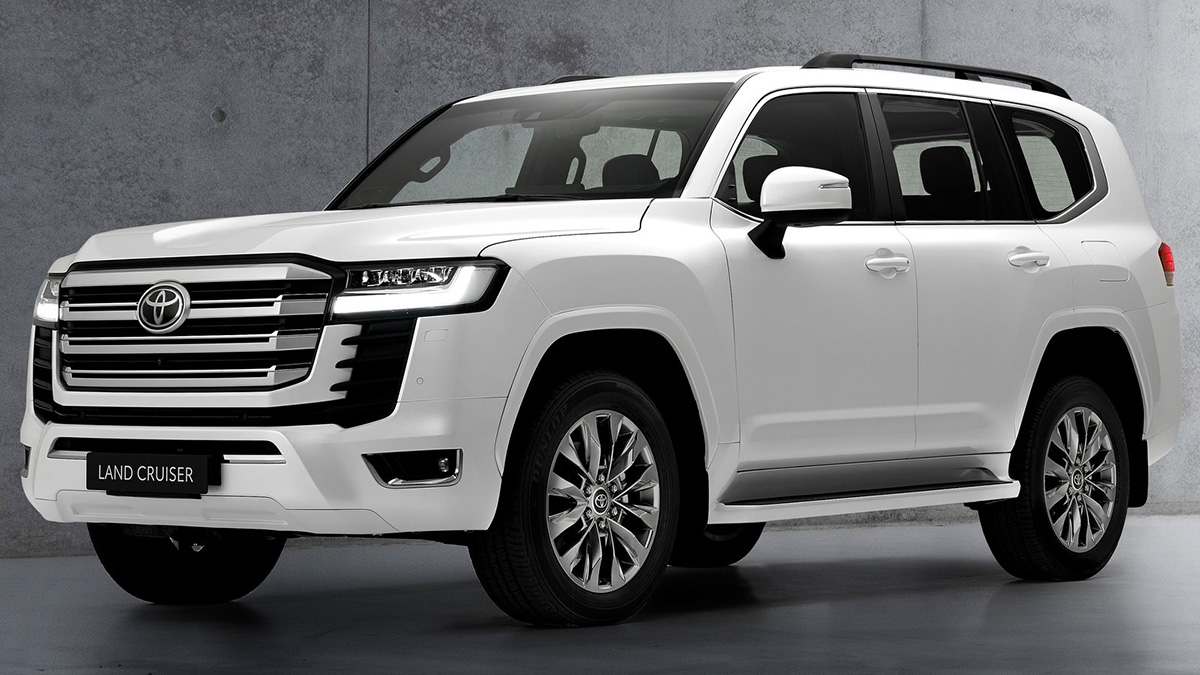
The Land Cruiser nameplate has carried decades of overlanding credibility across the globe. The 2026 model returns to American buyers in a smaller, more efficient package than before.
This generation leans heavily on hybrid technology while keeping serious trail hardware standards. Land Cruiser’s powertrain combines hybrid tech with a turbo 4-cylinder hybrid engine to generate 326 net combined horsepower with 465 lb-ft of torque. That output rivals far larger V6 and V8 SUVs from a smaller, lighter platform.
Four-wheel-drive hardware comes standard rather than as an expensive option. Land Cruiser’s full-time 4-wheel-drive system provides power continuously to the front and rear axles, with an electronically controlled 2-speed transfer case to select the right torque for driving conditions. Drivers can also engage electronically locking differentials with the press of a button to distribute torque for better traction in challenging terrain.
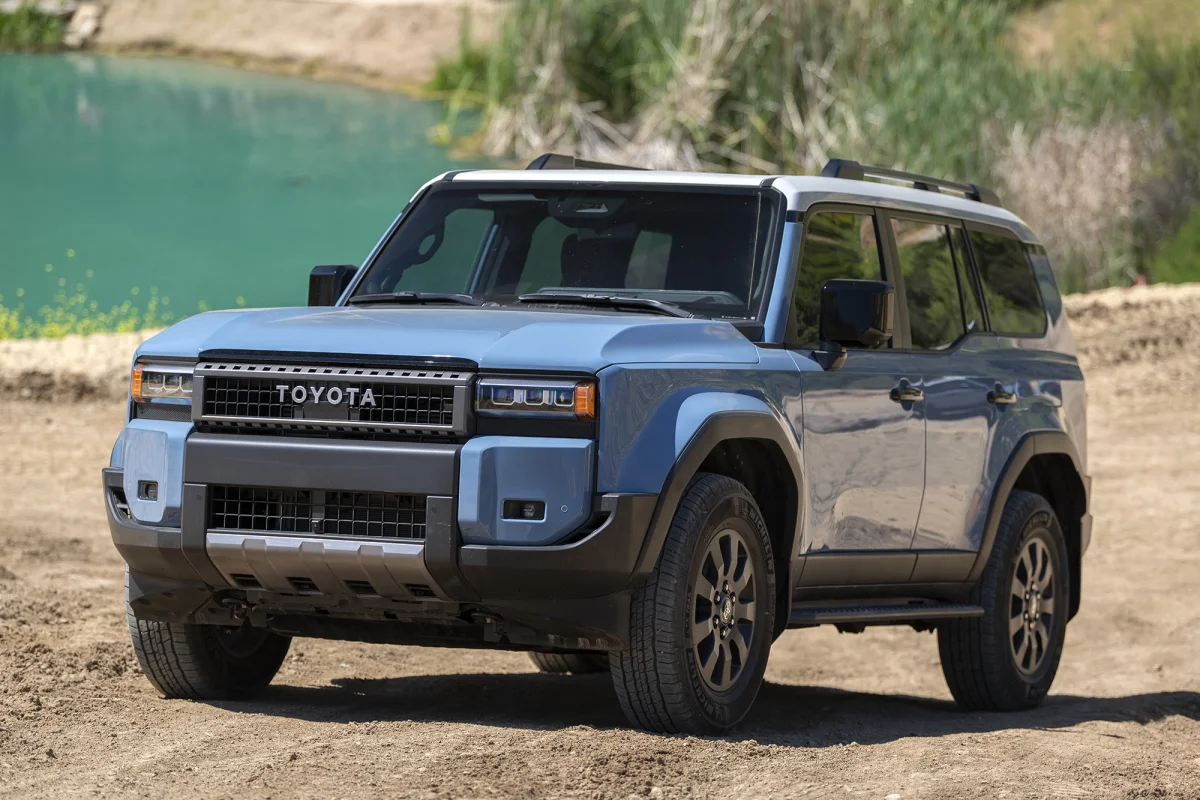
Ground clearance numbers vary slightly by source, but all confirm serious capability. The SUV provides up to 8.7 inches of ground clearance, with available equipment including rock rails and full-coverage steel skid plates for additional protection. That protection matters when boulders and deep ruts threaten the undercarriage on remote trails.
For campers, the built-in power system is the standout feature. An available 2,400-watt power inverter lets owners charge devices and operate equipment in remote locations, no generator required. The trim also offers dual-hue LED fog lights from Rigid that can switch between white and yellow beam colors for night driving in fog or dust.
Towing capacity rounds out the package for those hauling trailers or teardrop campers. With a payload capacity of 1,100 lbs and towing capability of 6,000 lbs, the Land Cruiser is ready to handle gear, groceries, or the great outdoors. That combination of payload and tow rating covers most overlanding trailers on the market today.
Rather than chasing luxury-oriented materials, Toyota focused on building an interior that prioritizes toughness and everyday usability. The cabin layout centers on practical features, including traditional physical buttons and switches that remain easy to operate while wearing gloves. It may seem like a minor detail, but it becomes invaluable when you’re standing at a trailhead before dawn, trying to avoid a sluggish touchscreen in freezing temperatures.
Toyota’s heritage styling also signals exactly what this SUV is built for. Round LED headlamps and boxy proportions echo the original Land Cruiser, a vehicle once famous for crossing continents.
Specifications:
- Engine: 2.4L turbocharged i-FORCE MAX hybrid inline-4
- Horsepower: 326 hp
- Torque: 465 lb-ft
- Length: 192.5 in.
- Width: 78.0 in.
3. Jeep Wrangler Rubicon
The Wrangler Rubicon remains the benchmark against which every off-road SUV gets measured. It has stayed mechanically focused on trail capability since the badge first appeared decades ago.
Power comes from a familiar, proven engine rather than chasing horsepower records. The Rubicon is powered by a 3.6L V6 gas engine producing 285 hp at 6,400 rpm and 260 lb-ft of torque at 4,800 rpm. That engine pairs with a standard 6-speed manual transmission, with an 8-speed automatic available as an option.
The real story is what sits underneath the body, not under the hood. The Rubicon features the Rock-Trac 4×4 system, including a 4:1 low gear ratio and up to a 100:1 crawl ratio with the manual transmission and 4.88 axles. That crawl ratio lets the truck inch over boulders at walking pace without stalling.
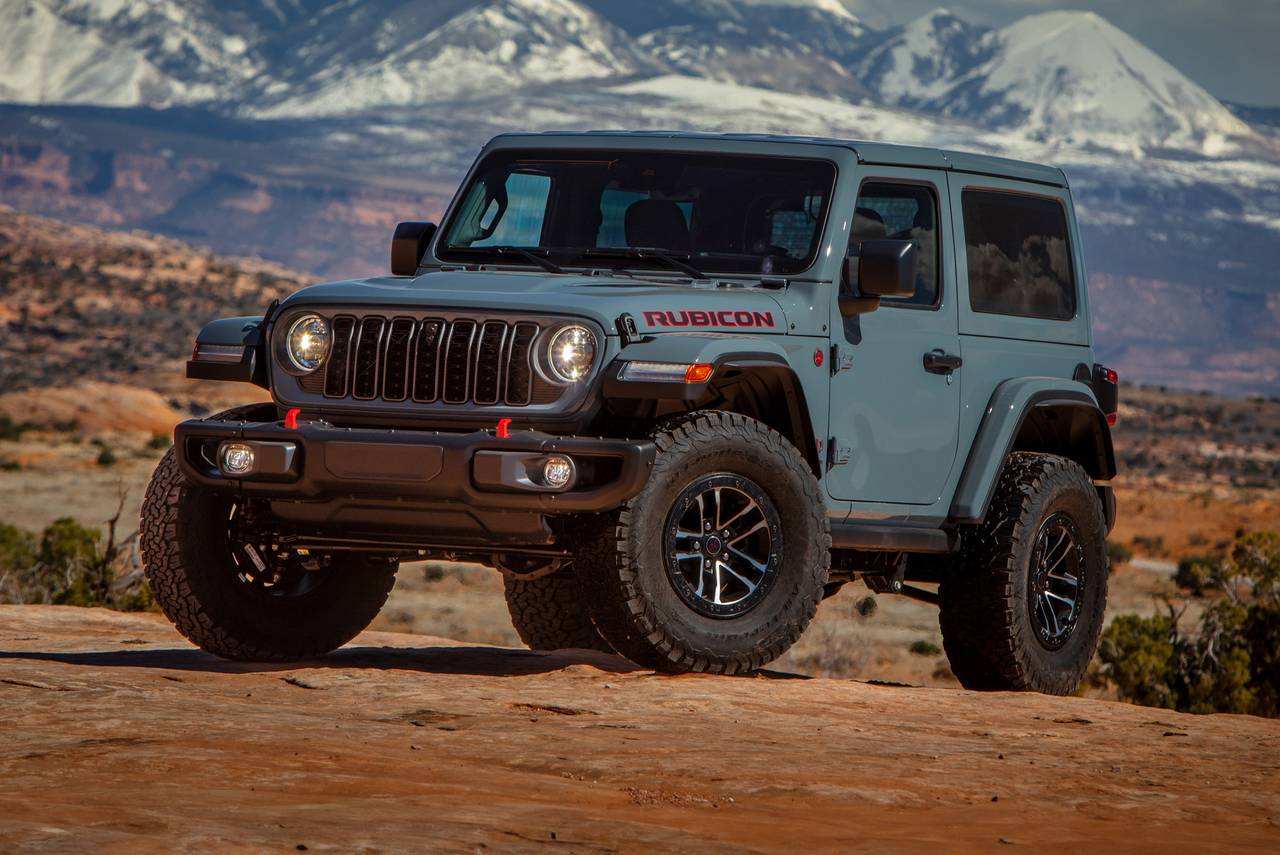
Trail hardware comes standard rather than buried in option packages. The Rubicon includes electronic front and rear locking differentials, a disconnecting sway bar, and heavy-duty Dana 44 axles. It also rides on 33-inch all-terrain tires, which are upgradable to 35-inch units, along with rock rails, skid plates, and red tow hooks.
Dimensions stay compact enough for tight trails while still hauling camping gear. The four-door model has 10.8 inches of ground clearance and a turning circle tight enough for switchback trails. Cargo room is generous for the segment too, with 31.7 cubic feet of space expanding to 72.4 cubic feet with seats folded.
The removable doors and roof are themselves a camping feature few rivals match. Pulling the top off transforms the cabin into an open-air basecamp at a scenic overlook. No other vehicle on this list lets you sleep under literal stars from the driver’s seat.
A massive aftermarket and Mopar accessory catalog also backs every Rubicon sold. Rooftop tent mounts, auxiliary lighting, and winch bumpers are all factory-supported add-ons. That ecosystem makes building out a full camping rig simpler than with almost any competitor.
Specifications:
- Engine: 3.6L V6 (gas)
- Horsepower: 285 hp
- Torque: 260 lb-ft
- Length: 188.4 in.
- Width: 73.9 in.
4. Rivian R1T
The R1T approaches overlanding from a completely different angle than its gas-powered rivals. Rivian built camping functionality directly into the electric truck’s architecture from the ground up.
Performance figures put this truck in supercar territory despite its size. The Quad-Motor configuration offers up to 1,025 horsepower and enables 0-60 mph sprints in a few seconds. The R1T can also cover up to 420 miles of driving range on a single charge, important for reaching remote trailheads.
Storage is where the R1T genuinely innovates beyond a typical pickup bed. The R1T has a front trunk with 9.9 cubic feet of cargo space and a tunnel running through the middle of the body that holds up to 11.7 cubic feet of cargo. That Gear Tunnel runs straight through the cab, accessible from both sides of the truck.
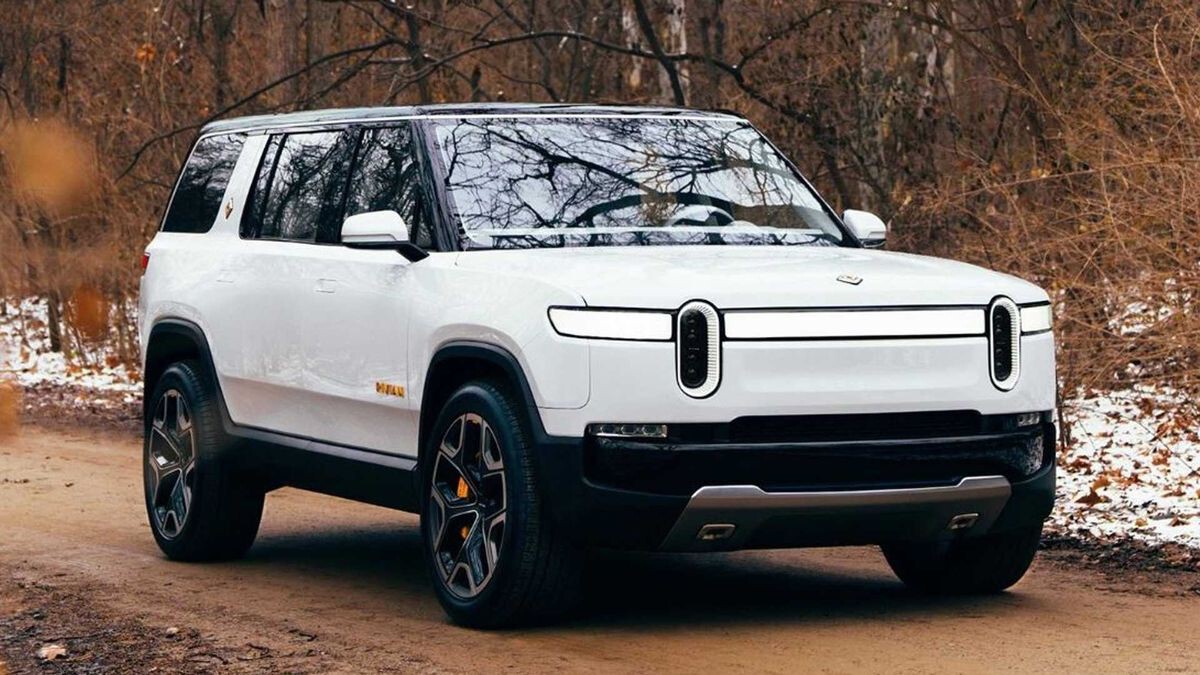
Rivian designed a literal kitchen to slide into that compartment. The R1T offers an optional Camp Kitchen with a sink and stove that slides directly into the Gear Tunnel storage area. This turns trailside cooking into a simple pull-out-and-go operation rather than unpacking loose gear.
Software ties everything together at the campsite itself. Camp Mode levels the vehicle on uneven terrain, optimizes battery energy consumption while parked, and maintains climate control overnight. There is also an optional Bluetooth-enabled Camp Speaker for music at the site without draining a separate device.
Towing and capability round out a genuinely complete adventure package. The truck offers an 11,000-pound towing capacity, enough for most overlanding trailers and small toy haulers. An optional All-Terrain package adds 20-inch wheels with all-terrain tires, a full-size spare, and skid plates for serious trail use.
The near-silent electric powertrain offers a genuine camping advantage too. Near-silent operation enhances the experience in remote areas, allowing quiet travel through trails and campsites with minimal disturbance to wildlife or fellow adventurers. That silence is something no diesel or gas engine on this list can match.
Specifications:
- Engine: Quad electric motors
- Horsepower: Up to 1,025 hp
- Torque: 829+ lb-ft (Performance configurations)
- Length: 217 in.
- Width: 88.4 in.
Also Read: 10 Used EVs To Avoid And Why
5. GMC Sierra 1500 AT4X AEV Edition
This truck represents a partnership between a mainstream automaker and a respected overland specialist. American Expedition Vehicles, known for serious trail builds, co-engineered this edition from the factory floor.
Buyers can choose between two distinct engine philosophies depending on their travel style. The 3.0-liter Duramax turbo diesel straight-six is rated at 305 horsepower and 495 lb-ft of torque, ideal for long-distance hauling. Alternatively, the 6.2-liter V8 produces 420 horsepower and 460 lb-ft of torque routed through a 10-speed automatic transmission.
Towing capability differs meaningfully between the two engine choices. In AT4X AEV configuration, the Sierra can tow up to around 9,000 pounds with the Duramax diesel, enough for a fully loaded camper trailer. That low-end diesel torque makes the truck rarely feel like it’s working hard, leaning on the torque curve and gliding up to speed even loaded down.
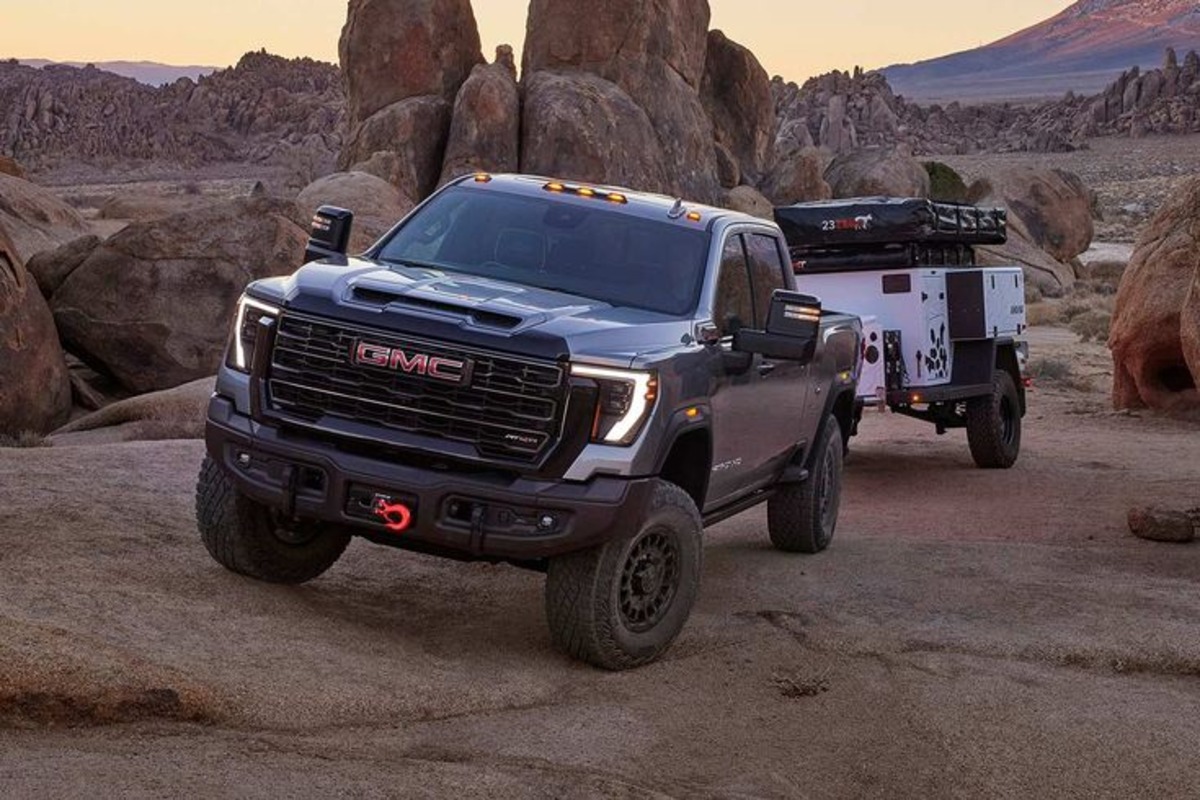
The AEV hardware is functional armor, not just styling. Hot-stamped boron steel skid plates protect the front approach zone, steering components, transfer case, fuel tank, and rear differential. There is also an AEV stamped steel rear bumper and rocker protection that doubles as a usable step for loading roof racks.
Front-end protection includes genuine recovery capability for remote trails. An AEV stamped steel front bumper includes front winch capability paired with a stamped boron steel front approach skid plate. That winch mount means recovery gear is ready to install without aftermarket fabrication work.
Inside, the truck stays surprisingly plush for something built to take serious abuse. 16-way power heated and ventilated front seats include a massage feature, a rare comfort touch in this category. That blend of trail armor and daily-driver comfort is exactly what AEV and GMC set out to build.
Buyers interested in this configuration should note its availability has shifted recently. GM has not confirmed whether the next-generation Sierra AT4X will continue offering an AEV Edition variant, with development work on the redesigned 2027 Sierra still underway. Shoppers should check the current dealer inventory before assuming this exact trim remains orderable.
Specifications:
- Engine: 3.0L Duramax diesel I6 / 6.2L V8
- Horsepower: 305 hp (diesel) / 420 hp (V8)
- Torque: 495 lb-ft (diesel) / 460 lb-ft (V8)
- Length: 231.7 in.
- Width: 81.2 in.
6. Mercedes-Benz Sprinter 4×4
No vehicle has shaped modern #vanlife culture more than the Sprinter. Its sheer interior volume turns it into a genuine mobile living space rather than just a camping support vehicle.
The 4×4 system is what separates a true overlanding Sprinter from a city delivery van. An optional high-performance version of the 2.0-liter turbocharged engine delivers 211 horsepower and 332 pound-feet of torque, and all-wheel drive is only available with this high-output engine. Both engines pair with a 9-speed automatic transmission for smooth, controlled power delivery on grades.
Interior volume is the Sprinter’s defining advantage over every truck or SUV on this list. The van offers up to 533 cubic feet of cargo space, depending on roof height and wheelbase configuration. Its flat load floor and tall ceiling make it ideal for installing shelves, racks, or transforming the van into a full camper or mobile clinic.
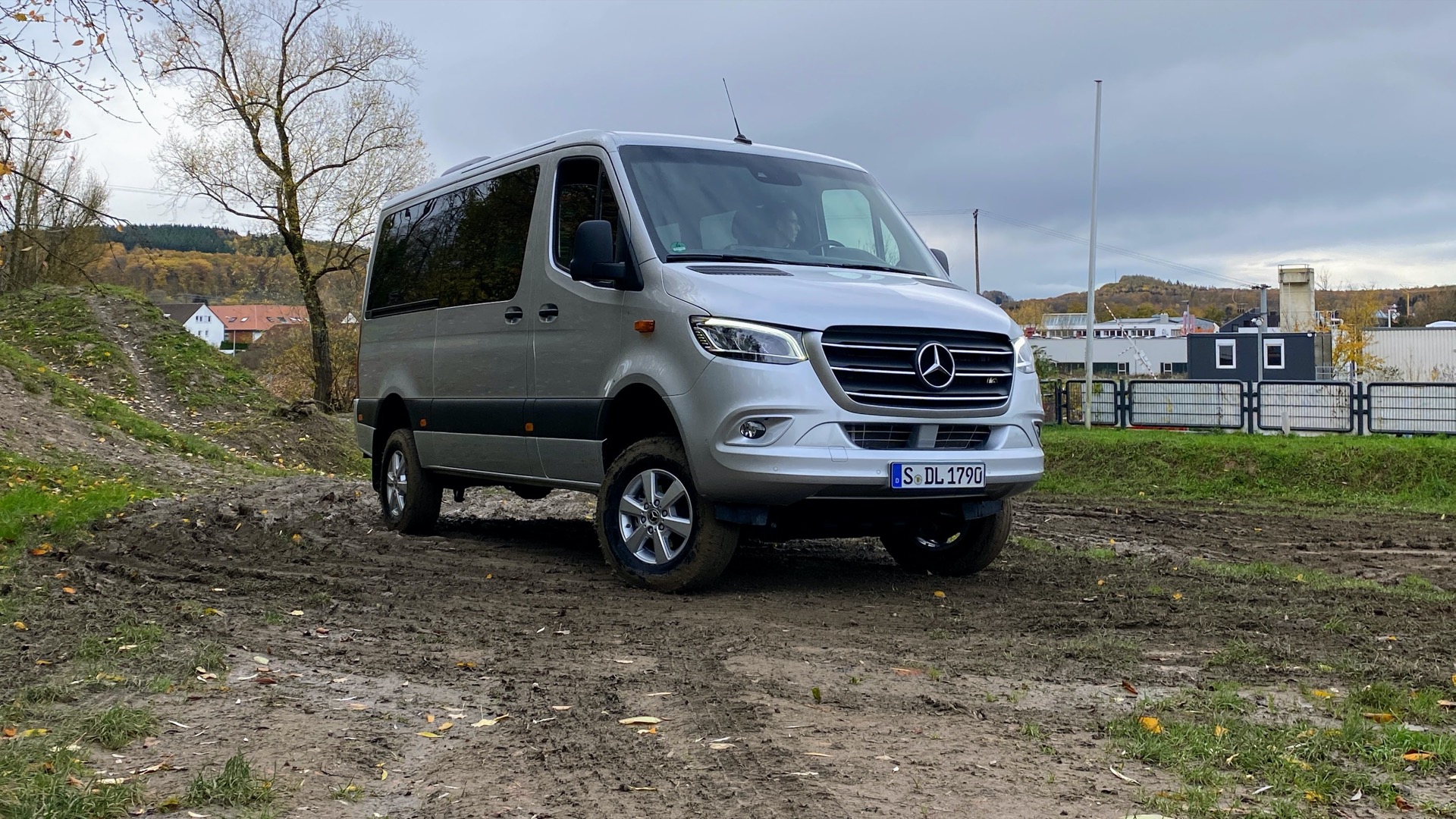
Buyers can tailor the chassis to their exact camping build plans. Multiple body styles, lengths, and roof heights are available, with the Sprinter ready to be tailored to the task. This flexibility is exactly why custom camper builders favor the Sprinter platform over competitors.
Towing numbers stay respectable despite the van’s boxy shape and weight. The 211-hp engine can tow up to 7,500 pounds when properly equipped, enough for a small trailer or extra gear hauler. For challenging terrain, the available 4×4 system adds confidence on routes through snow, sand, or mud, with engageable drive modes offering extra control.
Technology keeps the experience modern despite the van’s commercial roots. The available MBUX infotainment system features a high-resolution 10.25-inch touchscreen supporting wireless Apple CarPlay, Android Auto, and natural voice controls. That makes navigation to remote campsites and managing onboard systems far easier than older commercial vans.
The Sprinter’s massive following among professional camper builders is its own kind of proof. It offers immense aftermarket support and a huge community behind it, with diesel or petrol powertrains, 4×4 capability, and multiple configurations. Few vehicles on the road have this much accumulated knowledge built around converting them into full-time homes.
Specifications:
- Engine: 2.0L turbo diesel inline-4 (high-output)
- Horsepower: 211 hp
- Torque: 332 lb-ft
- Length: Up to 274.3 in. (extended wheelbase)
- Width: 96.0 in. (with mirrors)
7. Subaru Outback Wilderness
Not every camper needs a body-on-frame truck or a six-figure electric pickup. The Outback Wilderness proves a car-based wagon can still handle genuine off-grid adventures.
This trim starts with the standard Outback’s efficient turbocharged engine. The turbocharged 2.4-liter SUBARU BOXER engine delivers 260 horsepower and 277 lb-ft of torque. That power routes through an 8-speed continuously variable transmission with manual shift mode to all four wheels.
Ground clearance is the headline number that separates this trim from the regular Outback. The Wilderness offers 9.5 inches of ground clearance, making it the most capable Outback for off-road adventures and rough terrain navigation. That figure genuinely beats many full-size SUVs despite the Outback’s wagon-like proportions.
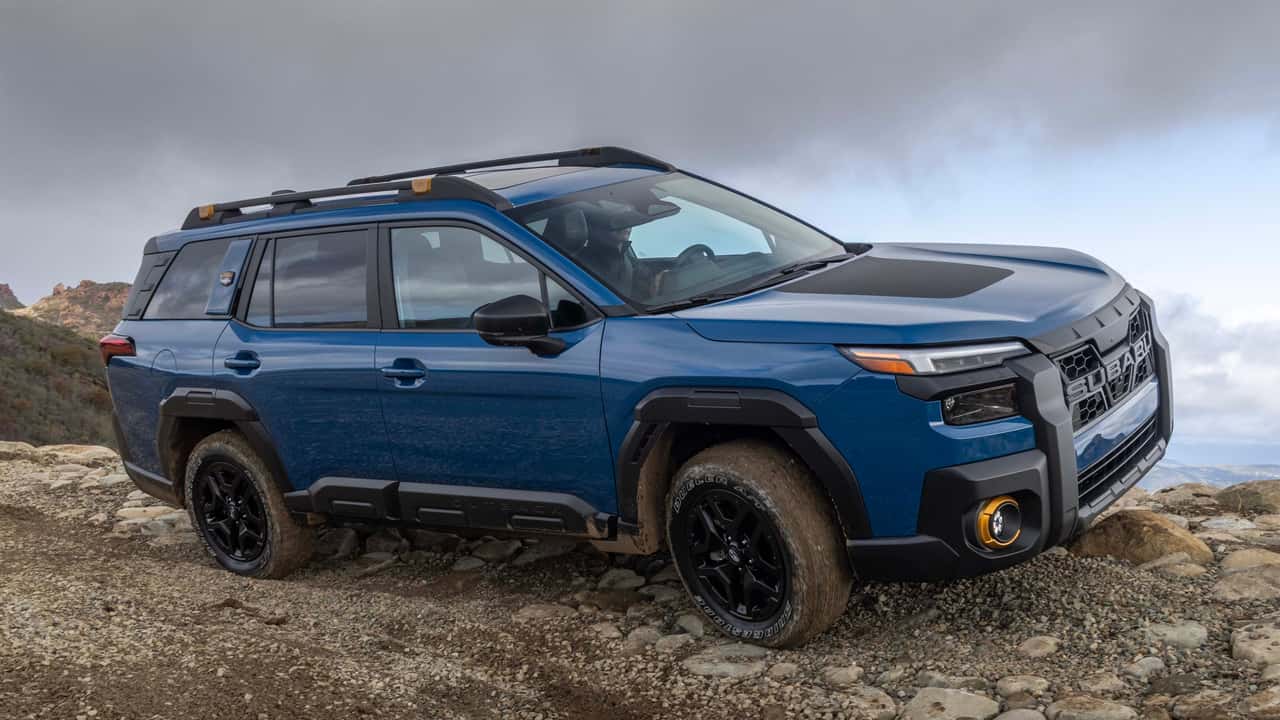
Approach and departure geometry matters as much as raw clearance on technical trails. Approach and departure angles are set at 20º and 22.5º, respectively, with a ramp breakover angle of up to 21.2º. Those numbers mean fewer scraped bumpers crossing ruts, logs, or steep driveway transitions to camp.
Off-road traction software is tuned specifically for this trim’s mission. The dual-function X-MODE has been retuned with settings for snow, dirt, deep snow, and mud, allowing additional wheel slip to power through adverse conditions. The drivetrain also features revised transmission gearing and an increased final drive ratio for improved low-speed climbing up to a 40% grade.
Roof capacity is generous enough to support genuine overlanding accessories. Roof weight capacity is set at an 800-pound static load and 220 pounds of dynamic load. That static rating comfortably supports a rooftop tent, making this wagon a legitimate sleeping platform at camp.
Practical touches round out the package for real-world towing and recovery situations. Towing capacity sits at 3,500 pounds, with improved tow hooks and reinforced underbody protection standard on this trim. Fuel efficiency stays a major advantage too, with up to 27 MPG for fuel-efficient value and long-range exploring between fill-ups.
For campers who want capability without committing to a truck-sized footprint, this wagon hits a sweet spot. It parks like a normal car, sips fuel like a sedan, and still climbs grades most crossovers cannot touch.
Specifications:
- Engine: 2.4L turbocharged BOXER 4-cylinder
- Horsepower: 260 hp
- Torque: 277 lb-ft
- Length: 191.9 in.
- Width: 73.0 in.
Also Read: Every Generation of the Jeep Wrangler Ranked
