
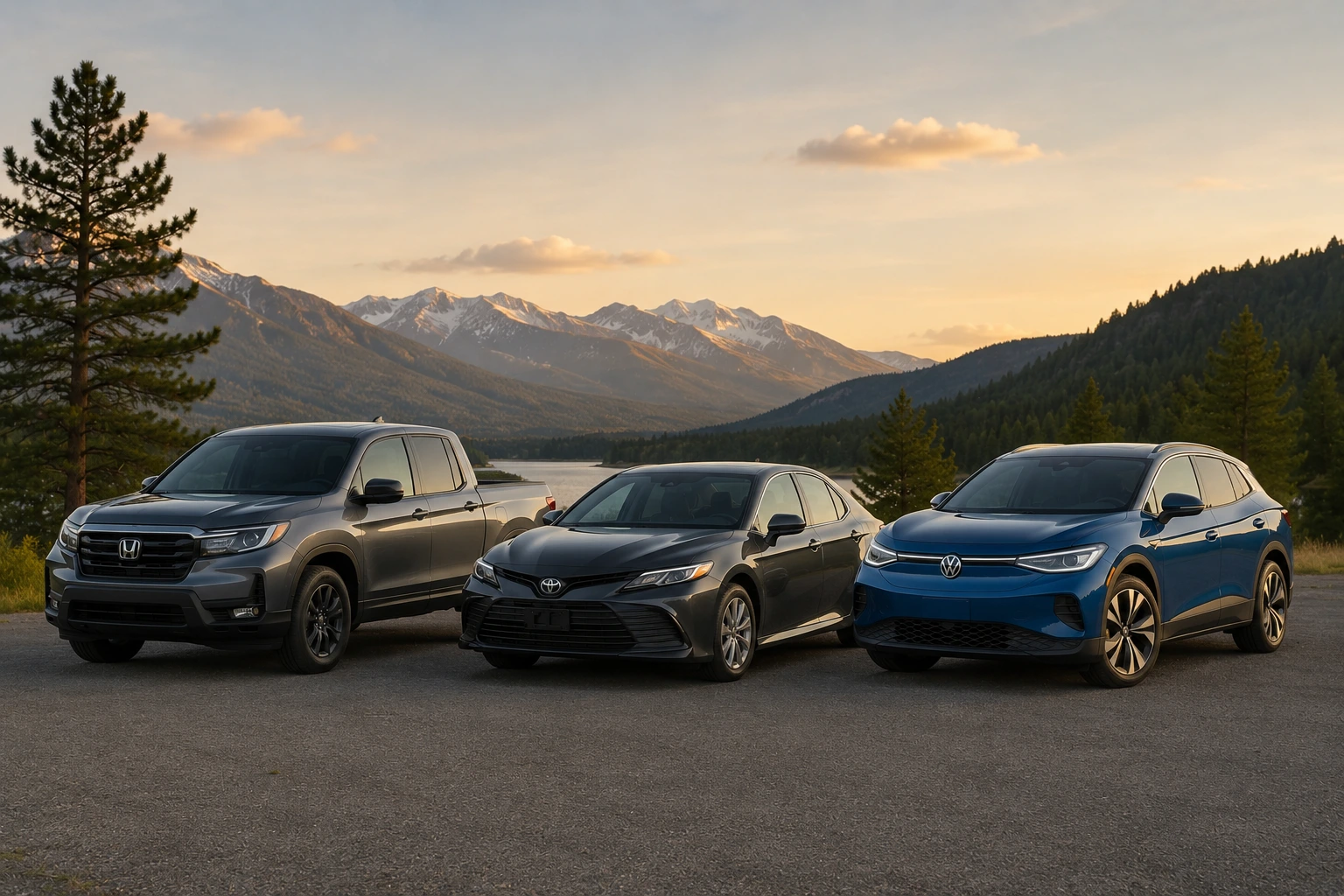
A widespread belief holds that purchasing Toyota, Honda, or Mercedes-Benz vehicles mainly benefits foreign factories while American workers are left out. That idea no longer reflects current reality, and in many cases, it was never fully accurate. A large share of foreign-branded vehicles is assembled within the United States, with production tied closely to local employment and regional supply networks that support surrounding communities.
Across several states such as Alabama, Kentucky, Tennessee, Indiana, and Georgia, these vehicles are produced daily by thousands of American workers. Many of the parts come from domestic suppliers, reinforcing economic activity within those regions.
Some plants have operated for decades, becoming central to town economies and providing stable employment for generations of families. Others represent newer investments by global automakers choosing to base production in the United States. These operations also strengthen supplier networks across multiple states.
This collection highlights eight vehicles assembled on American soil despite carrying Japanese, German, or Korean brand names. Each model is linked to specific factories across the country, along with production details that show how deeply integrated these brands are within the US manufacturing system. Understanding this helps clarify how ownership and production can differ in modern automotive manufacturing.
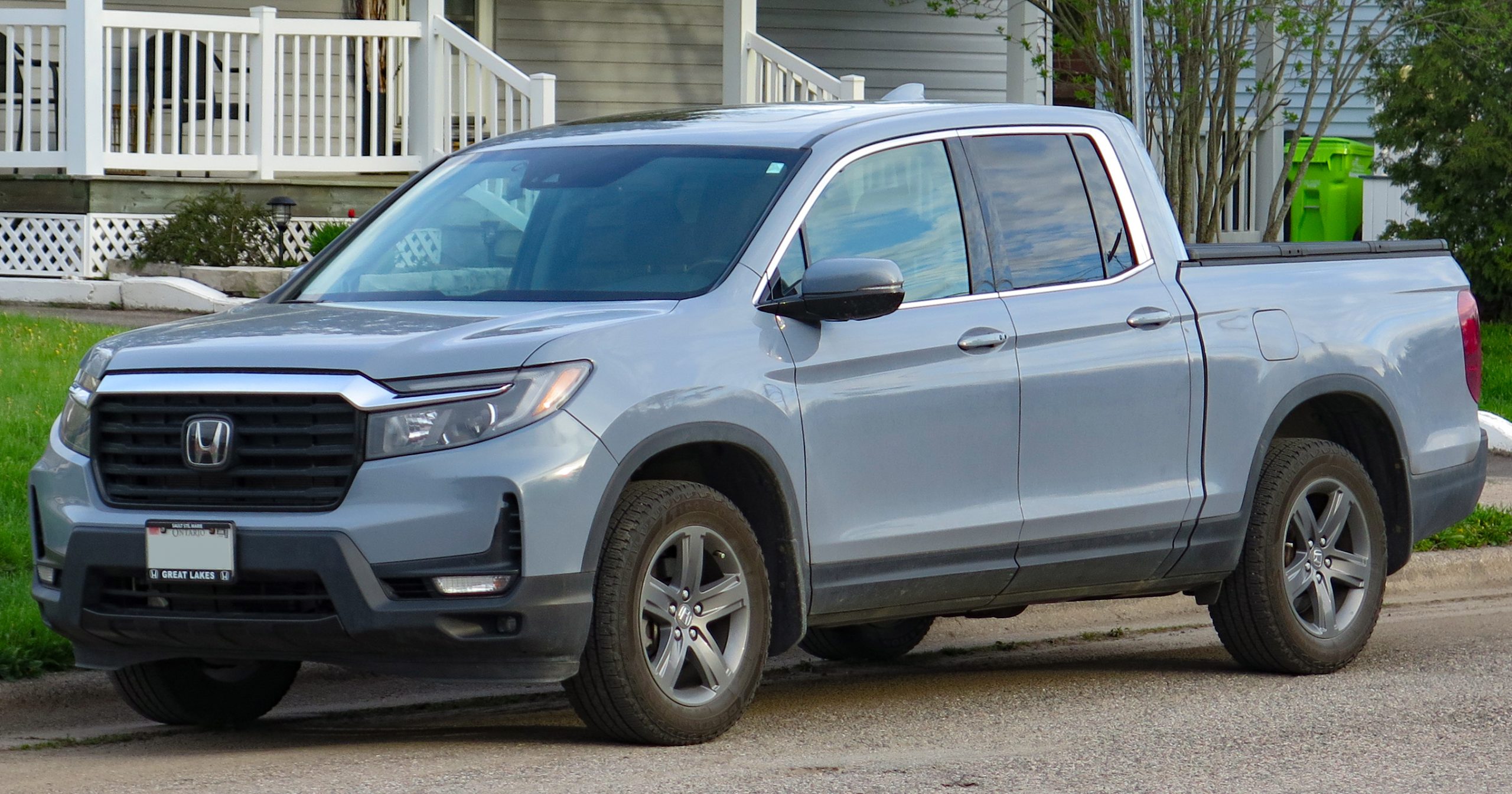
1. Honda Ridgeline
Assembly Location: Lincoln, Alabama
- Engine: 3.5L V6
- Horsepower: 280 hp
- Torque: 262 lb-ft
- Size: 210.2 in Long x 78.6 in Wide
Honda’s Ridgeline occupies a genuinely unique position within the American pickup truck market, functioning as the only unibody truck currently competing in a segment otherwise dominated by body-on-frame designs from Ford, Ram, and General Motors.
Its assembly at Honda’s Lincoln, Alabama, manufacturing facility places it firmly on American soil, where Honda has invested heavily in production infrastructure that supports multiple vehicle models rather than a single dedicated truck line.
The Lincoln, Alabama, plant represents one of Honda’s largest manufacturing investments in the United States, producing vehicles at a scale that requires substantial local employment and supplier relationships reaching throughout the regional economy.
Assembly workers at this facility build vehicles destined primarily for American consumers, making the supply chain from factory floor to dealership lot an almost entirely domestic journey despite the Japanese heritage of the brand that owns the nameplate.
A 3.5L V6 producing 280 horsepower and 262 lb-ft of torque powers the Ridgeline with genuine confidence for a vehicle of its size, delivering the kind of smooth, refined daily driving experience that Honda’s engine engineering reputation consistently supports. The truck measures 210.2 inches long and 78.6 inches wide, providing the physical presence and cargo bed dimensions that pickup buyers require without the raw bulk of full-size body-on-frame competitors.
Honda designed the Ridgeline around a buyer who uses a truck primarily as a refined daily vehicle that occasionally carries cargo and tows moderate loads rather than as a dedicated work tool subjected to constant heavy-duty punishment.
That philosophy shows up in the dual-action tailgate, the in-bed trunk, and the remarkably carlike interior that distinguishes this truck from competitors, all assembled by American workers at a facility that has become deeply integrated into Alabama’s manufacturing economy across years of continued Honda investment.
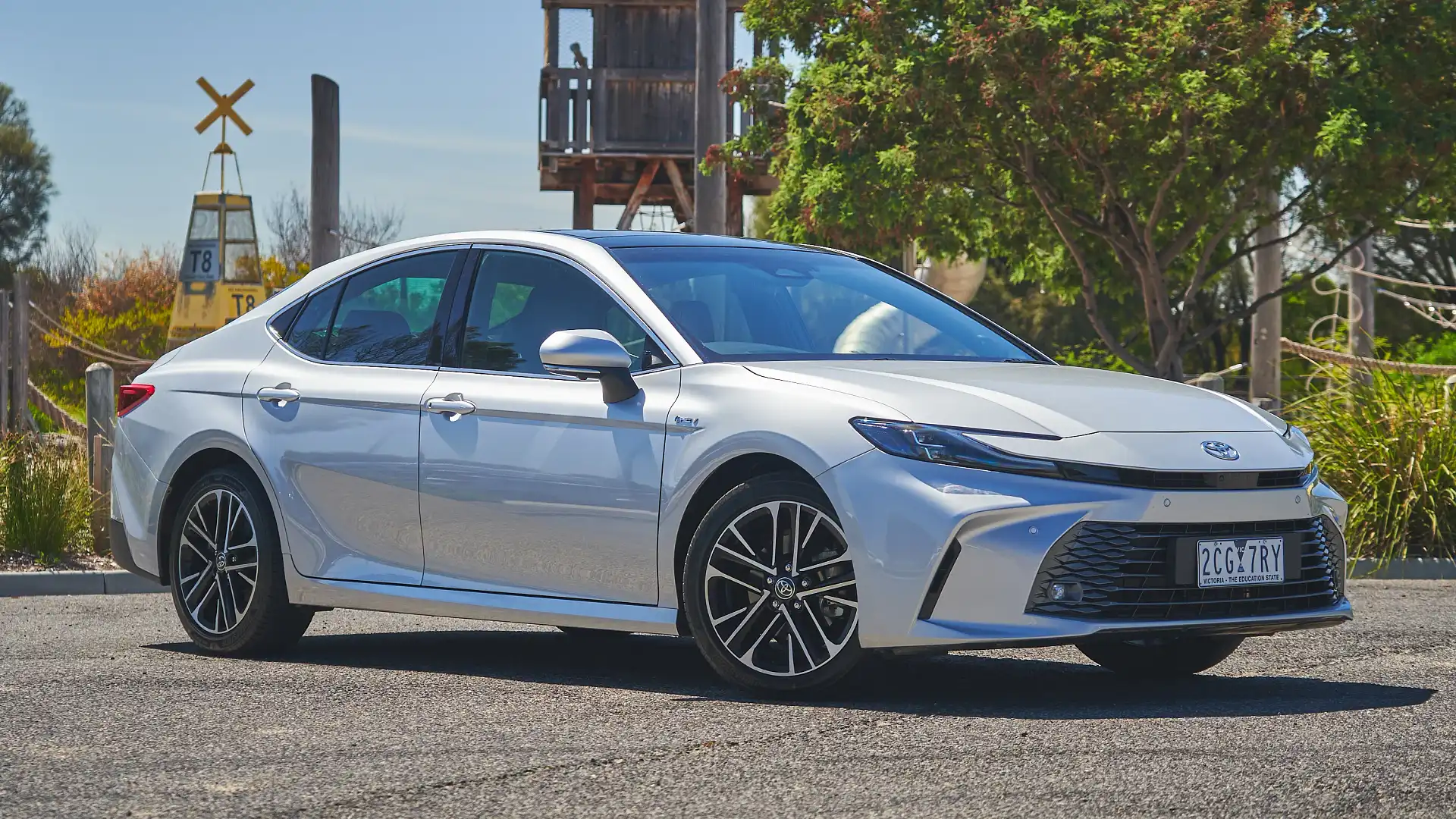
2. Toyota Camry
Assembly Location: Georgetown, Kentucky
- Engine: 2.5L 4-Cylinder Hybrid
- Horsepower: 225 hp
- Torque: 163 lb-ft (engine) / 150 lb-ft (electric motor)
- Size: 193.5 in Long x 72.4 in Wide
Toyota’s Georgetown, Kentucky, plant occupies a notable place in American automotive manufacturing history. It was among the earliest major Japanese-owned production facilities established in the United States, and it has assembled Camry sedans for decades. Over that span, entire generations of Kentucky workers have built long careers there, with many beginning and ending their working lives within the same facility.
That continuity of operation reflects a genuine manufacturing commitment rather than a temporary cost-efficiency calculation. Georgetown produces the Camry at volumes that make it one of the highest-output single-model production facilities in the United States, with annual production numbers that rival domestic brands’ home plants.
The workforce employed there represents a substantial economic force in central Kentucky, supported by a supplier network that extends throughout the state and surrounding region and creates employment well beyond the factory floor itself.
A 2.5L four-cylinder hybrid system generating 225 total system horsepower and paired with both a 163 lb-ft conventional engine output and a 150 lb-ft electric motor contribution gives the Camry Hybrid its smooth, efficient powertrain character. At 193.5 inches long and 72.4 inches wide, this sedan occupies the midsize sweet spot that has made the Camry one of America’s most purchased passenger cars across multiple decades of continuous production.
Georgetown workers also build Camry Hybrid models alongside the standard variants, integrating increasingly sophisticated electrified powertrain components into vehicles on an assembly line that has adapted repeatedly across production generations.
Each successive Camry generation assembled in Georgetown represents both a product evolution and a manufacturing capability advancement for a facility that has demonstrated genuine long-term commitment to domestic American production.
Also Read: 10 Cars That Are Cheapest to Insure for Drivers Under 25
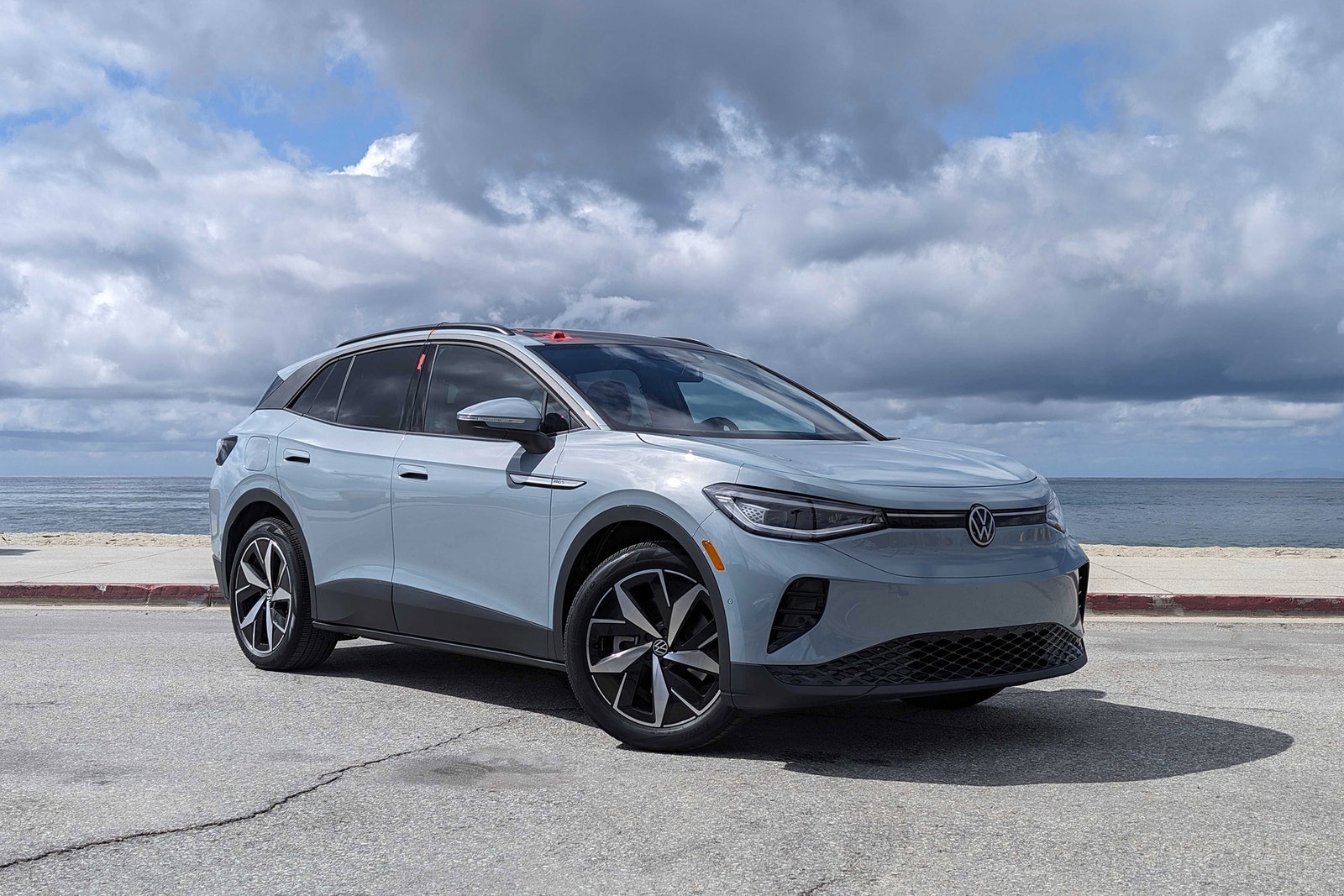
3. Volkswagen ID.4
Assembly Location: Chattanooga, Tennessee
- Engine: Single-Motor Electric (82-kWh battery)
- Horsepower: 282 hp
- Torque: 402 lb-ft
- Size: 180.5 in Long x 72.9 in Wide
Volkswagen selected Chattanooga, Tennessee, as the production base for its ID.4 electric crossover, a decision shaped by manufacturing strategy and access to United States incentives tied to domestic assembly. Vehicles built in this facility qualify for federal electric vehicle tax credits that imported versions cannot receive, regardless of their technical performance or efficiency ratings.
This arrangement affects buyer cost considerations in a direct way, making production location an important factor during purchase decisions in the American market. Each American-assembled ID.4 uses a single electric motor paired with an 82-kilowatt-hour battery pack, producing 282 horsepower and 402 pound-feet of torque for immediate acceleration typical of electric drivetrains without gear delay.
The model measures 180.5 inches in length and 72.9 inches in width, placing it within compact crossover size preferences common among United States buyers. Performance delivery remains smooth and continuous, supported by electric propulsion that responds instantly to pedal input.
Earlier operations at Volkswagen’s Chattanooga facility centered on assembly of the Passat sedan before retooling for ID.4 production, showing the plant’s ability to handle different vehicle programs. The change in production focus reflects established manufacturing capability and long-standing cooperation between Volkswagen and its Tennessee workforce. This continuity supports stable operations as the company moves toward electric vehicle manufacturing in the United States.
Workers at the site maintain production standards through established training systems supporting consistent output levels that align with Volkswagen’s manufacturing expectations for electric mobility products in the American market today and supporting employment stability across Tennessee operations currently
4. Honda Odyssey
Assembly Location: Lincoln, Alabama
- Engine: 3.5L V6
- Horsepower: 280 hp
- Torque: 262 lb-ft
- Size: 205.2 in Long x 78.5 in Wide
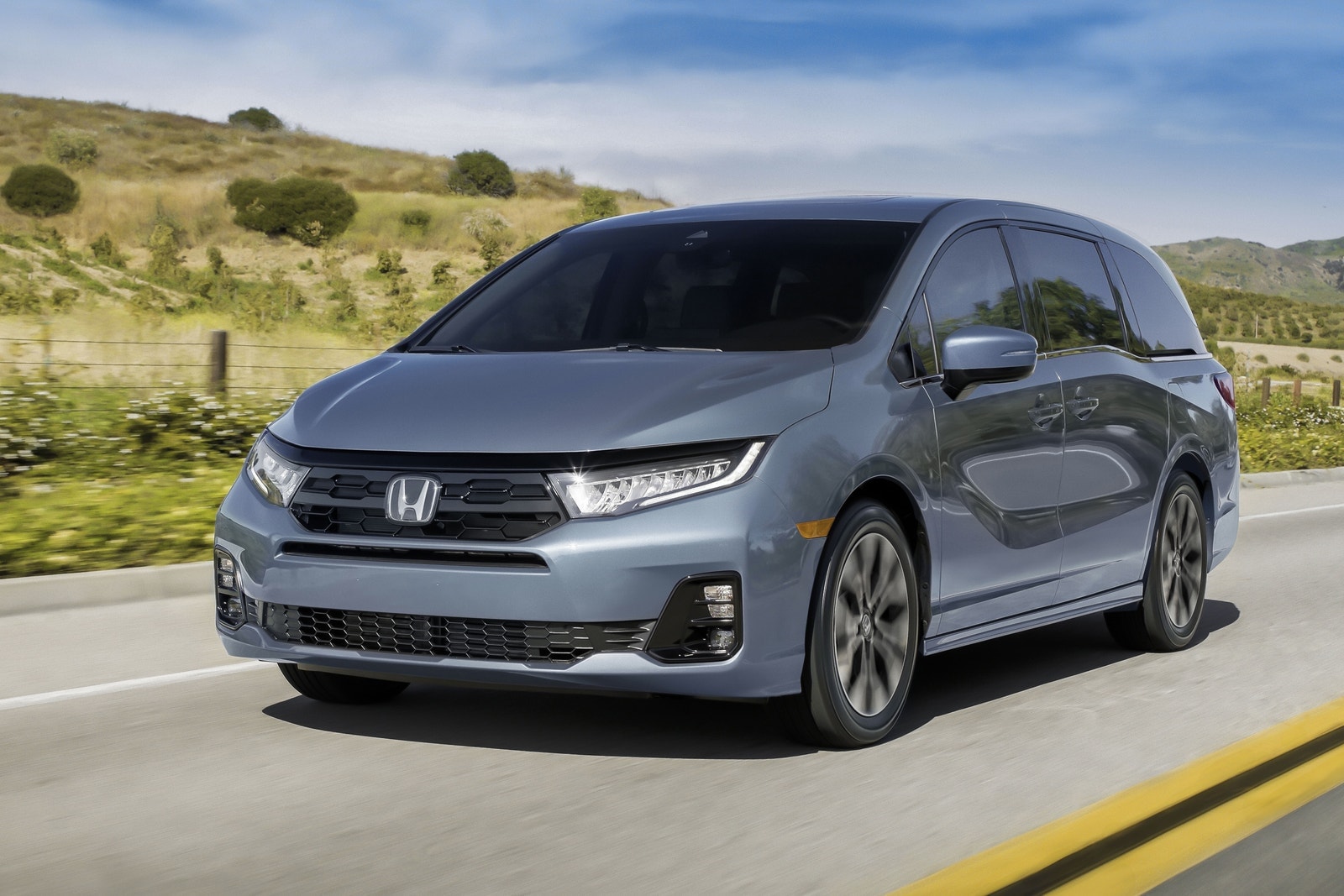
Honda assembles the Odyssey at the Lincoln, Alabama, plant, the same site that also produces the Ridgeline pickup mentioned earlier. This facility stands as one of Honda’s strongest production bases in the United States, handling multiple vehicle lines within a shared manufacturing system. The arrangement allows the company to spread investment across different models while maintaining steady output and efficient use of equipment and labour.
Demand for the Odyssey in the United States remains strong among family buyers, and Honda has continued producing it across several generations without interruption. The model receives regular updates while American assembly remains a stable part of its production plan rather than something adjusted based on short-term cost differences or exchange rate movement. This steady approach shows long-term commitment to local manufacturing capacity for this type of vehicle.
Under the hood, the 3.5L V6 engine delivers 280 horsepower and 262 lb-ft of torque, giving the Odyssey smooth performance suitable for daily family use even when fully loaded with passengers and luggage. It measures 205.2 inches in length and 78.5 inches in width, offering generous interior space while still remaining manageable for city driving and parking situations compared to larger alternatives.
Honda’s interior design approach is clear in the cabin, especially in the flexible second-row seating system that allows different arrangements for passengers and cargo depending on need. Production work in Alabama reflects trained local workers applying Honda manufacturing processes consistently, ensuring the Odyssey meets standards expected from global engineering requirements in each production cycle here.
5. Subaru Ascent
Assembly Location: Lafayette, Indiana
- Engine: 2.4L Turbocharged 4-Cylinder
- Horsepower: 260 hp
- Torque: 277 lb-ft
- Size: 196.8 in Long x 76.0 in Wide
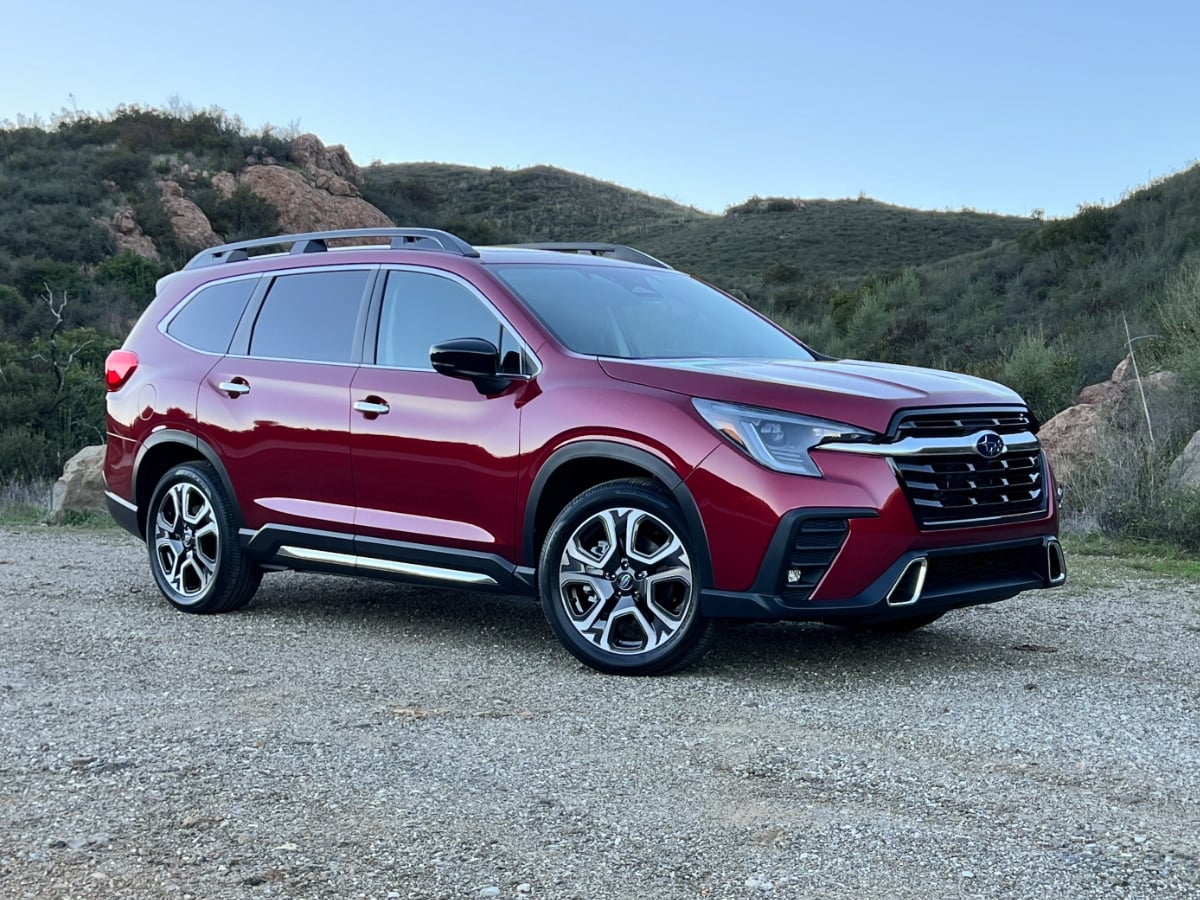
Subaru’s Lafayette, Indiana, manufacturing campus, known formerly as Subaru of Indiana Automotive, represents one of the longer-standing foreign-brand manufacturing investments in the American Midwest, operating continuously for long enough that it has become genuinely integrated into the regional manufacturing economy rather than sitting as an isolated foreign-owned enclave.
The Ascent is the largest vehicle Subaru builds anywhere, and the fact that it is built exclusively in Indiana rather than Japan reflects the company’s confidence in American manufacturing capability for its most demanding production program.
Building the Ascent exclusively in Lafayette rather than splitting production between American and Japanese facilities means that every three-row Subaru SUV sold in the United States travels a dramatically shorter supply chain distance than its Japanese-badged identity might suggest to a buyer who has not researched its production location. That domestic production reality becomes relevant when considering the vehicle’s economic footprint beyond simply its purchase price.
A 2.4L turbocharged four-cylinder producing 260 horsepower and 277 lb-ft of torque gives the Ascent genuine pulling capability appropriate for a three-row SUV that families frequently load to capacity during vacation travel and weekend activities. The turbocharged displacement provides a meaningful torque advantage over naturally aspirated alternatives of similar displacement, benefiting drivers who tow trailers or carry full passenger loads regularly.
At 196.8 inches long and 76.0 inches wide, the Ascent occupies proper three-row SUV proportions without reaching the imposing dimensions of full-size alternatives. Standard Symmetrical All-Wheel Drive across the Ascent lineup reflects Subaru’s commitment to all-weather capability as a baseline feature rather than an upgrade option, giving Indiana-assembled vehicles a year-round traction advantage that resonates with buyers in snowy northern markets.
6. Kia EV9
Assembly Location: West Point, Georgia
- Engine: Single-Motor Electric (76.1-kWh battery)
- Horsepower: 215 hp
- Torque: 258 lb-ft
- Size: 197.2 in Long x 77.9 in Wide
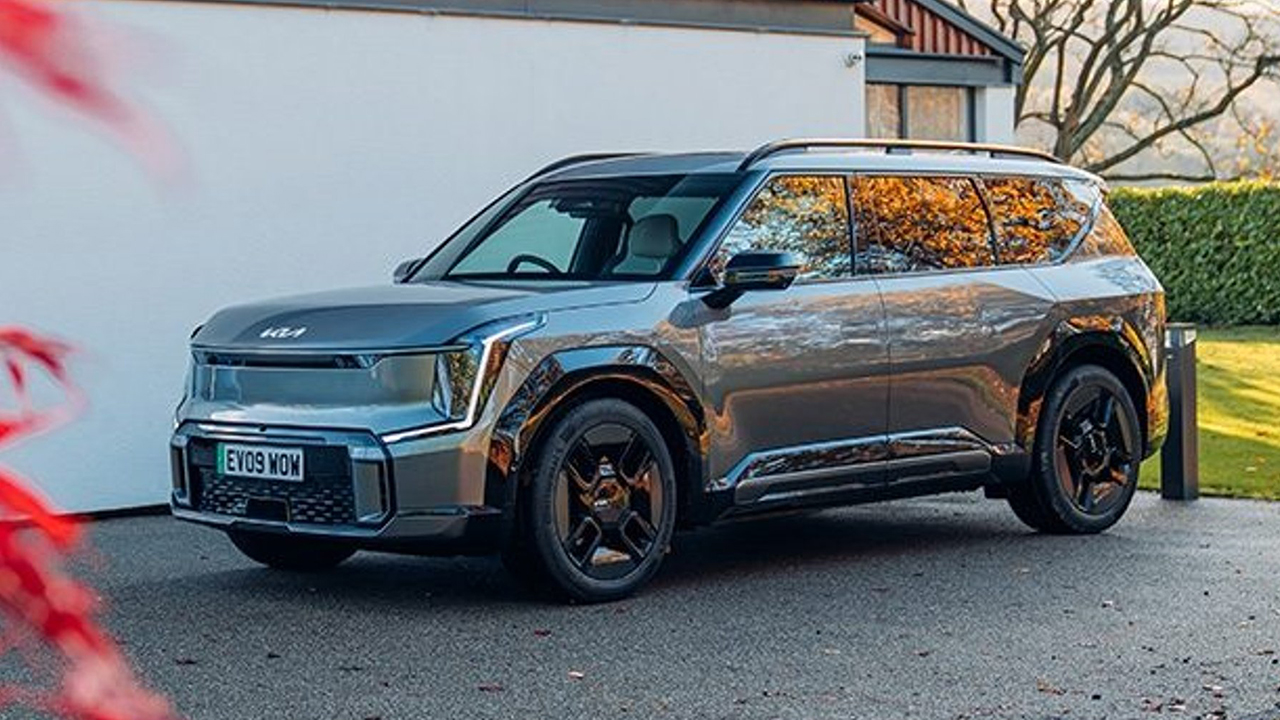
Kia’s decision to assemble the EV9 at its West Point, Georgia, facility carries the same federal tax credit implications that Volkswagen’s Chattanooga decision created for the ID.4, connecting domestic production directly to consumer financial benefit in a way that shapes purchasing decisions for EV buyers who plan to utilize available incentive programs.
West Point has been Kia’s American manufacturing home for the Telluride and earlier models, building the facility’s production credentials across multiple successful vehicle programs before the EV9 joined the lineup. Adding electric vehicle production capability to an existing facility required good infrastructure investment in charging systems, battery handling equipment, and assembly line modifications that Kia committed to making in Georgia rather than routing EV9 production entirely through Korean facilities.
That investment commitment reflects Kia’s assessment that American EV demand justifies domestic production capacity rather than treating the American market as a secondary consideration served by imports. A single electric motor drawing from a 76.1-kWh battery pack produces 215 horsepower and 258 lb-ft of torque in the base configuration, with dual-motor variants offering considerably more output for buyers who prioritize performance alongside the three-row family hauling capability that defines the EV9’s primary market position.
Measuring 197.2 inches long and 77.9 inches wide, this electric SUV delivers genuine three-row interior space without the visual bulk that might make it feel disproportionate to its intended family transportation purpose. West Point workers building the EV9 are gaining electric vehicle assembly experience that positions Georgia as a developing center of American EV manufacturing capability alongside the battery production facilities that have been established throughout the broader Southeast region in recent years.
7. Lexus TX 350
Assembly Location: Princeton, Indiana
- Engine: 2.4L Turbocharged 4-Cylinder
- Horsepower: 275 hp
- Torque: 317 lb-ft
- Size: 203.1 in Long x 78.3 in Wide
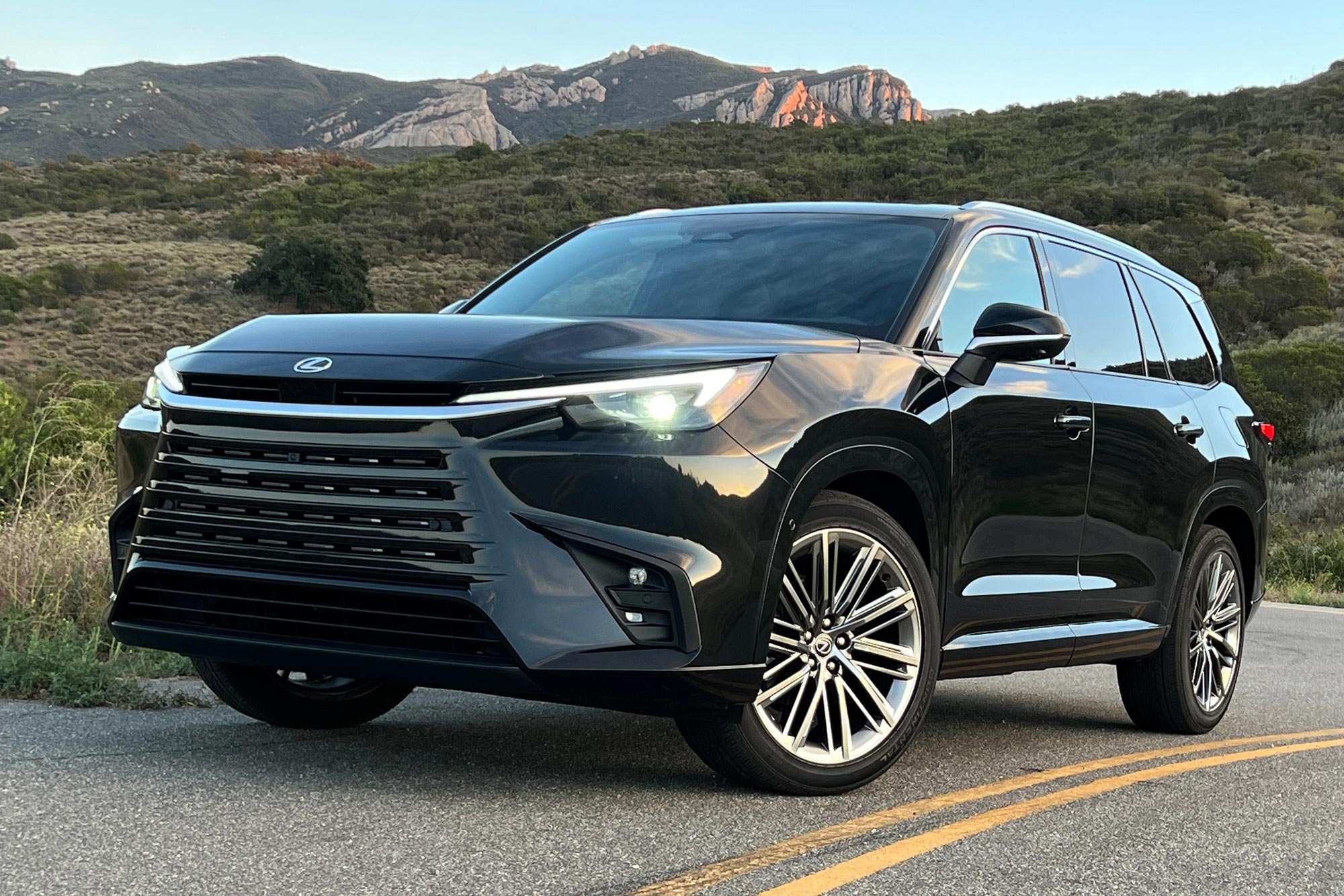
Lexus assembling the TX 350 in Princeton, Indiana, rather than in Japan, represents a specific manufacturing decision that reflects the vehicle’s primary market focus on American consumers who form the core buyer base for three-row luxury SUVs at this price point.
Princeton is home to Toyota’s manufacturing campus, which also produces the Sequoia, Sienna, and other Toyota-branded vehicles, making Indiana a domestic production center for the Toyota Motor Corporation’s American market products across both mainstream and luxury brand lines.
A turbocharged 2.4L four-cylinder producing 275 horsepower and 317 lb-ft of torque gives the TX 350 responsive, confident acceleration appropriate for a luxury SUV that buyers will use for family transportation, executive travel, and weekend journeys requiring both performance and comfort simultaneously.
The torque output specifically benefits from the turbocharged architecture, providing strong acceleration responsiveness from low speeds that naturally aspirated alternatives at comparable displacement cannot match with equal immediacy.
Measuring 203.1 inches long and 78.3 inches wide, the TX 350 provides three-row seating in proportions that feel genuinely spacious rather than cramped in the third row, a distinction that matters enormously for buyers choosing a luxury three-row SUV specifically because they need all three rows to accommodate passengers comfortably rather than simply having the option available for occasional use.
Princeton workers building the TX 350 alongside Toyota-branded vehicles on shared facility infrastructure benefit from the economies of scale that combined production provides, while Lexus buyers driving these vehicles can genuinely claim American assembly behind the luxury Japanese badge that sits on the hood of their purchased vehicle.
Also Read: 7 Cars Where the Cheapest Trim Costs the Least to Own Over Five Years
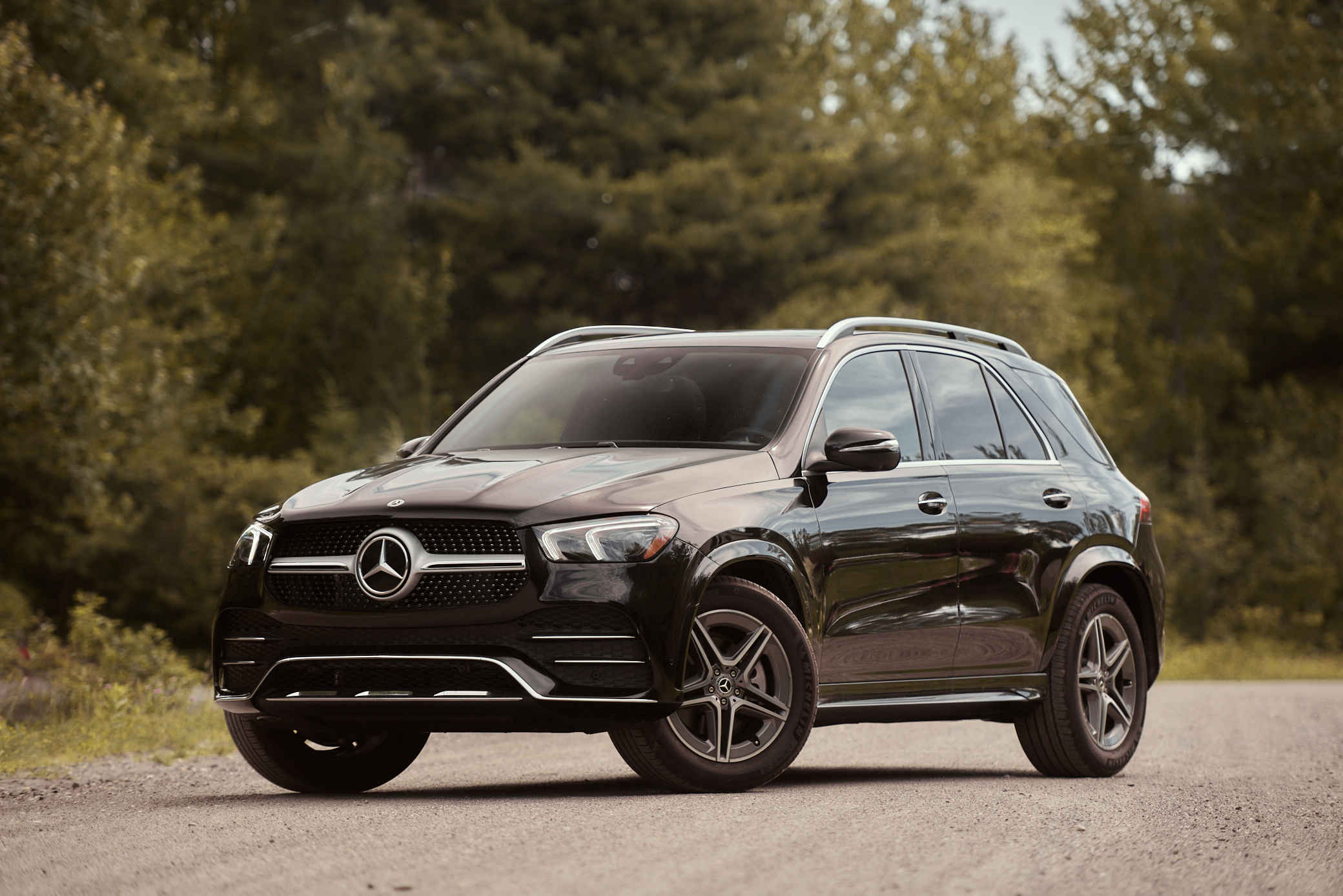
8. Mercedes-Benz GLE 350
Assembly Location: Vance, Alabama
- Engine: 2.0L Turbocharged 4-Cylinder Mild Hybrid
- Horsepower: 255 hp
- Torque: 295 lb-ft
- Size: 194.3 in Long x 76.7 in Wide
Mercedes-Benz runs its Vance, Alabama, plant as its main North American production site. The facility has grown into one of the biggest foreign automotive manufacturing hubs in the United States, measured by workforce size and output levels.
The GLE remains one of Mercedes-Benz’s most recognised global SUV models. Producing it in the United States reflects the brand’s understanding that demand in the American premium SUV market supports local assembly rather than relying only on imported units and long shipping chains.
A 2.0L turbocharged four-cylinder mild hybrid engine delivers 255 horsepower and 295 lb-ft of torque in the GLE 350. The system supports fuel savings and adds electric assist during low-speed driving, improving smoothness without moving into a full plug-in hybrid setup.
At 194.3 inches long and 76.7 inches wide, the GLE 350 sits within the midsize luxury SUV class. The size gives enough cabin room for passengers and luggage while still allowing easy handling in city driving and regular parking spaces.
The interior reflects Mercedes-Benz’s focus on premium design, with quality materials and modern technology features that support its pricing within the luxury segment when compared with mainstream crossover alternatives available at lower cost levels.
Workers in Vance, Alabama, assemble the GLE alongside other Mercedes-Benz models, forming thousands of direct jobs that support the local economy and making the plant an important industrial base for Tuscaloosa County over many years of operation.
Beyond production output, the Vance facility also supports a wide supplier network across Alabama and nearby states, helping local businesses take part in automotive manufacturing activity. Training programs and consistent production routines have helped workers build strong technical experience, allowing the plant to maintain steady output and meet global standards set by Mercedes-Benz across different model lines produced in the facility over the past few years.
