
Car names come and go. Most fade within a decade. But a rare few survive for generations. They outlast wars, oil crises, and changing tastes. These nameplates become more than model names. They become legends etched into automotive history.
This list counts down ten of the oldest car names still rolling off factory lines today. Each one tells a story of reinvention. Some started as military vehicles. Others began as simple family haulers.
Yet they all share one thing. Continuous production, decade after decade. From the Chevrolet Suburban to the Toyota Corolla, these names have weathered massive change. Engines evolved from carburetors to hybrids.
Bodies shifted from steel-heavy frames to lightweight aluminum. Safety features went from nonexistent to autonomous. Despite all this, the names stuck. Buyers kept coming back. This is a tribute to those enduring badges. Let’s look at the ten oldest nameplates still in production today.
1. Chevrolet Suburban (1935)
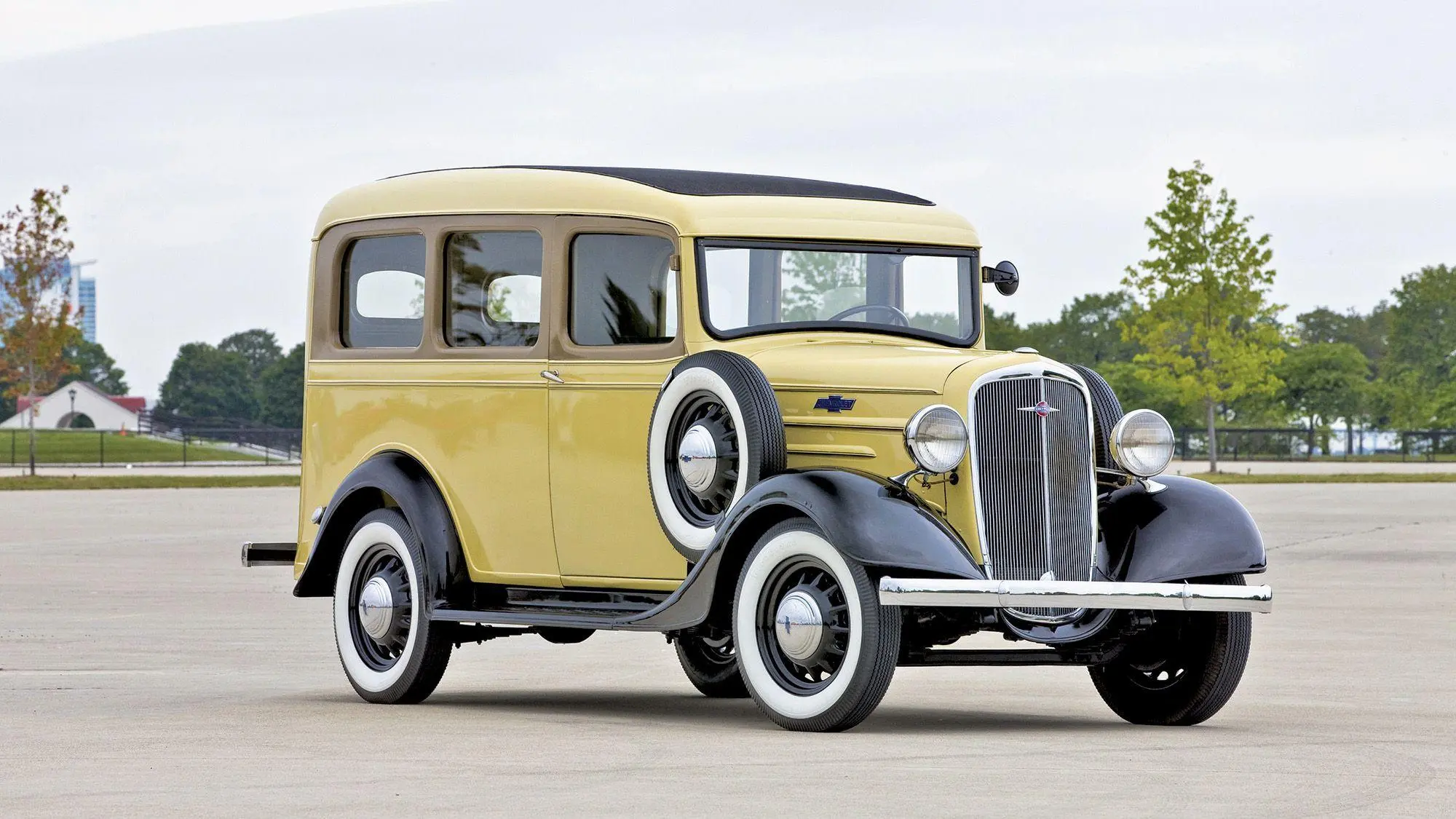
The Chevrolet Suburban holds the top spot. It is the oldest surviving nameplate. It all started in 1934 with the Carryall Suburban. Production truly began the following year.
Back then, “Suburban” wasn’t even a Chevy-exclusive name. Other brands used it too. Dodge, DeSoto, Studebaker, Nash, and Plymouth all sold their own suburbans. It described a body style, not a brand.
The original was a wood-bodied wagon. It was built specifically for the National Guard and Civilian Conservation Groups. Over the decades, the Suburban transformed completely. It has gone through no fewer than twelve generations.
Specifications:
- Engine: 6.2L V8
- Horsepower: 420 hp
- Torque: 460 lb-ft
- Length: 225.7 inches
- Width: 81.1 inches
It grew from a small wagon into a massive SUV. Today it rides on a heavy-duty pickup platform. The Suburban celebrates its 90th birthday in 2026, according to parent General Motors. That’s nine full decades of service.
It has hauled families, cargo, and even presidents. It is the only vehicle to receive a star on the Hollywood Walk of Fame. That honor came from its film appearances. It has appeared in over 1,750 feature films.
Production today happens in Arlington, Texas. The plant has built millions of units over the years. The Suburban remains a favorite for large families. It also serves government fleets around the world. No other nameplate comes close to its longevity. It truly stands alone at the top.
2. Jeep (CJ to Wrangler Lineage, 1945)
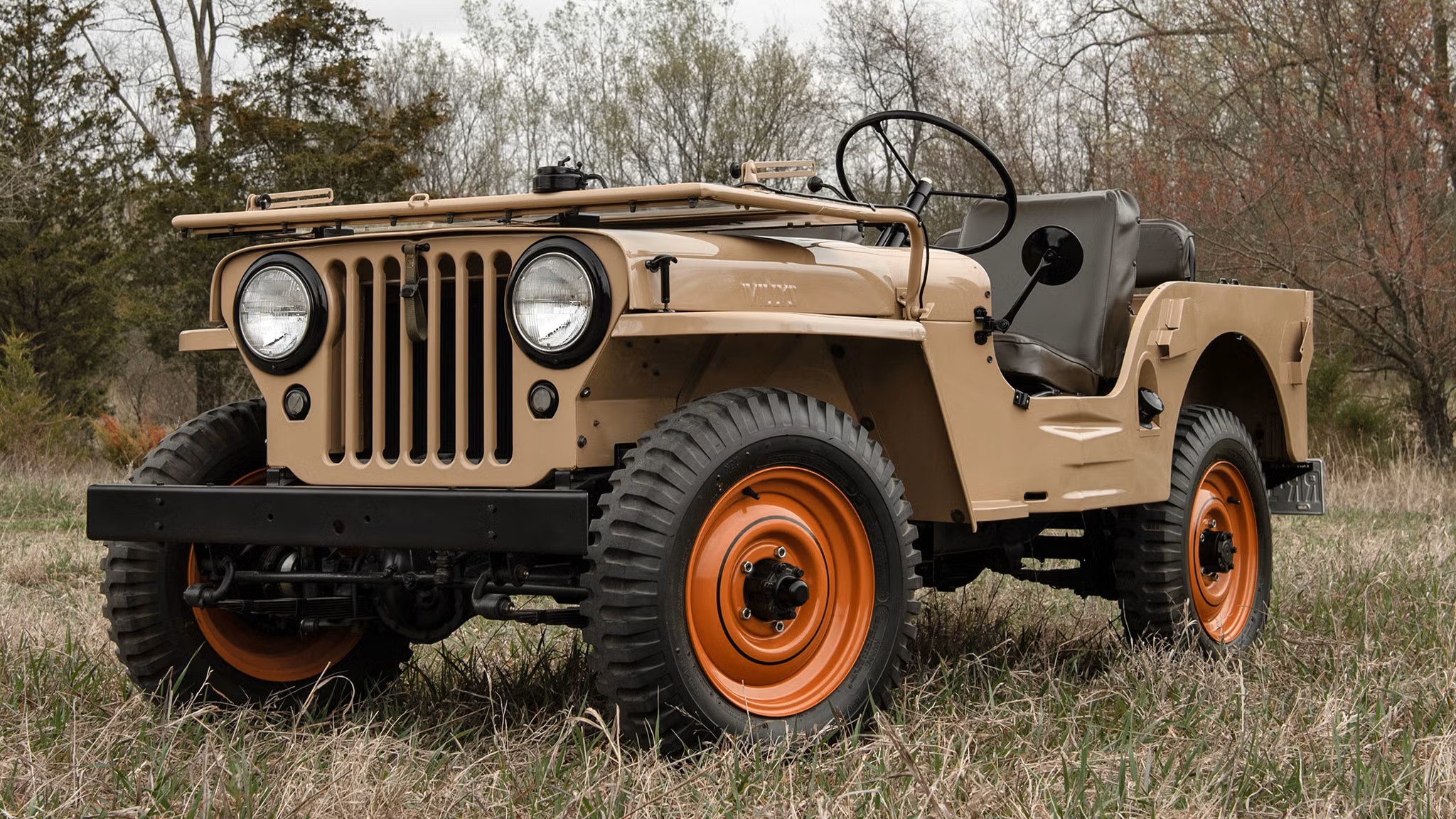
Jeep’s off-road lineage traces back to World War II. The military Jeep proved itself in combat first. By 1945, Willys began selling a civilian version. It was called the CJ, short for Civilian Jeep.
The CJ was simple and rugged. It had a basic body and removable doors. Over time, the CJ evolved through several versions. Each one kept the boxy, utilitarian shape. In 1986, the name changed to Wrangler. The core philosophy stayed the same. Four-wheel drive. Removable top. Go-anywhere capability.
Specifications:
- Engine: 3.6L Pentastar V6
- Horsepower: 285 hp
- Torque: 260 lb-ft
- Length: 188.4 inches (4-door Wrangler Unlimited)
- Width: 73.9 inches
The Wrangler still uses solid axles today. Few other vehicles have kept this old-school setup. It remains one of the most recognizable silhouettes on the road. The round headlights and flat hood are instantly familiar.
Modern Wranglers now offer hybrid powertrains. Yet they still tackle rock crawls with ease. The nameplate has spanned nearly eighty years. That’s a remarkable run for something built for war.
Jeep enthusiasts value this heritage deeply. Many still restore original CJ models today. The Wrangler proves that authenticity sells. Buyers want the same rugged spirit as the original. Few nameplates balance history and modern tech this well. It’s a genuine survivor of automotive evolution.
3. Ford F-Series (1948)
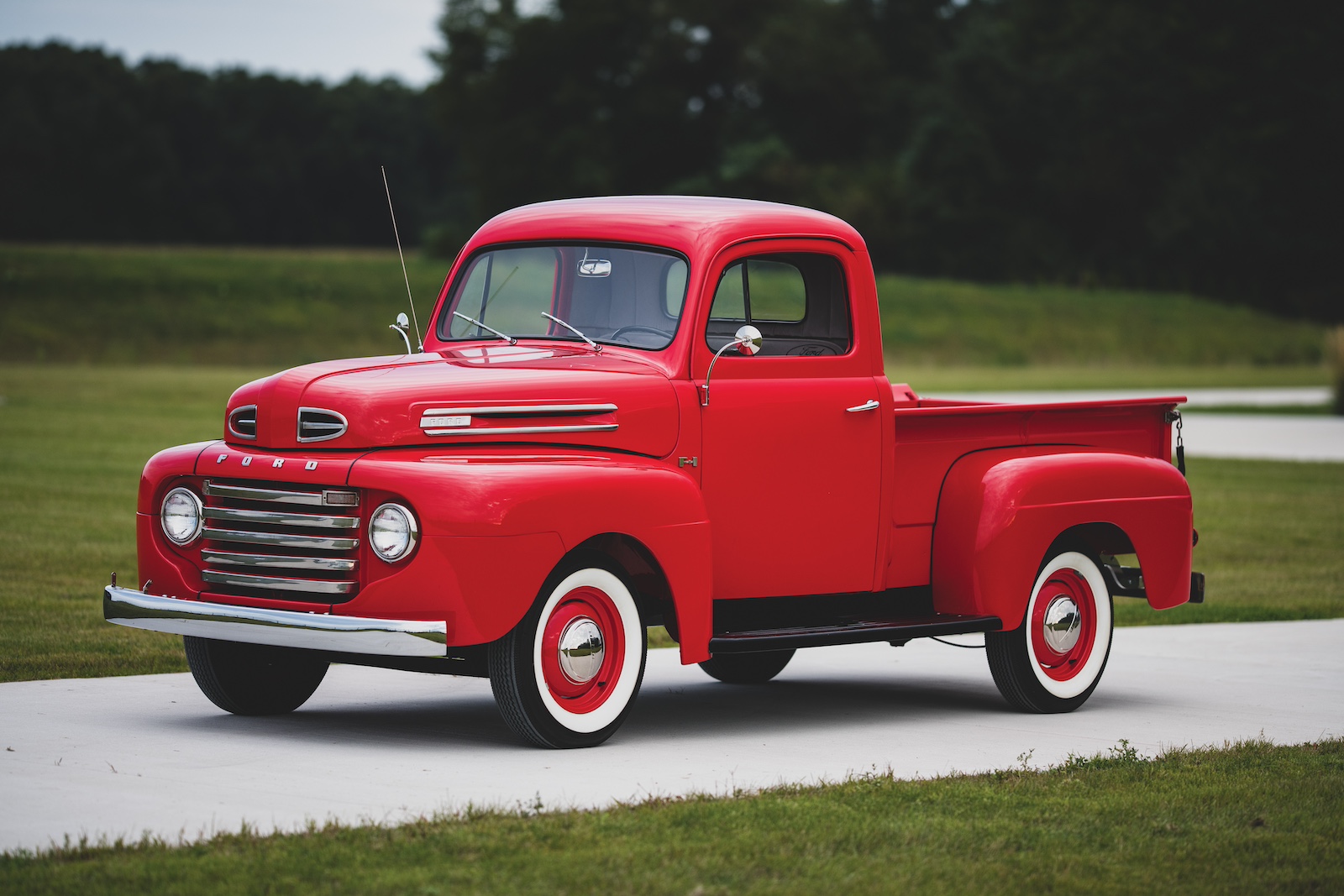
The Ford F-Series changed the pickup truck market forever. It first came out in 1947, opening the door for other manufacturers to release their own pickup trucks.
The first iterations were known as Ford Bonus-Built. They came in three versions. These were the F-1, F-2, and F-3. Simple names for simple, hardworking trucks.
Before this, most people used cars or small semi-trucks. There wasn’t a dedicated pickup category yet. Ford essentially created the segment. Competitors soon followed with their own trucks.
Specifications:
- Engine: 3.5L EcoBoost V6
- Horsepower: 400 hp
- Torque: 500 lb-ft
- Length: 232.7 inches
- Width: 79.9 inches
Over the decades, the F-Series grew in size and sophistication. It added crew cabs and luxury trims. Today’s F-150 offers advanced towing tech. It even comes in a fully electric version.
Ford’s F-Series trucks have been in production since 1948. That’s over seventy-five years of continuous sales. The F-Series has been America’s best-selling vehicle for decades. It dominates truck sales charts every year.
Fleet buyers and everyday drivers both rely on it. Farmers, contractors, and commuters all choose the F-150. Its durability built a loyal following. Many owners stick with Ford trucks for life. The F-Series proves that utility never goes out of style. It remains the backbone of Ford’s lineup.
4. Volkswagen Transporter (1950)
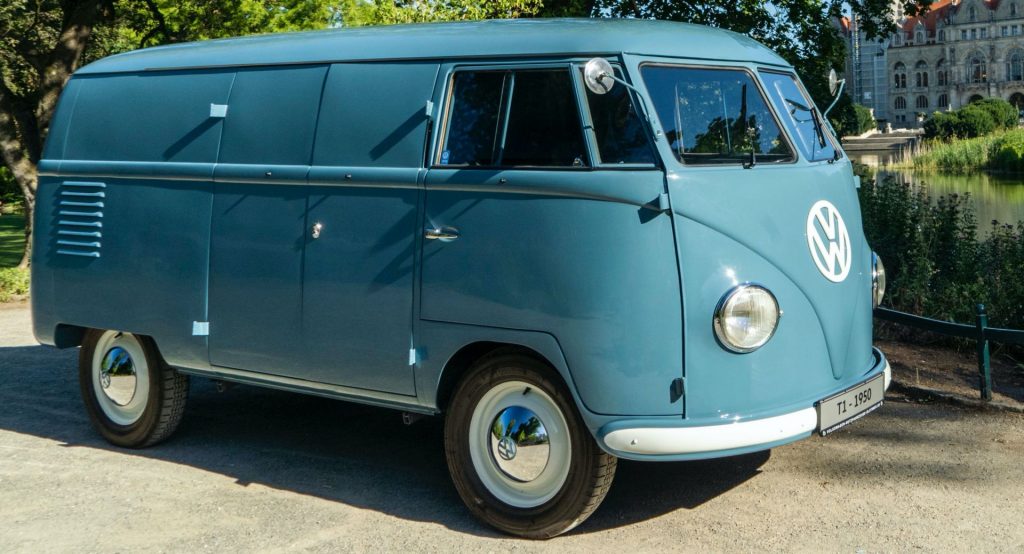
The Volkswagen Transporter began as a simple idea. Ben Pon first sketched the concept for a lighter commercial vehicle back in 1947. A few years later, it became reality. Production started in 1950.
Nobody was sure how well these vans would sell at first. That uncertainty didn’t last long. By 1964, over one million vans had already been sold. The boxy van became a global icon.
Hippies, surfers, and campers all embraced it. It became a symbol of freedom on the road. Over the years, the Transporter kept its practical shape. Yet it modernized significantly under the skin.
Specifications:
- Engine: 2.0L Turbo Diesel I-4
- Horsepower: 170 hp
- Torque: 288 lb-ft
- Length: 198.1 inches
- Width: 79.3 inches
It looks sleeker and more modern than the original, though it kept its boxy exterior. That balance kept fans happy. The Transporter received an all-new look in 2016 with the T6 version. Rumors of a T7 followed soon after.
Today it serves businesses and families alike. It remains popular across Europe, especially. The van’s cultural impact goes beyond sales numbers. It represents an entire era of counterculture history.
Few commercial vehicles carry this kind of emotional weight. The Transporter earned its icon status honestly. Its continued production honors that legacy well. It’s a workhorse with real soul.
Also Read: 10 Must-Have Tools Every Car Owner Should Keep In The Trunk
5. Toyota Land Cruiser (1951)
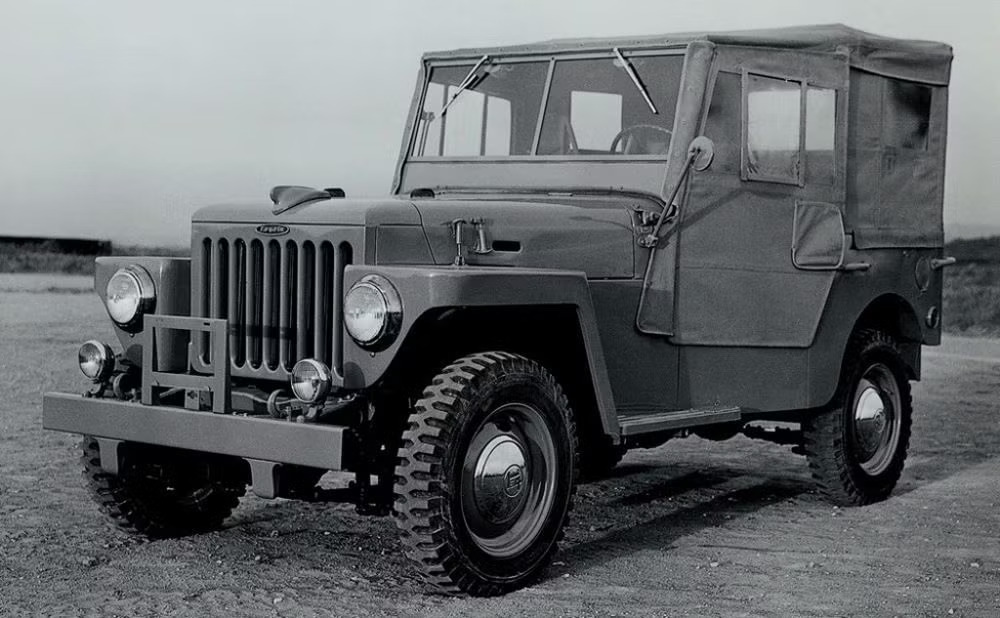
The Toyota Land Cruiser started with a clear mission. Toyota made a copy of the original military Jeep in 1951 and called it the Land Cruiser. The name has stuck ever since. Few nameplates carry this much off-road credibility.
The Land Cruiser has evolved a great deal over the decades. It grew from a rugged utility vehicle into a luxury SUV. The 1984 J70 model is still in production in some markets today. That’s a remarkable parallel legacy.
Meanwhile, the mainstream Land Cruiser kept modernizing. It added comfort features and advanced four-wheel-drive systems. The newest Land Cruiser is smaller than the previous J200 generation. Toyota shifted its focus toward efficiency.
Specifications:
- Engine: 2.4L Turbo Hybrid I-4 (i-FORCE MAX)
- Horsepower: 326 hp
- Torque: 465 lb-ft
- Length: 193.8 inches
- Width: 78.0 inches
The larger 300 series lives on in other parts of the world. American buyers get a different flavor now. Lexus has been tasked with carrying the luxury version of this SUV forward in the U.S. That’s the LX lineup.
Despite these branding shifts, the Land Cruiser name endures globally. It remains trusted in remote regions worldwide. Aid organizations and militaries still favor it. Its reputation for reliability is nearly unmatched.
Few vehicles have proven themselves across so many continents. Deserts, mountains, and jungles all test it daily. The Land Cruiser earned its name through decades of hard use. It remains a benchmark for durability.
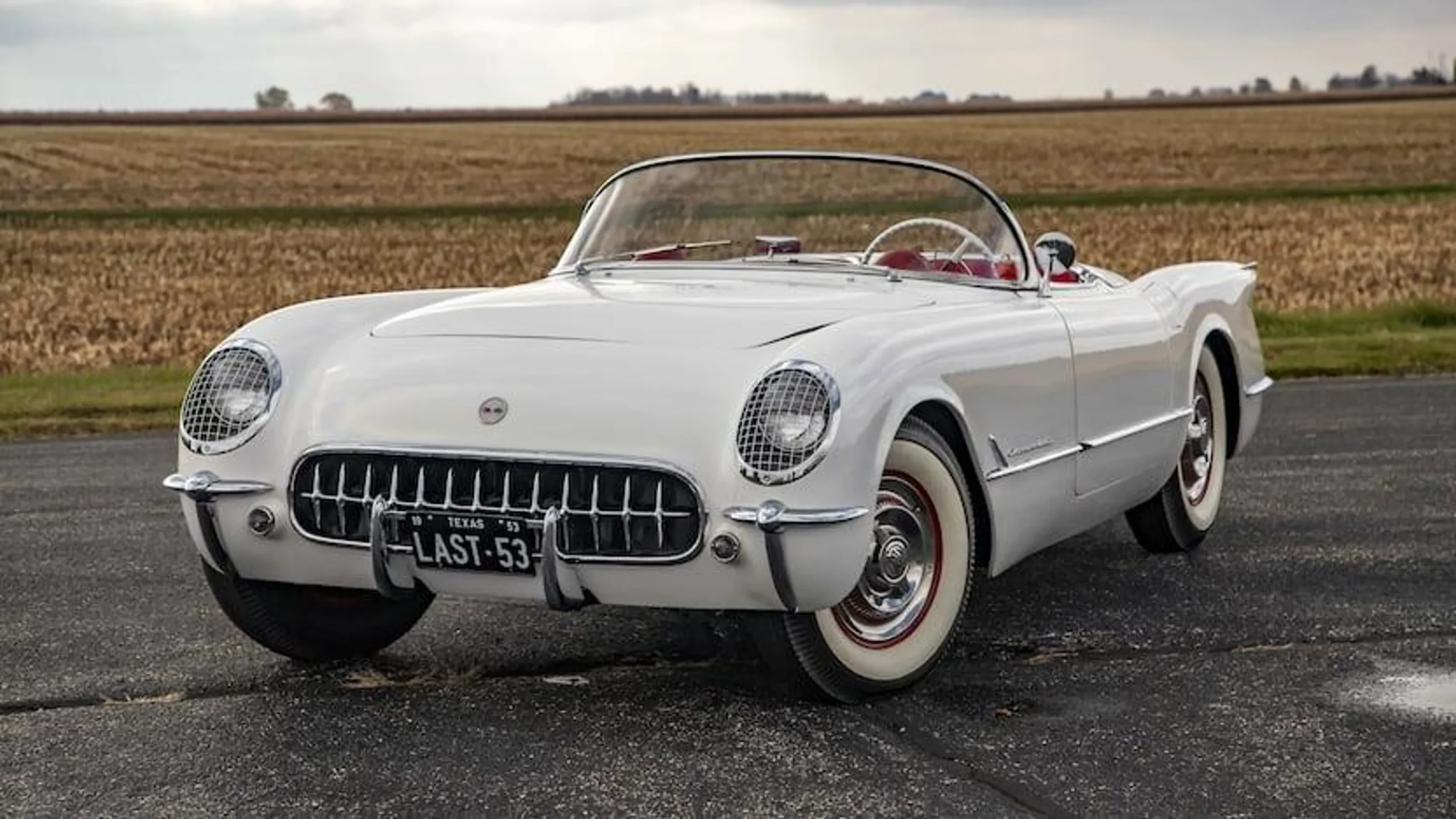
6. Chevrolet Corvette (1953)
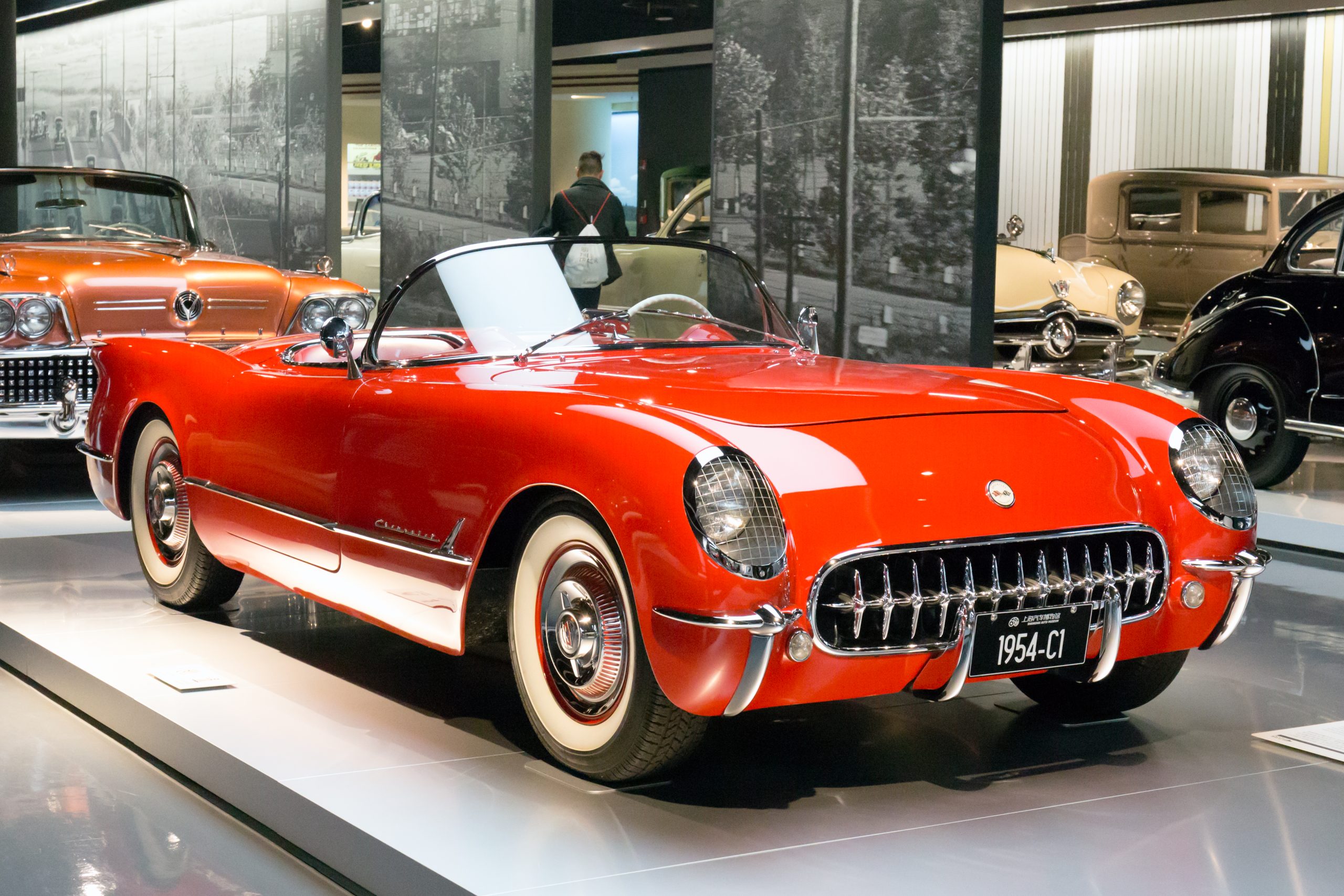
The Chevrolet Corvette redefined American sports cars. It first launched in 1953 and evolved through the muscle car era and the malaise years. Its power output changed dramatically over time. So did its appearance.
The latest generation still features a V8 engine, along with a new hybrid powertrain option. That’s a big shift for tradition. The Corvette has now entered its eighth generation. This one moved the engine from the front to a mid-engine layout.
That change shocked longtime fans. It brought the Corvette closer to European rivals. The Corvette E-Ray launched to celebrate the nameplate’s 70th anniversary. It offers 655 combined horsepower.
Specifications:
- Engine: 6.2L V8 Hybrid (E-Ray)
- Horsepower: 655 hp
- Torque: 595 lb-ft (combined)
- Length: 184.6 inches
- Width: 79.7 inches
It reaches 0-60 mph in just 2.5 seconds. That’s supercar territory. The E-Ray also introduced all-wheel drive, a major departure from its rear-wheel-drive history. Performance kept climbing steadily.
Since Morgan retired its 4/4 model in 2019, the Corvette became the oldest surviving sports car nameplate. That’s a notable title. With the introduction of the ZR1, the Corvette moved into hypercar territory. Yet pricing stayed relatively accessible.
Most rivals on similar performance lists cost far more than the Corvette, even though they’re slower. That value proposition never faded. The Corvette proves American engineering can compete globally. Seven decades in, it still turns heads.
7. Mercedes-Benz SL-Class (1954)
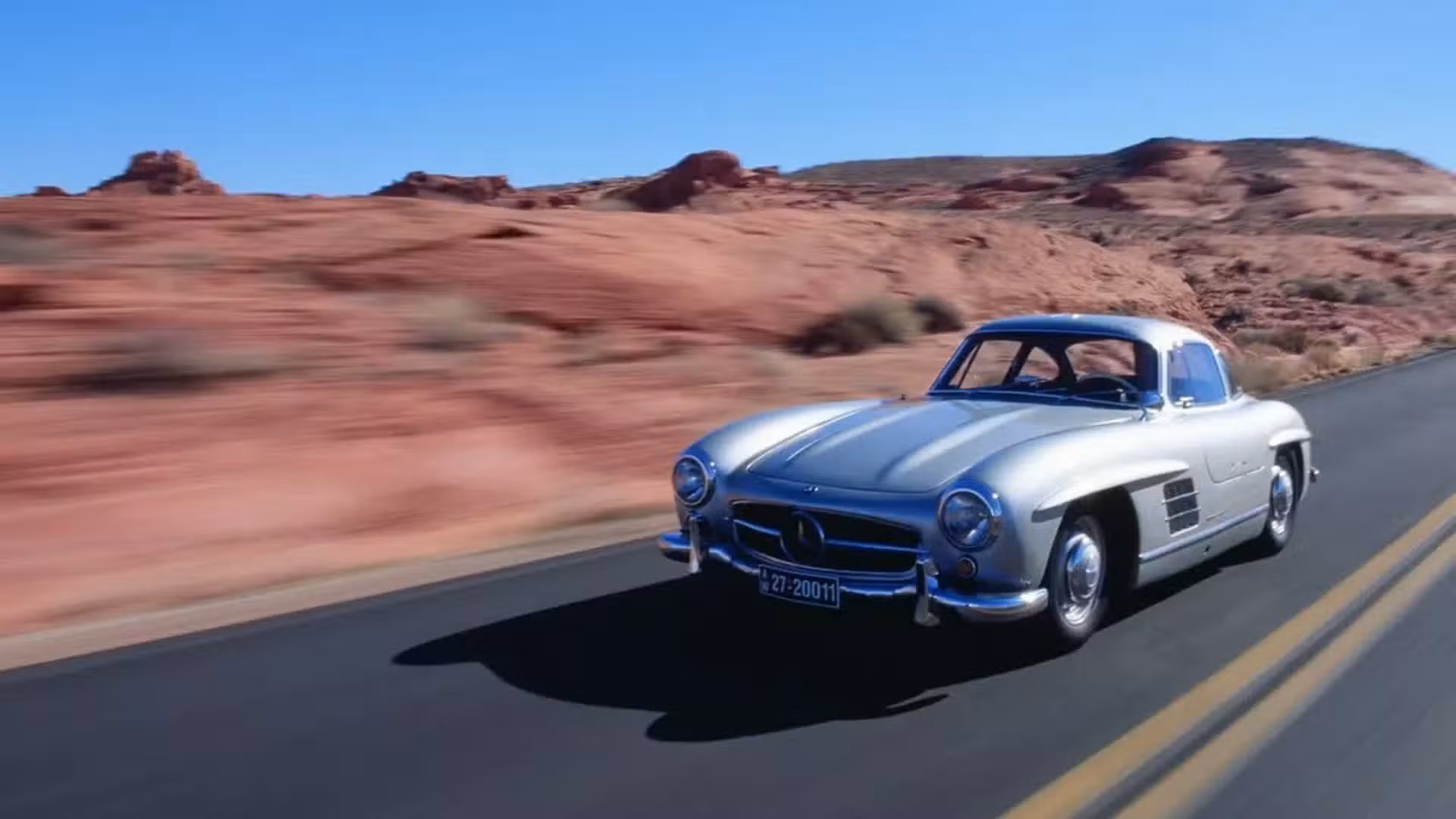
The Mercedes-Benz SL began with pure glamour. Importer Max Hoffman identified a market for an expensive Grand Prix-based car for American enthusiasts.
The result became an instant classic. The first model was the iconic gullwing-doored 300 SL. Those upward-swinging doors became legendary. Collectors still chase original units today.
The SL is now in its seventh generation as a convertible grand tourer. It shifted away from racing roots. America remains the primary market for the SL-Class even now. That connection never really broke.
Specifications:
- Engine: 4.0L Twin-Turbo V8
- Horsepower: 577 hp
- Torque: 590 lb-ft
- Length: 185.2 inches
- Width: 75.2 inches
The letters themselves carry some mystery. Mercedes has debated whether SL stands for Sport Leicht or Super Leicht. In 2017, Mercedes settled on Super Leicht as the official meaning. Both terms translate to “light” in English.
Ironically, modern SL models are far from lightweight. Luxury features add significant weight. Still, the badge commands respect. It signals decades of open-top elegance.
Buyers today get advanced tech and hybrid assistance. Yet the silhouette echoes that original roadster. The SL proves that style can outlast trends. Seven decades of desirability is no small feat. Few convertibles carry this much prestige. The SL remains a benchmark for luxury cruisers.
8. Porsche 911 (1963)
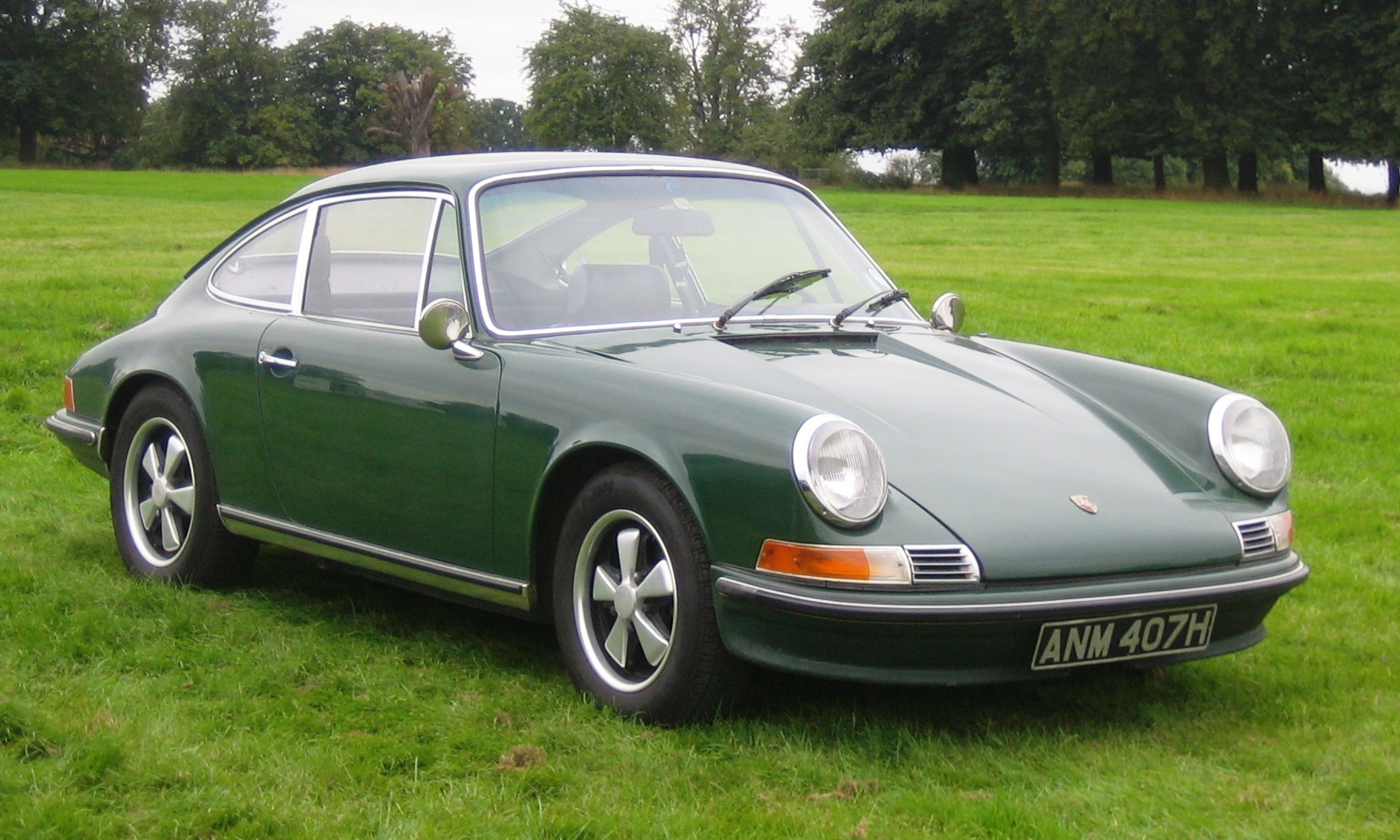
The Porsche 911 is arguably the purest sports car nameplate alive. It started with an air-cooled engine that remained in production until 1998. After that, Porsche made a big switch. The company then moved to water-cooled units for all future models.
Despite this shift, one thing never changed. Porsche’s dedication to the flat-six engine layout for power remained constant. That rear-engine, flat-six formula defines the car. It’s instantly recognizable on any street.
Specifications:
- Engine: 3.6L Turbo Flat-6 Hybrid
- Horsepower: 532 hp
- Torque: 449 lb-ft
- Length: 179.9 inches
- Width: 72.9 inches
The biggest recent change is the addition of a hybrid system in the GTS model. Electrification finally reached the icon. Porsche celebrated its 60th anniversary by introducing the 911 S/T. Many call it the greatest 911 ever built.
It represents the purest distillation of 911 performance, marking sixty years of the icon. Enthusiasts praised its lightweight focus. The 911’s silhouette has barely changed since 1963. Yet its performance numbers keep climbing sharply.
Modern 911s hit blistering lap times. Early models seem quaint by comparison. Still, the DNA connects every generation. Drivers can feel the lineage instantly.
Few cars balance heritage and innovation this well. The 911 remains the gold standard for sports cars. Its continued evolution shows no signs of slowing. Porsche keeps pushing the formula forward carefully.
9. Ford Mustang (1964)
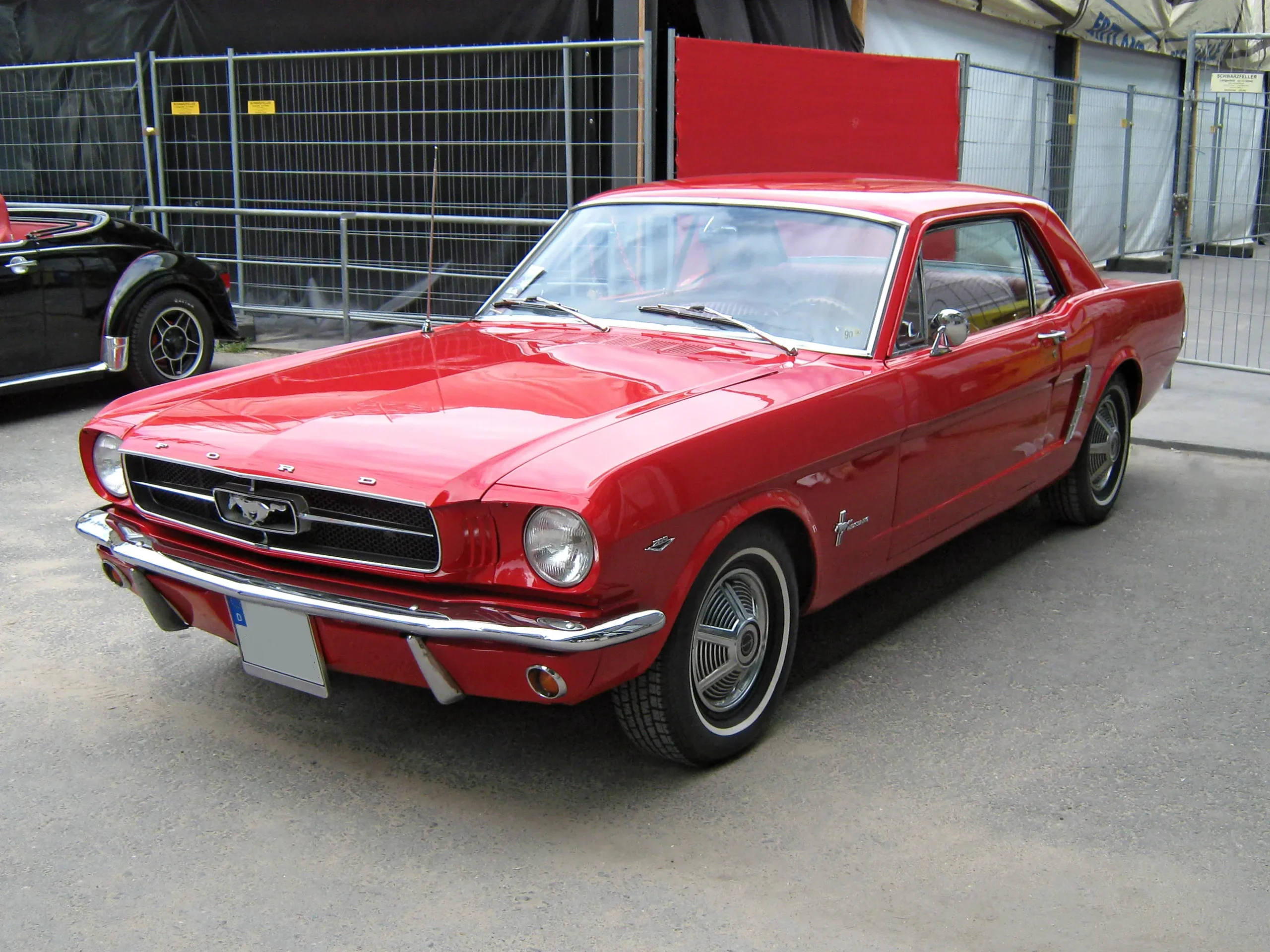
The Ford Mustang created an entirely new car category. It arrived just weeks after a rival tried first. Plymouth introduced the Barracuda earlier that same month in 1964. Yet the Mustang stole the spotlight.
The Barracuda only lasted about ten years before disappearing. The Mustang kept going strong instead. Ford’s pony car has remained in continuous production ever since its debut. That consistency is rare in the industry.
The Mustang celebrated its 60th anniversary in 2024. It has spawned seven full generations. Early Mustangs were affordable and sporty. They targeted young buyers craving excitement.
Specifications:
- Engine: 5.0L Coyote V8
- Horsepower: 480 hp
- Torque: 415 lb-ft
- Length: 189.4 inches
- Width: 75.4 inches
Later versions added serious muscle car power. The Boss and Shelby variants became legendary. The 1980s and 90s brought leaner, more efficient models. Then, retro styling returned in the 2000s.
Today’s Mustang still offers a thunderous V8 option. It also now includes a fully electric Mustang variant. That EV shares only the name and spirit. Purists debate whether that’s a fitting tribute.
Regardless, the badge continues selling strongly worldwide. Global markets have embraced right-hand-drive versions too. The Mustang proves that emotional appeal sells cars. Six decades later, it still stirs excitement.
10. Toyota Corolla (1966)
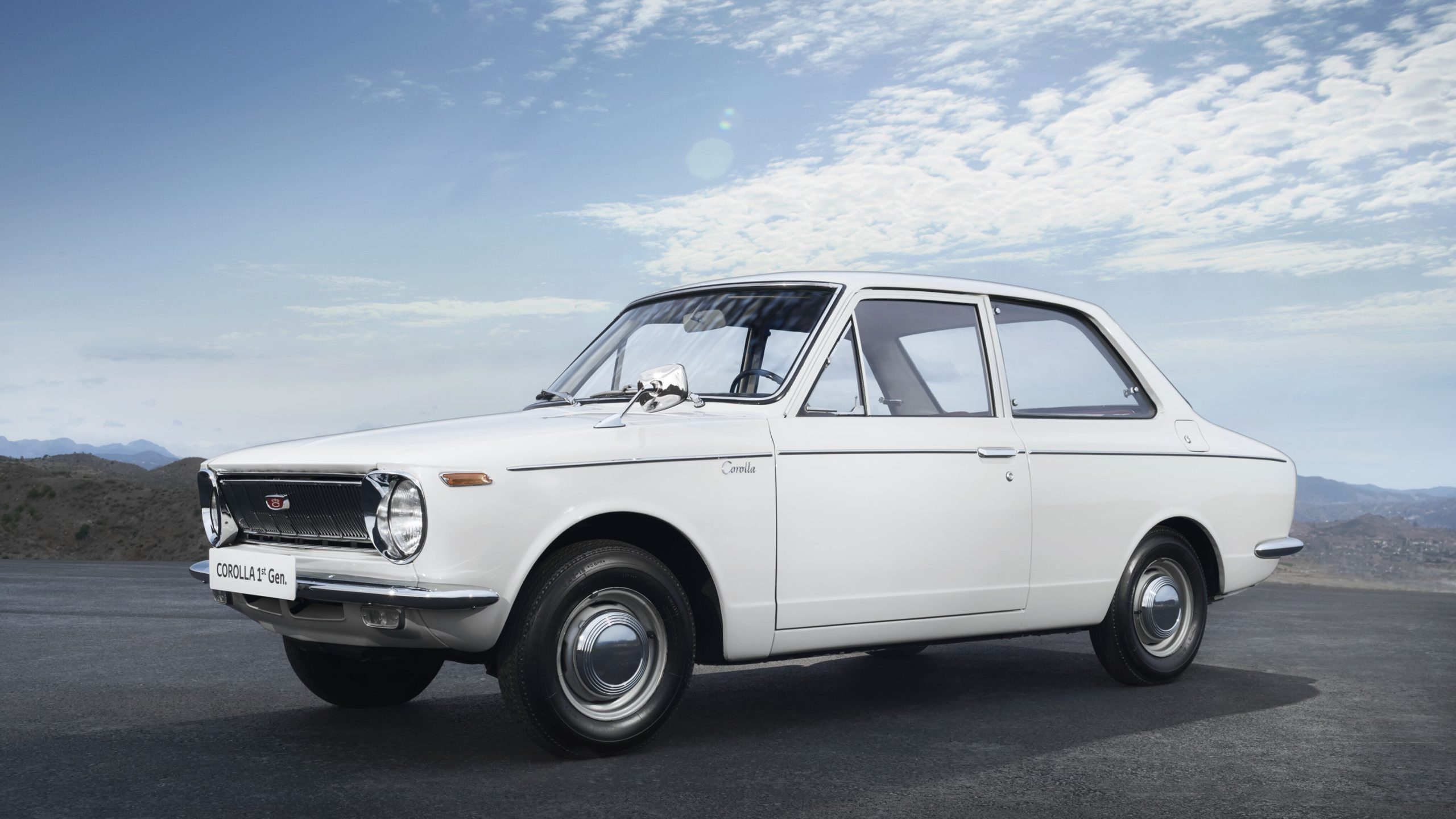
The Toyota Corolla rounds out this list as a sales phenomenon. Toyota has produced the Corolla for what seems like an eternity. It has gone through a dozen generations since its introduction. Few nameplates match that generational count.
In 1997, the Corolla overtook the Volkswagen Beetle as the best-selling nameplate. That was a historic milestone. Over 40 million Corolla models have been produced. No other car name comes close to that figure.
The first four Corolla generations, from 1966 to 1983, used rear-wheel drive. Later models switched to front-wheel drive for efficiency. The Corolla built its reputation on reliability. It rarely broke down and cost little to maintain.
Specifications:
- Engine: 1.8L Hybrid I-4
- Horsepower: 138 hp
- Torque: 105 lb-ft (engine) + electric motor assistance
- Length: 182.5 inches
- Width: 70.1 inches
Families across the globe trusted it deeply. That trust translated into decades of repeat buyers. Today’s Corolla includes hybrid powertrains and modern safety tech. Yet it stays true to its practical roots.
It remains one of Toyota’s best-selling models globally. Markets in Asia, America, and Europe all embrace it. The Corolla’s story is one of quiet consistency. It never chased flashy trends aggressively.
Instead, it focused on dependable transportation. That formula clearly worked for buyers everywhere. Six decades later, the Corolla still leads sales charts. Its legacy as history’s best-selling car remains secure.
Also Read: 10 Best Dash Cams For Every Budget
