
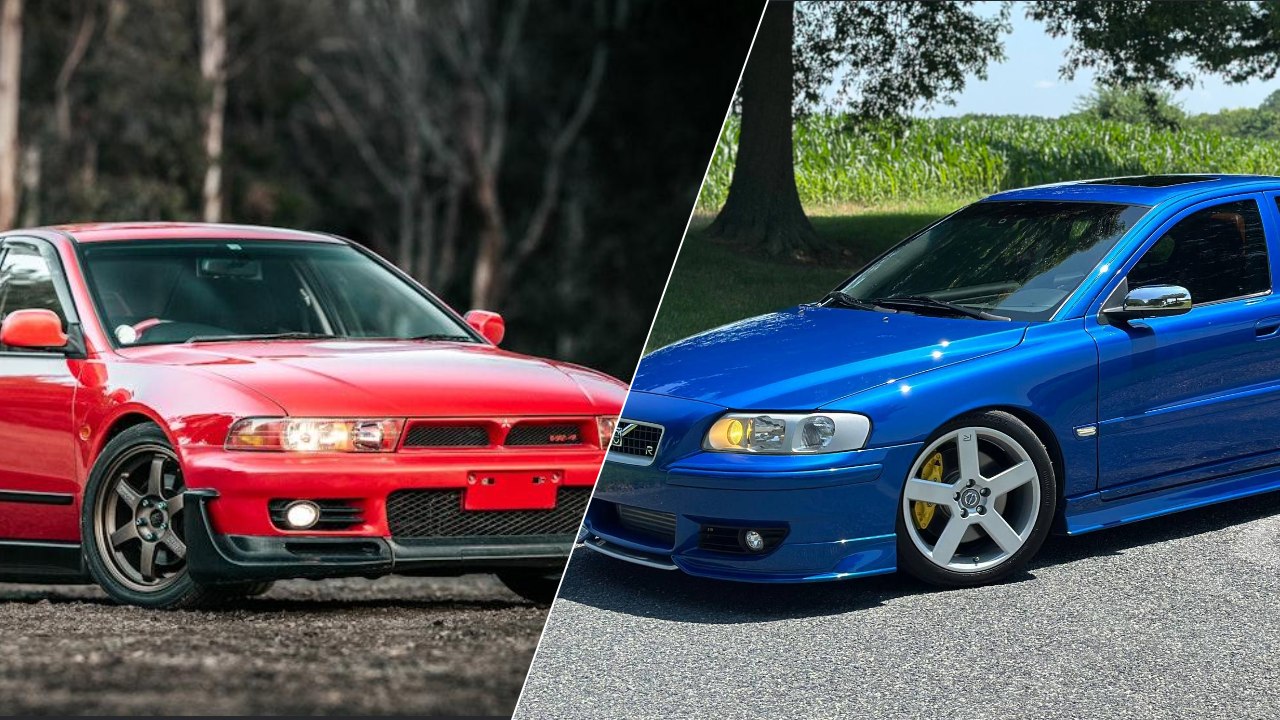
Sleeper cars represent a unique combination of ordinary appearance and surprising performance. These vehicles often look like regular commuter cars, family sedans, or practical daily drivers, yet they hide powerful engines and impressive driving abilities beneath their simple designs.
Over the years, American buyers have enjoyed many sleeper cars that could challenge dedicated sports cars while maintaining comfort, reliability, and everyday usability. From turbocharged sedans to underrated muscle machines, these vehicles created unforgettable moments on roads and racetracks.
This article highlights 8 of the best sleeper cars ever sold in America and explains why they earned legendary reputations among enthusiasts.
Also Read: 10 EVs Ranked by Charging Speed
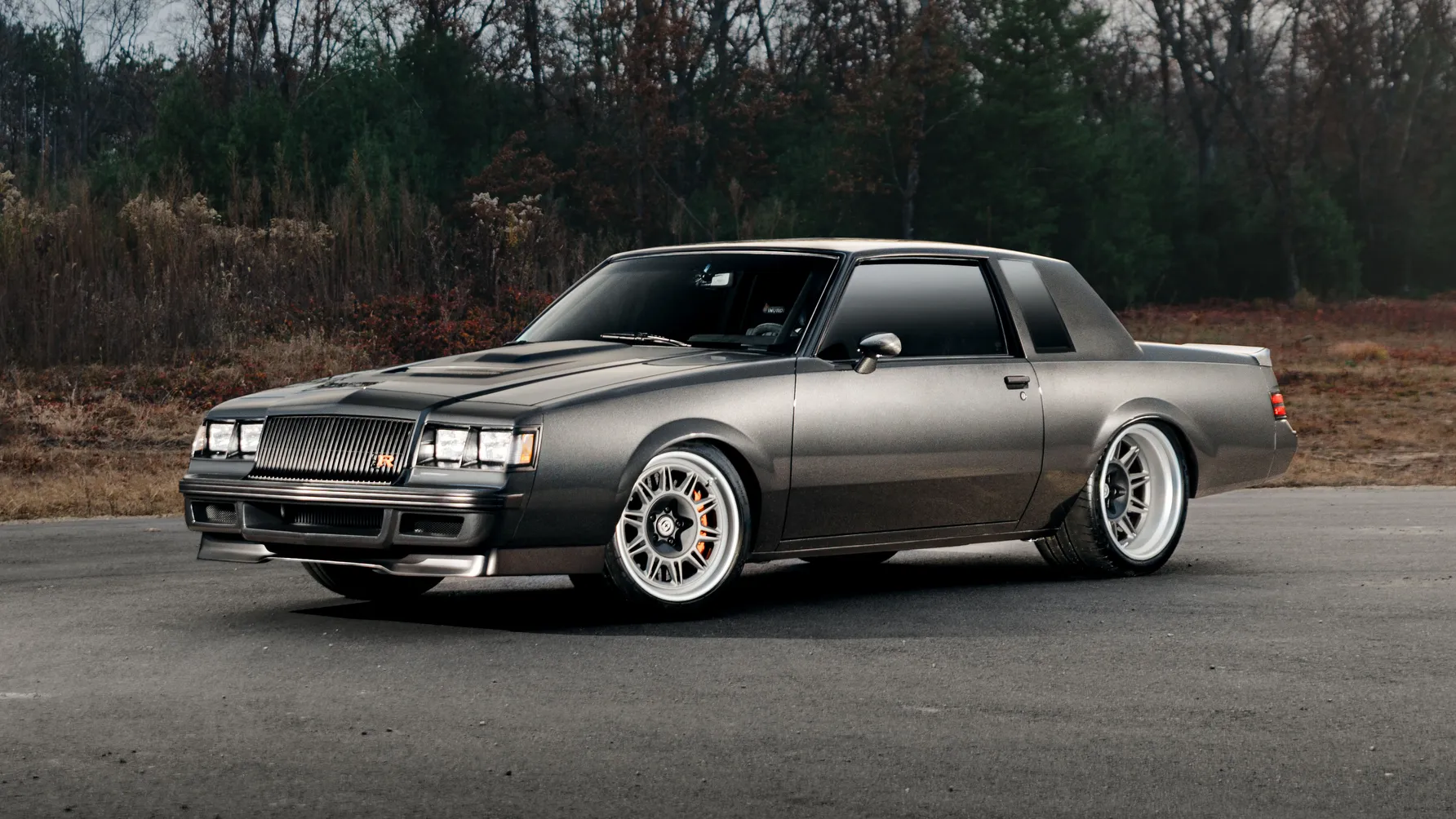
- Engine: 3.8-liter turbocharged V6
- Horsepower: 276 hp (factory rating)
- Torque: 360 lb-ft
- Length: 200.6 inches (5,095 mm)
- Width: 71.6 inches (1,819 mm)
1. Buick Grand National GNX: The Quiet Black Muscle Machine
The Buick Grand National GNX remains one of the most famous sleeper cars in American automotive history. Introduced during the 1980s, it completely changed the perception of what a Buick could achieve. Before the GNX arrived, many people associated Buick with comfortable luxury vehicles designed for relaxed cruising.
The Grand National changed that image by combining a subtle black exterior with a turbocharged V6 engine capable of surprising much faster and more expensive sports cars. Its appearance was simple, but its performance made it a serious competitor on the street.
The foundation of the GNX came from the Buick Regal platform, but extensive engineering upgrades transformed it into a high-performance machine. The standard Grand National already had impressive power from its turbocharged 3.8-liter V6 engine, but Buick partnered with McLaren Performance Technologies to create the GNX model.
The result was a vehicle with improved turbocharging, better suspension tuning, enhanced transmission components, and stronger performance capabilities. The factory claimed output was around 276 horsepower and 360 lb-ft of torque, but many tests showed the car could outperform those numbers.
What made the GNX such an effective sleeper was its appearance. The car lacked the aggressive styling associated with traditional performance vehicles. It did not have a massive hood scoop, bright racing colors, or dramatic bodywork.
Instead, it featured a dark exterior, understated badging, and a boxy design that looked similar to many ordinary sedans from that era. This allowed the GNX to surprise drivers who underestimated its capabilities.
The performance reputation of the Buick Grand National GNX grew quickly after its release. It was capable of reaching 60 mph in roughly five seconds, which was extremely impressive during the mid-1980s. At the time, many well-known sports cars struggled to match its acceleration.
The combination of turbocharged torque, rear-wheel drive, and lightweight construction made it a powerful street performer. Its ability to defeat vehicles with larger engines helped establish its legendary status.
Today, the Buick Grand National GNX is considered a collectible performance icon. Its limited production numbers and unique combination of luxury, stealth, and speed have made it highly desirable among collectors.
The GNX proved that a car did not need an exotic badge or flashy appearance to deliver serious performance. It remains a perfect example of how sleeper cars can surprise expectations and create lasting automotive legends.
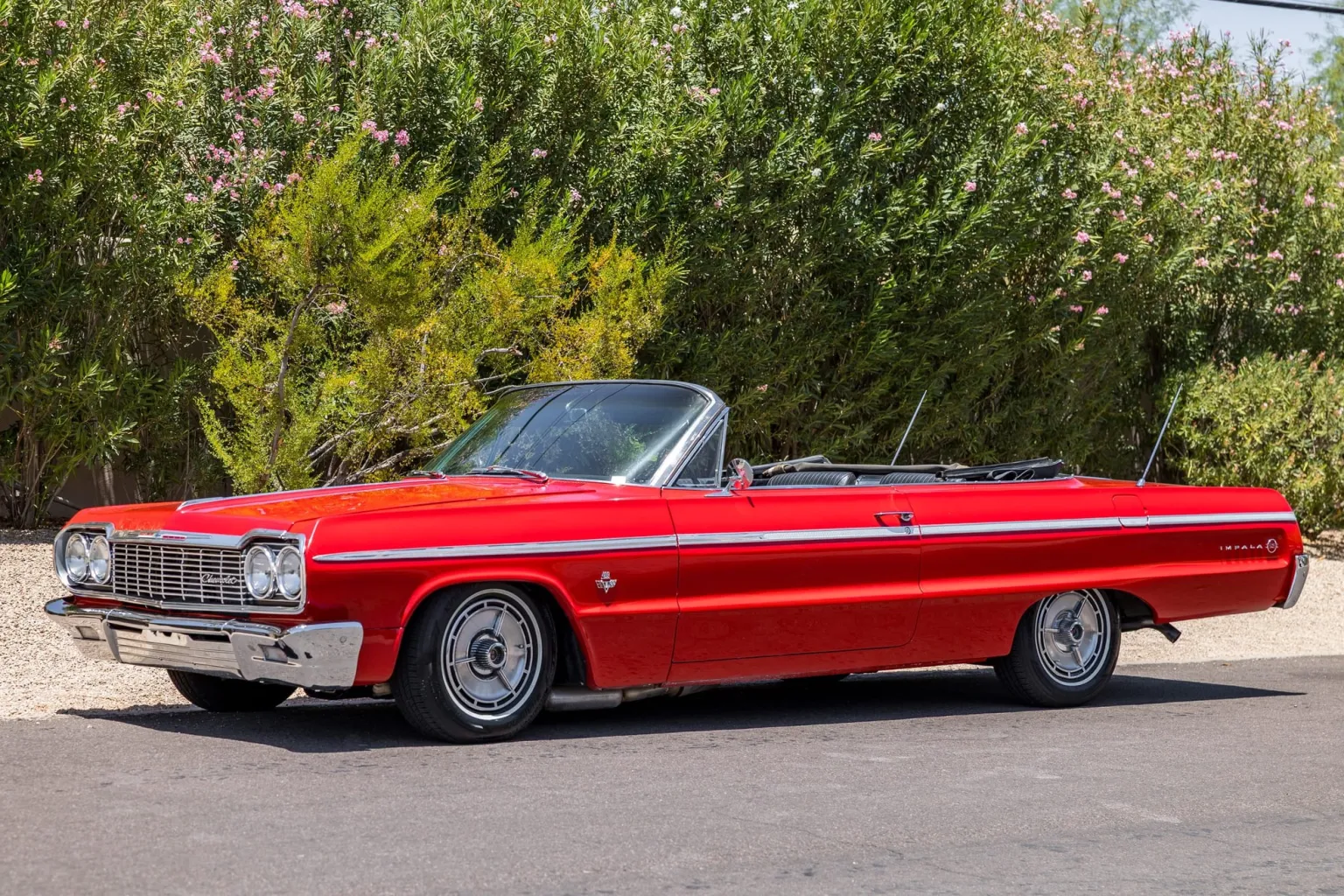
- Engine: 5.7-liter LT1 naturally aspirated V8
- Horsepower: 260 hp
- Torque: 330 lb-ft
- Length: 214.1 inches (5,438 mm)
- Width: 77.5 inches (1,968 mm)
2. Chevrolet Impala SS: The Family Sedan With Muscle Car Power
The Chevrolet Impala SS from the 1990s was another excellent example of a sleeper car that combined everyday practicality with serious performance.
At first glance, the Impala SS looked like a normal four-door sedan designed for families, business professionals, and daily transportation. However, underneath its conservative styling was a Corvette-derived V8 engine, rear-wheel-drive architecture, and impressive acceleration. It showed that a large sedan could deliver excitement without sacrificing comfort.
The heart of the Impala SS was its 5.7-liter LT1 V8 engine, which was closely related to the engine used in the Chevrolet Corvette. The sedan produced approximately 260 horsepower and 330 lb-ft of torque.
While those figures may appear modest by modern standards, the large amount of low-end torque gave the Impala SS strong acceleration. The engine provided effortless power, allowing the sedan to move quickly while carrying passengers and luggage.
The design of the Impala SS contributed greatly to its sleeper identity. Chevrolet removed unnecessary bright trim and gave the car a darker, more serious appearance. Most models came in black, creating a clean and intimidating look.
The vehicle had subtle badging and a restrained body design that did not immediately reveal its performance potential. Many people saw it as a simple police-style sedan rather than a high-performance machine.
The Impala SS also benefited from its connection to Chevrolet’s long history of powerful rear-wheel-drive vehicles. Enthusiasts appreciated its ability to combine comfort with traditional American performance characteristics.
Unlike many sports cars that focused only on speed, the Impala SS offered a spacious cabin, a comfortable ride, and enough room for daily responsibilities. It proved that performance and practicality could exist together.
The popularity of the Impala SS continues among enthusiasts because it represents a special period in American automotive history. It arrived when large sedans were becoming less common, making its combination of size and performance unusual.
The car remains respected because it delivered a genuine V8 experience while maintaining a low-profile appearance. For many drivers, the Impala SS remains a symbol of hidden performance and practical muscle.
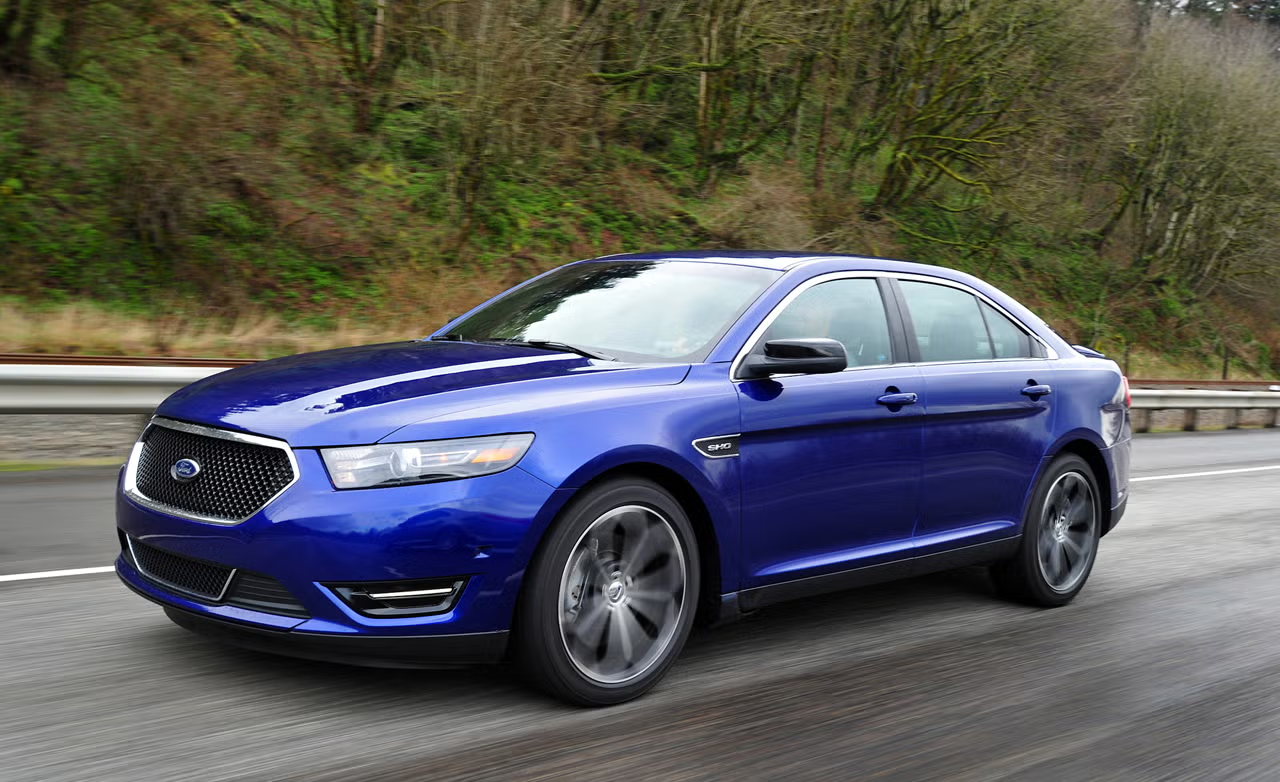
- Engine: 3.0-liter Yamaha-designed naturally aspirated V6
- Horsepower: 220 hp
- Torque: 200 lb-ft
- Length: 188.4 inches (4,785 mm)
- Width: 70.8 inches (1,798 mm)
3. Ford Taurus SHO: The Sports Sedan Nobody Expected
The Ford Taurus SHO became a major surprise when it arrived in America during the late 1980s. The regular Ford Taurus was known as a comfortable family sedan, but the SHO version introduced a completely different personality.
With a high-revving Yamaha-designed V6 engine, sport-tuned suspension, and subtle styling improvements, the Taurus SHO created a new category of affordable performance sedans.
The engine was the most important part of the Taurus SHO experience. Ford partnered with Yamaha to develop a special 3.0-liter V6 engine that produced around 220 horsepower. Unlike traditional American engines that focused heavily on low-end torque, this engine loved higher RPMs and delivered a unique driving experience. It was smooth, responsive, and advanced for its time.
The sleeper qualities of the Taurus SHO came from its appearance. Most people saw the standard Taurus as a practical commuter vehicle, and the SHO version maintained much of that same shape.
It featured small exterior changes, including unique wheels and subtle badges, but it did not advertise its performance abilities. A driver unfamiliar with the model could easily mistake it for a regular family sedan.
Behind the wheel, the Taurus SHO felt much different from the standard Taurus. The manual transmission option, sportier suspension, and powerful engine created a more engaging driving experience.
It could compete with many popular performance cars while offering four doors and everyday comfort. This made it appealing to drivers who wanted excitement without attracting unnecessary attention.
The Taurus SHO remains an important part of Ford’s performance history because it showed that a family sedan could also be a driver-focused vehicle.
It influenced later sport sedans and helped prove that performance cars did not always need aggressive styling. The SHO earned its reputation by quietly delivering speed, technology, and practicality in a package that surprised many people.
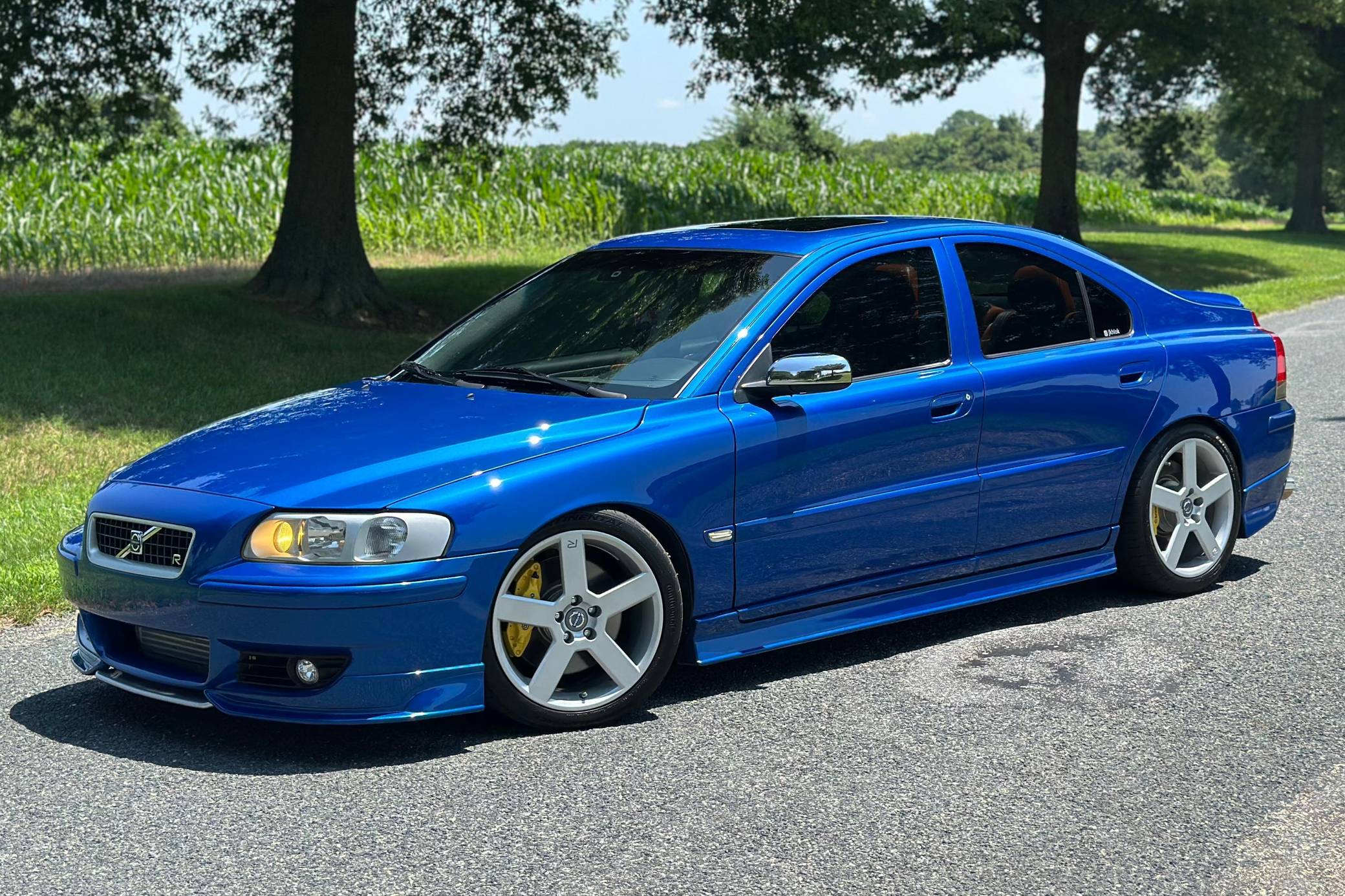
- Engine: 2.5-liter turbocharged inline-five cylinder
- Horsepower: 300 hp
- Torque: 295 lb-ft
- Length: 180.4 inches (4,582 mm)
- Width: 71.5 inches (1,816 mm)
4. Volvo S60 R: The Sleeper From Sweden With Serious Speed
The Volvo S60 R challenged the traditional idea of what a performance sedan should look like. Volvo had built a reputation around safety, comfort, and practical vehicles, but the S60 R added a surprising level of performance to that formula.
It looked like a normal luxury sedan that could comfortably carry passengers and handle daily driving duties, yet it contained advanced engineering designed to compete with established sport sedans. Its combination of understated styling, turbocharged power, and all-weather capability made it a memorable sleeper car sold in America.
The main source of the S60 R’s performance was its turbocharged 2.5-liter five-cylinder engine. The engine produced around 300 horsepower and 295 lb-ft of torque, giving the sedan strong acceleration and impressive highway performance.
Volvo equipped the car with advanced features such as all-wheel drive and a sophisticated suspension system that allowed drivers to enjoy better handling without sacrificing comfort. The engine also produced a distinctive five-cylinder sound that separated it from traditional four-cylinder and V6 competitors.
The exterior design of the Volvo S60 R helped maintain its sleeper personality. It did not have the aggressive styling of many sports sedans from the same period.
The body shape remained clean and professional, with only small details suggesting its performance abilities. Larger wheels, subtle R badges, and sportier trim were the only clues that this Volvo was far different from a standard commuter sedan. Many drivers underestimated it because of the brand’s calm and practical image.
Inside the cabin, the S60 R continued Volvo’s focus on comfort and quality. The vehicle offered supportive seats, premium materials, and a practical layout suitable for daily use.
Unlike many performance cars that required compromises, the S60 R could serve as a family vehicle during the week and a fast performance sedan during weekend drives. This balance made it appealing to enthusiasts who wanted speed without sacrificing practicality.
The Volvo S60 R remains respected among automotive enthusiasts because it represented a different approach to performance. It did not rely on loud styling or extreme designs to attract attention. Instead, it delivered impressive engineering in a package that looked mature and sensible.
The S60 R proved that sleeper cars could come from unexpected manufacturers and that performance could exist alongside safety and comfort.
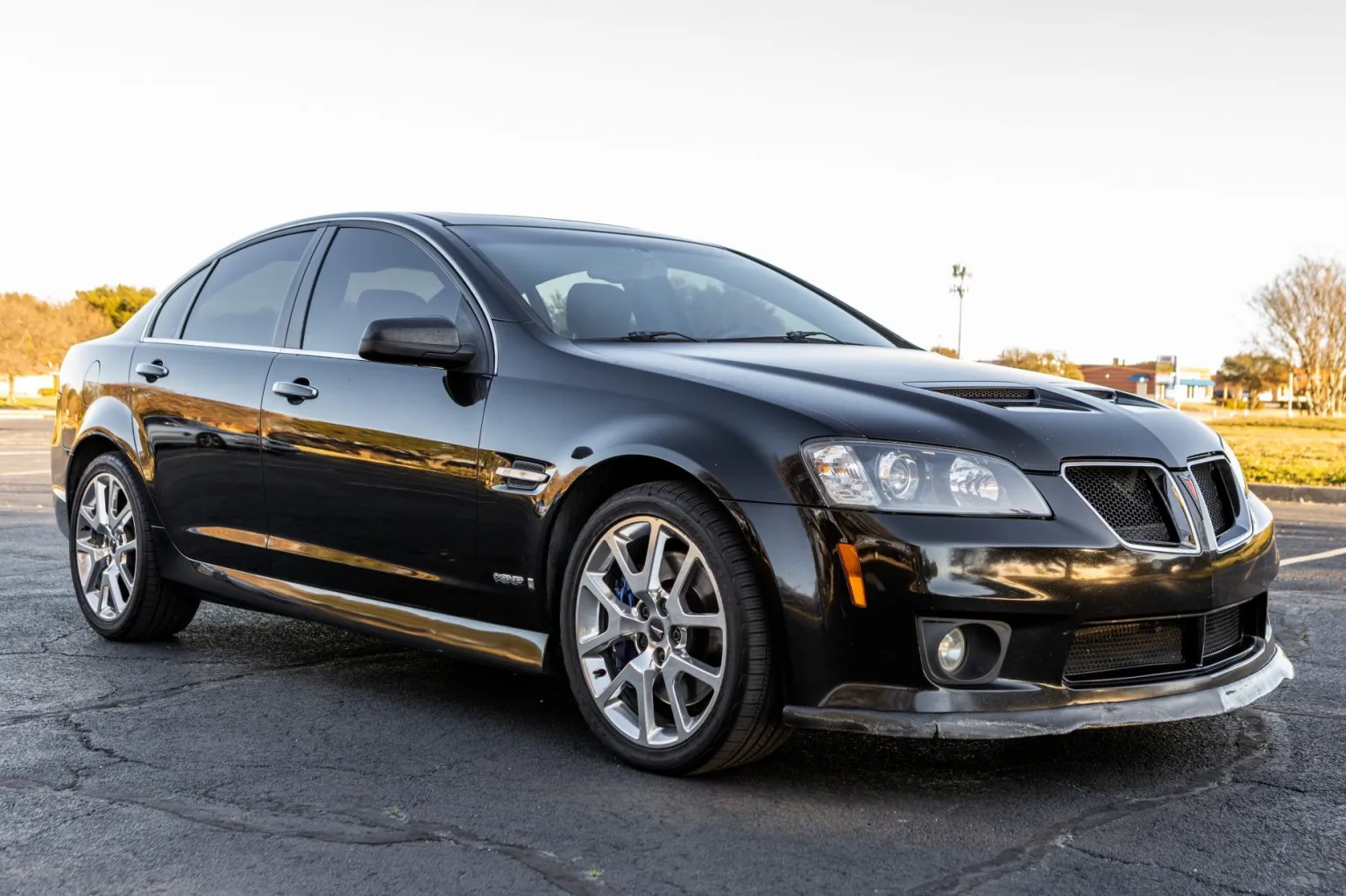
- Engine: 6.2-liter LS3 naturally aspirated V8
- Horsepower: 415 hp
- Torque: 415 lb-ft
- Length: 196.1 inches (4,981 mm)
- Width: 74.8 inches (1,900 mm)
5. Pontiac G8 GXP: The American Sedan With Australian DNA
The Pontiac G8 GXP arrived during a short but memorable period when Pontiac offered one of the most exciting performance sedans in America. Based on an Australian performance platform, the G8 GXP combined rear-wheel drive, a powerful V8 engine, and a practical four-door body. It looked like a regular sedan to many people, but its performance abilities placed it among serious enthusiast vehicles.
The most important feature of the G8 GXP was its 6.2-liter LS3 V8 engine, the same basic engine family used in the Chevrolet Corvette. It produced approximately 415 horsepower and 415 lb-ft of torque, giving the sedan incredible acceleration.
Buyers could choose between a six-speed manual transmission and an automatic transmission, making it attractive to both traditional performance enthusiasts and drivers seeking convenience.
The sleeper nature of the Pontiac G8 GXP came from its relatively simple design. The sedan had a clean appearance without excessive styling features.
While the larger wheels, rear spoiler, and unique front-end design hinted at its capabilities, many people still viewed it as an ordinary Pontiac sedan. The car did not immediately announce that it contained Corvette-level power under the hood.
The driving experience of the G8 GXP separated it from many other sedans. Its rear-wheel-drive layout provided better balance and allowed drivers to enjoy a more engaging connection with the vehicle.
The powerful V8 engine delivered strong acceleration, while the spacious interior allowed it to function as a practical daily car. It represented a rare combination of family-friendly usability and sports car performance.
The Pontiac G8 GXP has become increasingly appreciated because production ended shortly after its introduction. Pontiac’s closure meant that vehicles like the G8 GXP became reminders of a different era in American performance cars.
Enthusiasts continue to value it because it offered Corvette power, sedan practicality, and a low-key appearance. It remains a standout example of a sleeper car that delivered exceptional performance without demanding attention.
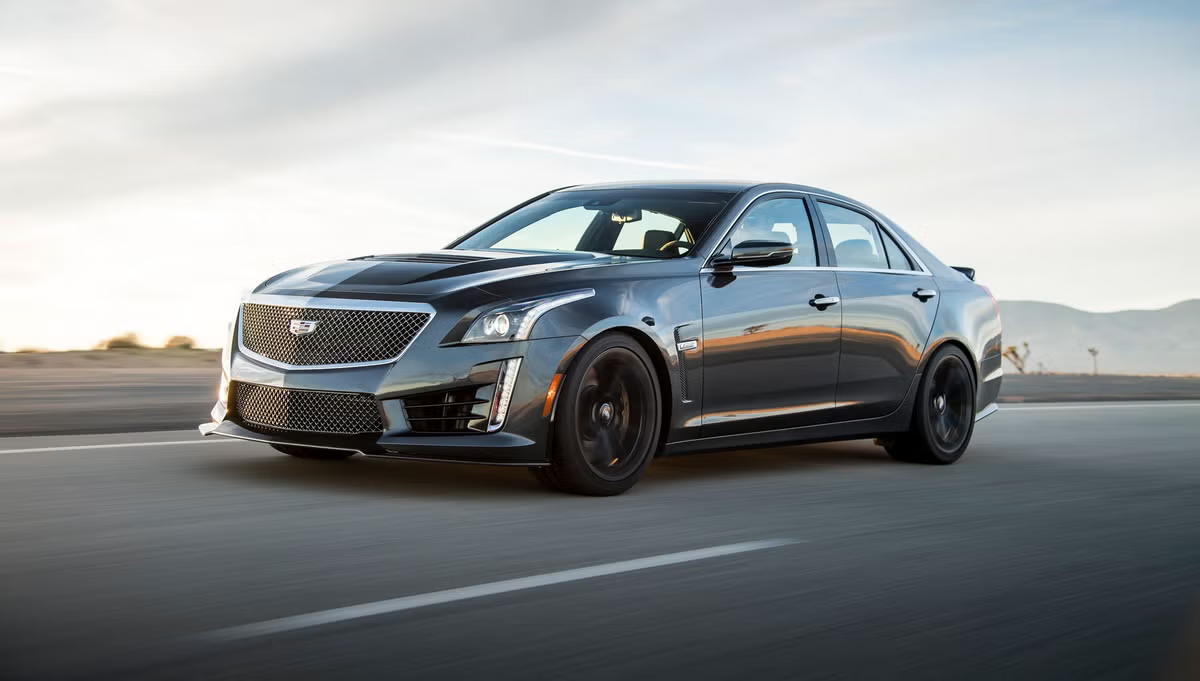
- Engine: 5.7-liter LS6 naturally aspirated V8
- Horsepower: 400 hp
- Torque: 395 lb-ft
- Length: 190.1 inches (4,829 mm)
- Width: 70.6 inches (1,794 mm)
6. Cadillac CTS-V: Luxury Comfort With Corvette Performance
The Cadillac CTS-V transformed expectations about American luxury sedans. Before the CTS-V arrived, Cadillac was mainly associated with comfort-focused vehicles designed for traditional luxury buyers.
The CTS-V changed that reputation by combining premium features with serious performance technology borrowed from Chevrolet’s racing and sports car programs. It looked like a refined executive sedan, but its capabilities placed it among some of the fastest cars available.
The first-generation CTS-V featured a 5.7-liter LS6 V8 engine, similar to the powerplant used in the Chevrolet Corvette Z06. Later versions received even more powerful engines, including supercharged V8 options.
The original model produced around 400 horsepower, which was impressive for a luxury sedan in the early 2000s. The combination of rear-wheel drive, a manual transmission option, and powerful engines created an exciting driving experience.
The design of the CTS-V maintained a level of restraint that helped create its sleeper reputation. Cadillac gave it a sharper appearance compared with standard CTS models, but it still maintained a professional and sophisticated look.
It could easily appear as a business executive’s vehicle rather than a performance machine. The subtle styling allowed drivers to enjoy serious speed without attracting unnecessary attention.
The interior of the CTS-V provided the comfort expected from a Cadillac. High-quality materials, advanced features, and a quiet cabin made it suitable for long-distance travel. However, pressing the accelerator revealed the vehicle’s true personality.
The powerful V8 engine delivered rapid acceleration, while the suspension and braking systems were designed to handle aggressive driving.
The Cadillac CTS-V became important because it demonstrated that American luxury sedans could compete with European performance brands. It combined comfort, technology, and speed in a way that few vehicles had achieved before. The CTS-V remains a respected name among enthusiasts because it proved that a luxury vehicle could also be a serious driver’s machine.
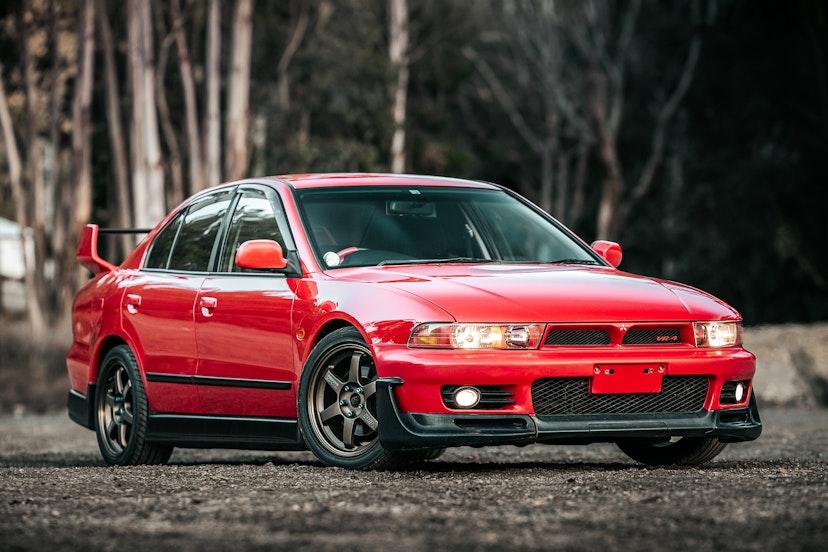
- Engine: 2.0-liter turbocharged inline-four cylinder
- Horsepower: 195 hp
- Torque: 203 lb-ft
- Length: 181.9 inches (4,620 mm)
- Width: 66.5 inches (1,689 mm)
7. Mitsubishi Galant VR-4: The Hidden Rally-Inspired Sedan
The Mitsubishi Galant VR-4 was a rare example of Japanese performance technology arriving in a practical sedan package.
While many enthusiasts recognize Mitsubishi for the famous Lancer Evolution, the Galant VR-4 helped establish the company’s reputation for advanced all-wheel-drive performance. It looked like a normal midsize sedan, but it contained technology inspired by motorsports.
The Galant VR-4 featured a turbocharged 2.0-liter four-cylinder engine producing around 195 horsepower in American models.
While that number may seem small today, the car’s lightweight construction, turbocharged power delivery, and advanced all-wheel-drive system gave it impressive real-world performance. The vehicle also benefited from Mitsubishi’s rally experience and engineering knowledge.
The exterior appearance of the Galant VR-4 made it a true sleeper. The sedan design was conservative and practical, with limited visual clues about its capabilities. It did not have the dramatic appearance of many performance cars.
Most people would assume it was simply a regular commuter vehicle, making its speed and handling abilities unexpected.
The all-wheel-drive system was one of the Galant VR-4’s strongest features. It provided improved traction in different weather conditions and allowed drivers to use the turbocharged power more effectively. This made the car enjoyable on winding roads and during challenging driving conditions. It offered technology that was uncommon in many affordable sedans of its era.
The Galant VR-4 remains a favorite among knowledgeable enthusiasts because of its rarity and engineering significance. It represented a period when manufacturers experimented with combining practical vehicles and advanced performance systems.
Although it never became as famous as some other Mitsubishi models, the Galant VR-4 earned respect as a clever and capable sleeper car.
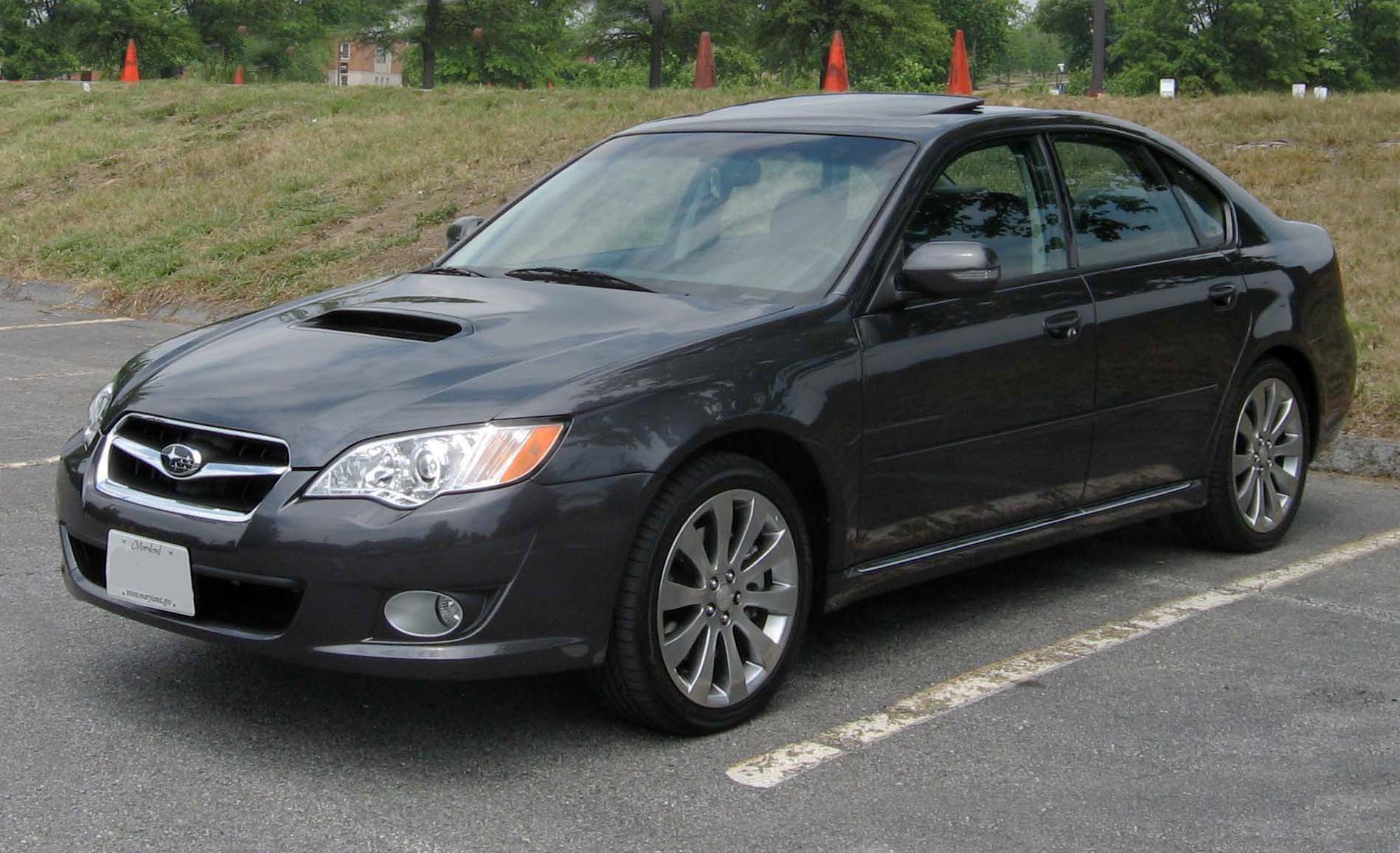
- Engine: 2.5-liter turbocharged horizontally opposed four-cylinder (Boxer)
- Horsepower: 250 hp
- Torque: 250 lb-ft
- Length: 186.2 inches (4,730 mm)
- Width: 68.1 inches (1,730 mm)
8. Subaru Legacy GT Spec B: The Family Sedan With Rally Technology
The Subaru Legacy GT Spec B was a perfect example of a sleeper car that combined practicality, performance, and advanced engineering. Subaru had already built a strong reputation through rally success and all-wheel-drive technology, but the Legacy GT Spec B brought those qualities into a more mature sedan package.
It looked like a normal family vehicle designed for commuting and long-distance travel, yet it delivered the kind of performance that appealed to driving enthusiasts.
The main attraction of the Legacy GT Spec B was its turbocharged 2.5-liter boxer four-cylinder engine. It produced around 250 horsepower and 250 lb-ft of torque, providing strong acceleration and smooth power delivery.
The engine’s horizontally opposed design helped lower the vehicle’s center of gravity, improving handling balance. Combined with Subaru’s symmetrical all-wheel-drive system, the car offered excellent traction and confidence in different driving conditions.
The exterior styling of the Legacy GT Spec B helped maintain its sleeper identity. Unlike many performance cars that used aggressive designs to advertise their abilities, the Subaru remained relatively conservative.
It featured subtle body enhancements, unique wheels, and small performance badges, but it still looked like a practical sedan. A person unfamiliar with the model could easily mistake it for a standard Legacy.
The interior added to the vehicle’s appeal by offering comfort and everyday usability. The sedan provided enough space for passengers, quality materials, and features expected from a premium vehicle.
At the same time, the sport-tuned suspension and responsive steering reminded drivers that this was not an ordinary family car. It balanced daily transportation needs with an engaging driving experience.
The Legacy GT Spec B gained respect because it represented Subaru’s ability to create performance vehicles without making them impractical. It appealed to drivers who wanted speed, control, and reliability in a package that remained easy to live with. Its understated appearance and capable engineering made it a true sleeper that could surprise many faster-looking vehicles.
Also Read: 10 Sedans That Pack More Than You’d Expect
