
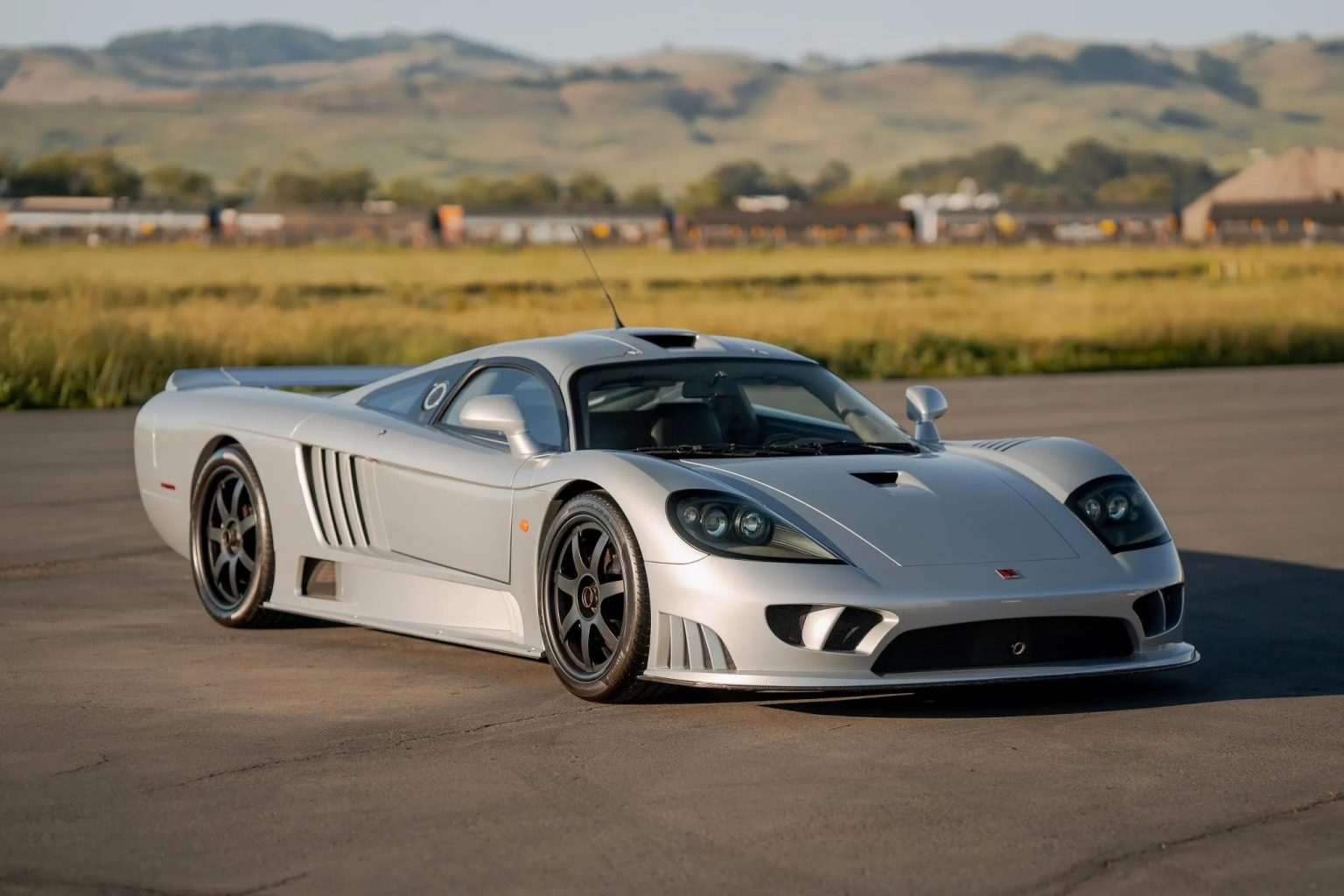
For decades, America was known for producing powerful muscle cars with large-displacement V8 engines and straight-line performance. Chevrolet built the Corvette, Dodge offered the Viper, and Ford dominated with the Mustang, but none of these cars truly challenged Europe’s elite mid-engine exotics on their own terms.
Ferrari, Lamborghini, McLaren, and Porsche had long established the benchmark for lightweight, mid-engine supercars capable of competing at the highest levels of performance and motorsport. That changed in 2000.
California-based performance manufacturer Saleen Automotive revealed the Saleen S7, a purpose-built supercar that shared almost nothing with existing production vehicles.
Few American supercars have represented such a dramatic leap for their manufacturer as the Saleen S7. Rather than refining an existing model, Saleen engineered the car from the ground up with a carbon-fiber body, an aluminum honeycomb chassis, and a naturally aspirated 7.0-liter V8 producing 550 horsepower. Its true mid-engine layout completed a package designed to compete with the world’s top exotic performance cars.
Even more remarkably, every example was hand assembled, making the S7 one of the most exclusive American performance cars ever built.
Widely recognized as America’s first fully developed mid-engine production supercar, the S7 proved that an American manufacturer could compete directly with Ferrari, Lamborghini, and Porsche using world-class engineering rather than simply relying on raw engine displacement.
More than two decades after its debut, the S7 remains one of the most important milestones in American automotive history.
Also Read: 10 Sedans With Headlights That Yellow Before 60,000 Miles
Steve Saleen’s Vision Went Beyond the Mustang
Steve Saleen had already earned a strong reputation during the 1980s and 1990s by transforming Ford Mustangs into high-performance machines capable of competing with European sports cars.
His company became synonymous with upgraded suspension systems, powerful V8 engines, improved aerodynamics, and limited-production specialty vehicles. Despite that success, Saleen wanted something entirely different.
Rather than modifying an existing production car, he envisioned building a completely original supercar that could compete with the world’s best on road courses as well as public roads. The project required years of engineering, extensive testing, and a level of investment rarely seen from an independent American manufacturer.
Unlike most low-volume performance cars, the S7 wasn’t based on another company’s platform. Engineers designed virtually every major component specifically for the project.
The chassis consisted of a lightweight aluminum honeycomb spaceframe, providing exceptional rigidity while keeping weight under control. Carbon-fiber composite body panels further reduced mass while increasing structural efficiency and aerodynamic performance.
The result was a vehicle weighing approximately 2,750 pounds, remarkably light considering its size and powerful V8 engine.
Every S7 was assembled by hand at Saleen’s California facility, where technicians carefully fitted body panels, drivetrain components, suspension assemblies, and interior trim.
This labor-intensive approach allowed exceptionally tight quality control while reinforcing the S7’s exclusivity. Production numbers remained intentionally low, ensuring each example received significant individual attention during assembly.
A Purpose-Built 550-Horsepower American Supercar
At the heart of the original Saleen S7 sat a naturally aspirated 7.0-liter V8, developed specifically for the car by Saleen in collaboration with Roush Industries. The engine featured an aluminum block, aluminum cylinder heads, forged internal components, dry-sump lubrication, and electronic fuel injection.
Output reached 550 horsepower and 525 lb-ft of torque, extraordinary figures for the year 2000.
Instead of mounting the engine ahead of the passenger compartment like a traditional American sports car, engineers placed it directly behind the seats in a longitudinal mid-engine configuration. This arrangement centralized mass between the axles, improving balance, steering response, and high-speed stability.
Power reached the rear wheels through a six-speed manual transmission, giving drivers complete control over the engine’s immense performance.
With minimal electronic intervention, the S7 delivered an exceptionally raw driving experience that demanded respect and rewarded skill. Performance figures placed the American newcomer among the world’s elite.
Independent testing recorded:
- 0–60 mph: approximately 3.3 seconds
- Quarter mile: around 11.6 seconds
- Top speed: approximately 220 mph
Those numbers positioned the S7 alongside contemporary exotics such as the Ferrari 550 Maranello, Lamborghini Diablo VT, and Porsche Carrera GT prototypes, proving that an American manufacturer could produce a genuine world-class supercar.
The suspension system reflected the car’s motorsport ambitions. Double wishbones at all four corners, coil-over dampers, adjustable anti-roll bars, and race-inspired geometry delivered exceptional handling precision. Massive ventilated disc brakes with four-piston calipers provided equally impressive stopping power.
Aerodynamics also played a central role in the S7’s development. Large front air intakes supplied cooling for the engine and brakes, while carefully shaped bodywork generated meaningful downforce without relying on oversized wings.
The long rear deck, integrated diffuser, and smooth underbody contributed to impressive stability at speeds exceeding 200 mph.
Rather than filling the cabin with lavish amenities, Saleen focused on creating a purposeful cockpit. Leather upholstery, aluminum accents, racing-inspired bucket seats, and an ergonomically arranged dashboard reflected the S7’s uncompromising performance-first philosophy.
The cockpit was intentionally compact, reinforcing the sensation of driving a purpose-built competition machine rather than a grand touring car. By the time the S7 entered production, it had accomplished something no previous American manufacturer had achieved. It wasn’t simply another fast V8-powered sports car.
It was a clean-sheet, hand-built, mid-engine supercar capable of competing with the finest performance cars in the world using engineering rather than heritage alone.
From Road Car to Racing Legend
Steve Saleen never intended the S7 to remain solely a road-going exotic. From the beginning, the platform was engineered with motorsport in mind, and that vision quickly led to the creation of the Saleen S7-R, a competition-focused version developed to compete against the world’s best GT race cars.
The S7-R debuted in international endurance racing shortly after the road car’s introduction. Stripped of unnecessary weight and fitted with extensive aerodynamic upgrades, a full roll cage, race suspension, and endurance-spec braking systems, the S7-R proved that the production car’s engineering was more than capable of succeeding on the track.
Over the following years, the S7-R competed in prestigious championships, including the American Le Mans Series (ALMS), FIA GT Championship, and 24 Hours of Le Mans. It earned numerous class victories and podium finishes while battling factory-backed efforts from Ferrari, Corvette, Porsche, Aston Martin, and Maserati.
Perhaps the S7’s greatest achievement was demonstrating that a small American manufacturer could develop a car capable of competing internationally against companies with decades of racing experience and significantly larger budgets.
Every success on the racetrack reinforced the credibility of the road-going S7 and proved that it was more than just an eye-catching supercar.
The Twin Turbo Took Performance to Another Level
In 2005, Saleen introduced an even more extreme version: the Saleen S7 Twin Turbo. While the original naturally aspirated model already produced an impressive 550 horsepower, the addition of twin turbochargers transformed the S7 into one of the fastest production cars in the world.
The upgraded 7.0-liter V8 produced 750 horsepower and 700 lb-ft of torque, extraordinary figures for the mid-2000s. The increase in power dramatically improved every aspect of the car’s performance.
Independent testing reported:
- 0 to 60 mph: approximately 2.8 seconds
- Top speed: around 248 mph
At the time, very few production vehicles could match those numbers. The S7 Twin Turbo competed directly with hypercars costing significantly more and established itself as one of the quickest road-legal automobiles of its generation.
Despite the dramatic increase in output, Saleen retained the car’s lightweight philosophy. Carbon-fiber bodywork, an aluminum honeycomb chassis, and race-inspired suspension ensured that the added power did not overwhelm the chassis.
Drivers praised the S7 Twin Turbo for maintaining exceptional stability and balance even at speeds exceeding 200 mph.
Hand Assembly Made Every Car Special
Every Saleen S7 was crafted largely by hand, setting it apart from mass-produced performance cars built on high-volume assembly lines.
Experienced technicians carefully assembled each chassis, installed the drivetrain, fitted the carbon-fiber body panels, completed the interior, and performed extensive quality inspections before the car left the factory.
This approach not only improved craftsmanship but also contributed to the S7’s exclusivity. Production remained extremely limited throughout its life, with fewer than 100 road-going S7s believed to have been built, making it one of the rarest American supercars ever produced.
The Saleen S7’s rarity has played a major role in its status as a highly desirable collector’s car. Beyond its limited production, the S7 stood apart because it wasn’t adapted from an existing platform or road car. It was conceived as a dedicated supercar from the outset, with virtually every major component developed specifically for the project. That uncompromising approach has cemented the S7’s place as one of the most significant American performance cars of its era.
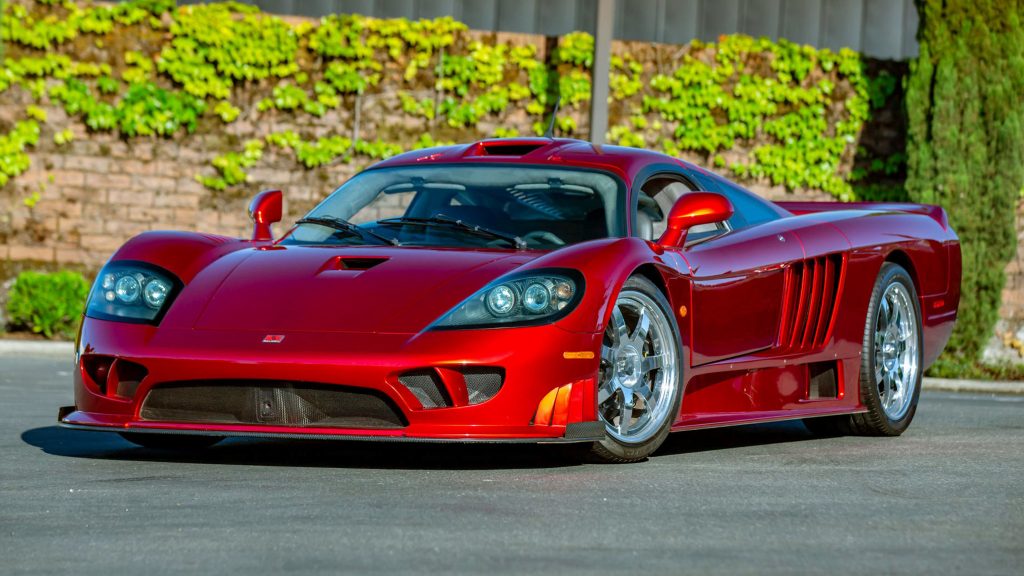
Collectors particularly value well-documented examples with low mileage, original factory specifications, and complete ownership histories. Twin Turbo models typically command the highest prices because of their exceptional performance and limited availability.
A Legacy That Changed American Performance Cars
The Saleen S7 arrived at a pivotal moment for the American automotive industry. Before its debut, the United States had produced many outstanding performance cars, but none matched the classic European supercar formula of a lightweight, hand-built, mid-engine exotic designed from the ground up.
The S7 proved that American engineering could successfully compete with the world’s most respected manufacturers. It combined advanced aerodynamics, lightweight construction, race-inspired engineering, and handcrafted assembly into a package that earned admiration from journalists and enthusiasts worldwide.
Its influence extended beyond Saleen itself. The success of the S7 demonstrated that there was room for ambitious, independently developed American supercars, helping inspire future low-volume performance projects from companies such as SSC North America, Hennessey Special Vehicles, and other boutique manufacturers.
Today, the S7 is widely regarded as one of the most important American performance cars ever built. It represents a rare combination of engineering ambition, handcrafted quality, and genuine motorsport capability. While production numbers were small, its impact on the perception of American supercars was enormous.
More than two decades after its introduction, the Saleen S7 continues to stand as a symbol of what can be achieved when innovative engineering takes priority over convention.
As America’s first purpose-built mid-engine production supercar, it broke new ground with its 550-horsepower naturally aspirated V8, lightweight carbon-fiber construction, and meticulous hand assembly.
The later 750-horsepower Twin Turbo version pushed those achievements even further, placing the S7 among the fastest production cars in the world.
Although it never reached the production volumes of Ferrari or Lamborghini, that was never its mission. The S7 was built to prove that an American company could design, engineer, and hand-build a world-class supercar capable of earning respect on both the road and the racetrack.
More than 20 years later, it remains one of the finest expressions of American automotive engineering and one of the most significant supercars ever produced in the United States.
Also Read: 10 Sedans That Pack More Than You’d Expect
