
Four straight months of declining vehicle sales hardly reflect the strong economic outlook many had hoped for, although part of April’s slowdown can likely be attributed to unusually strong comparisons from a year earlier. One clear bright spot, however, continues to be hybrids, which remain the fastest-growing powertrain segment in the market.
This discussion mainly centers on the United States, though hybrid demand is also rising globally. Australia, while not a direct comparison, shares some similarities with the U.S. market because of its strong appetite for large American-style pickup trucks. Interestingly, the country’s best-selling truck for everyday buyers is not American at all; it’s a hybrid.
Across Europe, hybrid adoption is accelerating rapidly, particularly in the compact crossover category, while smaller urban vehicles are increasingly shifting toward fully electric drivetrains. Pricing plays a major role in that trend. In some European markets, government subsidies have made small Chinese EVs available for as little as roughly $58 per month.
Meanwhile, Volkswagen continues its focus on Nürburgring performance records, recently claiming the title for the fastest electric luxury executive sedan around the track with a familiar model whose lengthy name nearly rivals the speed of its lap time.
Also Read: 10 Cars With Insurance Premiums Lower Than a Compact Sedan
Hybrid Models Continue Breaking Sales Records
The automotive market experienced unusual conditions last year, driven largely by political and economic developments. “Liberation Day” tariff announcements pushed many buyers to purchase vehicles before potential price increases took effect. At the same time, EV shoppers rushed to take advantage of federal tax incentives before they expired.
Given those circumstances, surpassing April 2025 sales numbers was always going to be difficult. Added geopolitical uncertainty, including the conflict involving Iran, further complicated the market situation. According to Automotive News, April’s performance could have been worse, but it still reflected ongoing weakness.
Preliminary data from GlobalData showed industry sales declining 6.7%, marking the fourth consecutive month of falling volumes.
Among the six automakers that still report monthly U.S. sales figures-Toyota, Ford, Honda, Hyundai Motor Group, Subaru, and Mazda, all recorded declines in April. Ford and Mazda experienced double-digit drops. Honda and Genesis were the only individual brands to post year-over-year gains.
Although employment figures in the U.S. remain relatively stable and job growth has improved, analysts note that consumers are still facing several challenges, including elevated vehicle prices, higher borrowing costs, rising fuel prices, and weakening consumer confidence.
Despite those pressures, hybrids continue gaining popularity as buyers increasingly appreciate their combination of improved fuel economy and refined driving characteristics. While electric vehicles suit many lifestyles, they are not practical for everyone. In many cases, hybrid versions of modern vehicles offer a more balanced experience than their conventional gasoline counterparts.
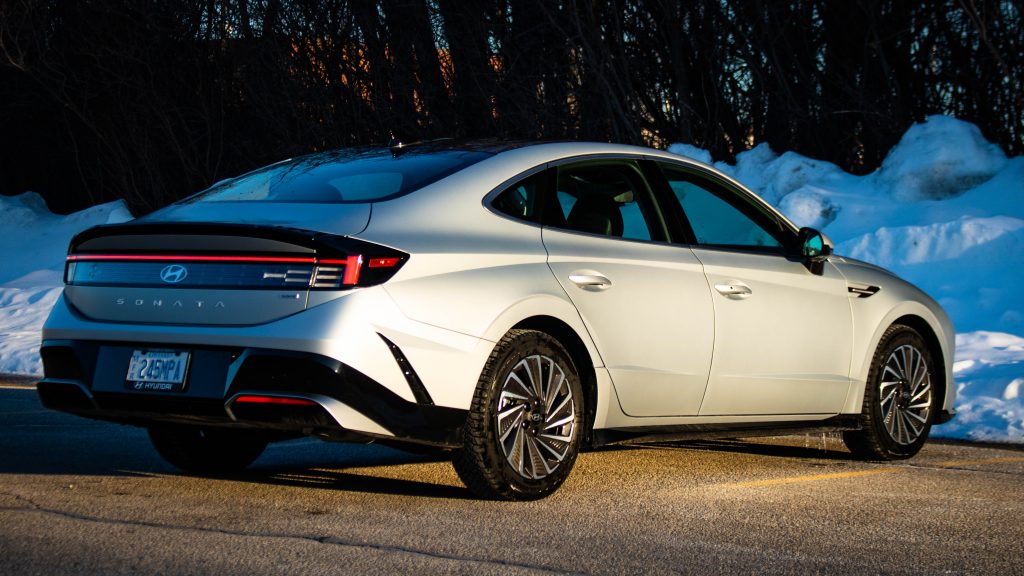
For buyers seeking a comfortable sedan capable of traveling long distances on a single tank of fuel, the Hyundai Sonata Hybrid remains a strong option.
Those looking for something with a slightly sportier image may lean toward the Honda Accord Hybrid. Hybrid SUVs are also proving highly efficient in real-world driving; for example, the Honda CR-V Hybrid has been averaging close to 40 mpg over roughly 800 miles of use in warmer weather.
Honda, one of the few automakers to avoid year-over-year sales declines in April, achieved a new hybrid sales record. More than half of all CR-V and Accord sales came from hybrid variants.
Toyota also reported that electrified vehicles represented 55.8% of its total U.S. sales, and those numbers extended far beyond its fully electric bZ lineup. Meanwhile, sales of the Hyundai Sonata Hybrid surged an impressive 171% compared with the same period last year.
