

Car interiors have evolved significantly in recent years, moving away from control-heavy dashboards. Instead of relying on numerous physical buttons and switches, modern vehicles now emphasize sleek designs built around expansive infotainment displays.
Automakers promote these touchscreens as symbols of innovation, connectivity, and luxury, but growing research suggests they may also be creating one of the biggest safety challenges in modern driving. Drivers today interact with climate settings, navigation systems, entertainment apps, seat controls, phone calls, messaging features, and even windshield functions through touch-based interfaces.
As a result, many motorists now spend substantial portions of their driving time looking at and touching screens rather than focusing entirely on the road and steering wheel.
The idea that the average driver may touch the touchscreen more often than the steering wheel sounds exaggerated at first, yet evidence from transportation studies, driving simulations, road safety organizations, and automotive usability research increasingly supports this concern.
Researchers studying driver distraction have discovered that touchscreen interaction creates cognitive overload, increases visual distraction, and reduces lane discipline. Unlike traditional physical controls, touchscreens provide little or no tactile feedback.
Drivers cannot rely on muscle memory in the same way they once could with physical knobs for volume or climate control. Instead, they must visually confirm every action. Even simple operations such as adjusting the air conditioning or changing a song may require several glances away from the road.
Studies conducted by institutions including the University of Washington, Toyota Research Institute, and Transport Research Laboratory found that drivers interacting with touchscreens showed slower reaction times, increased lane deviation, and decreased control precision. One major study reported a 40 percent increase in lane deviation while drivers used touchscreen systems.
The automotive industry itself is beginning to acknowledge the problem. Manufacturers such as Volkswagen, Audi, Porsche, and Hyundai have started reintroducing physical buttons after years of touchscreen-heavy designs. Euro NCAP, the European vehicle safety authority, announced plans to encourage physical controls for essential functions in future safety ratings.
Consumer surveys also reveal that many drivers strongly prefer tactile controls over digital menus because they are easier and safer to use while driving. According to What Car? A study referenced in multiple reports, nearly 90 percent of drivers preferred physical buttons over touchscreen controls.
The concern goes beyond convenience. Every second a driver spends interacting with a touchscreen is a second not fully focused on the road ahead. At highway speeds, even a brief distraction can translate into hundreds of meters traveled with reduced awareness.
As vehicles become increasingly software-driven, the debate over touchscreen dependency has evolved from a design discussion into a major road safety issue. Understanding how touchscreen usage affects driving behavior is essential because the data increasingly shows that digital convenience may be coming at the expense of driver attention, reaction time, and vehicle safety.
Also Read: 10 Cars With Insurance Premiums Lower Than a Compact Sedan
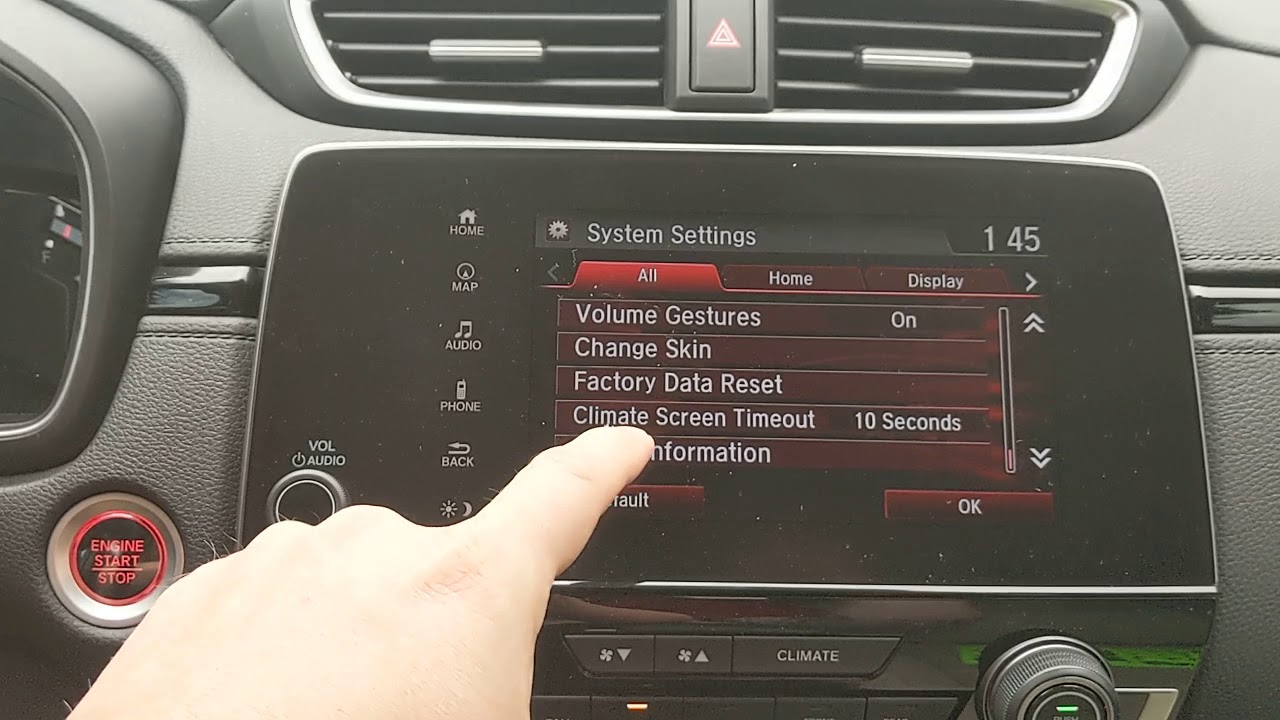
The Rise of Touchscreen-Dominated Cars
The rise of touchscreen-dominated vehicles began as part of a broader digital transformation within the automotive industry. Car manufacturers sought to modernize interiors by replacing clusters of buttons with large centralized displays that resembled smartphones and tablets.
Tesla played a major role in accelerating this trend by introducing minimalist interiors where nearly every function was controlled through a central screen. Other manufacturers quickly followed, believing consumers associated large displays with premium technology and futuristic design. Within a few years, touchscreens became standard features in vehicles across multiple price ranges, from economy hatchbacks to luxury sedans.
One of the biggest reasons automakers embraced touchscreens was manufacturing efficiency. Building vehicles with software-controlled interfaces is often cheaper and simpler than installing dozens of separate mechanical buttons and switches.
Instead of redesigning hardware components for every model update, companies can deploy software updates to modify features and layouts. This flexibility allows manufacturers to add functions remotely, customize user interfaces, and integrate smartphone ecosystems such as Apple CarPlay and Android Auto. However, the convenience for manufacturers does not always translate into convenience for drivers.
Research increasingly shows that touchscreen interfaces require significantly more visual attention than physical controls. Traditional buttons allow drivers to develop tactile familiarity over time. A driver can often adjust volume or climate settings without looking because physical controls provide shape, texture, resistance, and location consistency.
Touchscreens remove these sensory cues entirely. Drivers must visually search for icons, navigate menus, and confirm selections, all while operating a moving vehicle. This creates a dangerous shift in attention from the road to the screen.
A major study from the University of Washington and Toyota Research Institute found that touchscreen interaction impaired both driving performance and touchscreen accuracy simultaneously. Researchers observed that multitasking drivers experienced a 58 percent decline in touchscreen interaction accuracy and speed while also demonstrating reduced lane control.
The study involved participants using a 12-inch touchscreen while driving in simulated conditions that mirrored real-world distractions. These findings reinforced concerns that touchscreens fundamentally compete with the driving task for cognitive resources.
The automotive industry has started reacting to growing criticism. Volkswagen publicly admitted that its previous touchscreen-heavy designs frustrated drivers and compromised usability. Audi, Porsche, and Hyundai have also reintroduced physical controls for commonly used functions such as climate adjustment and audio management.
This reversal reflects increasing recognition that touchscreen minimalism may have prioritized aesthetics over practical safety. Despite this shift, many modern vehicles still rely heavily on digital interfaces, meaning touchscreen interaction remains deeply embedded in contemporary driving behavior.
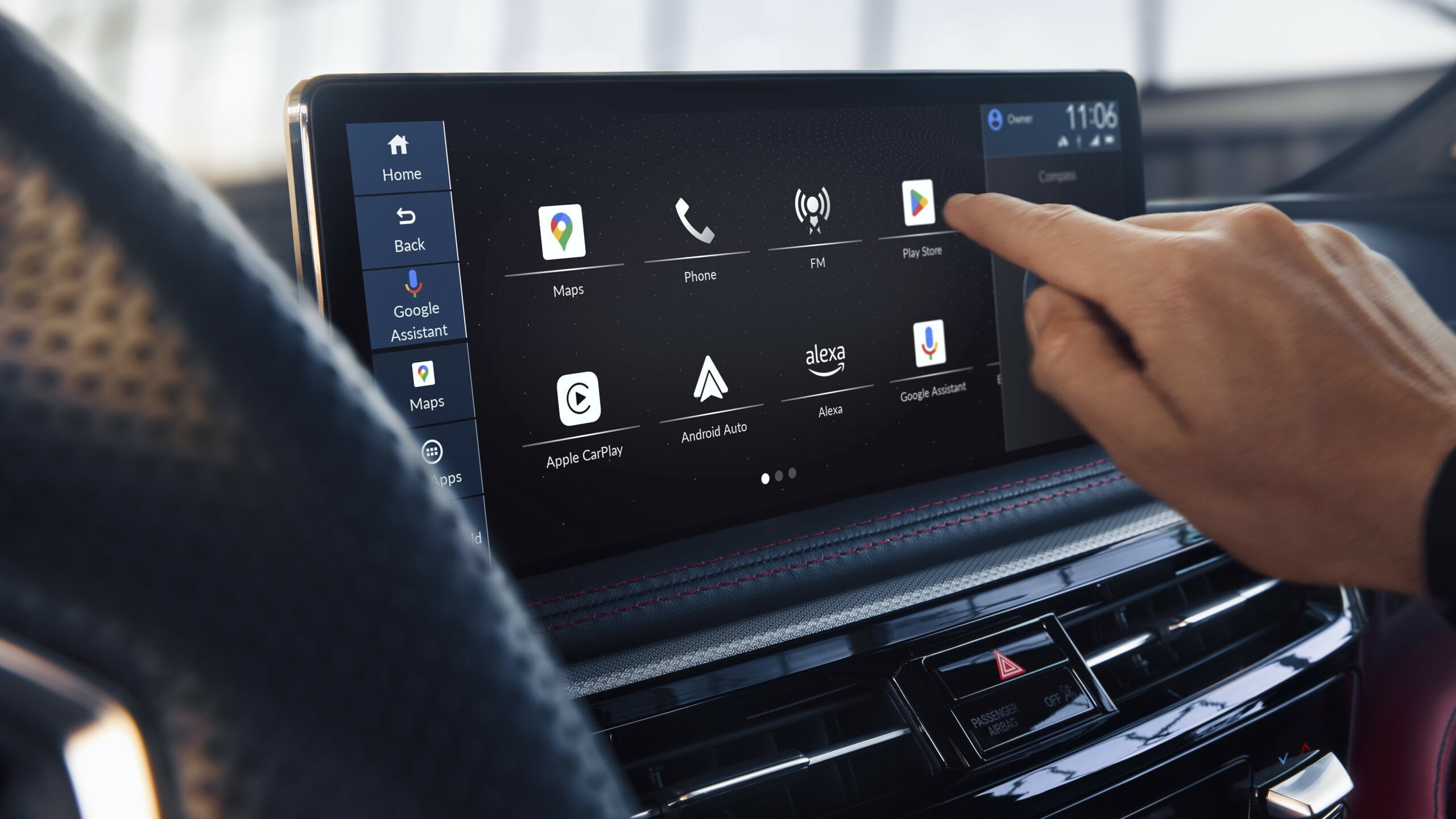
Why Drivers Use Touchscreens?
Modern drivers interact with touchscreens constantly because vehicles now centralize numerous essential and non-essential functions within digital menus. In older vehicles, a driver might touch a radio knob or climate dial occasionally.
In today’s cars, the same driver may need to use the touchscreen repeatedly for navigation, communication, entertainment, vehicle settings, and comfort adjustments. The dashboard has evolved from a simple control panel into a multifunction digital hub competing for driver attention throughout the journey.
Navigation systems are one of the most common reasons drivers interact with touchscreens. GPS-based systems require route input, destination changes, map zooming, and traffic updates. Many drivers also use smartphone integration systems like Apple CarPlay and Android Auto, which further increase touchscreen interaction through music streaming, messaging apps, and voice assistant controls.
Even though voice commands are intended to reduce distraction, studies suggest they often fail due to recognition errors or menu complexity, causing drivers to revert to manual touchscreen interaction.
Entertainment systems also contribute heavily to touchscreen dependency. Drivers regularly browse playlists, podcasts, radio stations, and streaming apps while driving. Unlike traditional radio buttons, digital entertainment systems often require multiple steps to perform basic tasks.
Adjusting audio settings or changing a song often requires multiple swipes and taps through layered menus. According to the Transport Research Laboratory, touchscreen-based tasks in some vehicles can take up to 22 seconds to complete. During that time, the car is still moving, which can significantly reduce driver attention and increase risk.
Climate control systems have also become increasingly digitized. Many automakers removed physical controls for air conditioning, heated seats, and fan speed adjustments in favor of touchscreen menus. This design choice forces drivers to perform visual interactions for tasks that previously required minimal attention.
Consumer frustration with these systems has become widespread because climate adjustments are among the most frequently used in vehicle functions.
Another factor increasing touchscreen interaction is the growth of advanced driver assistance systems. Semi-automated driving technologies can create a false sense of security, encouraging drivers to engage more frequently with infotainment systems.
Research involving over 31,000 touchscreen interaction sequences found that drivers using partial automation spent more time looking at touchscreens and performed more touchscreen interactions compared to manual driving conditions. Mean glance duration toward the touchscreen increased by 36 percent during higher levels of automation.
Touchscreen dependency is also influenced by changing consumer habits. People are deeply accustomed to smartphones, tablets, and digital interfaces in everyday life. Automakers intentionally design infotainment systems to resemble consumer electronics because familiarity encourages adoption.
However, driving is fundamentally different from sitting at home using a phone. The cognitive demands of controlling a moving vehicle mean even short moments of visual distraction can have severe consequences. The more functions that migrate to touchscreens, the more frequently drivers are forced to divide their attention between the road and digital interfaces.
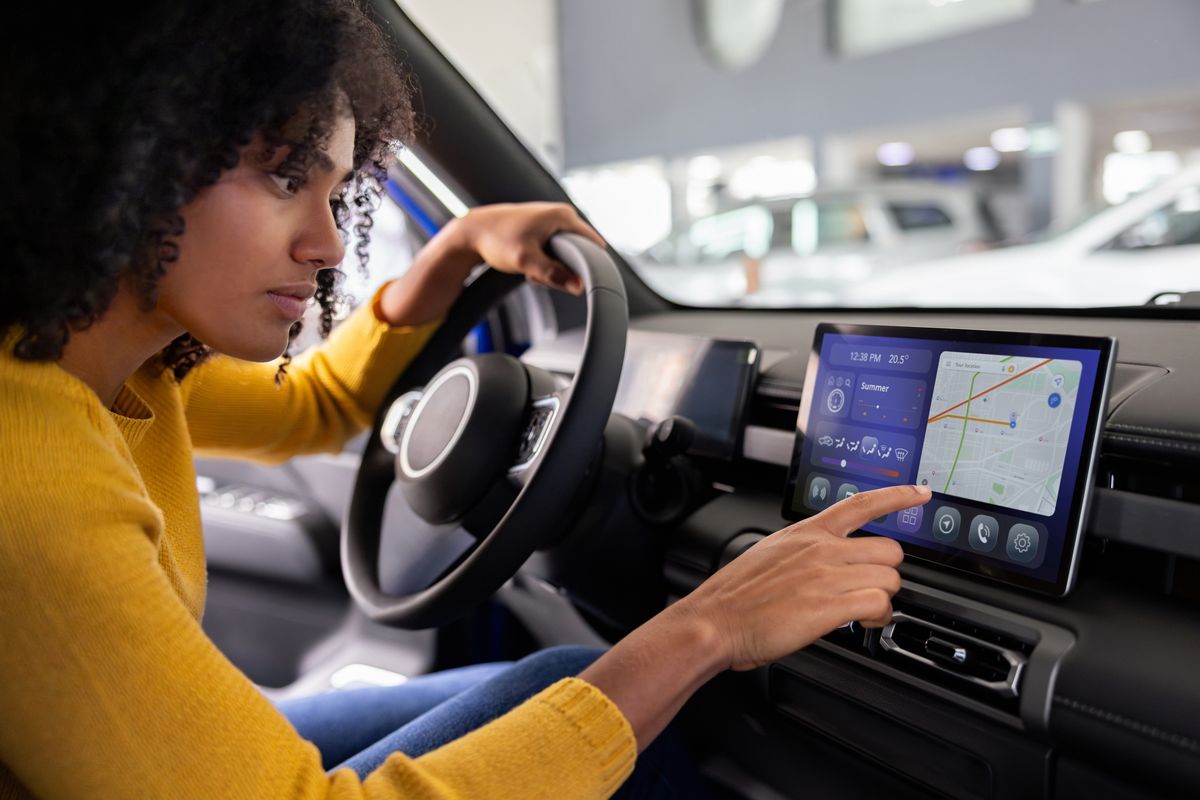
The Safety Risks of Touchscreen Interaction
The safety risks associated with touchscreen use while driving have become one of the most discussed issues in transportation research. Unlike traditional physical controls, touchscreens demand continuous visual confirmation, making them inherently distracting during vehicle operation.
Researchers categorize this distraction into three major forms: visual distraction, manual distraction, and cognitive distraction. Touchscreen systems often combine all three simultaneously, creating a dangerous environment where drivers divide attention between digital tasks and road awareness.
Visual distraction is perhaps the most immediate danger. Drivers using touchscreens must frequently look away from the road to locate icons, read menus, and confirm selections. Even short glances can dramatically increase crash risk. At highway speeds, a vehicle travels significant distances within seconds.
A driver traveling at 100 kilometers per hour covers nearly 28 meters every second. Looking away for just five seconds means traveling approximately 140 meters without full visual attention. Studies from the Transport Research Laboratory showed that some touchscreen tasks required between 12 and 15 seconds of interaction time, with complex menu systems taking even longer.
Manual distraction occurs because drivers physically remove at least one hand from the steering wheel to interact with the screen. This reduces steering precision and vehicle control stability.
Research from the University of Washington and Toyota Research Institute found that touchscreen use increased lane deviation by 40 percent while simultaneously reducing touchscreen accuracy itself. Drivers struggled both to maintain lane discipline and complete touchscreen tasks effectively, illustrating how multitasking overwhelms human attention capacity.
Cognitive distraction adds another layer of danger. Modern infotainment systems present drivers with information-dense interfaces requiring decision making, memory recall, and menu navigation. These mental processes consume attention resources that should remain focused on driving conditions. Even when drivers keep their eyes mostly on the road, cognitive engagement with touchscreen systems can delay hazard recognition and reaction times.
AAA and other road safety organizations have repeatedly warned that advanced infotainment systems create levels of distraction comparable to or worse than smartphone use.
One report highlighted that drivers using infotainment features in tested vehicles frequently removed both their eyes from the road and their hands from the wheel for extended periods. This is particularly concerning because smartphone distraction laws exist in many countries, while in vehicles, touchscreens remain largely unregulated despite presenting similar risks.
Real-world driver behavior reinforces these concerns. Studies examining naturalistic driving data found that drivers engaging with touchscreens during partially automated driving conditions increased both interaction frequency and glance duration toward the screen. Automation can unintentionally encourage overconfidence, leading drivers to believe the vehicle can safely manage itself while attention drifts toward infotainment systems.
Safety experts increasingly argue that touchscreen-heavy vehicle design represents a fundamental mismatch between human cognitive limitations and modern interface complexity.
Humans are not naturally equipped to perform precise touchscreen interactions while simultaneously monitoring road conditions, traffic movement, pedestrians, weather changes, and vehicle dynamics. As screens continue replacing tactile controls, the risk of distraction-related crashes may continue rising unless manufacturers rethink interface priorities and safety standards evolve accordingly.
Research and Data Supporting the Concern
Scientific research on touchscreen distraction has expanded rapidly over the past decade as digital vehicle interfaces became increasingly common. Multiple studies now provide strong evidence that touchscreen use negatively affects driver performance, attention, and reaction time.
Researchers use driving simulators, naturalistic driving data, eye tracking systems, and cognitive workload measurements to understand how infotainment systems influence driving behavior.
One of the most significant recent studies came from the University of Washington and Toyota Research Institute. Researchers placed participants in a simulated driving environment equipped with a 12-inch touchscreen display. Drivers performed typical infotainment tasks while researchers monitored lane control, eye movement, touchscreen accuracy, and physiological stress indicators.
The study found that touchscreen interaction caused a 58 percent reduction in pointing accuracy and interaction speed while increasing lane deviation by approximately 40 percent. These findings demonstrated that touchscreen multitasking significantly impairs both driving and touchscreen operation simultaneously.
Another important body of research comes from real-world driving studies involving advanced driver assistance systems. Researchers analyzing over 31,000 touchscreen interaction sequences discovered that partially automated driving increased touchscreen engagement substantially.
Drivers interacting with Level 2 automation systems showed a 36 percent increase in average glance duration toward touchscreens and a 17 percent increase in touchscreen interactions compared to manual driving. This suggests automation may unintentionally encourage distraction by creating a false sense of reduced driving responsibility.
The Transport Research Laboratory conducted experiments comparing touchscreen interactions with traditional physical controls. Their research showed that touchscreen tasks often require significantly longer visual engagement than physical buttons.
Some touchscreen operations reportedly took drivers up to 22 seconds to complete, while physical controls generally required far less visual attention. Researchers emphasized that touchscreen interfaces eliminate tactile guidance, forcing drivers to rely almost entirely on visual confirmation.
Consumer preference studies also support concerns about touchscreen usability. Surveys referenced in automotive publications found that nearly 90 percent of drivers preferred physical buttons over touchscreens for commonly used functions. Drivers cited safety, ease of use, and reduced distraction as primary reasons for their preference.
This widespread dissatisfaction has contributed to several automakers reversing course and restoring physical controls in newer models.
Research into visual demand further confirms touchscreen-related distraction risks. A predictive model study examining in-vehicle touchscreen systems found that menu complexity, button size, and interface design strongly influenced visual distraction levels. Drivers often needed multiple glances away from the road to complete tasks successfully, especially when menu structures became layered or visually cluttered.
Road safety authorities are also responding to mounting evidence. Euro NCAP announced plans to incentivize physical controls for critical vehicle functions beginning in future safety rating systems. This policy shift reflects growing institutional recognition that excessive touchscreen reliance may undermine road safety goals.
Collectively, these studies paint a consistent picture. Touchscreens increase visual distraction, reduce steering precision, prolong task completion times, and encourage divided attention. While technology itself is not inherently unsafe, current touchscreen implementation strategies appear poorly aligned with human cognitive limitations during driving.
The growing volume of research increasingly supports the argument that touchscreen dependency has become a measurable road safety concern rather than simply a matter of personal preference.
Also read: 10 Cars Where the Key Replacement Costs Hundreds Out of Warranty
