The world of classic automobiles is filled with machines that go far beyond transportation, becoming symbols of engineering ambition, design mastery, and historical importance. Some of these rare creations have reached valuations that exceed even the most celebrated Ferrari models, not because of luxury branding alone, but because of their unmatched rarity and cultural significance.
From pre-war European masterpieces to groundbreaking modern performance cars, each vehicle in this collection represents a turning point in automotive history. They were built in extremely limited numbers, often for racing dominance or elite clientele, and many introduced technologies that shaped future generations of cars.
Whether it is a hand-built Bugatti, a race-winning Jaguar, or a revolutionary McLaren, these vehicles share a common trait: they define excellence in their respective eras and continue to inspire collectors who view them as irreplaceable works of mechanical art rather than simple machines.
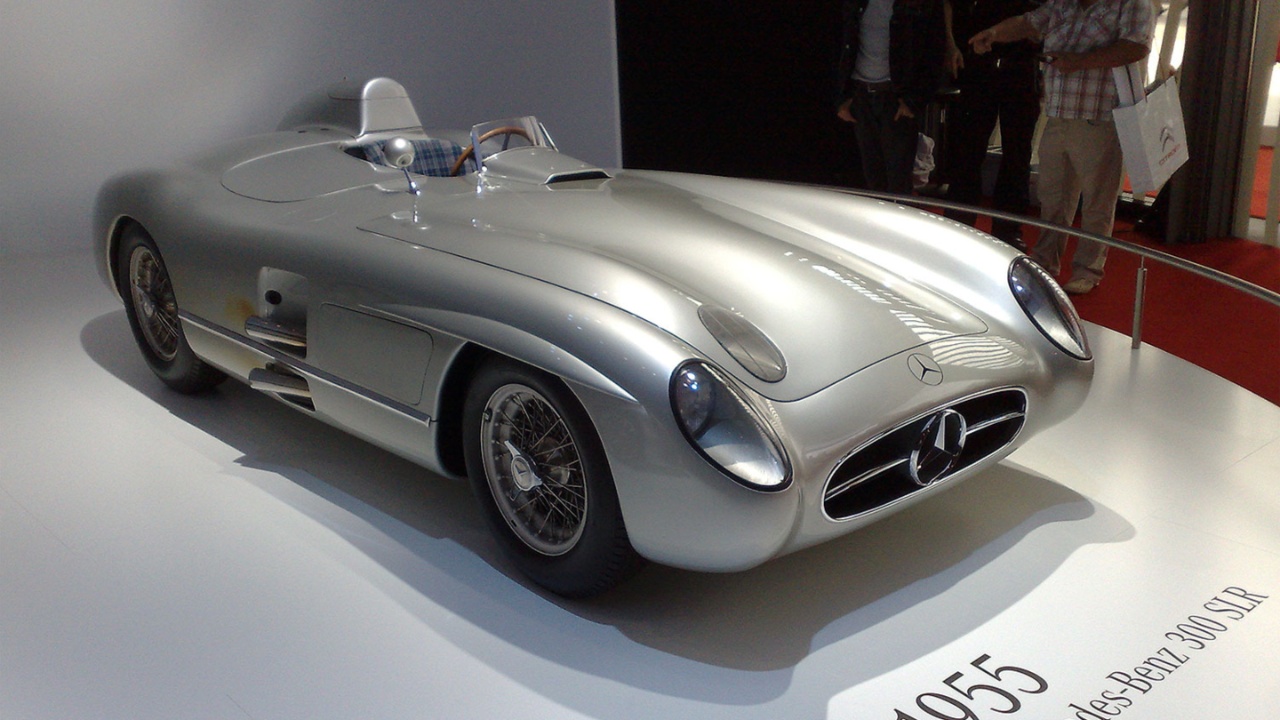
1. 1955 Mercedes-Benz 300 SLR Uhlenhaut Coupé
Few vehicles in history have achieved the legendary status of the Mercedes-Benz 300 SLR Uhlenhaut Coupé. Considered by collectors and automotive historians as the ultimate masterpiece of engineering, the car combines unmatched rarity, exceptional performance, and an extraordinary motorsport legacy. In 2022, one of only two examples was sold for approximately $142 million at a private auction, making it the most expensive car ever sold and cementing its place as an icon of automotive history.
Named after Mercedes-Benz engineer and motorsport chief Rudolf Uhlenhaut, the Uhlenhaut Coupé was developed as a road-legal adaptation of the company’s dominant W196 Formula 1 race car. Built in 1955, it featured a lightweight chassis, distinctive gullwing doors, and a powerful 3.0-liter straight-eight engine capable of producing around 300 horsepower.
With a top speed approaching 300 km/h (180 mph), it was recognized as the fastest road-legal car of its time. Despite its incredible performance, the vehicle remained intense and difficult to drive due to its loud mechanical nature, racing-style controls, and limited comfort.
Its rarity is one of the key reasons behind its immense value. Mercedes-Benz built only two examples, one with red interior trim and another with blue. Both remained in the company’s private collection for decades, with Rudolf Uhlenhaut himself using one as a company vehicle. Because it was never offered publicly, the car gained a mythical reputation often compared to a priceless work of art.
The Uhlenhaut Coupé also represents Mercedes-Benz’s golden age of motorsport. Derived from the championship-winning 300 SLR race car, it emerged during an era when legendary drivers such as Juan Manuel Fangio and Stirling Moss dominated racing. Following Mercedes-Benz’s withdrawal from motorsport after the tragic 1955 Le Mans accident, the coupé became a lasting symbol of speed, innovation, and engineering excellence.
- Engine: 3.0L Inline-8 (M196 S, naturally aspirated, Bosch direct fuel injection)
- Horsepower: 310 hp @ 7,400 rpm
- Torque: 234 lb-ft (317 Nm) @ 5,950 rpm
- Length: 169.3 in (4,300 mm)
- Width: 68.5 in (1,740 mm)
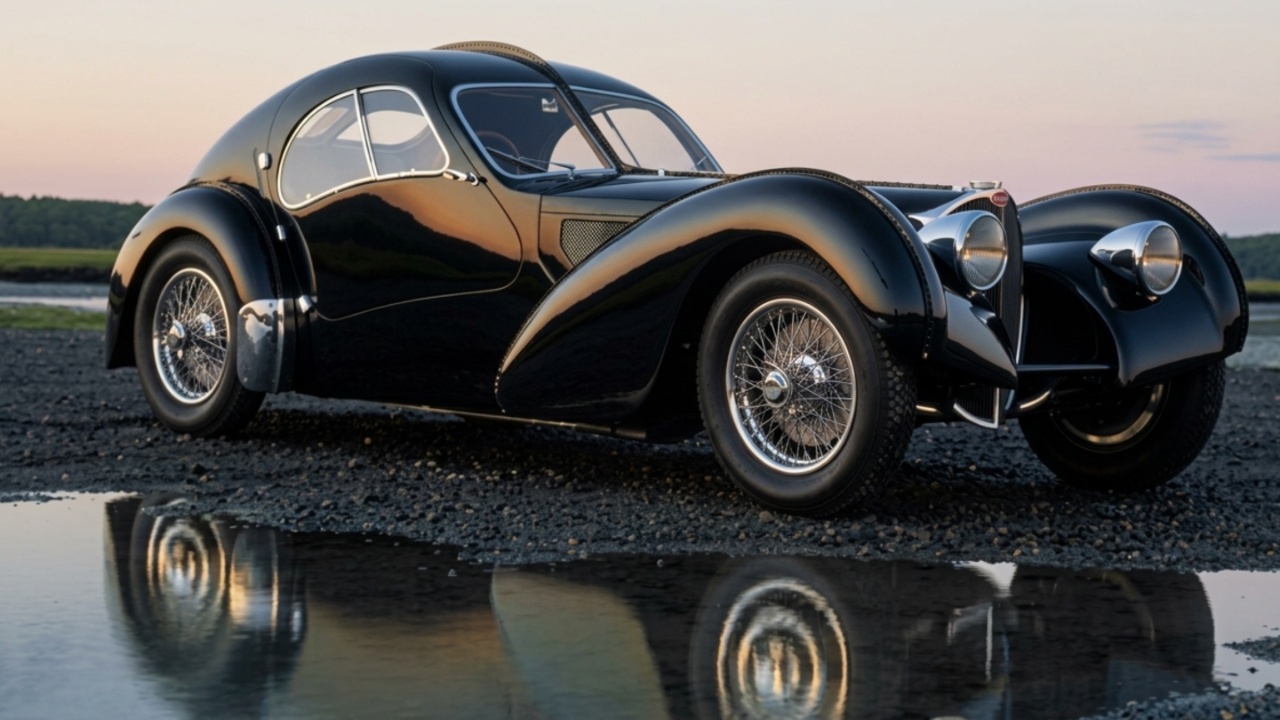
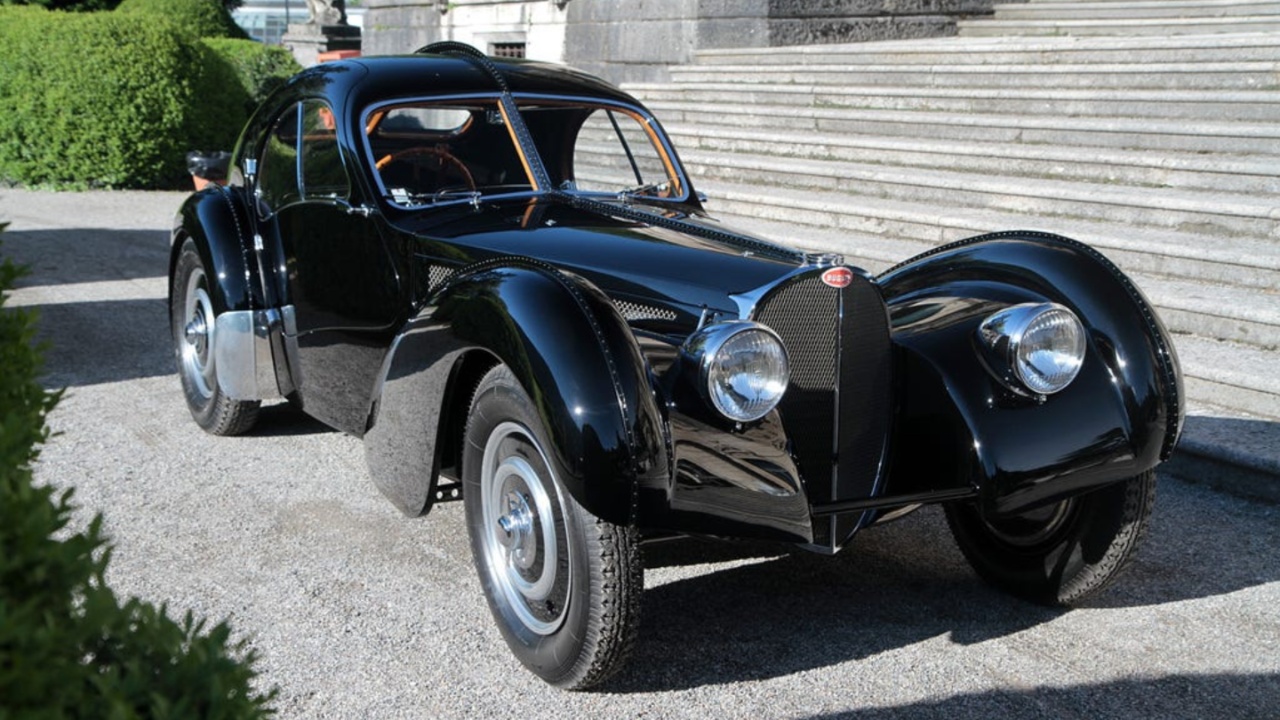
2. 1936 Bugatti Type 57SC Atlantic
The Bugatti Type 57SC Atlantic is widely regarded as one of the most beautiful and valuable automobiles ever built. Celebrated for its elegant styling, groundbreaking engineering, and extraordinary rarity, this pre-war masterpiece represents the height of Art Deco automotive design. Today, surviving examples are valued between $30 million and $40 million, while the missing “La Voiture Noire” version is believed to be worth well over $100 million if ever rediscovered.
Designed by Jean Bugatti, the Atlantic featured a dramatic low-slung body crafted with flowing curves and a distinctive riveted dorsal seam stretching from the hood to the rear. This unusual design, inspired by aviation and aerodynamic thinking, gave the car an unmistakable appearance and earned it comparisons to a moving sculpture or the “Mona Lisa” of automobiles. Only four Type 57SC Atlantic models were ever built, and just three are known to survive today, making it one of the rarest collector cars in existence.
Beyond its visual appeal, the Atlantic was a technical marvel for the 1930s. Powered by a supercharged 3.3-liter inline-eight engine producing roughly 200 horsepower, it could exceed 120 mph, an extraordinary speed during the pre-war period. As one of the earliest road-going vehicles to embrace aerodynamic styling and supercharged performance, it helped shape the future of sports car engineering.
The Type 57SC Atlantic transcends traditional automotive value because it combines historical significance, mechanical innovation, and artistic beauty, making it one of the most admired treasures in automotive history.
- Engine: 3.3L Supercharged Inline-8 (DOHC, 16-valve)
- Horsepower: 200 hp @ 5,500 rpm
- Torque: 218 lb-ft (295 Nm) @ 2,000 rpm
- Length: 174.0 in (4,420 mm)
- Width: 67.3 in (1,710 mm)
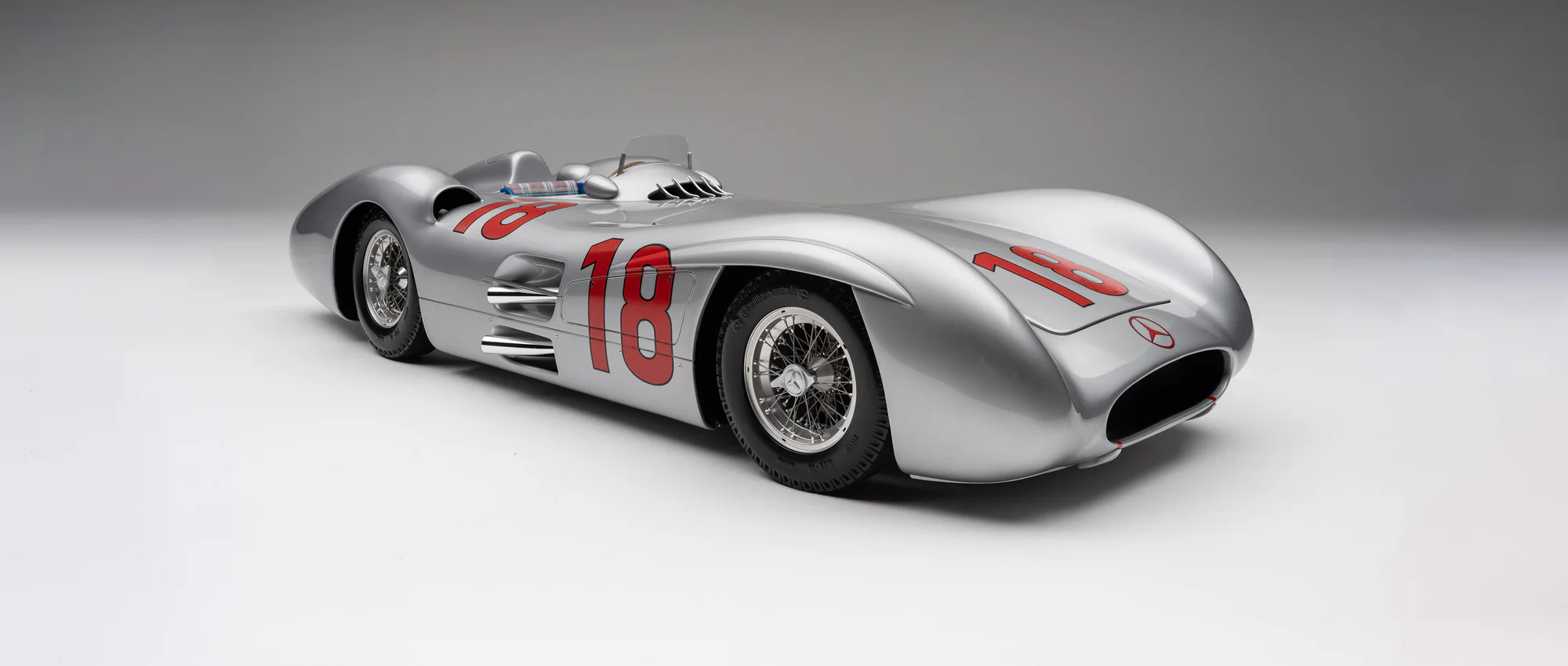
3. 1954 Mercedes-Benz W196
Few racing machines have shaped the history of motorsport as profoundly as the Mercedes-Benz W196. Built during a period of technological ambition and postwar rebuilding, the W196 became a symbol of engineering excellence and competitive dominance in Formula 1.
Its importance extends far beyond racing success, as it introduced innovations that influenced future generations of motorsport technology. Today, surviving examples are considered priceless collector pieces, with one famously selling for $29.6 million at auction and others estimated to exceed $50 million in value.
Designed under the leadership of Mercedes-Benz engineer Rudolf Uhlenhaut, the W196 was technologically advanced for its era. It featured a fuel-injected straight-eight engine, a revolutionary improvement that delivered superior power and efficiency compared to carbureted competitors.
Mercedes also equipped the car with a desmodromic valve system, eliminating traditional valve springs to improve reliability and performance at high engine speeds. Inboard brakes further enhanced handling by reducing unsprung weight and improving balance on demanding circuits.
On the racetrack, the W196 established itself as one of Formula 1’s most successful machines. Between 1954 and 1955, it won 9 of the 12 races it entered and helped secure championship victories through legendary drivers such as Juan Manuel Fangio and Stirling Moss. Fangio drove the car to major triumphs, including victories at the German and Swiss Grands Prix, solidifying both his legacy and the W196’s legendary status.
Only 14 examples of the W196 were built, and most remain in Mercedes-Benz’s collection, making privately owned cars exceptionally rare. Following Mercedes-Benz’s withdrawal from racing after the tragic 1955 Le Mans disaster, the W196 became a lasting monument to innovation, speed, and motorsport history.
- Engine: 2.5L Inline-8 (desmodromic valves, Bosch direct fuel injection)
- Horsepower: 257–290 hp
- Torque: 182–217 lb-ft (247–294 Nm) @ 6,300–8,200 rpm
- Length: 158.5 in (4,025 mm)
- Width: 64.0 in (1,625 mm)
4. 1956 Aston Martin DBR1
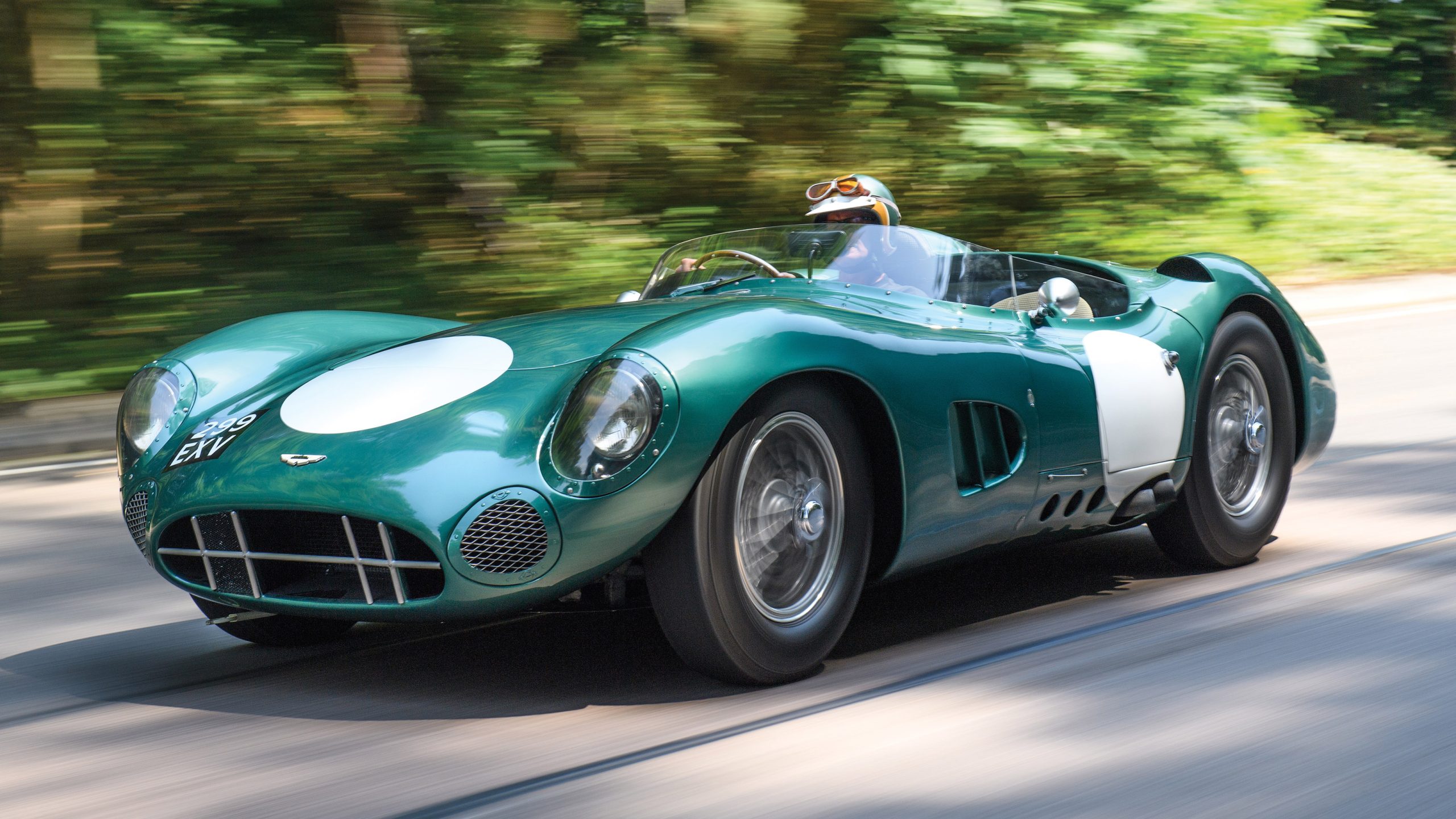
Few racing cars capture the spirit of endurance motorsport as completely as the Aston Martin DBR1. Designed during an era when manufacturers battled fiercely for supremacy on Europe’s toughest circuits, the DBR1 became Aston Martin’s defining competition machine. Combining elegant craftsmanship, lightweight engineering, and exceptional racing pedigree, it earned legendary status among collectors and enthusiasts. In 2017, chassis DBR1/1 sold for $22.5 million at auction, setting records as the most expensive British-built car and the highest-priced Aston Martin ever sold.
Only five DBR1 examples were produced, making the car one of the rarest competition vehicles of its generation. Chassis DBR1/1 built an extraordinary reputation through its association with some of motorsport’s greatest drivers, including Stirling Moss, Carroll Shelby, Jim Clark, and Jack Brabham. Although it never secured victory at Le Mans, the car achieved lasting fame after winning the challenging 1959 Nürburgring 1000 KM race, driven by Stirling Moss and Jack Fairman. That achievement helped establish Aston Martin as a leading force in international sports car racing.
The DBR1’s significance extends beyond a single race result. Closely related to DBR1/2, the sister car that brought Aston Martin victory at the 1959 24 Hours of Le Mans, it formed part of the company’s greatest motorsport era. Praised for its nimble handling and lightweight chassis, the DBR1 compensated for modest power with agility and precision.
After retirement from factory racing, DBR1/1 continued competing in historic motorsport events and underwent careful restoration. Today, its rarity, racing heritage, and timeless design make it one of the most prized collector cars in the world.
- Engine: 2.5L Inline-6 (RB6 DOHC, later 3.0L upgrade)
- Horsepower: 212 hp (2.5L) / up to 301 hp (3.0L)
- Torque: ~240–255 lb-ft (varies by tune)
- Length: 158.5 in (4,026 mm)
- Width: 64.0 in (1,630 mm)
5. 1937 Alfa Romeo 8C 2900B Lungo Spider
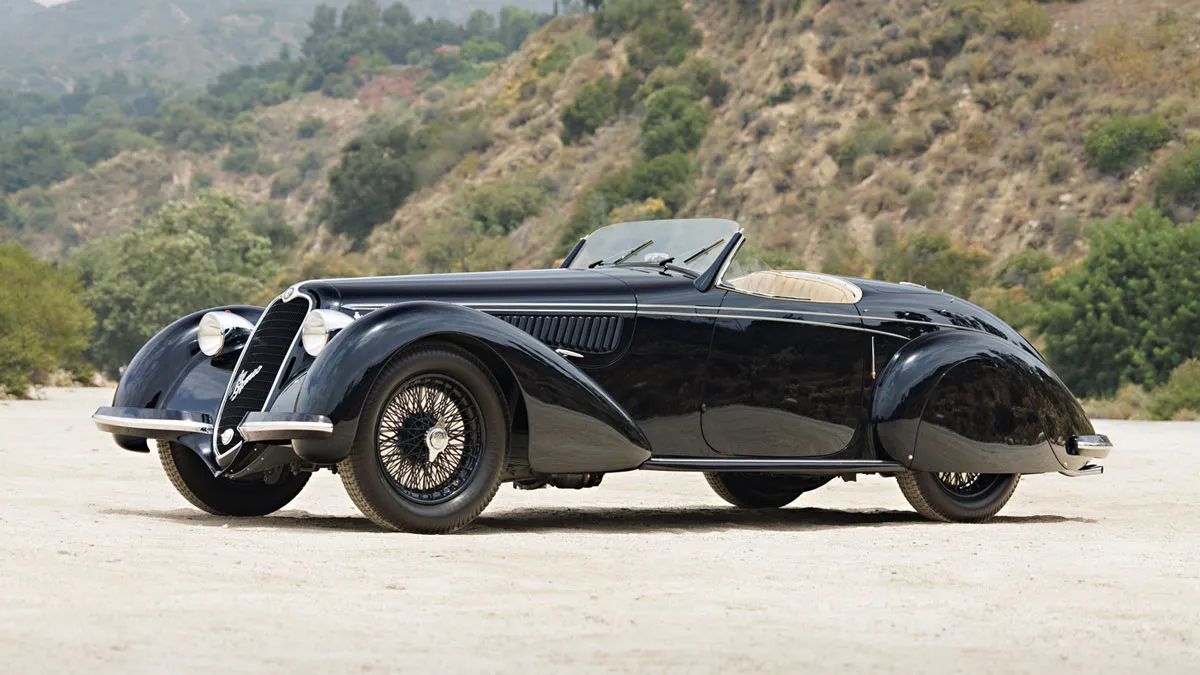
Among pre-war automobiles, the Alfa Romeo 8C 2900B Lungo Spider occupies a rare position where engineering innovation and artistic design meet at the highest level. Built in extremely limited numbers and valued at nearly $20 million, it is considered one of the most desirable open-top grand tourers ever produced. Its combination of racing-derived mechanics and coachbuilt beauty has made it a consistent highlight at elite concours events and a cornerstone of serious vintage collections.
The mechanical foundation of the car is a 2.9-liter supercharged inline-eight engine developed under the direction of engineer Vittorio Jano. Producing around 180 horsepower, it delivered exceptional performance for the 1930s, enabling speeds above 110 mph. This engine lineage traces back to Alfa Romeo’s dominant Grand Prix cars, meaning the 8C 2900B effectively brought competition-level technology into a road-legal luxury format. A four-speed manual gearbox and advanced independent suspension at both ends further enhanced its dynamic capability and handling precision.
The Lungo Spider bodywork, created by Carrozzeria Touring, is central to its legendary status. Built using the lightweight Superleggera technique, the design features long flowing fenders, a sweeping grille, and perfectly balanced proportions. The result is a car that is widely regarded as one of the most beautifully shaped, with aerodynamic influences subtly integrated into its elegant form. Chrome accents and a disappearing roof complete its refined yet purposeful appearance.
Inside, the cabin reflects a blend of luxury and performance focus. A large steering wheel, minimal dual-gauge layout, and richly trimmed leather surfaces create an environment that remains driver-centric while still offering grand touring comfort. Every detail reinforces its dual identity as both a road car and a competition-inspired machine.
With extremely low production numbers, advanced engineering, and timeless Italian design, the Alfa Romeo 8C 2900B Lungo Spider stands as one of the defining masterpieces of automotive history.
- Engine: 2.9L Supercharged Inline-8 (DOHC, twin Roots superchargers)
- Horsepower: 180 hp @ 5,200 rpm
- Torque: ~320–350 lb-ft (estimated)
- Length: 202.8 in (5,150 mm)
- Width: 69.7 in (1,770 mm)
Also read: 10 Cars Where Owners Reported Brake Failures Under 30,000 Miles
6. 1931 Bugatti Type 41 Royale
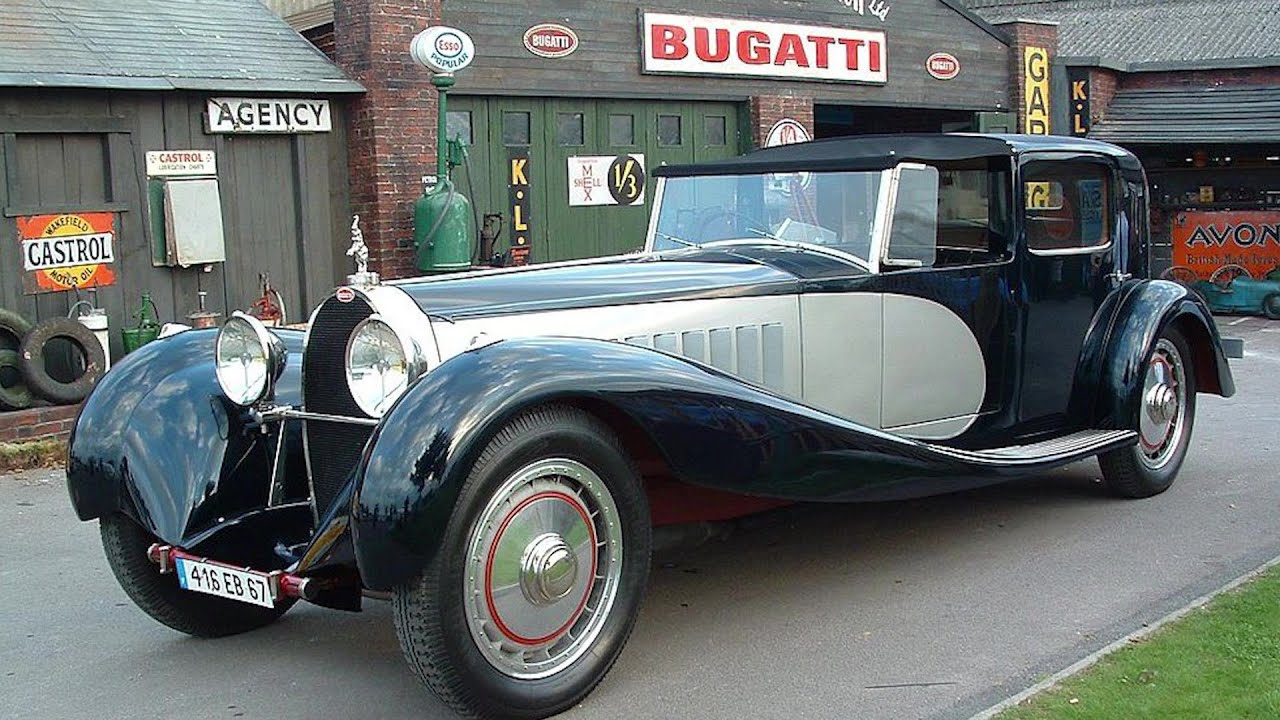
The Bugatti Type 41 Royale stands as one of the most ambitious automobiles ever conceived, created by Ettore Bugatti with the goal of building a car fit for kings. Its sheer scale, extreme mechanical complexity, and handcrafted elegance place it among the most iconic luxury vehicles of the pre-war era, with surviving examples now valued in the tens of millions of dollars.
At the heart of the Royale is an extraordinary 12.7-liter straight-eight engine, one of the largest engines ever fitted to a passenger car. Combined with a vast chassis stretching more than 20 feet in length, the vehicle prioritizes smooth, effortless power delivery and supreme refinement rather than outright speed. This engineering approach made it unlike any other automobile of its time, emphasizing presence and comfort over performance competition.
Production was extremely limited, with only six units completed between 1926 and 1931. The timing proved disastrous for commercial success, as the Great Depression eliminated demand for ultra-luxury automobiles. Intended for European royalty, the Royale instead became a financial failure for Bugatti during its era, despite its unmatched engineering and craftsmanship.
Each surviving example features bespoke coachbuilt bodies, making no two Royales identical. These custom designs transformed the car into a rolling piece of sculpture, with dramatic proportions and intricate detailing that highlighted its status as a luxury artifact. Interiors were equally opulent, featuring handcrafted materials, refined finishes, and elaborate detailing that reflected the highest standards of automotive craftsmanship.
Today, the Bugatti Royale is considered one of the most important pre-war automobiles ever built. Rarely appearing on the open market and often preserved in private collections or museums, it represents a rare combination of engineering ambition, artistic design, and historical significance, securing its reputation as one of the most valuable and admired cars in automotive history.
- Engine: 12.7L Inline-8 (SOHC, naturally aspirated)
- Horsepower: 300 hp @ 1,600–3,000 rpm
- Torque: 875 lb-ft (1,186 Nm)
- Length: 252 in (6.4 m)
- Width: 82.5 in (2.1 m)
7. 1962 Aston Martin DB4GT Zagato
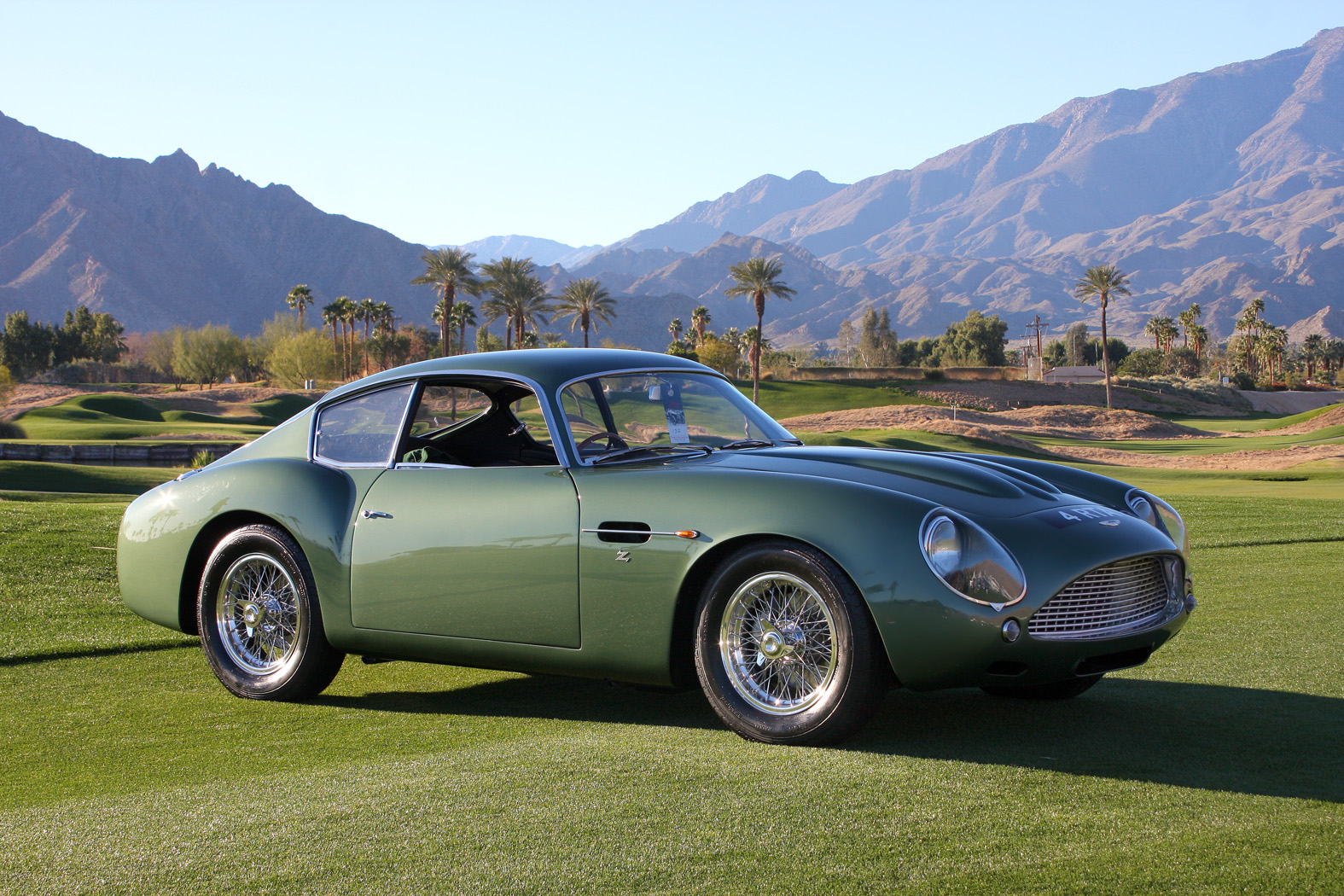
Few classic cars capture the tension between beauty and competition as perfectly as the Aston Martin DB4GT Zagato. Created as a lightweight, race-focused collaboration between Aston Martin and the Italian coachbuilder Zagato, it was designed to take on Ferrari at its own game while also becoming one of the most elegant shapes ever put on a racing chassis. Today, its rarity and pedigree place its value in the multi-million-dollar tier, often around $14 million or more.
Only 19 examples were built, making it one of the most exclusive Aston Martins ever produced. The project began with Aston’s DB4 GT chassis, which was sent to Milan where Zagato reimagined the body using ultra-thin aluminum panels. The result was a dramatic reduction in weight and a far more aerodynamic, muscular silhouette. The design language is unmistakably Italian, yet the mechanical foundation remains pure British engineering.
Beneath the sculpted body sits a high-performance inline-six engine tuned for competition, paired with a manual gearbox and race-developed suspension. The car was engineered specifically for GT racing in the early 1960s, targeting endurance events and direct competition with Ferrari’s dominant GT cars. Its lightness and agility made it exceptionally quick for its time, especially on twisty circuits where handling mattered as much as power.
The cabin reflects its racing intent, with a stripped-back layout, clear instrumentation, and functional controls rather than luxury excess. Even so, the craftsmanship remains evident, balancing purpose with refinement in a way typical of Aston Martin’s golden era.
Beyond its mechanical qualities, the DB4GT Zagato is revered for its design purity. Its flowing curves, compact proportions, and aggressive stance have made it a benchmark of automotive aesthetics. Combined with extreme scarcity and motorsport heritage, it stands as one of the most desirable and collectible grand tourers ever built.
- Engine: 3.7L Inline-6 (DOHC, twin-spark, naturally aspirated)
- Horsepower: 314 hp @ 6,000 rpm
- Torque: 278 lb-ft @ 5,400 rpm
- Length: 168.0 in (4,267 mm)
- Width: 61.3 in (1,557 mm)
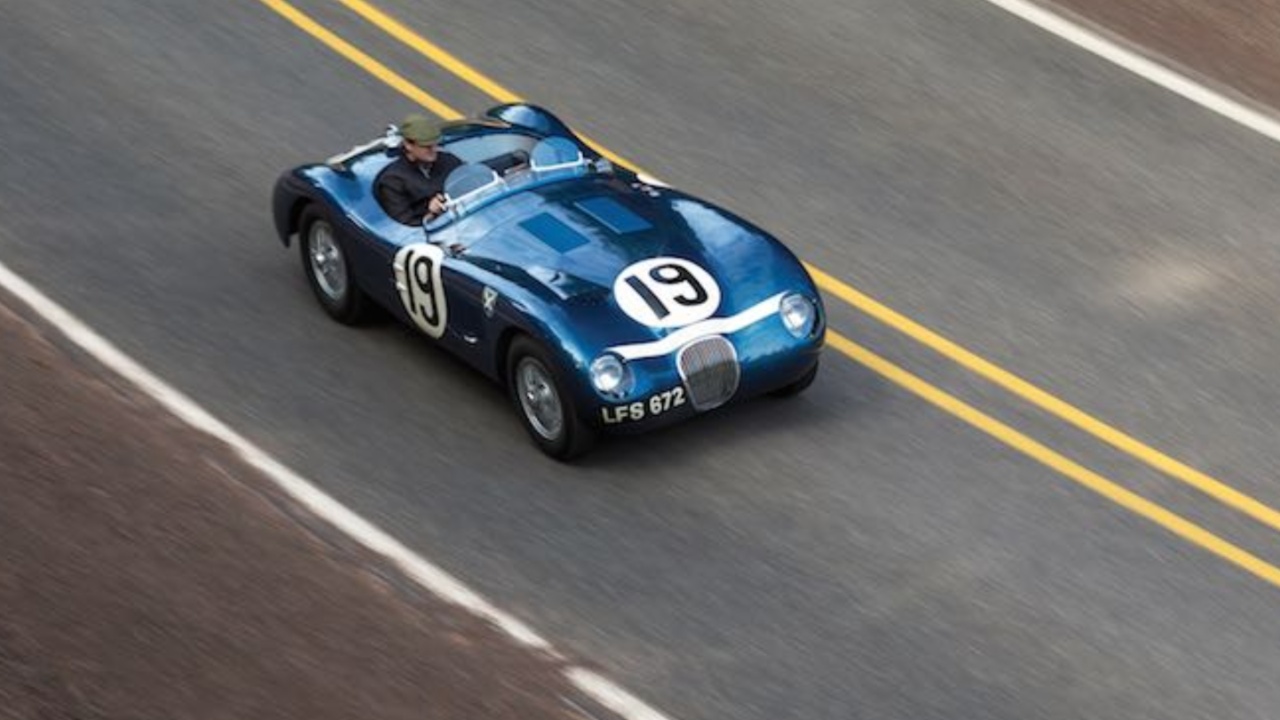
8. 1953 Jaguar C-Type Works Lightweight
In the early 1950s, Jaguar’s racing program produced a machine that would permanently alter sports car competition. The Jaguar C-Type Works Lightweight was not just another Le Mans entrant, but a purpose-built factory weapon that combined radical engineering with extreme rarity. Today, it is valued in the multimillion-dollar range, with auction results exceeding $13 million and, in some cases, climbing beyond $20 million.
Only three Works Lightweight versions were ever constructed, making it one of the rarest factory racing Jaguars in existence. Built specifically for the 1953 endurance racing season, the car was designed by Malcolm Sayers with a focus on aerodynamic efficiency. Its lightweight aluminum body reduced drag significantly, allowing higher sustained speeds on long straights while improving stability at race pace.
Power came from a 3.4-liter straight-six engine producing roughly 220 horsepower, paired with a chassis tuned for endurance racing. While the engine output was strong for its time, the true breakthrough came from its braking system. The C-Type was among the first racing cars to use disc brakes, giving it a decisive advantage in braking performance and fundamentally changing how drivers approached corner entry and race strategy.
The Works Lightweight played a central role in Jaguar’s dominant performance at the 1953 24 Hours of Le Mans, where the manufacturer secured first, second, and fourth positions. This result reinforced Jaguar’s reputation as a serious global competitor and demonstrated the effectiveness of its engineering innovations on the world stage.
After its factory career, the car continued racing with private teams, including Ecurie Ecosse, where it achieved multiple victories and further established its competition pedigree. Over the decades, it passed through several notable collectors and was carefully restored to its original specification.
Today, the C-Type Works Lightweight stands as a landmark in racing history, celebrated for its innovation, scarcity, and lasting influence on modern motorsport design.
- Engine: 3.4L Inline-6 (DOHC, triple Weber carburetors)
- Horsepower: 220 hp @ 3,900 rpm
- Torque: 220 lb-ft
- Length: 157 in (3,988 mm)
- Width: 64.5 in (1,638 mm)
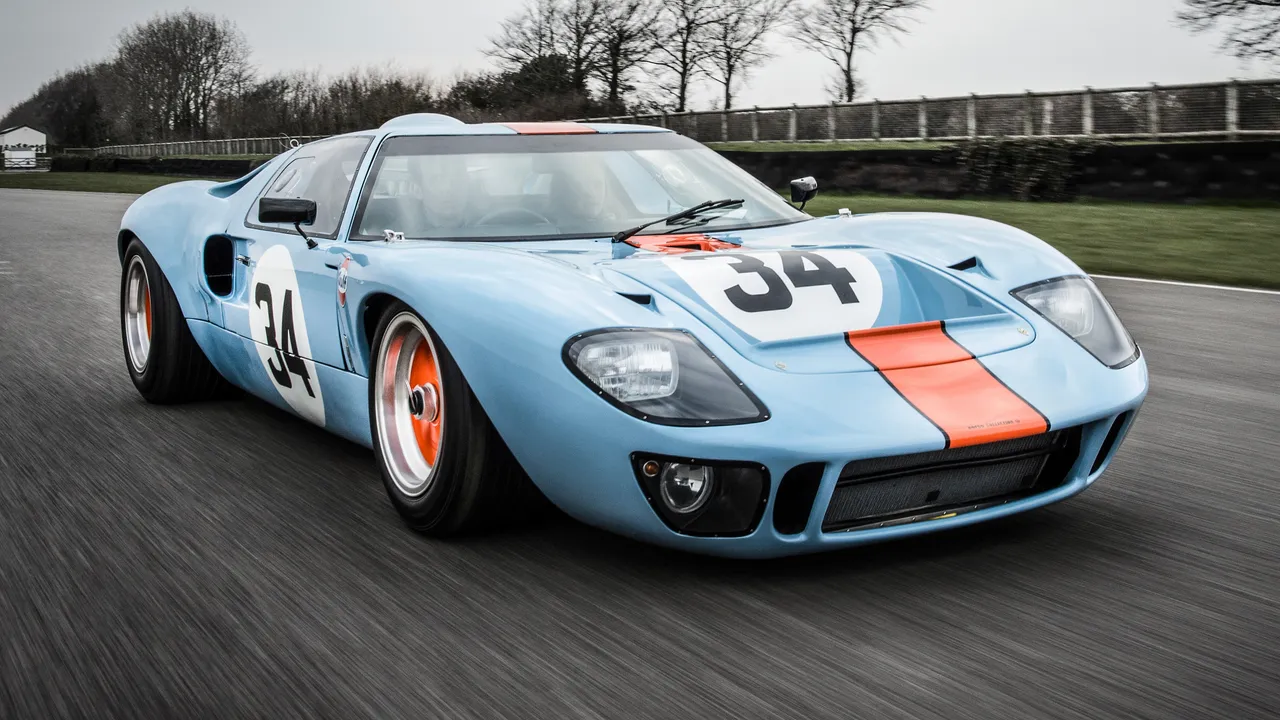
9. 1968 Ford GT40 Lightweight
Before it became a collector icon worth around $11 million, the Ford GT40 was built as a weapon of war on wheels. It was Ford’s answer to Ferrari’s dominance at Le Mans, created out of corporate frustration and turned into one of the most successful endurance racers in history. The lightweight versions represent the most focused and rare evolution of that mission.
The GT40 program began after Ford’s failed attempt to purchase Ferrari, a move that triggered Henry Ford II to beat the Italian marque on the track instead. Early development was chaotic, with repeated mechanical failures at Le Mans in 1964 and 1965. However, continuous engineering refinement transformed the GT40 into a race-winning platform. By 1966, Ford achieved a historic 1-2-3 finish at Le Mans, ending Ferrari’s winning streak and reshaping endurance racing history.
The lightweight variants built in 1968 pushed the concept further. Engineers stripped mass using thinner steel, aluminum components, and carefully revised construction methods. These changes improved acceleration, braking, and endurance over long-distance races. Combined with a high-displacement Ford V8 engine and refined aerodynamics, the car became one of the most capable prototypes of its era.
Beyond engineering, the GT40 became a cultural symbol. Its Gulf Oil racing colors, bright blue and orange, made it instantly recognizable on the global stage. Drivers like Jacky Ickx helped cement its reputation through dramatic victories and legendary performances at Le Mans.
What makes the GT40 Lightweight especially valuable today is not just its performance, but its historical role. It represents the moment American engineering broke European dominance in endurance racing. That legacy, combined with extreme scarcity and iconic status, places it among the most desirable racing cars ever built.
- Engine: 3.4L Inline-6 (naturally aspirated)
- Horsepower: 220 hp
- Torque: 220 lb-ft
- Length: 157 in (3,988 mm)
- Width: 64.5 in (1,638 mm)
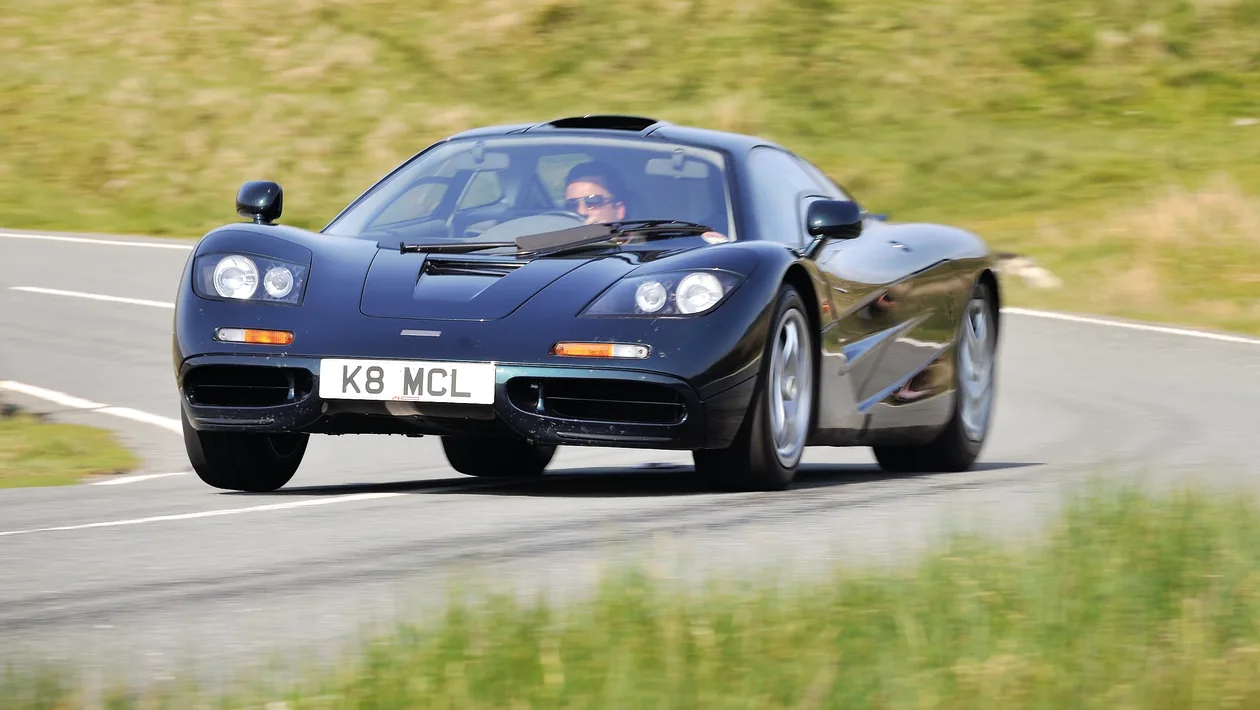
10. McLaren F1 (1994)
Valued today at over $20 million, the 1994 McLaren F1 remains one of the most influential and desirable performance cars ever built. Designed by Gordon Murray, it was created with a single-minded goal: to deliver the purest and most engaging driving experience possible. Only 64 road-going versions were produced, making it exceptionally rare, while its record-breaking performance and uncompromising engineering philosophy pushed it far beyond the supercars of its time.
At its core, the F1 is powered by a bespoke 6.1-liter BMW Motorsport V12 engine, producing enormous power with a naturally aspirated, linear delivery. This engine helped the car reach a top speed of 386 km/h (240 mph), a record it held for years. Unlike modern performance machines, the F1 deliberately avoids electronic driver aids such as traction control or ABS, preserving a direct mechanical connection between driver and machine.
Murray’s design philosophy centered on extreme weight reduction and intelligent packaging. The car weighs around 1,000 kg, achieved through extensive use of carbon fiber and Formula One-inspired construction techniques. One of its most famous innovations is the central driving position, flanked by two passenger seats, giving the driver a commanding, race-inspired viewpoint. The gold-lined engine bay reflects heat, highlighting the obsessive attention to engineering detail.
On the road, the McLaren F1 delivers an experience defined by immediacy and intensity. The V12 responds instantly, producing a dramatic surge of acceleration accompanied by a distinctive, rising engine note. The manual six-speed gearbox, combined with a light clutch and precise steering, demands engagement and skill, rewarding drivers with unmatched feedback and control. Despite its performance, it remains surprisingly usable in everyday driving conditions, capable of smooth, relaxed cruising when needed.
Its motorsport credentials further cement its legacy. In 1995, the F1 achieved a remarkable victory at the 24 Hours of Le Mans in its debut attempt, proving its capabilities on the world’s toughest endurance stage. This rare combination of road-car usability, race-winning pedigree, and analog purity is what sets it apart.
More than just a fast car, the McLaren F1 is widely regarded as the ultimate expression of mechanical driving excellence and remains a benchmark against which all modern supercars are measured.
- Engine: 6.1L BMW S70/2 V12 (naturally aspirated)
- Horsepower: 618 hp @ 7,400 rpm
- Torque: 479 lb-ft @ 5,600 rpm
- Length: 168.8 in (4,288 mm)
- Width: 71.6 in (1,820 mm)
Looking across these remarkable automobiles, a clear pattern emerges where rarity, innovation, and historical impact combine to shape extraordinary value. Each vehicle carries a distinct legacy tied to motorsport triumphs, design breakthroughs, or engineering achievements that left a lasting mark on the automotive world.
Their multi-million-dollar prices are a reflection of more than just condition or performance, representing instead a deep appreciation for their place in history. From handcrafted European grand tourers to revolutionary racing prototypes, these cars continue to attract collectors who seek pieces of automotive heritage that cannot be replaced or reproduced.
Even as technology advances rapidly, these machines remain benchmarks of creativity and mechanical excellence from their respective eras. They are preserved and celebrated because they capture defining moments when engineering vision and craftsmanship came together to produce some of the most important automobiles ever built.
Also read: 5 Cars That’ll Cost You Under $400/Month