Kawasaki’s history is shaped by motorcycles that once played important roles in their respective eras before gradually fading from everyday discussion. Some were built with bold engineering ideas, others focused on reliability and long-distance practicality, and a few attempted to redefine what their categories could be. As newer generations arrived with better performance, updated technology, and clearer purpose, many earlier models were pushed out of focus.
The motorcycles discussed here bring attention back to eight Kawasaki machines that are now often overlooked despite their contributions. They span multiple decades and cover sport-tourers, retro-inspired middleweights, entry-level sportbikes, cruisers, and dual-sport machines. Each reflects the design priorities of its time, whether that meant speed, comfort, durability, or affordability. Some achieved strong balance and real-world usability, while others were held back by weight, outdated systems, or unclear positioning against competitors. Together, they show how Kawasaki explored different ideas across multiple segments while continuously refining its approach to performance and practicality.
1. Kawasaki Concours (ZG1000)
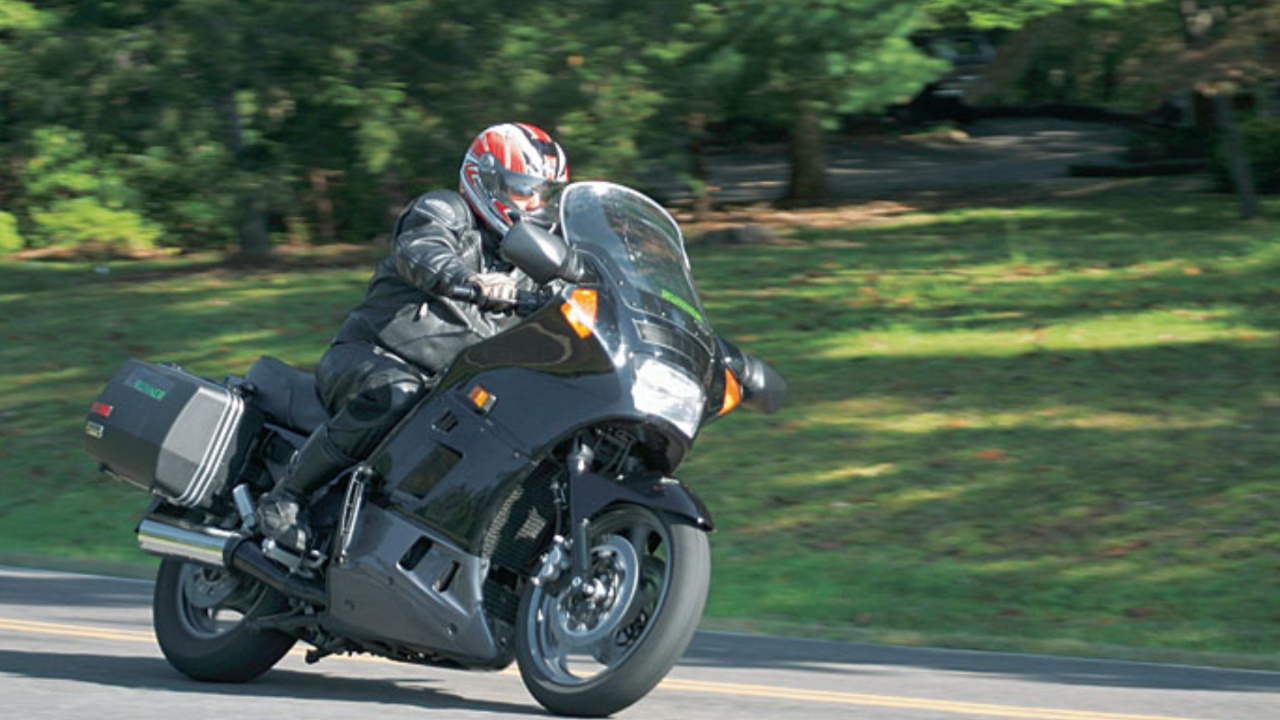
The Kawasaki Concours (ZG1000), produced from 1986 to 2006, was designed to dominate the sport-touring motorcycle market by combining performance, comfort, and long-distance practicality. Powered by a Ninja-derived 997cc inline-four engine, the Concours offered strong performance, delivering around 95 horsepower and consistent torque across a wide rev range. This made the motorcycle highly capable for highway cruising and extended road trips, while its shaft drive and modified engineering improved reliability and reduced maintenance for touring riders.
One of the bike’s most celebrated features was its touring capability. The Concours came with a massive 7.5-gallon fuel tank, enabling riders to travel nearly 300 miles between refueling stops when combined with respectable fuel efficiency. Comfort was another priority, as Kawasaki equipped the motorcycle with a triple-density foam seat for long-distance support and extensive weather protection through a large fairing. Practicality also stood out, thanks to spacious saddlebags, locking front storage compartments, and a rear luggage rack that made carrying gear for long journeys remarkably easy.
Despite its strengths, the ZG1000 developed a reputation for serious thermal management issues. The motorcycle’s large, dense fairing trapped engine heat, causing excessive warmth around the rider’s legs and cockpit. Poor airflow sometimes led to overheating concerns, warped components, premature valve wear, and cooling system problems, making long rides uncomfortable and frustrating for some owners. These engineering shortcomings became one of the model’s most criticized weaknesses.
Over its 20-year production run, Kawasaki made only limited updates, causing the bike to appear outdated compared to increasingly advanced sport-tourers. Enthusiasts generally divide the ZG1000 into three generations. Early models (1986–1993) suffered from soft suspension, weaker braking systems, and handling limitations. Mid-generation models (1994–1999) introduced major improvements, including a larger 17-inch front wheel, upgraded suspension, and better brakes, significantly improving stability and safety. The final generation (2000–2006) is widely viewed as the best, offering improved ergonomics, digital instrumentation, larger carburetors, and refined engine reliability.
Although overshadowed by the faster and more modern Concours 14, the late-generation ZG1000 remains respected as a durable, affordable, and highly practical long-distance touring motorcycle.
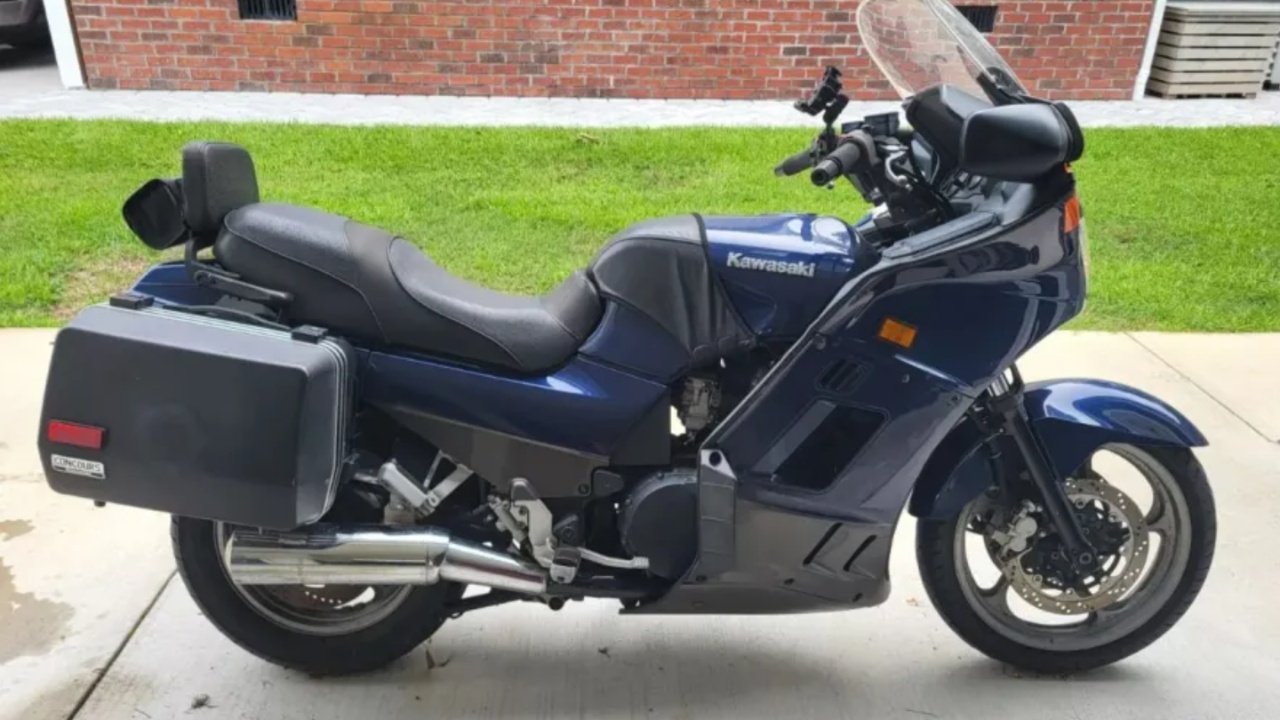
- Engine: 997cc liquid-cooled transverse inline-4, DOHC, 16-valve
- Horsepower: 95–110 hp @ 6,500–9,500 rpm
- Torque: 65–72.3 lb-ft @ 6,000–6,500 rpm
- Length: 90.2 in (2,290 mm)
- Width: 36.6 in (930 mm)
2. Kawasaki Eliminator (ZL900)
The Kawasaki Eliminator ZL900, produced only from 1985 to 1986, was an ambitious attempt to redefine the cruiser segment by blending drag-bike styling with sportbike performance. Designed to compete in the emerging “muscle bike” market and challenge rivals such as the Yamaha V-Max, the Eliminator used a modified version of Kawasaki’s legendary 908cc Ninja 900R inline-four engine.
Unlike traditional cruisers that relied on V-twin or V-four engines with strong low-end torque, the Eliminator featured a high-revving powerplant adapted for stronger midrange performance through revised camshafts and smaller carburetors. The result was a motorcycle capable of impressive acceleration and thrilling straight-line speed.
Kawasaki engineered the Eliminator with a long, low chassis optimized for drag-style launches. Its stretched 62-inch wheelbase, low 27-inch seat height, shaft-drive system, and exceptionally wide rear tire helped maximize stability and traction during rapid acceleration. Although heavier than the Ninja and less capable in outright quarter-mile performance, the Eliminator excelled in stoplight-to-stoplight riding and delivered strong real-world torque for urban use.
Despite its performance strengths, the ZL900 struggled with a serious identity crisis. Traditional cruiser riders disliked its sporty ergonomics and high-revving engine character, while sportbike enthusiasts found its heavy weight and long-wheelbase handling too limiting for aggressive cornering.
Its drag-bike suspension setup also made rough roads uncomfortable, and the bike developed a reputation for mechanical quirks, including finicky carburetors, cooling system concerns, and starter clutch issues. Because of its short production run, replacement parts later became difficult to source.
Though considered commercially unsuccessful, the Eliminator is now viewed as a misunderstood cult classic and a motorcycle ahead of its time. Arriving years before mainstream power cruisers gained popularity, it pioneered a category later embraced by bikes such as the V-Max and performance-focused cruisers.
Overshadowed by Kawasaki’s more conventional Vulcan line, the ZL900 remains admired by collectors for its unique styling, 1980s muscle-bike appeal, and raw riding excitement, though it is rarely considered practical for everyday use.
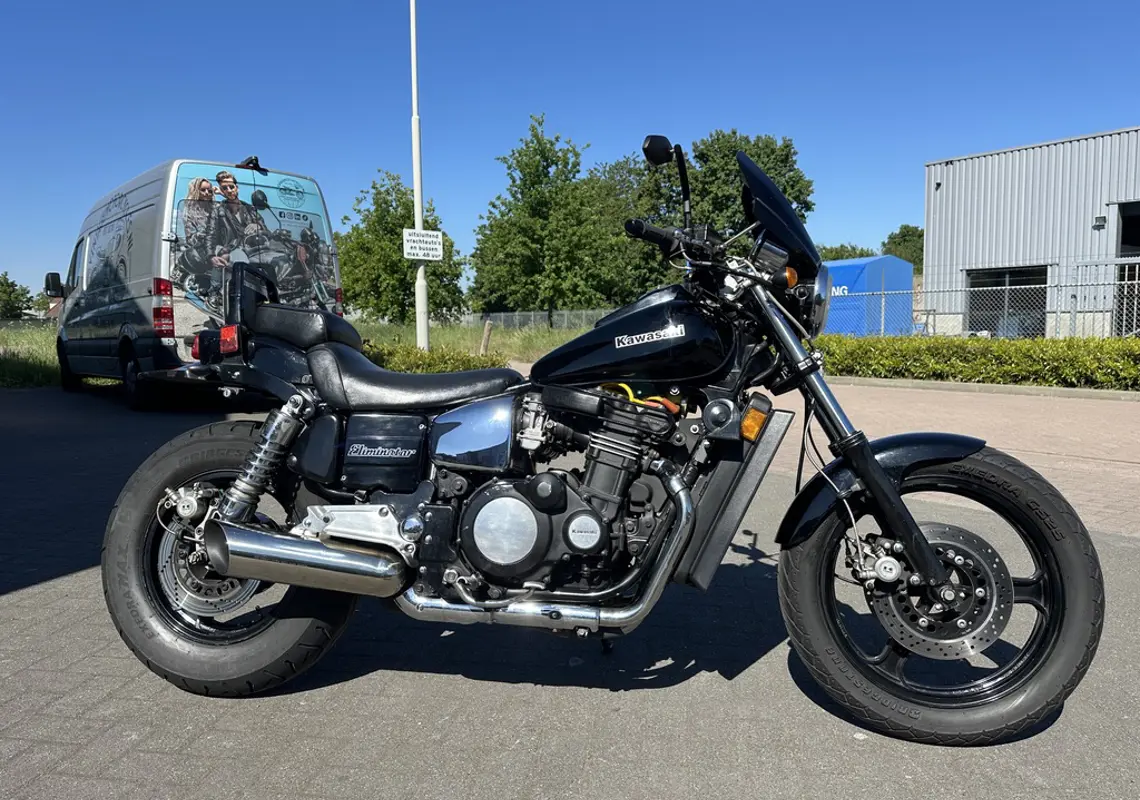
- Engine: 908cc liquid-cooled inline-4, DOHC, 16-valve
- Horsepower: 105 hp @ 9,500 rpm
- Torque: 62.1 lb-ft (85.3 Nm) @ 8,000 rpm
- Length: 89.2 in (2,265 mm)
- Width: 33.1 in (840 mm)
3. Kawasaki Vulcan 800 Drifter
The Kawasaki Vulcan 800 Drifter (VN800) was a bold and unconventional cruiser that blended vintage American motorcycle styling with dependable Japanese engineering. Introduced as a tribute to the iconic 1940s Indian Chief, the Drifter stood out with massive deep-skirted fenders, a solo-style seat, hidden rear suspension, and a blacked-out frame that recreated the appearance of a classic hardtail cruiser. Its striking retro design made it one of Kawasaki’s most visually distinctive motorcycles, though its unusual styling also divided opinion among riders.
Beneath its nostalgic appearance, the Drifter featured a reliable 805cc liquid-cooled V-twin engine shared with the standard Vulcan 800 lineup. Producing roughly 50–60 horsepower depending on the market, the motorcycle delivered smooth and predictable performance with enough torque for relaxed cruising and highway riding.
The V-twin engine provided a pleasant rumble and flexible power delivery, making the bike lively around town while still capable of comfortable long-distance travel. With a low seat height of around 29.9 inches and relatively narrow dimensions, it was also accessible and manageable for shorter riders or those new to cruisers.
Despite its strengths, the Vulcan 800 Drifter faced criticism that limited its mainstream success. The same deep, dramatic fenders that defined its appearance also reduced ground clearance, making aggressive cornering difficult and causing floorboards to scrape on tight turns. Braking performance was another weakness, as the bike relied on a single front disc brake that many riders considered underpowered for its weight and cruising intentions. Some plastic body components also developed vibrations or rattling over time.
The Drifter’s biggest challenge, however, was its polarizing identity. Many traditional cruiser buyers were hesitant to embrace a Japanese motorcycle that so openly imitated classic American styling, while shifting cruiser trends in the early 2000s moved toward more modern and aggressive designs. As a result, the bike quietly disappeared from Kawasaki’s lineup. Today, the Vulcan 800 Drifter is remembered as a reliable, charming, and highly unique cruiser that appeals strongly to retro enthusiasts and collectors seeking vintage character without vintage maintenance.
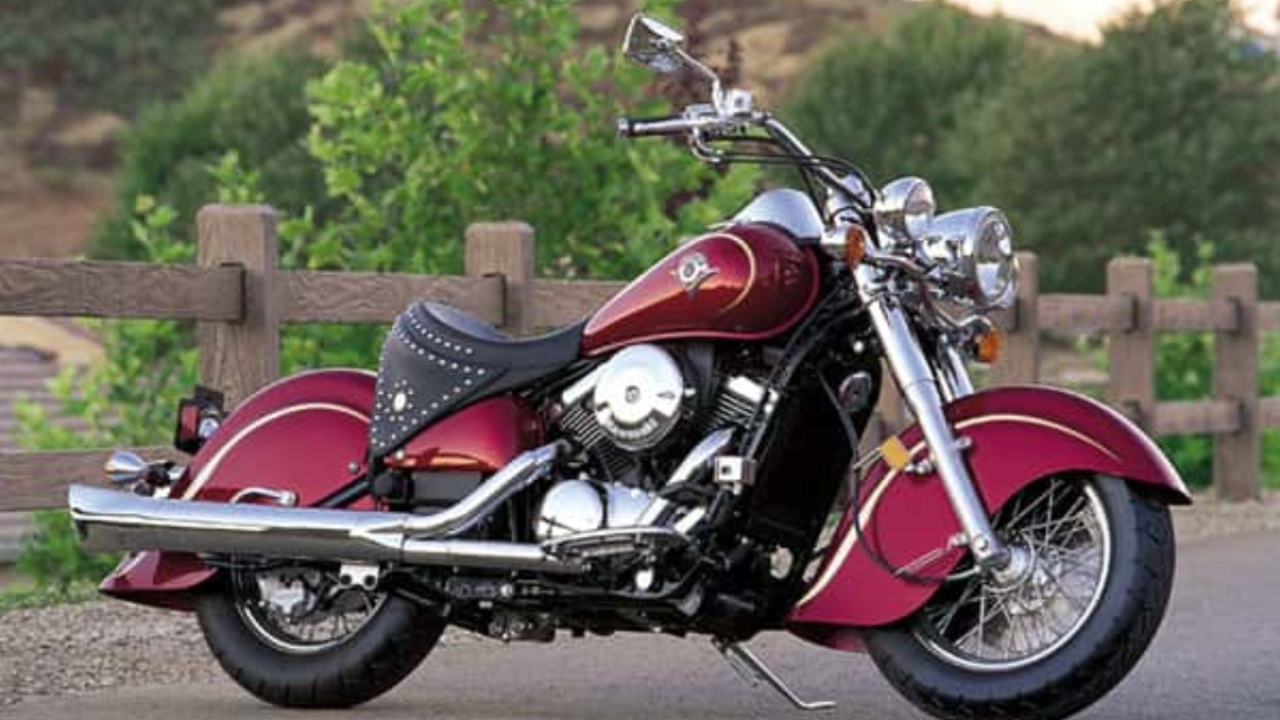
- Engine: 805cc liquid-cooled 55° V-twin, SOHC, 4-valve per cylinder
- Horsepower: 56 hp @ 7,000 rpm
- Torque: 47.2 lb-ft (64 Nm) @ 3,300 rpm
- Length: 98.0 in (2,490 mm)
- Width: 39.6 in (1,006 mm)
4. Kawasaki Ninja 300
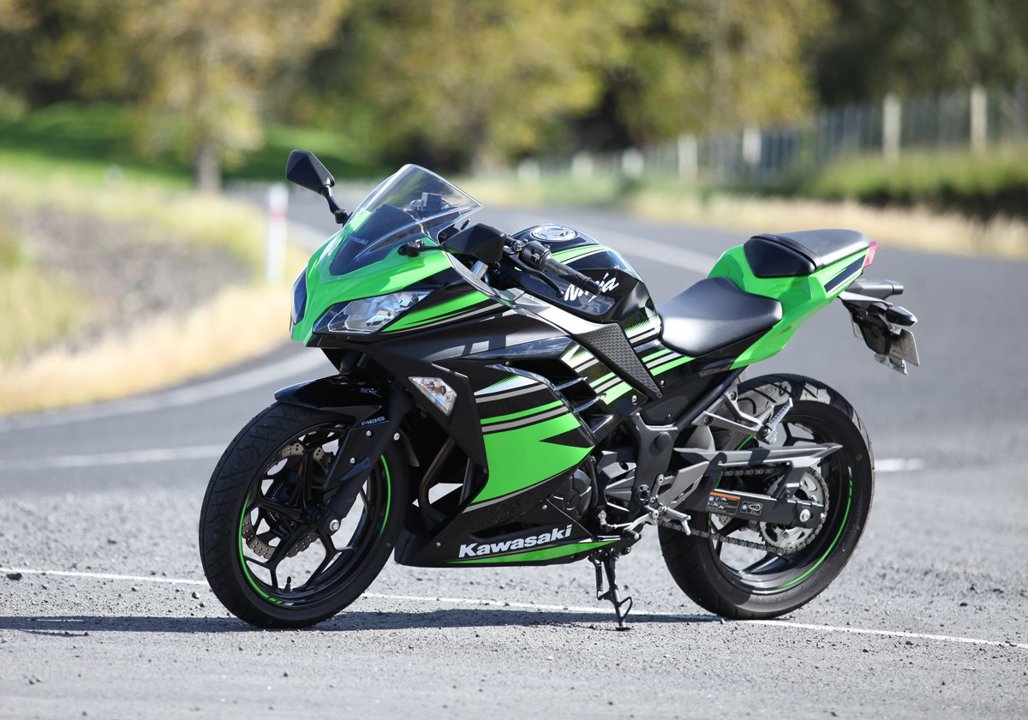
The Kawasaki Ninja 300, produced from 2013 to 2017, was a highly influential lightweight sportbike that successfully bridged the gap between beginner-friendly motorcycles and full-sized supersports.
Replacing the long-running Ninja 250, it featured aggressive styling inspired by Kawasaki’s larger Ninja models, a larger 296cc parallel-twin engine, fuel injection, and improved refinement. With approximately 39 horsepower and a lightweight chassis, the Ninja 300 offered approachable performance while remaining exciting enough for experienced riders to enjoy on winding roads and highways.
One of the Ninja 300’s greatest strengths was its accessibility. The motorcycle delivered smooth power, manageable handling, and a comfortable riding position that made it ideal for new riders learning throttle control, cornering, and shifting techniques.
Kawasaki also introduced an assist-and-slipper clutch, reducing clutch effort and preventing rear-wheel instability during aggressive downshifts. Compared to the Ninja 250, the 300 offered stronger midrange power, smoother highway performance, better fuel efficiency, and improved suspension refinement, making it feel more stable and confidence-inspiring.
Despite these advantages, the Ninja 300 developed a mixed reputation due to several reliability and hardware concerns. A major recall involving a faulty engine control unit (ECU) caused some motorcycles to stall unexpectedly during deceleration, creating potentially dangerous riding situations.
Owners also commonly reported soft or “spongy” front brakes, leaking fork seals, rattling bodywork clips, and relatively fragile fairing hardware. While braking performance remained adequate for everyday riding, many riders felt it lagged behind the bike’s otherwise modern improvements.
The Ninja 300 also became a victim of rapid technological progress. Its analog-digital instrument cluster, basic electronics, and modest performance were quickly eclipsed by the more powerful and refined Ninja 400, followed later by the Ninja 500. These newer motorcycles offered stronger acceleration, better low-end torque, updated technology, and greater versatility.
Although no longer the benchmark beginner sportbike, the Ninja 300 remains an important stepping stone in Kawasaki’s lineup. Today, it is remembered as a stylish, learner-friendly motorcycle that balanced excitement and affordability, even if reliability frustrations and stronger successors eventually overshadowed its legacy.
- Engine: 296cc liquid-cooled parallel-twin, DOHC, 8-valve
- Horsepower: 39 hp @ 11,000 rpm
- Torque: 19.9 lb-ft (27 Nm) @ 10,000 rpm
- Length: 79.3 in (2,015 mm)
- Width: 28.1 in (715 mm)
Also read: 5 Cars Where Trade-In Beats Private Sale vs 5 Where It Doesn’t
5. Kawasaki GPz1100
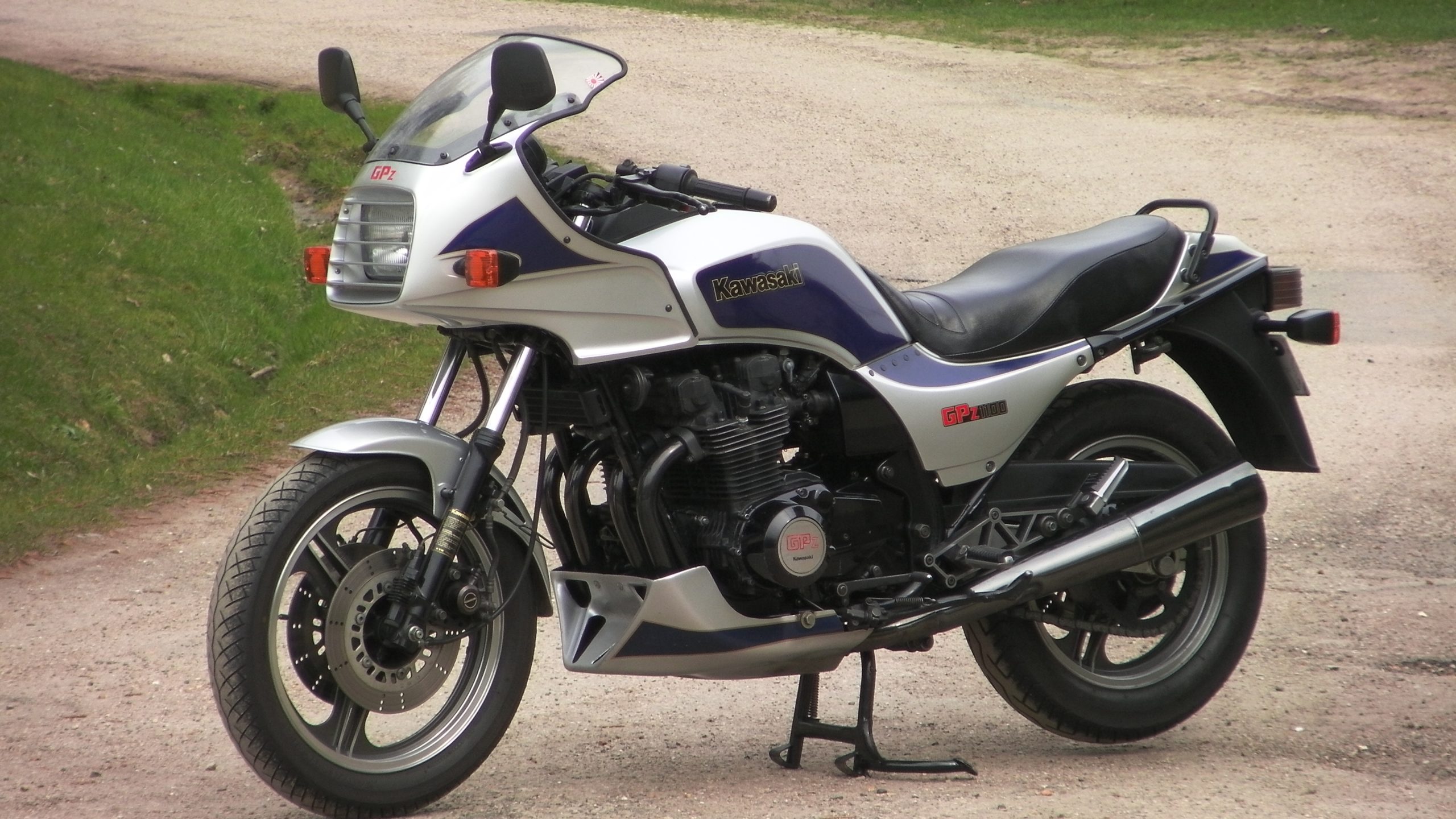
The Kawasaki GPz1100 was one of the most powerful and technologically ambitious motorcycles of the early 1980s, designed to push performance boundaries during the golden era of superbikes. Produced initially between 1981 and 1983, the motorcycle represented the final evolution of Kawasaki’s legendary air-cooled inline-four platform before the revolutionary Ninja generation arrived.
Featuring an advanced 1,089cc four-cylinder engine and early digital fuel injection (DFI), the GPz1100 delivered astonishing straight-line performance, becoming one of the first production motorcycles capable of exceeding 150 mph. Combined with its aggressive “Firecracker Red” paint scheme and sporty styling, it quickly earned a reputation as a high-speed icon.
The GPz1100’s greatest strength was its engine performance. By 1983, Kawasaki refined the bike to produce a claimed 120 horsepower, giving it explosive top-end acceleration and remarkable highway speed for the time.
Aerodynamic improvements and revised bodywork further enhanced stability at high speeds, allowing riders to comfortably tuck behind the fairing during aggressive riding. In an era defined by horsepower wars, the GPz1100 represented Kawasaki’s final and most extreme expression of the air-cooled superbike formula.
Despite its capabilities, the motorcycle struggled to achieve widespread success. Early fuel injection systems were still immature and often suffered from cold-start issues, inconsistent throttle response, and difficult servicing.
The bike’s handling also drew criticism, particularly on early models, which felt heavy and unstable at lower speeds or during aggressive cornering. Suspension and braking technology lagged behind the engine’s immense power, creating a machine that excelled in straight-line speed but felt less confidence-inspiring in tighter riding situations.
The GPz1100 also suffered from unfortunate timing. It faced fierce competition from motorcycles such as Suzuki’s GS/GSX1100, Yamaha’s XS1100, and Honda’s six-cylinder CBX, all of which attracted considerable media attention.
More importantly, Kawasaki’s groundbreaking 1984 GPz900R Ninja soon overshadowed it with lighter weight, superior handling, and modern liquid-cooling. Today, the GPz1100 survives as a rare and respected collector’s motorcycle remembered for its speed, technical ambition, and role in Kawasaki’s performance history.
- Engine: 1,089cc air-cooled DOHC inline-4 (1981–1985) / 1,052cc liquid-cooled DOHC inline-4 (1995–1998)
- Horsepower: 105–120 hp (1st gen) / 97–125 hp (2nd gen)
- Torque: 70–74 lb-ft (95–100 Nm) (1st gen) / 65–74 lb-ft (89–100 Nm) (2nd gen)
- Length: 89.2 in (2,265 mm) (1st gen) / 85.8 in (2,180 mm) (2nd gen)
- Width: 30.9 in (785 mm) (1st gen) / 28.3 in (720 mm) (2nd gen)
6. Kawasaki KLR 650
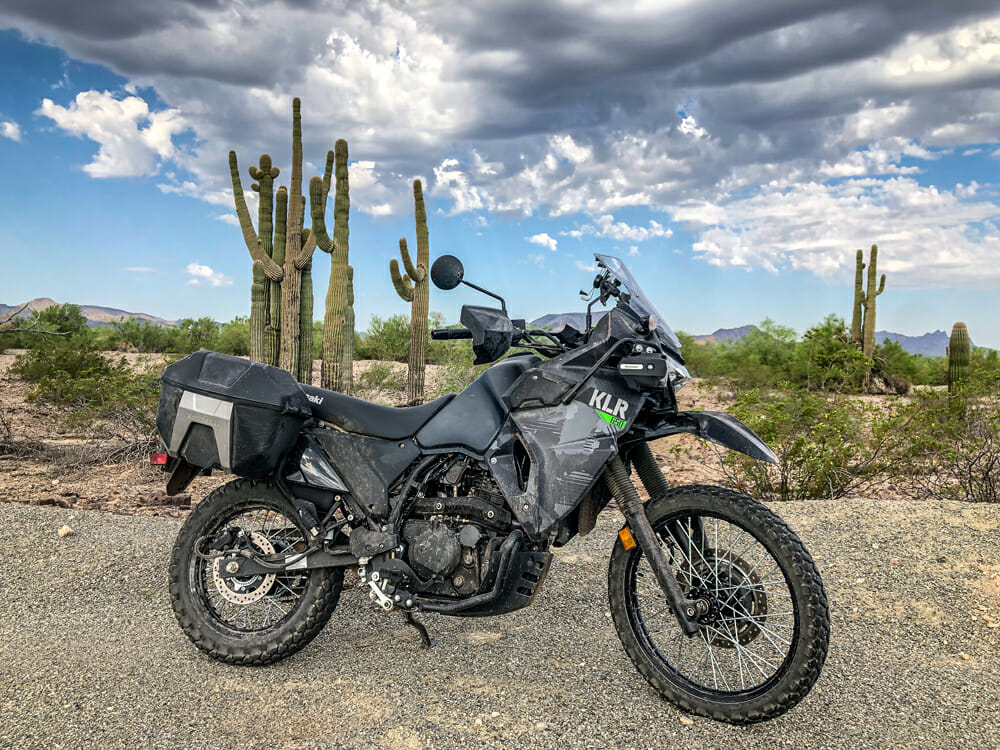
The Kawasaki KLR 650 is one of the most iconic dual-sport motorcycles ever produced, known worldwide for its extreme simplicity, rugged durability, and unmatched long-distance reliability. Built as a true “go anywhere” machine, it has earned a loyal following among global adventurers, commuters, and off-road explorers. Its large 6.1-gallon fuel tank, easy maintenance design, and ability to run on low-octane fuel in remote regions make it a dependable travel companion in nearly any environment.
At the heart of the KLR 650 is a 652cc liquid-cooled single-cylinder engine that produces around 37 horsepower. While this configuration prioritizes reliability over speed, it also exposes the bike’s biggest weakness: performance. Weighing roughly 450 pounds or more, depending on the version, the KLR feels heavy and underpowered by modern standards.
On highways, the engine becomes buzzy and strained at sustained speeds, while off-road, its mass reduces agility compared to lighter, more modern adventure bikes. The braking system and suspension, especially on older generations, also reflect its utilitarian design rather than a performance focus.
Despite these limitations, the KLR 650 has achieved legendary status because of its “bulletproof” engineering. For decades, it was known for being nearly impossible to destroy with proper maintenance. Its simple construction and lack of complex electronics made it easy to repair in remote areas, and its massive aftermarket support further enhanced its long-term practicality. Riders value it as a cost-effective alternative to expensive adventure motorcycles, especially for long-distance or round-the-world travel.
Over time, however, newer adventure twins with more power, better suspension, and advanced electronics have exposed their aging design. Earlier carbureted versions and outdated components, such as the infamous balancer chain tensioner (“doohickey”), also contributed to its reputation for being mechanically basic.
Kawasaki has modernized the platform in recent years with the latest generation introducing fuel injection, improved braking, stronger frame design, and better comfort features. Even so, the KLR 650 remains a paradox: a slow, heavy, and simple machine that is simultaneously one of the most trusted and capable long-distance motorcycles ever built.
- Engine: 652cc liquid-cooled DOHC single-cylinder (fuel-injected, 40 mm throttle body)
- Horsepower: ~36–40 hp @ 6,000–6,100 rpm
- Torque: 35.4–39.1 lb-ft (48–53 Nm) @ ~4,500 rpm
- Length: 89.8 in (2,280 mm)
- Width: 38.2 in (970 mm)
7. Kawasaki Z650 RS
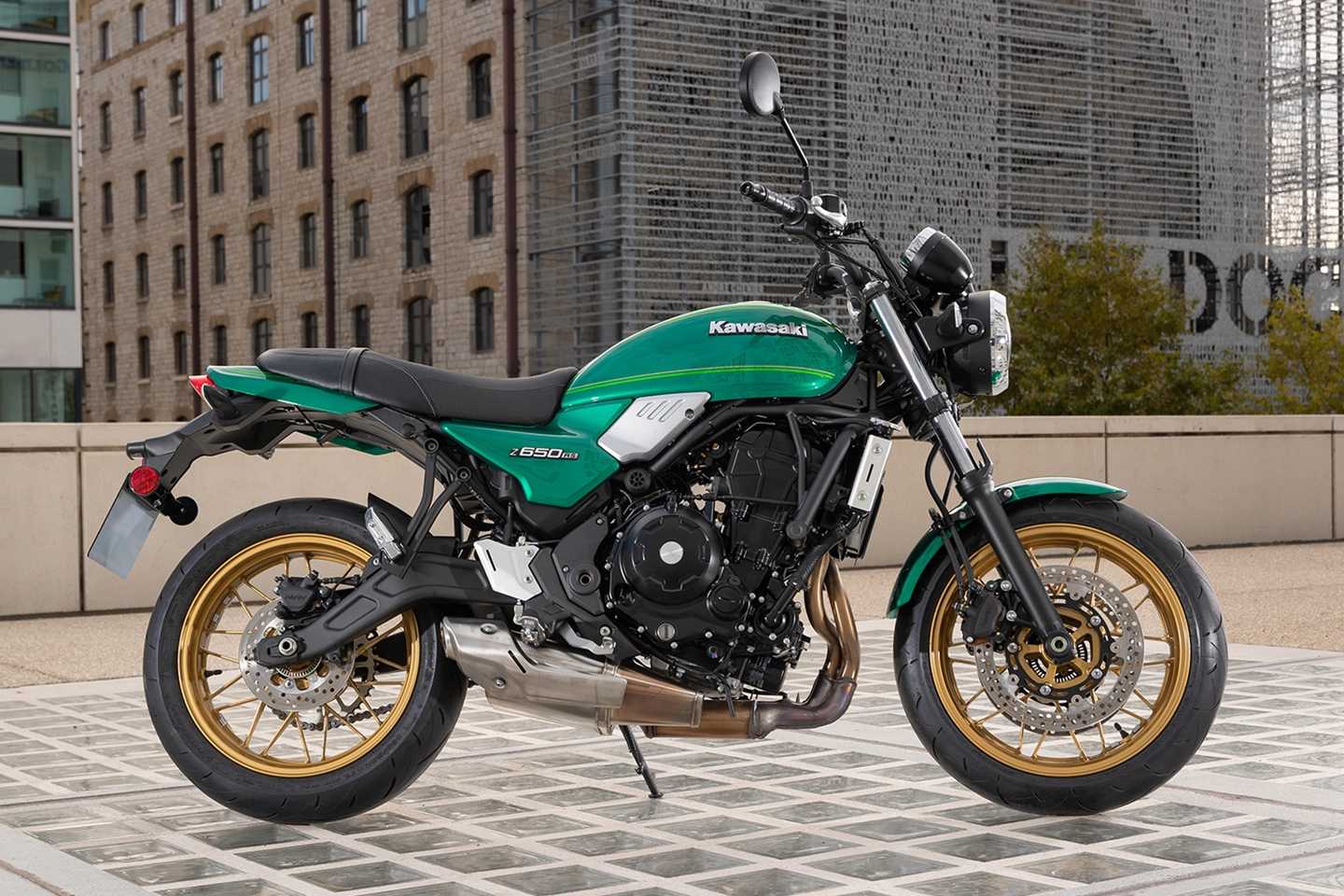
The Kawasaki Z650 RS is a middleweight motorcycle that merges classic 1970s-inspired design with the proven performance of a modern 649cc parallel-twin engine. It features a carefully styled retro package that includes a teardrop fuel tank, round LED headlamp, dual analogue dials, and spoke-style wheels, all designed to reflect Kawasaki’s heritage models.
Power comes from a 67-horsepower twin that delivers smooth, predictable performance suited to commuting, weekend rides, and light touring. The bike is light, approachable, and easy to manage, making it appealing to both new and experienced riders.
Even with its strong qualities, the Z650 RS is frequently overlooked in the middleweight segment. Many buyers gravitate toward more powerful machines like the Z900 RS or competitors offering more advanced electronics and aggressive performance.
Its relatively simple feature set contributes to this perception, with basic ABS, a traditional instrument cluster, and no modern connectivity features. The engine, while dependable and efficient, produces a modest exhaust note and can feel slightly buzzy at higher speeds, which reduces its emotional appeal compared to larger displacement or multi-cylinder rivals.
Where the Z650 RS stands out is in its real-world usability. The lightweight chassis, just over 400 pounds, allows easy maneuvering in traffic and confident cornering on twisty roads. Its upright seating position and well-cushioned seat make it comfortable for longer rides without causing fatigue.
Built on the proven Z650 platform, the chassis provides stable and predictable handling that feels controlled without being intimidating. Practical touches such as an assist-and-slipper clutch and strong fuel economy make daily riding convenient and cost-effective.
Reliability is a strong advantage, with the parallel-twin engine tracing its roots to Kawasaki’s long-established and durable twin-cylinder family. Maintenance requirements remain straightforward, and running costs are relatively low. While it does not rely on modern electronics or advanced rider aids, it compensates with simplicity and mechanical dependability.
The Z650 RS delivers a relaxed, enjoyable riding experience wrapped in classic styling, even though it continues to sit in the shadow of more attention-grabbing motorcycles in its category.
- Engine: 649cc liquid-cooled parallel-twin, DOHC
- Horsepower: 67 hp @ 8,000 rpm
- Torque: 65.7 Nm (48.5 lb-ft) @ 6,500 rpm
- Length: 81.3 in (2,065 mm)
- Width: 31.5 in (800 mm)
8. Kawasaki Ninja 650
The Kawasaki Ninja 650 is a highly versatile middleweight motorcycle designed to balance everyday practicality with engaging sporty performance. Positioned as an entry point into the Ninja family, it uses a 649cc liquid-cooled parallel-twin engine that produces around 67–69 horsepower and strong midrange torque.
While it lacks the high-revving drama and aggressive sound of inline-four supersports, it compensates with smooth, predictable power delivery, excellent fuel efficiency, and low maintenance costs, making it ideal for commuting, beginner riders, and everyday use.
One of the Ninja 650’s greatest strengths is its usability. Its upright yet slightly sporty riding position, low seat height, and lightweight chassis make it easy to handle in city traffic and comfortable on longer rides. The bike feels stable and confidence-inspiring, while still offering enough agility for weekend canyon roads. A slipper and assist clutch further improves ride quality by reducing lever effort and ensuring smoother downshifts, enhancing its beginner-friendly nature.
Modern versions of the Ninja 650 include useful features such as ABS, LED lighting, and a TFT display with smartphone connectivity. These additions improve convenience without overwhelming the rider with complex electronics. Fuel economy is also a strong point, with the engine delivering efficient mileage suitable for daily commuting and long-distance travel.
However, the Ninja 650 is not without criticism. Its suspension setup is relatively basic, with non-adjustable front forks and a simple rear shock that can feel soft or harsh when pushed hard. Braking performance is adequate but not exceptional, relying on standard calipers and discs. Some riders also note mild vibration at higher rev ranges and a lack of emotional character in the engine note, especially compared to rivals like Yamaha’s MT-07 or Suzuki’s SV650.
Despite these drawbacks, the Ninja 650 remains one of the most well-rounded motorcycles in its class. It offers a blend of comfort, reliability, affordability, and real-world performance that few competitors can match. While it may not deliver track-focused excitement, it succeeds as a friendly, capable, and dependable machine suited for a wide range of riders and riding conditions.
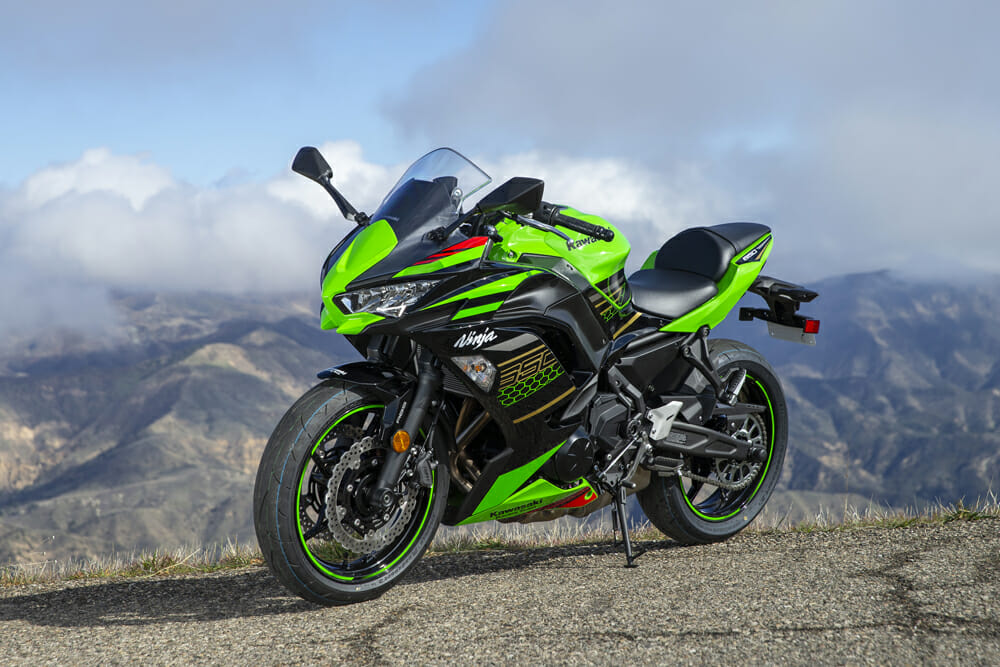
- Engine: 649cc liquid-cooled parallel-twin, DOHC, 8-valve
- Horsepower: 67 hp @ 8,000 rpm
- Torque: 47 lb-ft (63.7 Nm) @ 6,700 rpm
- Length: 80.9 in (2,055 mm)
- Width: 29.1 in (740 mm)
Looking at these motorcycles together shows how uneven progress in motorcycle design can be. Certain models focused heavily on durability and long-distance capability, such as the KLR 650 and Concours, while others, like the GPz1100 and Eliminator ZL900, pushed performance boundaries but were quickly overtaken by newer and more refined machines. Some, including the Ninja 650 and Z650 RS, struck a better balance between usability and everyday riding, yet still ended up overshadowed by more specialized or better-equipped rivals.
Across all eight motorcycles, the common theme is transition rather than failure. Each one served a purpose during its time before being replaced by designs that better matched changing rider expectations and regulations. As engineering advanced, older models naturally lost relevance, even if they were respected in their era.
Despite that, these machines remain important parts of Kawasaki’s development story. They highlight experimentation, adaptation, and steady improvement, all of which helped shape the motorcycles that followed and continue to influence modern Kawasaki designs.
Also read: Top 10 Cars With the Shortest Turning Radius Ranked