

Cargo space is one thing. Flexible seating is another. Minivans sit in a rare spot where both matter at the same time, especially for families, contractors, rideshare drivers, and anyone who regularly rearranges their vehicle for different needs. One day it might be a full passenger load. The next day it could be bulky furniture, sports gear, or travel luggage stacked to the roof.
What separates minivans from SUVs is how they handle those changes. Some models rely on seats that disappear into the floor. Others depend on sliding systems or removable chairs that completely reshape the interior. A few lean toward comfort-first designs where seats do not fully disappear but still create usable space through movement and adjustment.
This ranking focuses on how easily each minivan transforms from people carrier to cargo hauler and back again. Speed of conversion, physical effort required, and usable flat space all matter here. Some systems feel almost effortless, while others require lifting, folding, or removing heavy components.
Every vehicle on this list offers its own solution to interior flexibility. A few have become industry benchmarks. Others show creative thinking that prioritizes comfort or safety over full flat-folding seats. Together, they reveal how different manufacturers approach the same challenge in very different ways.
The objective is straightforward: evaluate ten minivans by how well their seating configurations handle everyday demands. From transporting passengers and groceries to carrying equipment or weekend luggage, these models highlight how thoughtful interior design can significantly improve daily usability and convenience.
1. Chrysler Pacifica / Chrysler Pacifica Hybrid
- Engine: 3.6L V6
- Horsepower: 287 hp
- Torque: 262 lb-ft
- Size: 204.3 inches Long x 79.6 inches Wide
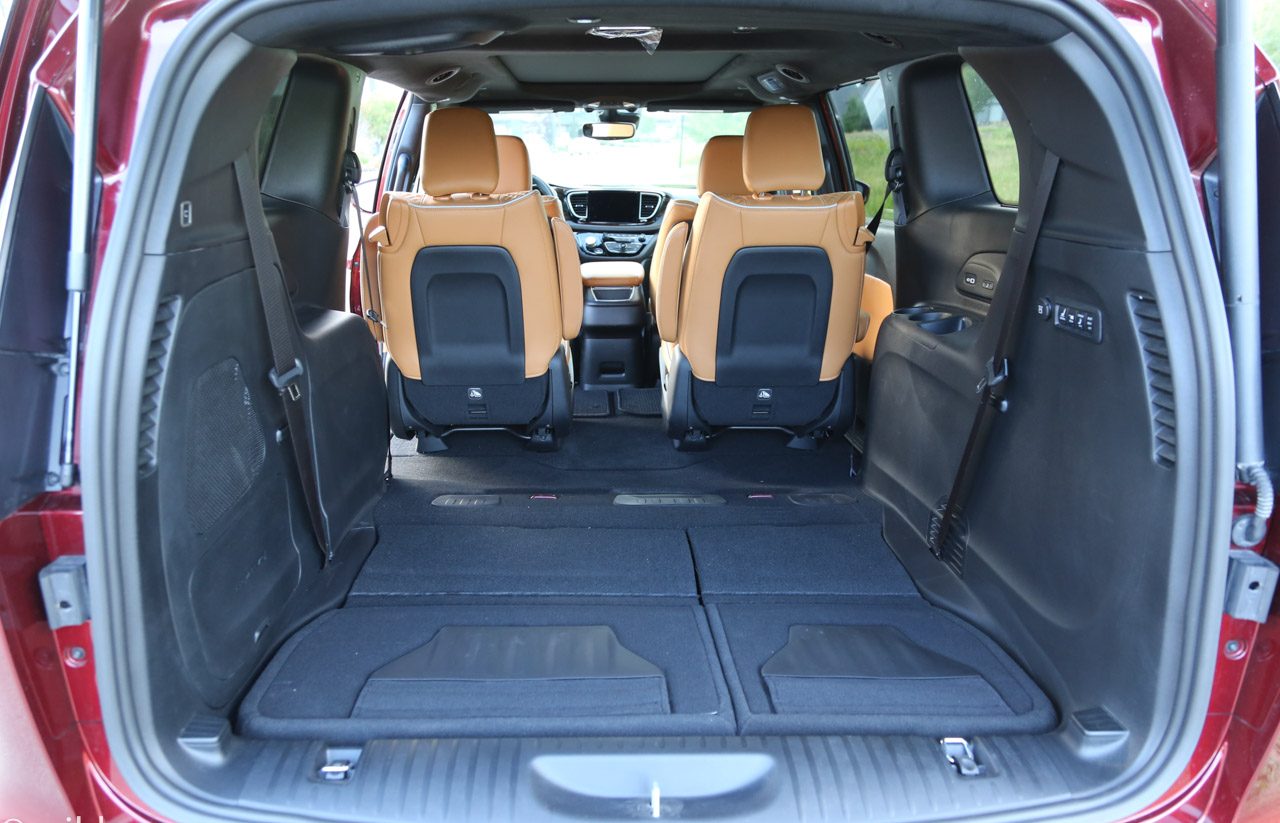
When seat flexibility becomes the main topic, this minivan sets the benchmark that others are measured against. Chrysler designed the Pacifica with a system called Stow ’n Go, and it reshaped expectations for what a family van interior can do. The idea is straightforward: both the second-row and third-row seats disappear completely into the floor, leaving behind a flat cargo area without the need to remove heavy seats or store them elsewhere.
That transformation happens faster than most drivers expect. With a few simple steps, the seats fold, slide, and drop into hidden floor compartments beneath the carpet. Once locked in place, the cabin turns into a wide, uninterrupted loading space. Grocery runs, furniture moves, or travel packing all benefit from that level of openness.
Under the hood, the Chrysler Pacifica carries a 3.6L V6 engine producing 287 horsepower and 262 lb-ft of torque. Those numbers are not aimed at racing, but they provide smooth and confident movement even when the vehicle is fully loaded. At 204.3 inches in length and 79.6 inches in width, it maintains a balanced footprint that still feels manageable in parking lots.
One detail worth noting is how the hybrid version changes the seating system. Because the battery pack sits under the floor, the second-row Stow ’n Go storage space is reduced. That means buyers choosing efficiency through hybrid power trade away part of the full folding advantage.
2. Dodge Grand Caravan (Discontinued, Used through 2020)
- Engine: 3.6L V6
- Horsepower: 283 hp
- Torque: 260 lb-ft
- Size: 203.7 inches Long x 78.7 inches Wide
Long after manufacturing stopped, this minivan maintains a strong reputation for its seating system that changed how people viewed interior space in affordable family vehicles. The Dodge Grand Caravan uses the Stow n Go foundation shared with its Chrysler counterpart, offering a budget focused design that kept it accessible during production years.
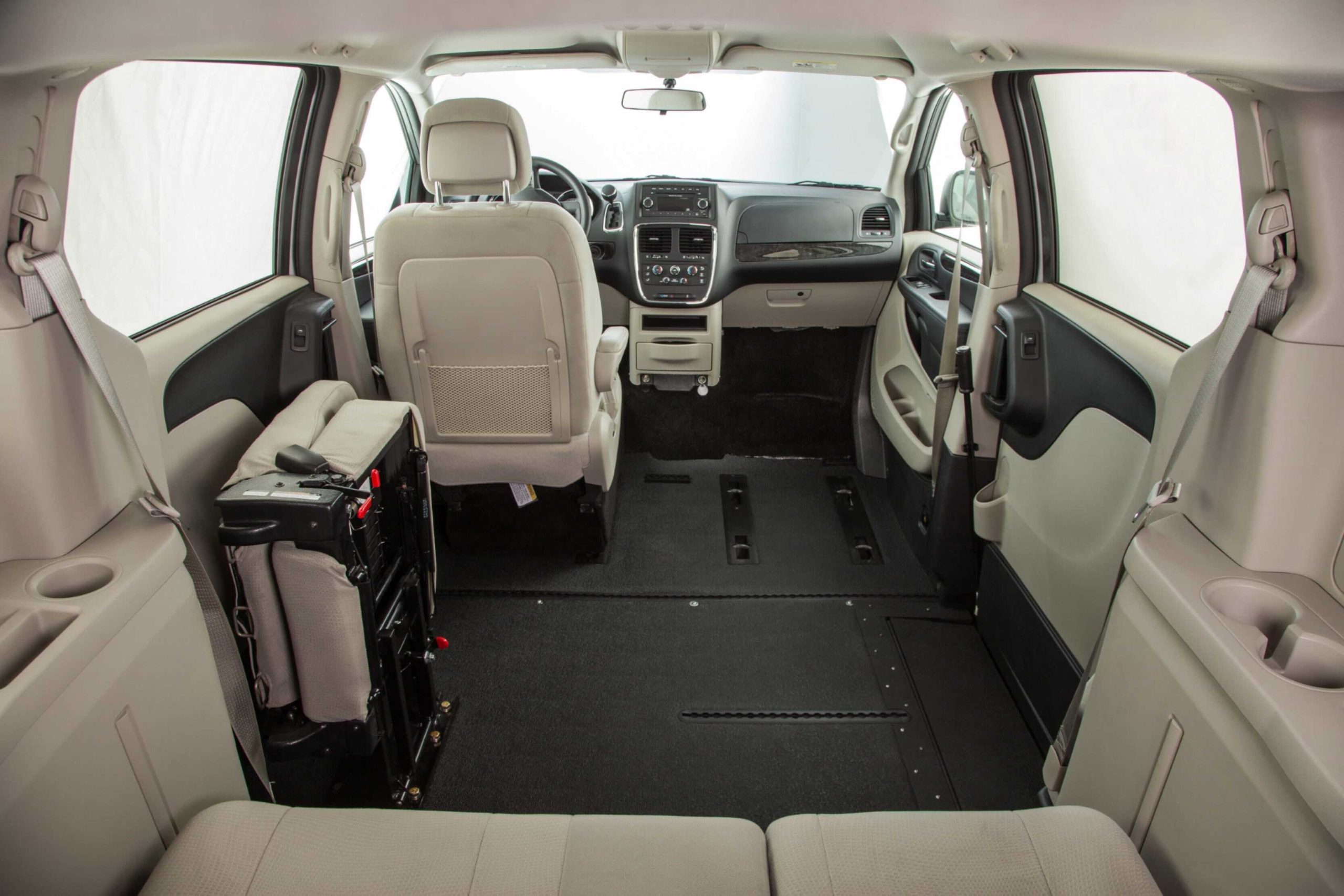
Inside this cabin, both second row and third row seats fold fully into the floor without lifting, removing, or storage planning. With simple pulls, the rear area becomes a flat loading platform that attracted families, delivery workers, and users needing fast cargo flexibility.
Power delivery comes from a 3.6L V6 engine producing 283 horsepower and 260 lb-ft of torque, providing enough strength for highway travel and loaded city use. The body measures 203.7 inches long and 78.7 inches wide, helping drivers handle tight spaces. Convenience stands out because seats remain attached to the chassis, eliminating removal steps and extra storage.
This reduces physical strain and supports frequent interior rearranging for different hauling needs. Storage versatility as folded seating creates a cargo area suitable for home improvement tasks, sports equipment hauling, and small business deliveries. Durable materials and straightforward controls support daily use; models remain popular due to wide parts availability.
Also Read: 5 Minivans Worth the Money and 5 to Skip
3. Honda Odyssey
- Engine: 3.5L V6
- Horsepower: 280 hp
- Torque: 262 lb-ft
- Size: 205.2 inches Long x 78.5 inches Wide
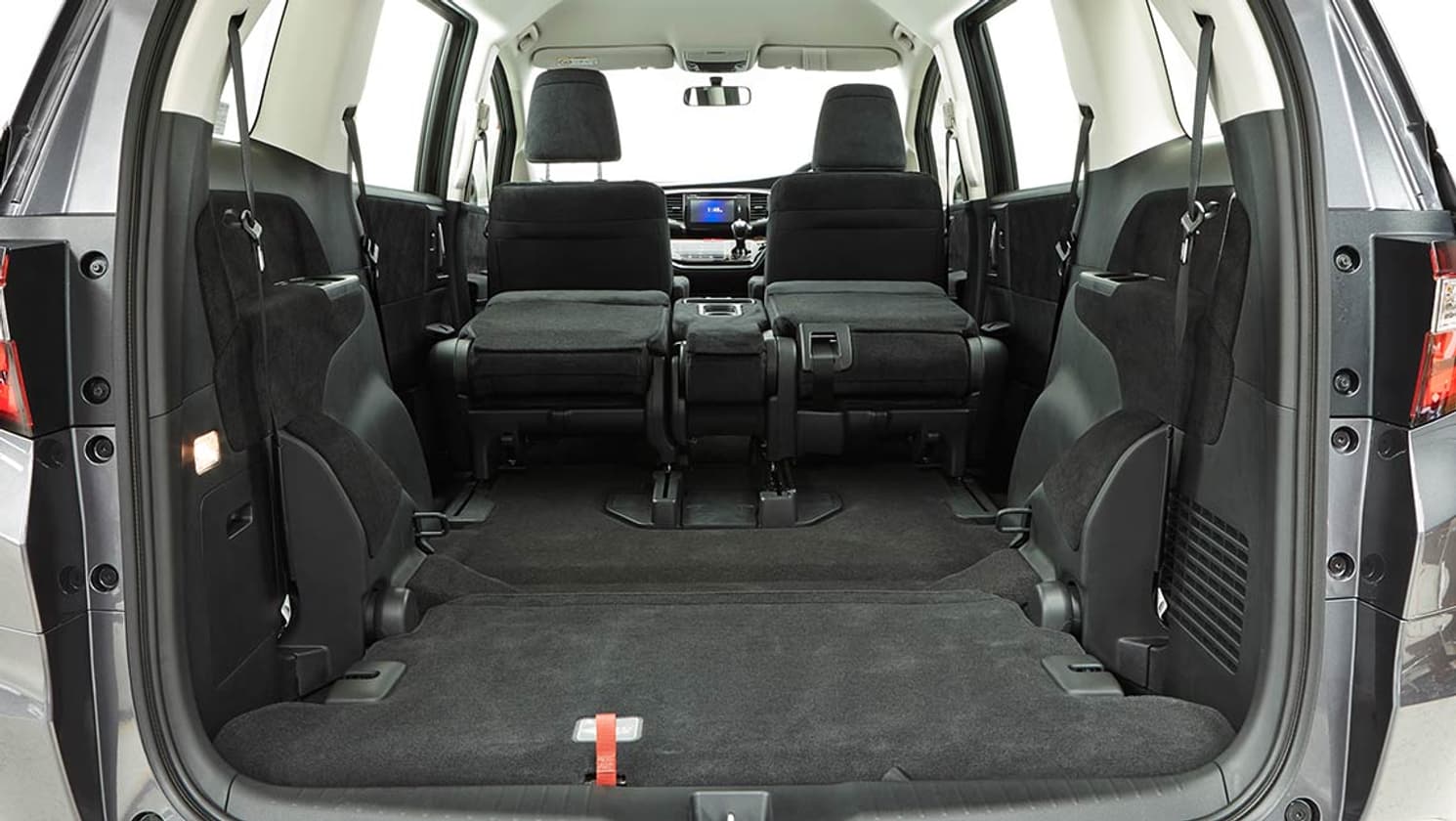
Honda designed the Odyssey with a focus on seat movement and arrangement instead of full floor storage. Instead of seats dropping into hidden compartments, the second-row Magic Slide system allows them to move sideways and adjust forward in different positions, changing how the cabin space is used.
Those middle-row seats can move left or right and also slide forward or back, depending on the setup needed. That makes it easier to reach child seats and adjust spacing between passengers. While they do not fold into the floor, their range of motion adds practical flexibility during daily use.
At the rear, the third-row seats fold flat into the cargo floor, creating a smooth loading area for bags, boxes, or larger items. This setup is simple to operate and avoids the heavier removal process seen in older minivan designs. Power comes from a 3.5L V6 engine producing 280 horsepower and 262 lb-ft of torque.
Acceleration feels steady and controlled, especially on highways. The vehicle measures 205.2 inches in length and 78.5 inches in width, giving it a roomy cabin suited for families and group travel. Inside, comfort remains a priority. The sliding second-row system helps adjust seating based on passenger needs, whether more legroom or easier child access is required.
Cargo capacity improves once the third row is folded, allowing larger items to fit without obstruction. Wide door openings also make loading and unloading simpler, especially during travel or errands. Ride quality stays smooth thanks to suspension tuning aimed at comfort.
Road noise is kept low, supporting relaxed driving even when the cabin is full. Instead of relying on seats disappearing into the floor, this design depends on movement and reconfiguration to create usable space.
4. Toyota Sienna (Current Generation)
- Engine: 2.5L 4-cylinder Hybrid
- Horsepower: 245 hp (Total System)
- Torque: 176 lb-ft (Engine Only)
- Size: 203.7 inches Long x 78.5 inches Wide
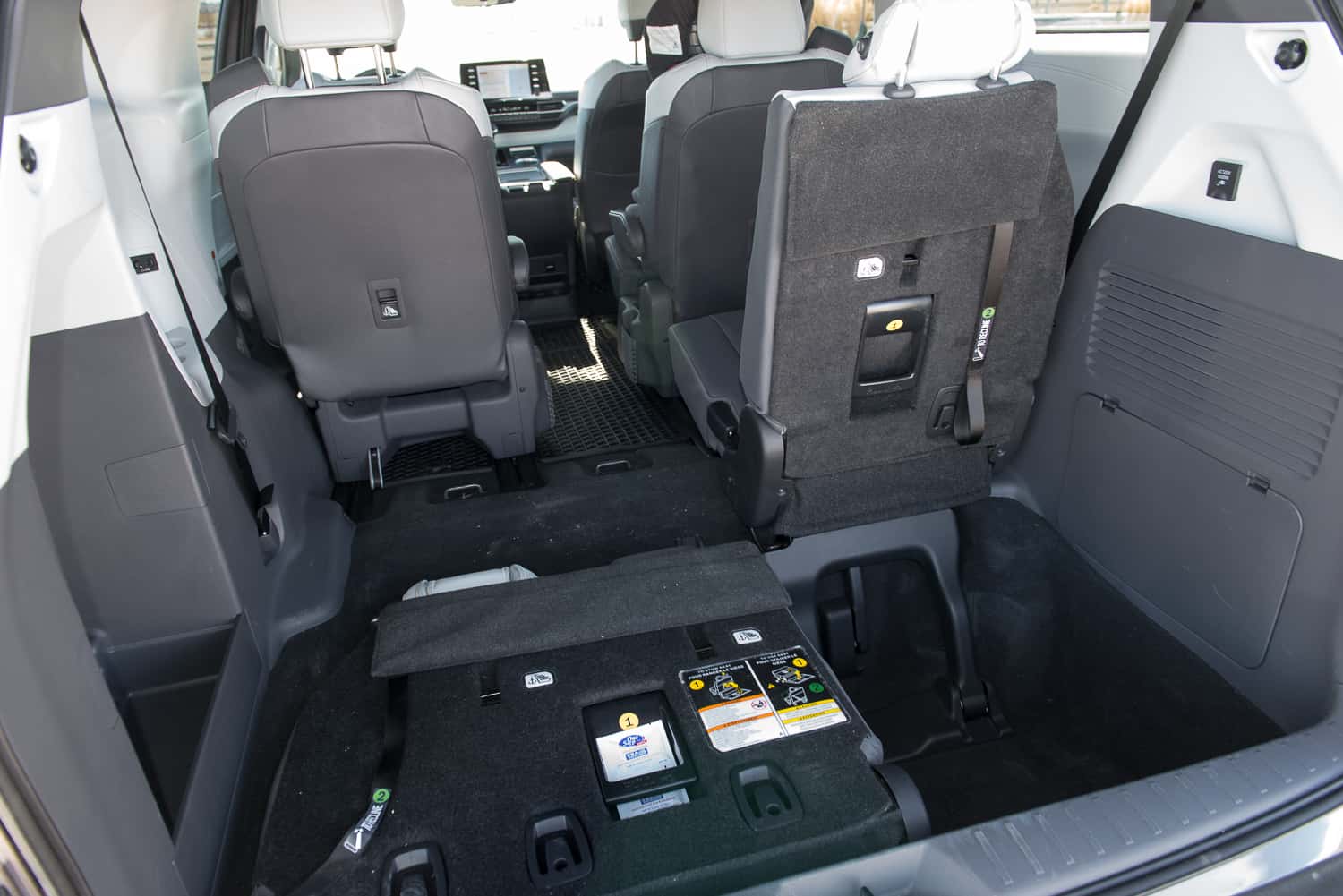
Toyota designed the Sienna with a strong focus on comfort, safety, and hybrid efficiency rather than full seat removal systems. Instead of folding into the floor, the second-row seats use a Super-Long-Slide setup that lets them move as far as 25 inches. That wide range of motion creates a cabin feel closer to a luxury shuttle than a typical family minivan.
Power delivery comes from a 2.5L hybrid system that produces a combined 245 horsepower. Even though torque output is lower than many V6 rivals, electric support smooths acceleration and helps improve fuel economy. The Sienna measures 203.7 inches in length and 78.5 inches in width, placing it within standard minivan sizing.
Inside design centers on passenger comfort and flexible seating arrangements. The sliding second-row setup allows different layouts depending on whether passengers or storage space take priority at the moment. Cargo use is possible when seats are moved forward, though it does not create a perfectly flat loading surface like some competitors with fold-into-floor systems. Safety structure and hybrid components influence that limitation.
Ride quality remains smooth and controlled, with seamless transitions between electric and gasoline power. That makes daily driving and long trips equally comfortable. Rather than focusing on seats disappearing into the floor, Toyota chose movement-based flexibility that favors comfort and adaptability for passengers.
5. Kia Carnival
- Engine: 3.5L V6
- Horsepower: 290 hp
- Torque: 262 lb-ft
- Size: 203.0 inches Long x 78.5 inches Wide
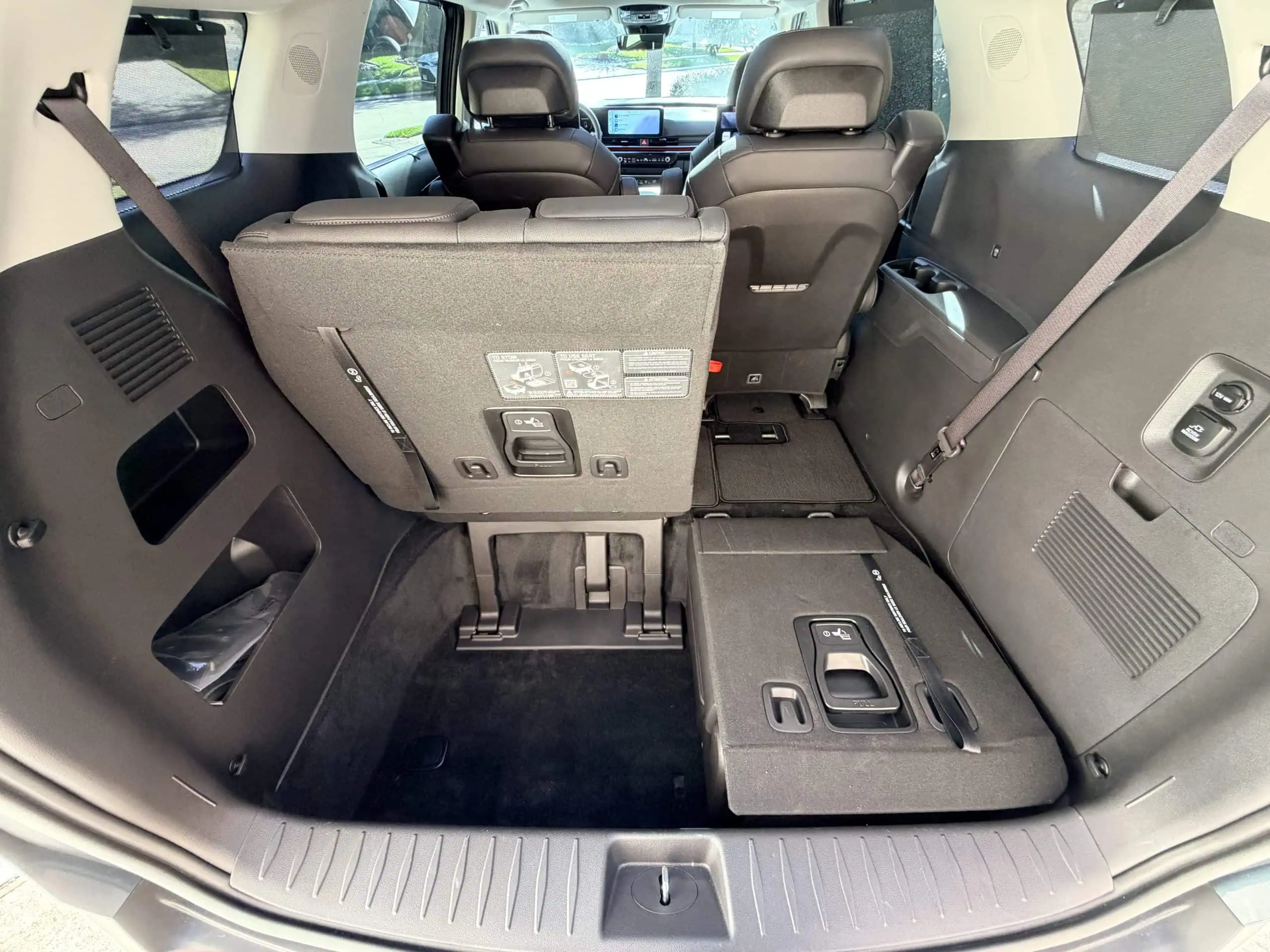
A fresh approach from Kia shaped the Carnival as more of a versatile passenger lounge than a standard minivan focused on cargo utility. Seating layouts vary across trims, yet the main idea centers on comfort, adjustable space use, and flexible interior arrangements rather than full seat disappearance into the floor.
Inside eight-seat versions, the middle seat in the second row can fold down into a table-like surface. That setup turns the cabin into a practical space for working, eating, or organizing small items during travel. Higher trim seven-seat models introduce VIP-style second-row chairs with powered recline and extending footrests that allow a near-flat resting position, although they do not fold away into the floor.
Power delivery comes from a 3.5L V6 engine producing 290 horsepower and 262 lb-ft of torque. This gives the vehicle strong acceleration for its class while still supporting relaxed highway driving. Measuring 203.0 inches long and 78.5 inches wide, it fits comfortably in most driving environments while still offering generous interior room.
Cargo use depends more on partial seat adjustments than complete removal or floor storage systems. The seating layout prioritizes passenger comfort, so hauling large items requires rearranging or folding sections instead of clearing the cabin entirely.
Although it does not match full fold-flat systems for cargo capacity, the Kia Carnival focuses on adaptable comfort and flexible seating positions that serve passengers in a more relaxed and premium way.
6. Chrysler Voyager
- Engine: 3.6L V6
- Horsepower: 287 hp
- Torque: 262 lb-ft
- Size: 203.8 inches Long x 79.6 inches Wide
A closer look at the Chrysler Voyager reveals a practical, fleet-oriented minivan that borrows much of its structure from the Pacifica while simplifying certain interior features to reduce cost. The result is a vehicle that still offers strong seat flexibility in specific areas, though it does not deliver the full cabin transformation found in higher trims or more premium configurations.
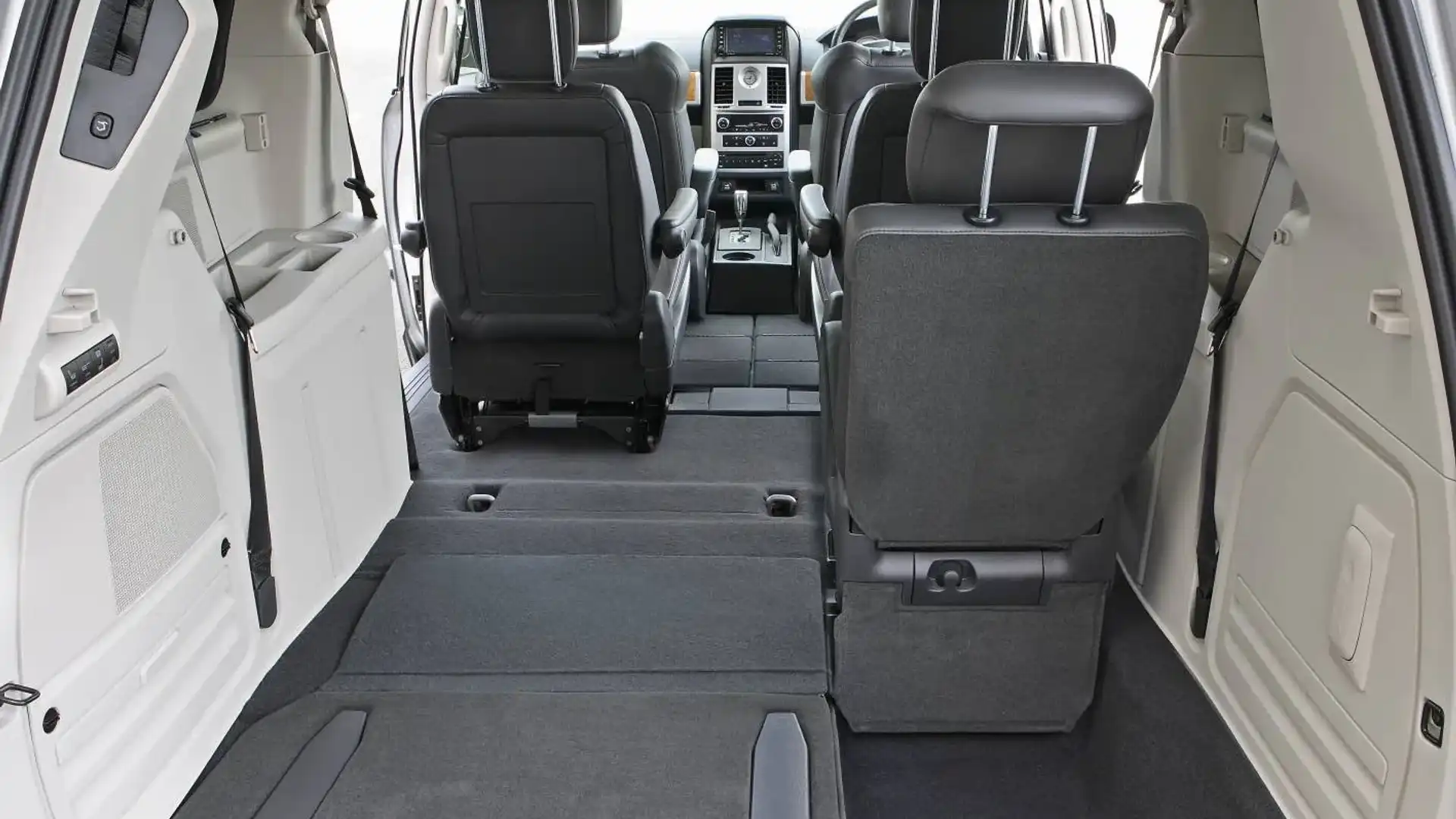
At the rear, the third-row seats use the familiar Stow ’n Go system. With a few quick steps, they fold flat into the floor compartments, creating a level cargo surface suitable for luggage, boxes, or work equipment. That part of the system remains one of the most convenient in the segment because it avoids seat removal entirely.
The second row takes a different approach. Instead of folding into the floor, those captain’s chairs must be manually unlatched and lifted out of the vehicle to achieve maximum open space. That process requires more physical effort and storage planning, especially when frequent reconfiguration is needed.
Power comes from a 3.6L V6 engine producing 287 horsepower and 262 lb-ft of torque. Performance is steady and predictable, supporting both city driving and highway travel. With a body length of 203.8 inches and width of 79.6 inches, the Voyager shares a familiar footprint with its Chrysler siblings.
Interior design emphasizes durability and function rather than premium finishes. Materials are chosen for long-term use, making it well-suited for fleet operations, shuttle services, and large family transport. Cargo flexibility depends heavily on how the second-row seats are handled.
With them removed, the cabin opens into a large, flat space. Without removal, space becomes more limited, even with the third row folded. This dual nature places the Voyager in a middle position within this ranking. It delivers excellent rear cargo transformation but requires more effort for full interior clearance compared to models with full Stow ’n Go coverage.
7. Kia Sedona (Discontinued, Used through 2021)
- Engine: 3.3L V6
- Horsepower: 276 hp
- Torque: 248 lb-ft
- Size: 201.4 inches Long x 78.1 inches Wide
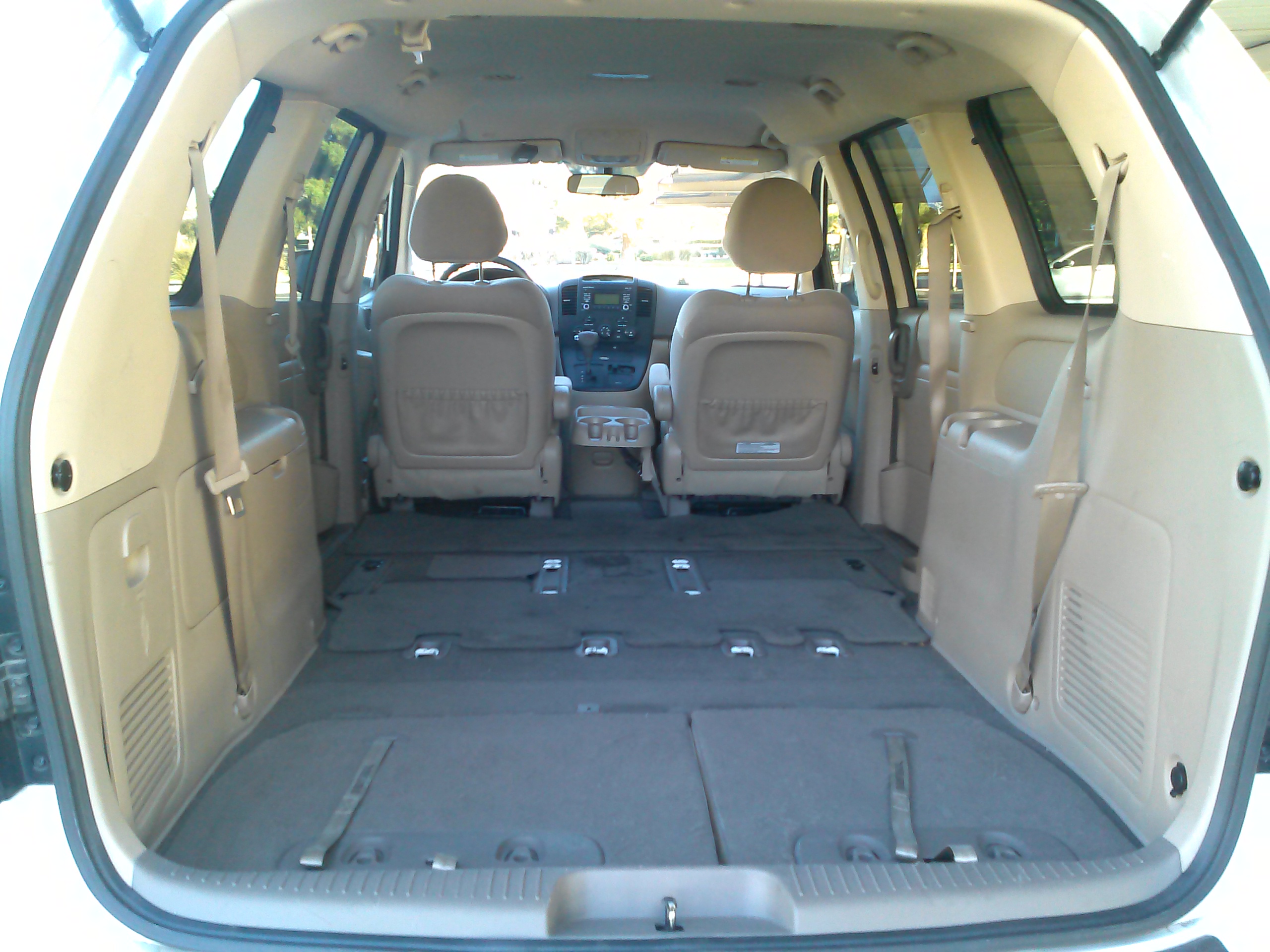
Design work on the Kia Sedona centers on adjustable seating that combines sliding motion and folding parts rather than floor storage. The Slide-N-Stow second-row system defines this minivan, separating it from standard interior layouts used in many vehicles today’s designs.
Rather than removing seats or storing them elsewhere, the second-row cushions fold upward while the full assembly slides toward the front seats. This action opens rear cabin room without lifting effort or external storage needs inside daily use conditions present.
At the back section, third-row seats fold flat into the cargo floor, producing a level loading surface for larger items. This arrangement pairs with sliding second-row seats to create adaptable space for passengers, cargo, and mixed usage needs daily requirements.
Powertrain options include a 3.3L V6 engine producing 276 horsepower and 248 lb-ft of torque, offering smooth daily performance and highway stability. Body size measures 201.4 inches long and 78.1 inches wide, helping with handling in tight city environments easily.
Inside use focuses on passenger comfort and easy reconfiguration between seating and storage. Families benefit from quick changes without heavy lifting. Interior materials emphasize durability and comfort, with simple controls and seating designed for long travel comfort and daily practicality.
8. Nissan Quest (Discontinued, Used through 2017)
- Engine: 3.5L V6
- Horsepower: 260 hp
- Torque: 240 lb-ft
- Size: 200.8 inches Long x 77.6 inches Wide
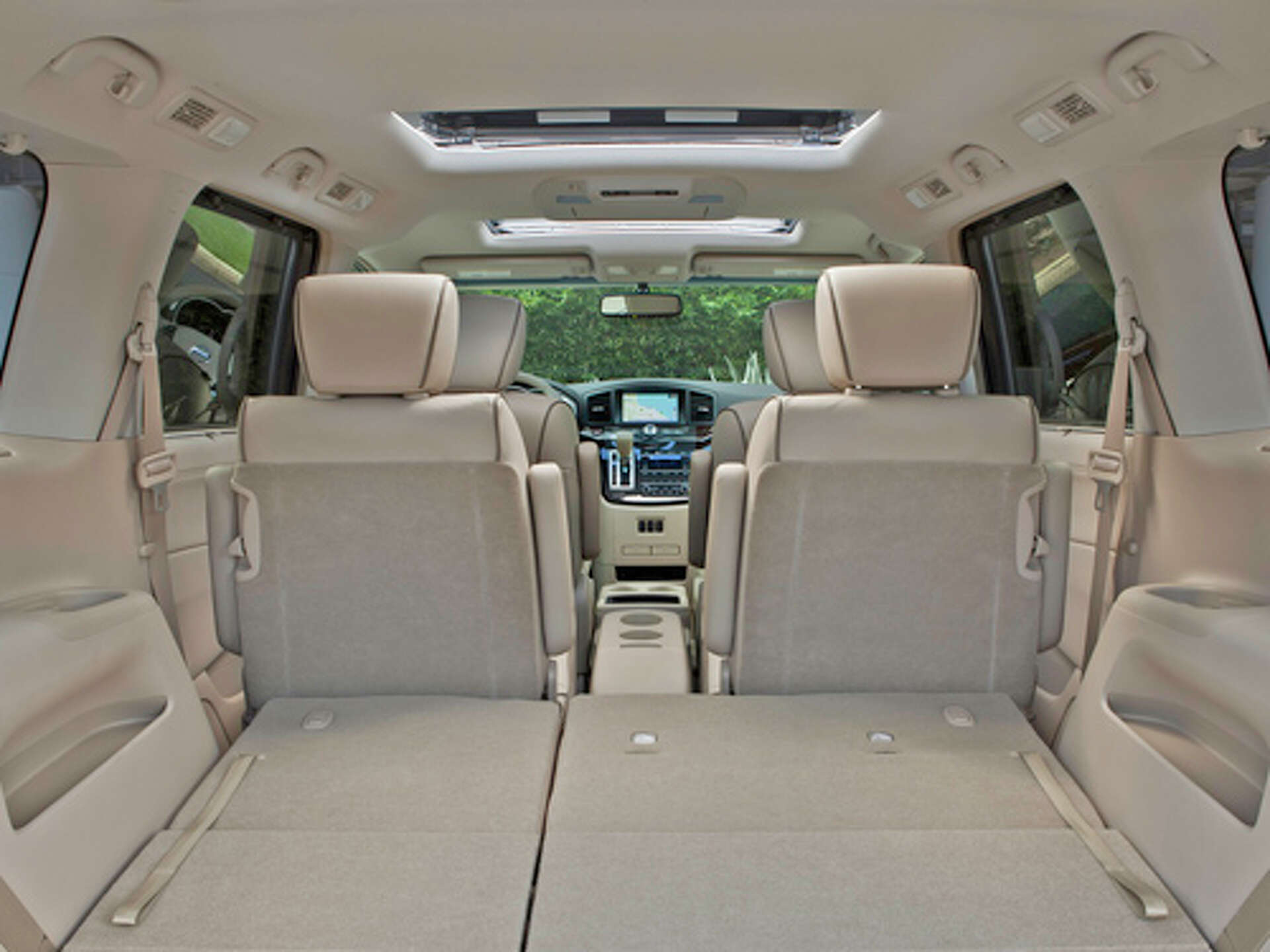
Nissan took a different design path with the Quest, choosing a folding system that behaves more like a traditional SUV than a minivan with hidden storage compartments. Both second and third-row seats fold forward flat, creating a continuous floor surface without requiring seat removal or external storage.
This forward-folding approach produces a quick transformation process. Instead of dropping seats into the floor, they collapse forward into a stacked position. That creates an even cargo surface, though it does reduce vertical cargo height compared to vans with fully recessed seating systems.
Power is delivered by a 3.5L V6 engine producing 260 horsepower and 240 lb-ft of torque. Acceleration remains steady, supporting highway merging and urban driving without strain. At 200.8 inches in length and 77.6 inches in width, the Quest sits on the slightly narrower side of the segment.
Interior design focuses on simplicity and open space. The folding system is easy to operate and does not require heavy lifting. This makes it accessible for drivers who prefer straightforward functionality over multi-step seat removal systems.
Cargo space becomes immediately usable once both rows are folded. The flat floor allows for large boxes, luggage, or equipment to be loaded without obstruction. However, reduced vertical space means taller items may not fit as easily compared to competitors with deeper cargo wells.
Passenger comfort remains a priority when seats are in use. The cabin layout provides decent legroom and visibility, making it suitable for family travel.
9. Toyota Sienna (Older Generation, Used 2011-2020)
- Engine: 3.5L V6
- Horsepower: 296 hp
- Torque: 263 lb-ft
- Size: 200.2 inches Long x 78.1 inches Wide
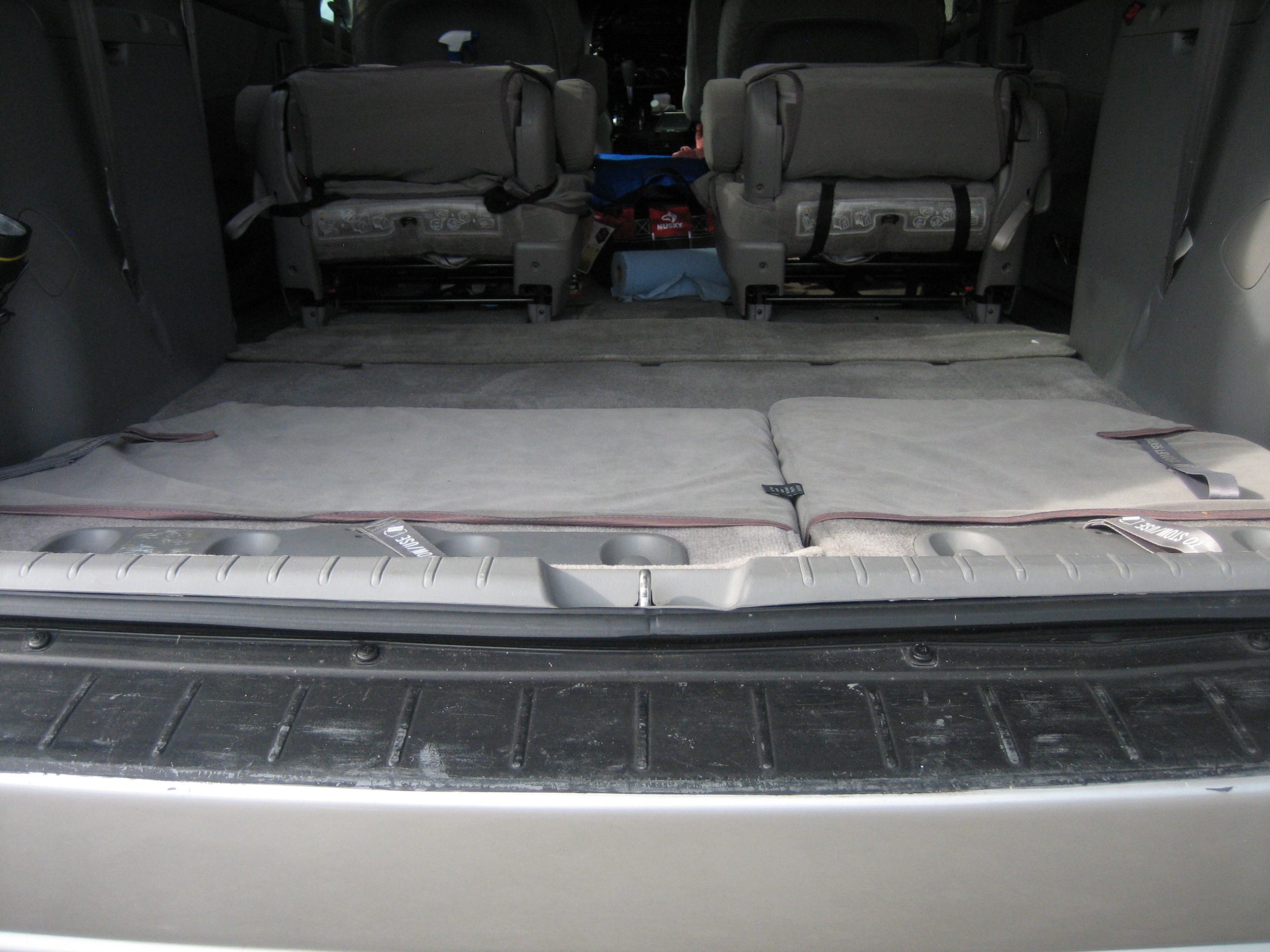
Older versions of the Toyota Sienna take a more traditional approach to seat flexibility, relying on folding and removal rather than integrated storage systems. The third-row seats split in a 60/40 configuration and fold flat into the floor, creating a wide cargo area suitable for luggage or larger items.
The second-row seats, however, require more effort. These units are heavy and bulky, designed for comfort and durability rather than quick removal. To achieve maximum cargo space, they must be manually lifted out of the cabin after releasing locking mechanisms.
Engine performance in this generation comes from a 3.5L V6 producing 296 horsepower and 263 lb-ft of torque. That makes it one of the stronger performers in this list in terms of raw output. Body dimensions measure 200.2 inches in length and 78.1 inches in width, giving it a slightly shorter profile compared to newer models.
Interior flexibility depends heavily on user effort. Once the second-row seats are removed, the cargo area becomes expansive and highly usable. Without removal, space remains limited despite the folding third row. Comfort levels are strong, as Toyota prioritized long-term seating support and ride stability. The cabin feels durable, with materials designed for long-term use.
This generation appeals to drivers who do not mind physical effort in exchange for durable seating systems and strong engine performance. While not as quick to reconfigure as newer designs, it remains functional for those willing to manage seat removal when needed.
Also Read: 9 Minivans That Crushed the Stereotype and Hit 350,000 Miles
10. Volkswagen Routan (Discontinued, Used 2009-2014)
- Engine: 3.6L V6
- Horsepower: 283 hp
- Torque: 260 lb-ft
- Size: 202.5 inches Long x 76.9 inches Wide
Volkswagen’s entry into the minivan segment came through the Routan, a model built on shared architecture with Chrysler but adjusted to reflect Volkswagen’s interior comfort philosophy. That influence led to changes in seat design that affected flexibility, particularly in the second row.
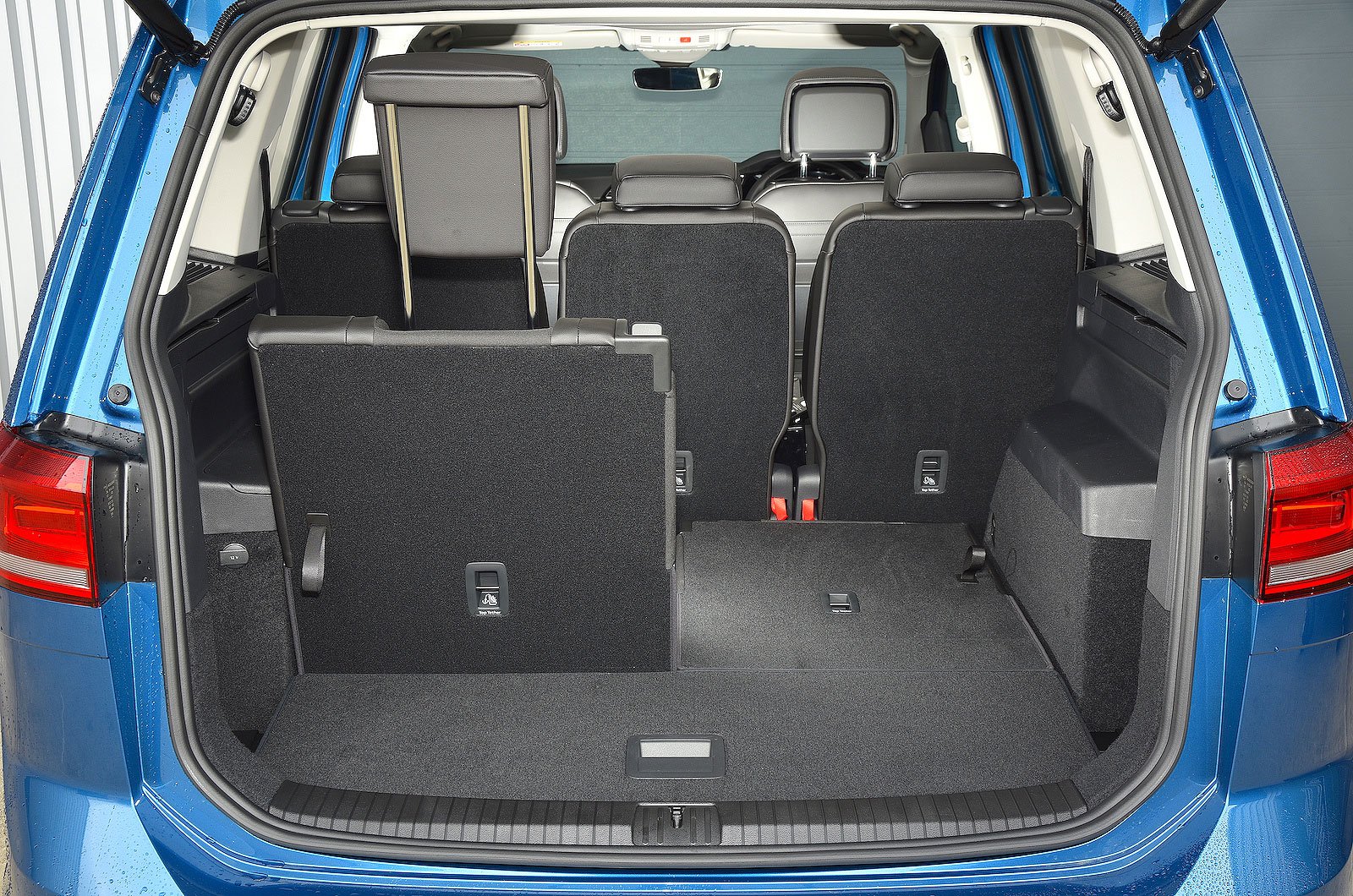
Unlike Chrysler-based systems, the Routan does not include second-row floor storage bins. That means the middle seats cannot fold into the floor at all. Instead, they remain fixed or removable depending on configuration, limiting quick transformation ability.
The third row, however, follows a folding design that allows it to collapse into the rear cargo area. This creates additional space for luggage or equipment, though not a fully flat loading floor across the entire cabin. Power comes from a 3.6L V6 engine producing 283 horsepower and 260 lb-ft of torque.
Performance remains consistent for highway driving and daily use. The vehicle measures 202.5 inches in length and 76.9 inches in width, making it slightly narrower than many competitors. Interior comfort was a primary focus for Volkswagen. Seat cushioning is softer, and passenger comfort is prioritized over full cargo conversion.
That decision influences how the seating system behaves in practical use. Cargo space becomes partially usable once the third row is folded, but second-row limitations prevent full interior clearance without additional effort. This reduces its flexibility ranking compared to competitors with integrated folding systems.
Despite that, the Routan offers a smooth driving experience and comfortable seating, making it appealing for passengers rather than cargo-heavy use cases.
